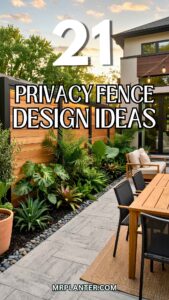
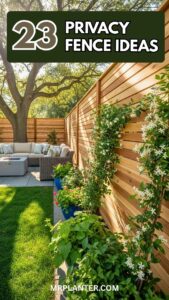
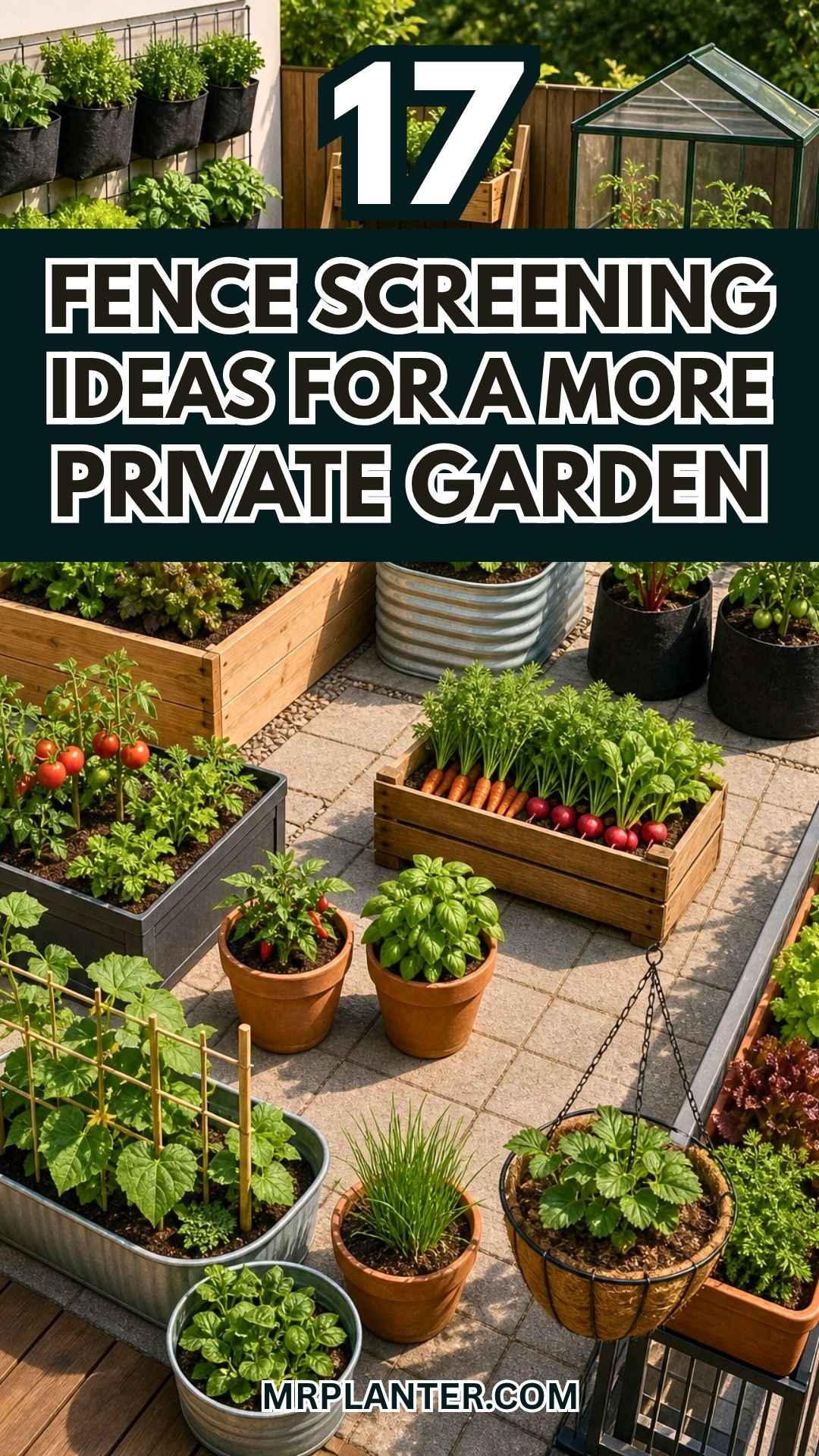
A private garden gives you room to relax, dine, and grow plants without feeling watched. The best fence screening ideas combine visual cover with the right amount of light, airflow, and garden style. Your choice also needs to suit your budget, local weather, and the fence you already have.
The most useful screen blocks the views you care about while keeping your garden comfortable, attractive, and easy to maintain.
1. Horizontal Cedar Slat Screen Panels
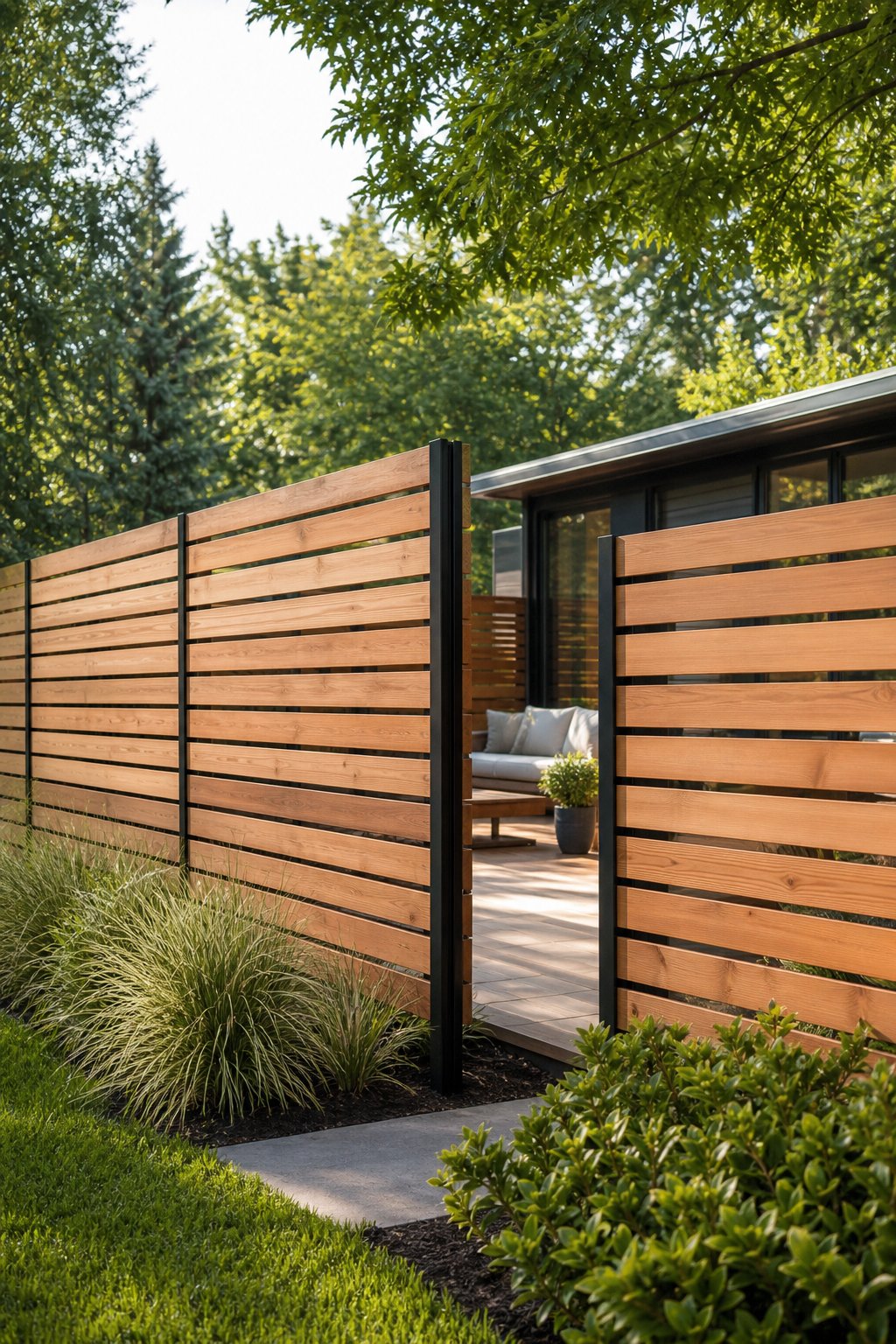
Horizontal cedar slats give a plain yard a clean, warm backdrop with strong visual coverage. The narrow gaps let air pass through and cast soft lines across your garden, while the natural wood color pairs well with raised beds and patio furniture. Cedar handles outdoor moisture well when it receives regular sealing.
Install the slats on sturdy posts with consistent spacing. A darker stain creates a modern look, while a clear sealer keeps the wood’s natural tone. For a wider design, place the panels slightly in front of an existing fence and add low planting along the base. You’ll find more layout inspiration among these horizontal wood fence ideas.
Expert Tip From MrPlanter: “Leave a small gap under the panels so water and leaves can move through. Seal cut ends first, since they absorb moisture quickly.”
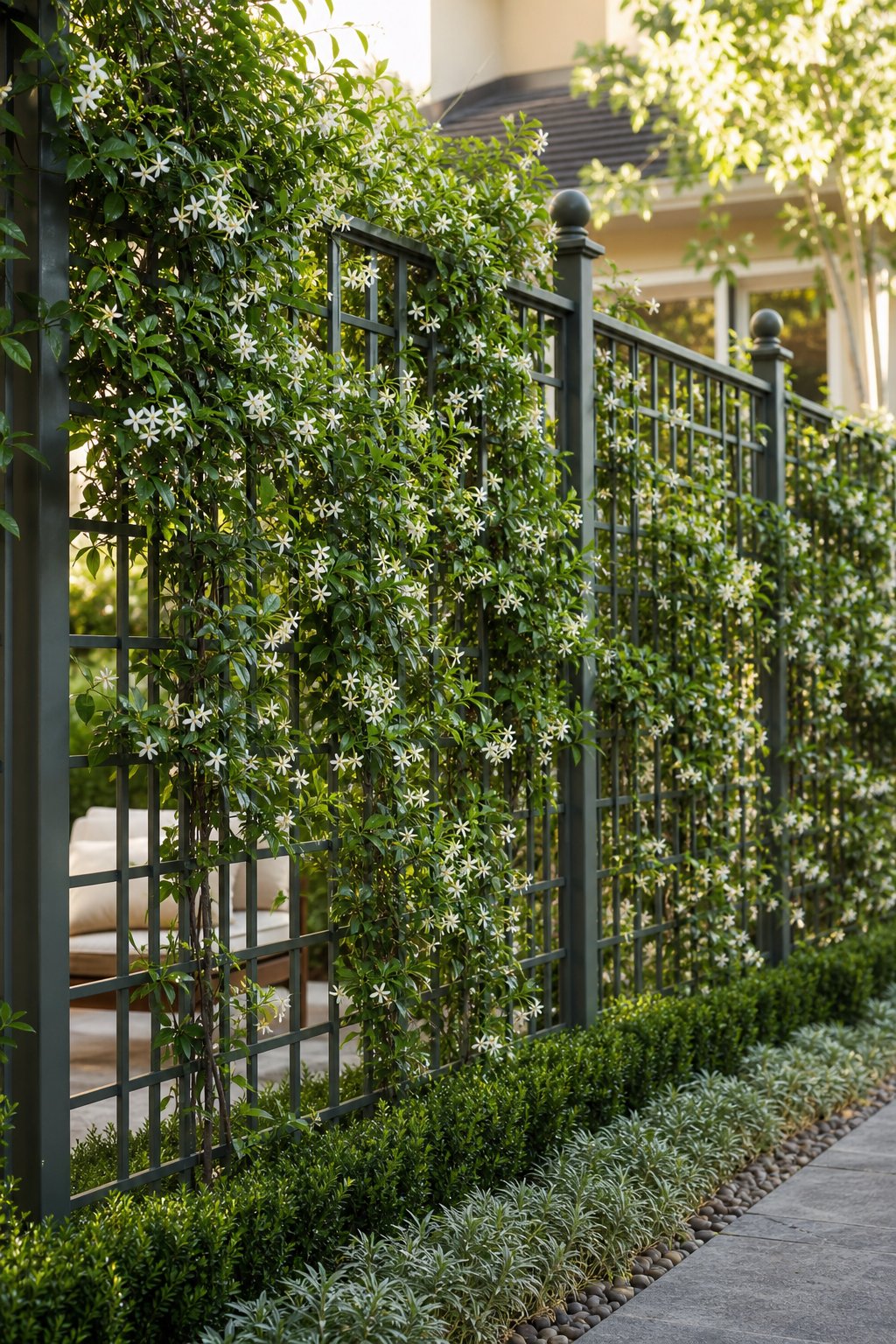
2. Trellis Panels Covered With Climbing Jasmine
A jasmine-covered trellis turns privacy screening into a fragrant garden feature. The open frame provides filtered cover as the vine grows, and its flowers bring scent close to seating areas. Choose a trellis with strong vertical supports, since mature vines become heavier after rain.
Attach the panels several inches from a wall or fence to improve airflow. Guide young stems with soft ties, then prune after flowering to keep paths clear. Jasmine suits sunny, sheltered spots and needs regular watering during its first growing season. For more climbing-plant layouts, browse these garden trellis ideas.
Expert Tip From MrPlanter: “Place jasmine beside the spot where you sit most often so you enjoy its fragrance. Give the trellis a firm anchor before the vine fills in.”
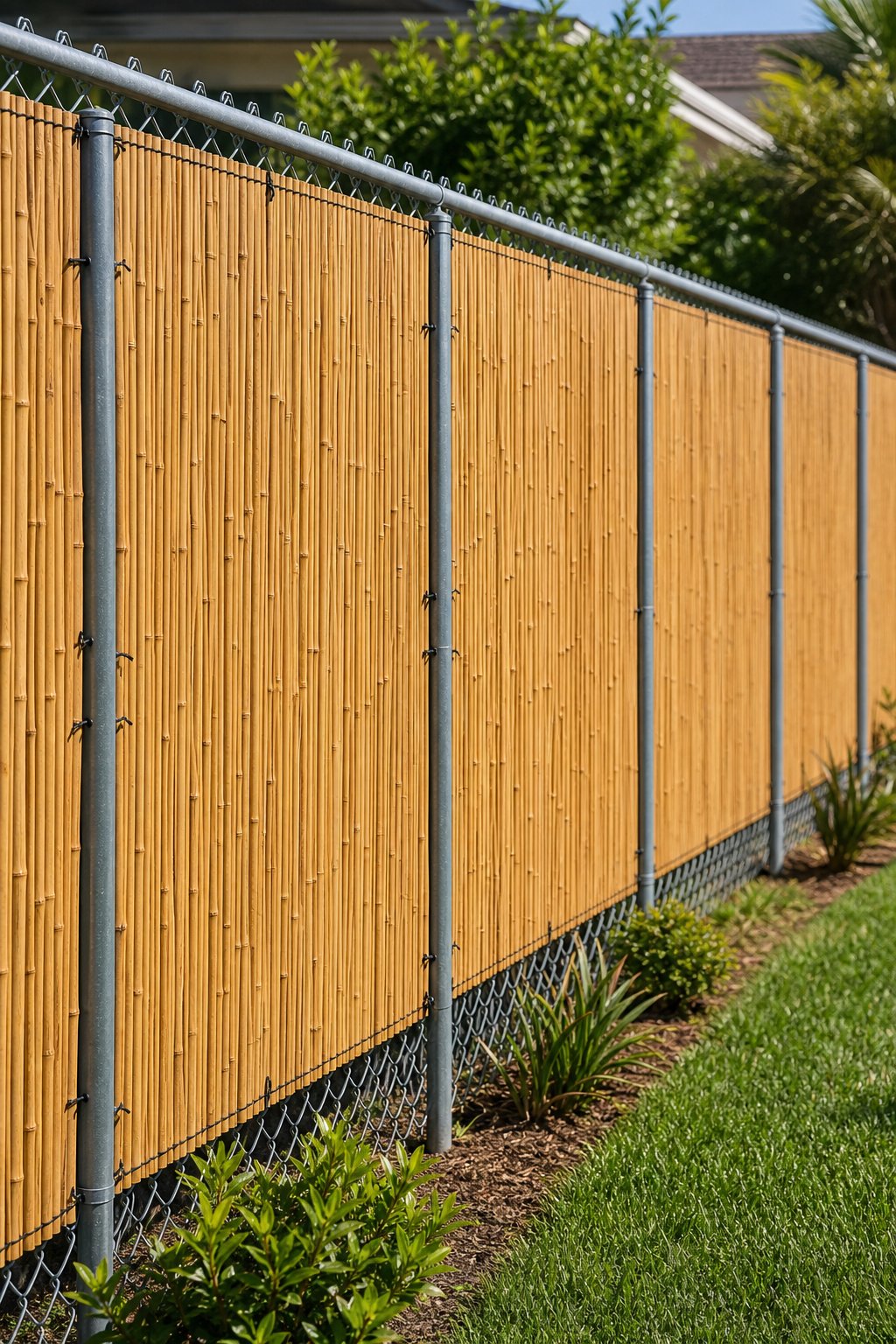
3. Bamboo Reed Rolls on an Existing Chain-Link Fence
Bamboo reed rolls offer quick cover for a chain-link fence without tearing out the whole boundary. Their warm, natural texture softens metal and suits tropical, Japanese-inspired, or relaxed cottage gardens. The rolls are lightweight, so installation is manageable with a helper and weather-resistant ties.
Stretch each roll tightly against the mesh and fasten it at the top, middle, and bottom. Add extra ties near corners where wind catches the material. Select treated outdoor bamboo and keep the lower edge clear of wet soil. You can find more ways to dress up mesh fencing in these chain link fence ideas.
Expert Tip From MrPlanter: “Use UV-stable ties because ordinary plastic ties become brittle outdoors. Check the fasteners after the first windy storm.”
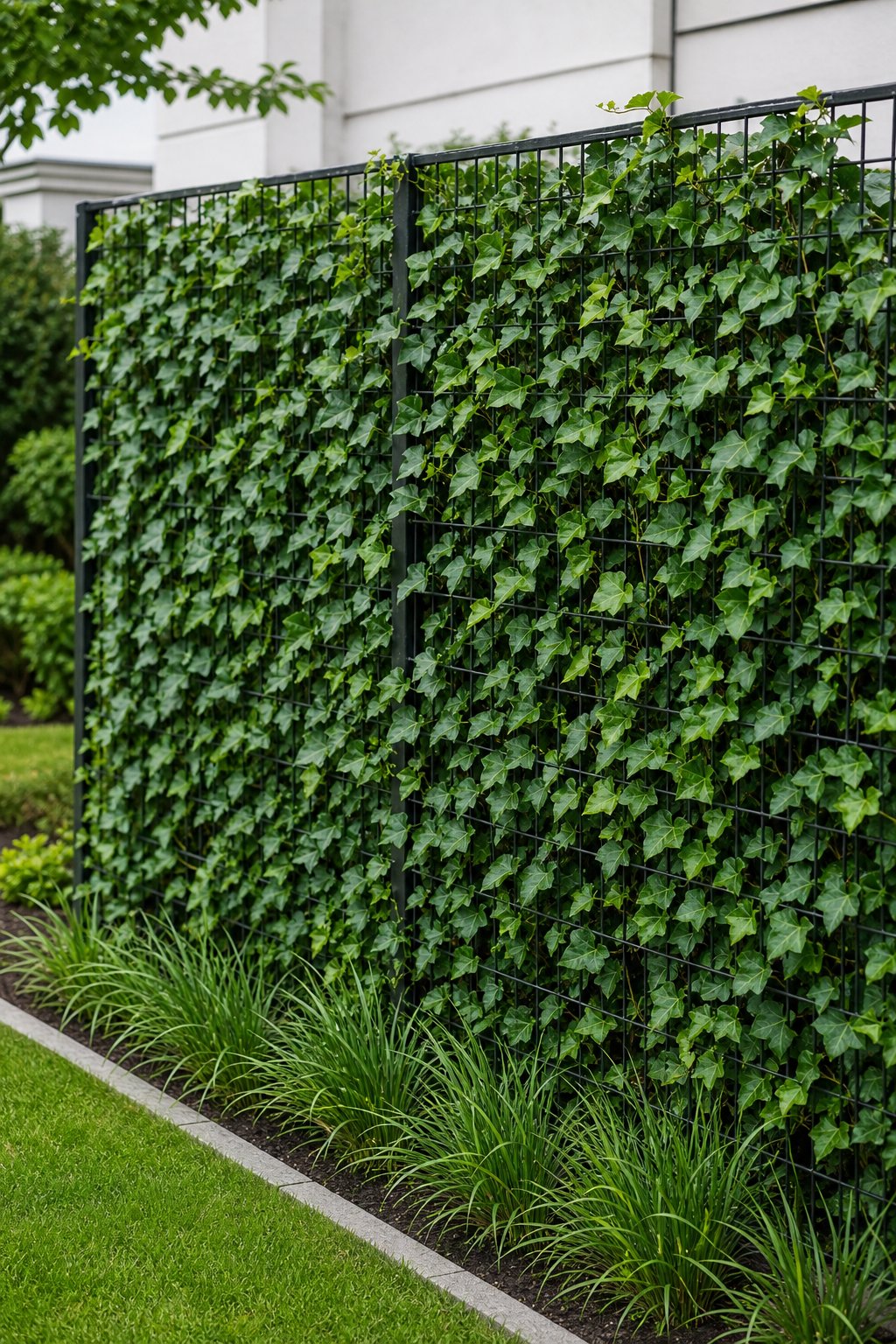
4. Living Ivy Wall on Welded Wire Mesh
Ivy creates a dense green screen when you give it a strong mesh framework and time to spread. Welded wire mesh keeps the support light while providing many points for stems to grip. The result feels softer than a solid fence and supports small garden wildlife.
Secure the mesh to posts before planting, then space young ivy plants according to their mature spread. Water deeply during the first year and guide new growth across bare areas. Keep stems away from siding, gutters, and wooden structures because ivy can cause damage when allowed to creep unchecked.
Expert Tip From MrPlanter: “Choose a non-invasive ivy suited to your region and trim it twice a year. Keep a clear strip at the fence base for easy mowing and inspection.”
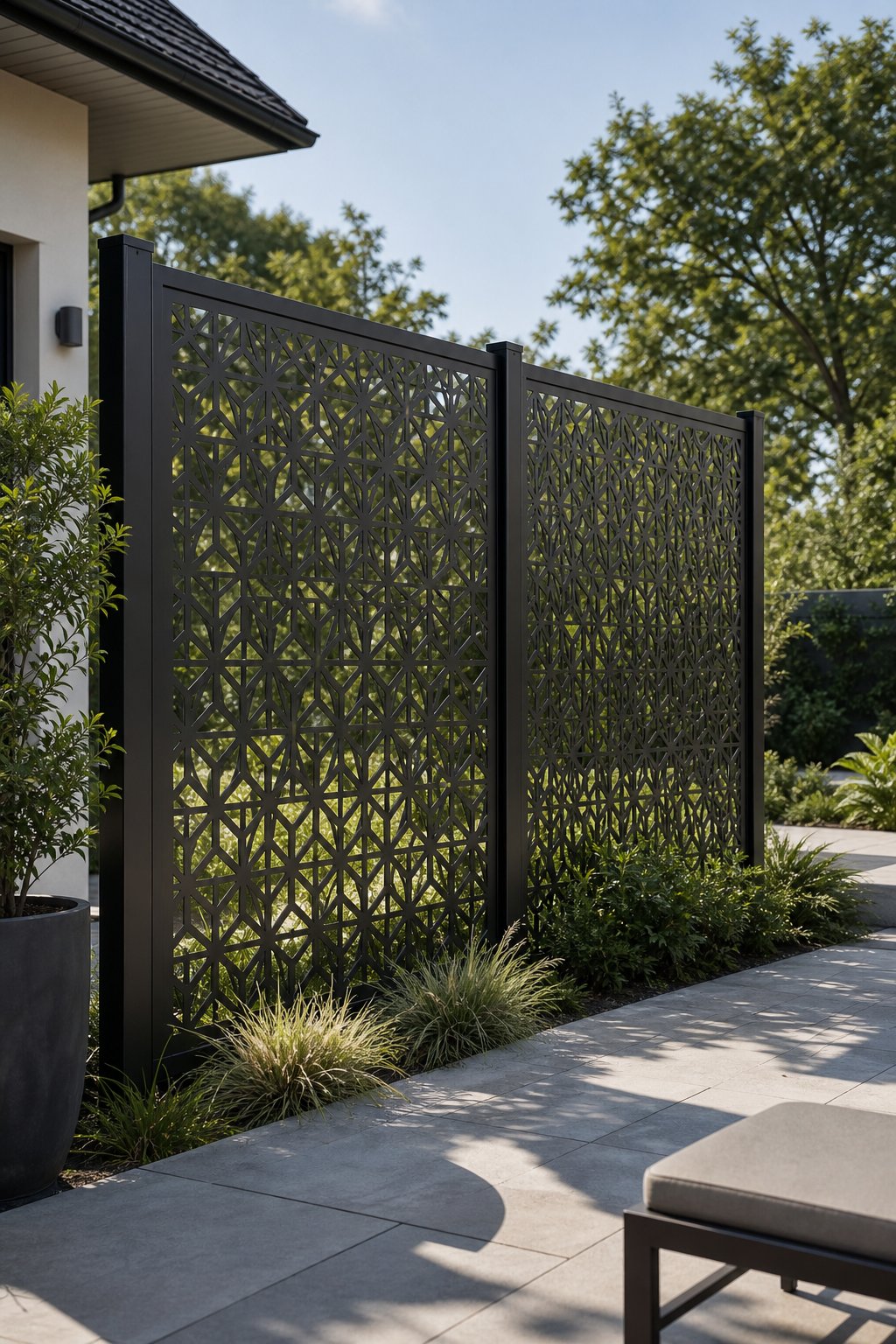
5. Laser-Cut Metal Privacy Screen Panels
Laser-cut metal panels provide patterned privacy with a crisp, architectural look. The cutouts block direct views while allowing sun and air to reach nearby plants. You can use one panel as a focal point or repeat a design along a patio edge.
Powder-coated steel lasts well outdoors when the coating remains intact. Aluminum weighs less and resists rust, which helps on damp sites. Mount the panels to posts rated for their weight, and check that the pattern gives enough coverage from your main viewing angle. Dark finishes make foliage stand out, while bronze tones warm up pale paving.
Expert Tip From MrPlanter: “Check the shadow pattern at different times of day before fixing the panels. A sample piece helps you judge privacy far better than a catalog photo.”
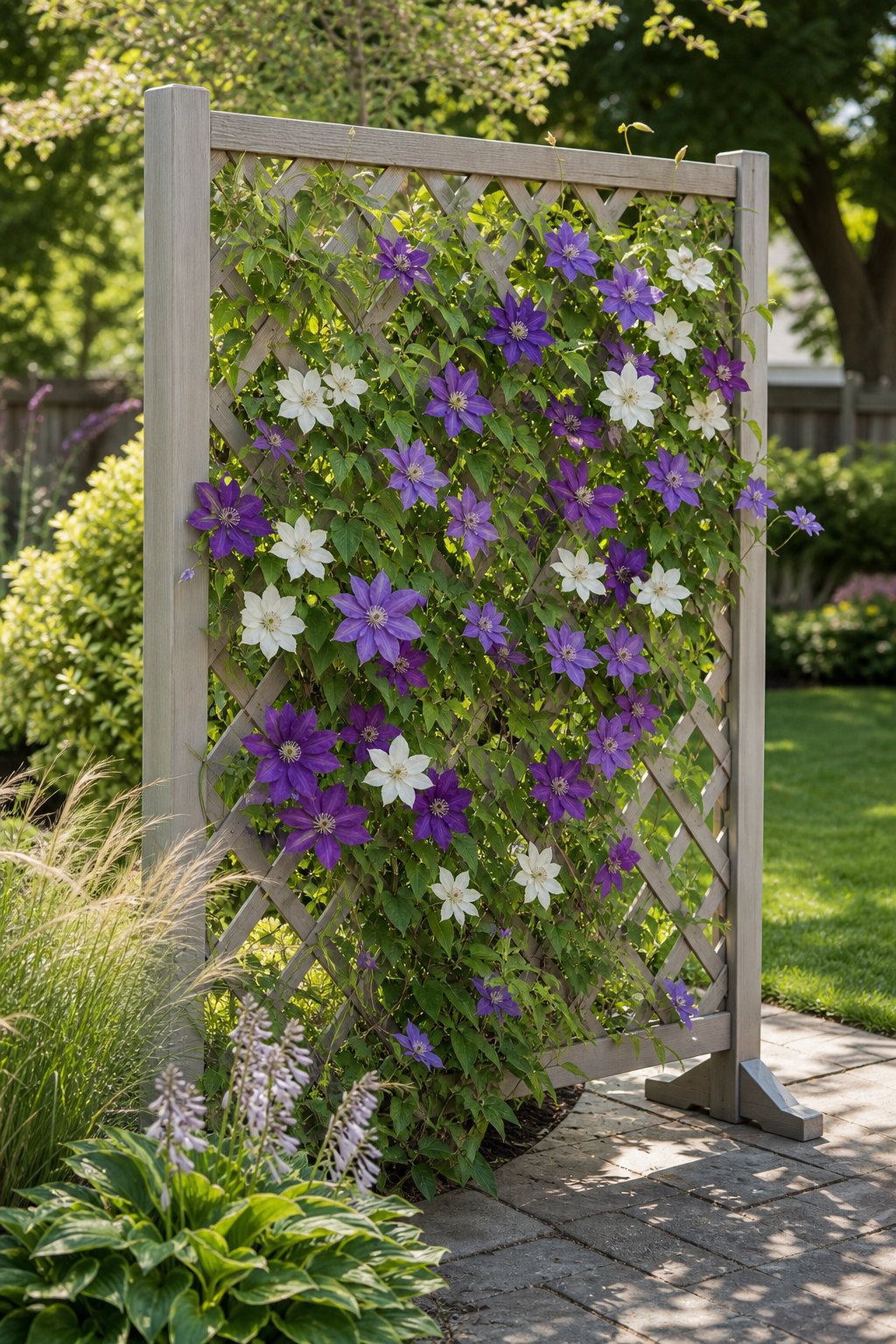
6. Freestanding Lattice Screen With Clematis
A freestanding lattice screen gives you flexible privacy around a seating area, path, or vegetable garden. Clematis adds seasonal flowers while the lattice keeps the structure airy. You can move the screen’s position during a garden redesign if its posts sit in large planters or removable ground sleeves.
Use a thick, weather-resistant lattice and anchor it against strong wind. Plant clematis with its roots shaded and its upper growth in sun. Tie stems loosely as they climb, since tight ties can cut into growing vines. Paint the frame before planting to protect every edge and make future care easier.
Expert Tip From MrPlanter: “Pair clematis with a low plant that shades the soil around its roots. Leave room behind the lattice so you can prune and repair it.”
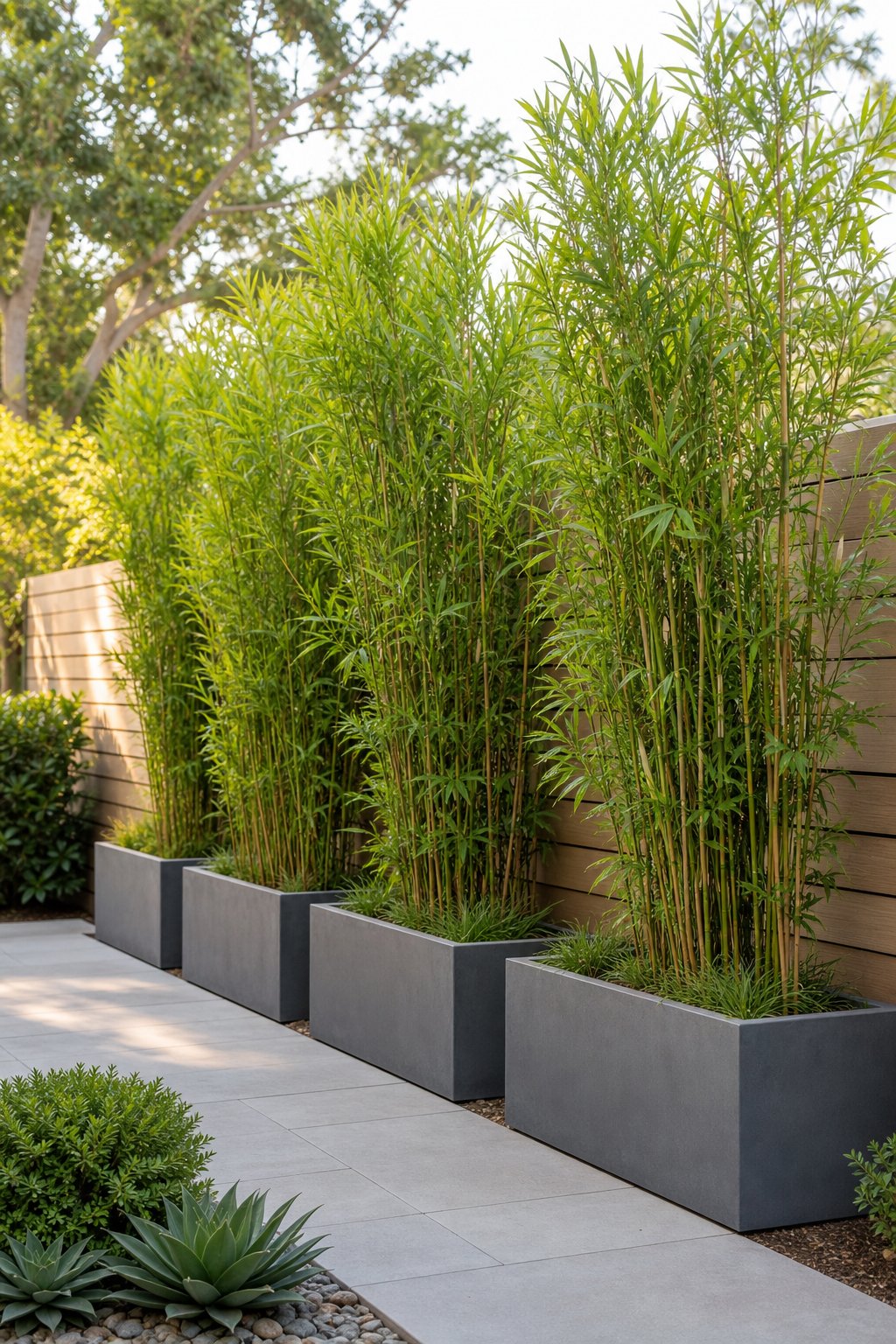
7. Tall Planter Boxes Filled With Clumping Bamboo
Tall planter boxes filled with clumping bamboo create a movable green wall for patios and narrow yards. The containers define a private zone while letting you change the layout for parties, seasonal chores, or new furniture. Clumping varieties spread in tight circles, making them easier to manage than running bamboo.
Choose containers with drainage holes, sturdy walls, and enough weight to resist tipping. Use quality potting soil and water deeply during hot weather. Bamboo needs regular feeding during active growth, and dry leaves should be cleared from the soil surface. These bamboo fence ideas offer more ways to use the plant.
Expert Tip From MrPlanter: “Put the planters on locking casters only when the containers stay stable while moving. A heavy base keeps tall bamboo from becoming a sail.”
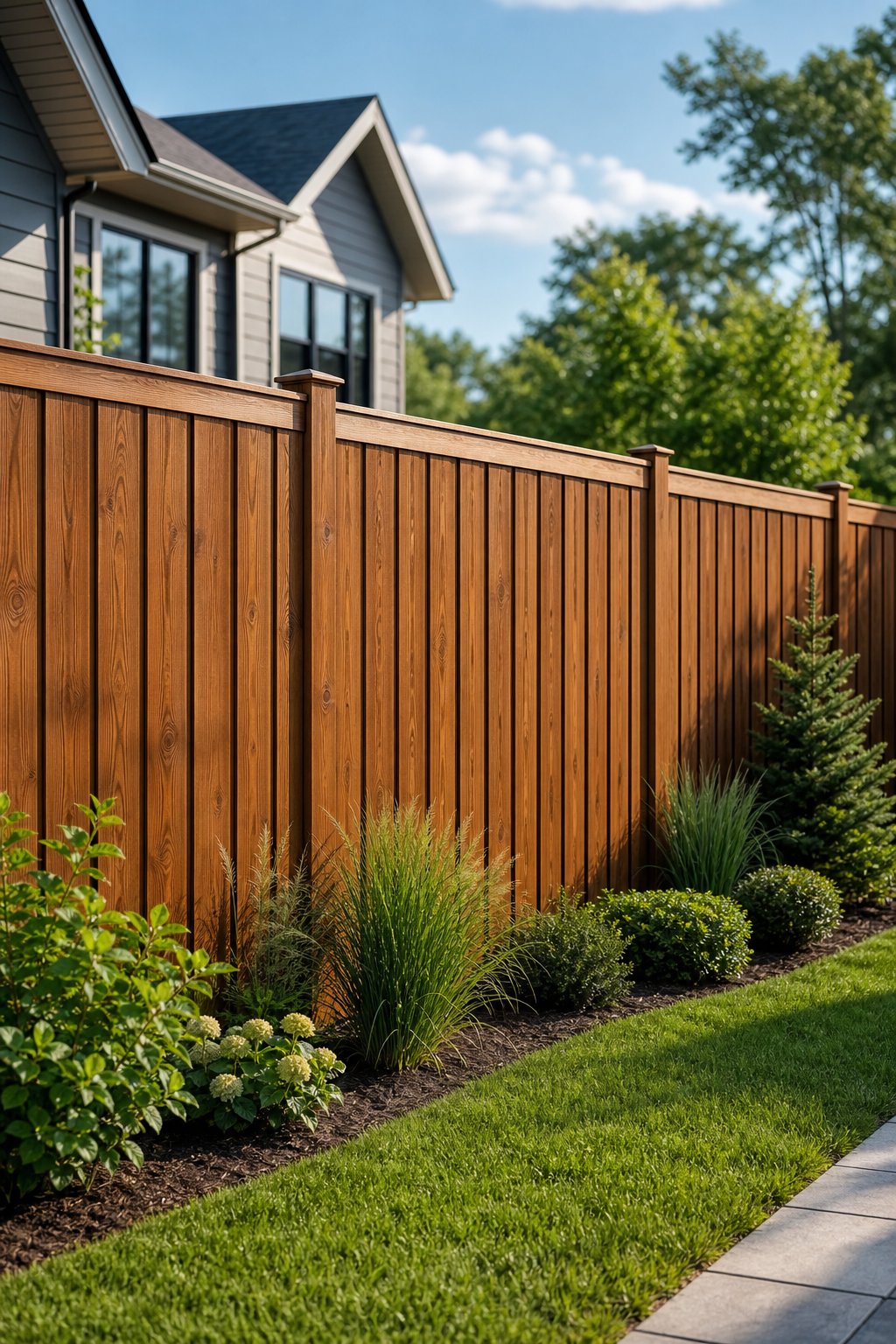
8. Board-on-Board Wooden Privacy Fence
Board-on-board construction delivers close visual coverage from both sides of the fence. Overlapping boards hide the gaps that appear when you view a standard fence at an angle, giving your garden a more enclosed feel. The layered pattern also creates a strong, traditional wood texture.
Use pressure-treated posts and outdoor-rated fasteners, then seal the boards after the wood dries. Keep the fence slightly above soil level to reduce splashback and rot. Add a narrow planting bed with shade-tolerant shrubs to soften the base without blocking access for repairs. For more styles, explore these wood fence ideas.
Expert Tip From MrPlanter: “Build a small sample panel before ordering all the boards. You’ll spot spacing, stain color, and height issues while changes are still easy.”
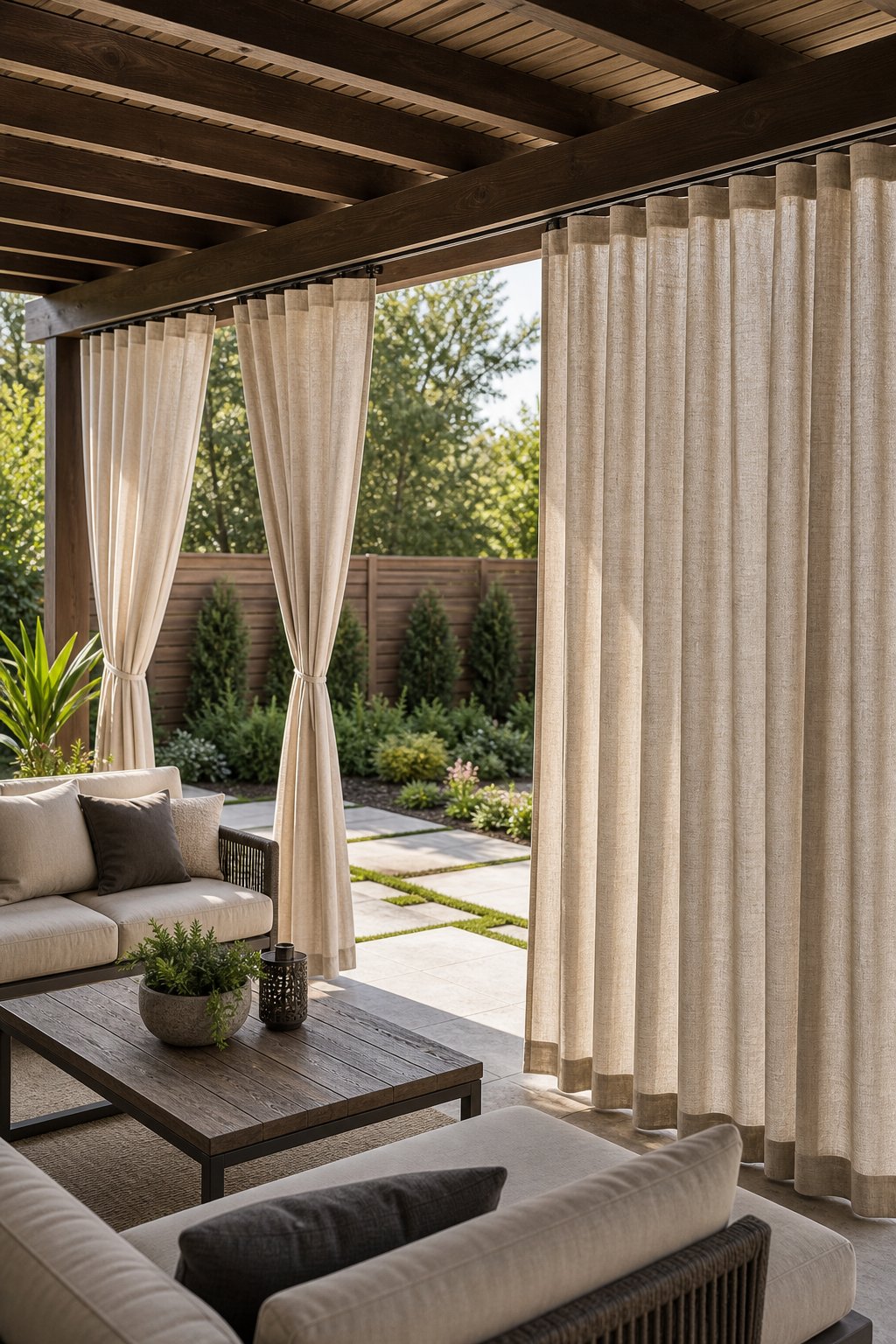
9. Outdoor Curtain Panels on a Pergola
Outdoor curtains let you control privacy whenever you need it around a pergola. Draw the panels during meals or evening gatherings, then open them to restore airflow and garden views. Neutral fabric keeps the structure calm, while a richer color gives the patio a room-like feel.
Select solution-dyed fabric with rust-resistant grommets and a strong curtain track. Add tiebacks so wind doesn’t turn the panels into sails. Wash or brush off the fabric according to its care label, and store it during severe winter weather. A pergola with a roof can also provide extra shade and rain protection.
Expert Tip From MrPlanter: “Install a bottom tie or weighted hem in windy yards. It keeps the curtains from wrapping around posts when the breeze picks up.”
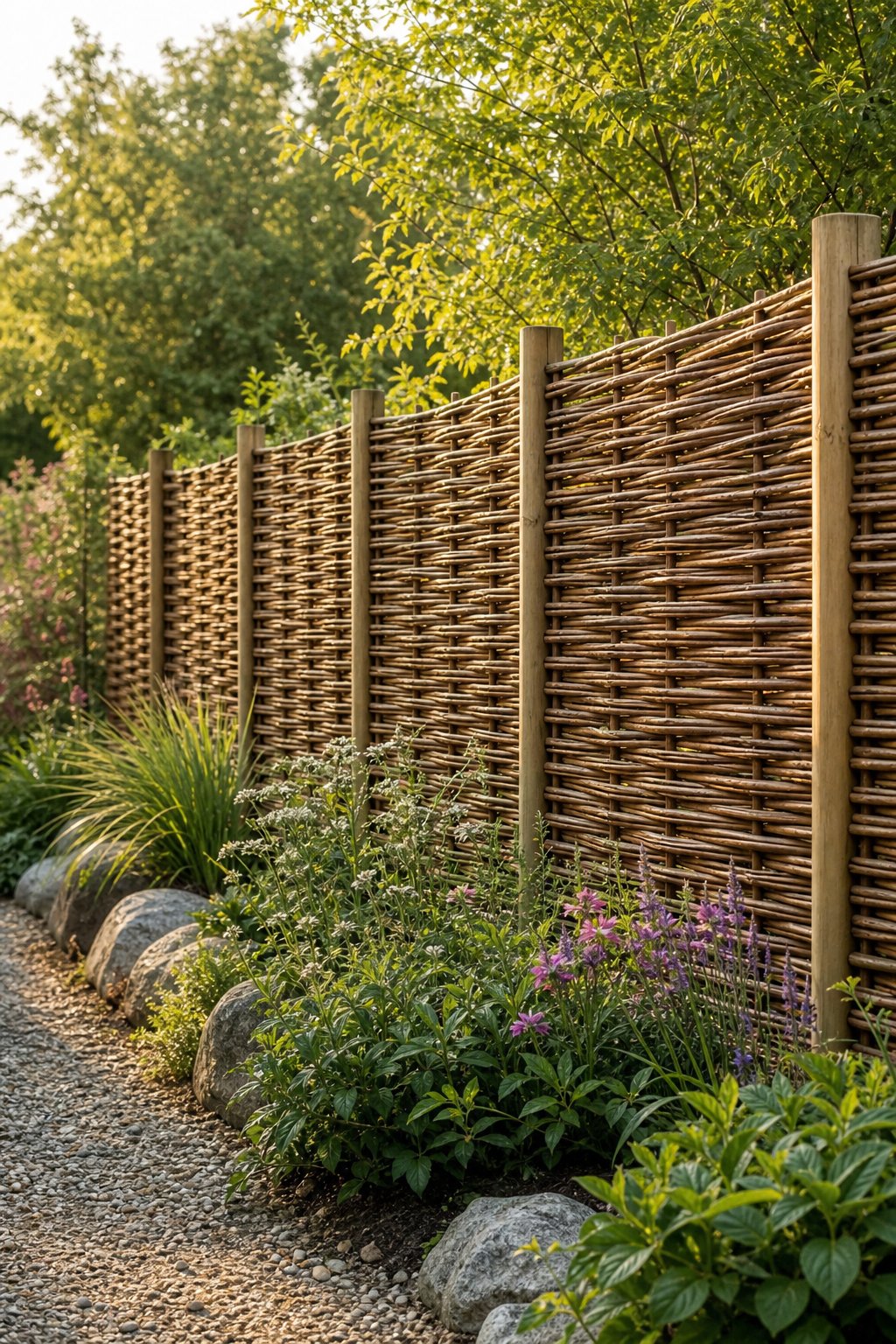
10. Willow Hurdle Fence Panels
Willow hurdle panels bring a rustic, handwoven texture to garden boundaries and pathways. Their warm brown stems work well beside cottage planting, gravel paths, and informal seating areas. The woven gaps provide partial screening while keeping the space light and open.
Fix each panel to solid posts with galvanized wire or outdoor screws. Keep the willow away from standing water and trim plants that press against it. The material weathers to a silvery tone over time, which suits natural gardens. Replace damaged sections early because broken rods can loosen neighboring pieces.
Expert Tip From MrPlanter: “Raise the bottom edge above mulch and soil to slow rot. A narrow gravel strip makes the panels last longer and keeps trimming simple.”
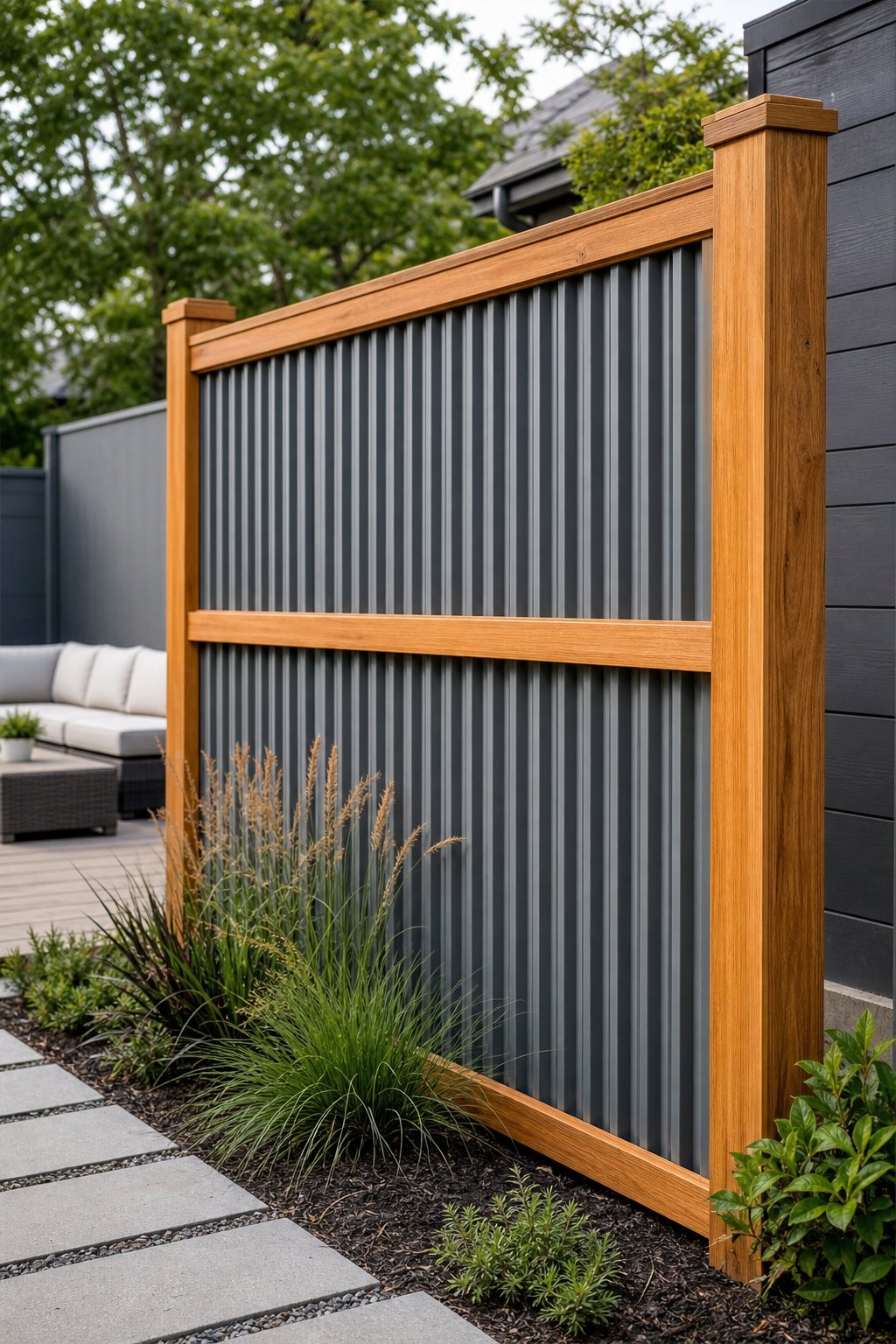
11. Corrugated Metal and Wood Frame Screen
Corrugated metal framed with wood creates a durable screen with a warm industrial style. The metal blocks views closely, while timber posts and rails stop the surface from feeling harsh. This pairing works well behind modern planting, gravel, or a simple patio.
Use galvanized or factory-coated panels rated for exterior use. Pre-drill holes and fit washers so the screws don’t tear the metal during wind movement. Seal every cut in the wood, then leave a small clearance below each panel for drainage. For more material combinations, see these corrugated metal fence ideas.
Expert Tip From MrPlanter: “Run the corrugations vertically when you want extra height without a bulky look. Add timber caps to protect sharp upper edges.”
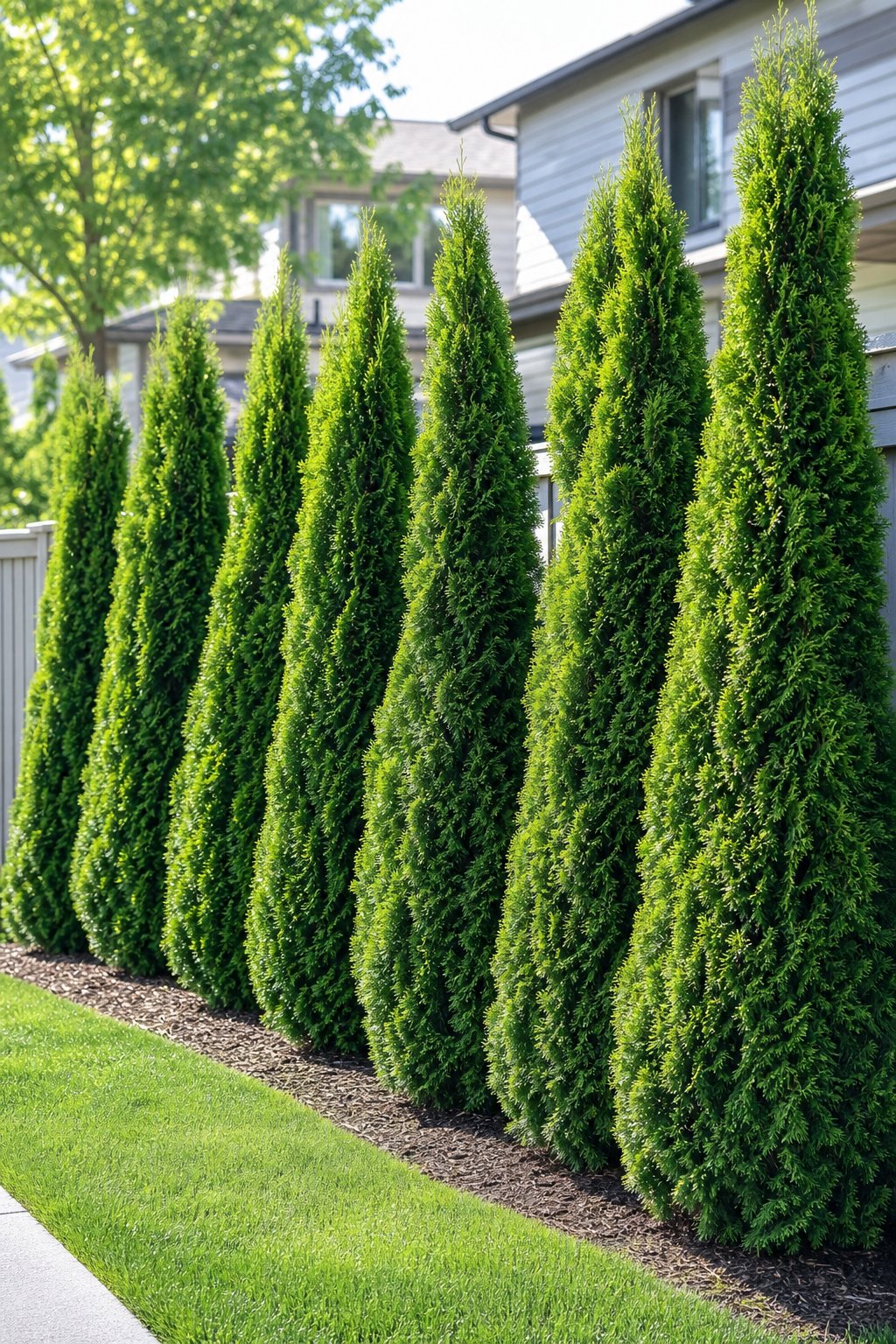
12. Hedge Screen With Arborvitae Trees
Arborvitae form a dense evergreen hedge that provides year-round cover along a yard boundary. Their upright shape saves space, while repeated planting creates a calm green wall behind lawns, borders, or play areas. Choose healthy plants with enough room to reach their mature width.
Prepare the soil with compost and install drip irrigation if the site dries quickly. Space trees according to the variety’s mature size, since tight planting leads to crowding and weak airflow. Prune lightly to keep a tapered shape, with the base wider than the top so lower branches receive light.
Expert Tip From MrPlanter: “Measure mature width before setting the spacing. A hedge that has room to breathe stays fuller near the ground.”
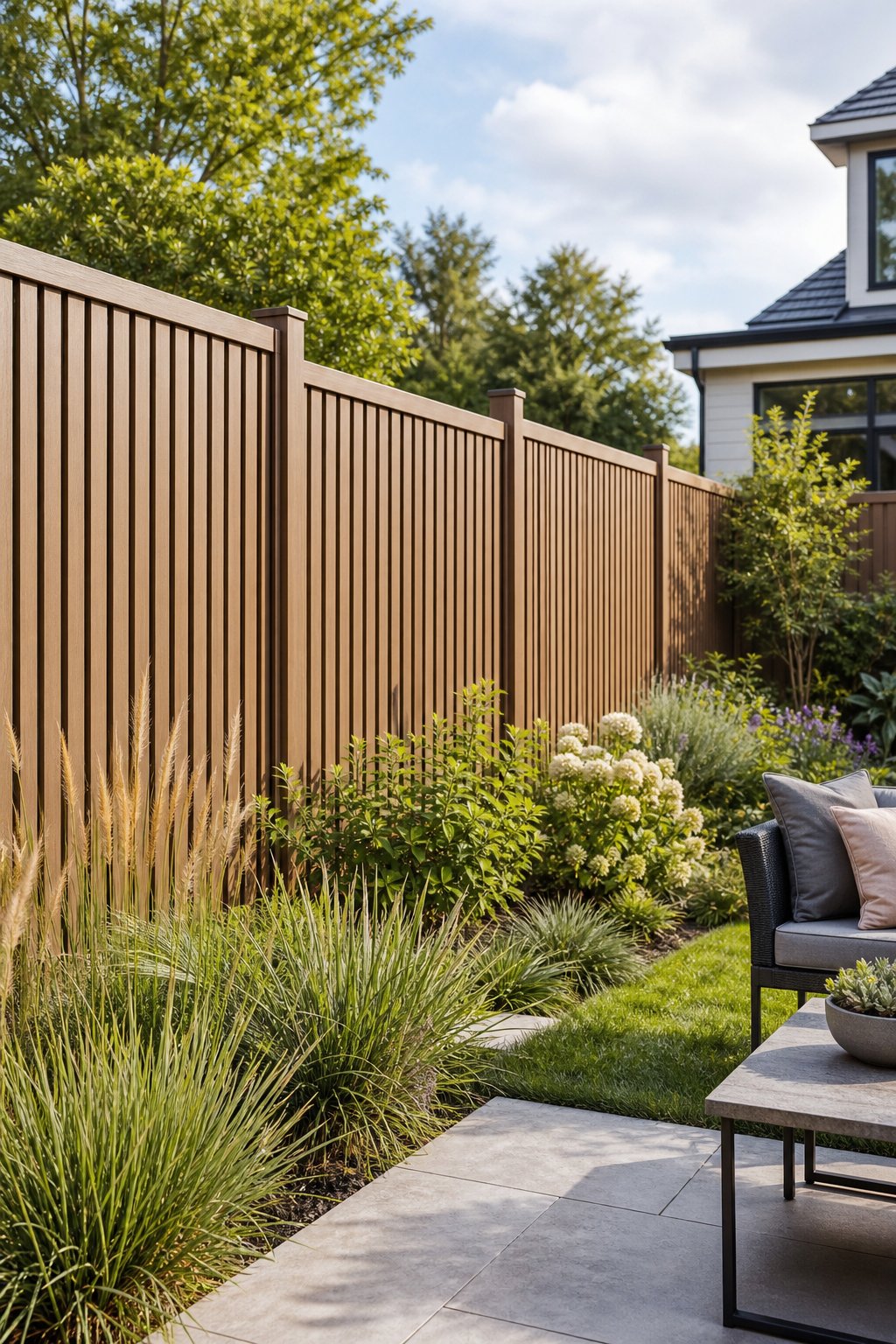
13. Decorative Composite Fence Panels
Composite panels provide steady coverage with a low-maintenance finish that suits busy garden spaces. They resist peeling and insect damage, and many designs mimic painted wood or textured boards. Color options range from soft gray to deep brown, so you can connect the fence to your patio or house trim.
Follow the manufacturer’s spacing instructions because composite expands with temperature changes. Use the matching posts and caps for a neat edge, then place planting beds far enough away for future cleaning. Composite works well where you want consistent lines and don’t want annual staining.
Expert Tip From MrPlanter: “Order a sample before choosing the color. Composite can look different in bright sun than it does under store lighting.”
14. Vertical Garden Wall With Modular Planters
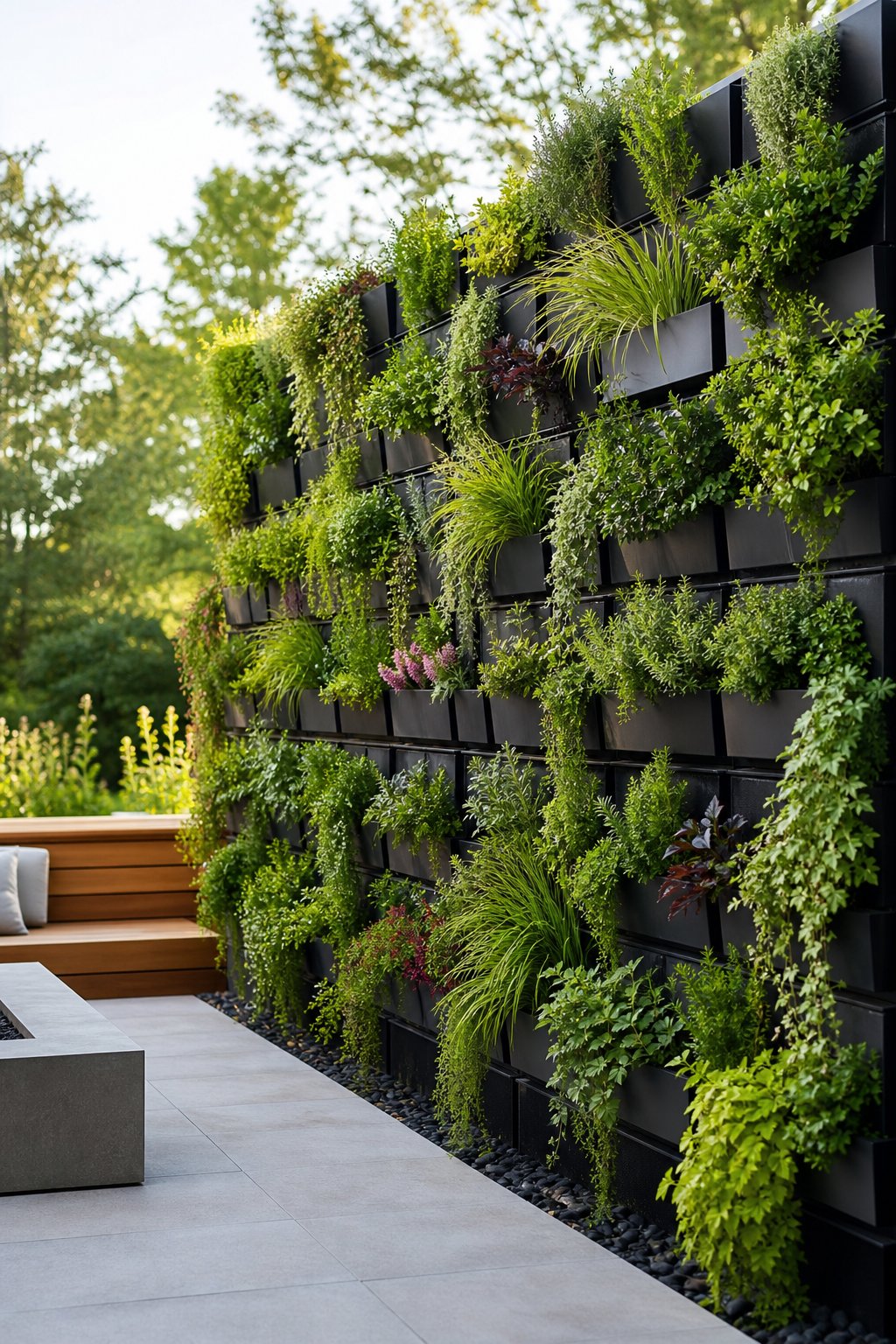
Modular planters turn a fence into a living wall with herbs, flowers, and trailing plants. The planting pockets break up hard surfaces while adding cover at eye level around patios or balconies. This approach works best where you can provide reliable water and easy access.
Choose a rail system rated for the full weight of wet soil and mature plants. Use lightweight growing mix, install drip lines, and group plants with similar water needs. Herbs and compact flowers suit sunny walls, while ferns and shade plants fit dimmer corners. Keep the lowest modules high enough to avoid splash from the ground.
Expert Tip From MrPlanter: “Plant the top row with drought-tolerant choices because it dries first. Label watering zones before the wall fills with foliage.”
15. Repurposed Pallet Wood Screen
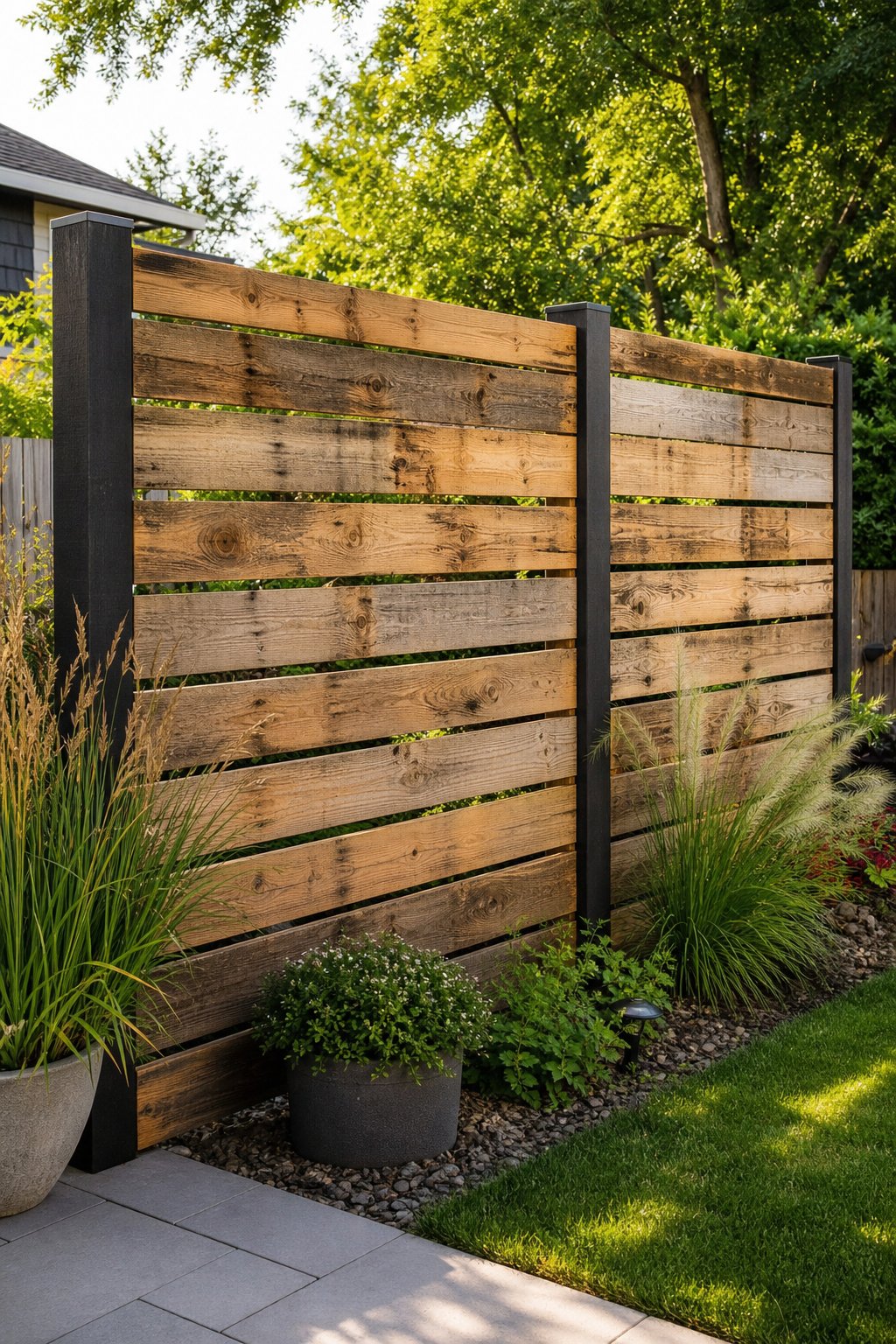
A pallet wood screen adds character at a low material cost when you prepare the boards carefully. The varied grain gives a relaxed, reclaimed look beside vegetable beds or outdoor seating. You can keep the boards weathered, stain them one color, or paint a simple pattern across the surface.
Use pallets marked for safe handling and remove nails before sanding. Avoid boards with chemical treatment marks or signs of oil contamination. Build a rigid frame, seal every exposed surface, and keep the structure off damp ground. Uneven board widths make each screen unique, though careful layout still keeps it tidy.
Expert Tip From MrPlanter: “Sand the edges until you can run a gloved hand across them safely. Use stainless or coated screws so rust doesn’t streak the wood.”
16. Gabion Wall Filled With Local Stone
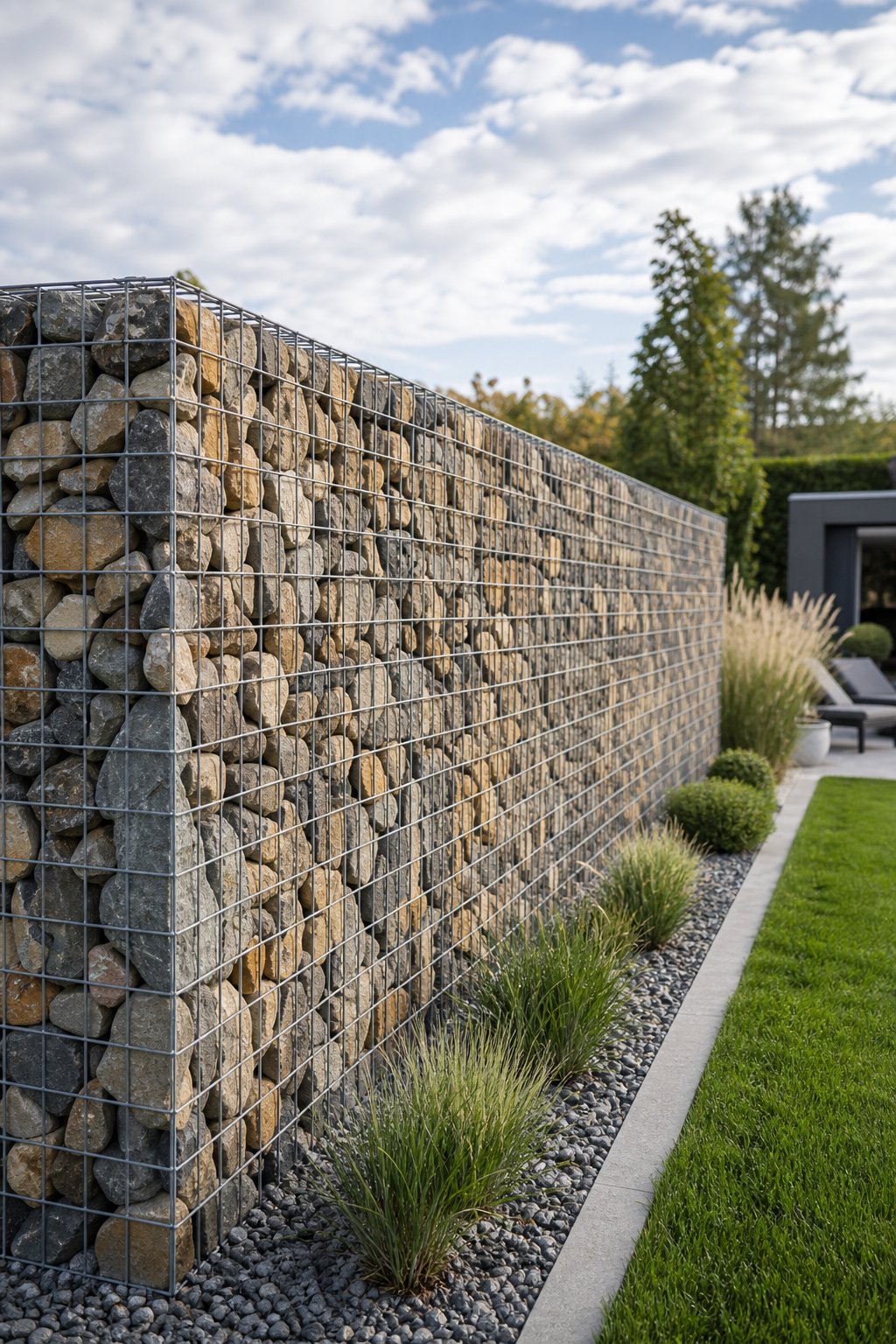
A gabion wall uses wire baskets filled with stone to create a sturdy, textured garden boundary. The open metal structure gives the wall a lighter look than poured masonry, while the stone adds sound reduction and strong visual separation. Local rock can connect the screen to nearby paths and retaining walls.
Set the baskets on a level, well-drained base and use stone sized to stay inside the mesh. Fill the visible faces neatly, then pack the center with suitable rubble if the basket design allows it. A cap or planted edge softens the top line and helps the wall feel part of the garden.
Expert Tip From MrPlanter: “Choose stone before ordering baskets so the sizes work together. Compact the base firmly, since a settling wall is difficult to straighten later.”
17. Weatherproof Roller Shades for a Covered Patio
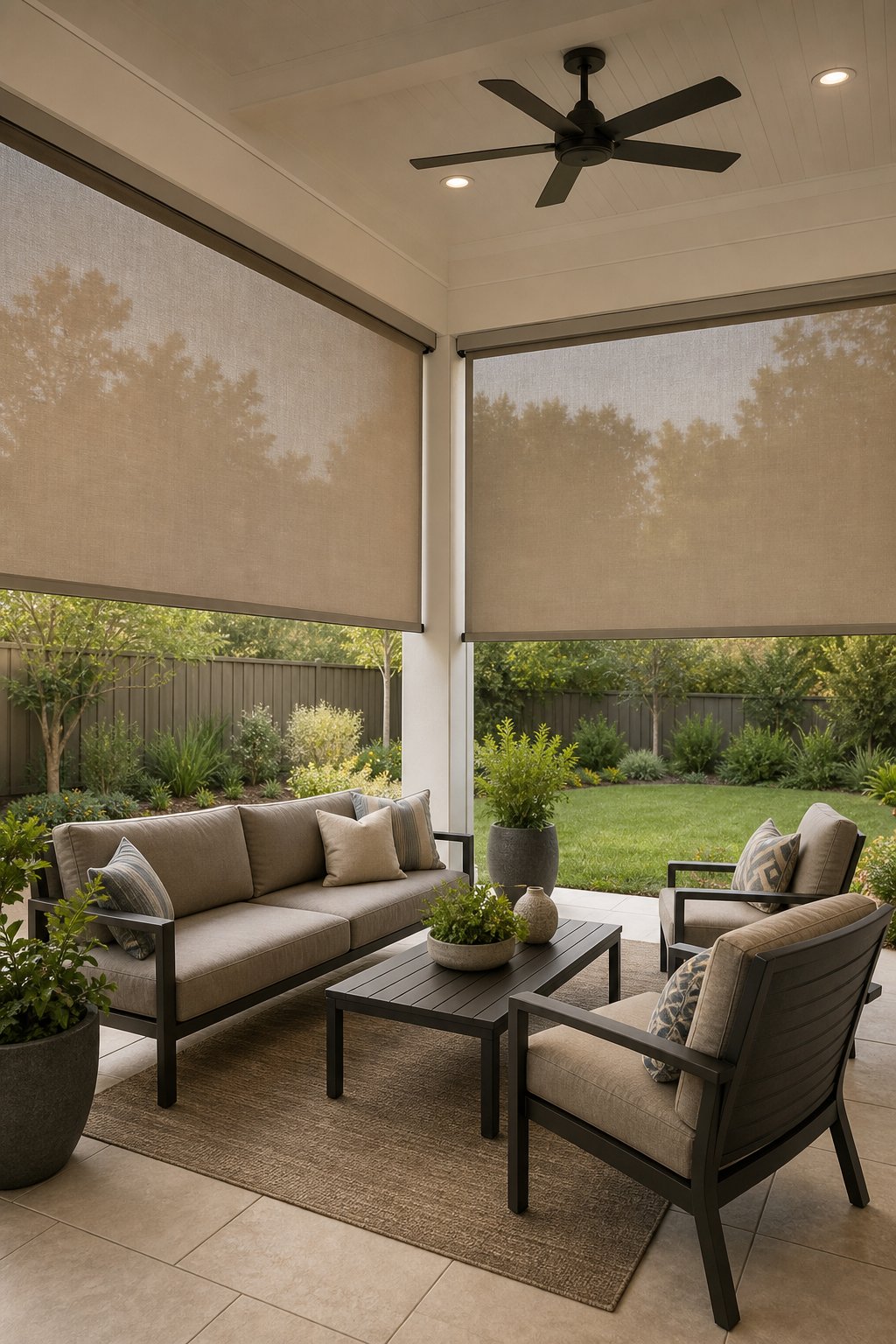
Weatherproof roller shades give a covered patio adjustable privacy with a compact, tidy profile. Lower them during bright afternoons or gatherings, then roll them up to open the yard again. Mesh fabric filters light and airflow, while solid outdoor fabric provides stronger visual cover.
Attach the shades to sound pergola beams or patio framing, and confirm the hardware supports the unit’s weight. Choose mildew-resistant fabric and clean it with the method recommended by the maker. Side channels improve coverage where wind pushes the shade away from the frame.
Expert Tip From MrPlanter: “Measure the opening in several places before ordering. Install the roll high enough to clear doors, lights, and nearby plant growth.”
How to Choose a Fence Screen
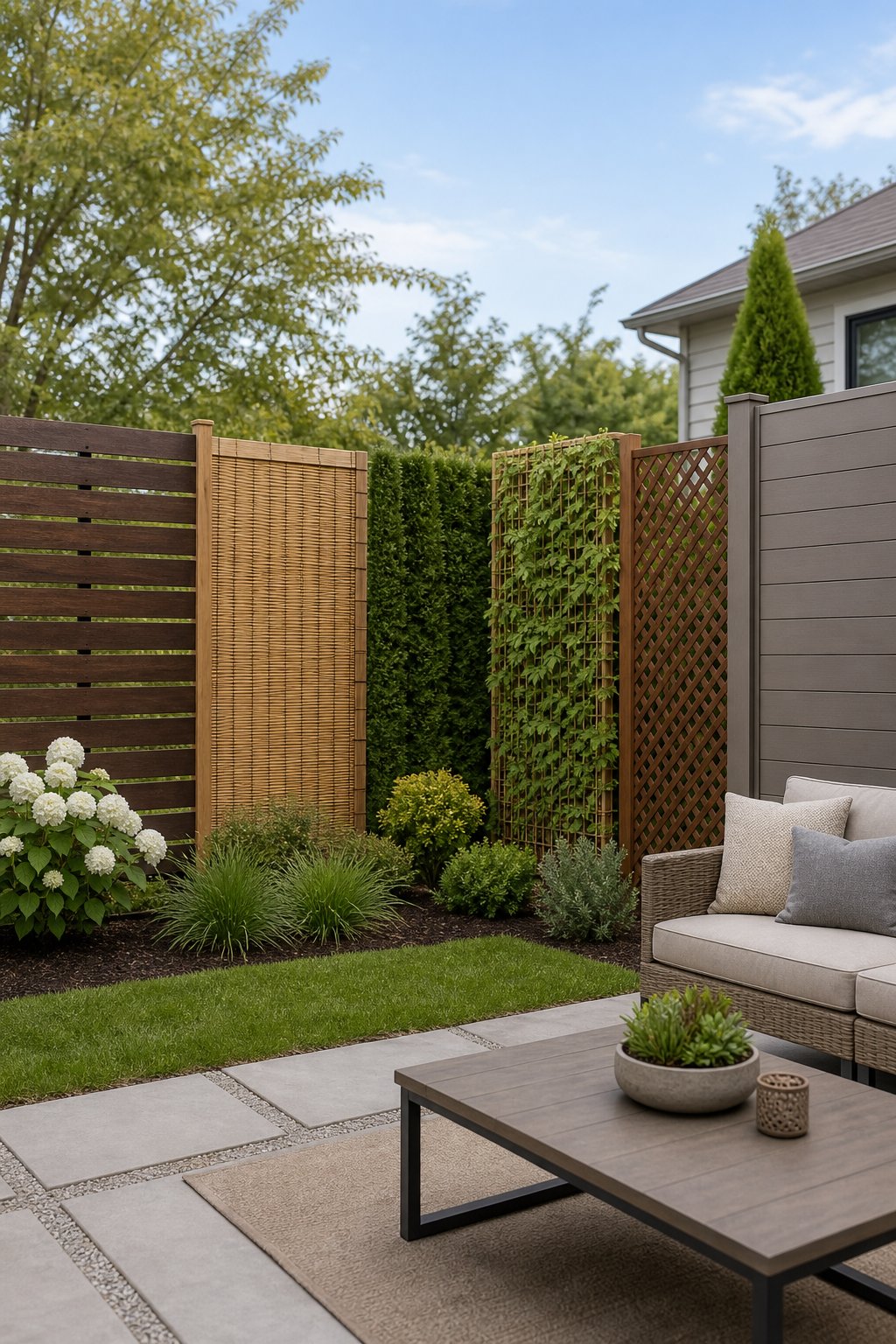
The best fence screen matches the sightline you need to block, the weather your garden receives, and the amount of upkeep you’ll accept. Use the table to compare the main choices before measuring your space.
| Screen type | Privacy | Maintenance | Wind performance | Best setting |
|---|---|---|---|---|
| Cedar slats | High | Medium | Good with gaps | Backyard |
| Jasmine trellis | Medium | High | Good | Garden edge |
| Bamboo reed | High | Low | Medium | Existing fence |
| Ivy mesh | High | High | Medium | Shaded boundary |
| Laser-cut metal | Medium | Low | Good | Modern patio |
| Lattice with clematis | Medium | Medium | Medium | Seating area |
| Bamboo planters | High | High | Medium | Patio |
| Board-on-board wood | High | Medium | Good | Yard boundary |
| Outdoor curtains | Adjustable | Medium | Medium | Pergola |
| Willow hurdles | Medium | Medium | Medium | Cottage garden |
| Corrugated metal | High | Low | Good | Modern backyard |
| Arborvitae hedge | High | High | Good | Property edge |
| Composite panels | High | Low | Good | Busy garden |
| Modular planters | Medium | High | Medium | Patio wall |
| Pallet wood | Medium | High | Medium | DIY garden |
| Gabion wall | High | Low | Excellent | Sloped boundary |
| Roller shades | Adjustable | Medium | Medium | Covered patio |
What Level of Privacy Do You Actually Need?
Measure the sightline from nearby windows, sidewalks, and seating areas before choosing a height. Eye-level screening often handles a patio while leaving the sky open. A full-height barrier gives stronger coverage along a property line, though it needs better posts and careful local checks.
Check privacy at standing and seated positions. A screen that works beside a dining table may leave a lounge chair exposed. Plants, trellis panels, and slatted sections help fill specific gaps without enclosing every part of the garden.
Which Materials Suit Your Garden’s Climate?
Match the material to moisture, sun, salt air, freezing temperatures, and wind. Cedar needs sealing, fabric needs drying and storage, and living screens need irrigation during establishment. Metal and composite require less routine coating, while plants need pruning and room for mature growth.
Look closely at drainage before adding planters or dense hedges. Water trapped against wood speeds decay, and saturated containers become heavy enough to strain mounts. Choose rust-resistant hardware near sprinklers, pools, or coastal air.
Should the Screen Be Permanent, Movable, or Rental-Friendly?
Permanent panels suit property boundaries and long-term privacy goals. Freestanding planters, curtains, and roller shades give you more control when you rent, host events, or change the garden layout. A movable option also lets you follow seasonal sun and wind patterns.
Check the weight, base design, and storage needs before choosing portable screening. Tall planters need a stable footprint, and fabric panels need a dry place during storms. For a broader planning guide, compare these privacy fence design ideas.
Before You Install Garden Screening
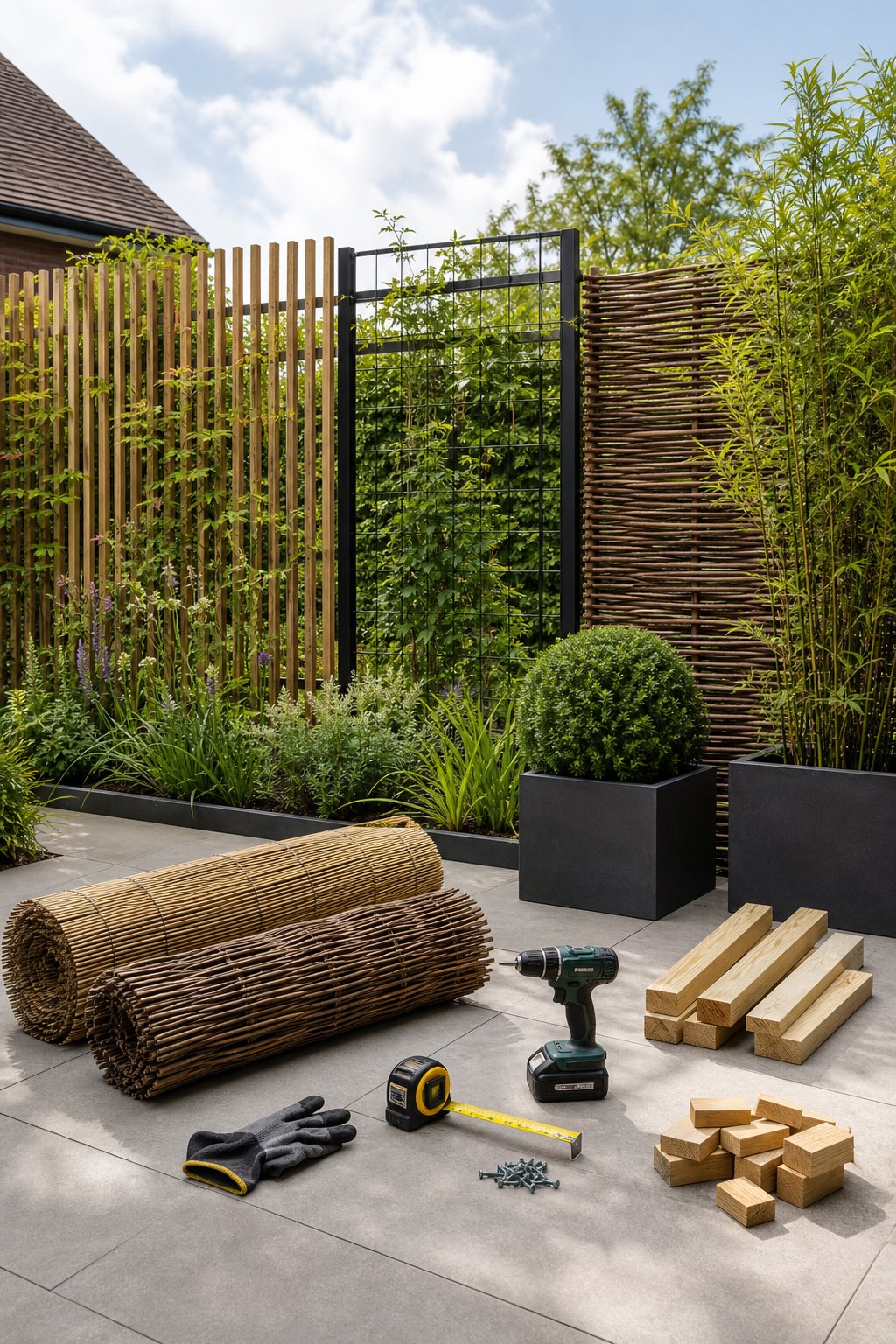
Prepare the site before buying panels, plants, or hardware. A sound base, legal height, and clear garden plan prevent expensive changes after installation.
Check Local Height Limits and HOA Rules
Look up city, county, and HOA rules before setting posts or ordering tall plants. Fence limits can change between front yards, side yards, and rear property lines, and corner lots may have visibility rules near driveways. Some communities also regulate materials, finishes, and placement.
Confirm the property line with your survey or local records. Talk with neighbors when the screen sits close to a shared boundary, then keep written approval for any shared-cost or shared-fence arrangement.
Plan for Wind, Drainage, and Secure Footings
Wind pressure increases as a screen becomes taller and more solid. Use strong posts, suitable concrete or ground anchors, and gaps where the design allows airflow. Freestanding planters need broad bases, while curtains and shades need secure tracks and tiebacks.
Call before digging to locate buried utilities. Grade water away from posts, keep wood above soil, and add gravel beneath willow or pallet screens. A level string line helps you catch leaning posts before the panels go on.
Match the Screen to Your Backyard, Front Yard, or Garden Zone
Use your backyard for taller privacy, a front yard for lighter screening, and a garden zone for supports that help plants grow. Repeat one finish or color so separate screens feel connected. Keep gates, paths, hose bibs, and utility access clear.
Place dense screens beside the areas that need cover most. Leave sunny sections open for vegetable beds and pollinator plants, and avoid blocking windows that depend on daylight. Sketch the view from each seat before installation, then mark post locations with stakes.