As an Amazon Associate, MrPlanter.com earns from qualifying purchases.
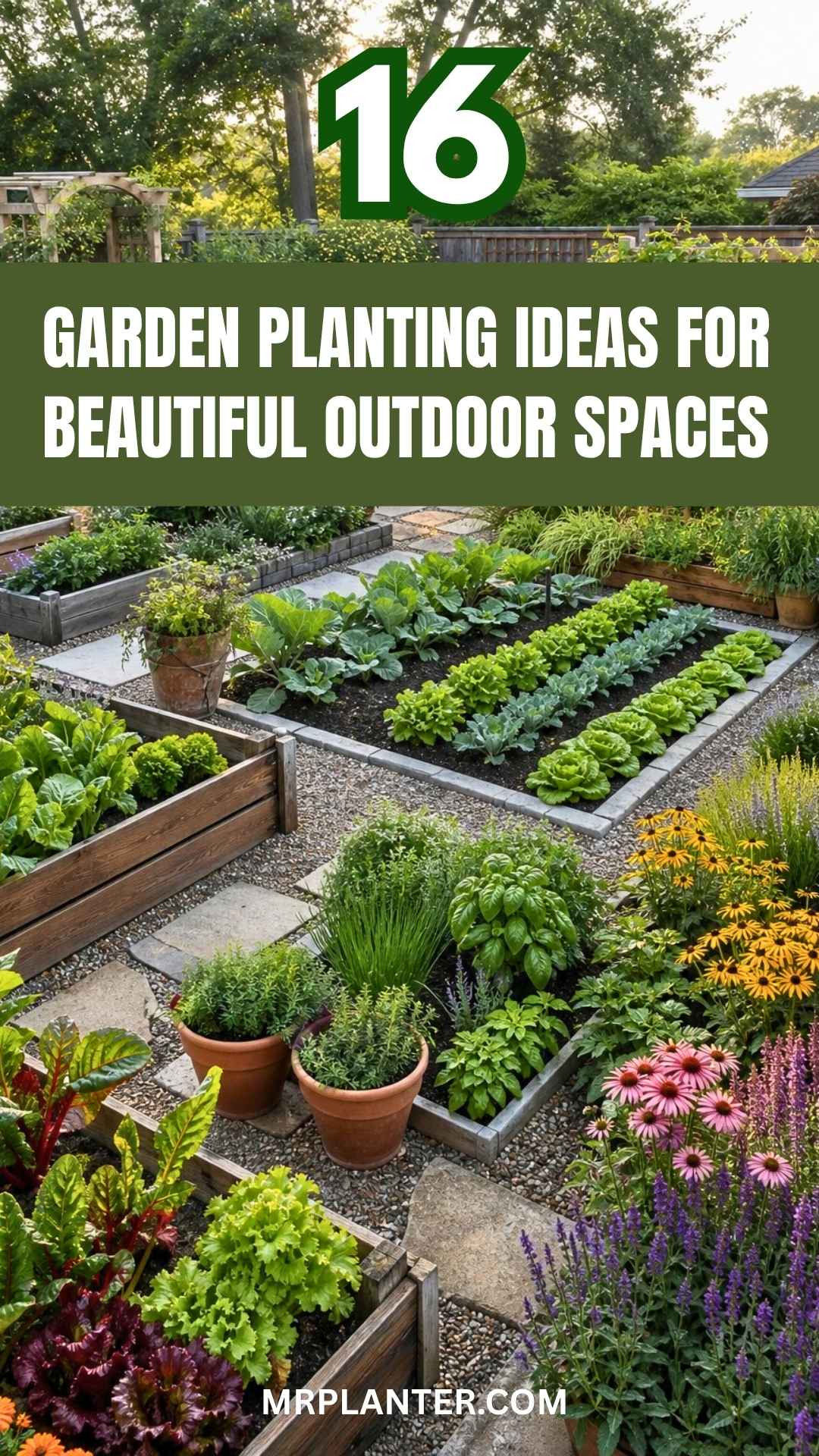
A beautiful garden starts with a planting plan that matches your space, soil, and daily habits. With the right mix of flowers, food crops, shrubs, and climbers, you can make a small backyard feel full or give a broad yard clear shape and purpose.
The best 16 garden planting ideas combine plants with different heights, bloom times, textures, and care needs, so your outdoor space stays useful and attractive through the seasons.
Start with the conditions you already have, then choose plants that enjoy them.
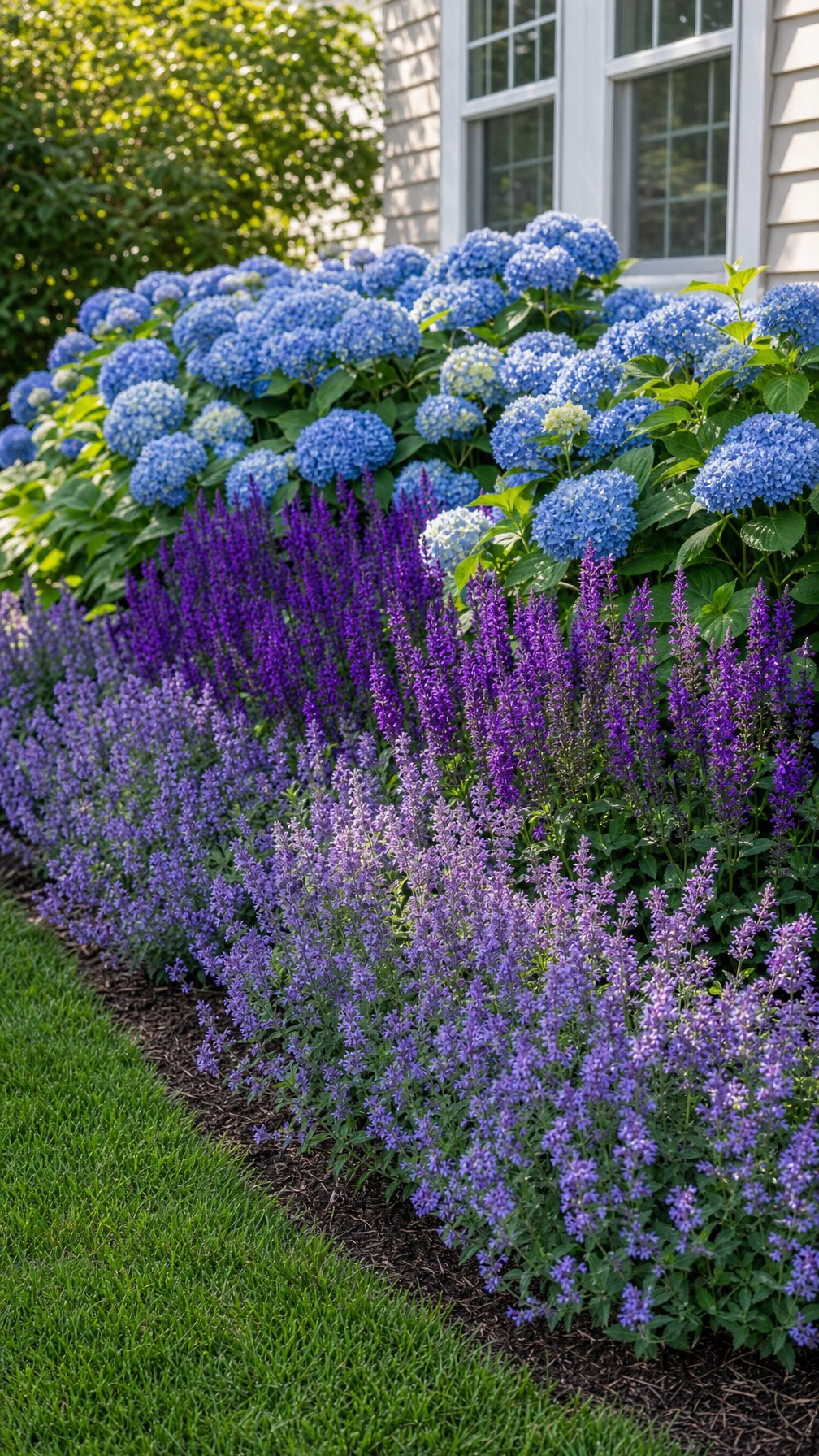
1. Layer a Mixed Border With Hydrangea, Salvia, and Nepeta
A flat flower bed can feel sleepy, so give each plant a different height. Place hydrangeas toward the back, salvia through the middle, and nepeta along the edge for a soft, flowing border. Blue and purple flowers create a cool color scheme, while the broad hydrangea leaves add weight.
Leave enough room for mature growth, especially around hydrangeas. Keep the soil evenly moist and add compost before planting. Regular deadheading keeps salvia and nepeta tidy and encourages more flowers.
Expert Tip From MrPlanter: “Plant nepeta where its stems can spill over the bed edge. Trim it after the first flush of flowers for a fresh second display.”
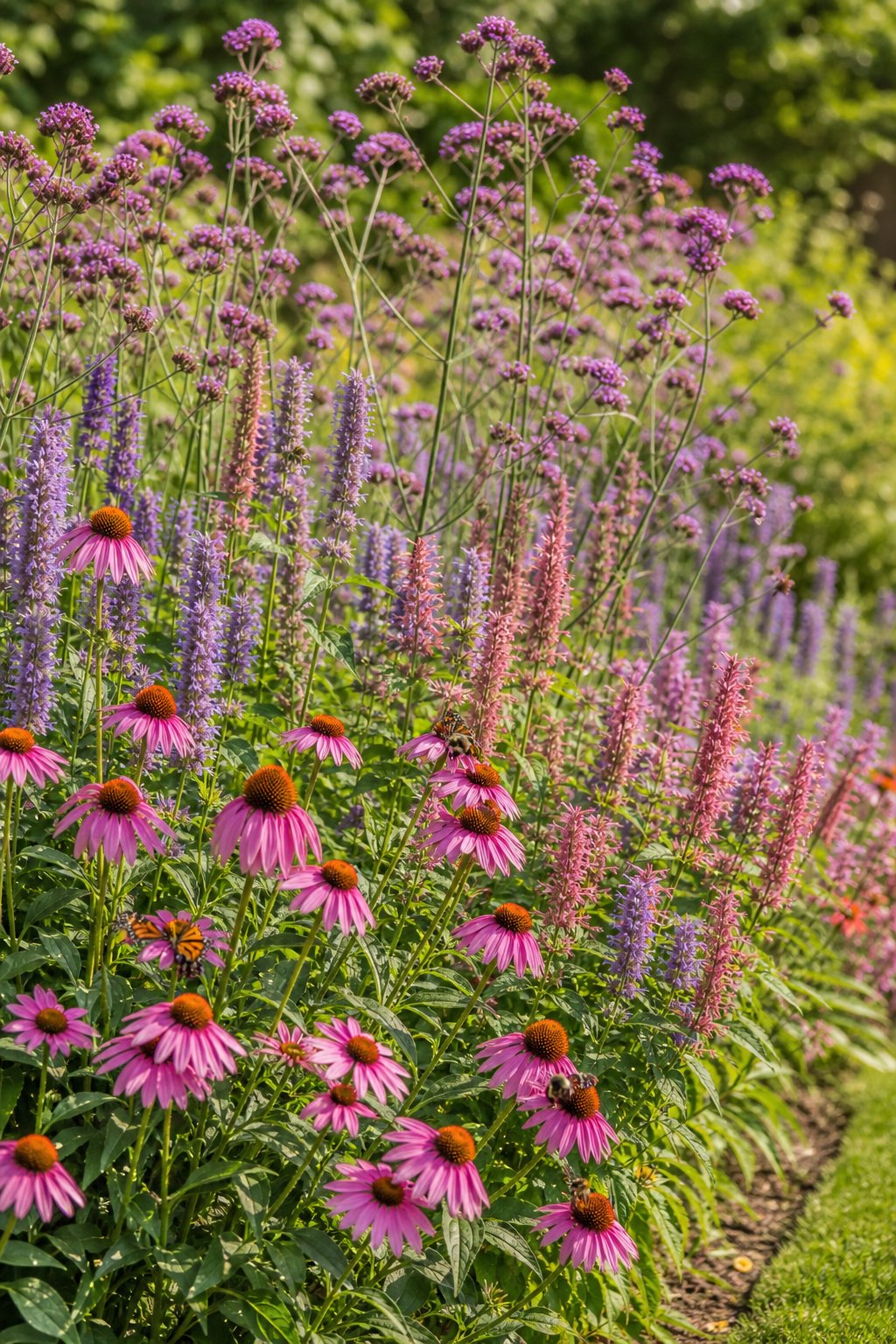
2. Create a Pollinator Border With Echinacea, Verbena Bonariensis, and Agastache
A quiet flower bed becomes a lively feeding stop when you mix echinacea, Verbena bonariensis, and agastache. Echinacea gives bees sturdy landing places, while tall verbena adds airy height and movement. Agastache brings fragrant blooms that keep the color going through summer.
Choose a sunny spot with well-drained soil. Group each plant in small clusters so pollinators can find flowers easily. Leave spent seedheads on echinacea into fall, since birds enjoy the seeds and the stems add winter texture.
Expert Tip From MrPlanter: “Skip pesticides around flowering plants when possible. A shallow dish of water with pebbles gives visiting insects a safe drink.”
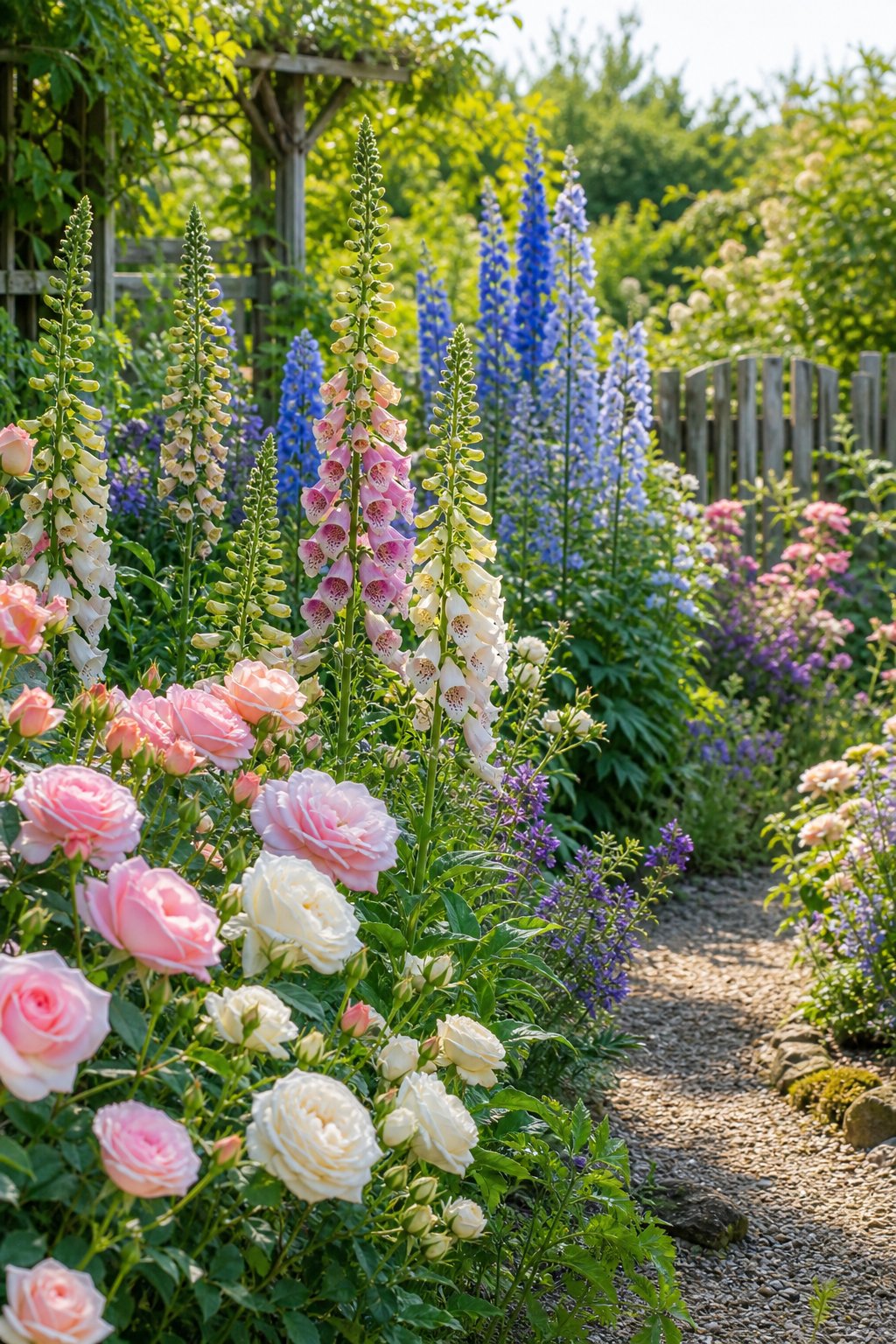
3. Plant a Sunny Cottage-Garden Mix of Roses, Foxgloves, and Delphiniums
A sunny border gains old-fashioned charm from roses backed by foxgloves and delphiniums. Roses supply lasting structure, foxgloves bring tall spires, and delphiniums add a clear blue note that makes the whole bed feel cheerful.
Give roses rich soil, good air movement, and room for pruning. Stake delphiniums before storms flatten them, and let foxgloves scatter a few seeds after flowering. For more ideas in this style, explore these cottage garden ideas.
Expert Tip From MrPlanter: “Place foxgloves in loose groups instead of a straight row. Their uneven height makes the border feel relaxed and welcoming.”
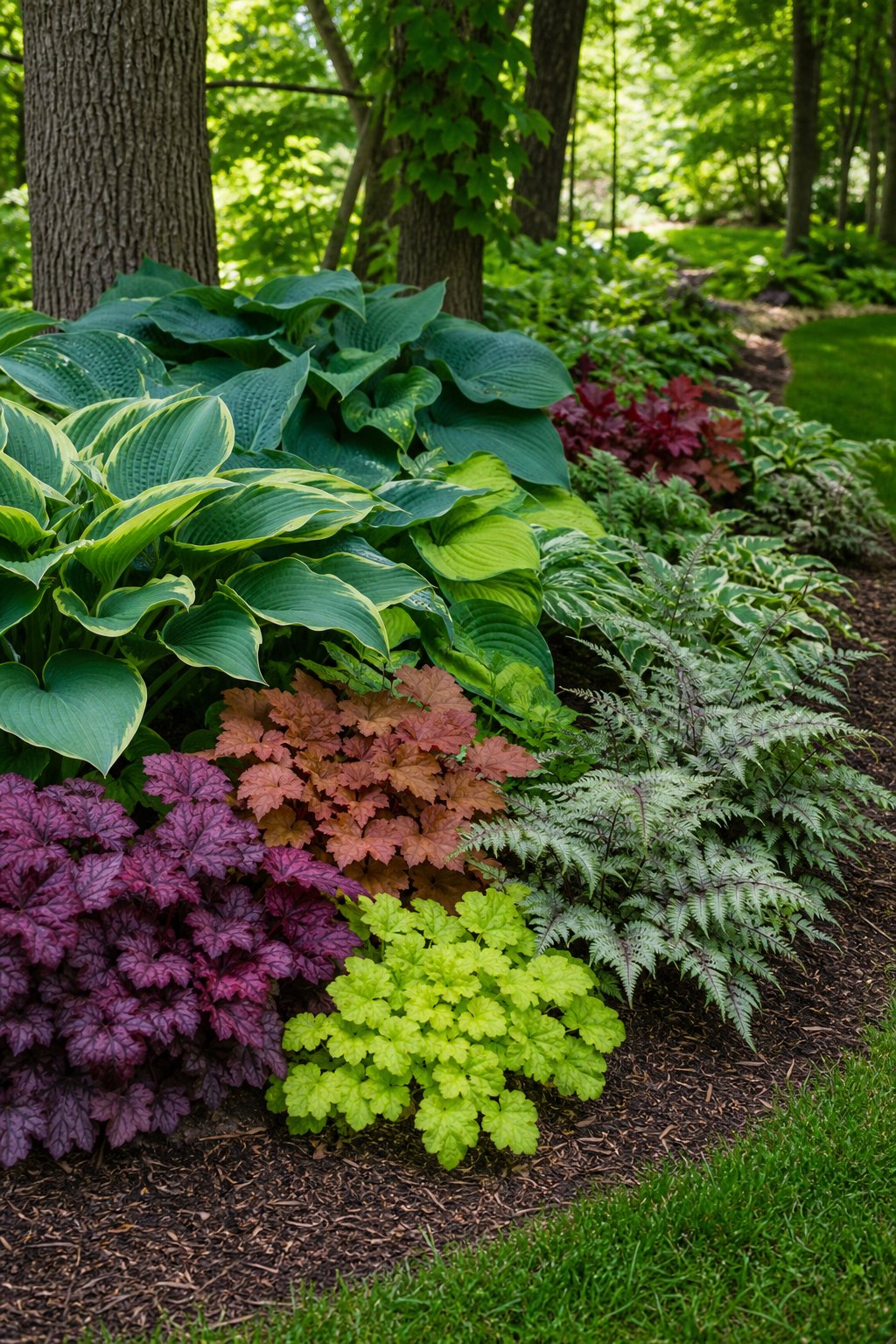
4. Build a Shade Border With Hosta, Heuchera, and Japanese Painted Fern
Shade becomes a garden feature when hosta, heuchera, and Japanese painted fern bring different leaf shapes to the bed. Hosta supplies broad leaves, heuchera adds bright color near the ground, and the fern contributes delicate silver markings.
Use rich, moisture-holding soil and protect young plants from drying winds. Give each plant enough air space to reduce leaf problems. Slugs often visit hostas, so check leaves in the evening and remove hiding spots near the bed.
Expert Tip From MrPlanter: “Use pale heuchera beside dark green hostas for extra brightness. A layer of leaf mold helps the soil hold moisture through hot spells.”
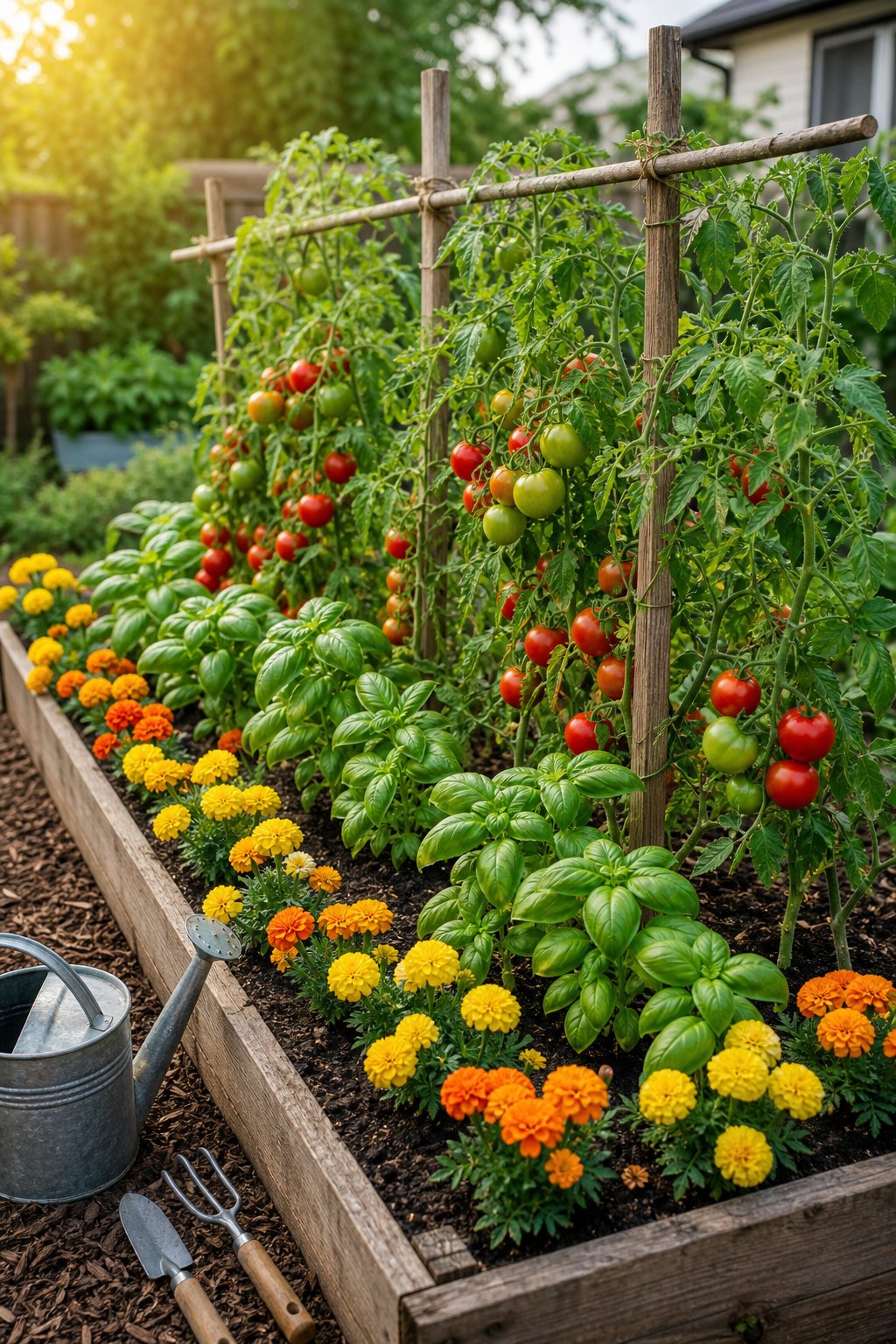
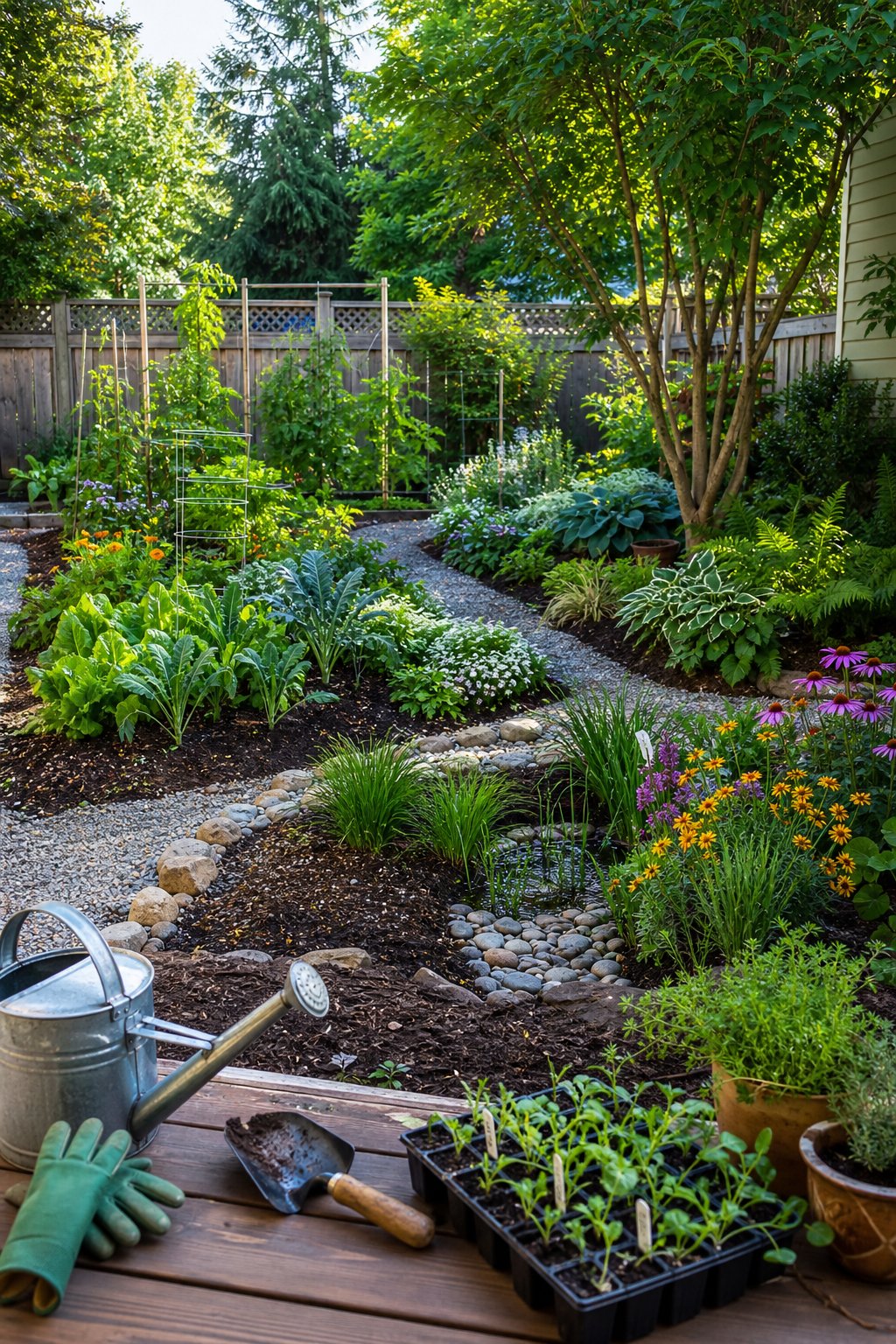
5. Grow a Kitchen Garden With Tomatoes, Basil, and French Marigolds
A raised bed filled with tomatoes, basil, and French marigolds gives you food, color, and a pleasant scent in one compact space. Put tomatoes at the back with sturdy stakes, tuck basil around their base, and use marigolds as a bright edging plant.
Plant tomatoes after the danger of frost has passed and water at soil level to keep leaves dry. Harvest basil often to encourage branching. If you are new to tomatoes, these tips on how to grow tomatoes for beginners can help you start well.
Expert Tip From MrPlanter: “Give each tomato plant strong support at planting time. Adding the stake later can disturb the roots and leave you wrestling with a tangled vine.”
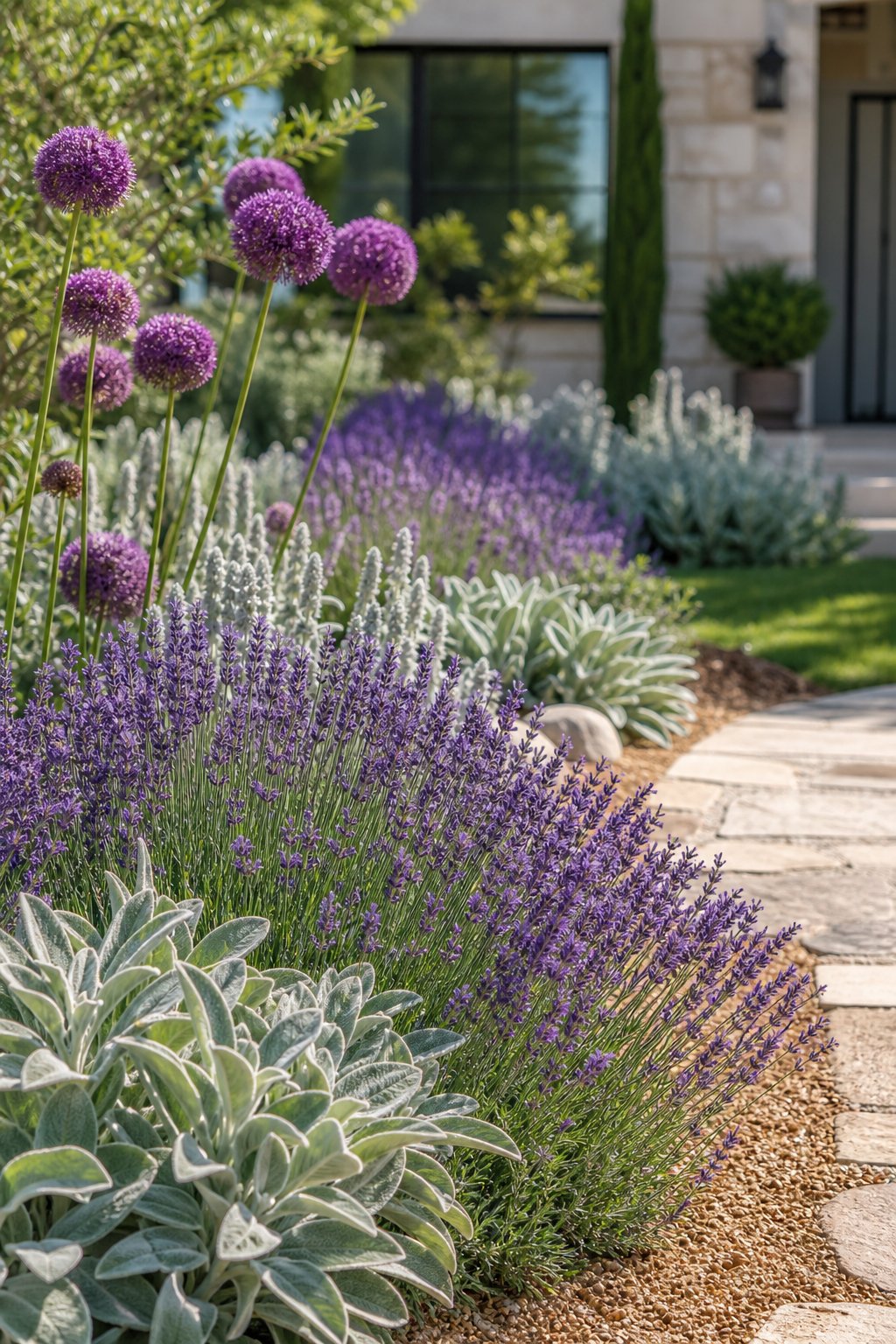
6. Use Lavender, Alliums, and Stachys for a Drought-Tolerant Front Border
A dry, sunny front border suits lavender, alliums, and stachys beautifully. Lavender forms neat mounds, alliums lift purple spheres above the foliage, and lamb’s ear adds a soft silver edge that looks good even between blooms.
Plant in sharply drained soil and avoid heavy mulch around lavender crowns. Water deeply while new plants settle, then let the soil dry between watering. Cut lavender lightly after flowering to preserve its rounded shape. See more drought-tolerant front yard ideas for a cohesive entry garden.
Expert Tip From MrPlanter: “Keep lavender away from sprinklers and downspouts. Wet roots cause more trouble than a missed watering.”
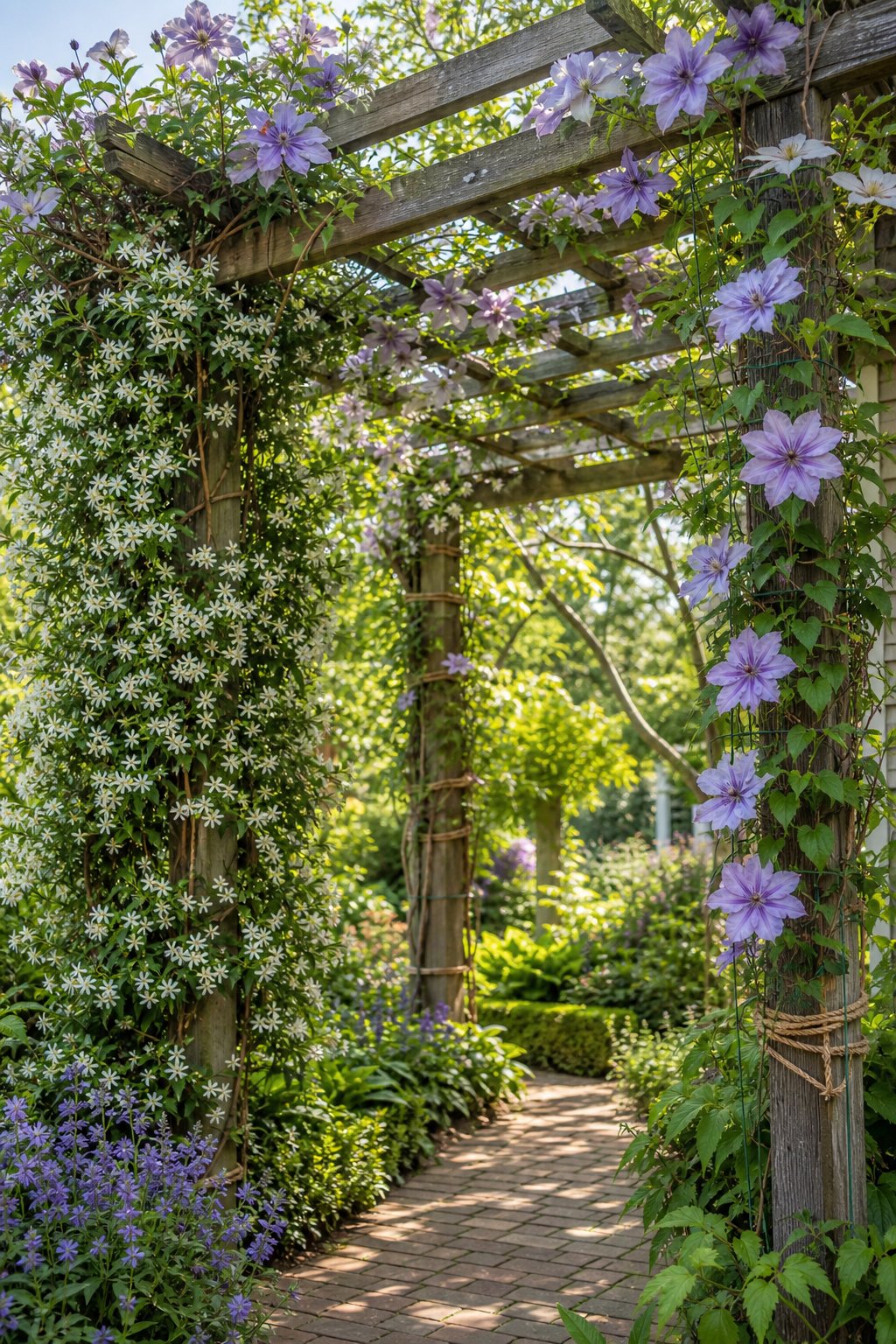
7. Train Star Jasmine and Clematis Up a Pergola
A pergola becomes a leafy garden room when star jasmine and clematis climb its posts and beams. Star jasmine supplies glossy foliage and sweet fragrance, while clematis adds flowers at eye level and overhead.
Install strong wires or trellis panels before the vines become heavy. Keep star jasmine in a warm, sheltered spot, and choose a clematis variety suited to your local climate. Guide young stems gently with soft ties, checking them each month so they do not press into the support.
Expert Tip From MrPlanter: “Keep clematis roots cool with a low plant or mulch. Give the upper stems sun so the vine flowers freely.”
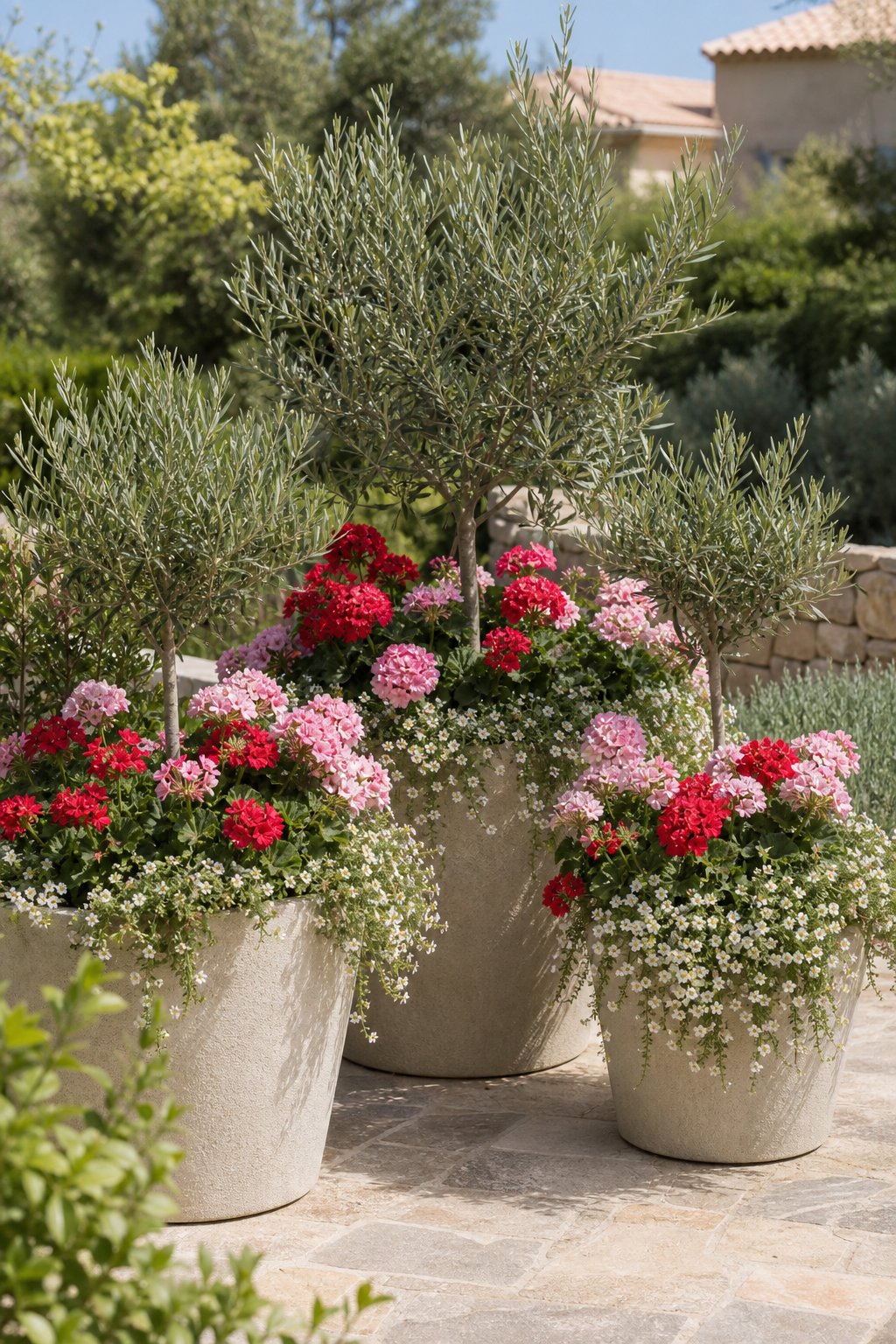
8. Fill Large Containers With Olive Trees, Pelargoniums, and Trailing Bacopa
Large containers create instant structure when olive trees rise above pelargoniums and trailing bacopa. The olive tree gives height and a silver-green color, while pelargoniums add bold flowers and bacopa softens the pot edges.
Choose containers with drainage holes and enough weight to stay steady in wind. Use a free-draining potting mix, feed flowering plants during the growing season, and turn containers every few weeks for even growth. Move olive trees to shelter before hard freezes.
Expert Tip From MrPlanter: “Put pots on feet so water drains freely. A container that stays soggy can damage roots even when the plant sits in full sun.”
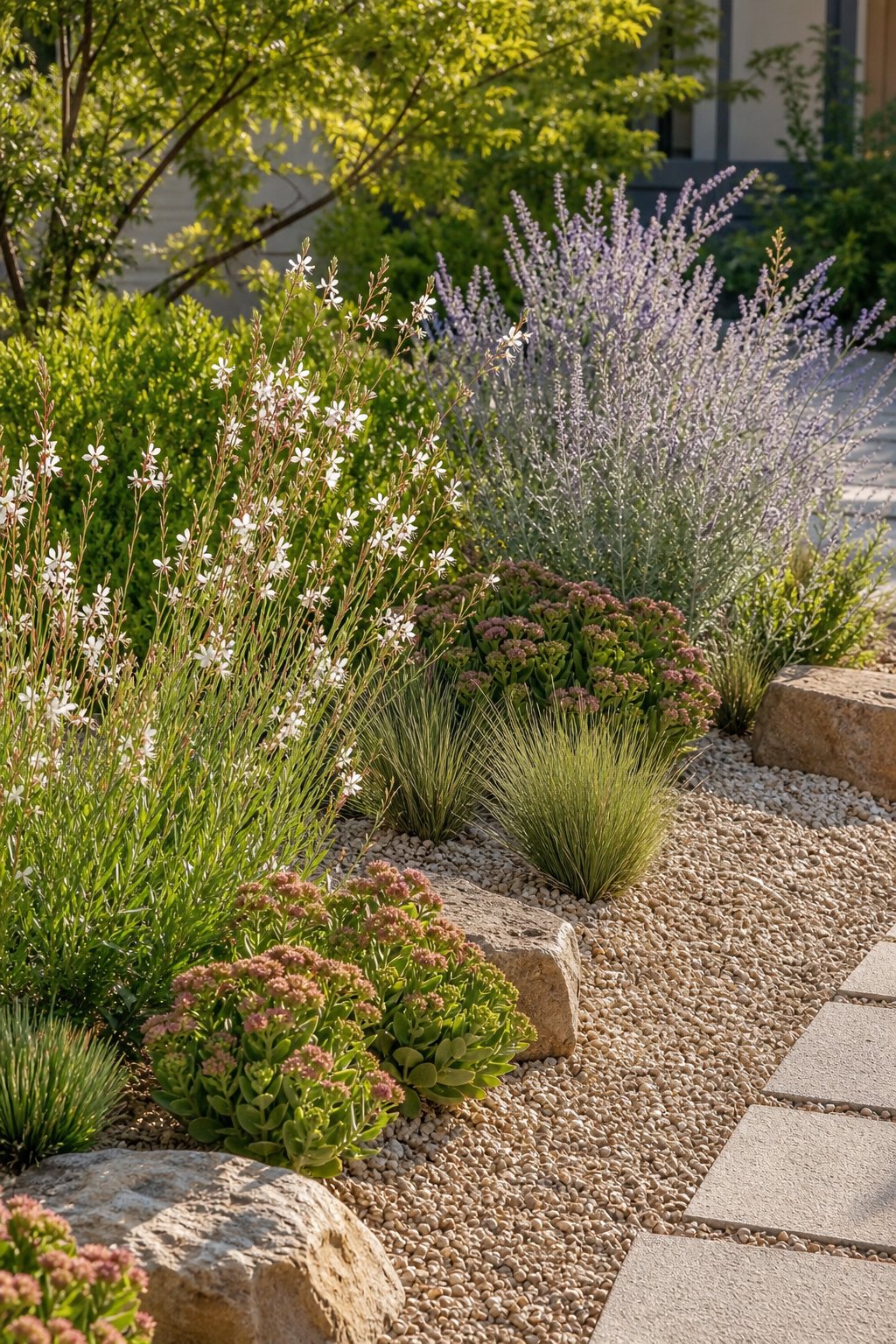
9. Create a Gravel Garden With Sedum, Gaura, and Russian Sage
A gravel garden suits sunny yards with dry soil and little time for watering. Sedum hugs the ground, gaura sends up dancing white flowers, and Russian sage gives the planting a tall silver haze.
Remove weeds before spreading a deep layer of small gravel, then plant through it while the soil is workable. Space plants for mature width so air moves around them. Water new plants during their first growing season, especially during extended heat.
Expert Tip From MrPlanter: “Use gravel that matches your home’s colors. Light stone reflects heat, while darker stone gives flowers a richer backdrop.”
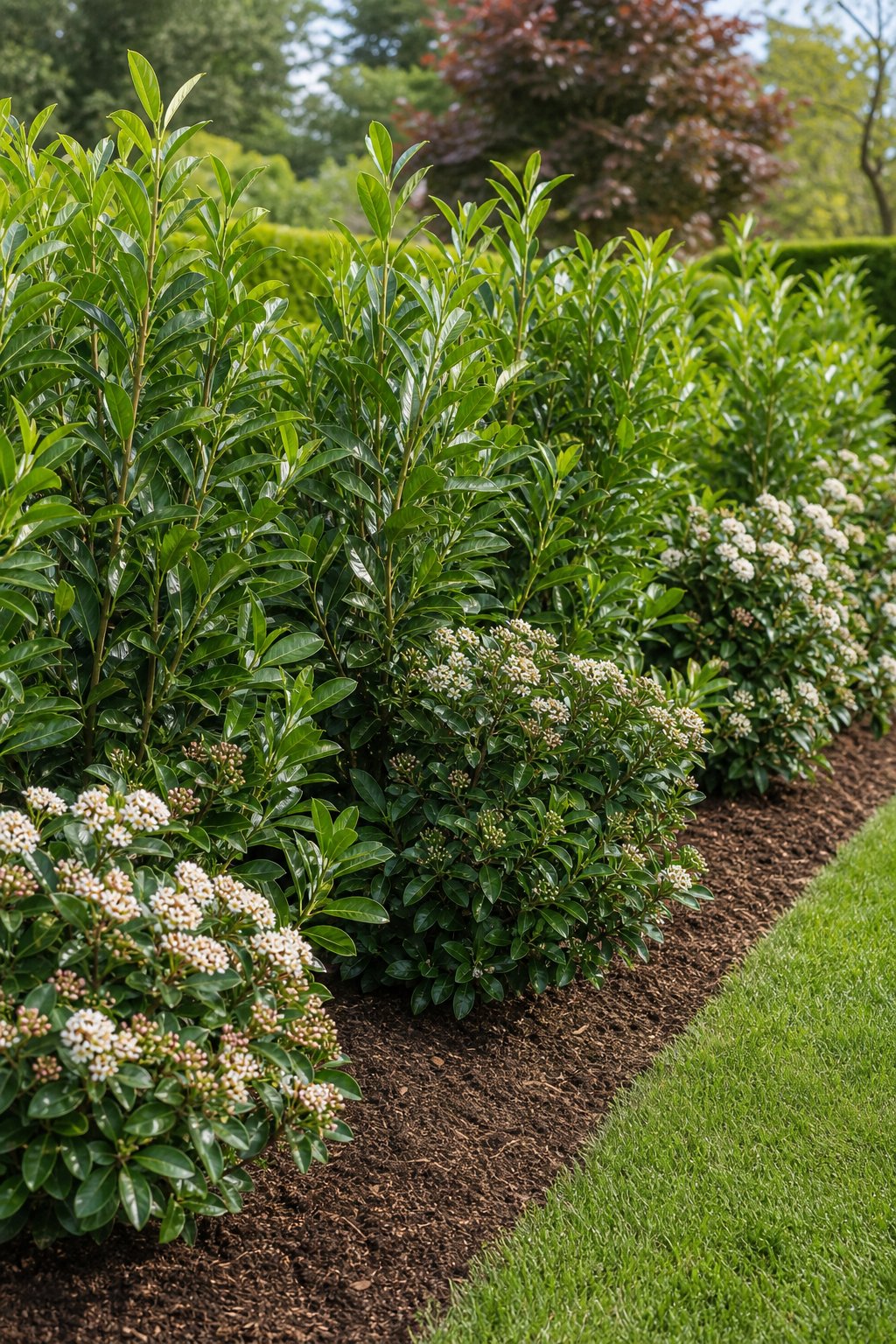
10. Plant an Evergreen Privacy Screen With Portuguese Laurel and Viburnum Tinus
A mixed screen of Portuguese laurel and Viburnum tinus gives your boundary year-round foliage with seasonal flowers and berries. Portuguese laurel brings glossy leaves and a formal shape, while Viburnum tinus adds winter and spring blooms.
Measure the mature width before planting so the hedge has space to breathe. Improve compacted soil with compost, water deeply during the first year, and prune after flowering when possible. Staggering the shrubs creates a fuller screen than placing every plant in a rigid line.
Expert Tip From MrPlanter: “Leave a narrow service path behind the screen if space allows. You’ll appreciate the room when trimming or checking irrigation.”
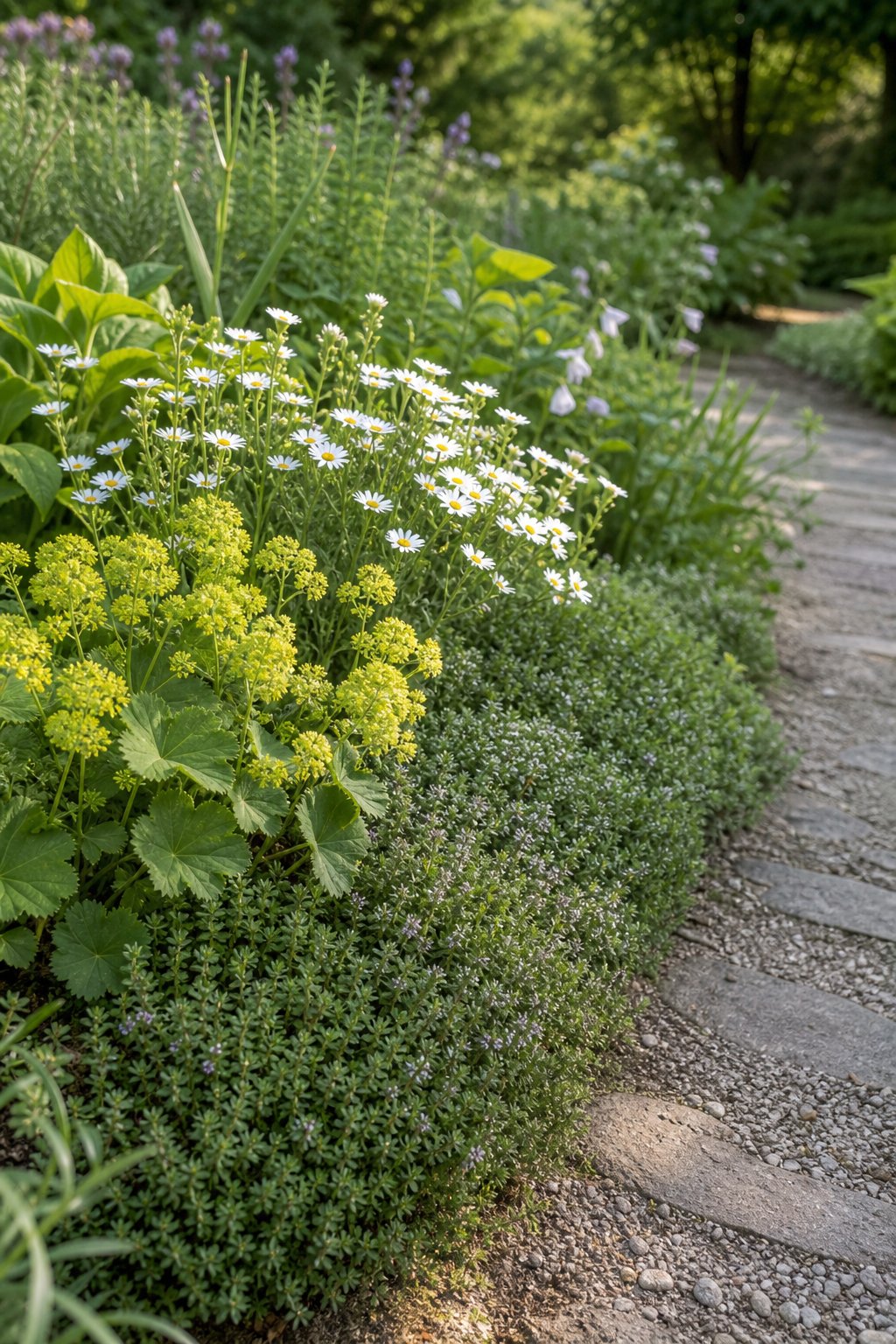
11. Edge a Garden Path With Thyme, Erigeron, and Alchemilla Mollis
A path feels finished when low thyme, airy erigeron, and chartreuse Alchemilla mollis soften its edges. Thyme releases fragrance when brushed, erigeron fills gaps with small daisy flowers, and lady’s mantle gives the border a fresh, rounded form.
Plant thyme in the sunniest, driest edge and place lady’s mantle where soil stays slightly moist. Keep plants several inches back from the walking surface so stems do not flop underfoot. Trim after flowering to keep the route clear.
Expert Tip From MrPlanter: “Use a firm path edge beneath the plants. It keeps gravel or soil from washing onto the walking surface during heavy rain.”
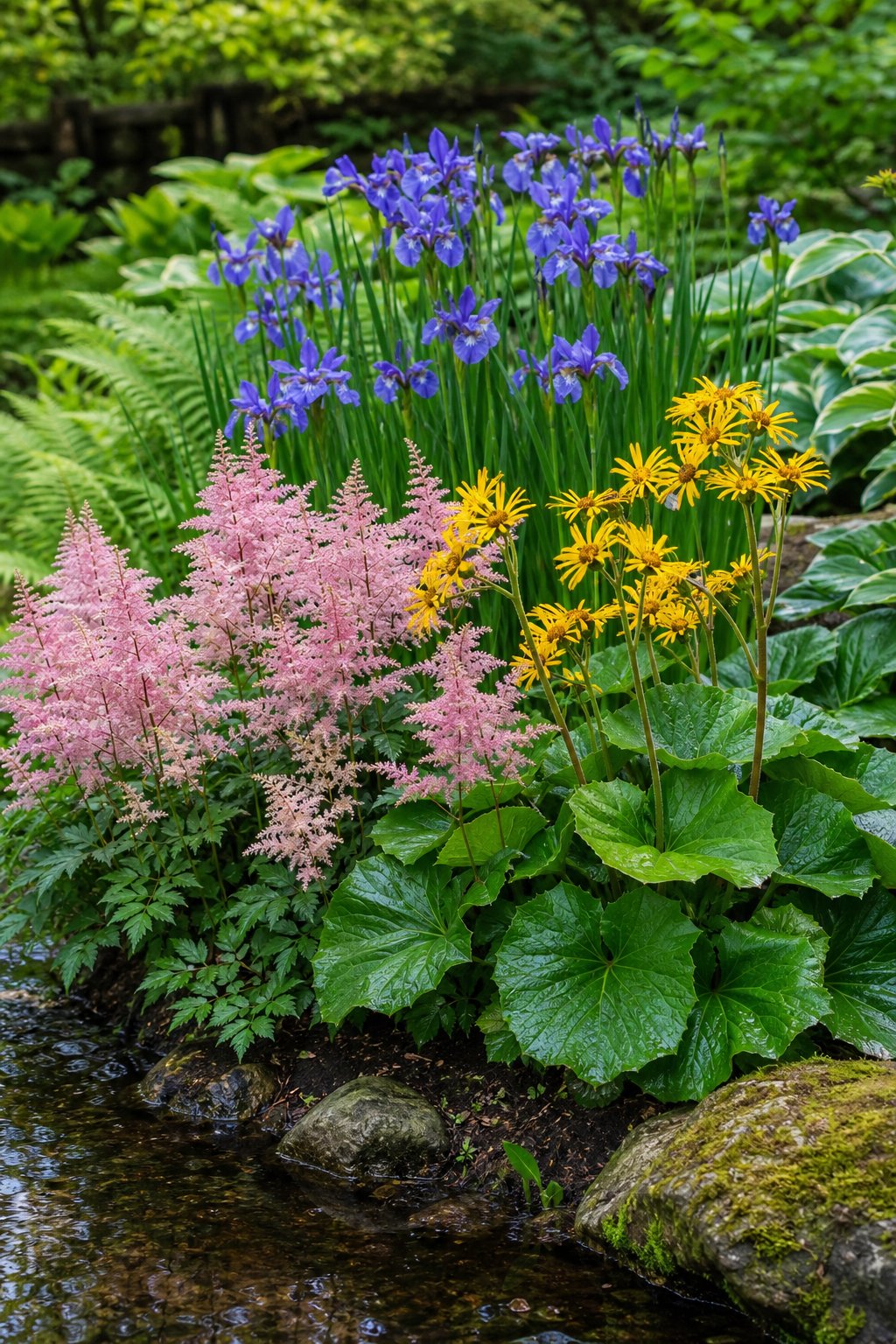
12. Brighten a Wet Spot With Astilbe, Iris Sibirica, and Ligularia
A damp corner becomes colorful when astilbe, Siberian iris, and ligularia take advantage of moist soil. Astilbe offers feathery flower plumes, Siberian iris brings elegant blooms, and ligularia adds large leaves that give the planting a bold anchor.
Test the area after rain so you know whether it is moist or waterlogged. Add compost, keep roots covered with organic mulch, and provide afternoon shade if summer heat is strong. Remove damaged foliage as the season ends, then leave healthy stems for winter structure.
Expert Tip From MrPlanter: “Plant ligularia where it receives protection from hot afternoon sun. Its leaves wilt quickly when the soil dries.”
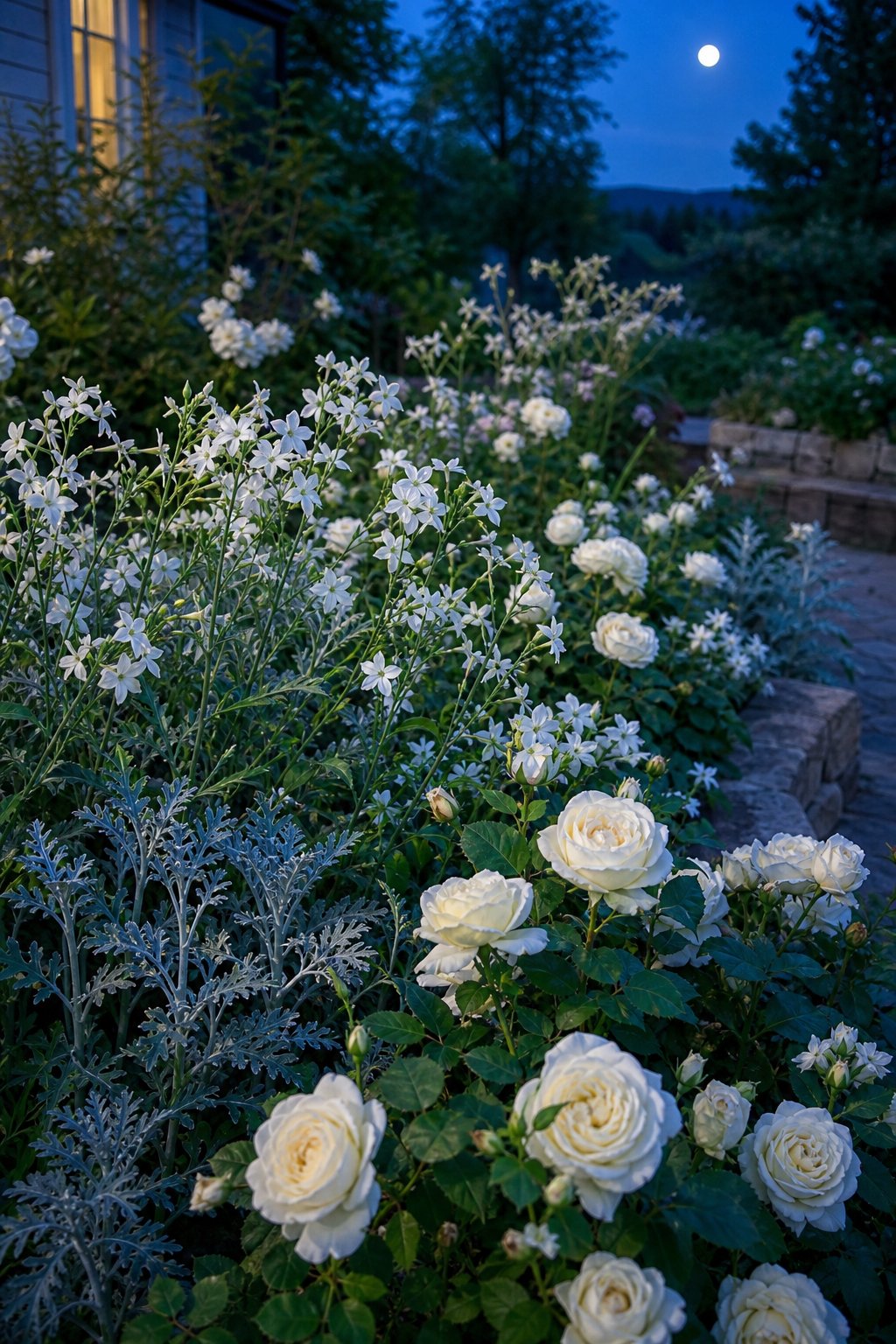
13. Make a Moon Garden With White Roses, Nicotiana, and Silver Artemisia
A moon garden glows after sunset through white roses, pale nicotiana, and silver artemisia. White flowers catch low light, nicotiana adds evening fragrance, and artemisia keeps the bed attractive between bloom cycles.
Place the garden near a patio, window, or seating area where you spend time after dark. Add plants with different heights, then use warm path lights to guide movement without flooding the space with glare. Keep scented plants close enough for you to enjoy their fragrance.
Expert Tip From MrPlanter: “Choose warm-white bulbs for a softer evening effect. Aim lights at paths and foliage instead of shining them into eye level.”
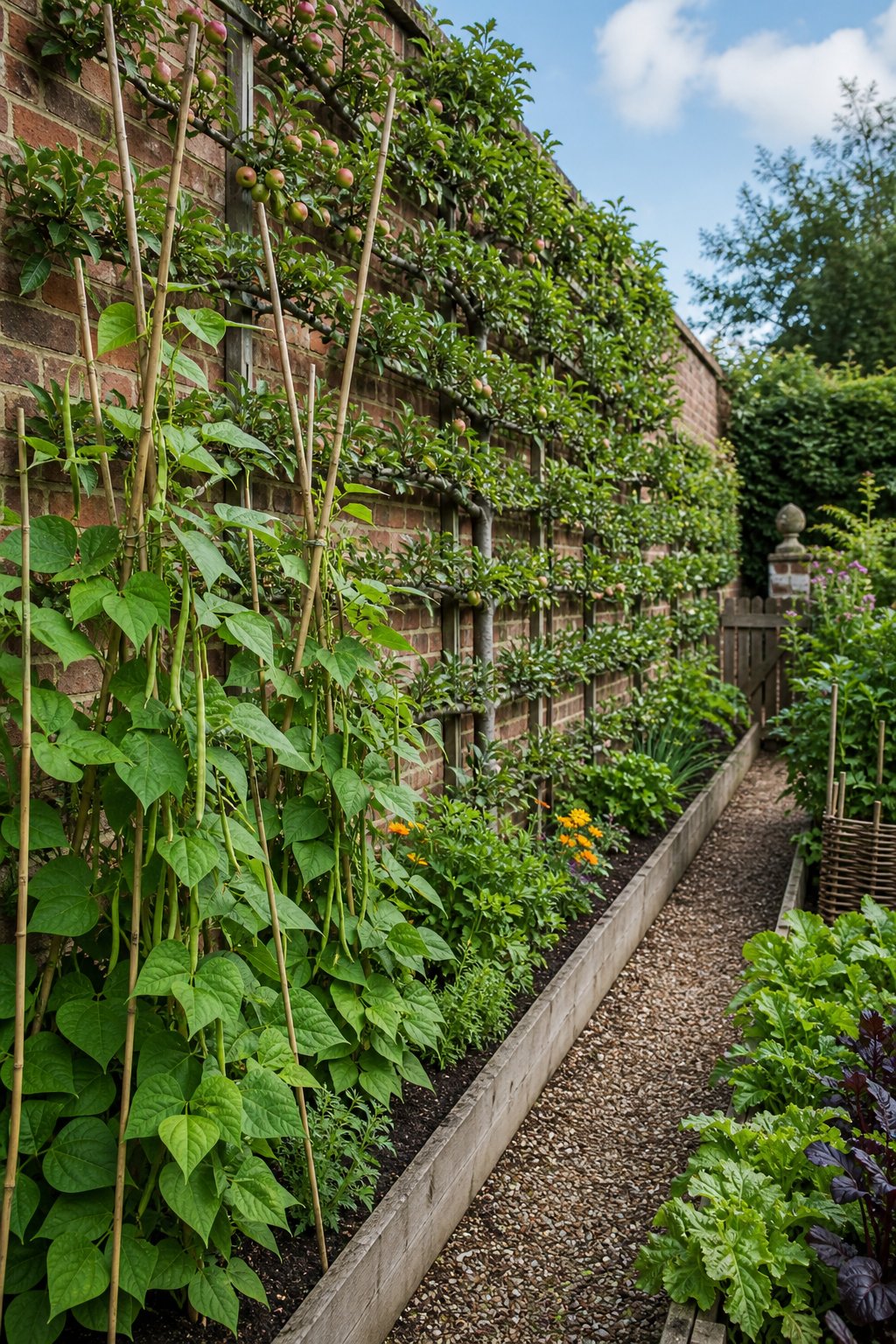
14. Add Vertical Interest With Espaliered Apple Trees and Climbing Beans
A wall or fence can grow food when you train apple trees flat against it and send climbing beans upward. Espaliered apples bring blossom and fruit in a narrow footprint, while beans fill a simple support during summer.
Fix horizontal wires securely before training young branches. Keep the tree’s trunk clear of ties that might cut into the bark, and pick beans often to extend the harvest. Leave room between the support and wall for airflow and pruning access.
Expert Tip From MrPlanter: “Tie branches loosely with soft material and check them as they thicken. A quick adjustment prevents bark damage.”
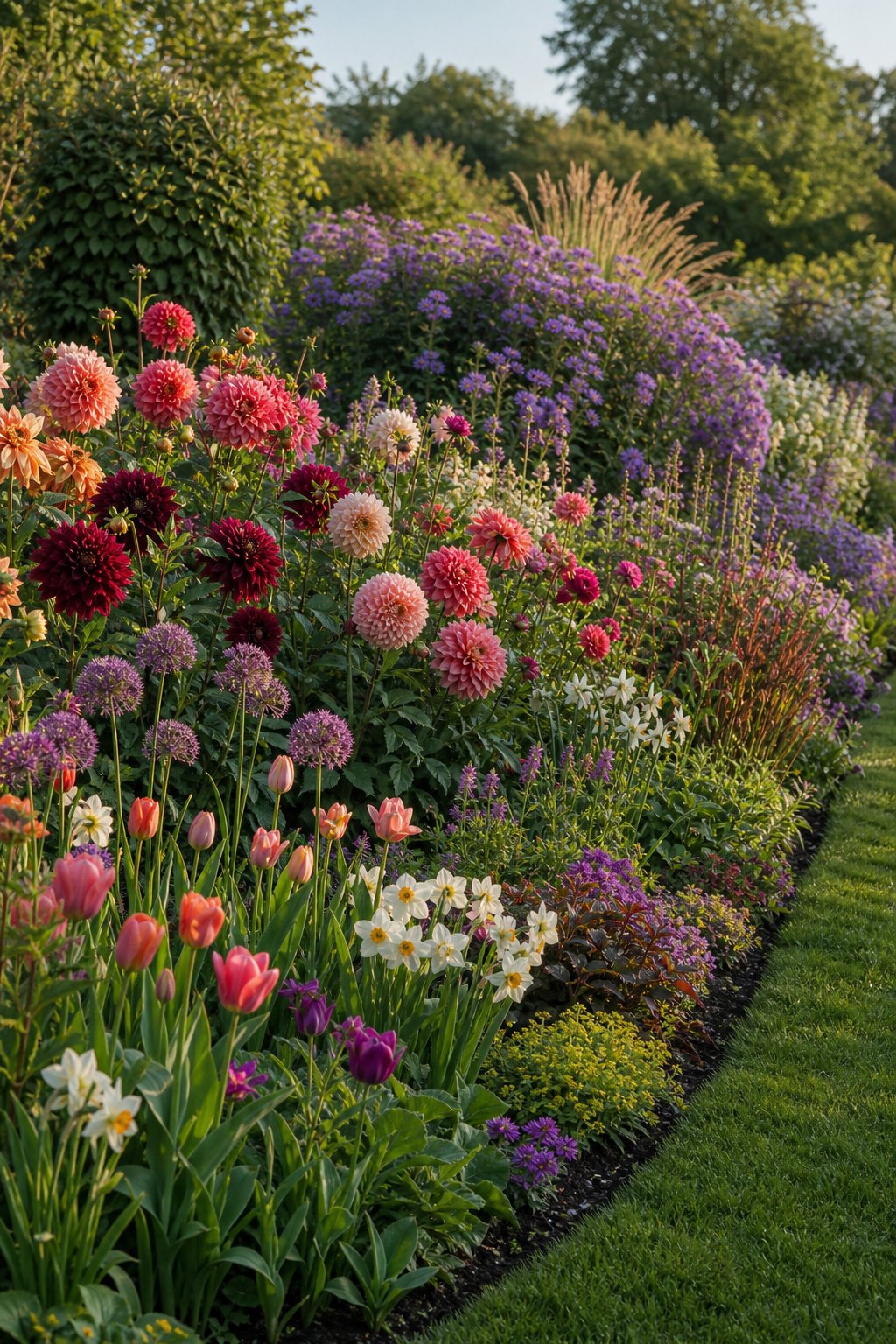
15. Design a Long-Season Border With Spring Bulbs, Dahlias, and Asters
A border stays colorful longer when spring bulbs hand the display to dahlias and asters. Plant bulbs for the first wave, tuck dahlias into open spaces for summer color, and use asters to carry flowers into fall. Ornamental grasses add movement after blooms fade.
Place bulbs in groups for stronger impact and let their foliage yellow naturally after flowering. Stake tall dahlias early, before heavy blooms lean over. Choose asters suited to your region and give them enough space to avoid crowding.
Expert Tip From MrPlanter: “Mark dahlia locations with small labels before winter. You’ll know where to plant spring companions without cutting into tubers.”
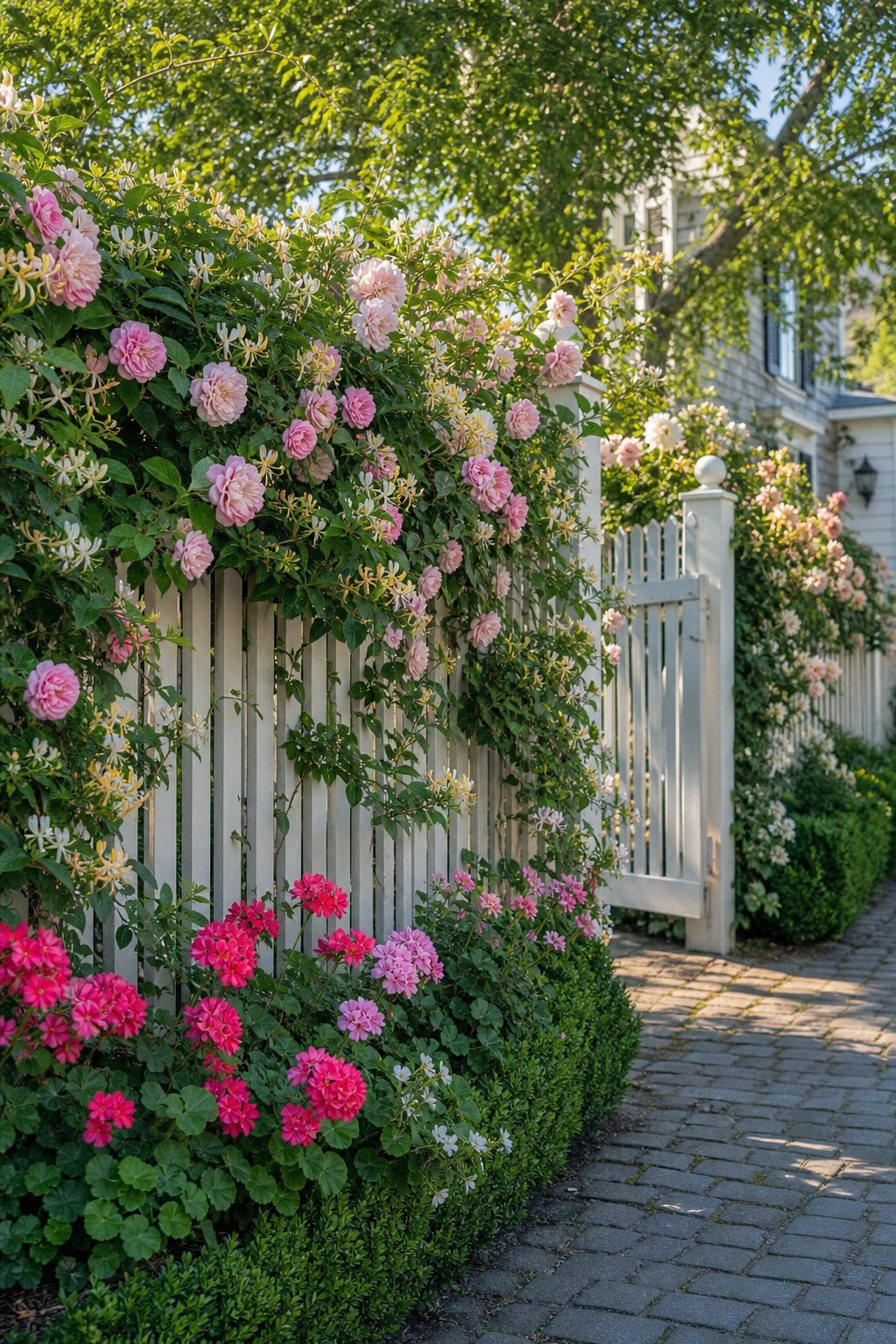
16. Soften a Front-Yard Fence With Climbing Roses, Honeysuckle, and Geraniums
A fence looks friendlier when climbing roses and honeysuckle cover its hard lines, with geraniums brightening the base. Roses bring large blooms, honeysuckle supplies scent and wildlife value, and geraniums keep color close to the ground.
Attach climbers to sturdy wires with enough space for pruning and air movement. Check honeysuckle growth each season so it does not smother nearby plants. Plant geraniums in well-drained soil and remove faded flowers to keep the front border neat.
Expert Tip From MrPlanter: “Train rose stems sideways along the fence for more flowers. Water at the base during dry weather and keep leaves dry.”
Plan Your Planting by Sun, Soil, and Moisture
Match every planting choice to the area’s sun, soil, and moisture before you buy plants. A quick site check prevents struggling flowers and helps you place each group where it can grow with less daily care.
How Many Hours of Sun Does the Area Receive?
Track the space from morning through late afternoon. Full sun means about six or more hours of direct light, while partial shade receives less or gets strong light for part of the day. Remember that summer shade changes as trees leaf out.
Which Plants Suit Your Soil and Drainage?
Test soil texture and drainage before digging a large bed. Sandy soil drains quickly, clay holds water, and loam supports many plants when enriched with compost. Dig a test hole, fill it with water, and watch how quickly it empties.
How Can You Turn Difficult Shade or Wet Areas Into Assets?
Choose shade plants for tree-covered corners and moisture-loving plants for low spots. A damp area can support astilbe or Siberian iris, while dry shade suits plants with tough, textured leaves. Group plants with similar needs so watering stays simple.
Expert Tip From MrPlanter: “Watch the site for a full day before planting. Light and water patterns reveal more than a quick glance from the patio.”
Make a Small Garden Feel Lusher and Larger
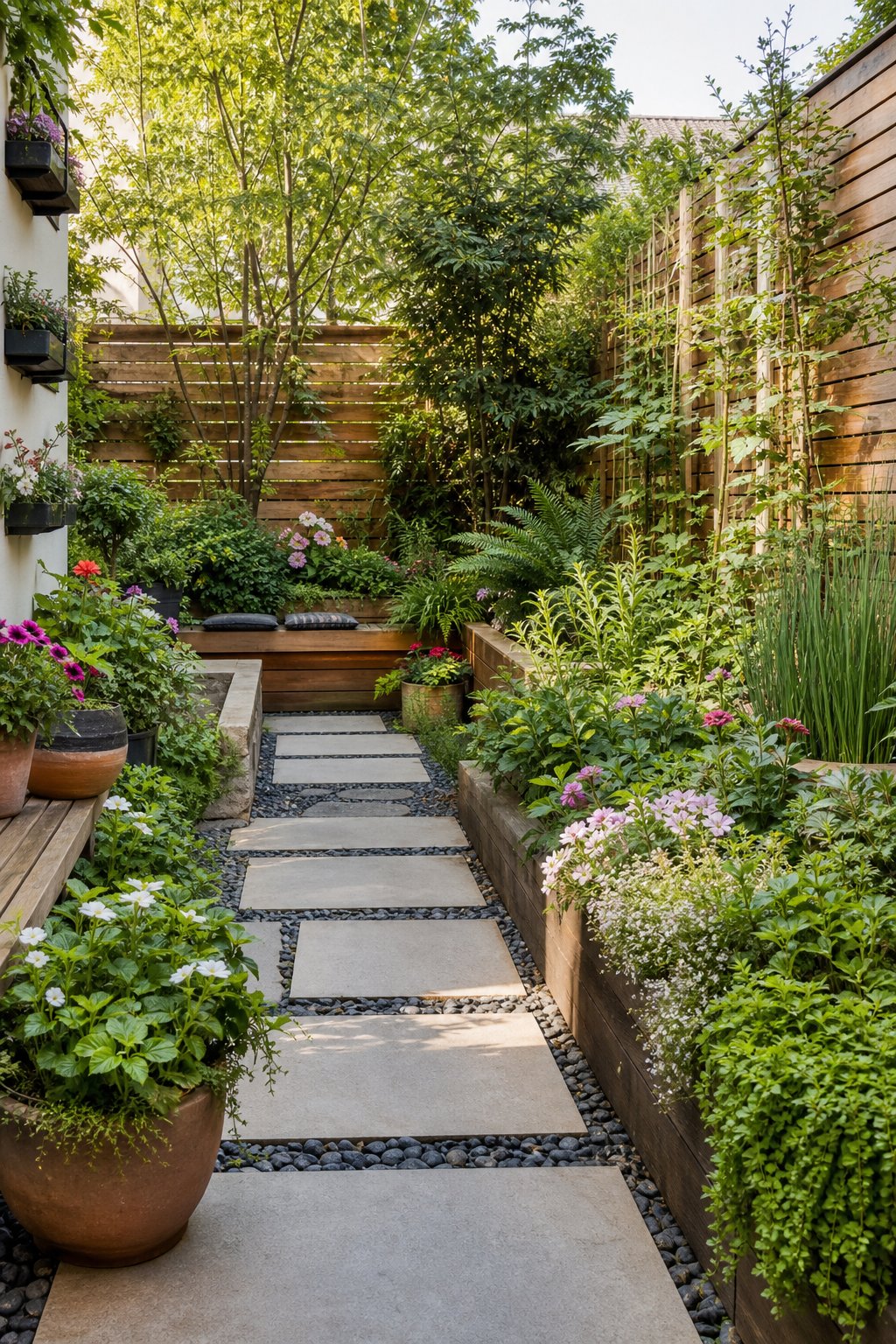
A small garden feels more spacious when you repeat plants, use vertical space, and guide the eye along a clear path. Keep the palette focused, then add a few strong focal points that give the space direction.
Why Should You Repeat Plants and Colors?
Repeat a flower or leaf color in several locations so the garden feels connected. Three small groups usually read as one design, while scattered single plants can make a compact space feel busy. Repetition also makes plant care easier.
Where Do Tall Plants, Containers, and Vertical Features Work Best?
Place tall plants along boundaries and use containers near entrances, seating, or steps. Trellises, pergolas, and wall-trained fruit trees add planting space above ground level. Keep tall features from blocking doors, windows, or the main walking route.
How Can Paths and Focal Points Improve Perspective?
A gently curving path makes the garden unfold in stages. Position a bench, pot, sculpture, or bright plant at the end of a view so your eyes travel through the space. Use narrow paving and clear edges to preserve walking room.
Expert Tip From MrPlanter: “Choose one main view from the house and improve it first. A strong sightline makes even a tiny garden feel carefully planned.”
I’m Anirban Saha, the Founder and Owner of MrPlanter.com. I pay the bills as a software developer, although my BTech is actually in Electronics and Communication. I really love my day job, but what gives me energy every day is interacting with my indoor plants and taking care of them. I have been successfully nurturing and maintaining houseplants for over 10 years now.
📚🔍 Our content undergoes thorough review and fact-checking before publication. For additional details, explore our strict Editorial Policy to deliver helpful content. 📝🔒