As an Amazon Associate, MrPlanter.com earns from qualifying purchases.
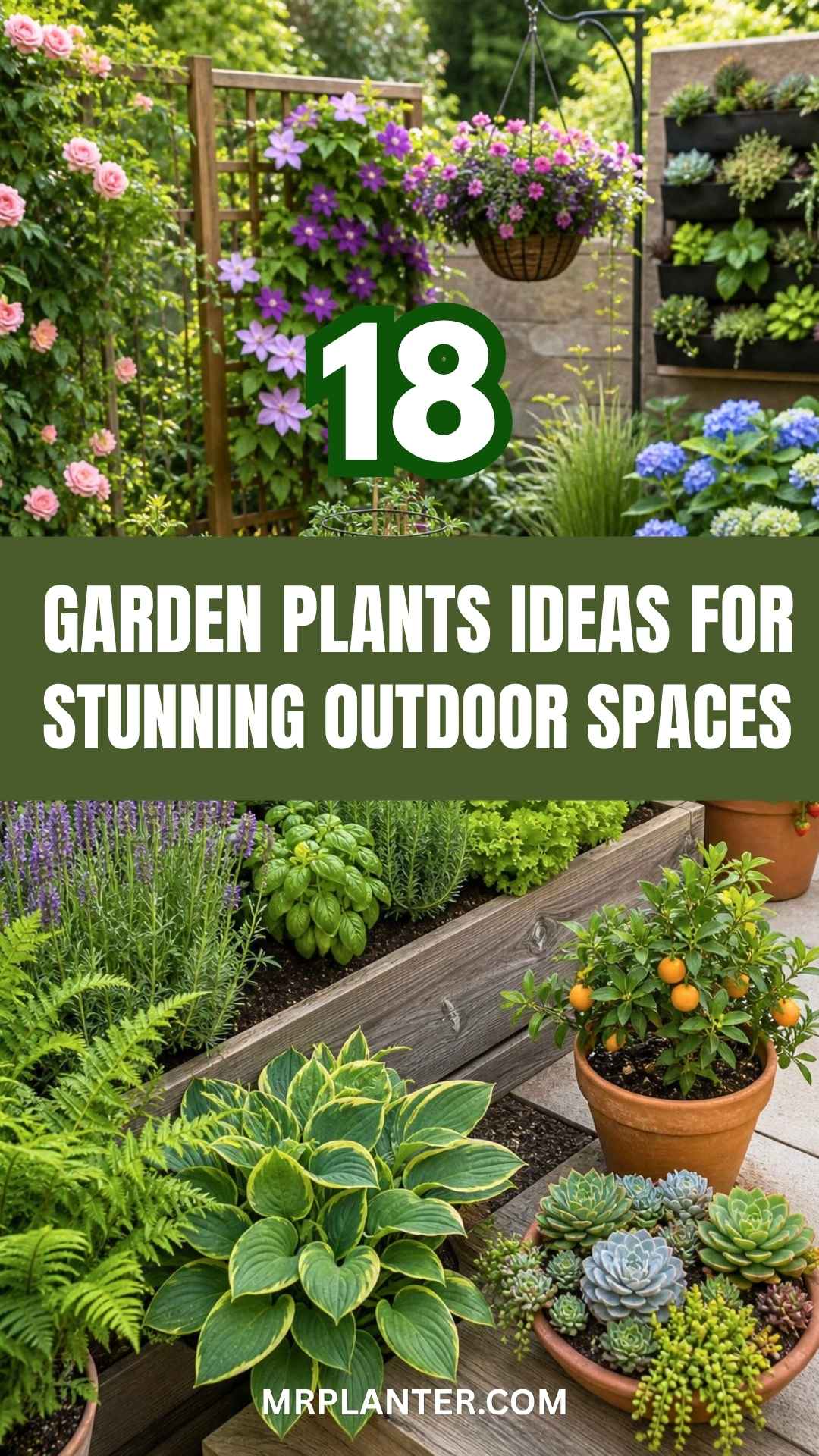
A beautiful garden starts with plants that suit your light, soil, space, and daily routine. With the right mix of flowers, foliage, herbs, grasses, and shrubs, you can make a front walkway welcoming or turn a plain backyard corner into a place you enjoy using.
The best 18 garden plants ideas combine structure, seasonal color, useful texture, and care needs you can manage. Choose a few dependable plants first, then add accents in pots, borders, or raised beds.
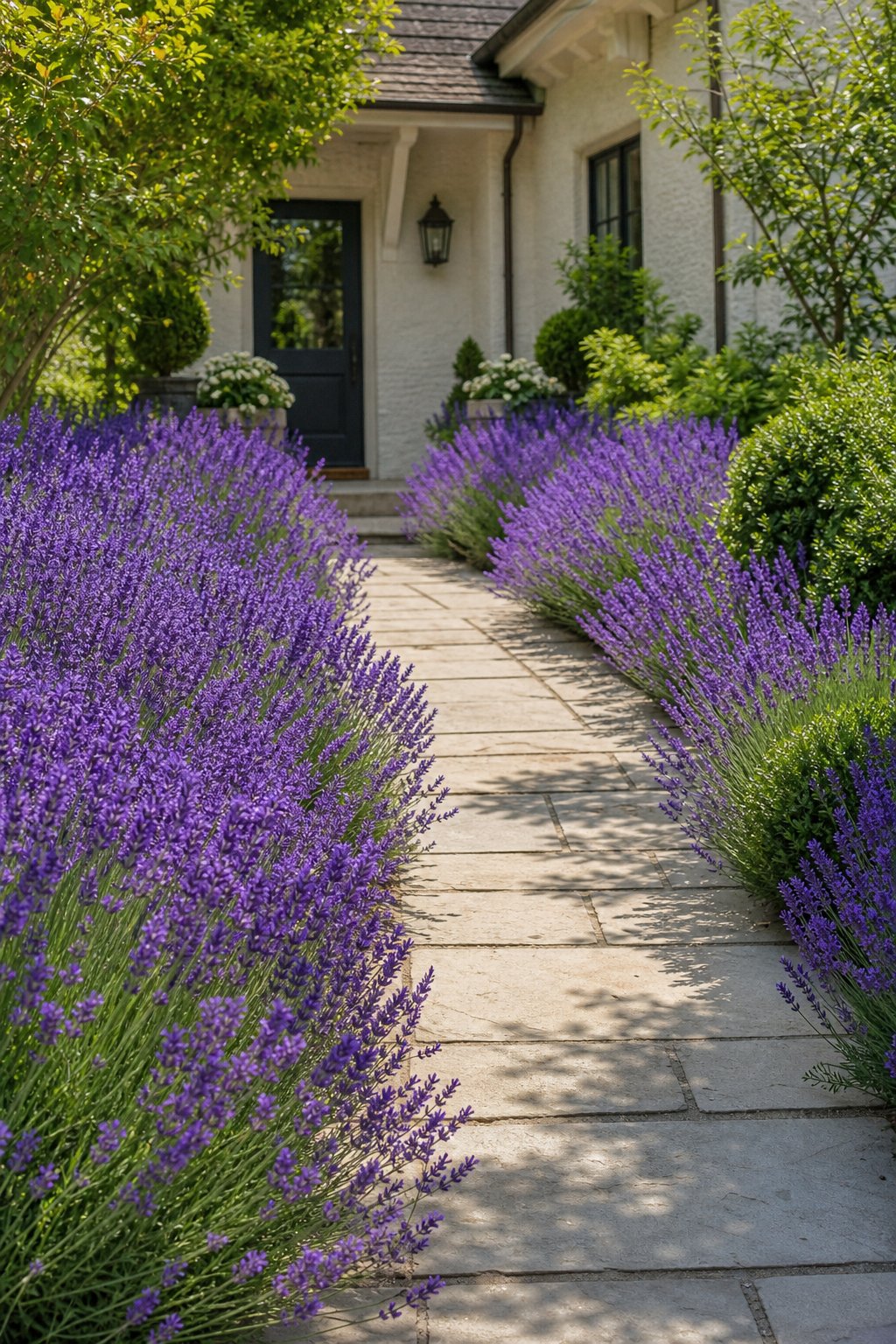
1. Lavender Border Along a Front Garden Path
A plain walkway gets a cheerful lift from a lavender border. Plant lavender along the sunny edge of your path to add purple flowers, silvery leaves, and a gentle scent near the entrance. Leave enough room for mature growth so stems don’t spill into the walking area.
Lavender needs sharp drainage and light, gritty soil. Trim the flower stems after blooming, then prune lightly to keep the plants rounded. Pair it with pale gravel, stone edging, or white flowering plants for a tidy front garden look. You’ll also draw bees toward the path during bloom time.
Expert Tip From MrPlanter: “Give lavender space for air to move around each plant. Keep mulch away from the crown so wet soil doesn’t cause trouble.”
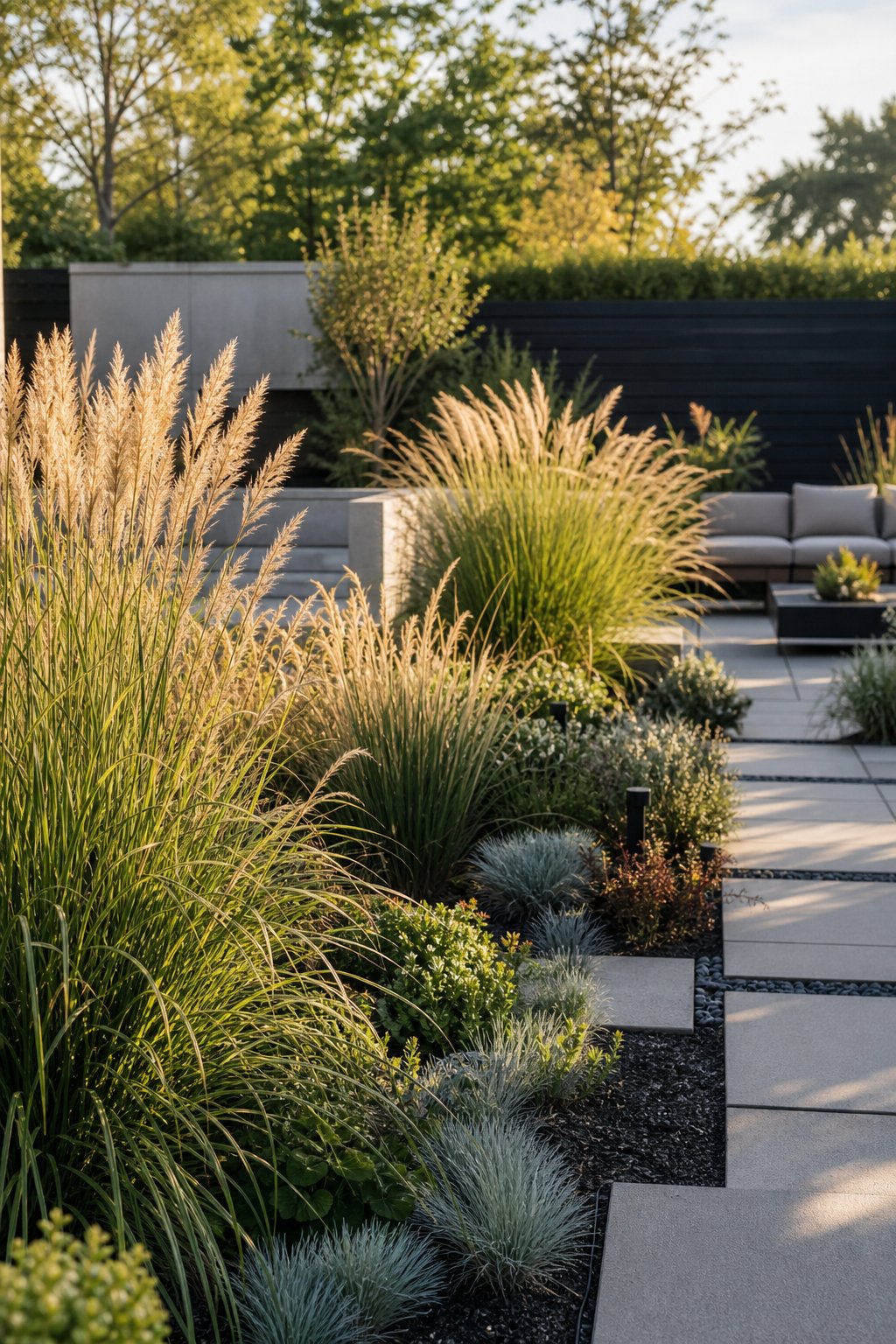
2. Ornamental Grasses in a Modern Paver Garden
Hard pavers feel softer beside ornamental grasses. Their fine blades sway above the path and add movement to a clean-lined garden without making the layout feel crowded. Choose clumping varieties that stay within their planting area.
Use grasses beside dark mulch, gravel, or concrete pavers for a crisp color contrast. Cut warm-season grasses back in late winter before new growth appears. A repeated row along one side of the path gives your yard a calm rhythm, while a single larger clump works as a soft accent near a seating area.
Expert Tip From MrPlanter: “Check the mature width before planting grasses near paving. A small gap keeps blades out of your path and makes trimming easier.”
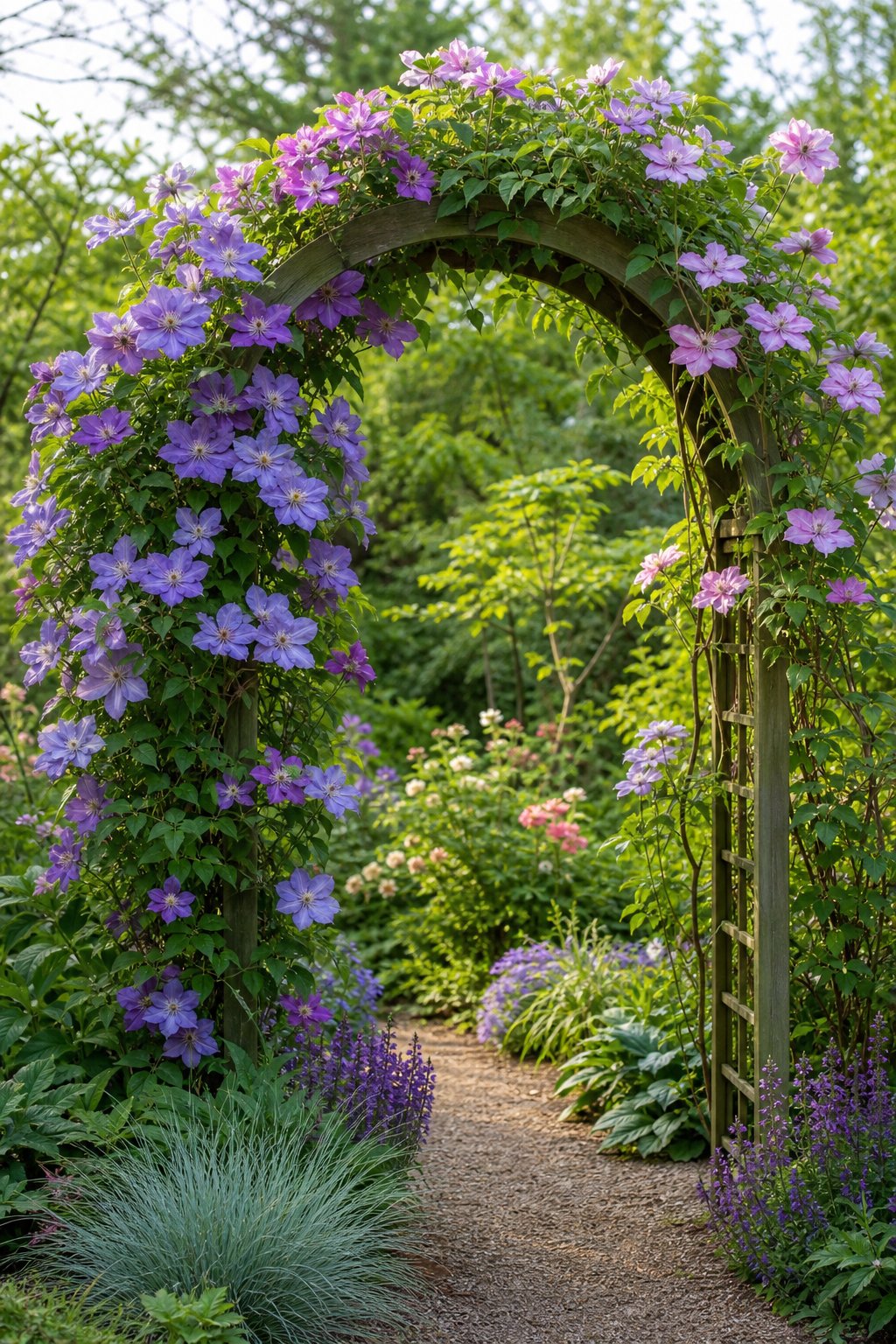
3. Climbing Clematis on an Arched Garden Trellis
A bare arch becomes a garden entrance when clematis climbs across it. This vine brings flowers upward, saving ground space while giving you a welcoming transition between the front yard and backyard. Its roots prefer cool soil, while the vine enjoys sun.
Add a layer of mulch around the base and plant a low ground cover nearby to shade the roots. Tie young stems loosely to the trellis until they find the support. Select a variety suited to your climate and pruning group, since bloom timing and pruning needs vary among clematis types.
Expert Tip From MrPlanter: “Use soft garden ties so stems stay secure without getting pinched. Guide a few shoots sideways to fill the arch evenly.”
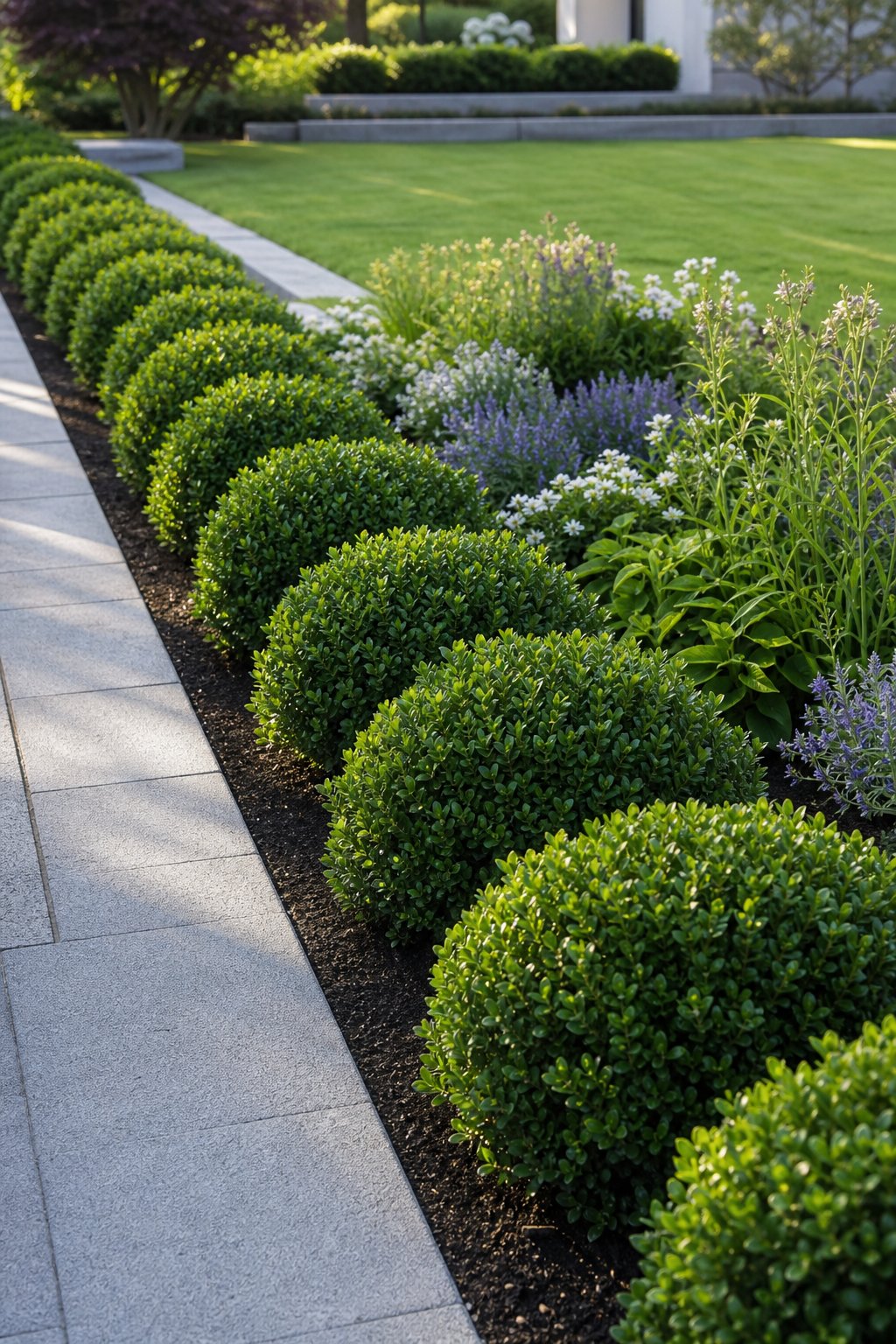
4. Boxwood Shrubs for Clean-Lined Garden Borders
Boxwood gives your garden a neat green frame through much of the year. Its small leaves and dense growth work well along paths, flower beds, and front steps where you want clear edges.
Plant boxwood in well-drained soil and allow space for mature width. Shear lightly in late spring or shape by hand with pruners for a softer line. Good airflow helps reduce disease risk, so avoid packing shrubs tightly. For more layout inspiration, explore these boxwood landscaping ideas.
Expert Tip From MrPlanter: “Round the top of each shrub slightly so snow and rain slide away. Keep the lower branches full for a strong border.”
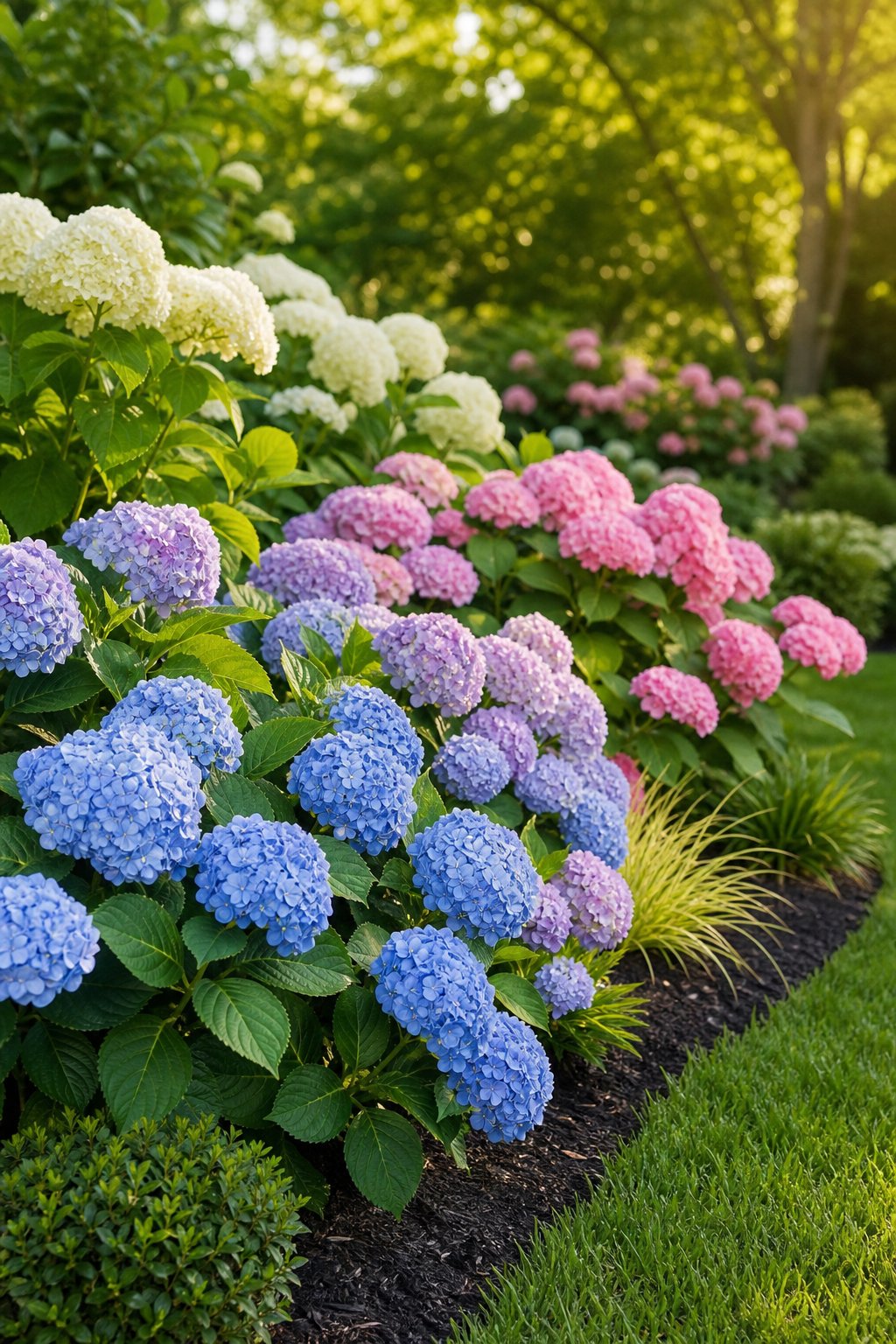
5. Hydrangeas for a Lush Backyard Flower Bed
Hydrangeas fill a backyard bed with large blooms and broad leaves. Their full shape makes them useful for softening a fence, framing a patio, or creating a relaxed flower garden near a seating area.
Give hydrangeas rich soil, steady moisture, and the light level their variety prefers. Morning sun with afternoon shade suits many types, especially in hot regions. Avoid cutting stems until you know whether your plant blooms on old wood or new wood. See these hydrangea landscaping ideas for ways to combine them with shrubs and ground covers.
Expert Tip From MrPlanter: “Water hydrangeas deeply at the soil line during dry spells. A thick mulch layer helps hold moisture around the roots.”
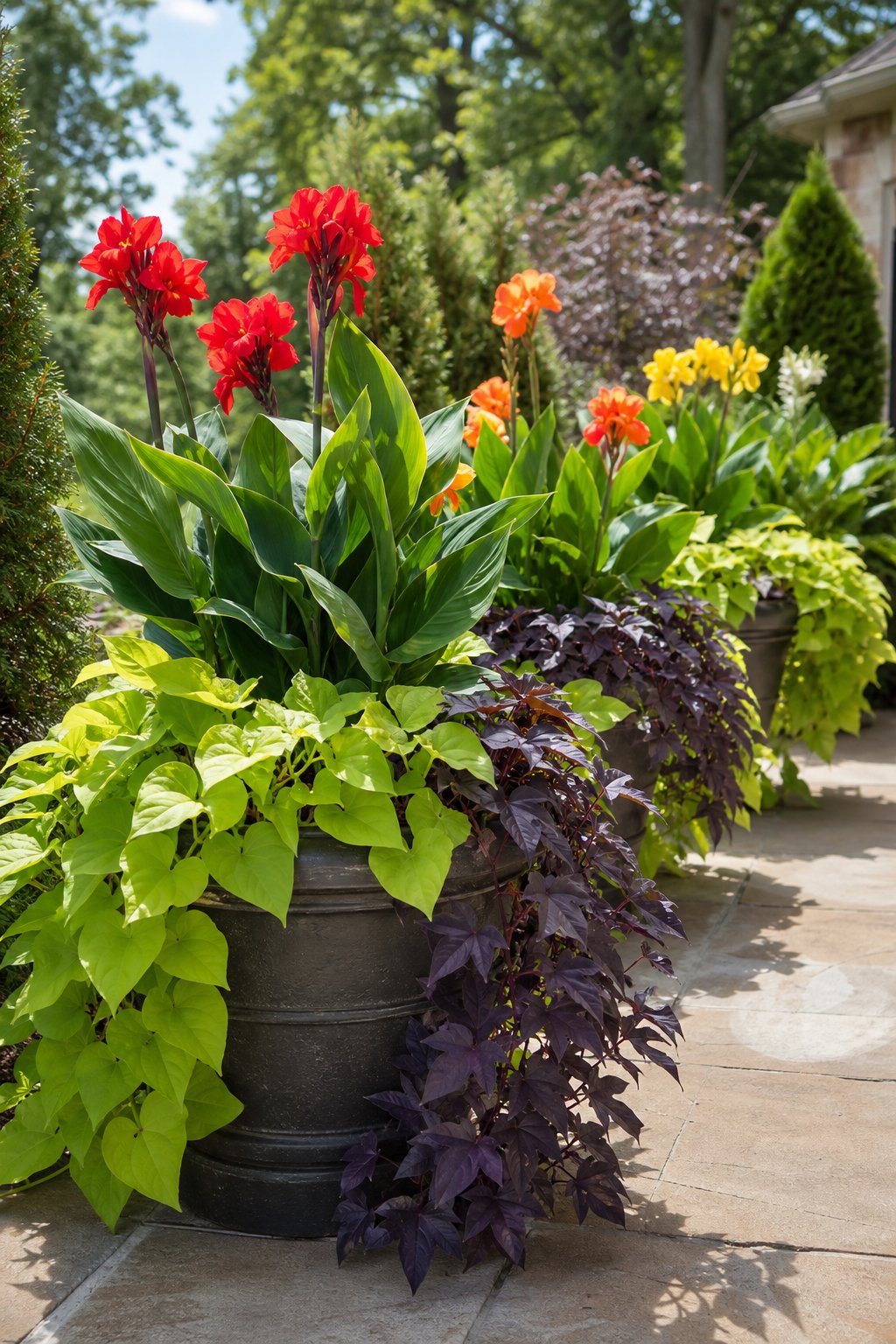
6. Canna Lilies and Sweet Potato Vine in Large Planters
Large containers become bold patio displays with upright canna lilies and trailing sweet potato vine. Canna leaves provide height and drama, while the vine spills over the rim and hides part of the pot.
Choose a heavy container with drainage holes so tall stems stay steady. Use fresh potting mix, water when the top inch feels dry, and feed during active growth. In cold areas, move containers indoors or store canna rhizomes before frost. Dark-leaved sweet potato vine creates a strong contrast with orange, yellow, or red canna flowers.
Expert Tip From MrPlanter: “Place the planter where you can reach it with a hose. Big leaves drink quickly during hot weather.”
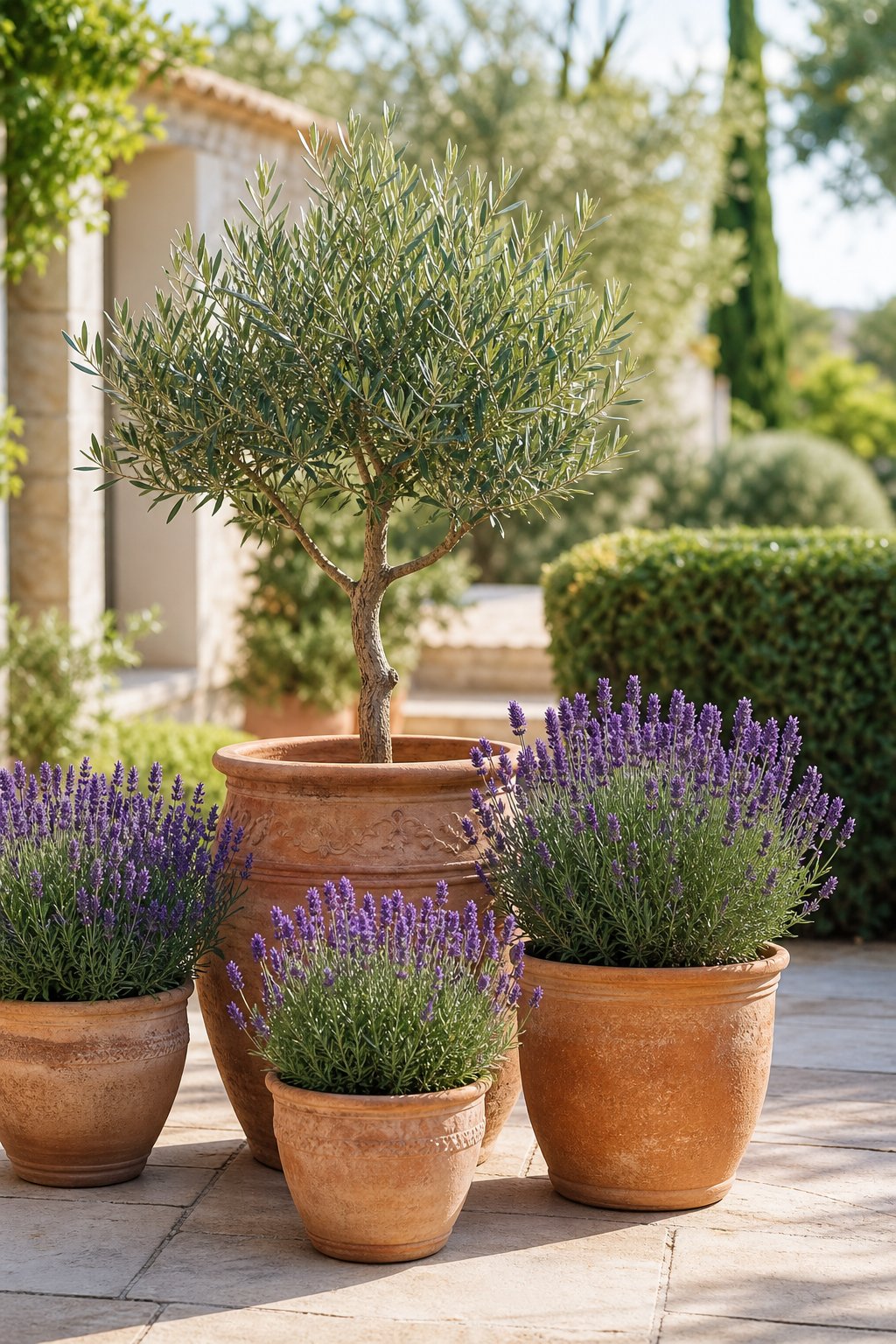
7. Small Olive Tree and Lavender in Terracotta Pots
A potted olive tree and lavender create a relaxed patio display with Mediterranean character. The olive tree supplies height and silvery foliage, while lavender keeps the base colorful and fragrant.
Use terracotta pots with drainage holes and a gritty mix that sheds excess water. Set both plants in full sun, then rotate the olive tree every few weeks for even growth. Protect the tree from hard freezes by moving it into a bright, cool space. Keep the display near a wall or seating area where its texture gets noticed.
Expert Tip From MrPlanter: “Let the soil dry slightly between waterings. Terracotta dries faster than plastic, so check the pot before reaching for the hose.”
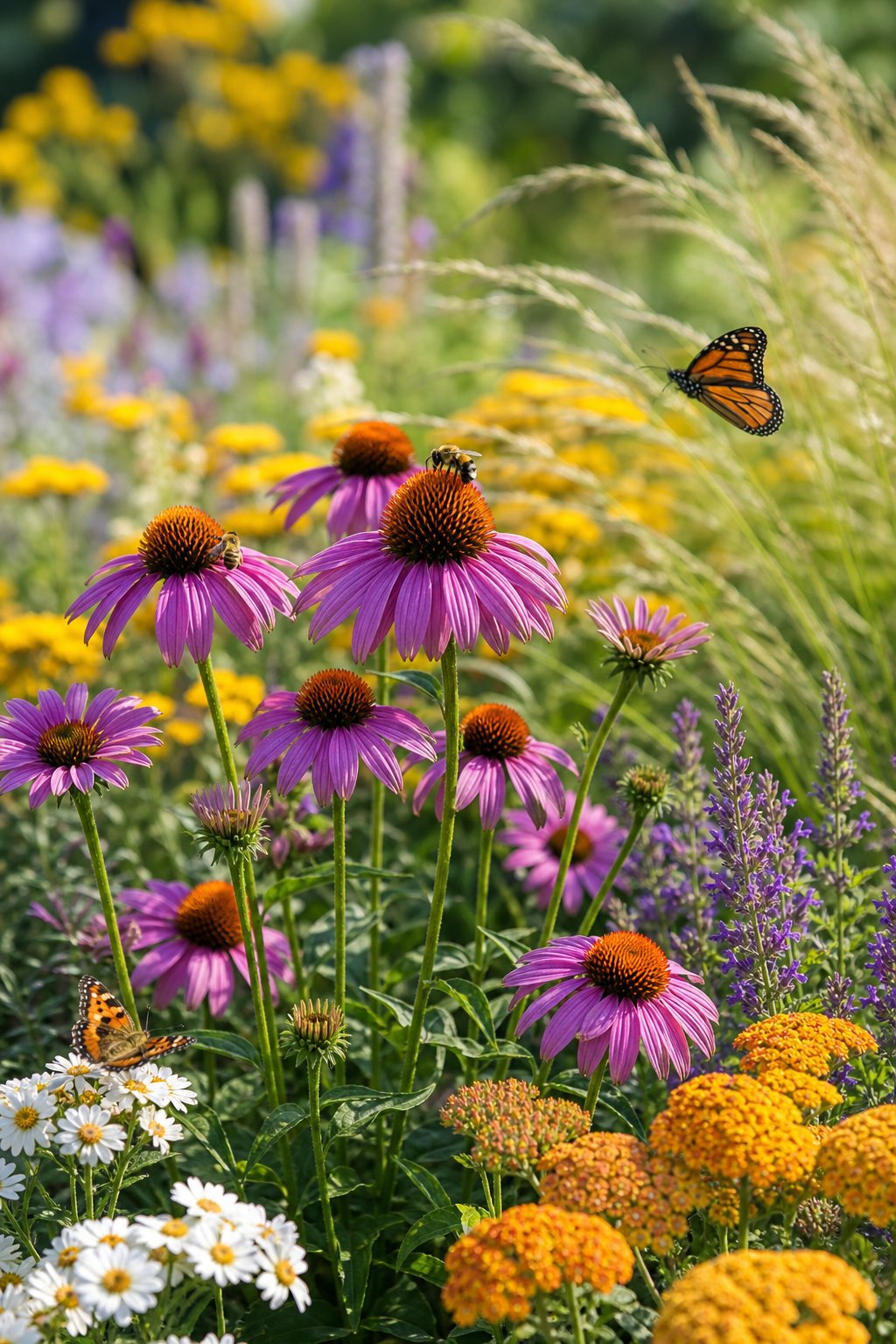
8. Coneflowers for a Sunny Pollinator Garden
Coneflowers bring sturdy color to sunny beds and give bees and butterflies a place to feed. Their daisy-like flowers rise above strong stems, so they keep their shape through summer rain and light wind.
Plant coneflowers in full sun with well-drained soil. Remove faded flowers for more blooms, or leave a few seed heads standing for birds in fall. Mix them with grasses, salvia, or low-growing edging plants for a loose pollinator border. Once established, they handle short dry periods better than many soft-stemmed flowers.
Expert Tip From MrPlanter: “Leave some spent flower heads after the season ends. Birds enjoy the seeds, and the stems add winter shape.”
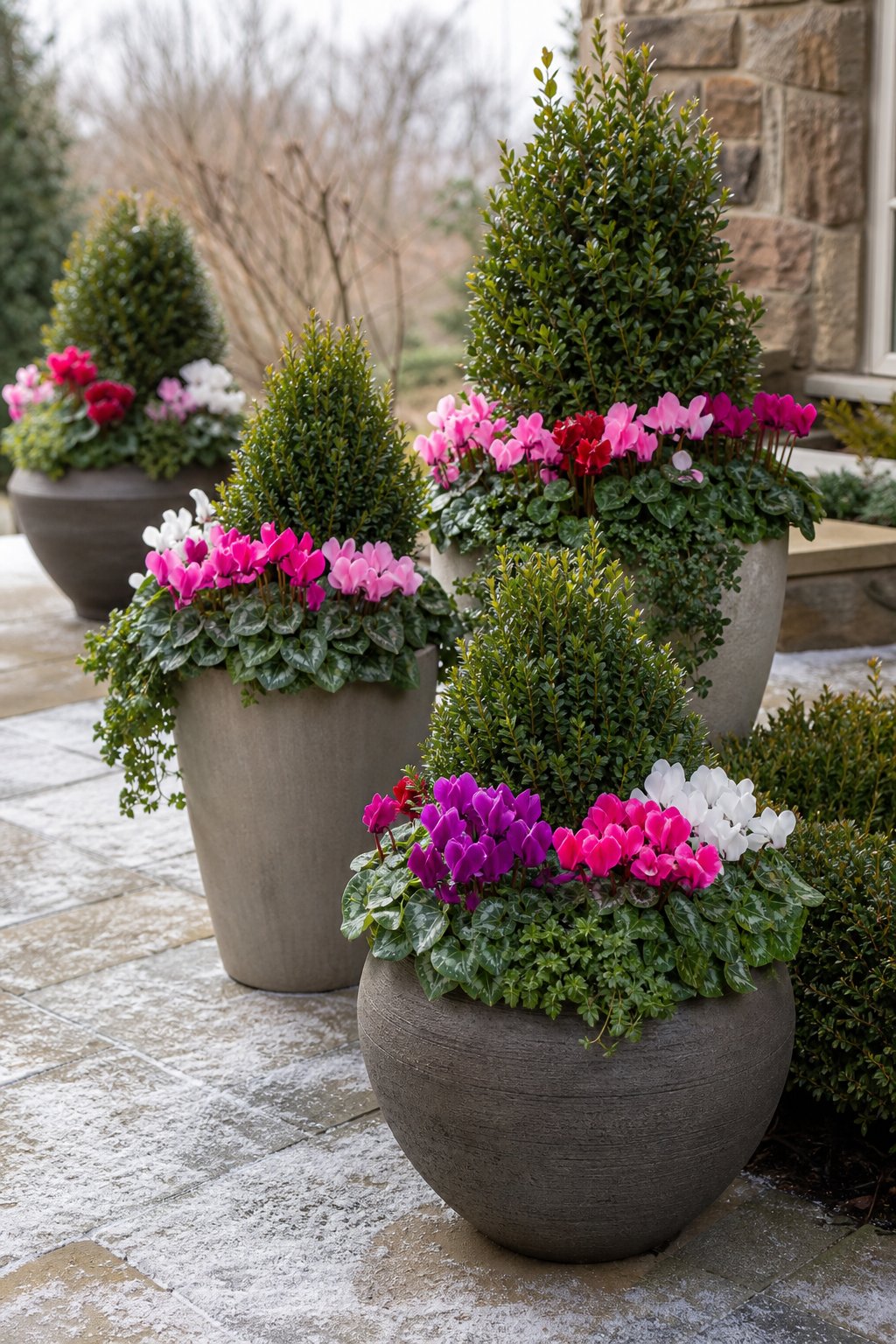
9. Evergreen Shrubs and Cyclamen in Winter Containers
Winter containers stay attractive with an evergreen shrub surrounded by cyclamen. The shrub provides structure after annual flowers fade, while cyclamen adds bright color during cool weather.
Choose a container with drainage and place it where winter wind won’t dry the foliage too quickly. Use a quality potting mix, remove faded cyclamen blooms, and water when the soil surface feels dry. Protect tender plants from deep freezes by moving the pot near a sheltered wall or into a cool covered space.
Expert Tip From MrPlanter: “Raise containers slightly on pot feet so drainage holes stay clear. Grouping pots near a wall also cuts exposure to cold wind.”
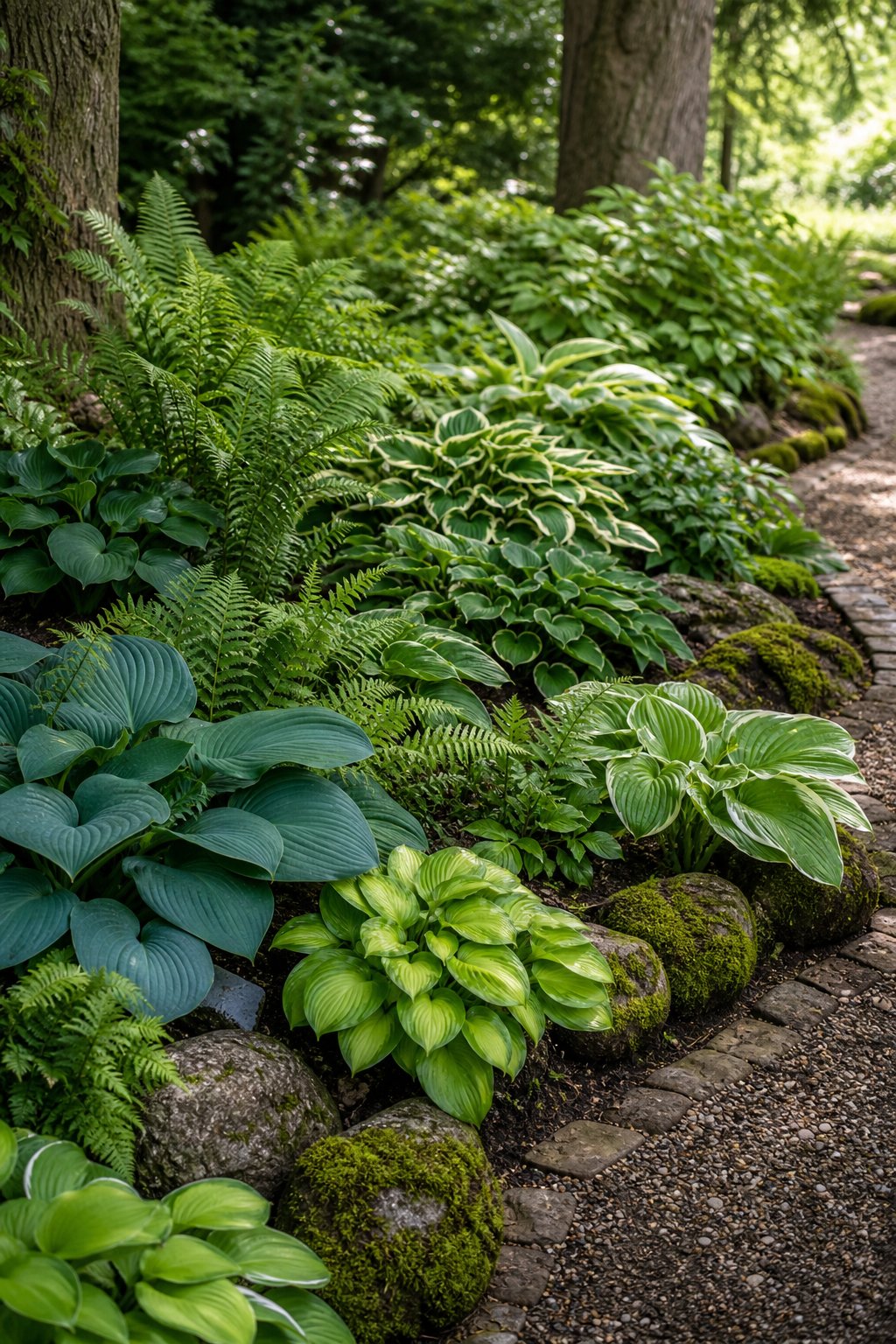
10. Hostas and Ferns for a Shady Garden Corner
Hostas and ferns turn a dim garden corner into a cool leafy retreat. Hostas bring broad, patterned leaves, while ferns add fine texture and arching fronds beneath trees or beside a shaded fence.
Improve the soil with compost before planting, then keep the bed evenly moist while roots settle. Use hosta sizes that fit the space, since large varieties quickly fill small corners. Slugs may chew hosta leaves, so remove hiding places and inspect plants after damp evenings. Mossy stones and a short path complete the woodland feel.
Expert Tip From MrPlanter: “Place taller ferns behind hostas so every leaf remains visible. Morning light with afternoon shade gives many hostas strong color.”
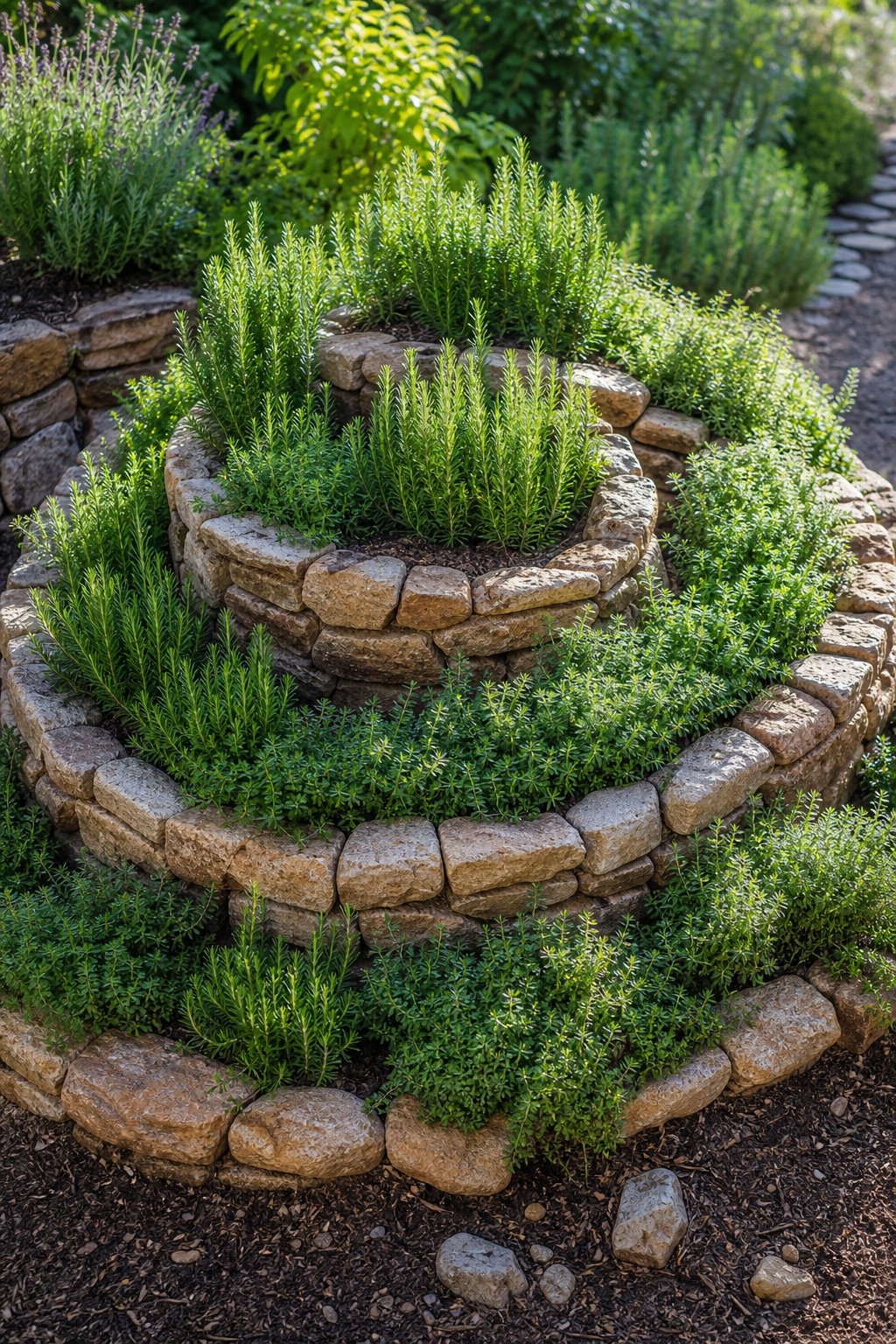
11. Rosemary and Thyme in a Spiral Herb Garden
A spiral herb garden turns cooking plants into a useful garden feature. Rosemary sits near the top where drainage is sharp, while thyme fits the lower edges and spills across the stones.
Build the spiral with soil and stone, keeping the upper planting zone drier than the base. Give rosemary full sun and trim it often enough to keep stems compact. Thyme needs good drainage and little fuss once established. Harvest small amounts regularly, and avoid cutting into old woody rosemary stems.
Expert Tip From MrPlanter: “Put herbs you use most near the outside edge. You’ll harvest more often when the leaves are easy to reach.”
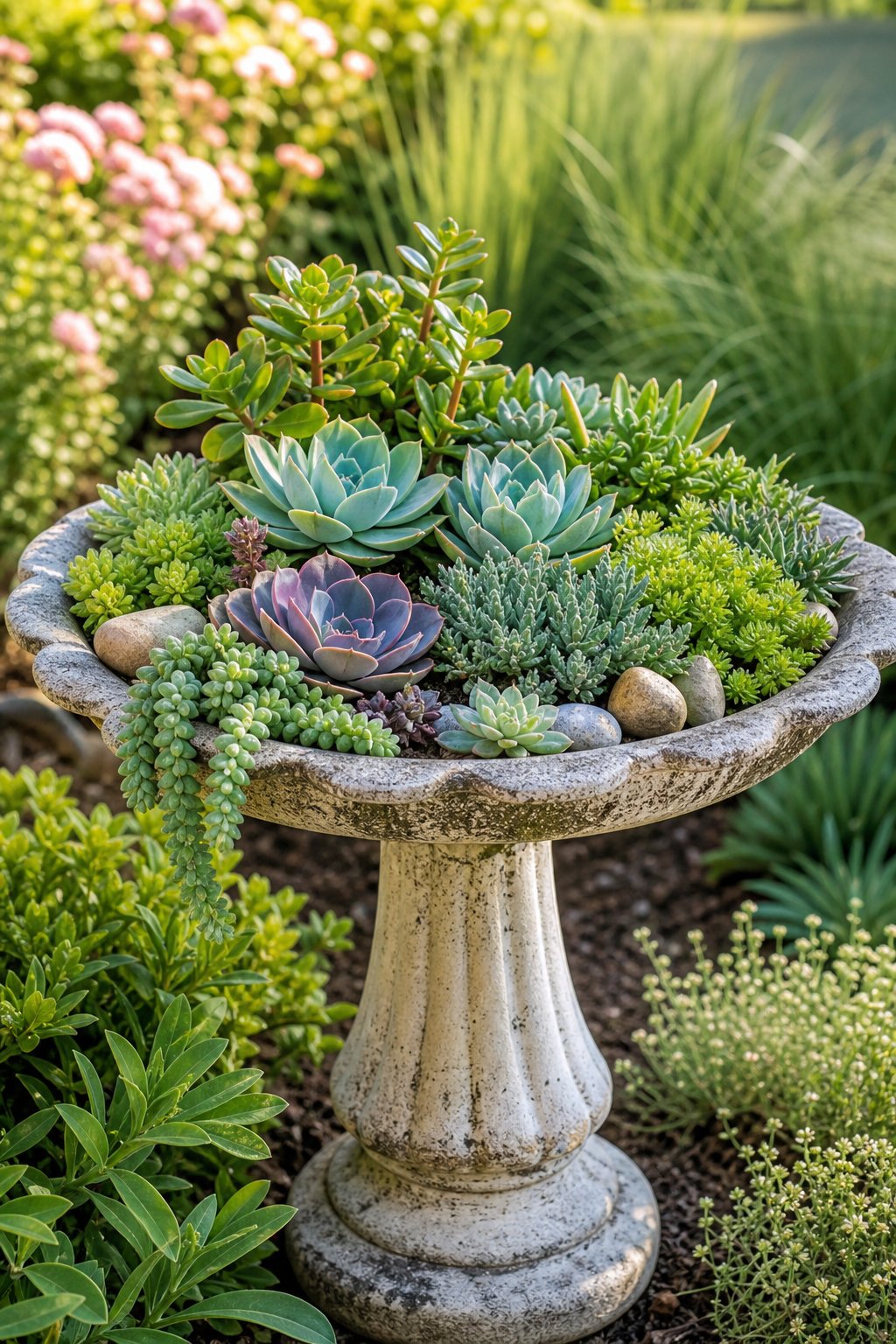
12. Succulents in a Repurposed Birdbath Planter
A vintage birdbath makes a charming home for shallow-rooted succulents. Their varied shapes and colors create a miniature display that works beside a patio, path, or sunny garden wall.
Check that the basin drains well, or add a layer of gritty mix and use plants that tolerate your setup. Combine upright, rounded, and trailing forms for texture. Water deeply, then let the mix dry before watering again. Bring tender succulents indoors when freezing weather threatens.
Expert Tip From MrPlanter: “Test drainage before planting by pouring in a cup of water. If it sits in the basin, choose drought-tolerant plants that handle that condition or improve the drainage.”
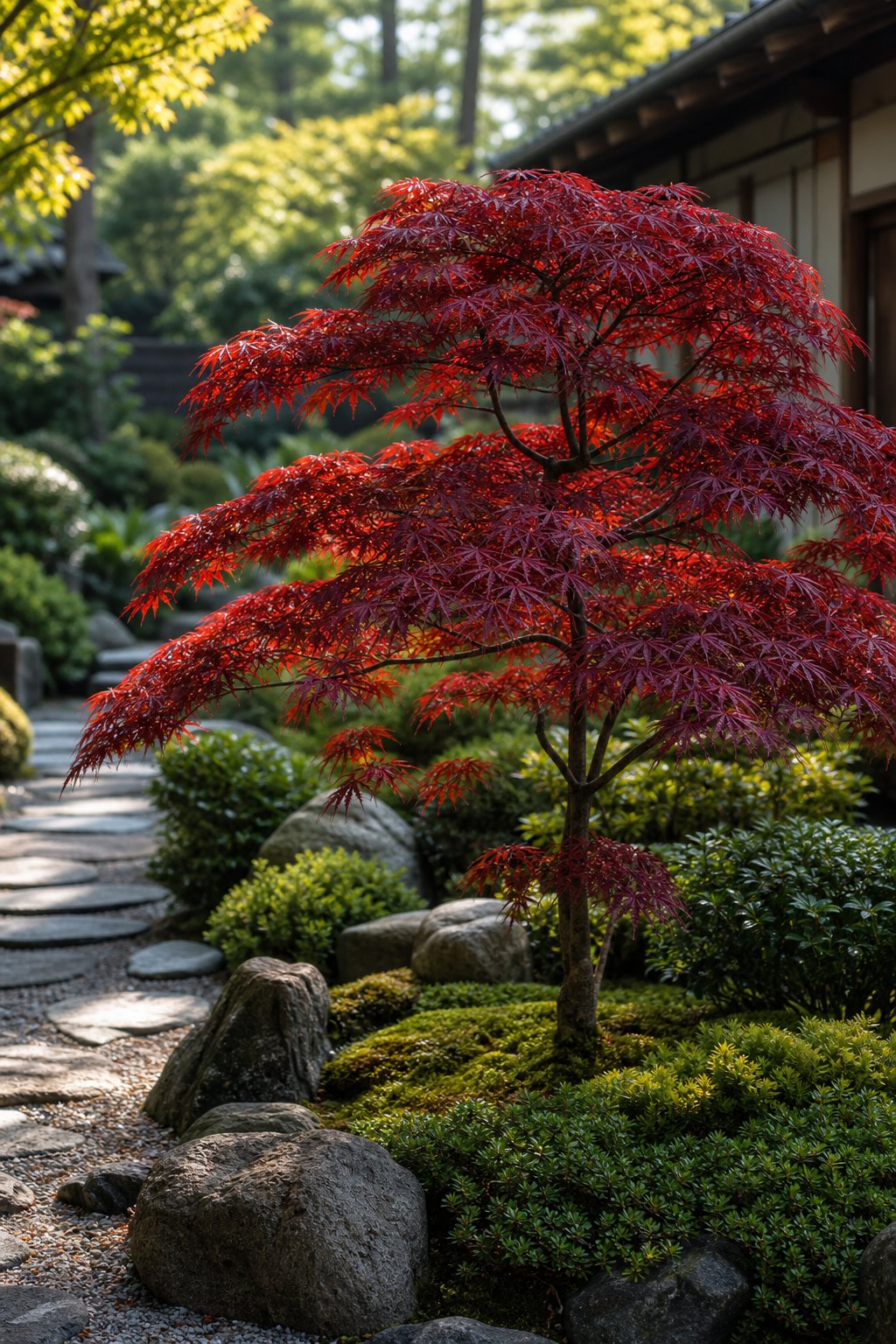
13. Dwarf Japanese Maple as a Garden Focal Point
A dwarf Japanese maple gives a small garden a graceful focal point. Burgundy or green leaves draw attention through the growing season, while the branching shape adds interest after leaves drop.
Place the tree where it receives gentle morning sun and protection from harsh afternoon heat in warm climates. Keep the soil evenly moist and add mulch without touching the trunk. Surround the maple with low ferns, moss, or stones so its form remains visible. Choose a mature size that fits the bed.
Expert Tip From MrPlanter: “Stand back before planting and check the tree from windows and paths. A focal plant works best where you’ll see its shape often.”
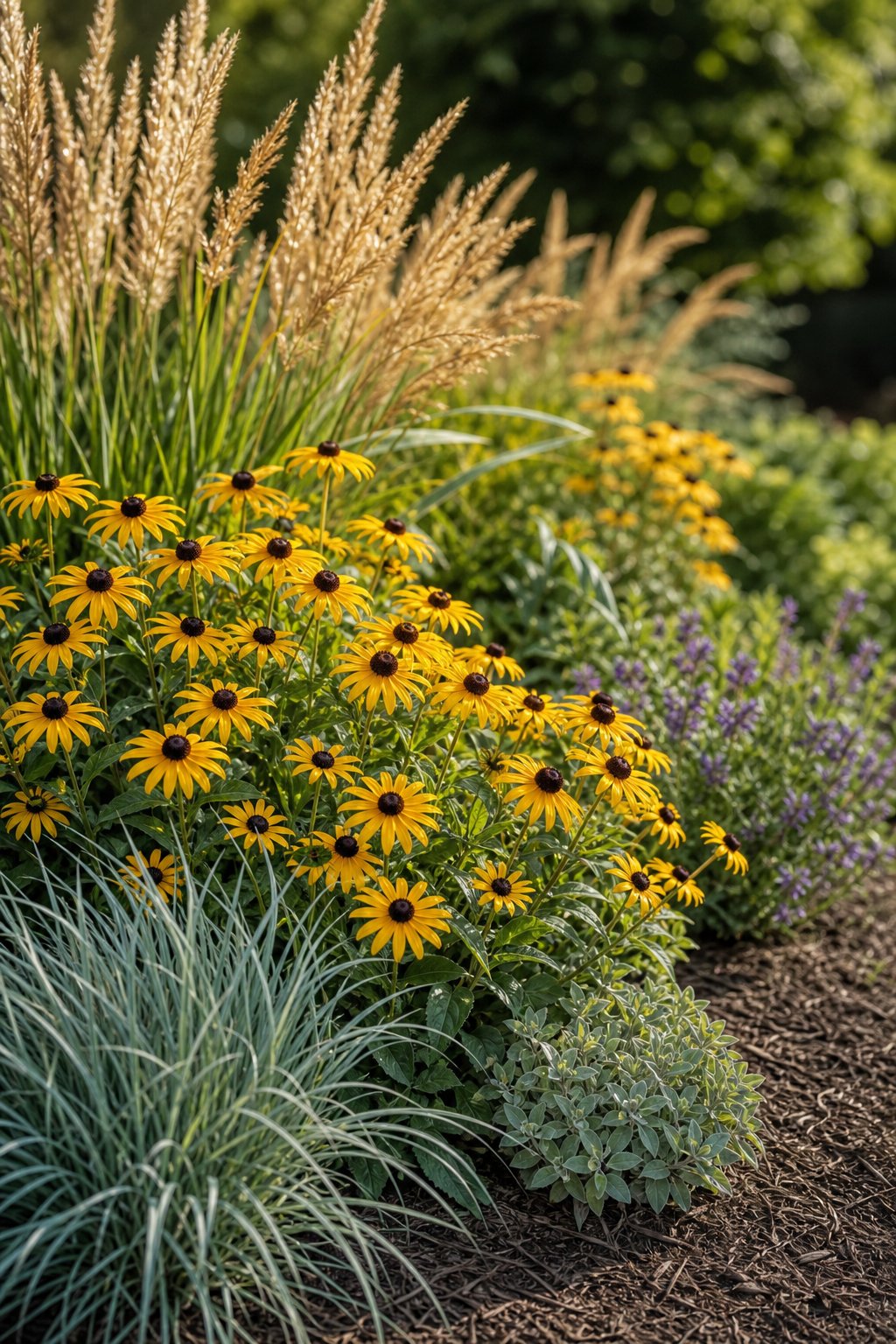
14. Black-Eyed Susans in a Low-Maintenance Border
Black-Eyed Susans bring golden flowers to a border with limited upkeep. Their dark centers add contrast beside ornamental grasses, green shrubs, and plants with silver leaves.
Give them full sun and soil that drains well. Water new plants during their first season, then remove faded blooms if you want a tidier display. Leave some seed heads for birds after flowering. Because they spread by seed and clumps, leave enough room for the border to fill without crowding nearby plants.
Expert Tip From MrPlanter: “Plant them in groups of three or five for a fuller color patch. Divide crowded clumps in spring or fall.”
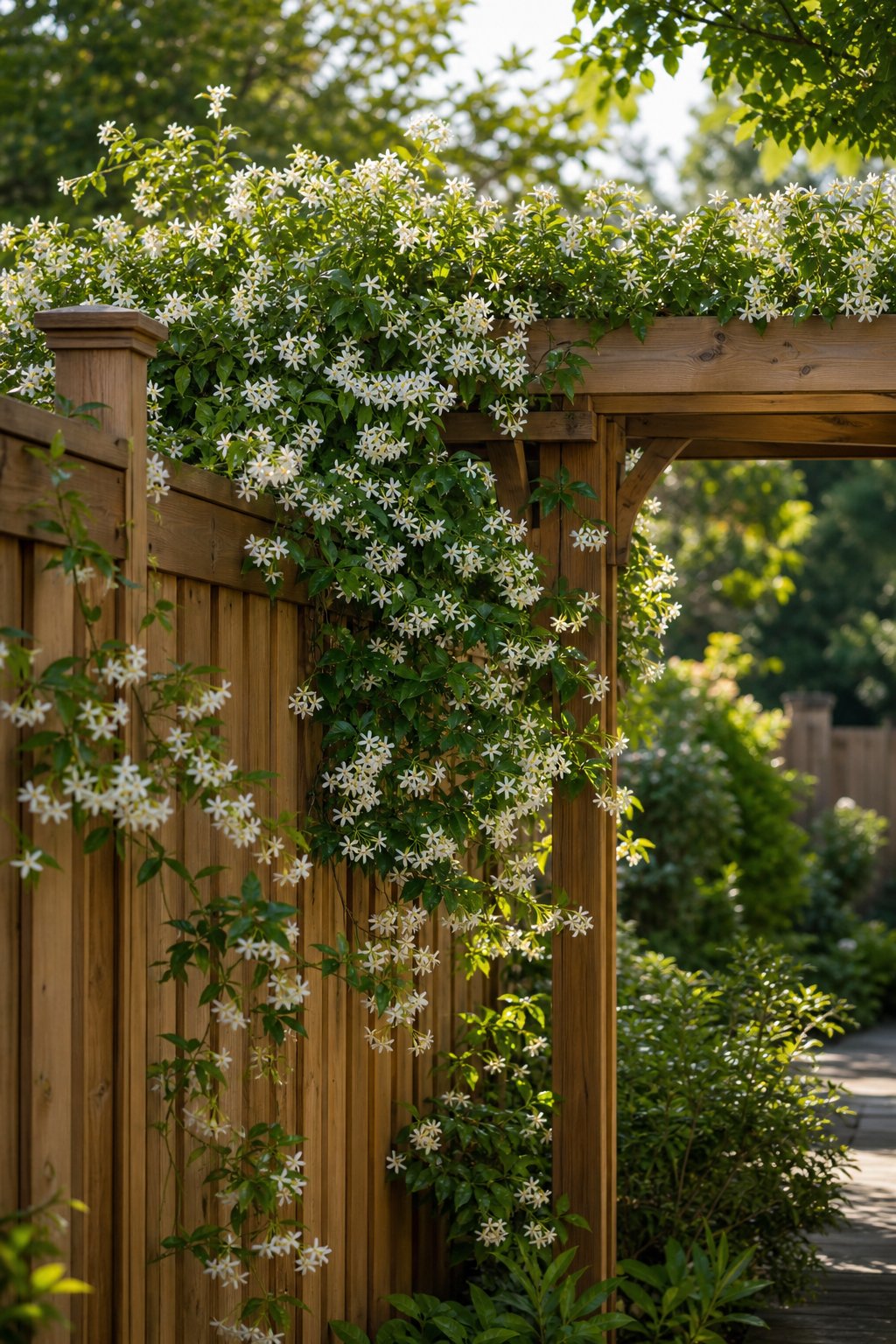
15. Jasmine on a Privacy Fence or Pergola
Jasmine softens a privacy fence or pergola with twining stems and fragrant white flowers. The vine adds height while making a hard structure feel more connected to the garden.
Provide sturdy support, full sun to partial shade, and soil that drains freely. Tie new growth to the structure until the vine begins to climb on its own. Prune after flowering to control size and guide the shape. Check your local growing conditions, since some jasmine types need winter protection.
Expert Tip From MrPlanter: “Install the support before planting the vine. Early guidance keeps stems off gutters, siding, and nearby shrubs.”
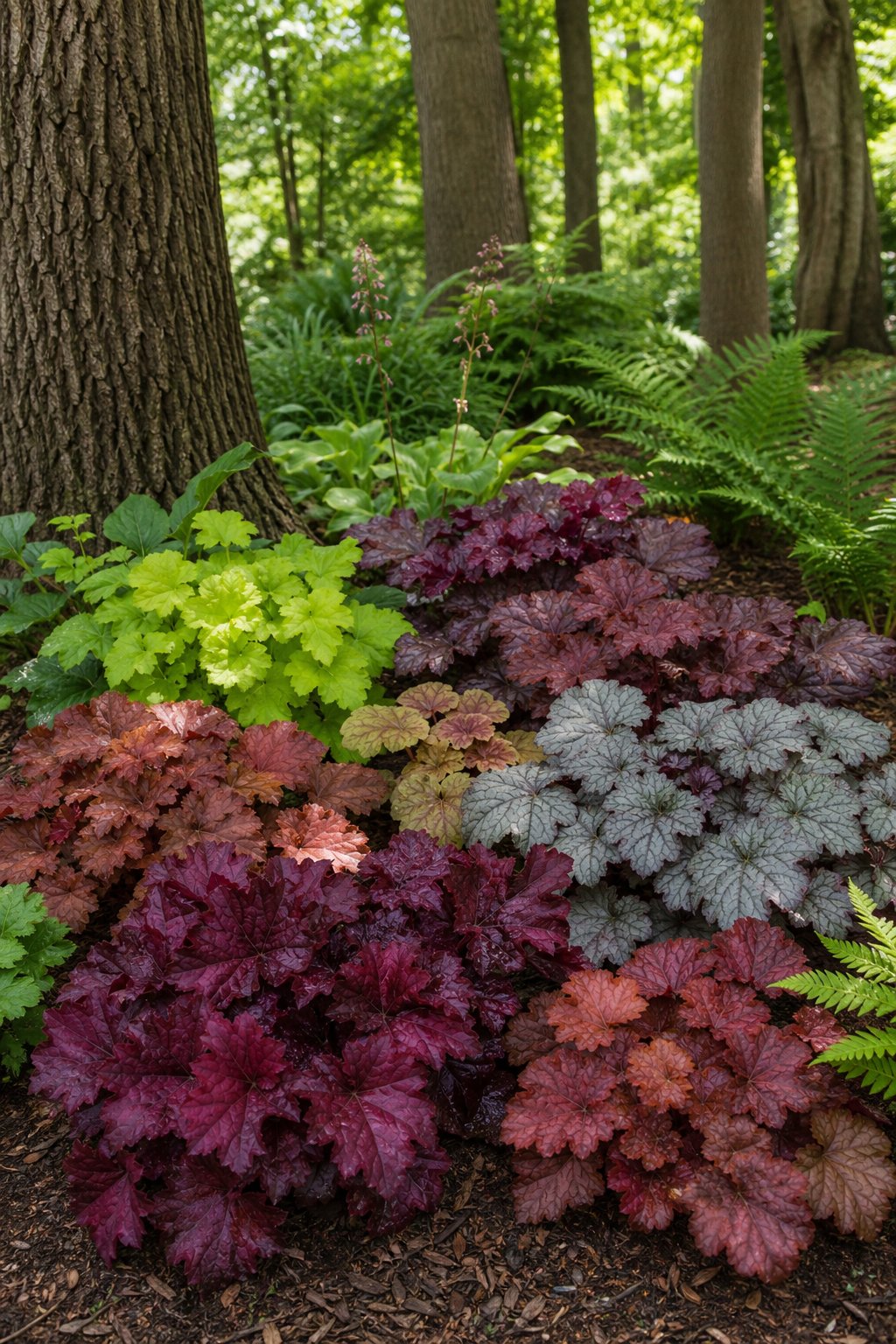
16. Coral Bells for Colorful Foliage Under Trees
Coral bells add leaf color beneath trees where flowers may struggle. You can find varieties in copper, lime, burgundy, and deep purple, giving a shaded bed interest even between bloom periods.
Plant them in rich, well-drained soil with dappled light or morning sun. Keep crowns at soil level and remove tired leaves as the season progresses. Add compost each spring to support fresh growth. Coral bells pair well with ferns, hostas, and small stones around tree roots.
Expert Tip From MrPlanter: “Avoid burying the crown under mulch. Leave a small clear ring around each plant to protect new growth.”
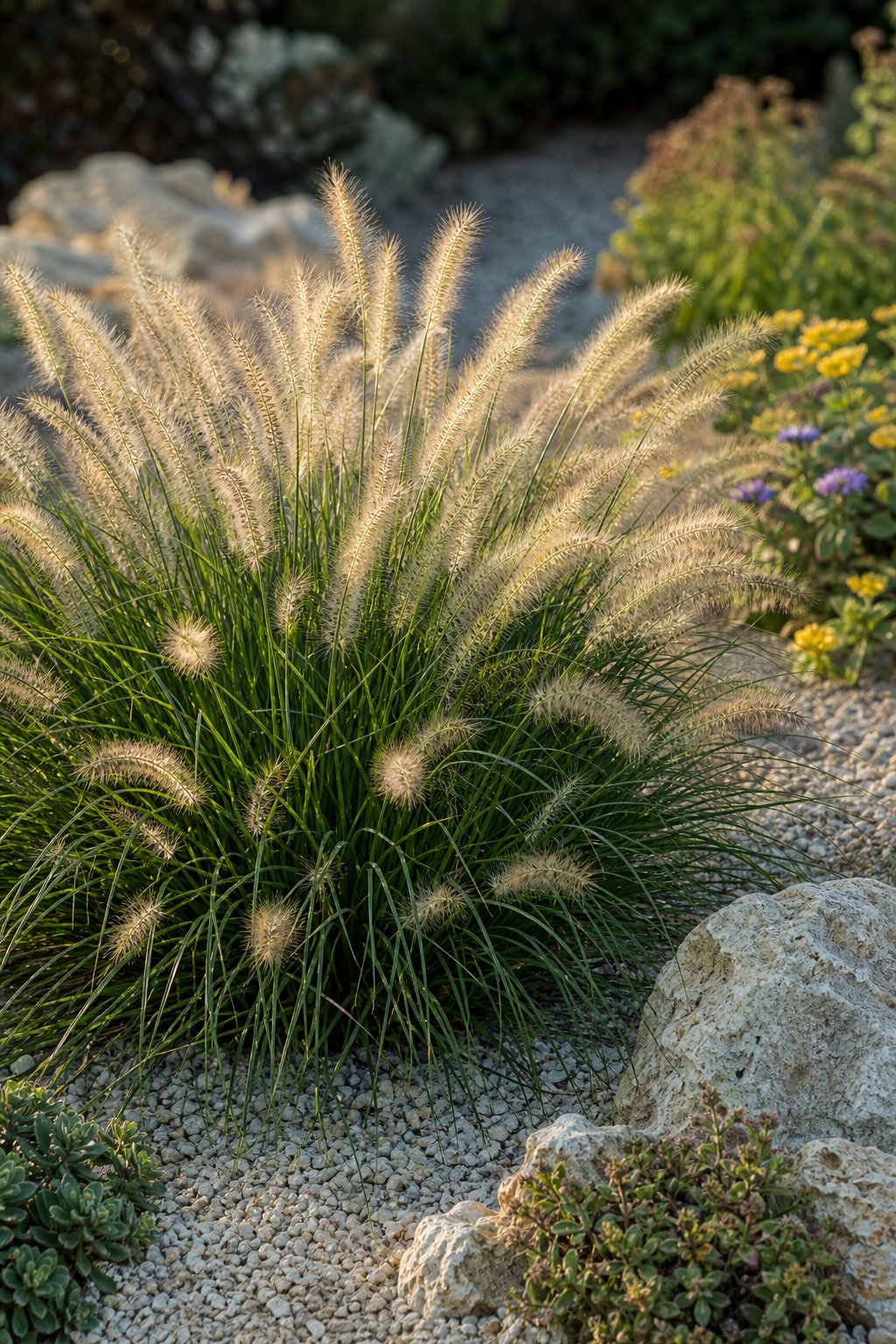
17. Dwarf Fountain Grass in a Gravel Garden
Dwarf fountain grass brings soft plumes and movement to a gravel garden. Its narrow leaves break up hard stone surfaces while keeping the planting plan easy to manage.
Choose a sunny site with fast-draining soil, then water deeply while plants establish. Use gravel as a mulch layer that keeps the crown dry and limits weed growth. Cut the grass back in late winter before fresh blades appear. Group several plants along a path or repeat one clump beside a boulder.
Expert Tip From MrPlanter: “Keep gravel a few inches away from the crown. That open space helps rain drain and makes spring trimming easier.”
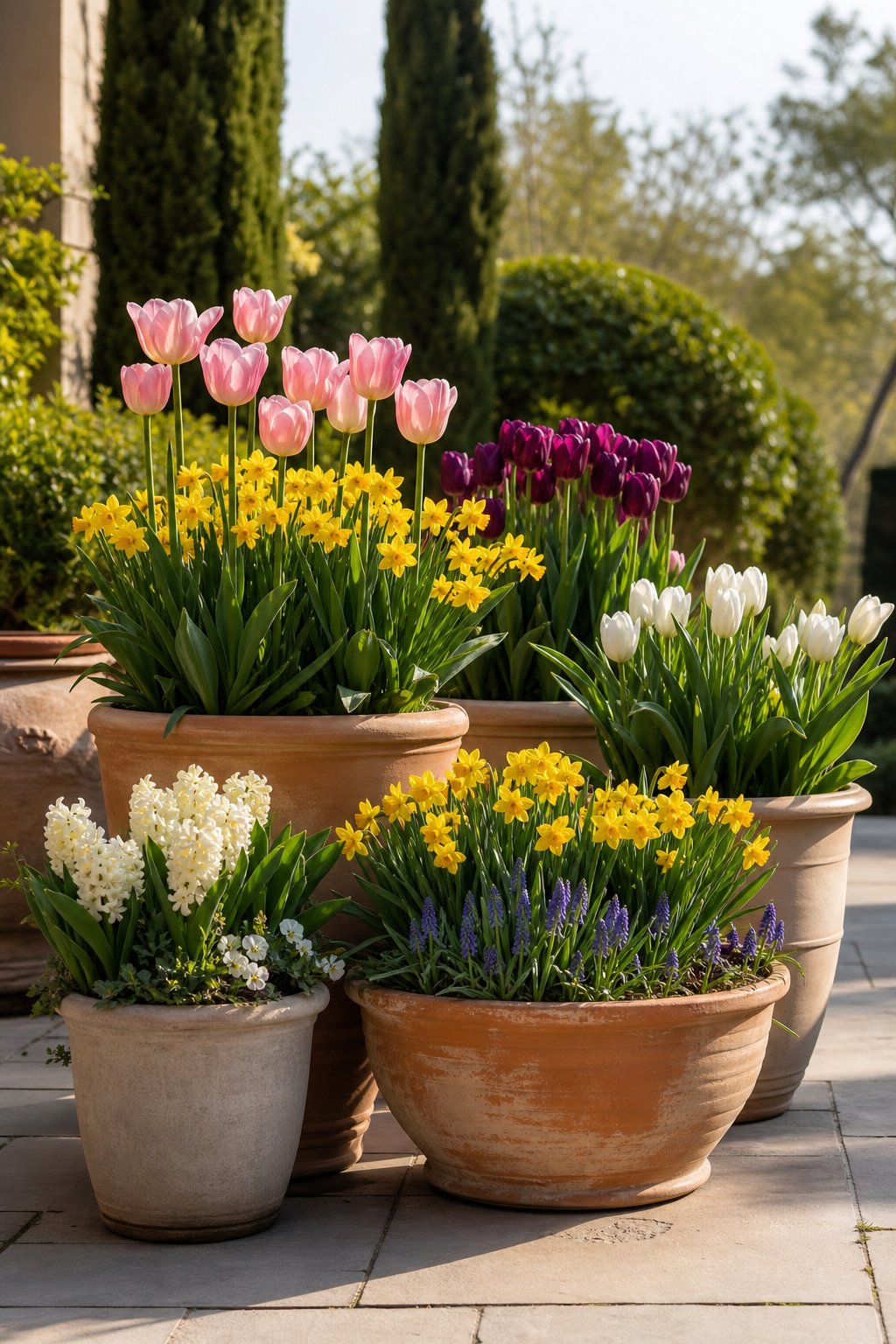
18. Tulips and Daffodils in Layered Spring Containers
Layered bulbs create a spring display that unfolds in stages. Plant daffodils deeper, tulips above them, and early bulbs near the surface so flowers appear at different heights.
Use a container with drainage and fill it with fresh potting mix. Plant bulbs in fall according to package depth, then protect the pot from extreme cold. After flowering, let leaves fade naturally so bulbs store energy for next year. Add cool-season flowers around the rim for color while you wait.
Expert Tip From MrPlanter: “Mark the bulb layers with a small label during planting. You’ll know where each type sits when the pot needs seasonal care.”
How to Choose Garden Plants for Your Space
The best plant choices match your garden’s light, moisture, available room, and care routine. Start by observing the space for a full day, then check mature plant sizes before buying.
Which Plants Match Your Garden’s Sunlight?
Morning sun and afternoon shade suit many leafy plants, including hostas, ferns, and coral bells. Full-sun areas support lavender, coneflowers, black-eyed Susans, thyme, and many grasses. Watch for reflected heat near walls and paving, since those spots dry faster.
Read plant tags for light needs, then group plants with similar requirements. A simple sketch showing sun and shade zones helps you avoid placing a shade plant beside a hot driveway.
How Much Maintenance Can You Realistically Handle?
Match plant care to the time you can give each week. Drought-tolerant shrubs, grasses, lavender, and coneflowers reduce watering and trimming once established. Hydrangeas, containers, and fast-growing vines need more regular checks.
Choose fewer plant types when you want a calm care routine. Grouping plants with similar water needs also makes irrigation easier. For compact yards, these small garden ideas can help you use space without creating extra chores.
How Do You Combine Height, Texture, and Color?
Build each bed from back to front. Place a tree, tall shrub, or trellis vine behind medium flowers and grasses, then finish the edge with low herbs, ground covers, or containers.
Repeat one or two colors across the yard so separate beds feel connected. Mix broad leaves with fine blades, rounded shrubs with upright flowers, and soft foliage with stone or gravel. Leave open gaps around mature plants so the design has room to breathe.
Planning a Cohesive Backyard or Front Yard Planting Scheme
A cohesive planting scheme repeats shapes, colors, and materials across connected garden areas. Use a clear path or focal plant to guide movement, then place plants in groups that suit each zone.
How Do You Create Layers Without Overcrowding?
Place tall plants at the back of beds, medium plants in the middle, and low plants along paths. Check the mature width on every label and leave the recommended spacing between plants.
Repeat groups across a long border instead of filling every gap with a different variety. Mulch can cover open soil while plants grow, giving roots room to expand without making the bed look unfinished.
Which Plants Work Best in Beds, Borders, and Containers?
Use shrubs, hydrangeas, Japanese maples, and grasses to anchor planting beds. Lavender, boxwood, thyme, and low flowers define borders along paths. Containers suit canna lilies, olive trees, succulents, seasonal bulbs, and plants that need winter shelter.
Keep containers near water access and choose heavy pots for tall plants. If you want more potted color, these container gardening flowers offer practical combinations for patios and entrances.
How Can You Add Year-Round Interest?
Combine plants with different seasons of strength. Evergreen shrubs and boxwood hold structure in winter, cyclamen and bulbs bring cool-season color, while hydrangeas, coneflowers, and black-eyed Susans carry summer flowers.
Add bark, stones, seed heads, and colorful containers to keep beds attractive between blooms. Plan one focal point for each main view, then repeat a supporting plant along paths or borders so the yard feels connected.
I’m Anirban Saha, the Founder and Owner of MrPlanter.com. I pay the bills as a software developer, although my BTech is actually in Electronics and Communication. I really love my day job, but what gives me energy every day is interacting with my indoor plants and taking care of them. I have been successfully nurturing and maintaining houseplants for over 10 years now.
📚🔍 Our content undergoes thorough review and fact-checking before publication. For additional details, explore our strict Editorial Policy to deliver helpful content. 📝🔒