As an Amazon Associate, MrPlanter.com earns from qualifying purchases.
A good planting layout turns your yard into a place that works hard without feeling crowded. You get clearer paths, healthier plants, easier watering, and a garden that looks intentional even when a zucchini starts plotting world domination.
The best garden planting layout matches your sunlight, soil, space, and available gardening time. You can grow food in raised beds, flowers along a driveway, herbs beside the kitchen, or a mix that makes your yard useful from spring through fall.
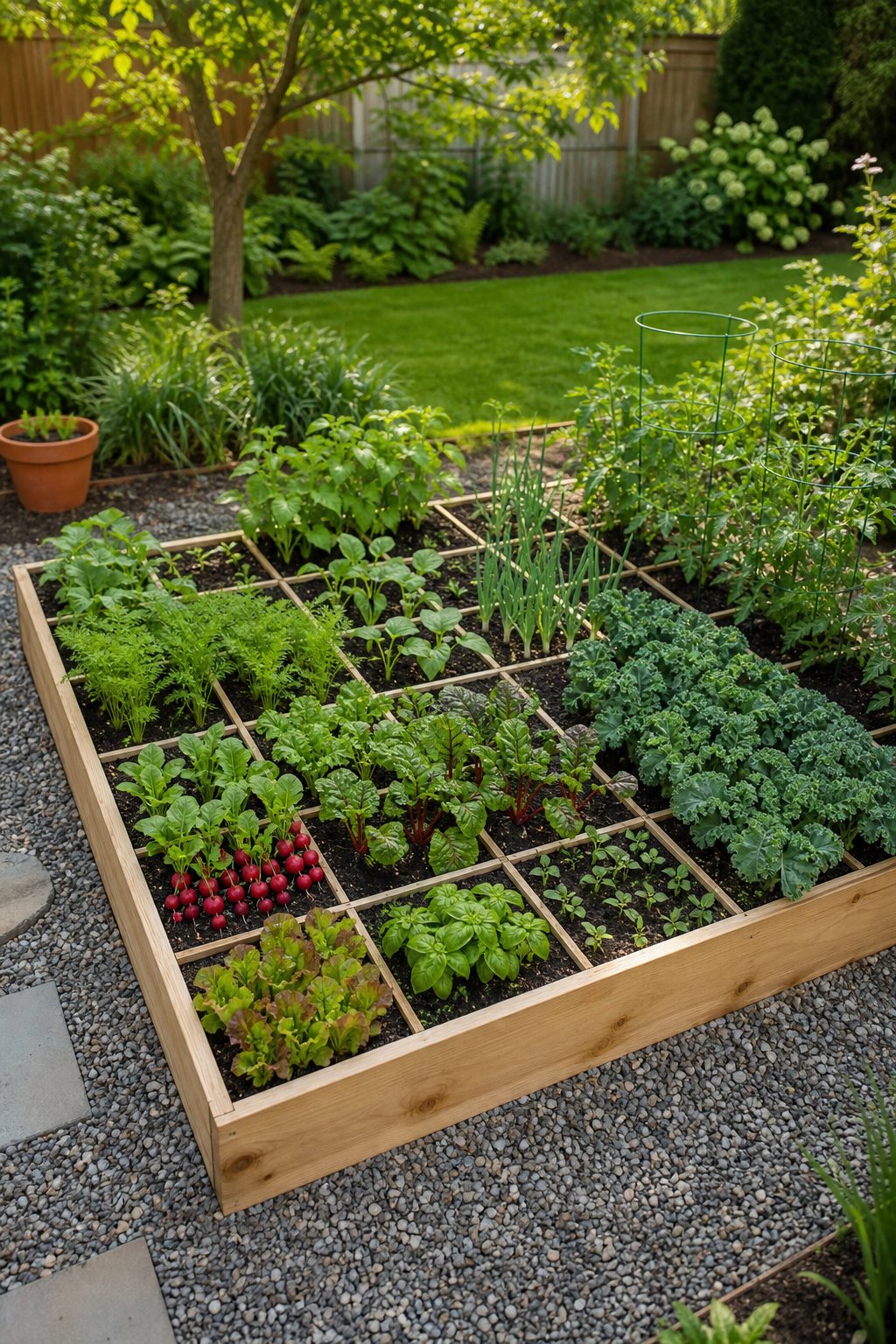
1. 4×8 Raised Bed Square Foot Vegetable Grid
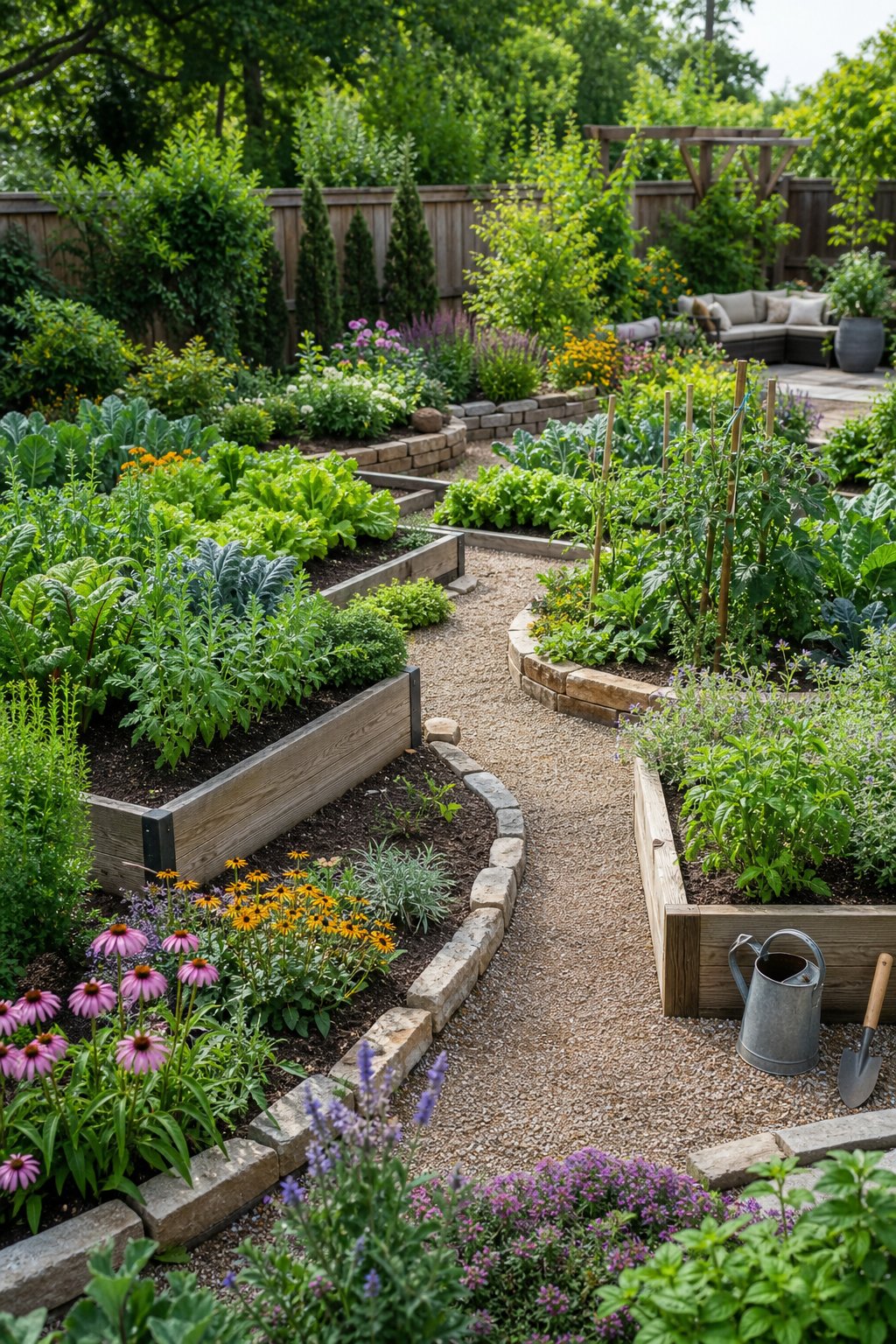
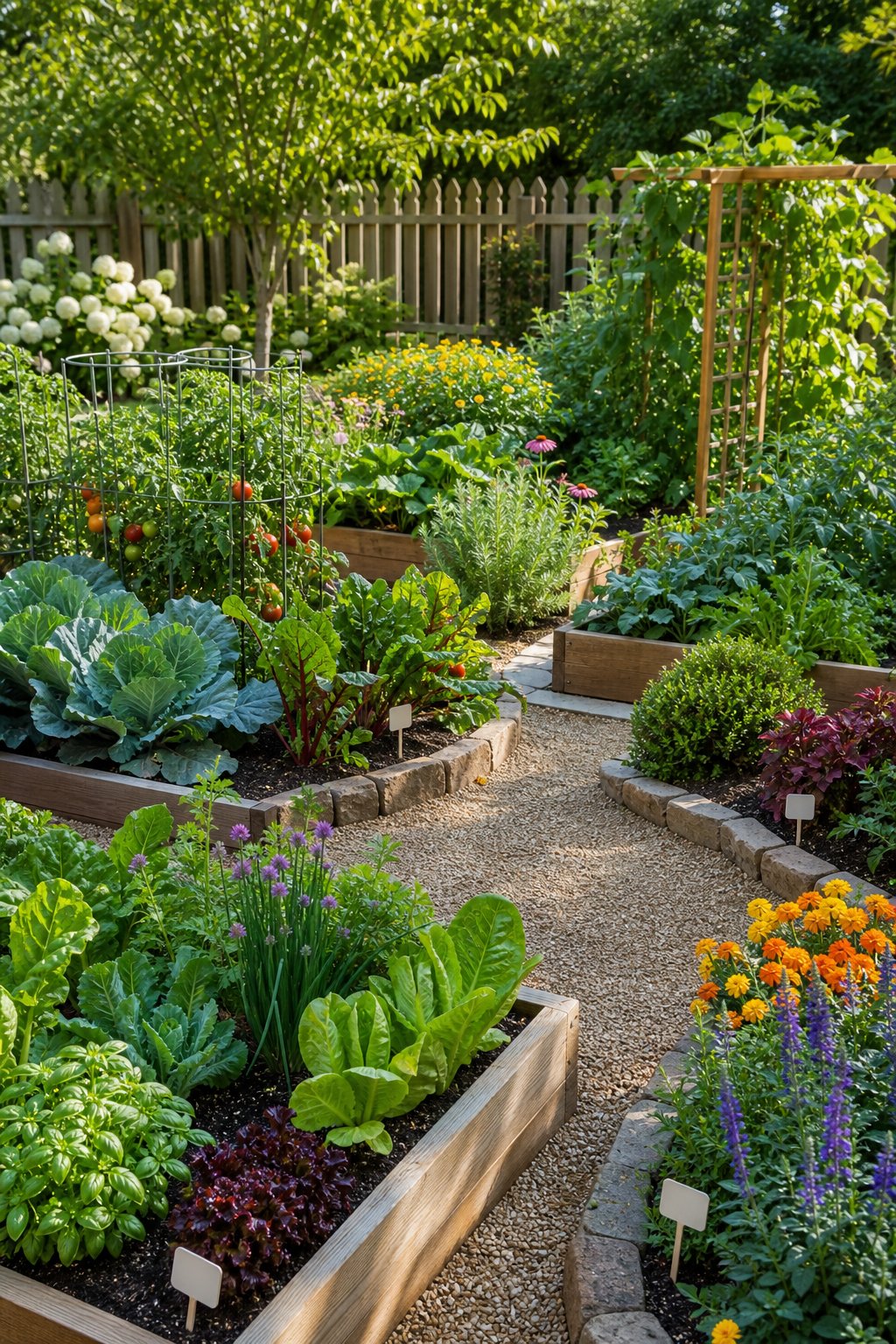
A 4×8 raised bed gives you a tidy growing space that stays easy to reach from both long sides. Divide the surface into one-foot squares, then assign each square to a crop based on its mature size. Radishes and carrots fit several per square, while tomatoes and peppers need more room. Use sturdy boards, rich soil, and a mulch layer to keep the grid neat. This plan works especially well for a backyard vegetable garden or a small side yard. Leave enough room around the bed for a wheelbarrow and your knees.
Expert Tip From MrPlanter: “Mark each square with twine during your first season. You’ll learn the spacing much faster when you can see it.”
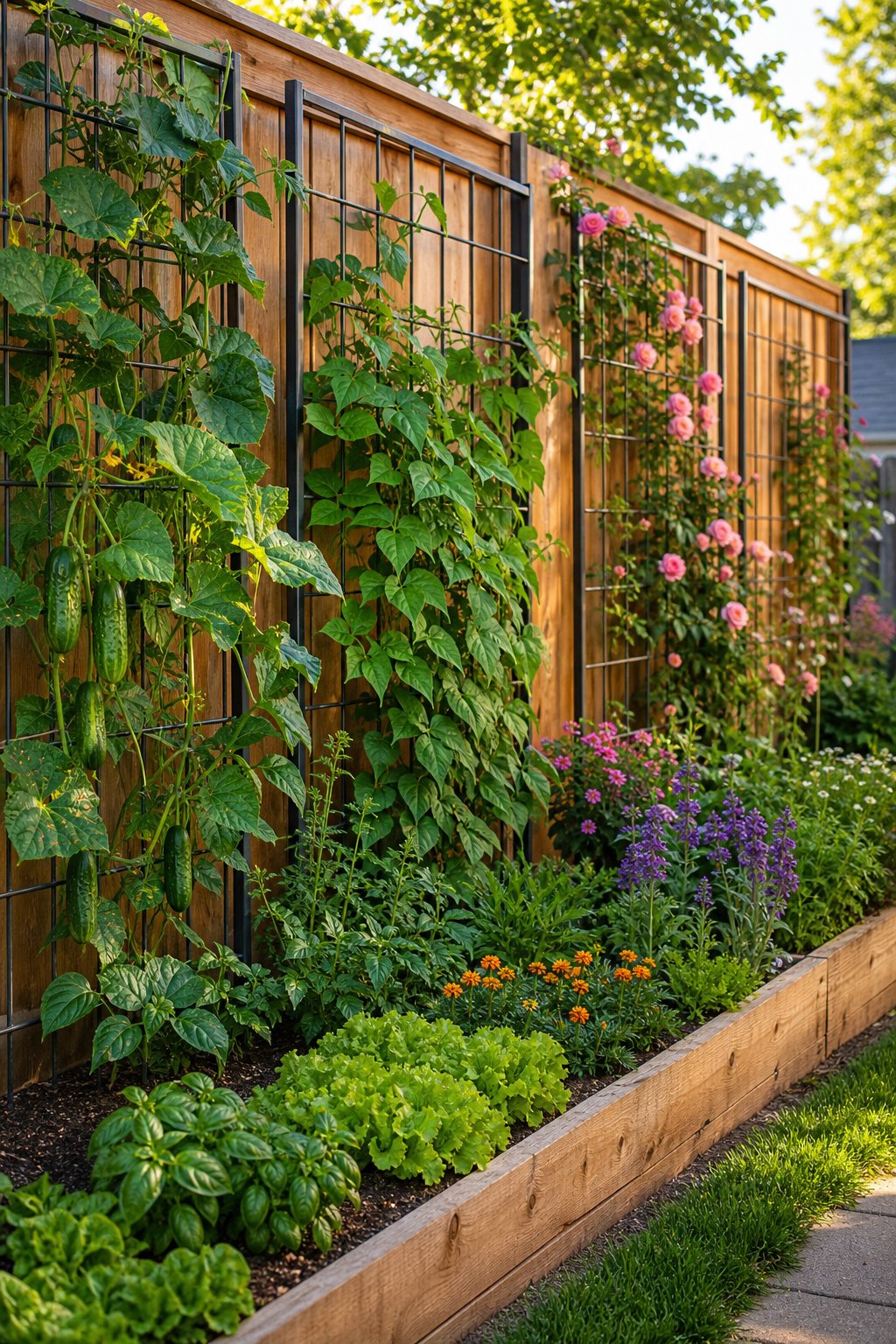
2. Vertical Trellis Garden Along a Sunny Fence
A sunny fence can become a productive growing wall with trellises and climbing crops. Put cucumbers, pole beans, peas, or small melons near the base, then guide young stems upward with soft ties. Keep the tallest plants on the north side when possible so they cast less shade across the bed. Check that the fence receives at least six hours of sun and can support the added weight. For more ways to use this space, browse these garden trellis ideas.
Expert Tip From MrPlanter: “Install the trellis before planting so roots stay undisturbed. Leave a little space behind it for air movement and repairs.”
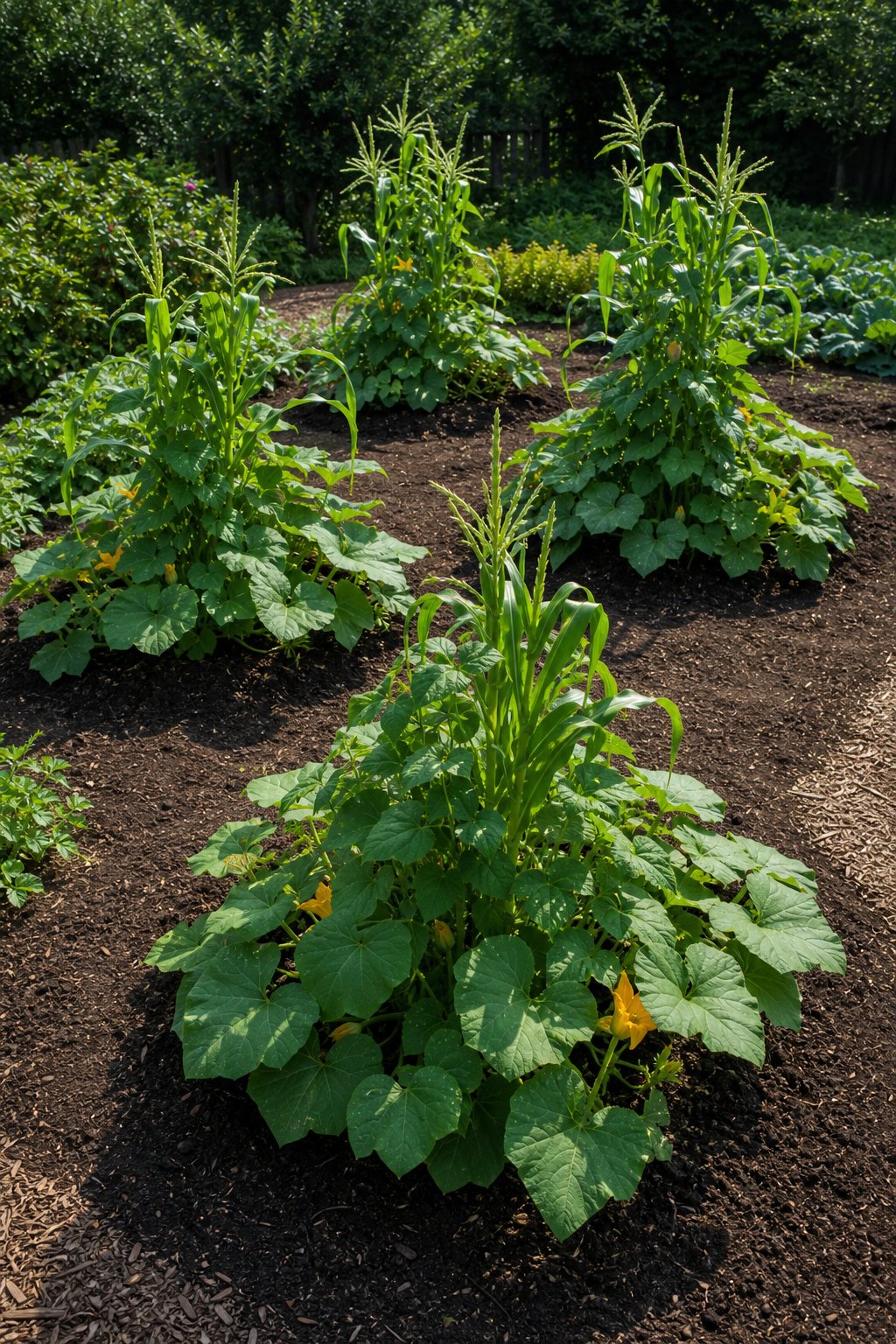
3. Three Sisters Corn, Bean, and Squash Mounds
Three Sisters mounds pair corn, climbing beans, and squash in one space-saving arrangement. Plant corn in a small mound first, add beans after the stalks gain height, and let squash spread around the base. Corn offers a natural support for beans, while broad squash leaves shade the soil. Give each mound plenty of room because squash vines travel quickly across paths and neighboring beds. Choose a sunny backyard area with fertile soil and reliable water.
Expert Tip From MrPlanter: “Use a strong corn variety that grows tall enough for beans. Guide the first bean vines gently so they find the stalk.”
4. Keyhole Garden With a Central Compost Basket
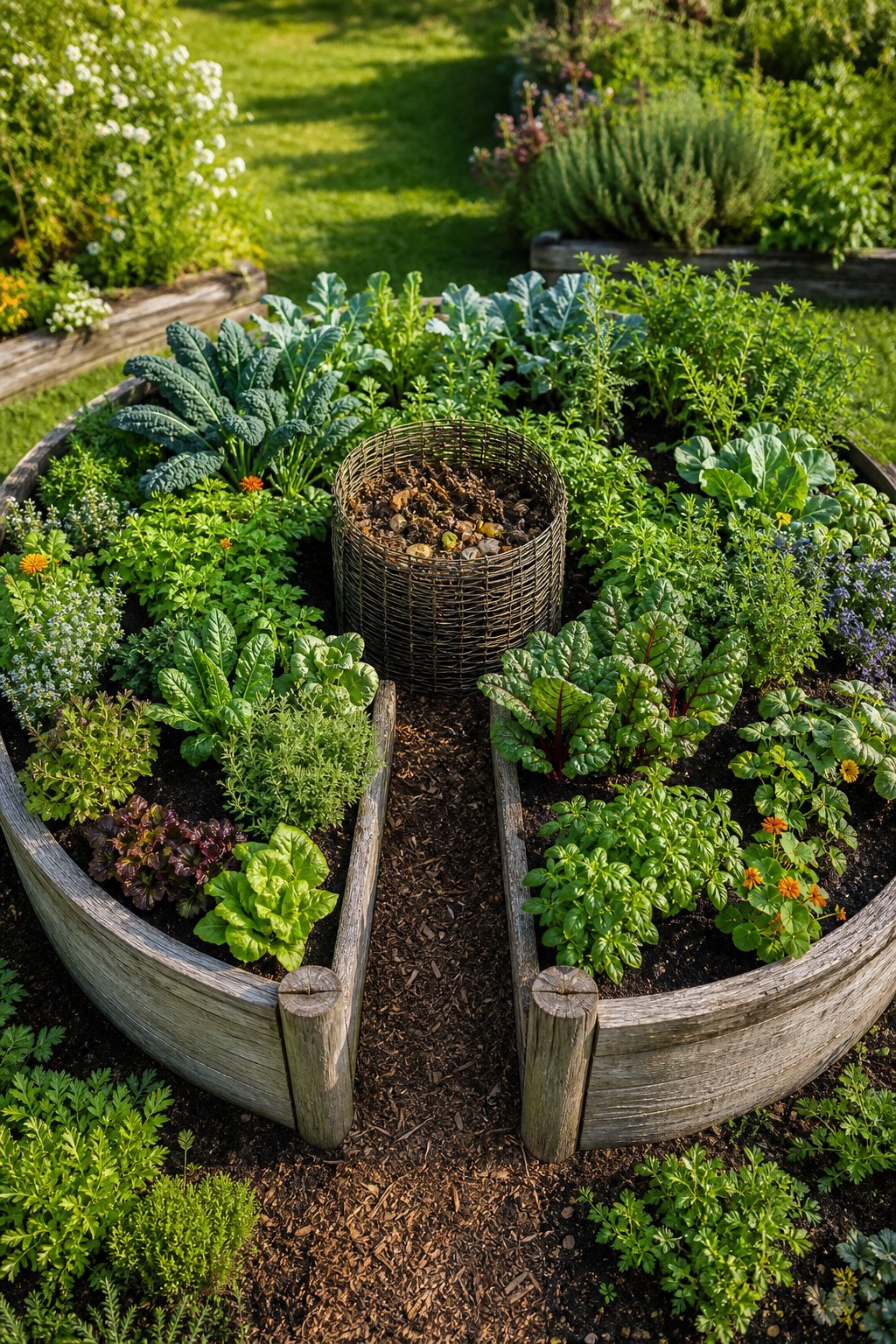
A keyhole garden places growing soil in a compact circle around a central compost basket. The narrow opening lets you reach the middle without stepping into the bed, while kitchen scraps and water added to the basket feed the surrounding soil. Build the outer wall from stone, brick, or untreated wood, then fill it with rich compost and soil. Plant herbs near the path and larger vegetables toward the outer edge. This shape suits a sunny backyard with limited room.
Expert Tip From MrPlanter: “Keep the compost basket open enough for worms and water to pass through. Add small amounts of scraps so the center stays balanced.”
5. Formal Potager Garden With Boxwood-Edged Beds
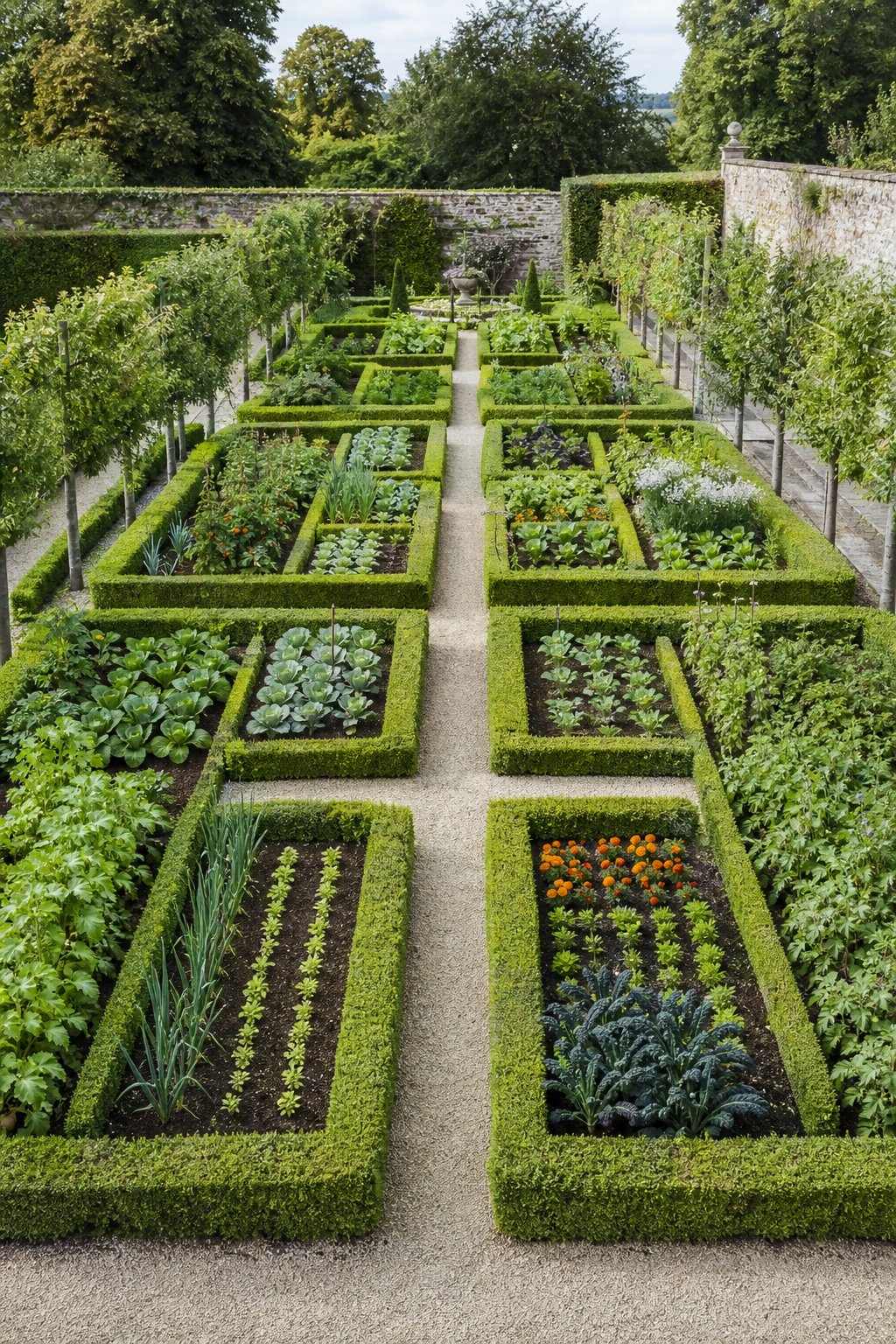
A formal potager makes vegetables, herbs, and flowers part of a carefully framed garden design. Lay out symmetrical beds with gravel paths, then use low boxwood borders to define each shape. Place taller crops toward the back and tuck colorful flowers along the edges. The design needs regular trimming and clear planting plans, yet the result looks polished from a patio or kitchen window. Explore more boxwood garden ideas before choosing your border style.
Expert Tip From MrPlanter: “Keep bed shapes simple during your first year. Straight paths are easier to edge, weed, and refresh.”
6. Succession-Planting Raised Bed Layout
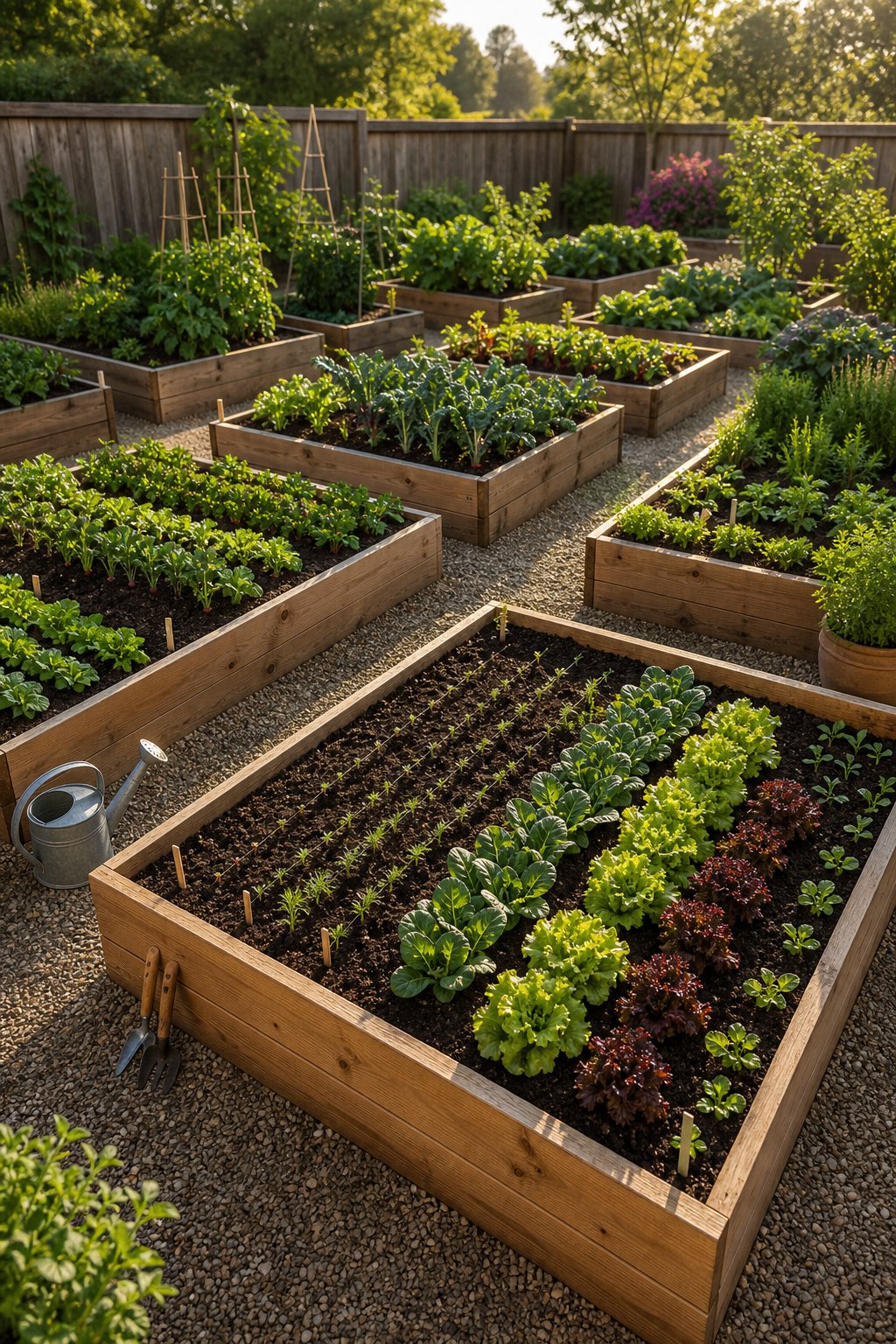
A succession-planting layout keeps one raised bed producing through several harvest windows. Start with quick crops such as lettuce or radishes, then replant those spaces with beans, basil, or fall greens. Write planting dates on a calendar and reserve a few squares for the next crop before the first one comes out. This approach fills gaps that usually sit empty between seasons. It also spreads your harvest, so you don’t bring home thirty heads of lettuce at once.
Expert Tip From MrPlanter: “Choose crops with different harvest speeds for each bed. A simple planting calendar keeps the next sowing from slipping your mind.”
7. Companion Planting Beds for Tomatoes, Basil, and Marigolds
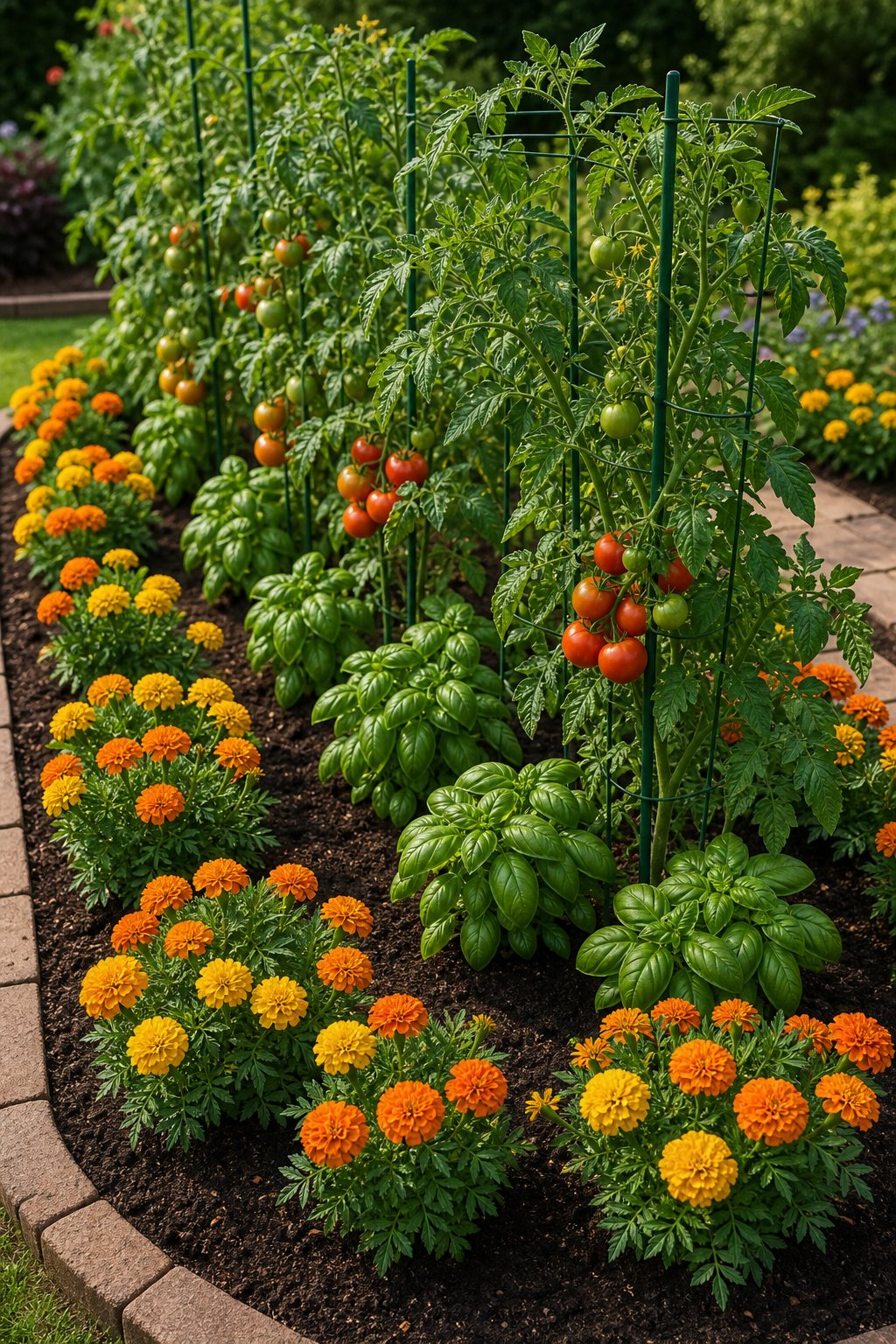
Tomatoes, basil, and marigolds create a practical mixed bed with food, scent, and color. Set tomatoes toward the back with stakes or cages, place basil between them, and ring the front edge with marigolds. Give tomatoes enough room for airflow and keep leaves off the soil with mulch. The flowers attract helpful insects and make the bed look finished while the vegetables grow. For first-season tomato guidance, see how to grow tomatoes for beginners.
Expert Tip From MrPlanter: “Space tomatoes by their mature width, not the size of the nursery pot. Tuck basil where it gets light without blocking air around tomato leaves.”
8. Spiral Herb Garden Near the Kitchen Door
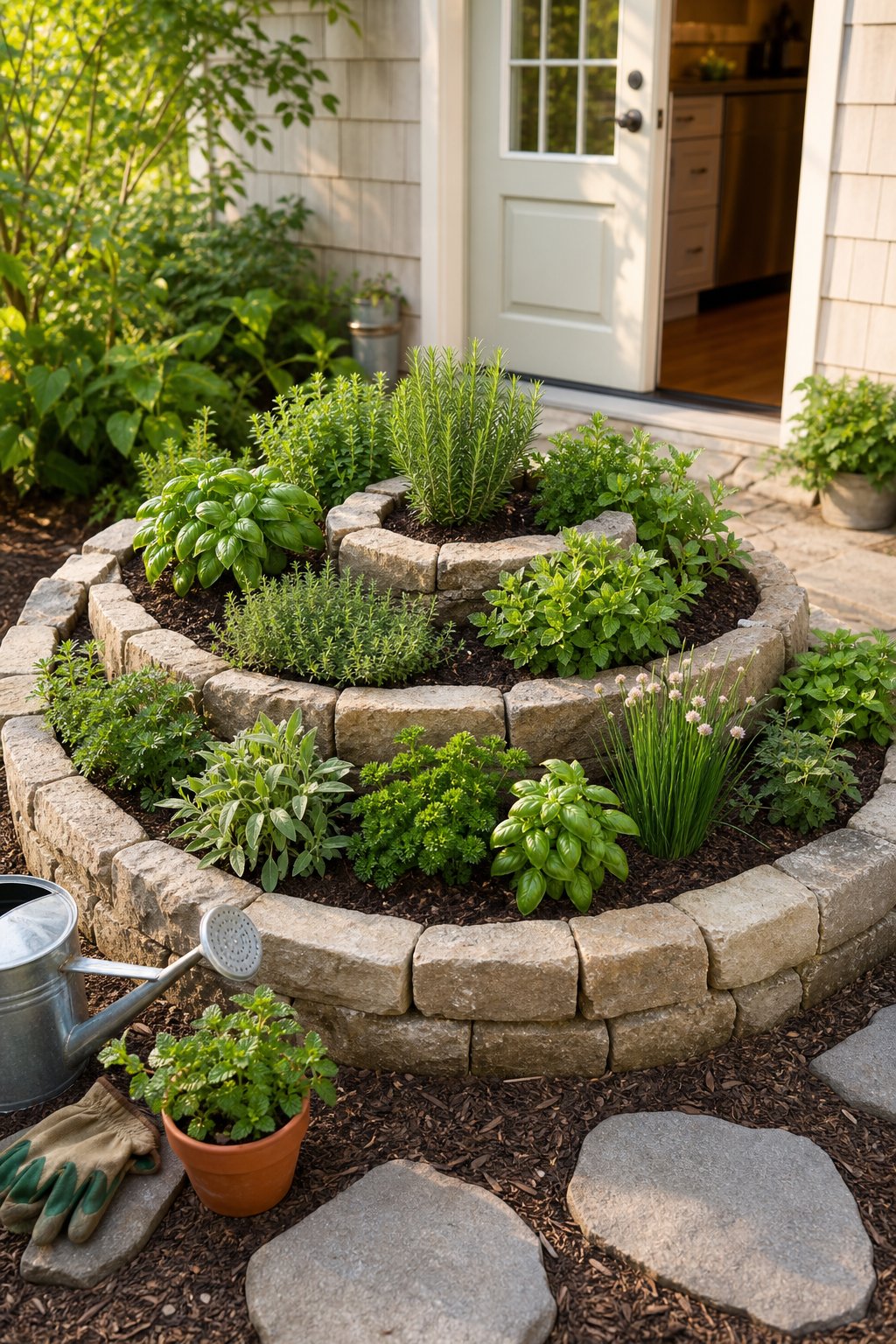
A spiral herb garden puts many cooking herbs within a few steps of your kitchen. Build a low stone spiral that rises toward the center, then plant dry-loving rosemary and thyme near the top. Place parsley, chives, or mint lower down where the soil stays cooler and moister. Keep mint in a container within the bed because it spreads with impressive confidence. A sunny position near the door makes quick harvests easy during meal preparation.
Expert Tip From MrPlanter: “Place herbs you cut daily closest to the path. Give rosemary a fast-draining top spot and keep thirsty herbs near the base.”
9. Pollinator Border With Coneflower, Aster, and Goldenrod
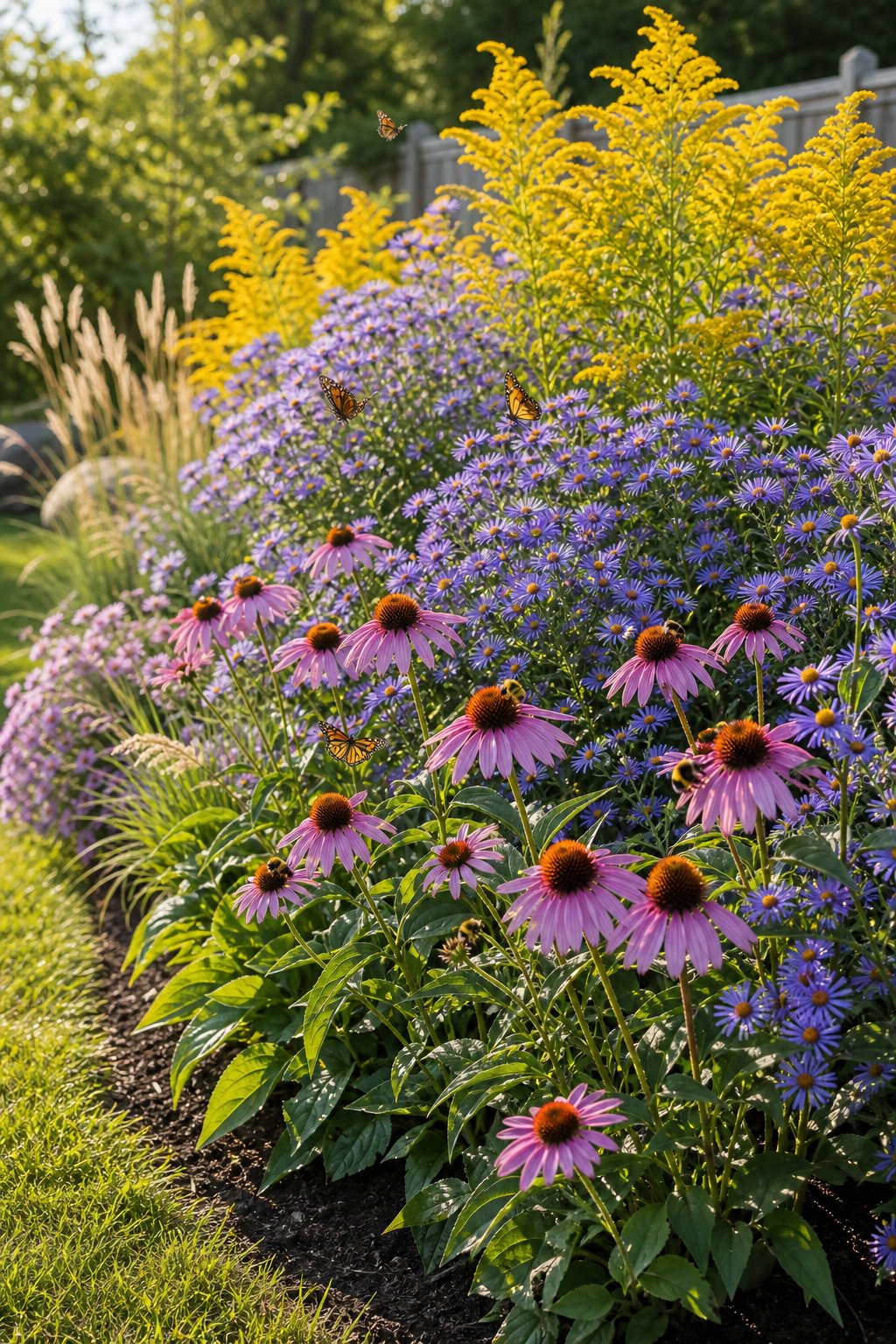
A pollinator border works best when flowers bloom across several seasons and stand at different heights. Plant goldenrod toward the back, coneflower through the middle, and asters along the front edge. Grouping each plant in small clusters makes the border easier for pollinators to find and gives your yard stronger color blocks. Leave seed heads standing into winter for birds and cut them back in late winter. Full sun and well-drained soil suit this planting plan.
Expert Tip From MrPlanter: “Choose a few bloom times instead of filling every gap with one-season color. Avoid spraying open flowers when bees are visiting.”
10. Water-Wise Front Yard Border With Sedum and Salvia
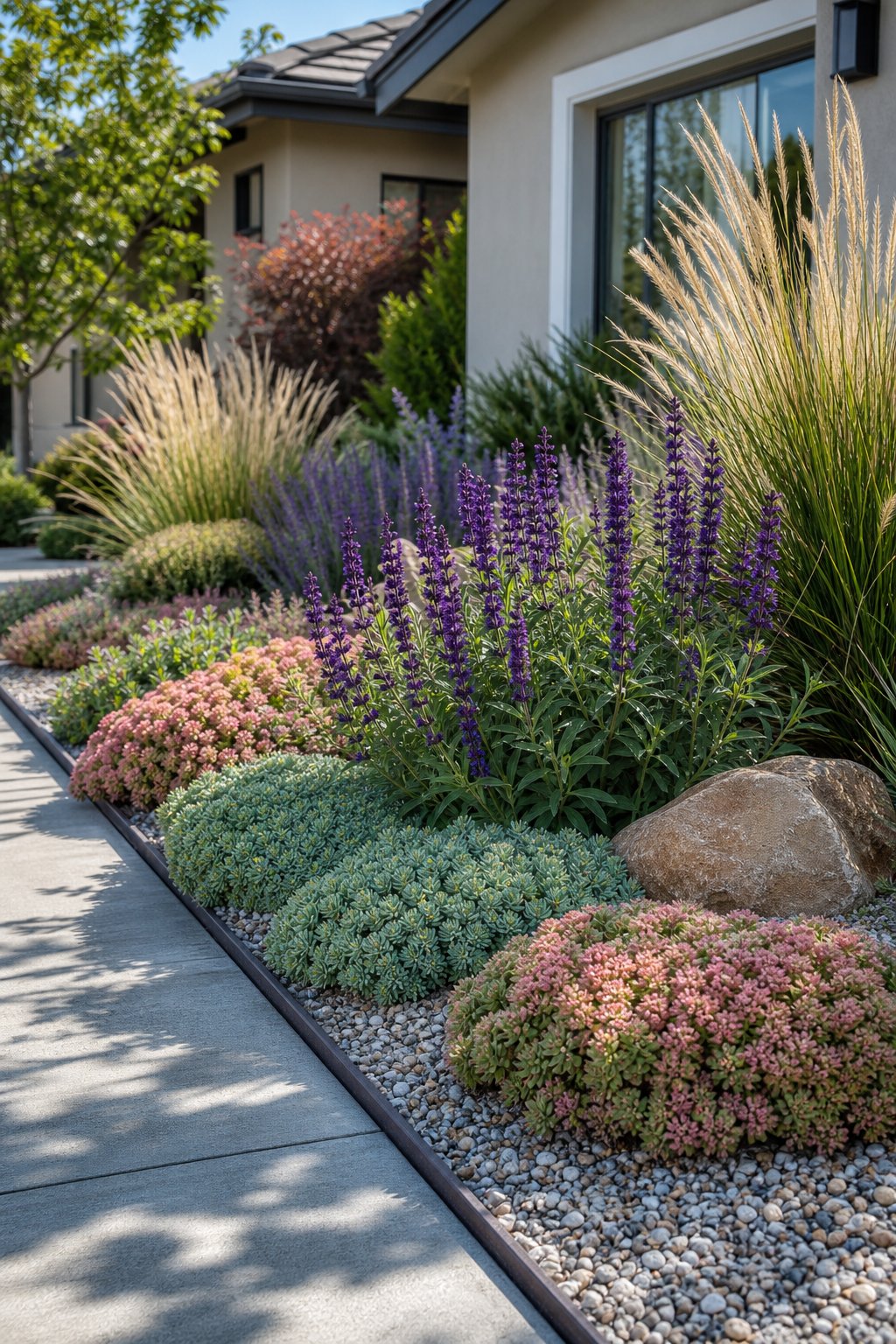
A water-wise front yard border combines tough plants with gravel and stones that help define the planting area. Place upright salvia near the middle, low sedum along the edge, and ornamental grasses where their movement softens the hardscape. Improve drainage before planting and water deeply while roots establish. Once settled, these plants need less frequent irrigation than thirsty annuals. Match plant choices to your local climate and keep the border clear of walkways.
Expert Tip From MrPlanter: “Group plants by water needs so your hose work stays simple. Add gravel after planting to reduce weeds around young crowns.”
11. Lasagna Garden Bed for Poor or Weedy Soil
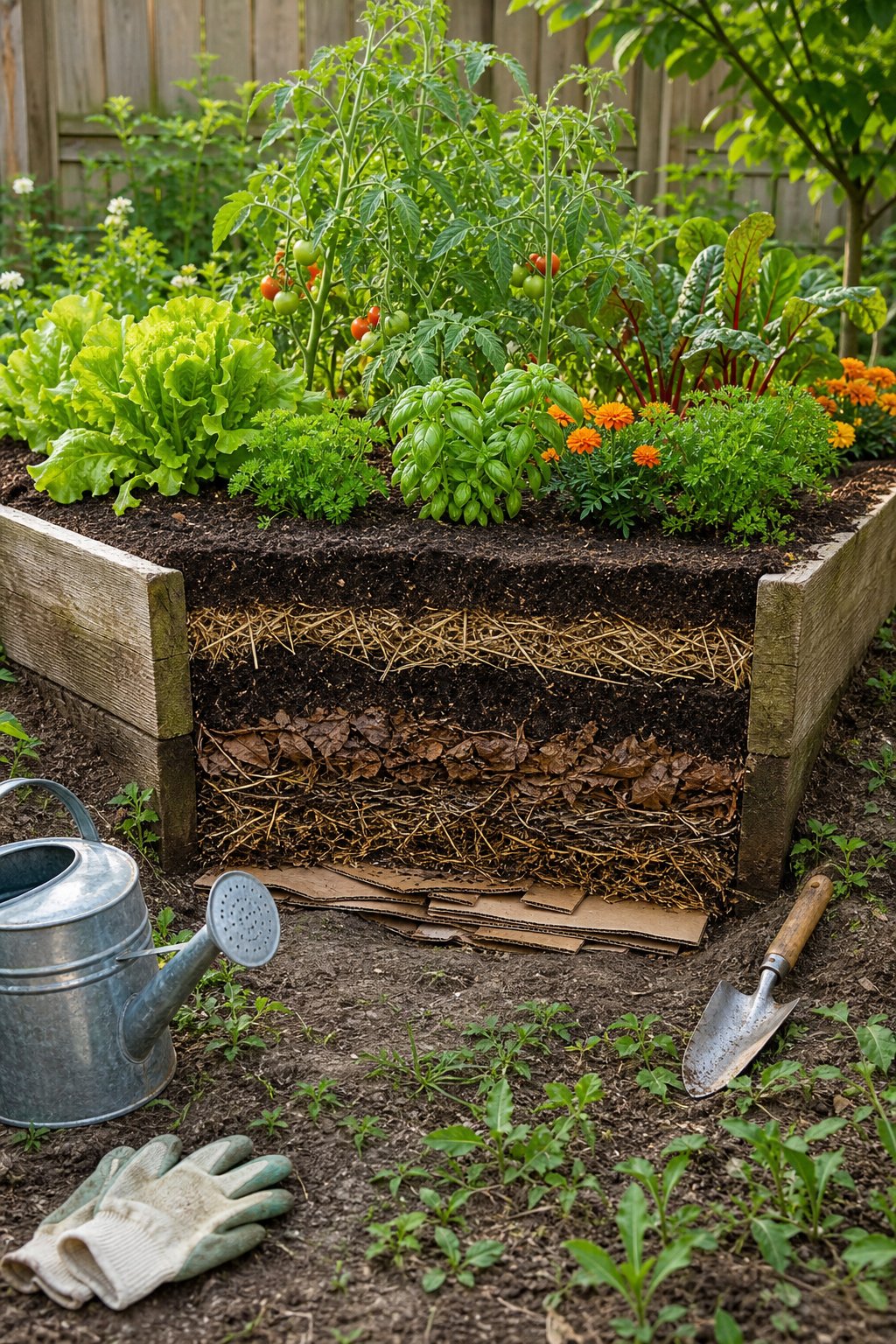
A lasagna garden builds a new planting bed directly over poor or weedy ground. Start with damp cardboard to cover grass, then layer compost, leaves, straw, and topsoil until you reach a planting depth of about 12 inches. Use finished compost in the upper layer so young roots have a clean place to grow. Keep the edges contained with boards or stones, and water each layer as you build. This layout suits a backyard where digging would bring up rocks or stubborn roots.
Expert Tip From MrPlanter: “Overlap cardboard seams so weeds cannot find narrow openings. Let thick layers settle before adding more topsoil.”
12. Hugelkultur Mound for Sloped Backyard Planting
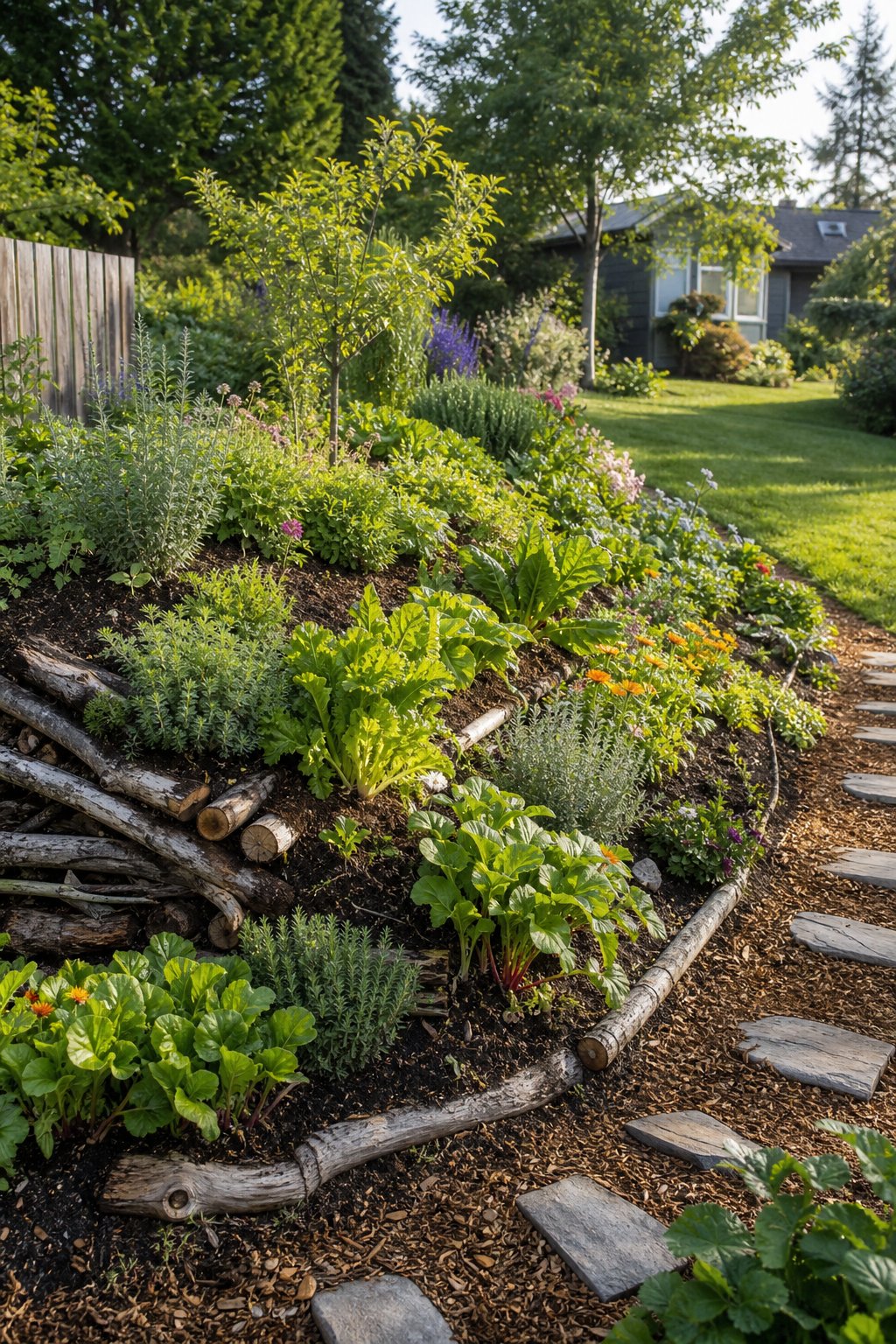
A hugelkultur mound turns woody debris into the base of a raised planting area. Place logs and branches along the slope, cover them with compost and soil, then shape the top into gentle tiers. The buried wood stores moisture as it breaks down, while the mound creates useful planting height. Plant shallow-rooted greens near the top and crops that enjoy more moisture lower down. Anchor the slope with stones or logs so heavy rain does not wash soil away.
Expert Tip From MrPlanter: “Use well-rotted wood when possible and pack soil into every gap. Cover the mound with mulch during its first season to slow drying.”
13. Container Garden Cluster for a Patio or Small Yard
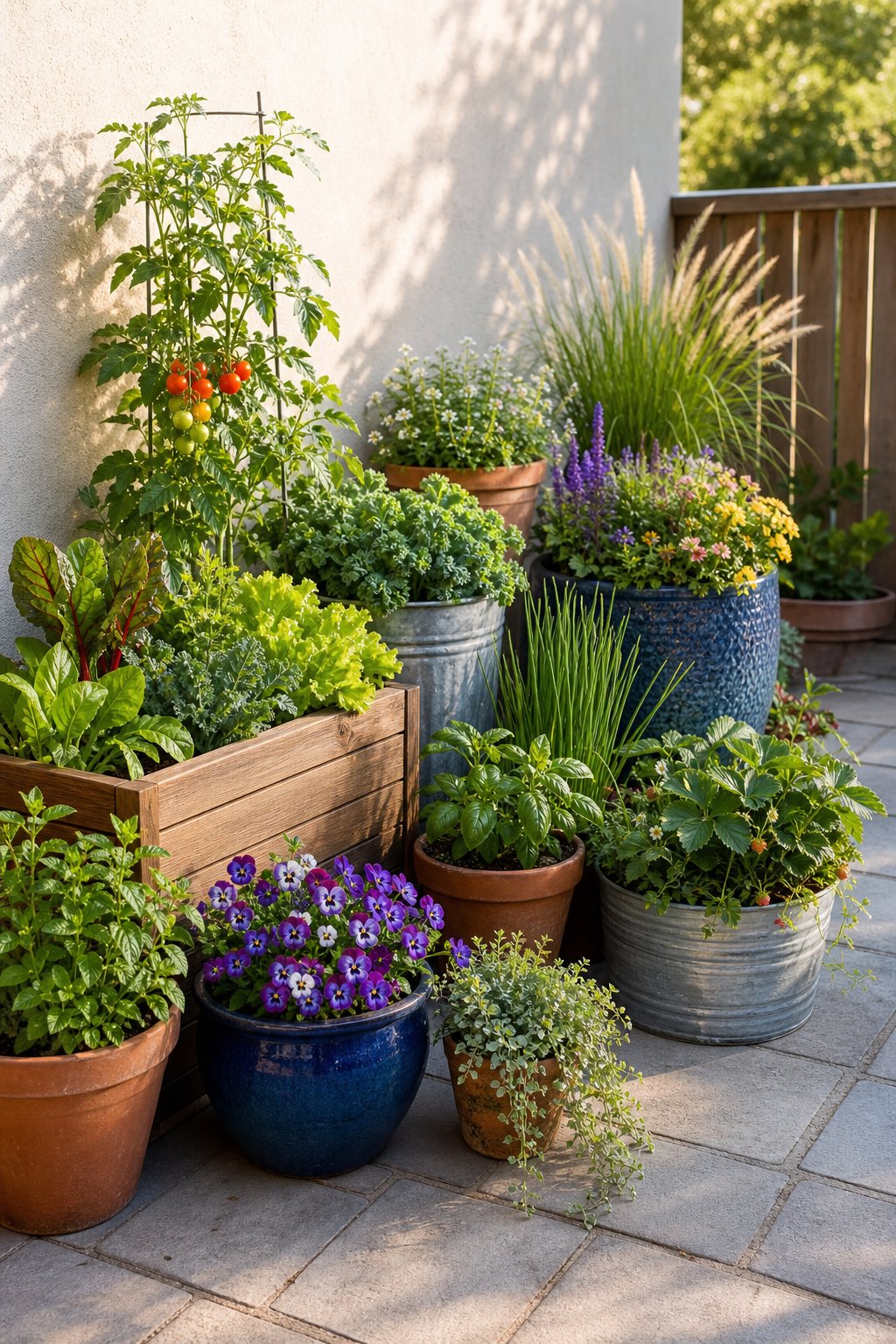
A container cluster lets you grow food and flowers on a patio, porch, or small backyard pad. Put large pots behind smaller ones, then group containers by watering needs so care stays manageable. Use deep pots for tomatoes and peppers, window boxes for herbs, and lightweight planters for seasonal color. Make sure every container has drainage holes and enough soil volume for the plant at maturity. Tiered stands add height without taking much floor space. For flower-focused ideas, explore container gardening flowers.
Expert Tip From MrPlanter: “Place pots on saucers or risers to protect the patio surface. Check moisture at the bottom of large containers because the top can look dry first.”
14. Mandala Garden With Circular Paths and Wedge Beds
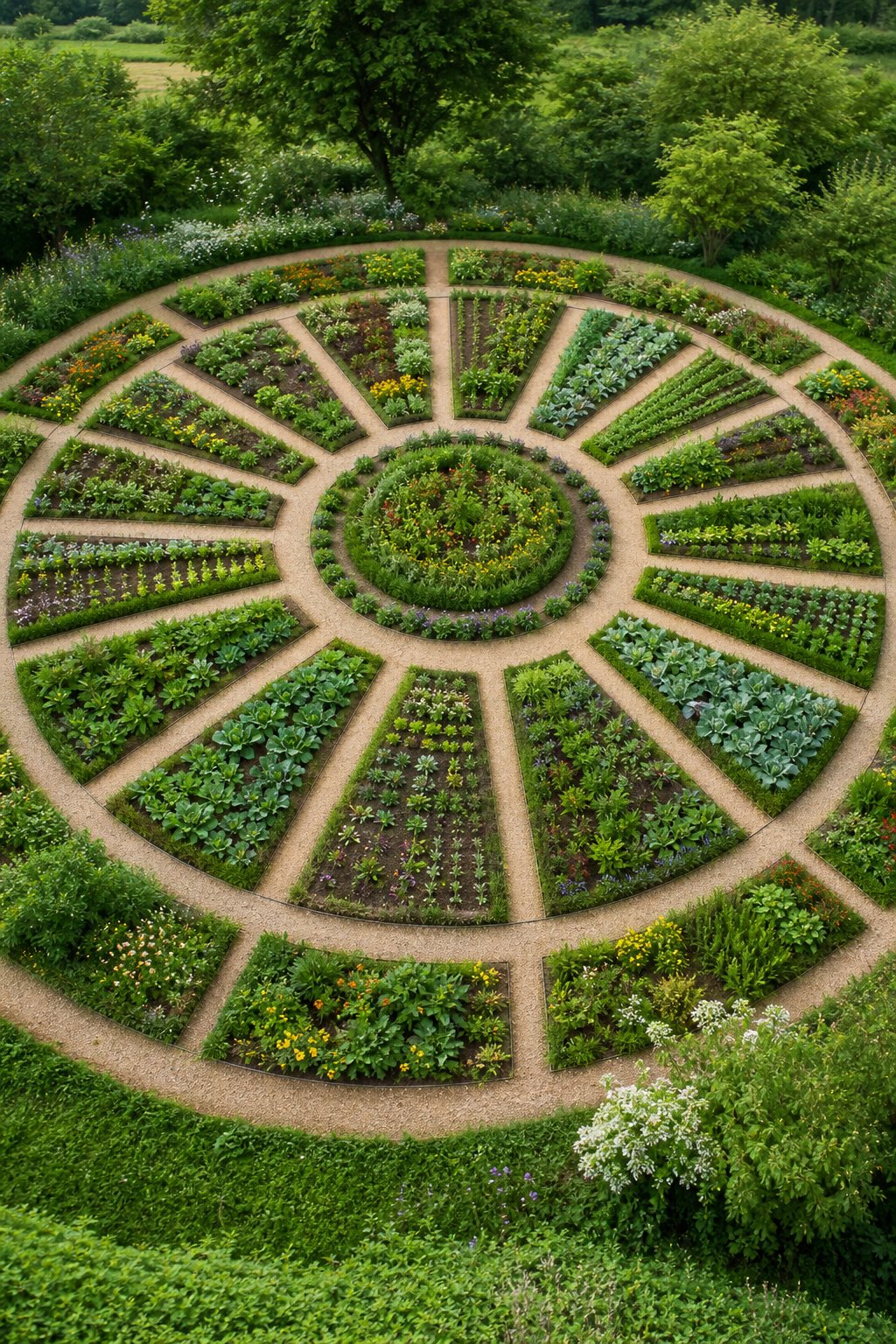
A mandala garden organizes planting beds around a central point with curved paths and wedge-shaped sections. Use the center for a small tree, birdbath, or tall flower, then assign each wedge to herbs, vegetables, or seasonal blooms. Keep paths wide enough for a wheelbarrow and use mulch or gravel to hold their shape. The curved layout creates many edge areas, so you can mix low plants with taller ones without blocking every view.
Expert Tip From MrPlanter: “Mark the center with a stake and string before shaping the circles. Keep each wedge wide enough to reach from the path.”
15. Mixed Edible and Flower Border Along a Driveway
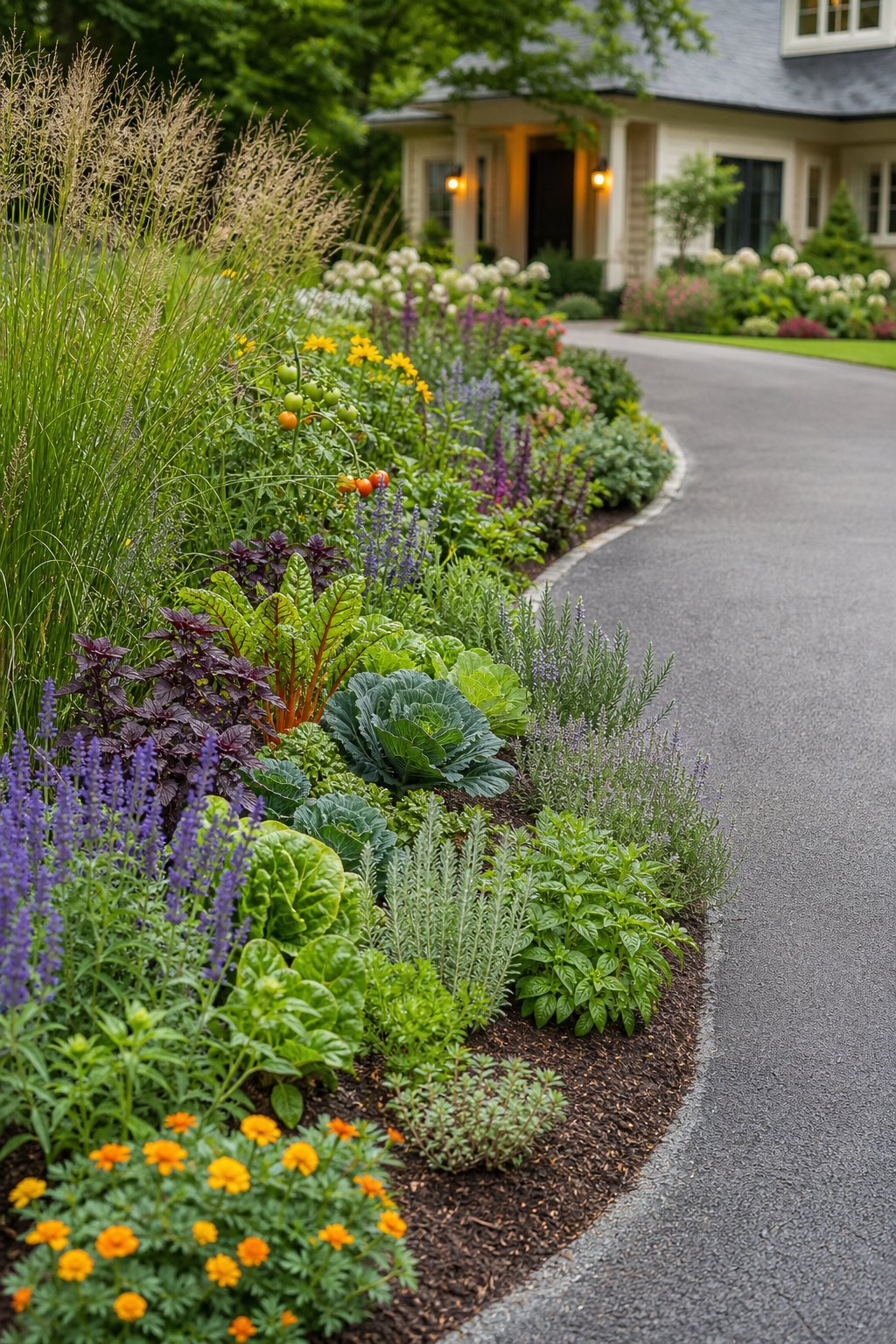
A mixed driveway border brings food crops into a space that visitors see every day. Combine compact peppers, kale, chives, strawberries, and flowers in repeating groups along the edge. Keep tall plants away from turning areas and choose sturdy varieties that tolerate reflected heat from pavement. A defined border or low edging keeps soil and mulch out of the driveway. This plan works well when your backyard is full and your front yard receives better sun.
Expert Tip From MrPlanter: “Leave a clear strip beside the pavement for doors, tires, and snow removal. Pick clean-looking crops so harvests never leave the border bare.”
How to Choose the Right Planting Layout
Choose your layout by matching the site to your plants, schedule, and main garden goal. Sketch the yard on paper, mark sunlight and water access, then place paths before buying plants. A simple plan saves you from moving heavy soil or discovering that your favorite herb lives in a shadowy corner.
Track the area from morning through late afternoon during a clear day. Most vegetables and many flowering plants need six or more hours of direct sun, while leafy greens and some herbs handle less. Place tall crops on the north side of shorter ones so they cast fewer shadows across the bed.
What Is Your Soil and Drainage Like?
Dig a small test hole and watch how quickly water drains after filling it. Heavy, slow-draining soil suits raised beds or containers, while dry sandy soil benefits from compost and mulch. A soil test helps you adjust nutrients before planting, especially when you plan to grow food.
How Much Time Do You Want to Spend Maintaining It?
Match the design to your weekly routine. Raised beds need regular watering and harvesting, formal borders need edging and trimming, and native-style plantings need less frequent care after they settle. Place high-use herbs close to the house so harvesting does not become a separate chore.
Are You Growing Food, Flowers, Privacy, or a Mix?
Start with your main purpose, then assign the best space to it. Use trellises for privacy, raised beds for vegetables, and borders for flowers and pollinator habitat. If you want several functions, repeat plant groups so the yard feels connected instead of patched together.
Planting Layout Basics That Prevent Regret
Good planting layouts begin with comfortable access, mature plant size, and a clear watering plan. Draw the bed borders at full scale and measure the widest plants before setting them in the ground. This small planning step protects your back and gives each plant room to reach its expected size.
Why Should Paths Be Planned Before Plants?
Paths determine how you reach every bed for watering, weeding, pruning, and harvest. Mark them with a hose or string, then walk the route with a full watering can or wheelbarrow. Use firm materials in high-traffic areas and mulch in spaces that need a softer look.
How Wide Should Beds Be for Easy Access?
Keep beds narrow enough that you can reach the center without stepping into the soil. A 4-foot width works well when you approach from both sides, while a one-sided bed should stay closer to 2 feet wide. Leave room for gates, tools, and turning around at the ends.
How Can Layering Create a Fuller Look?
Layer plants from low at the front to tall at the back or center. Use ground covers along edges, medium plants through the middle, and supports or shrubs behind them. Repeat a few colors or shapes across the yard to connect separate planting areas.
What Spacing Mistakes Cause Crowding?
Crowding starts when you plant according to the nursery container instead of the mature width. Read the plant tag, measure the distance between centers, and allow airflow around tomatoes, squash, and dense shrubs. Empty soil in the first few weeks is normal, and mulch can cover it while plants grow.
I’m Anirban Saha, the Founder and Owner of MrPlanter.com. I pay the bills as a software developer, although my BTech is actually in Electronics and Communication. I really love my day job, but what gives me energy every day is interacting with my indoor plants and taking care of them. I have been successfully nurturing and maintaining houseplants for over 10 years now.
📚🔍 Our content undergoes thorough review and fact-checking before publication. For additional details, explore our strict Editorial Policy to deliver helpful content. 📝🔒