As an Amazon Associate, MrPlanter.com earns from qualifying purchases.
Brick brings warmth, texture, and useful structure to outdoor spaces. You can use it to guide footsteps, frame flowers, build seating areas, or give a plain lawn a little old-house charm.
The best brick landscaping ideas solve a yard problem while adding a clear visual detail.
Choose a firm base for paths and patios, match the brick to your home, and leave room for plants to grow without swallowing the hardscape.
1. Herringbone Brick Garden Path
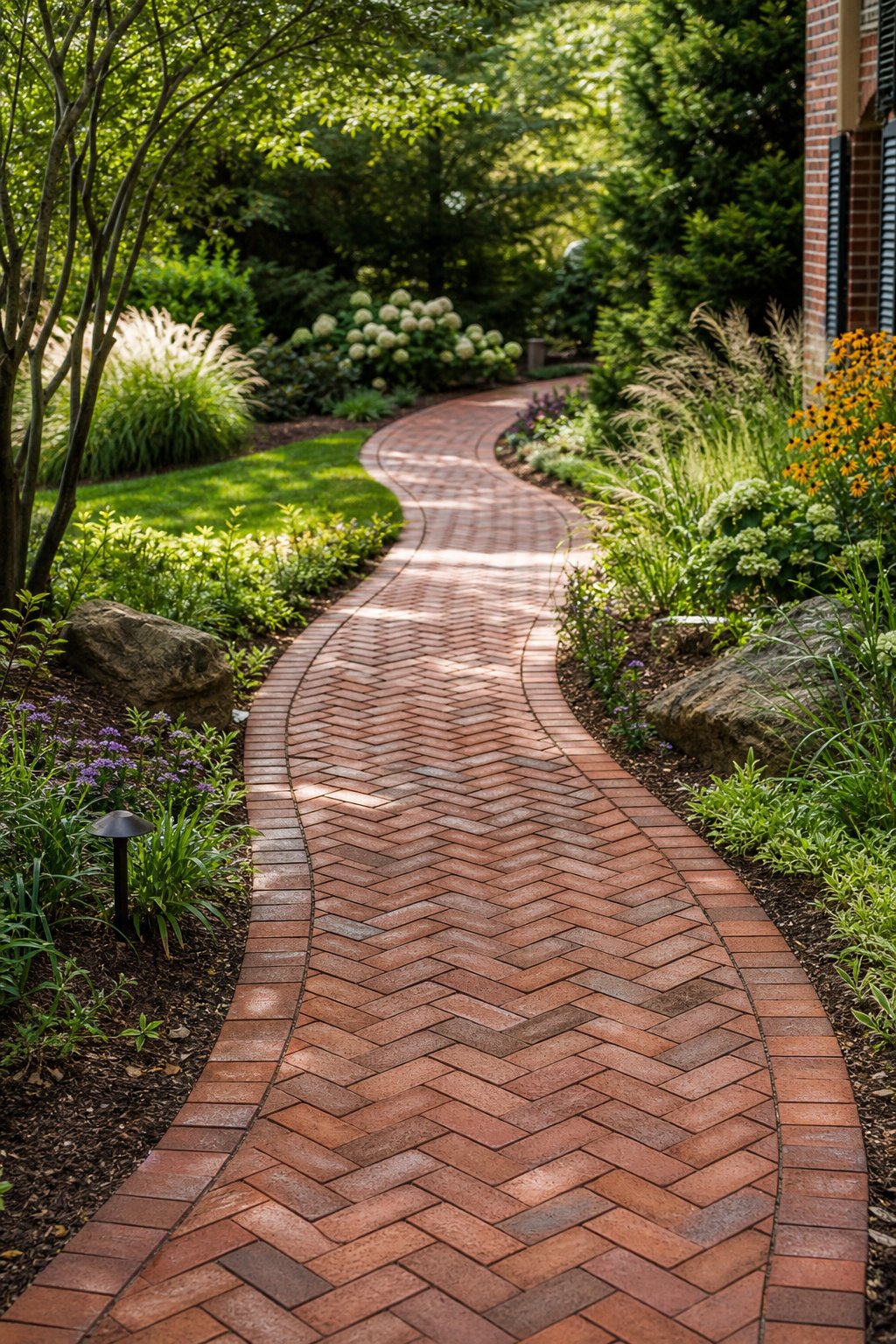
A herringbone path gives a garden walkway extra visual movement and a firm walking surface. The interlocking pattern handles foot traffic well, so it works beautifully between planting beds, a shed, or a backyard seating area. You can run the bricks at a 45-degree angle for a lively look or use a 90-degree pattern for a calmer feel.
Lay the path on compacted gravel topped with bedding sand. Set a solid edge along both sides before placing the bricks, then sweep polymeric sand into the joints. Curves require careful cutting, so keep the bends broad for an easier installation.
Expert Tip From MrPlanter: “Leave enough width for two people to walk side by side. A wide path feels welcoming and makes garden chores easier.”
2. Brick Patio With a Soldier-Course Border
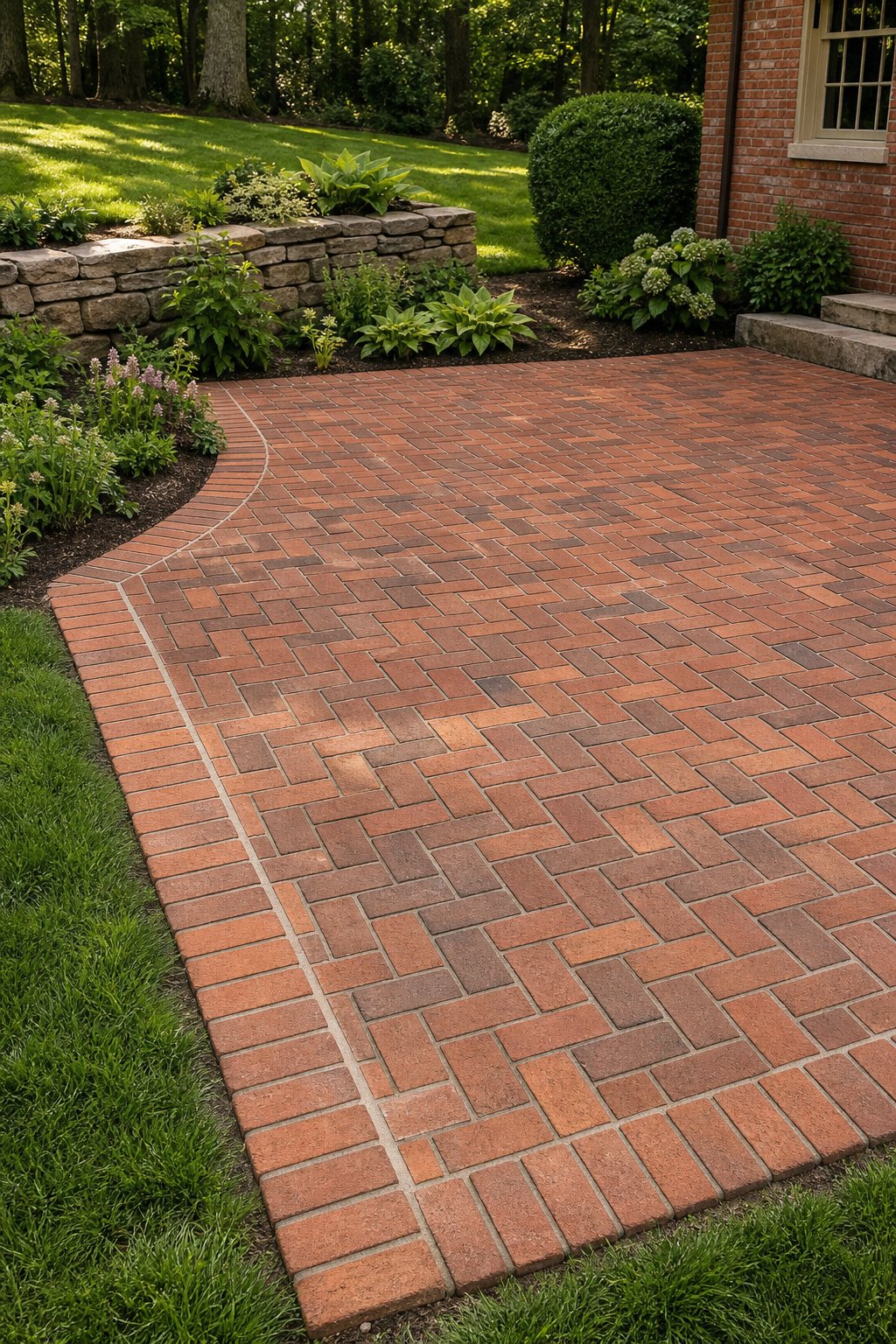
A soldier-course border gives a brick patio a crisp frame and helps hold the inner pavers in place. Stand the border bricks upright with their long edges touching, then fill the center with running bond, basket weave, or herringbone brickwork. This mix creates a quiet pattern change without making the patio feel busy.
Slope the surface slightly away from your home so rainwater moves toward a planting bed or drainage point. A compacted base keeps chairs from rocking and reduces shifting during freeze-thaw cycles. Add large containers at the corners to soften the straight lines.
Expert Tip From MrPlanter: “Check the border line with a string before you set any bricks. A clean frame makes every inner row look sharper.”
3. Low Brick Edging for Front Flower Beds
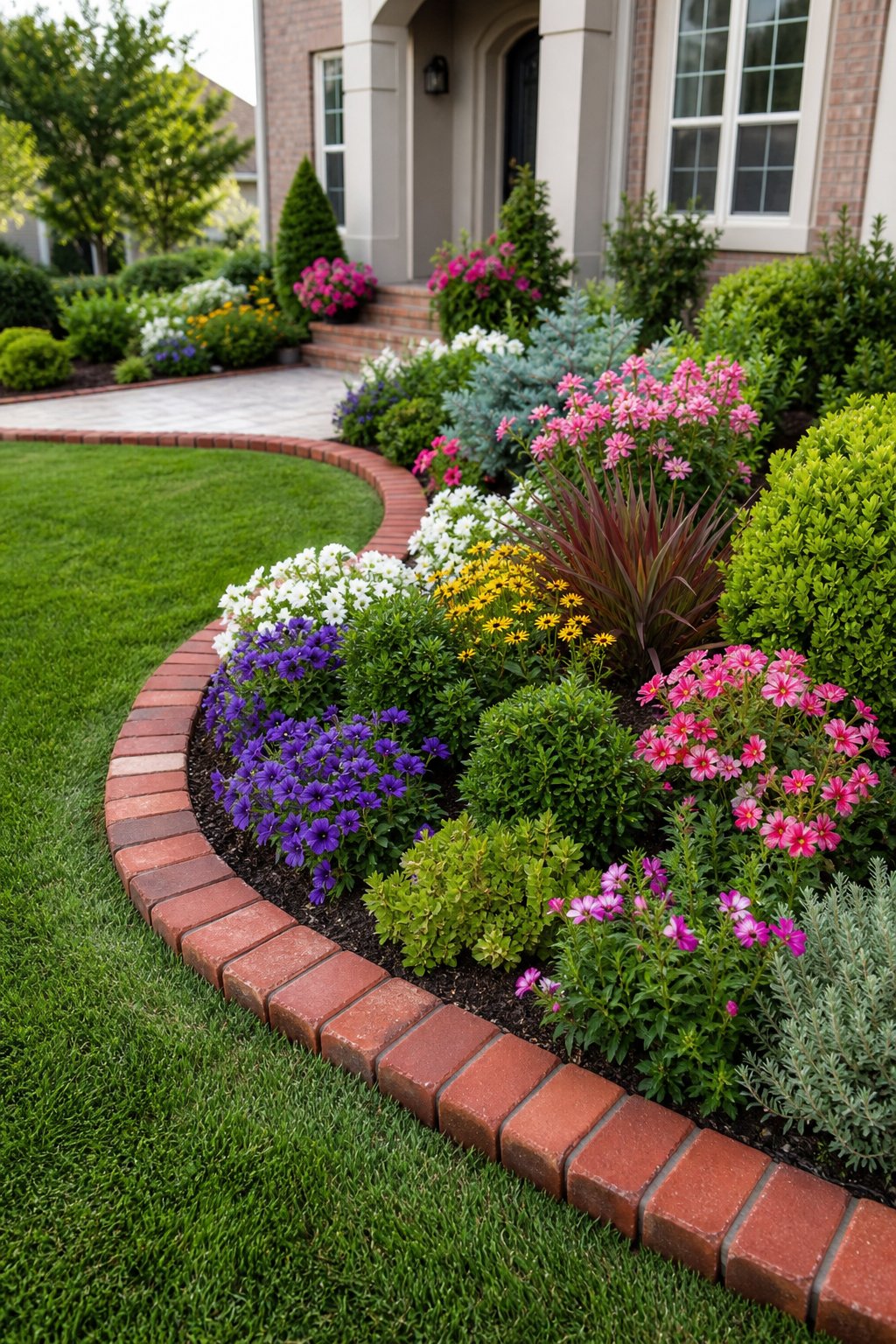
Low brick edging keeps mulch and soil inside front flower beds while giving your planting area a neat outline. Set bricks flat for a subtle finish, or stand them on edge for a taller line that catches attention from the street. Curved edging works well around shrubs and informal beds.
Dig a narrow trench, add a level layer of sand, and set each brick tightly against the next. Keep the top edge even with the lawn if you want easy mowing. For more flower bed inspiration, explore these flower bed edging ideas.
Expert Tip From MrPlanter: “Use a garden hose to test your curve before digging. You can adjust the shape in minutes while the hose is still in place.”
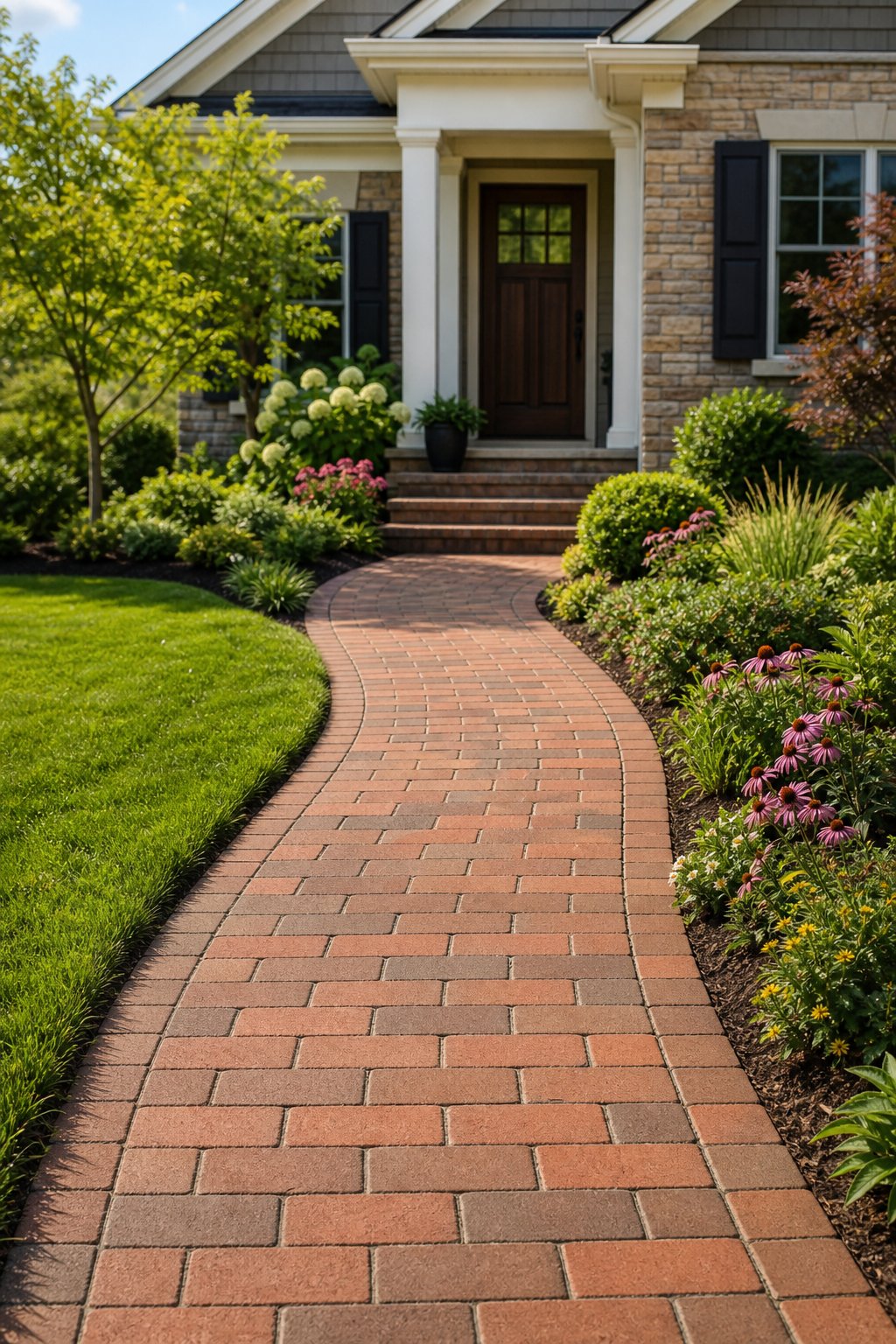
4. Curved Brick Walkway to the Front Door
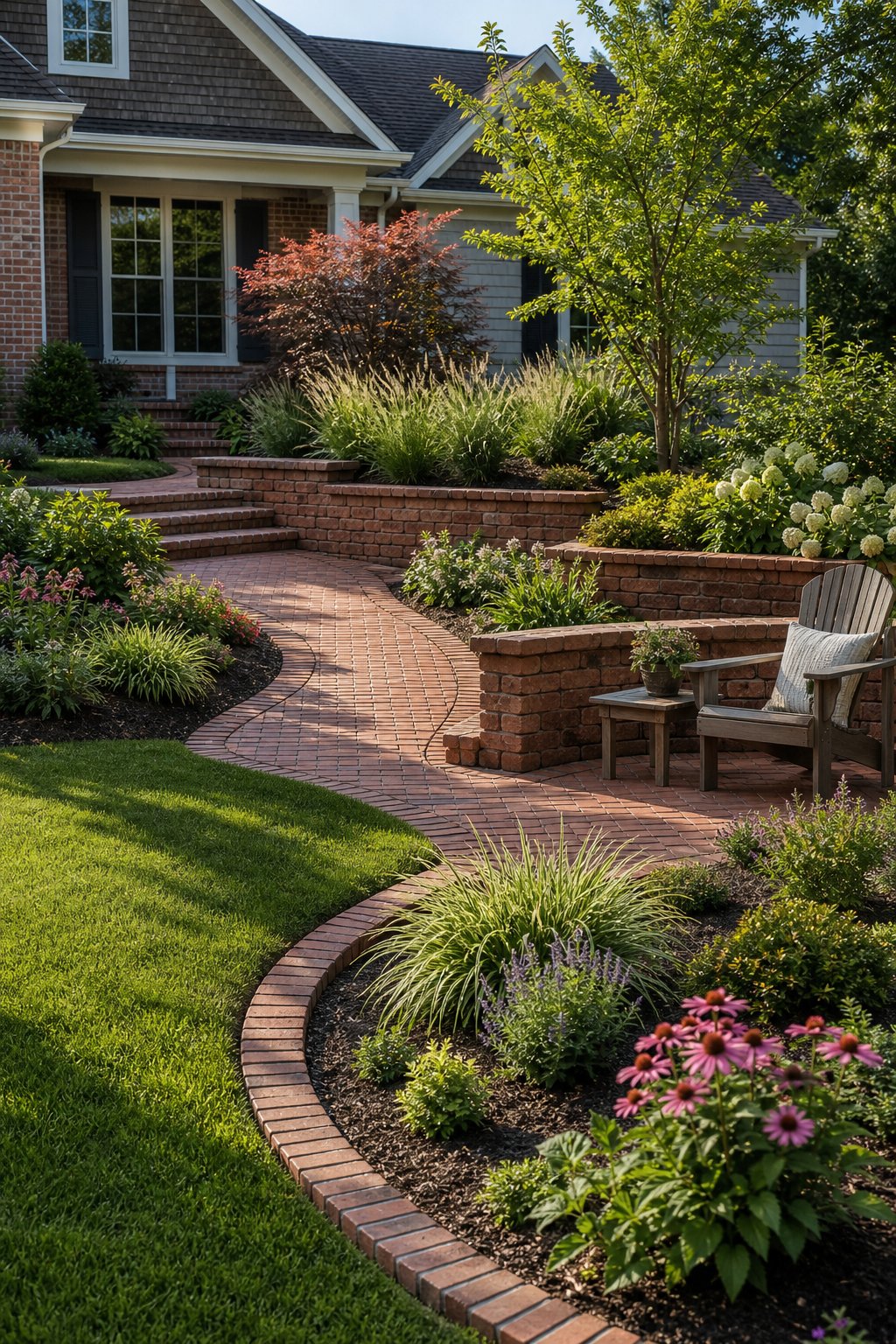
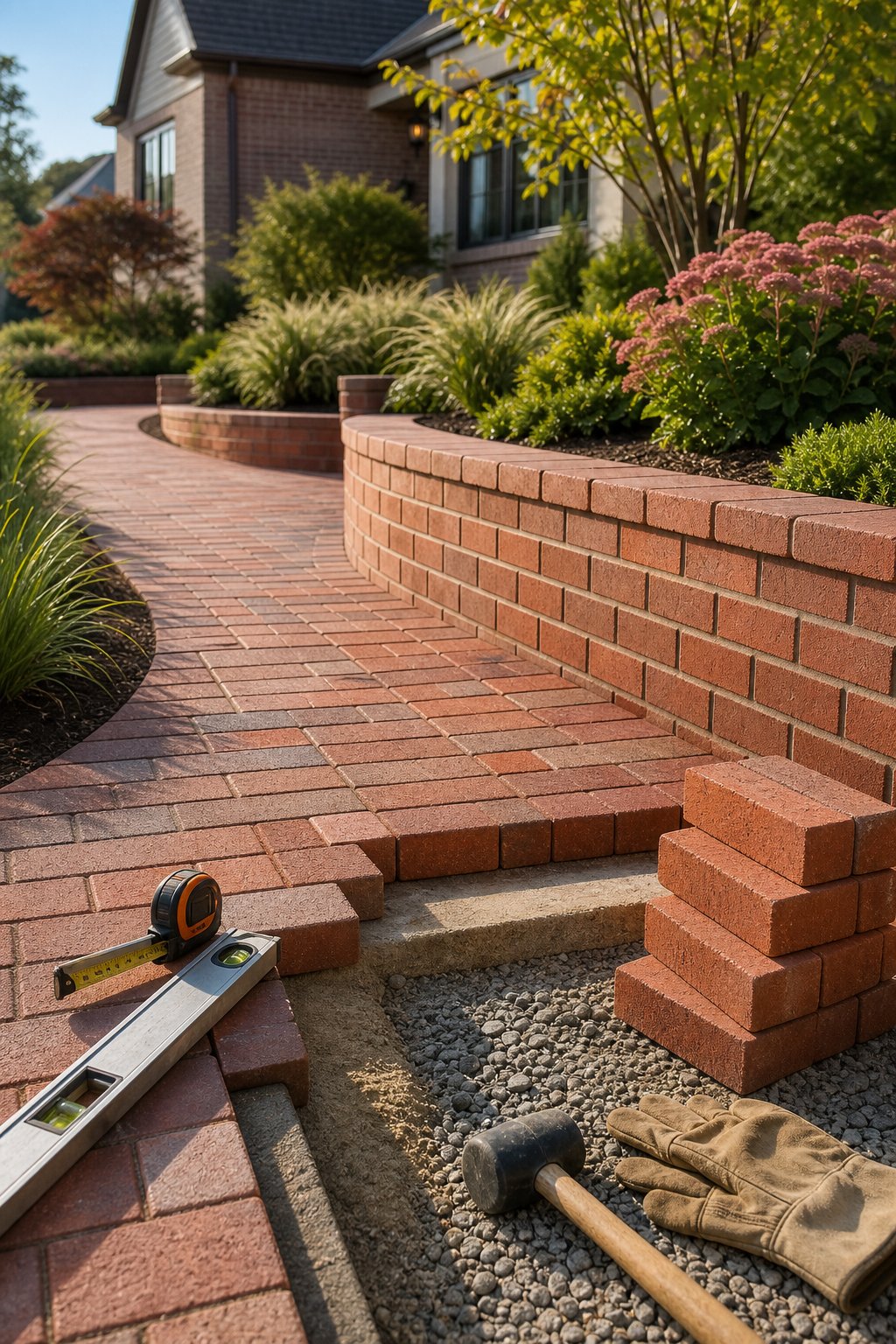
A curved brick walkway makes your front entry feel softer and more inviting. The bend also guides visitors past shrubs, grasses, or a small flower bed, giving the approach more interest than a straight run. Keep the curve gentle and the walking surface wide enough for comfortable foot traffic.
Use a soldier-course edge or contrasting border to define the route. Place low plants beside the path, leaving several inches of space so stems and mulch stay off the bricks. A path that receives shade needs good drainage and regular sweeping to limit moss growth.
Expert Tip From MrPlanter: “Aim the walkway toward the door in its final stretch. Guests should see where to go without guessing.”
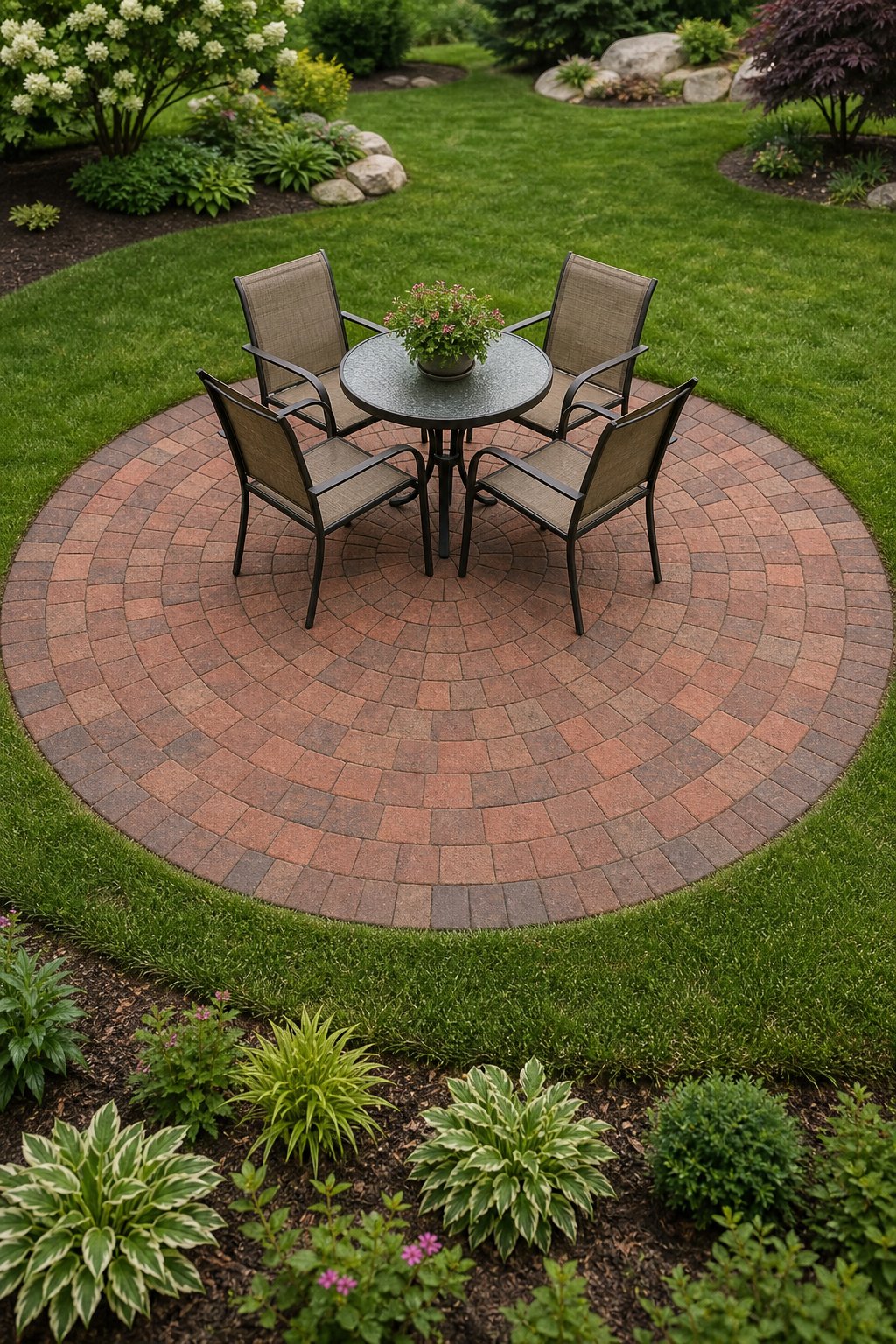
5. Circular Brick Patio Set in a Lawn
A circular brick patio creates a natural gathering spot in the middle of a lawn. It suits a small table, a pair of chairs, or a compact bistro set, and its rounded shape breaks up broad rectangular yard lines. Use wedge-shaped pavers for clean circles, or cut standard bricks with a masonry saw.
Mark the center with a stake and string, then use the string to draw the outer edge. Build the base carefully because circles show uneven settling quickly. Surround the patio with low ground cover or a narrow gravel strip to separate brick from grass.
Expert Tip From MrPlanter: “Place your furniture before planting around the circle. Seating needs decide how much open space you have left.”
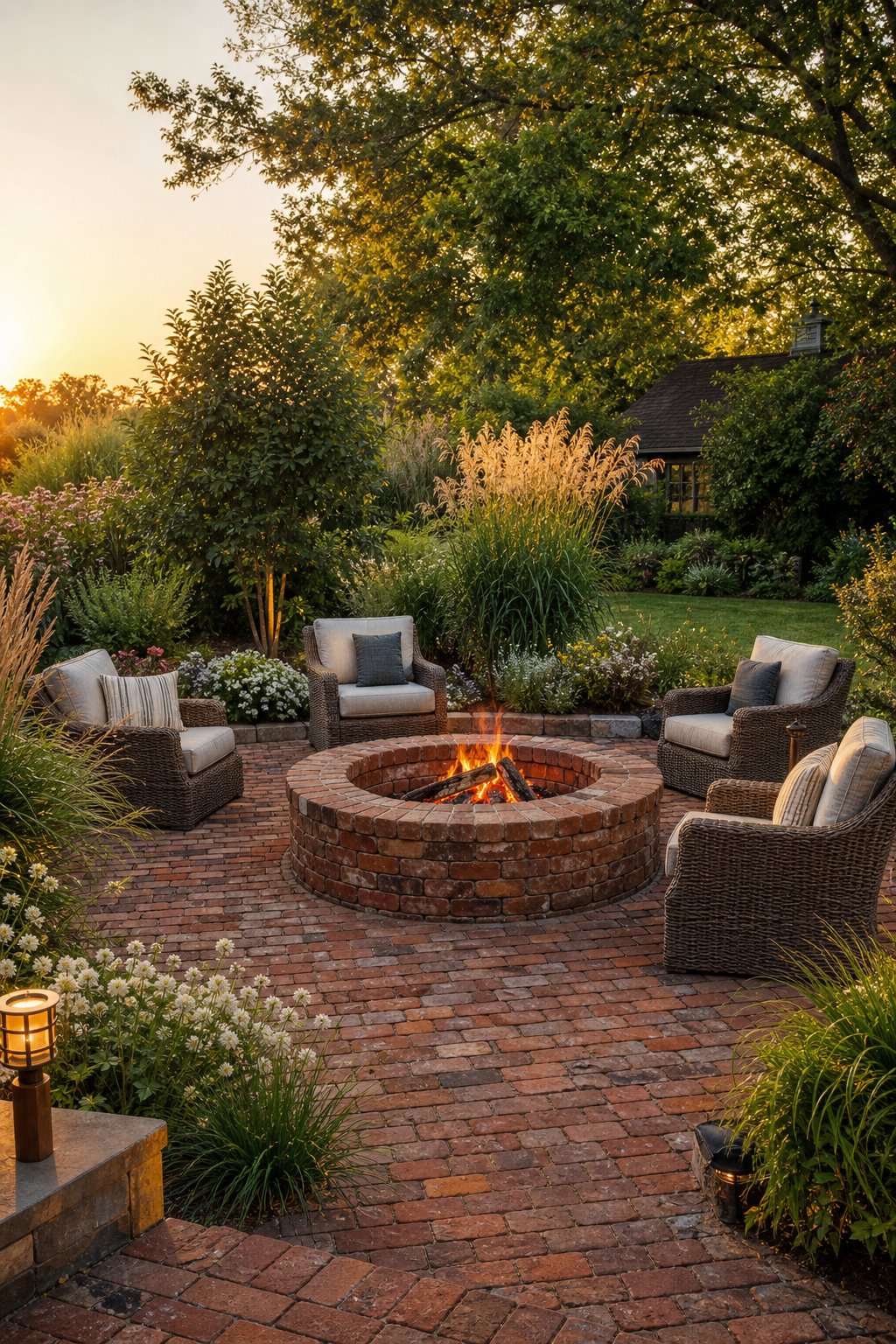
6. Reclaimed Brick Fire Pit Terrace
A reclaimed brick terrace gives a fire pit area a lived-in look and a strong sense of place. Use old bricks for the surrounding terrace and build the fire ring with materials rated for high heat. Arrange chairs on the level surface, then add gravel or open soil beyond the seating zone for safer clearance.
Check local fire rules, wind conditions, and the distance from fences, trees, and structures before building. Keep a water source nearby and avoid painted or treated brick inside the fire ring. These fire pit ideas for your backyard offer more ways to arrange seating and planting.
Expert Tip From MrPlanter: “Inspect reclaimed bricks for crumbling faces before installation. Sound bricks last longer and shed fewer pieces near the fire.”
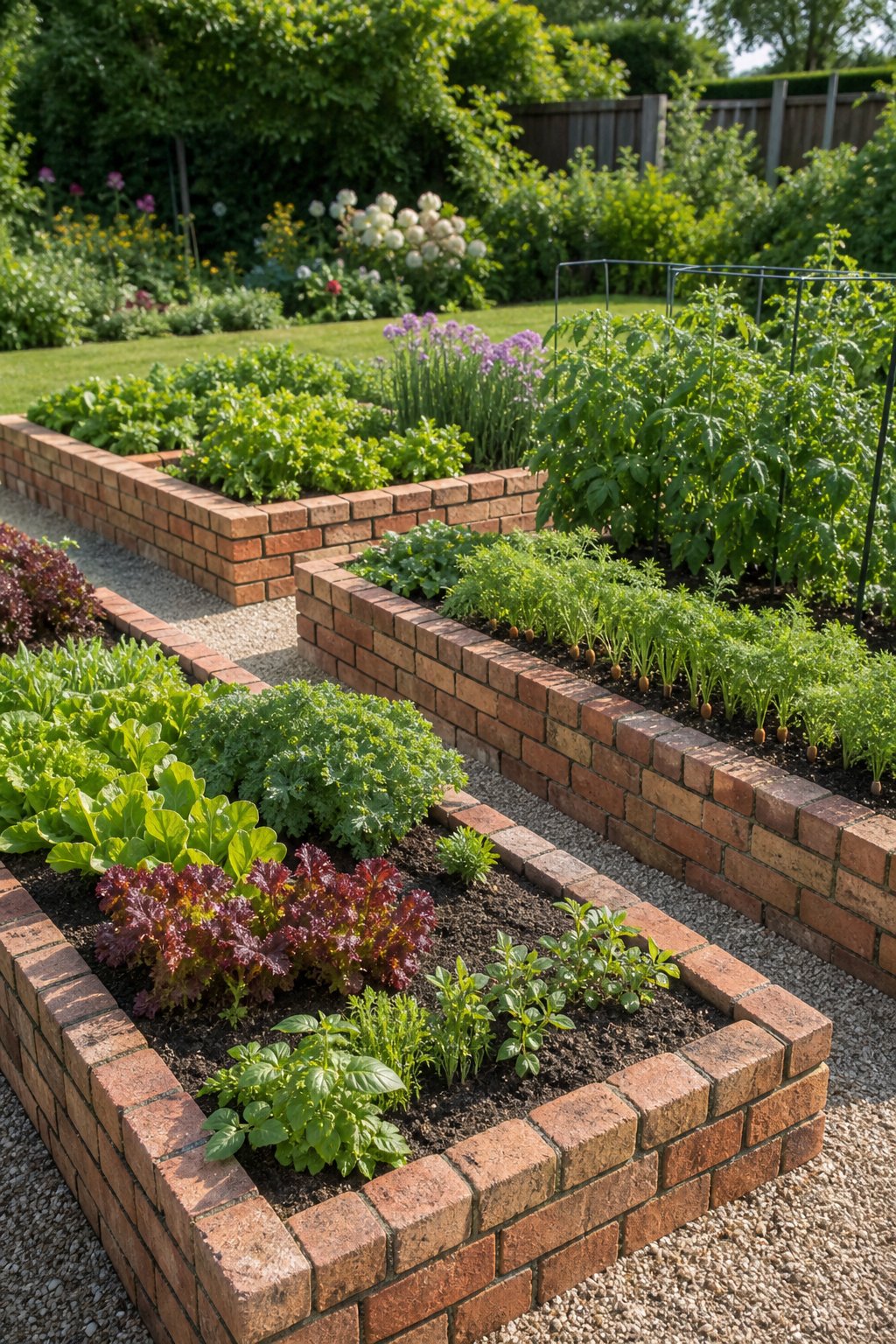
7. Brick-Raised Vegetable Garden Beds
Brick raised beds give vegetables a tidy growing space with firm edges for sitting, weeding, and harvesting. Build walls one or two bricks high for a simple border, or add several courses for deeper soil. Keep each bed narrow enough for you to reach the center without stepping into the soil.
Choose a sunny location with easy access to water. Fill the beds with quality garden soil and compost, then leave walking paths between them. Bricks warm in the sun, which helps early-season crops, while summer beds benefit from steady watering and mulch. Browse these raised garden bed ideas for additional layouts.
Expert Tip From MrPlanter: “Keep bed width near four feet when you can reach from both sides. Your back will thank you during harvest season.”
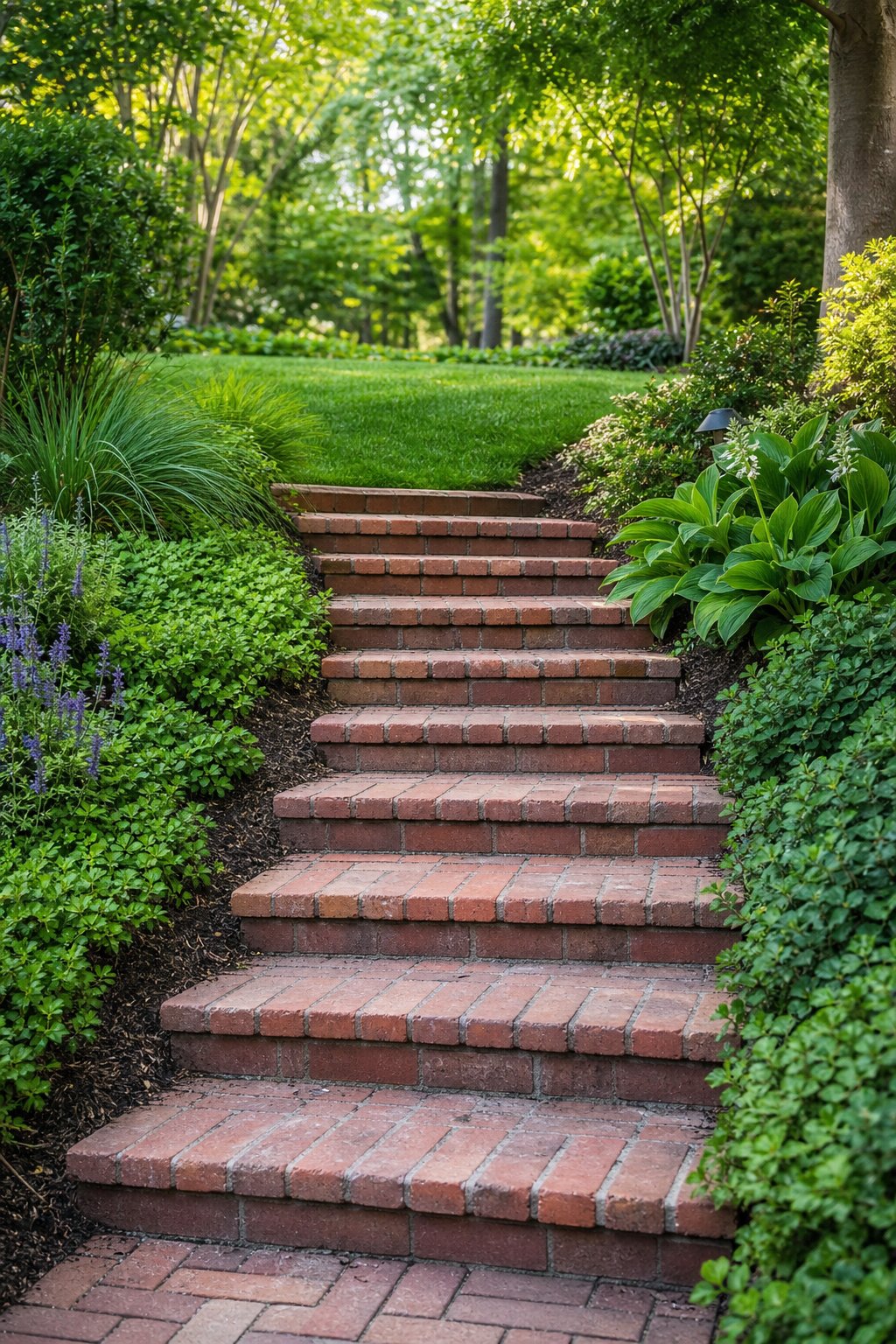
8. Brick Steps on a Sloped Backyard Path
Brick steps turn a sloped backyard path into a safer, more comfortable route between yard levels. Use broad treads with consistent riser heights, and set each step on compacted material that resists movement. Brick faces add color while nearby plants help the steps blend into the slope.
Measure the total rise before ordering materials. Divide that rise into equal steps, then mark each tread and riser with stakes. Add a handrail when the slope or local code calls for one. Drainage beside the steps prevents water from washing soil across the walking surface.
Expert Tip From MrPlanter: “Make every riser the same height. Even a small change becomes easy to trip over on a long staircase.”
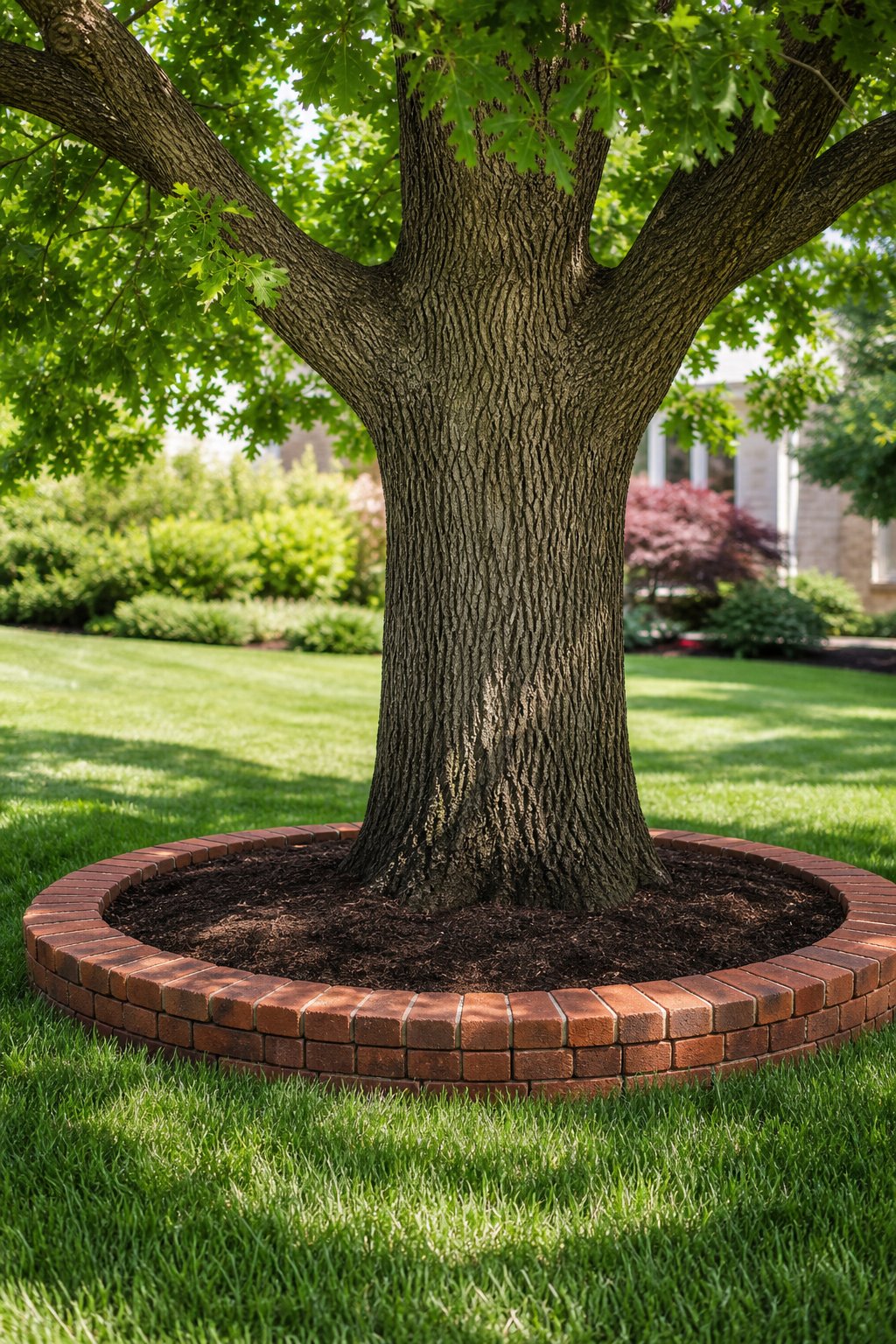
9. Brick Tree Ring Around a Mature Oak
A brick tree ring defines space around a mature oak and keeps lawn equipment away from the trunk. Build the ring well beyond the trunk flare, then fill the area with leaf mold or a thin layer of mulch. This creates a clean bed for shade plants while protecting surface roots from mower damage.
Avoid raising soil against the trunk because buried bark holds moisture and invites decay. Leave space for the tree to expand, and use flexible edging if roots sit close to the surface. Shade-tolerant hostas, ferns, and native ground covers work well beneath an established oak.
Expert Tip From MrPlanter: “Keep mulch several inches away from the trunk. The open space lets the bark stay dry and healthy.”
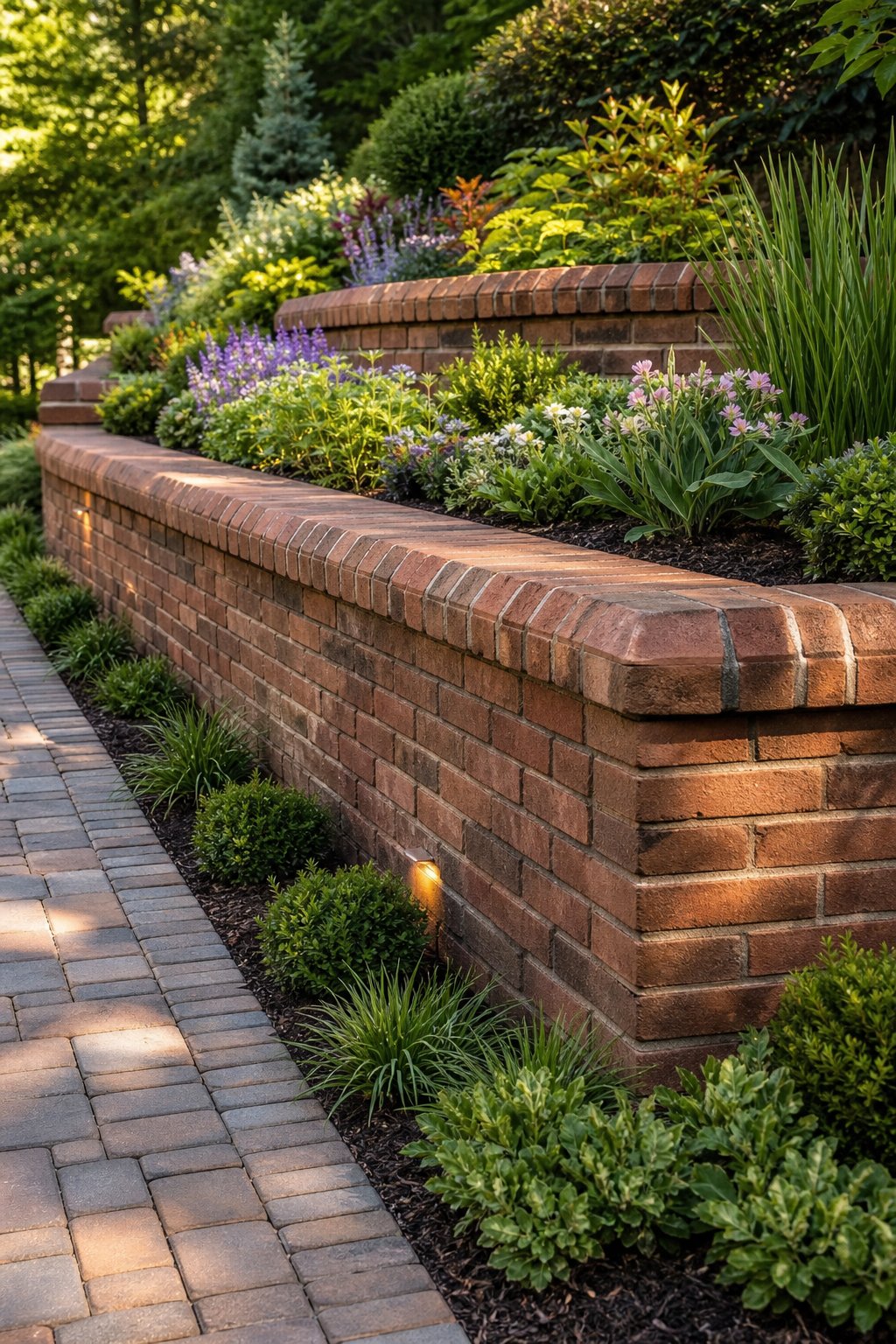
10. Brick-Capped Retaining Wall for a Terraced Garden
A brick cap gives a retaining wall a finished top and creates a comfortable visual transition between garden terraces. Use sturdy wall construction below the cap, then set the bricks with a slight overhang to shed water from the face. Repeating the brick color in nearby paths ties the levels together.
Gravel behind the wall and a drainage outlet help relieve water pressure. Tall walls, steep slopes, and areas near buildings deserve professional design because soil weight creates serious force. Plant each terrace with roots suited to its depth, sun exposure, and moisture level.
Expert Tip From MrPlanter: “Place the cap with a small outward lip. Rain will fall clear of the wall face and reduce staining.”
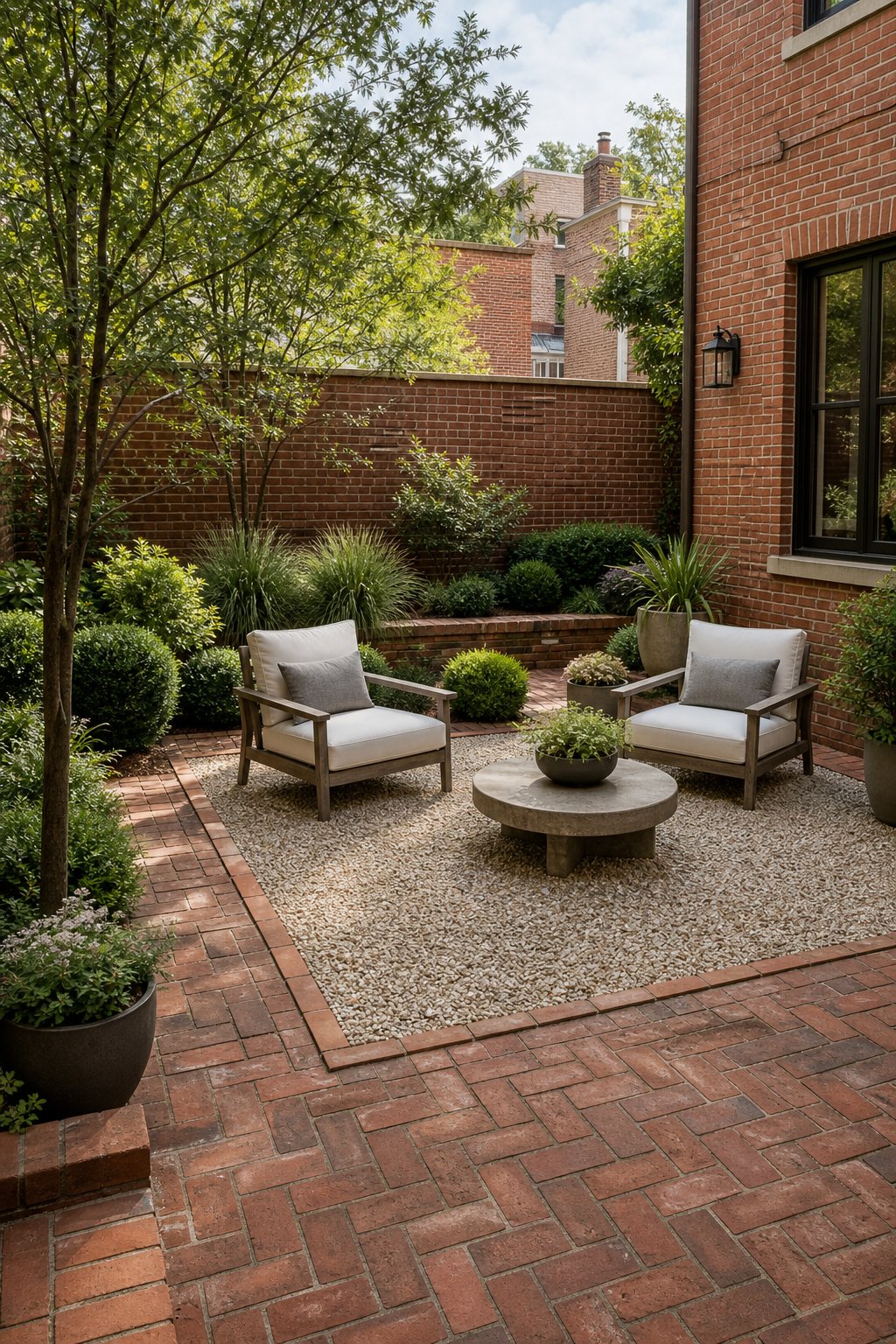
11. Brick Courtyard With a Gravel Seating Area
A brick courtyard paired with a gravel seating area creates two textures within one outdoor room. Use brick for the main walking route and a contained gravel pad beneath lounge chairs or a small dining table. Low brick walls can frame the space, support planters, or provide extra seating.
Install landscape fabric beneath the gravel only when it suits your soil and drainage plan. Secure the gravel with a metal, stone, or brick edge so it doesn’t spread into planting beds. Add a shade tree, climbing vine, or umbrella where the courtyard receives strong afternoon sun.
Expert Tip From MrPlanter: “Choose angular gravel for furniture that needs stability. Rounded stone shifts more easily under chair legs.”
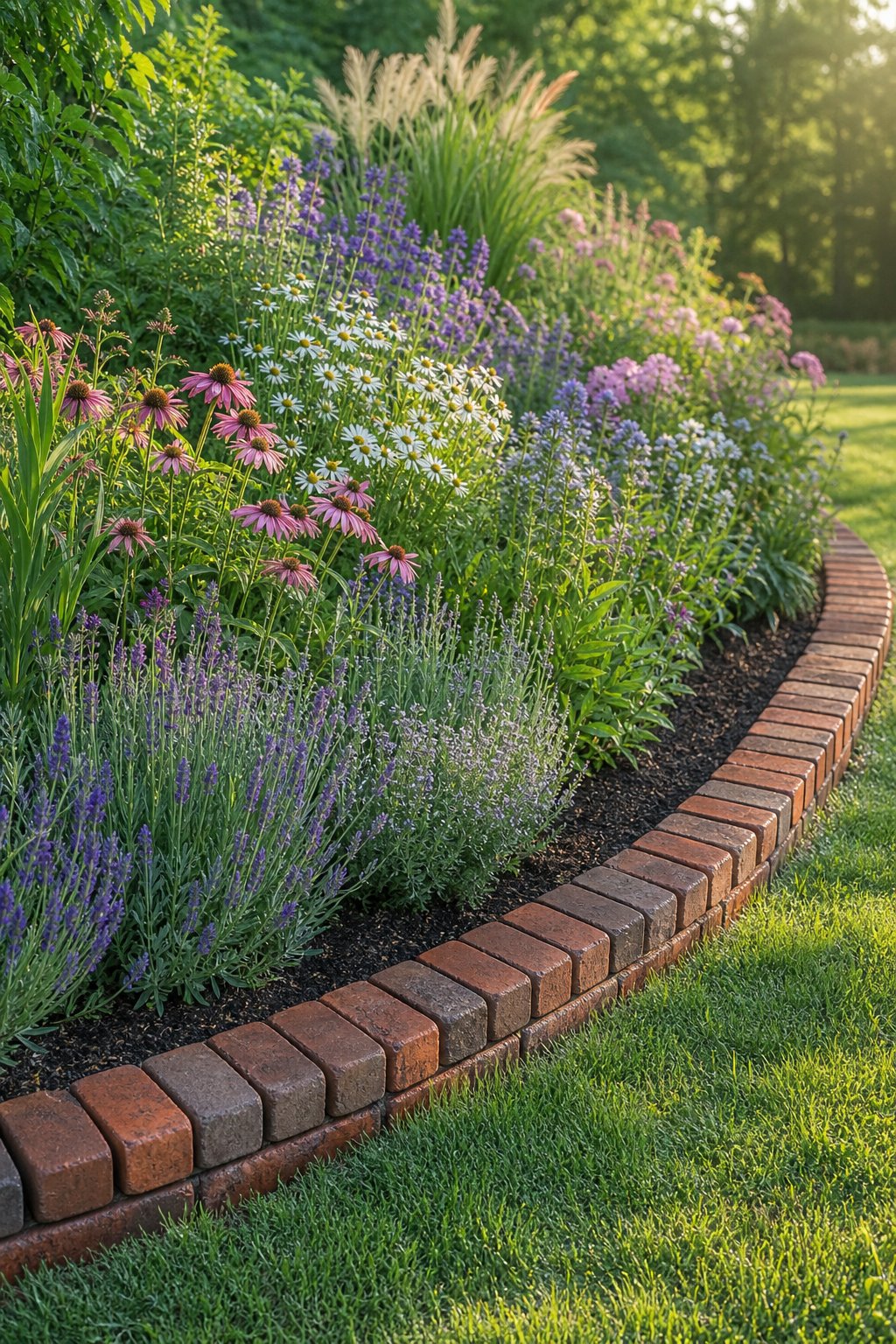
12. Brick Garden Border With Cottage Perennials
A curved brick border gives a cottage garden a clear shape while allowing perennials to spill over in a relaxed way. Pair old-looking brick with coneflowers, salvia, catmint, yarrow, or daisies for a soft planting style. Set the border level with the surrounding soil so water can move into the bed.
Plan plants by mature height, placing shorter flowers near the brick and taller stems toward the back. Leave enough room for spreading plants to fill in without covering the entire edge. This approach fits many garden edging ideas while keeping the brick detail easy to maintain.
Expert Tip From MrPlanter: “Repeat one flower color near both ends of the bed. The small echo makes a mixed planting feel planned.”
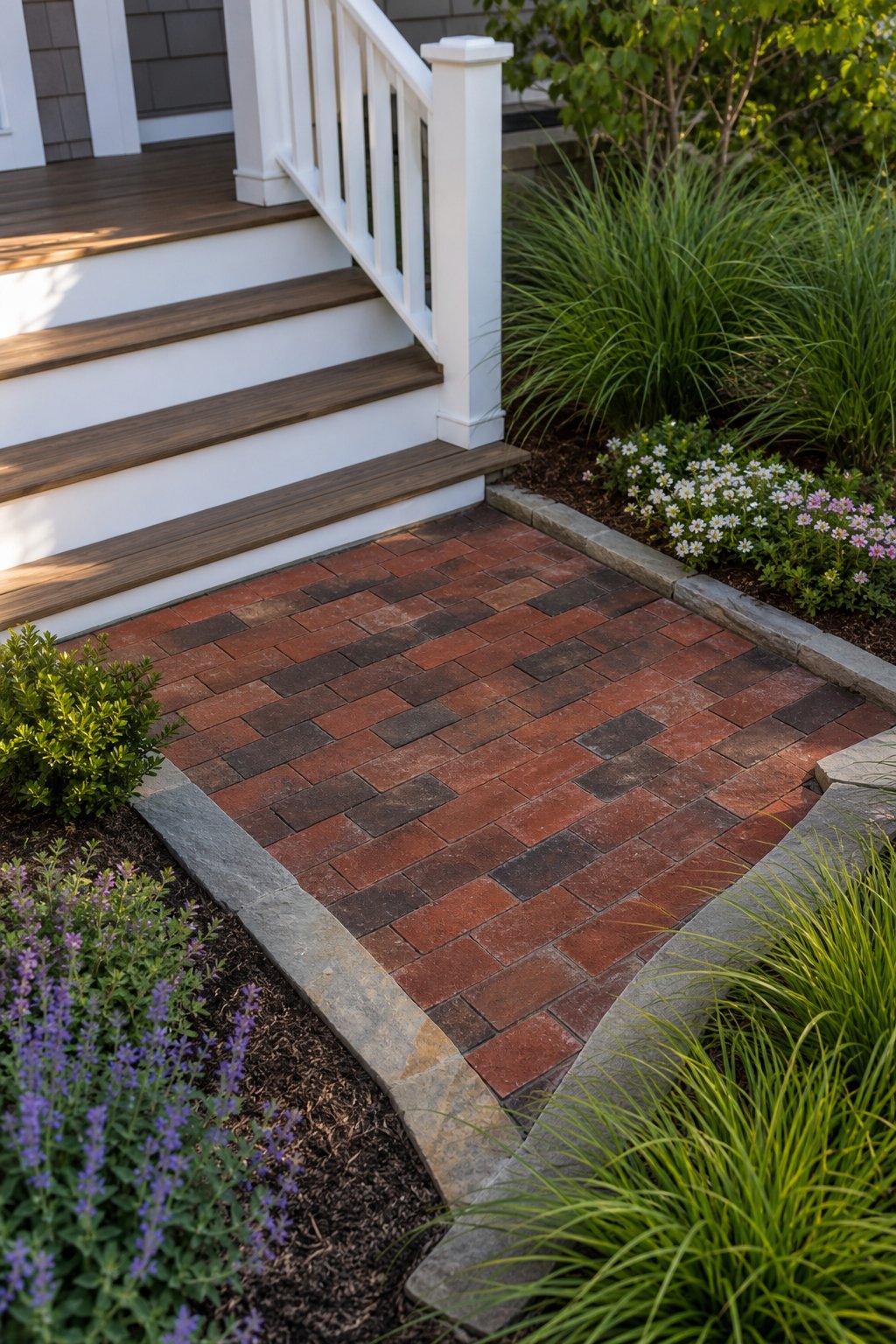
13. Brick Landing at the Base of Porch Steps
A brick landing gives porch steps a level transition zone for opening doors, greeting guests, and setting down bags. Make the landing wide enough for the door swing and comfortable standing room. Match its brick tone to the porch or repeat the color in nearby edging for a connected entry.
Build the surface with a firm, well-drained base, then check the finished height against the bottom stair. Keep planting beds outside the main walking area, using compact shrubs or low flowers near the sides. Browse these front entry landscaping ideas for planting arrangements that frame a porch.
Expert Tip From MrPlanter: “Test the door swing before setting the last bricks. A beautiful landing still needs clear space for daily entry.”
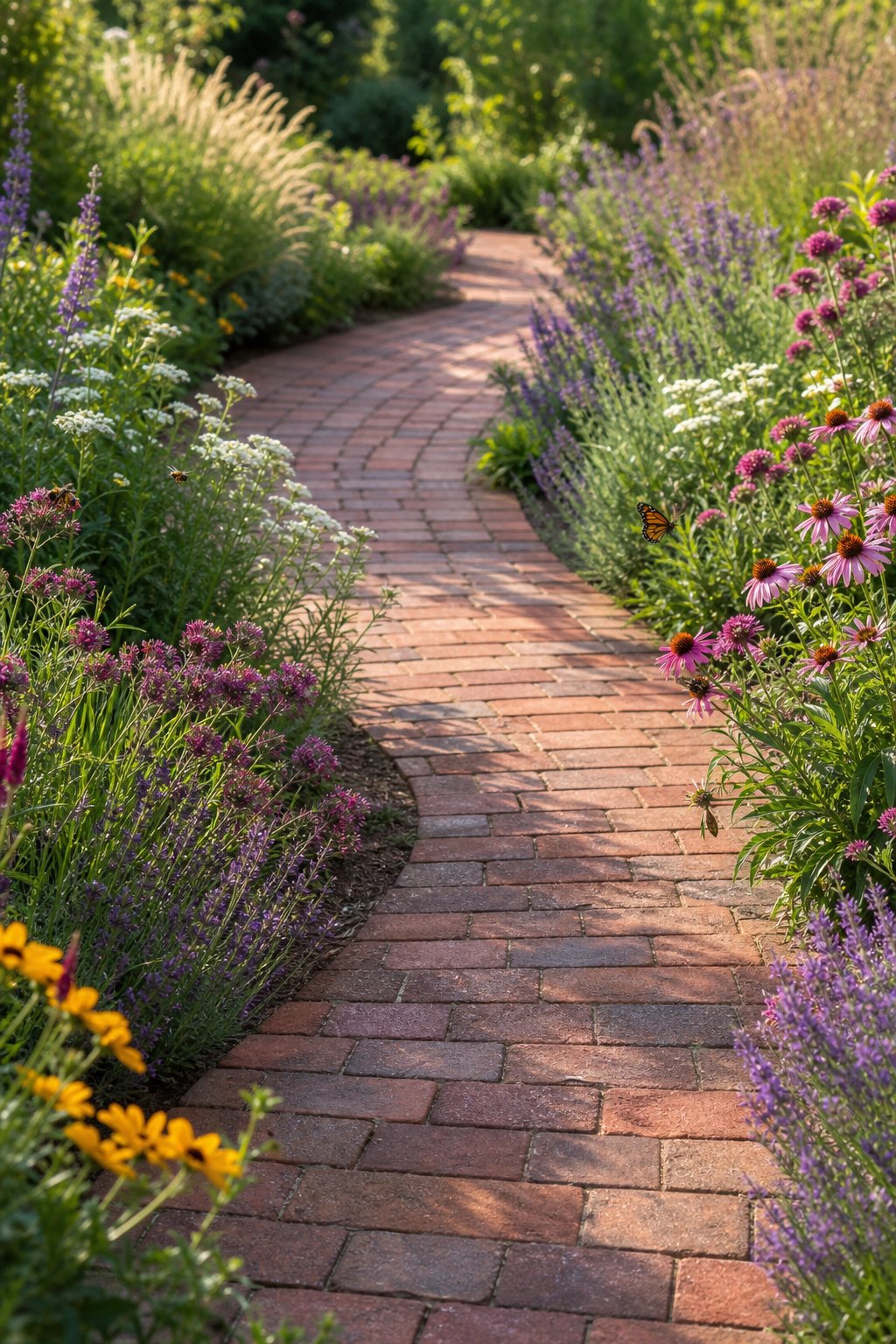
14. Brick Paver Path Through a Pollinator Garden
A brick paver path lets you enjoy a pollinator garden without compressing its soil. Curve the route between nectar plants, leaving pockets for native flowers, herbs, and grasses. Warm brick adds a hard surface that feels settled while the planting remains lively and seasonal.
Choose flowers with different bloom periods so insects find food across the growing season. Avoid broad pesticide use near the path, and include a shallow water source with stones for safe landing. Keep the path edge visible by trimming runners and sweeping away fallen petals.
Expert Tip From MrPlanter: “Plant in broad groups instead of single scattered specimens. Larger patches are easier for pollinators to spot.”
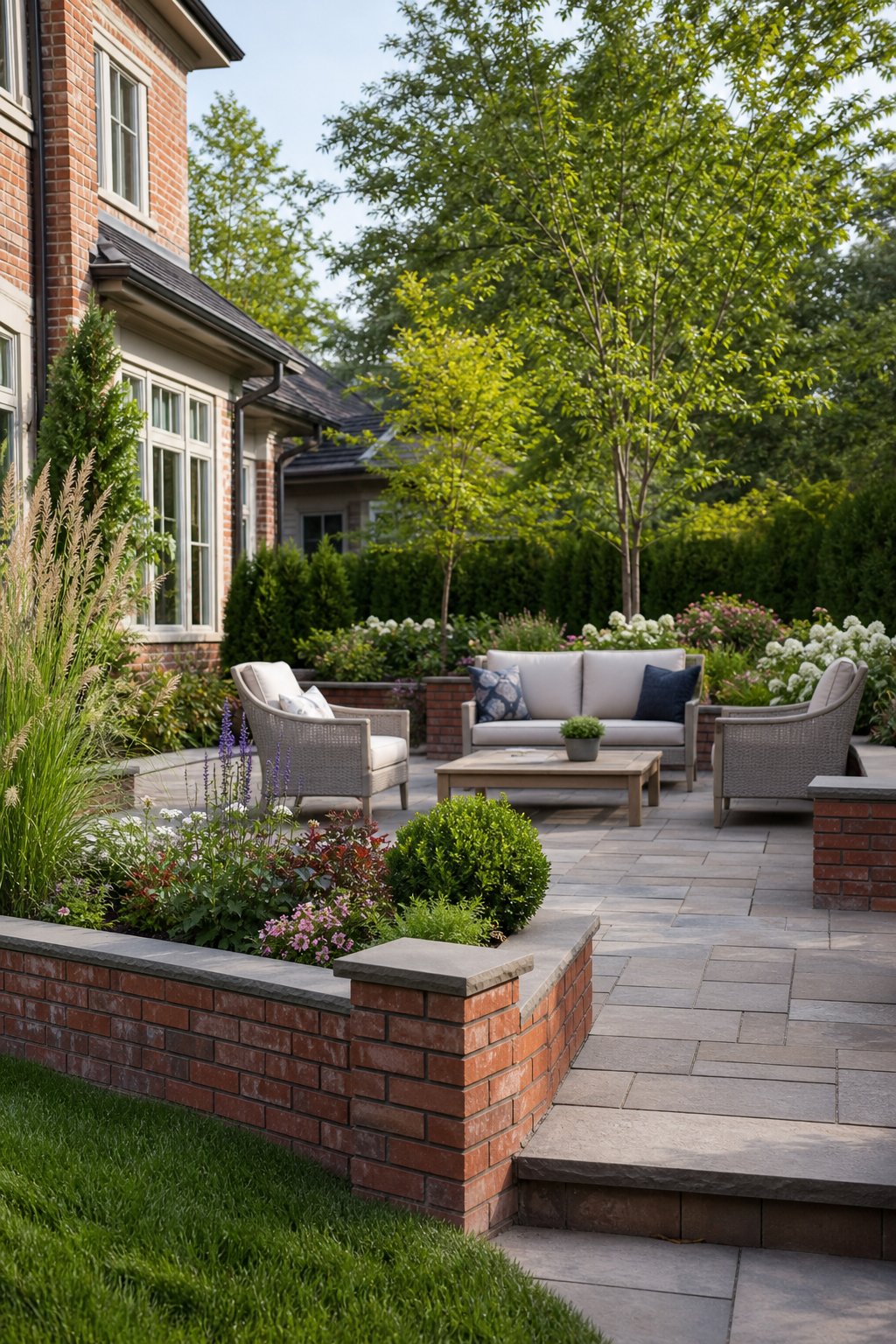
15. Brick Planter Wall Around a Patio
A low brick planter wall can surround a patio while adding color, privacy, and a comfortable sense of enclosure. Build the wall high enough to hold soil and low enough to preserve views across the yard. A broad cap turns the top into a perch for pots or a casual seat.
Line the planting area carefully and include drainage outlets so water doesn’t collect behind the wall. Use upright grasses, compact shrubs, or trailing flowers based on the patio’s sun and wind. These landscaping around patio ideas can help you place planting pockets around seating.
Expert Tip From MrPlanter: “Keep thorny plants away from chair paths. Choose soft foliage where people walk and sit close to the wall.”
16. Brick-Inset Stepping Stones in a Gravel Path
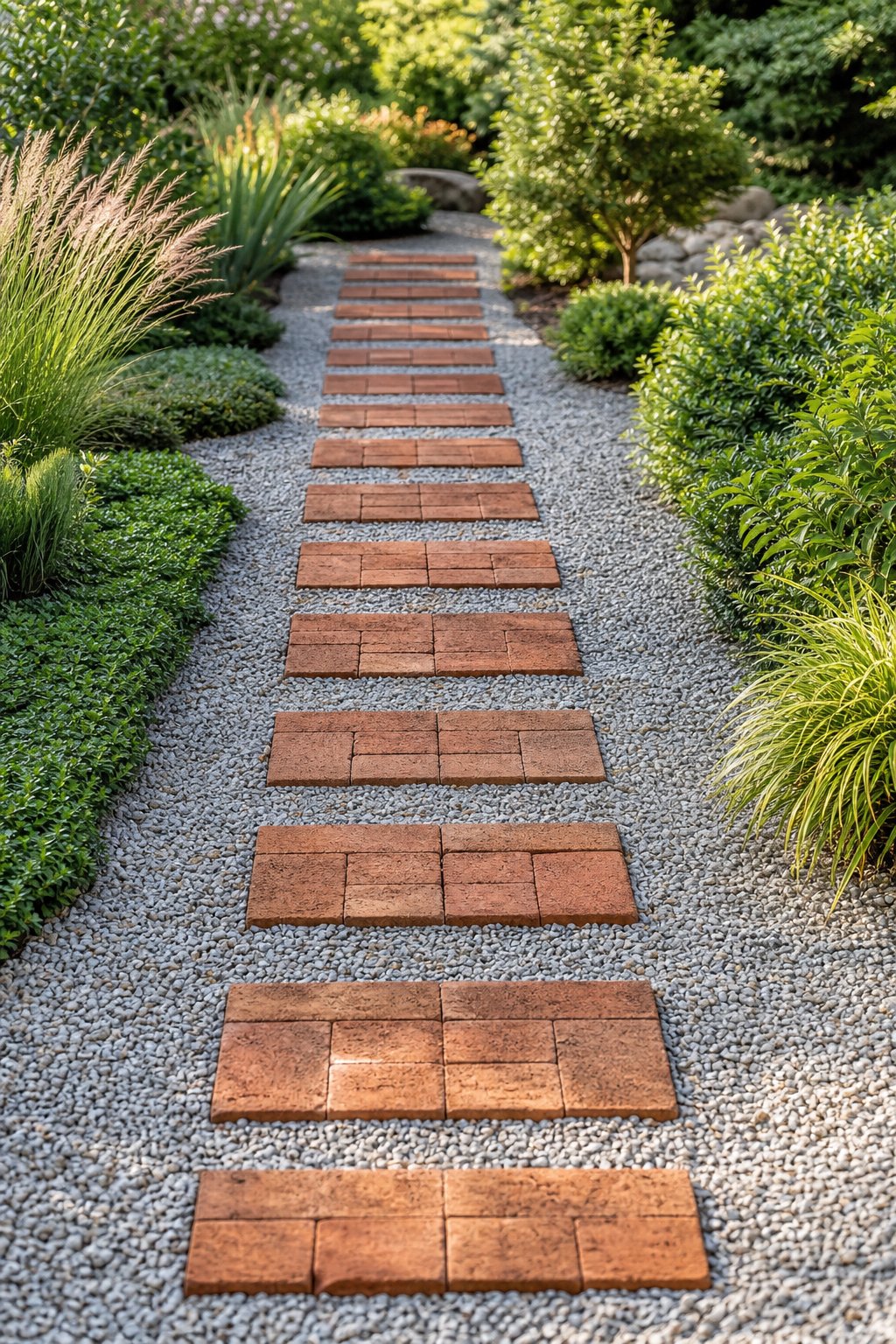
Brick stepping stones make a gravel path easier to walk and give it a stronger visual rhythm. Set each brick cluster at an even stride length, with the top surface slightly above the gravel. The result feels casual while still guiding visitors between garden rooms.
Use larger brick groups where you expect frequent traffic, such as the route to a shed or gate. Compact the gravel below each stone so it stays stable underfoot. Keep the surrounding gravel level with a hand rake, especially after storms or heavy yard work.
Expert Tip From MrPlanter: “Walk the planned route before placing the stones. Your natural stride will show where each landing belongs.”
17. Brick Water Feature Surround With Planting Pockets
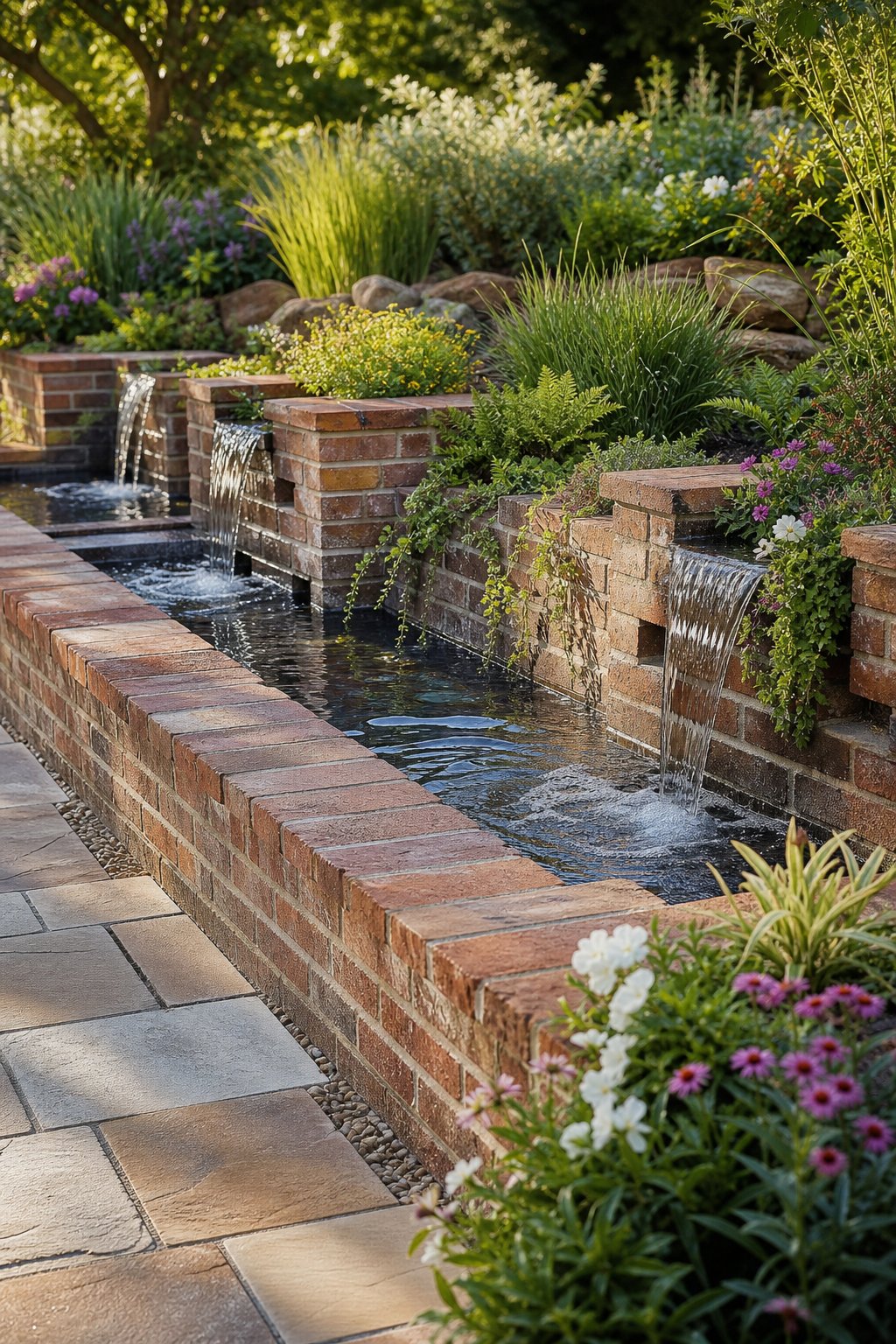
A brick surround turns a small pond or fountain into a clear garden focal point. Use the brick frame to define the water’s edge, then add planting pockets for moisture-loving foliage and flowers. The warm masonry pairs well with moving water, especially near a patio or backyard path.
Keep bricks outside the liner so sharp edges don’t puncture it. Leave access for pump cleaning and provide a stable surface around the feature for safe maintenance. Ferns, rushes, and low grasses soften the border without hiding the water. For more ideas, explore these pond landscaping ideas.
Expert Tip From MrPlanter: “Leave one open side for service access. Pumps need cleaning, and hidden equipment turns a small job into a frustrating one.”
18. Brick Herb Spiral Near an Outdoor Kitchen
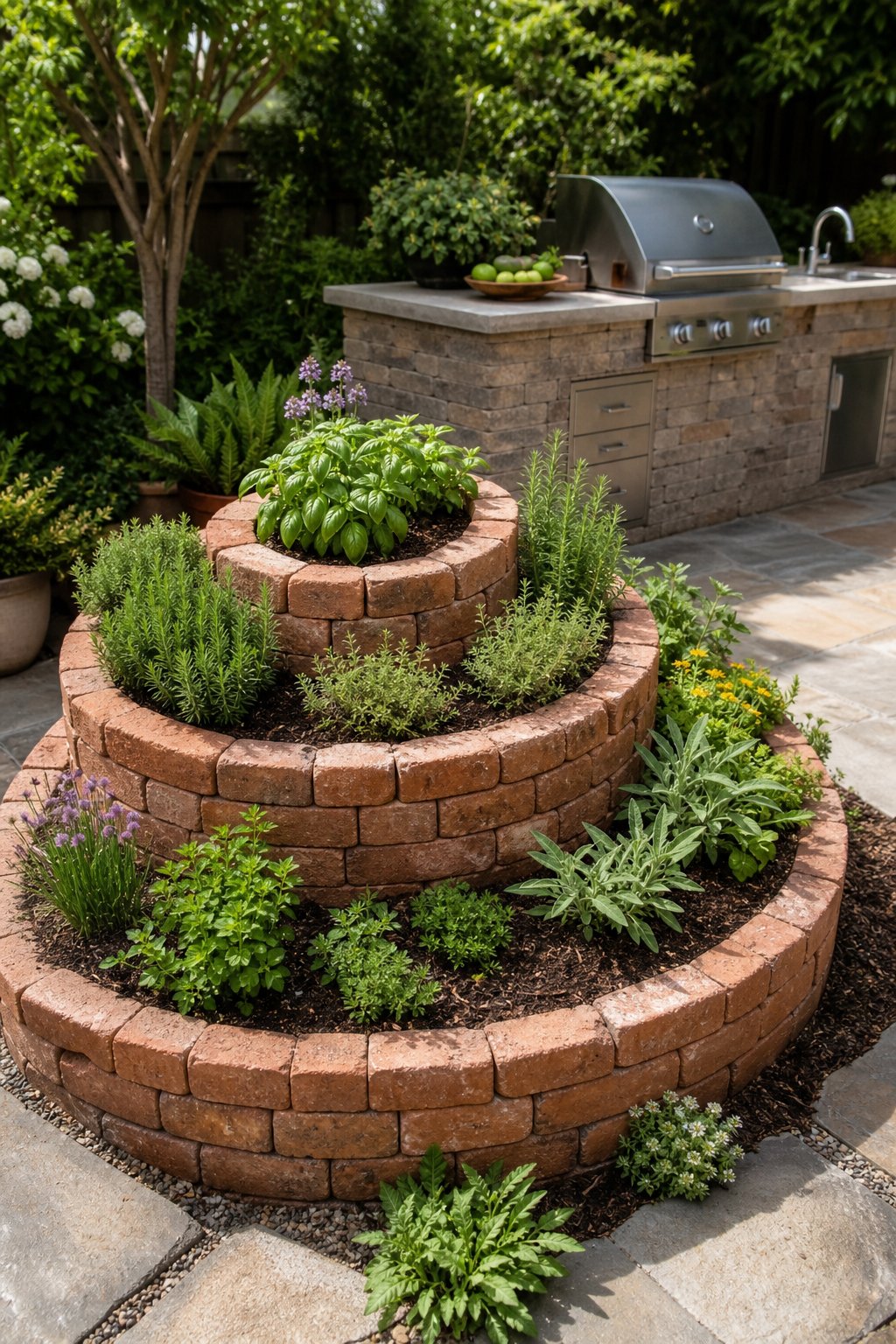
A brick herb spiral packs several growing conditions into a small kitchen garden feature. Build a rising spiral wall with brick, then fill the center with free-draining soil and compost. Plant sun-loving rosemary and thyme near the top, with parsley, chives, or mint in lower, moister pockets.
Place the spiral close enough to the outdoor kitchen for easy harvesting, while keeping it clear of smoke, grease, and heavy foot traffic. Use a root barrier for mint because it spreads quickly. A brick edge also makes the spiral easy to spot during evening cooking.
Expert Tip From MrPlanter: “Put herbs you harvest daily on the easiest side to reach. Save the high center for plants that need the best drainage.”
How to Choose a Brick Landscaping Project
Which Brick Feature Fits Your Yard’s Main Job?
Start with the job you need the brick to perform. A path handles foot traffic, edging contains soil, a patio supports furniture, and a retaining wall holds back earth. Your yard size, slope, drainage, and access points will narrow the choices quickly.
A small front yard often benefits from a walkway or low flower-bed border. A sloped backyard gains usable space from steps or terraces. If you want a broad source of direction, these yard landscaping ideas can help you connect hardscape choices with planting areas.
Should You Use New, Reclaimed, or Matching Brick?
New brick offers consistent color and size, which helps with clean patterns and easy installation. Reclaimed brick brings weathered color and small marks that suit cottage gardens, courtyards, and fire pit terraces. Matching brick works well near an existing home because the new feature feels connected to the building.
Inspect reclaimed pieces for cracks, mortar residue, and crumbling faces. For large projects, buy extra pieces from the same batch so repairs don’t create a patchwork effect.
When Does a Pattern Need a Border?
A border helps when the pattern reaches a lawn edge, curves around a bed, or carries furniture and foot traffic. It gives installers a fixed line and reduces movement at the outer edge. Herringbone, basket weave, and circular layouts benefit from a border because their cuts become easier to organize.
Use a contrasting brick for a clear frame, or keep the same brick for a quieter look. A simple soldier course works well for paths and patios, while flat edging suits planting beds.
Planning and Installation Essentials
How Do You Create a Stable Base and Proper Drainage?
Excavate deep enough for the brick, bedding layer, and compacted base. Remove organic soil, compact the subgrade, add crushed stone in thin lifts, and check the finished slope with a level. For paths and patios, a slight fall directs water away from buildings and prevents puddles.
Use edge restraints where foot traffic or lawn movement could push bricks outward. Sweep joint sand into the finished surface, then compact according to the paving material’s instructions. Retaining walls need drainage stone and a suitable outlet behind the wall.
Which Brick Patterns Work Best for Paths, Patios, and Edging?
Herringbone handles busy paths and drive areas because its interlocking lines spread force across nearby bricks. Running bond gives a calm, traditional surface for patios and straight walks. Basket weave adds a stronger decorative note to small sitting areas.
Soldier-course rows suit borders, while circular layouts work best with wedge-shaped pavers. Choose the pattern after measuring the space so you know how many cuts and edge pieces the project requires.
How Can You Blend Brick With Plants and Existing Architecture?
Repeat a brick color already found in your home, porch, chimney, or garden wall. Then soften the hard lines with plants suited to the site’s light and moisture. Leave room for mature plant width, keep aggressive roots away from walls, and place taller plants where they won’t block doors or paths.
Use gravel, mulch, or ground cover as a narrow transition between brick and planting beds. For more planting direction, browse these garden landscape design ideas before marking your project area.
I’m Anirban Saha, the Founder and Owner of MrPlanter.com. I pay the bills as a software developer, although my BTech is actually in Electronics and Communication. I really love my day job, but what gives me energy every day is interacting with my indoor plants and taking care of them. I have been successfully nurturing and maintaining houseplants for over 10 years now.
📚🔍 Our content undergoes thorough review and fact-checking before publication. For additional details, explore our strict Editorial Policy to deliver helpful content. 📝🔒