As an Amazon Associate, MrPlanter.com earns from qualifying purchases.
Fresh herbs turn an outdoor cooking area into a place you’ll use more often. When basil, rosemary, thyme, or chives grow within a few steps of the grill, you can snip what dinner needs while the skillet heats.
The best kitchen herb garden ideas keep plants close to your cooking space, give each herb enough sun, and make watering easy. Pots, raised beds, wall planters, and rolling carts all work when you match the setup to your yard and cooking habits.
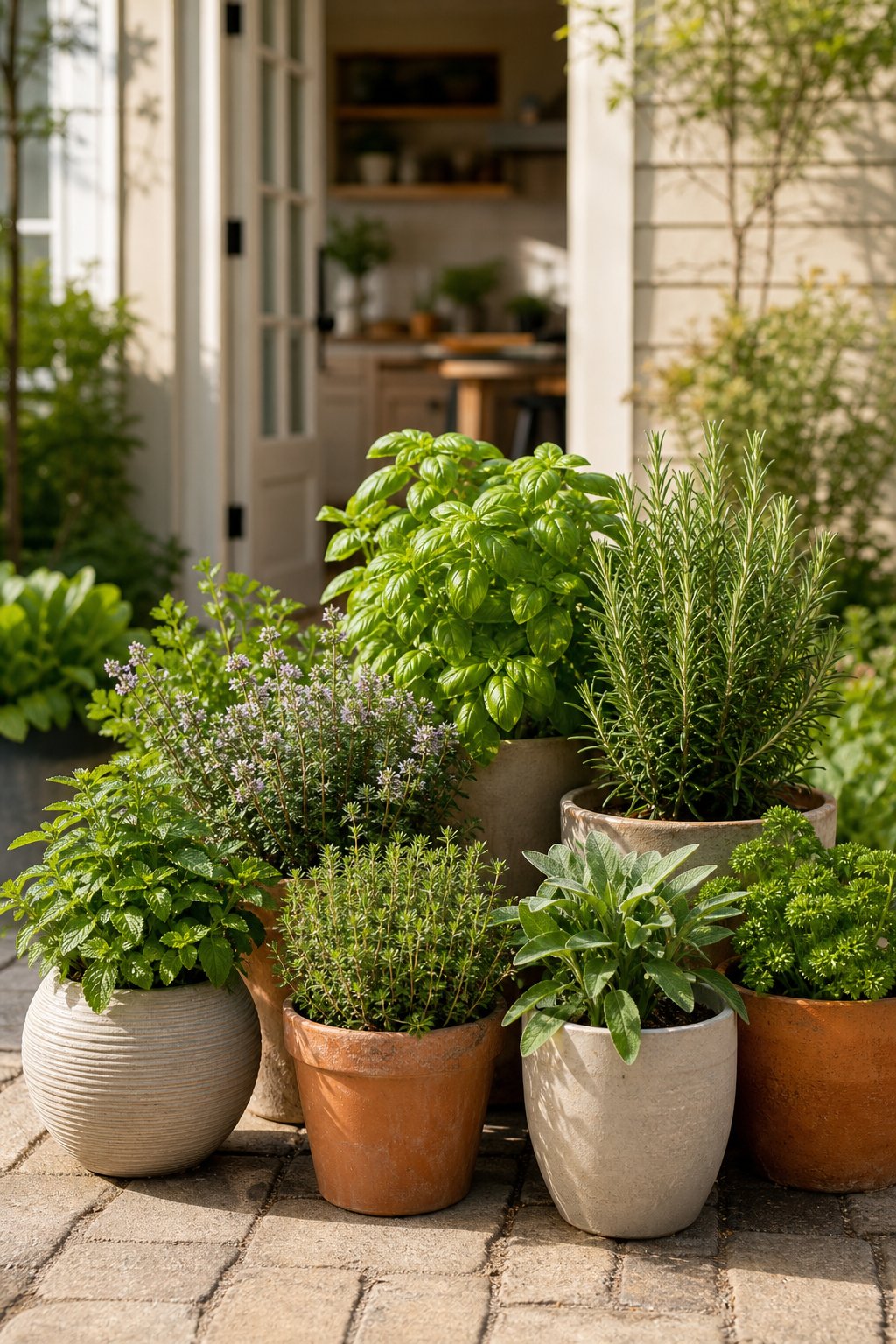
1. Sunny Patio Herb Pots Beside the Kitchen Door
A few sunny pots beside the kitchen door give you the fastest route to fresh flavor. Choose containers with drainage holes and group herbs by water needs. Rosemary, thyme, and oregano prefer soil that dries slightly between drinks, while basil and parsley enjoy more even moisture.
Use sturdy pots that won’t tip when you brush past them with a bowl in hand. A small plant stand raises shorter herbs to countertop height, and simple labels save you from guessing whether you grabbed sage or oregano. Terracotta dries quickly in hot weather, so check it often with your finger.
Expert Tip From MrPlanter: “Keep the pots close enough that you can reach them with one hand. Snip basil above a leaf pair so the plant grows bushier.”
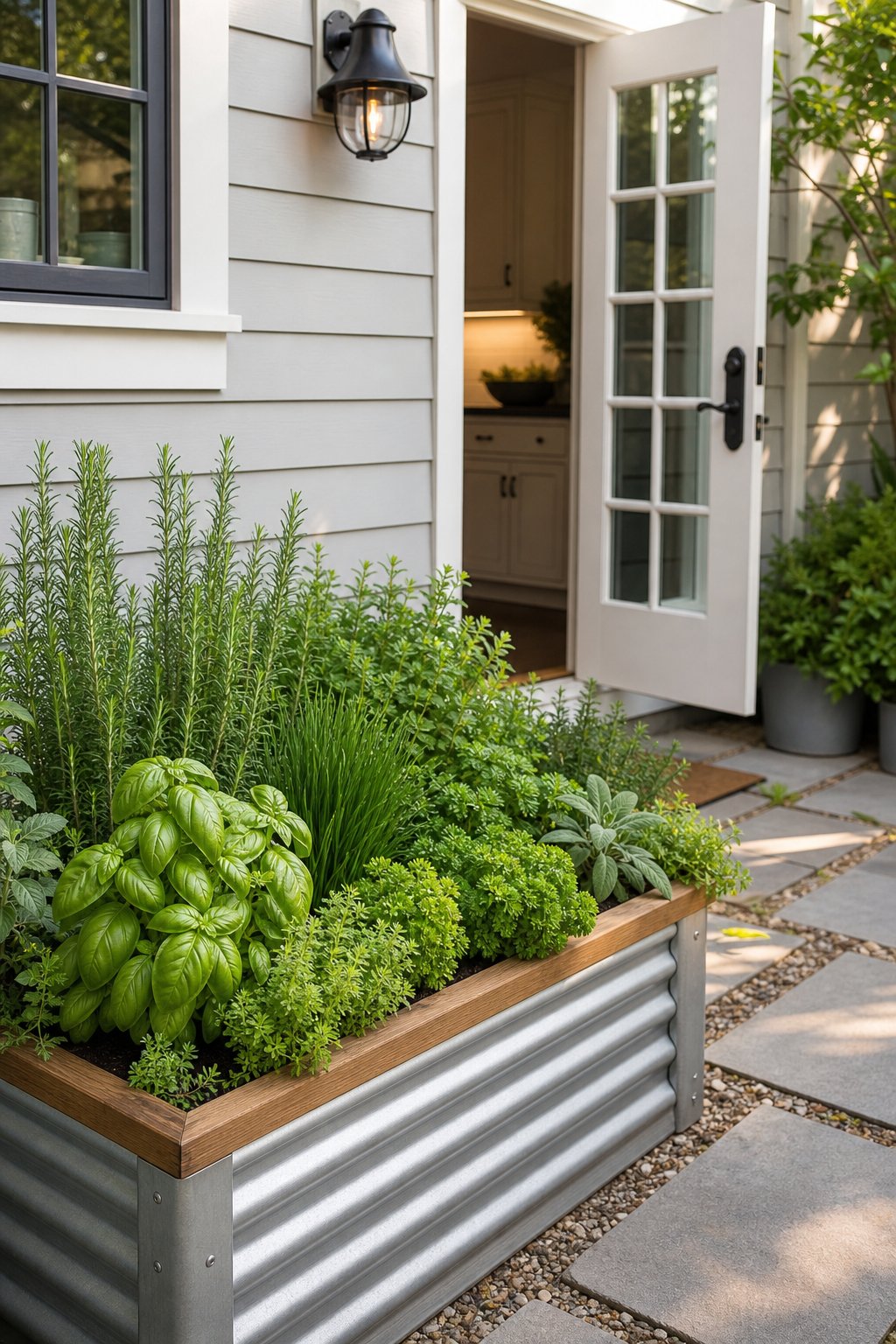
2. Raised Culinary Herb Bed Outside the Back Door
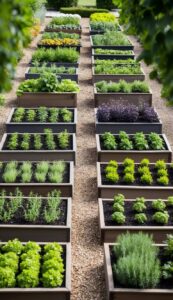
A raised herb bed gives you generous growing room and comfortable access for planting and harvesting. Build it a few steps from the back door, then fill it with loose soil mixed with compost. A 10- to 12-inch height makes planting easier and helps excess water drain away.
Place taller rosemary or sage toward the back, with parsley, chives, and thyme near the front edge. Leave room around each plant for airflow and future growth. Cedar boards, stone, or brick all suit an outdoor cooking area, and a narrow bed fits beside many doors. See these raised garden bed ideas for more layout inspiration.
Expert Tip From MrPlanter: “Keep the bed narrow enough to reach its center without stepping into it. Add compost each spring before new growth begins.”
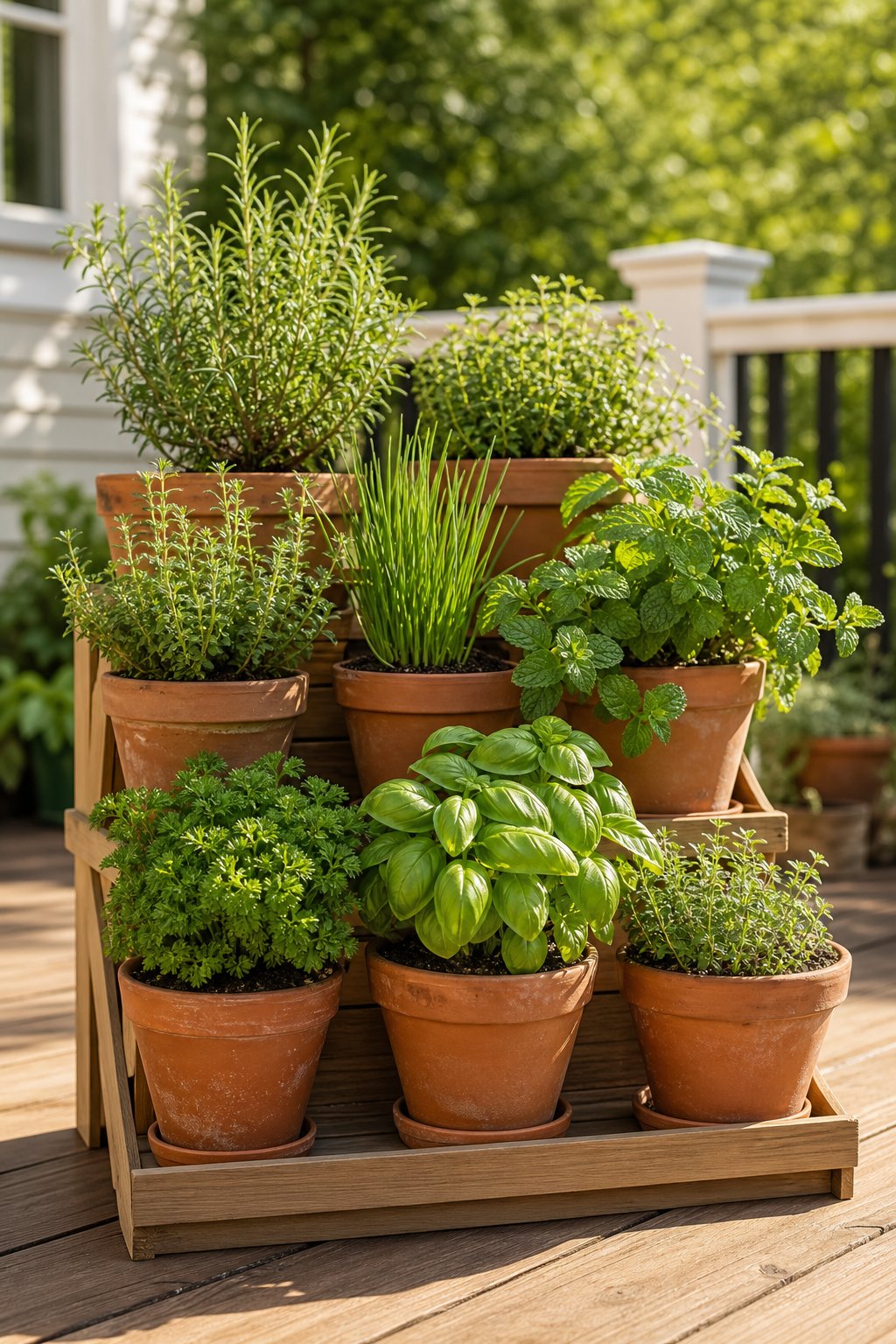
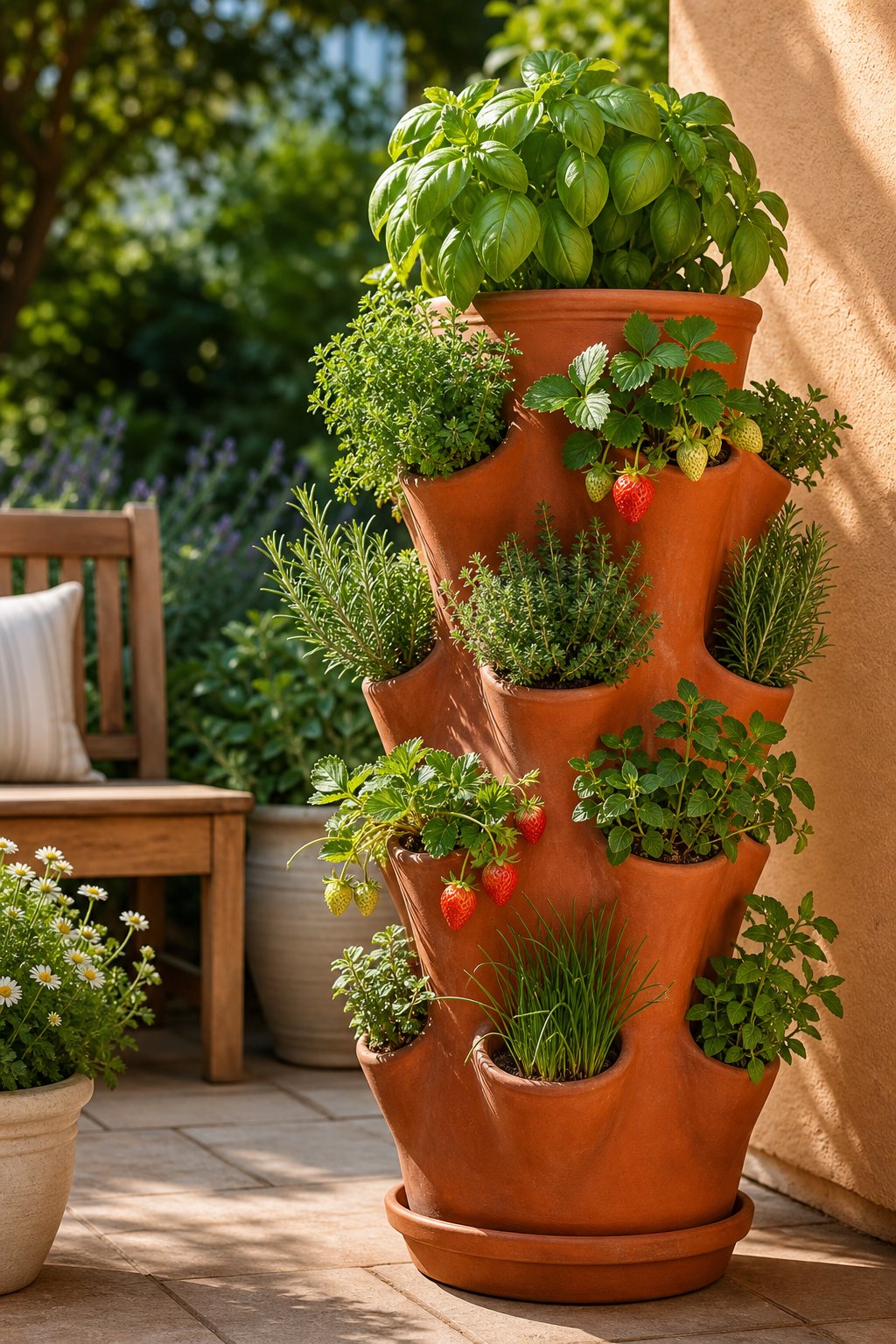
3. Tiered Terracotta Planter Garden on a Deck
A tiered terracotta planter turns a small deck corner into a compact herb display. The raised levels give each pot access to light and make harvesting easy while you cook outside. Put sun-loving herbs on the top tier, then place parsley or cilantro where they receive a little afternoon shade.
Terracotta breathes well, though it dries faster during hot spells. Set saucers underneath to protect deck boards, and check that water can drain freely. A nearby rail or wall keeps the stand steady in windy weather. Arrange the tiers near your prep table so fresh leaves stay within reach.
Expert Tip From MrPlanter: “Put the thirstiest herb on the lowest level where watering is easiest. Lift each pot once in a while to check for trapped water.”
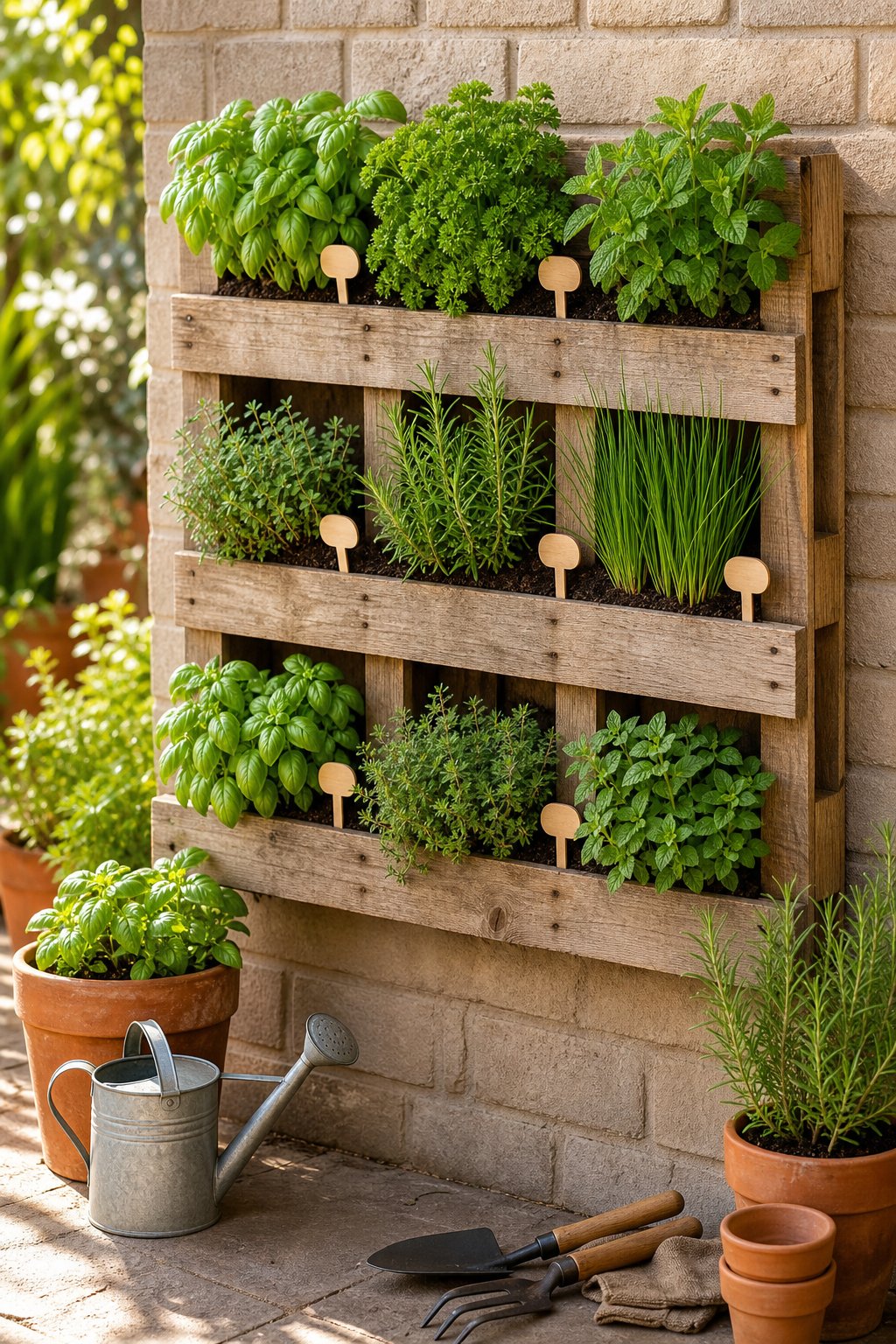
4. Vertical Pallet Herb Garden Along a Patio Wall
A vertical pallet garden makes use of a sunny patio wall while keeping herbs off the ground. Secure the pallet firmly, line planting pockets with landscape fabric, and leave openings for drainage. Compact herbs such as thyme, chives, oregano, and parsley fit well in the smaller spaces.
Paint or seal the wood with an outdoor product labeled safe for garden use. Keep the pallet away from hot grill exhaust, which can dry leaves and damage tender stems. Harvest from the lower pockets first so upper plants don’t shade them. Browse these pallet garden ideas for more ways to arrange reclaimed wood.
Expert Tip From MrPlanter: “Anchor the pallet before adding soil because wet planting pockets become heavy fast. Give the lower herbs extra light by trimming overhanging stems.”
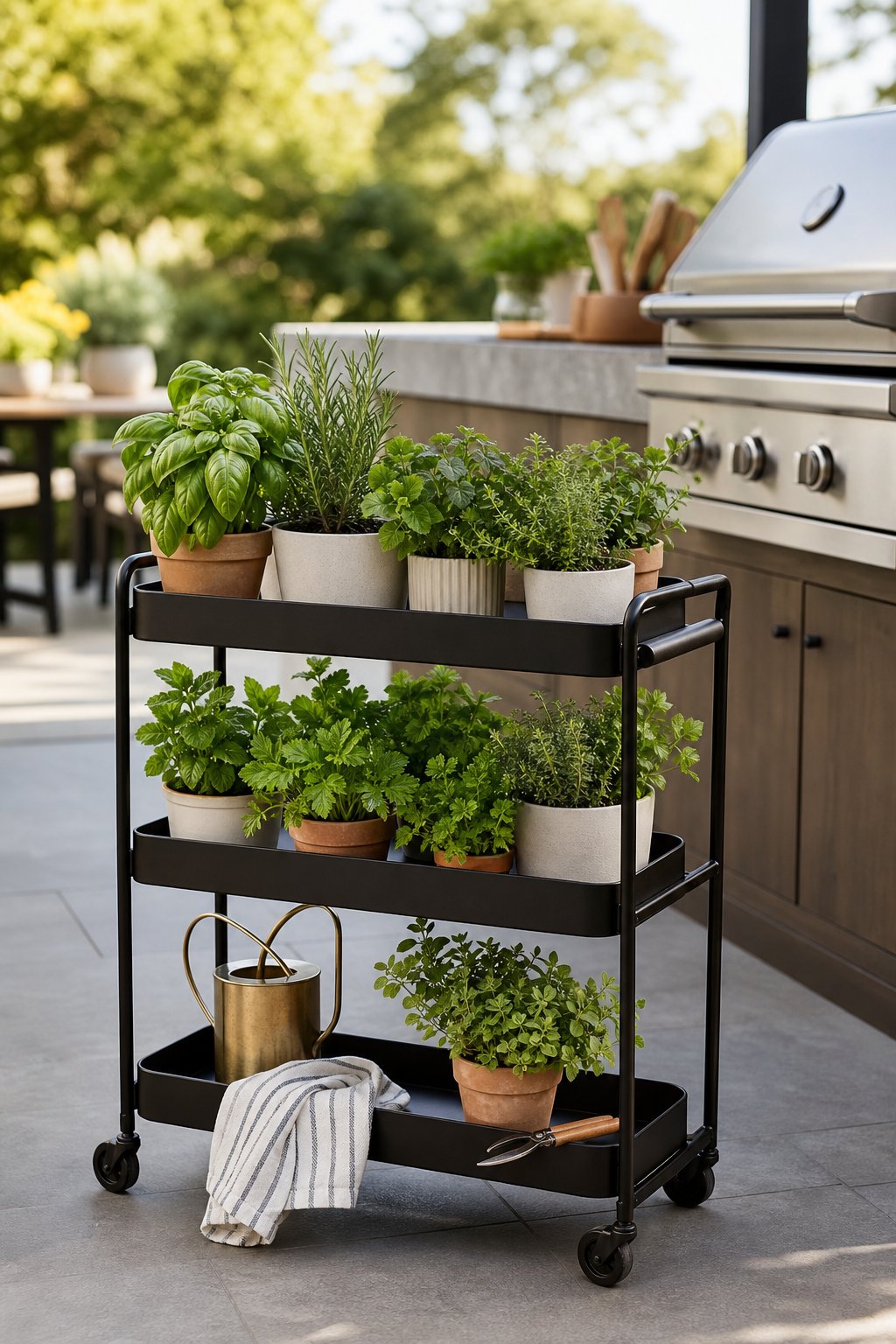
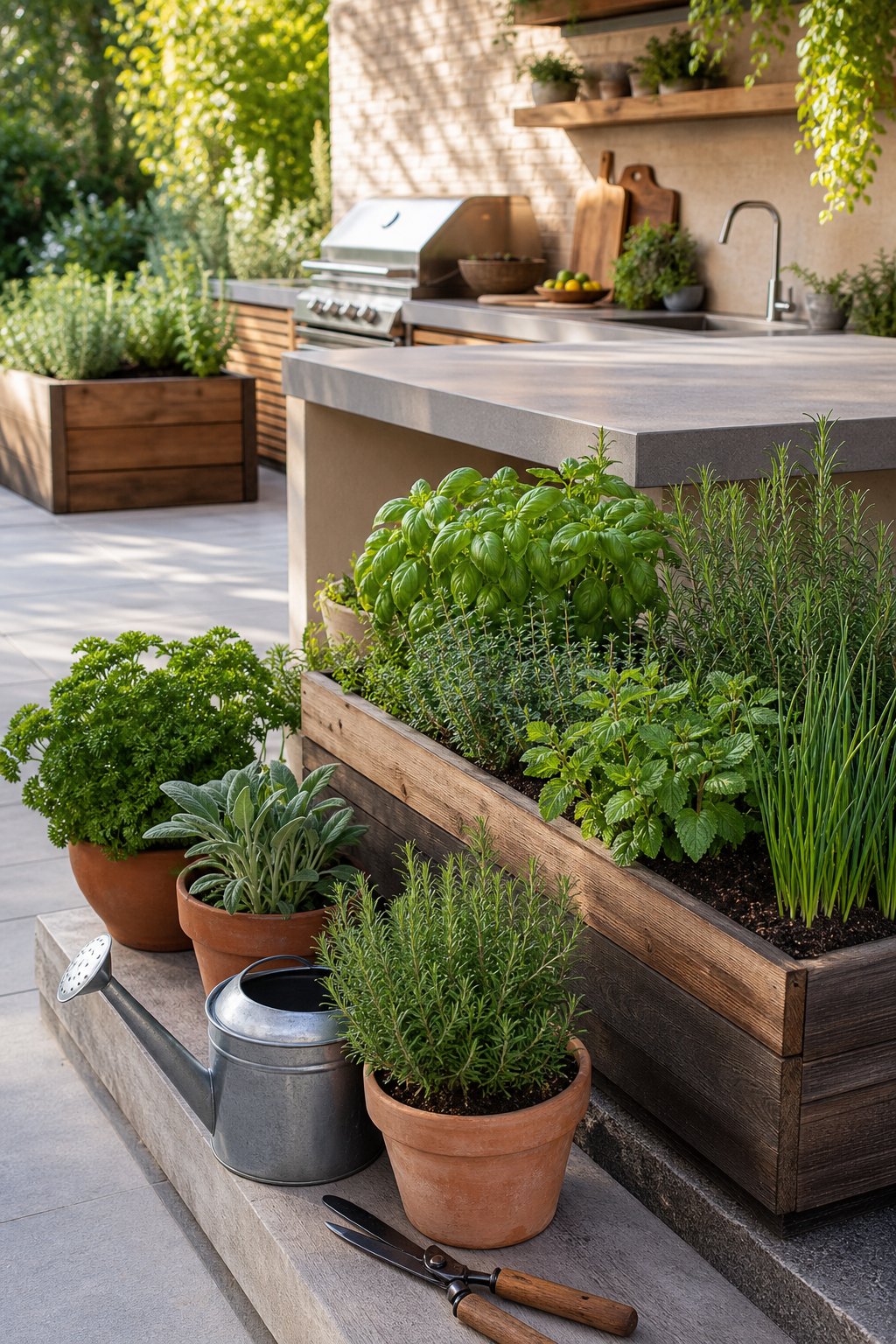
5. Rolling Bar Cart Herb Garden for an Outdoor Kitchen
A rolling bar cart lets you bring fresh herbs straight to the outdoor kitchen. Choose a cart with locking wheels, a solid lower shelf, and enough depth for pots that won’t wobble. Place basil, mint, and chives on the top shelf, then store snips, gloves, and a watering can below.
Move the cart into morning sun and roll it under cover during storms or frost. A waterproof tray catches drips and keeps the cart cleaner. Mint deserves its own pot because its roots spread quickly. The setup also works well when your cooking area changes from the grill to the dining table.
Expert Tip From MrPlanter: “Lock the wheels before harvesting so the cart stays put. Keep a small pair of scissors on the lower shelf for quick snips.”
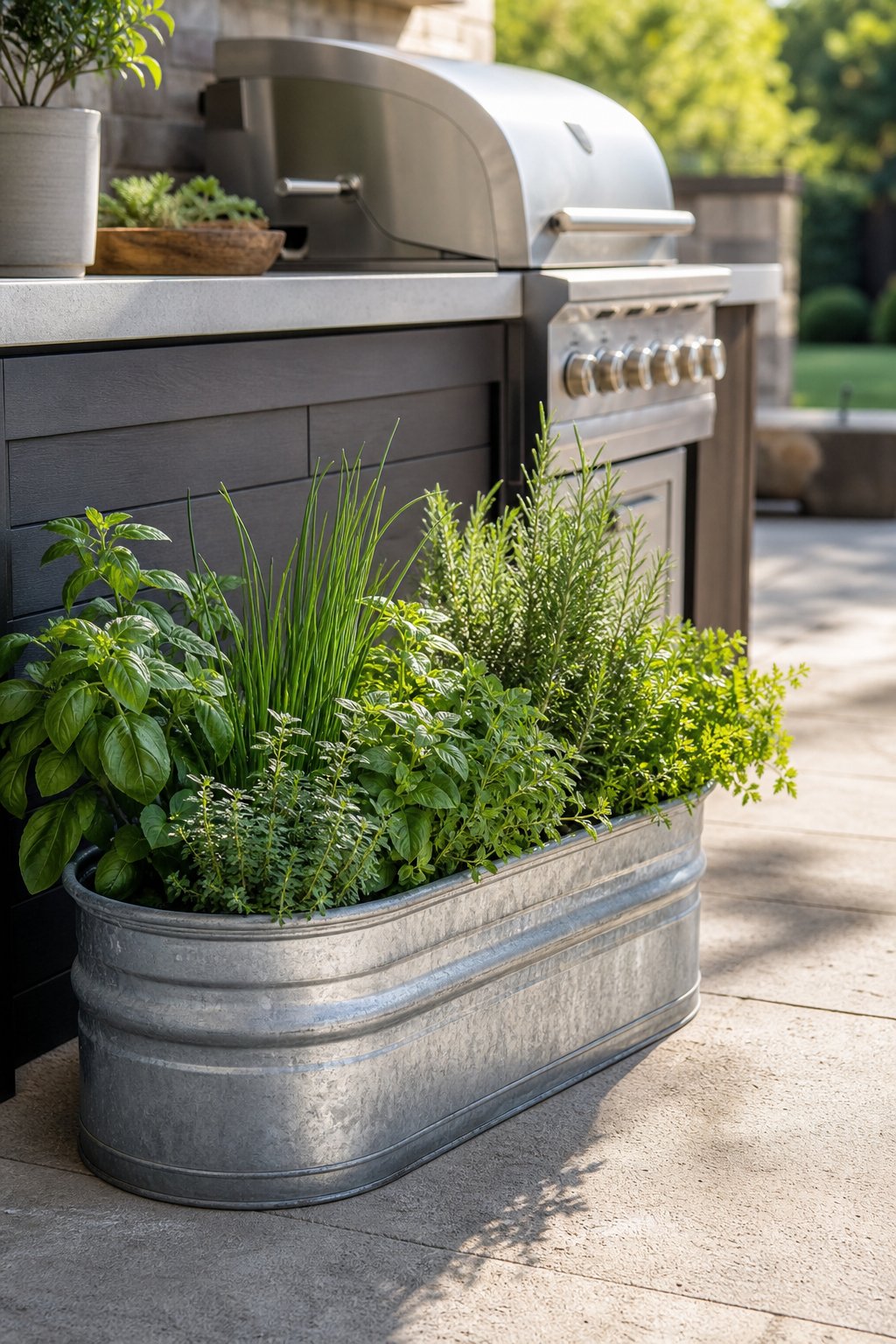
6. Galvanized Trough Herb Planter by the Grill
A galvanized trough creates a long planting bed beside the grill, giving you room for several cooking herbs in one container. Drill drainage holes if the trough lacks them, then add a layer of potting mix suited to containers. Keep the planter far enough from the grill that heat and grease don’t reach the leaves.
Line up rosemary and sage at one end, with thyme, oregano, or chives toward the other. Metal warms in full sun, so check soil moisture during summer. A narrow trough also defines the cooking zone and keeps loose pots from crowding your walking path.
Expert Tip From MrPlanter: “Leave space between the trough and grill for safe movement. Add mulch to slow moisture loss during hot afternoons.”
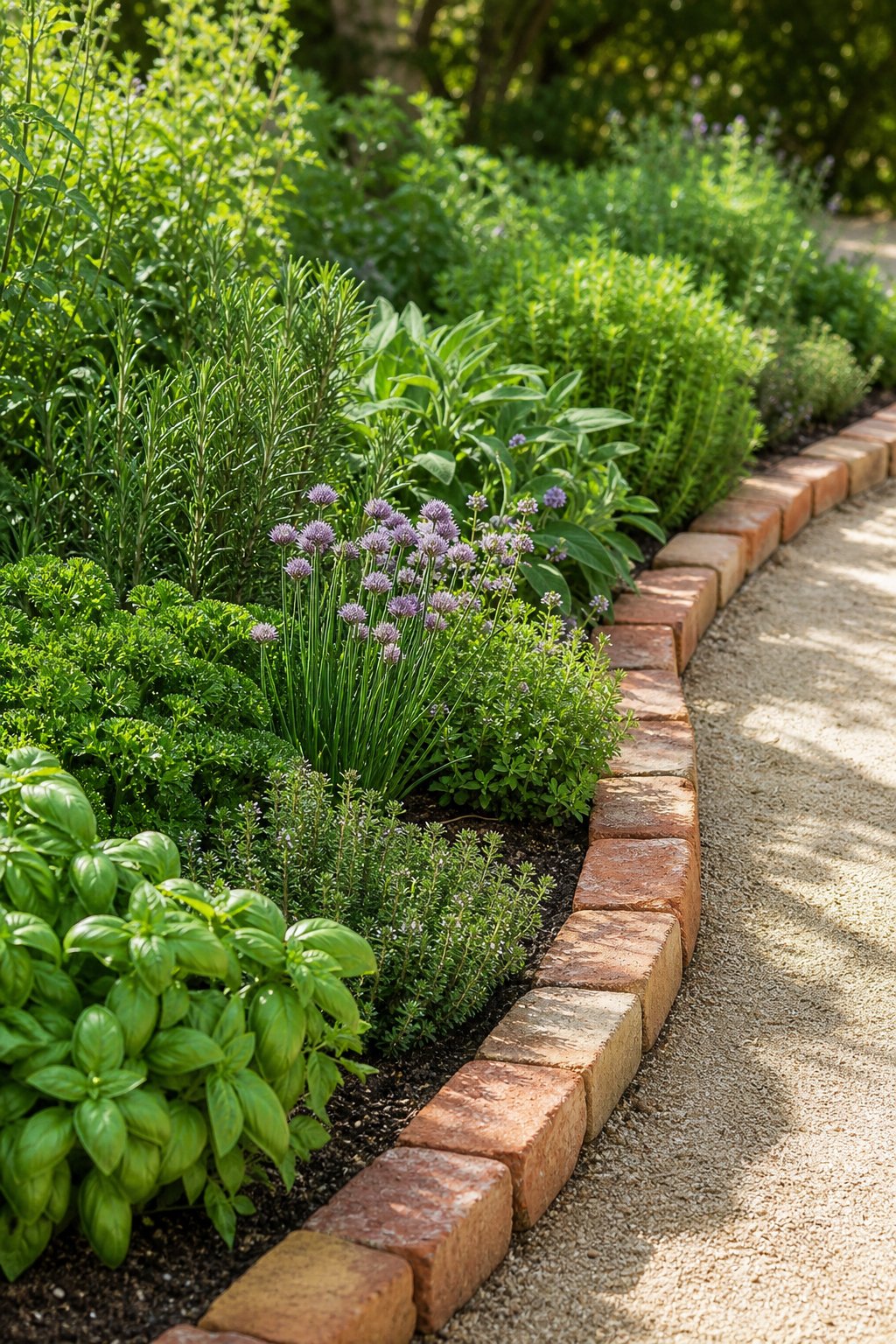
7. Brick-Edged Herb Border Along a Garden Path
A brick-edged herb border places low-growing herbs beside the path leading to your outdoor kitchen. Bricks hold soil in place and create a neat line for thyme, oregano, chives, and parsley. Set the border where the plants receive at least several hours of direct light.
Keep creeping herbs near the path so you can harvest them without reaching into taller plants. Leave enough walking width for carrying a tray or hot pan. Gravel or mulch between the bricks and plants improves drainage and keeps mud off your shoes. These brick edging ideas offer more ways to shape the border.
Expert Tip From MrPlanter: “Set the brick tops level with the path so they don’t catch your shoes. Trim thyme after flowering to keep the edge tidy.”
8. Strawberry Pot Herb Tower Near the Patio
A strawberry pot creates a tall herb tower for a patio corner with limited floor space. Fill the central chamber with potting mix, then plant compact herbs in the side openings. Thyme, oregano, chives, and small parsley plants fit well, while strawberries add a snack between meals.
Place the tower where every opening receives light. Water slowly from the top so moisture reaches lower pockets, and check the side openings because they dry quickly. Choose a broad, heavy pot that won’t tip in wind. Keep sprawling mint in a separate container to prevent crowding.
Expert Tip From MrPlanter: “Add soil in stages as you plant each pocket. Turn the pot a quarter turn every few days for even growth.”
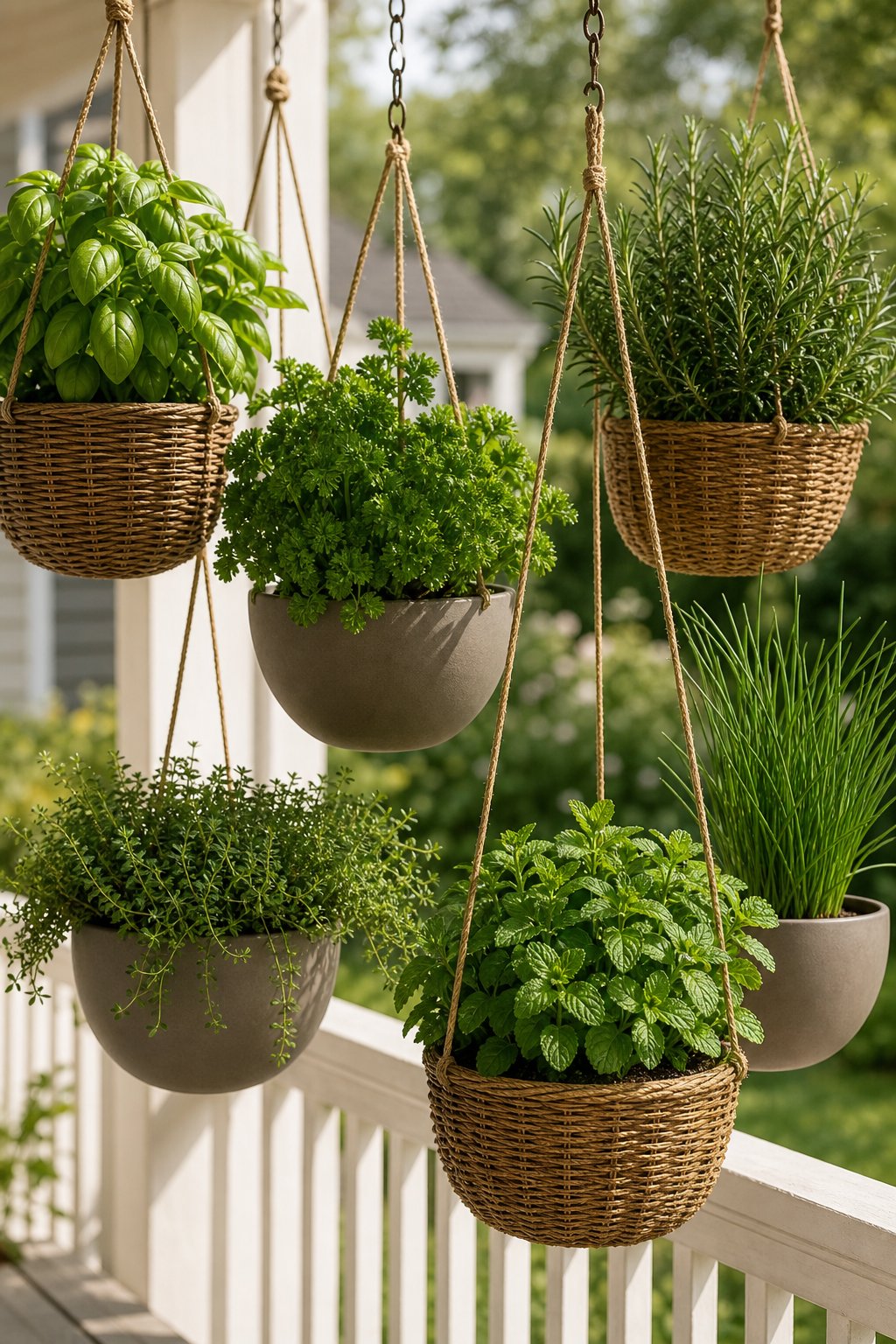
9. Hanging Basket Herb Garden on a Porch Rail
Hanging baskets free up porch floor space while keeping herbs near an outdoor dining or cooking area. Choose baskets with strong hooks and drainage, then plant trailing thyme, oregano, or compact mint. Basil works well in a larger basket where its stems have room to spread.
Porch rails receive changing light, so hang baskets where they get morning or afternoon sun without baking against a hot wall. Water until it drains from the bottom, and place a tray below if drips could stain furniture. Harvest often to keep stems full and easy to reach.
Expert Tip From MrPlanter: “Lift the basket before watering so you learn its dry weight. A light basket signals that the roots need a drink.”
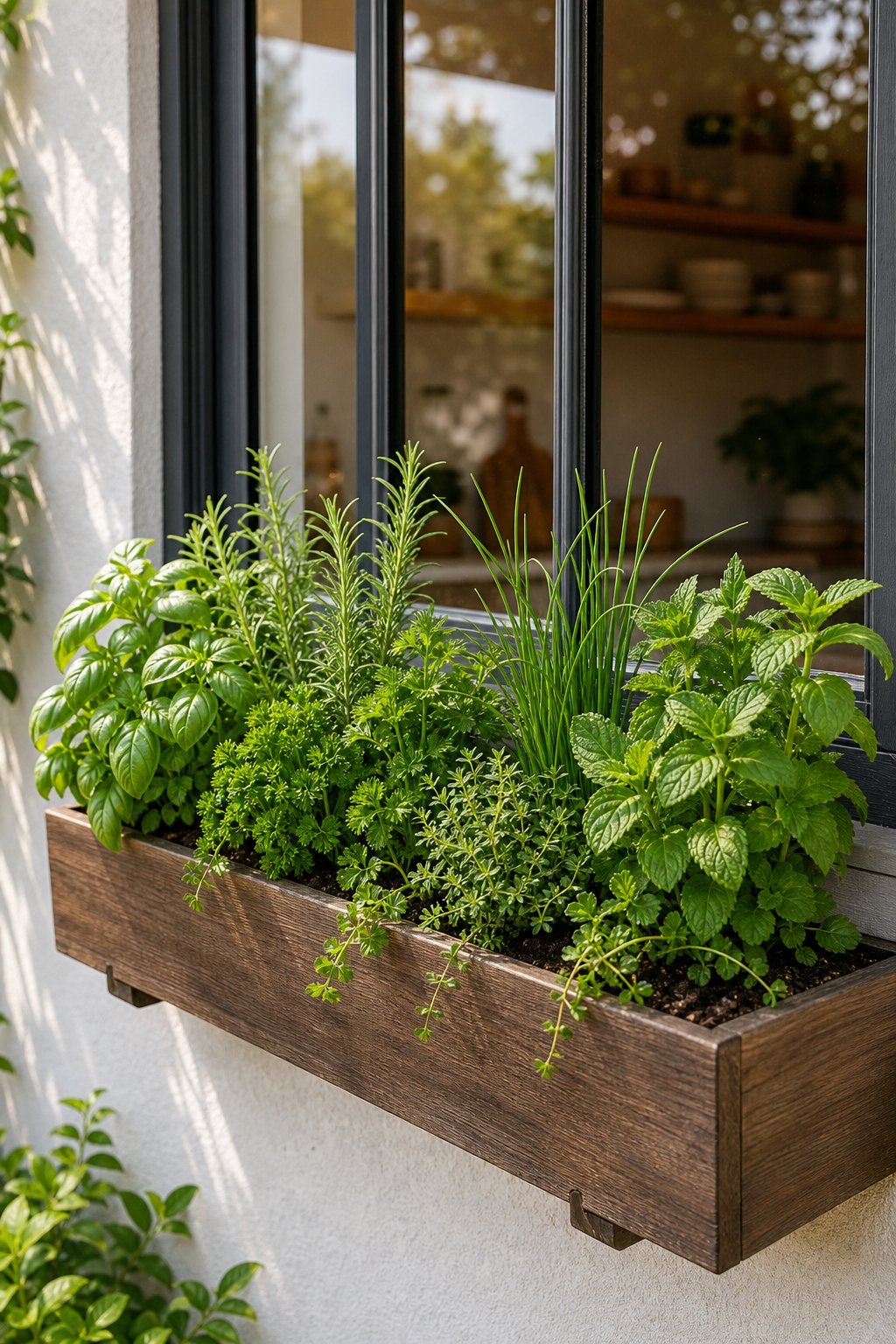
10. Window Box Herb Garden Outside the Kitchen Window
A window box outside the kitchen window keeps fresh herbs visible and close to your indoor prep space. Use a box with drainage holes and secure brackets rated for its full wet weight. Chives, parsley, basil, and thyme give you a useful mix in a narrow footprint.
Place taller plants toward the window side and shorter herbs along the outer edge. Check how many hours of sun reach the box before choosing varieties. Water at the soil line to keep leaves dry, and trim flowers from basil when you want more leafy growth.
Expert Tip From MrPlanter: “Use a window box that you can reach without leaning far outside. Harvest a few stems at a time so every plant keeps producing.”
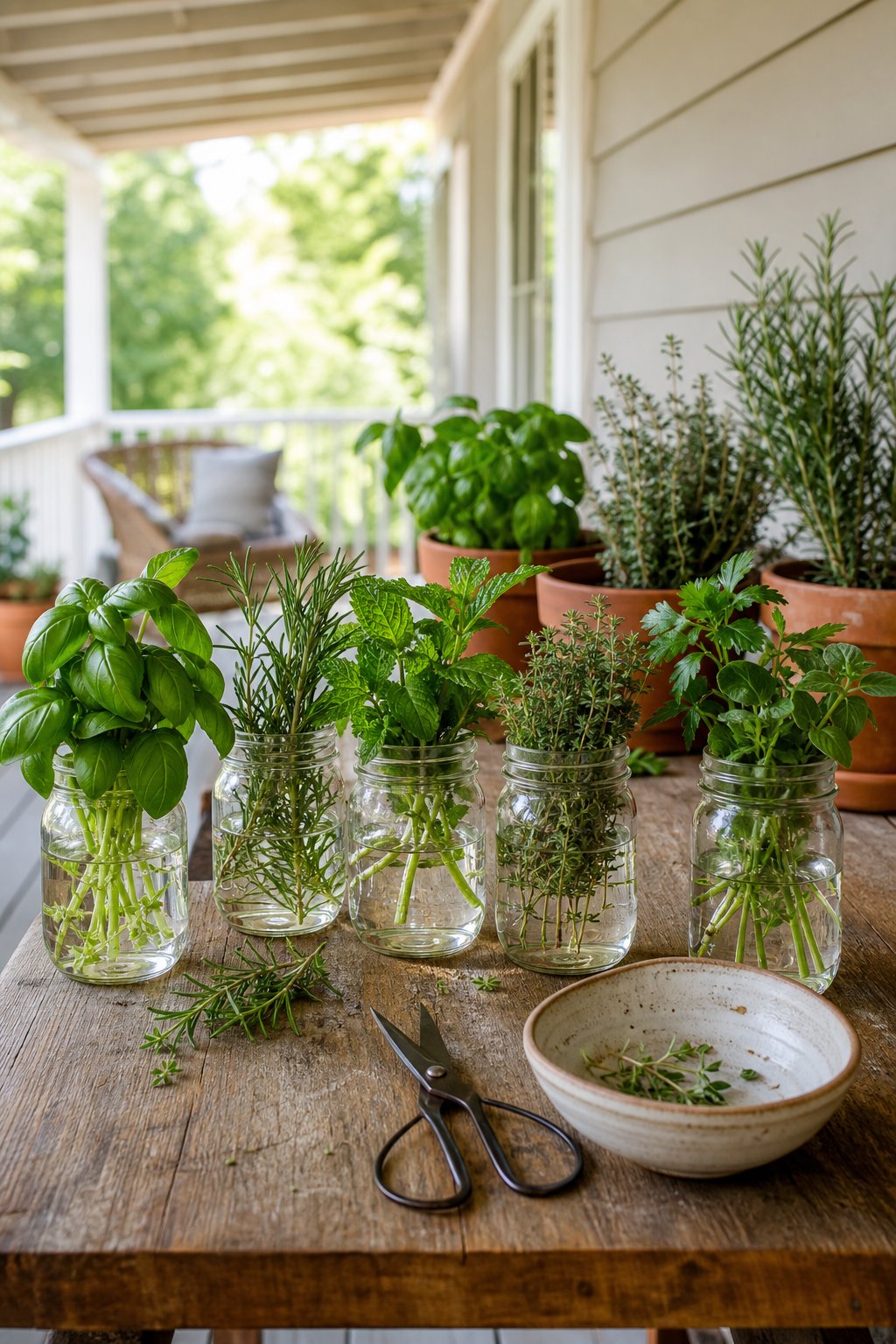
11. Mason Jar Herb Cutting Station on a Covered Porch
A mason jar cutting station gives you a handy place to hold fresh snips while you cook on a covered porch. Use jars for short-term cuttings, or place small nursery pots inside larger decorative containers for a growing setup. Add drainage when a jar will hold soil, since standing water quickly harms roots.
Keep the station on a shaded table if you’re storing cut stems, and move living herbs into brighter light. Label each jar with the herb name and harvest date. A small tray catches water and keeps the wood surface dry during watering.
Expert Tip From MrPlanter: “Refresh the cutting water every day or two. Strip leaves below the waterline so the stems stay clean.”
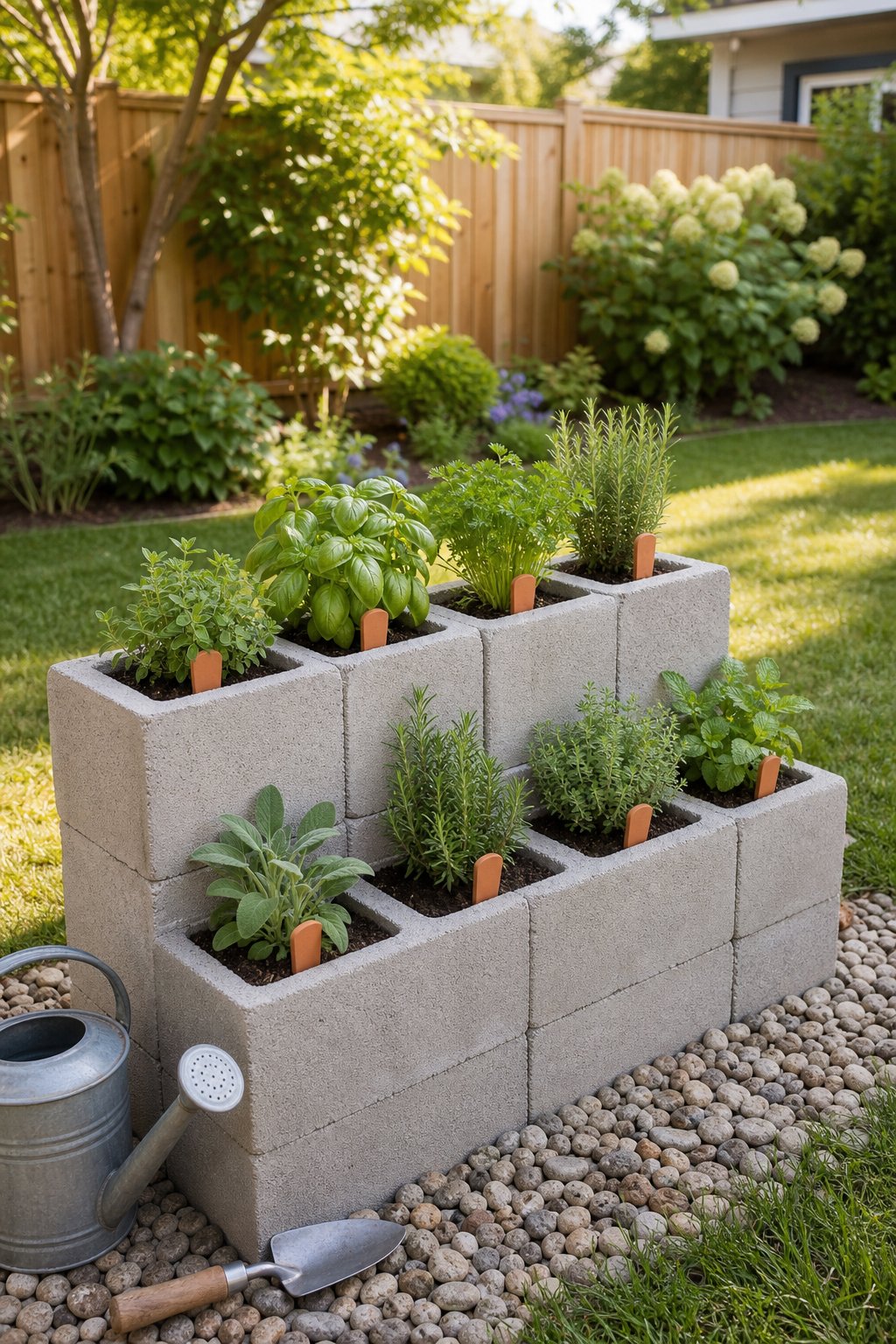
12. Cinder Block Herb Planter Wall in the Backyard
A cinder block planter wall gives you sturdy planting pockets along a backyard edge. Stack blocks on level ground, check that the wall is stable, and fill each opening with well-draining potting mix. Thyme, oregano, chives, and small sage plants suit the separate pockets.
The blocks absorb heat, so afternoon watering may be needed during hot weather. Place taller blocks toward the back and keep the wall away from children’s play areas or busy walkways. A short wall beside the patio also doubles as a boundary for the cooking zone.
Expert Tip From MrPlanter: “Test the first row for level before stacking higher. Add a little gravel beneath each planting pocket to help water escape.”
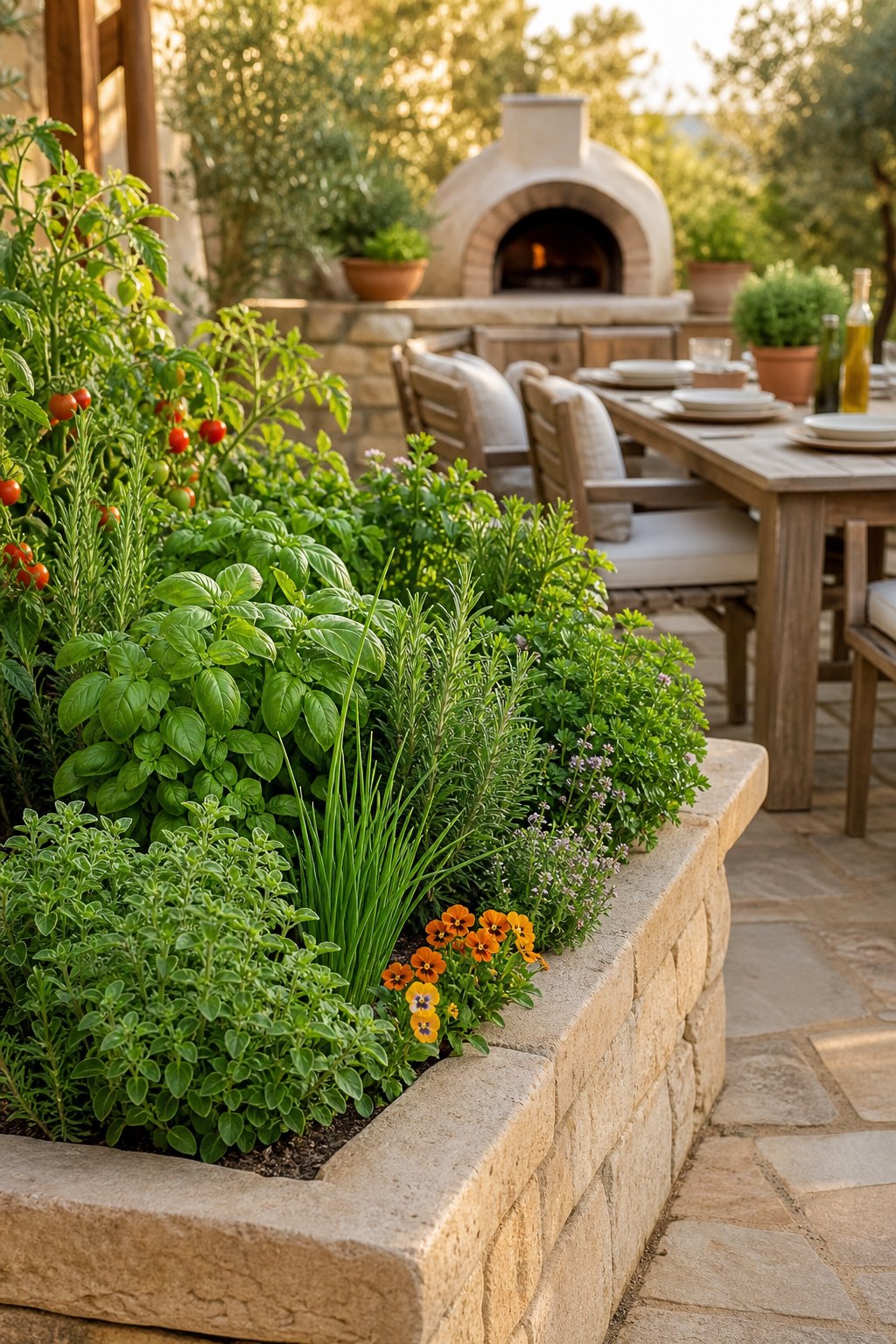
13. Pizza Garden Herb Bed Beside the Outdoor Dining Area
A pizza garden bed puts basil, oregano, thyme, rosemary, parsley, and chives beside the place where you serve outdoor meals. Arrange the bed so the shortest herbs face the dining area and taller rosemary stays at the rear. A raised edge keeps soil away from the paving.
Basil needs warm sun and steady moisture, while rosemary and thyme prefer drier conditions. Plant them in separate zones within the bed so watering stays simple. Add a small harvest basket or pair of shears nearby for pizza night. This idea also fits neatly into wider patio garden ideas.
Expert Tip From MrPlanter: “Place basil closest to the dining table because it needs frequent picking. Give rosemary extra room so its woody stems don’t crowd softer herbs.”
Planning an Outdoor Kitchen Herb Garden
Plan your garden around the path you take from the kitchen to the grill, dining table, or prep counter. A sunny spot within easy reach makes harvesting part of cooking, while a protected location reduces wind damage and drying. Start with a few herbs you use each week, then add containers as your routine grows.
Which Herbs Grow Best Near a Kitchen?
Basil, parsley, chives, thyme, oregano, rosemary, and sage cover many everyday meals. Basil suits warm, sunny spaces with regular water. Rosemary, thyme, oregano, and sage prefer well-drained soil that dries between waterings.
Mint grows quickly and spreads through roots, so give it a dedicated pot. Cilantro grows fast in cooler weather and benefits from afternoon shade. Choose plants based on your cooking habits, then group those with similar water needs together.
How Much Sun Does an Outdoor Herb Garden Need?
Most culinary herbs need about four to six hours of direct sun each day, with basil and rosemary benefiting from brighter exposure. Watch the spot across the day because a wall, roof, or tree can create unexpected shade.
Morning sun with some afternoon protection suits parsley, cilantro, and chives. If stems become thin or leaves turn pale, move containers to a brighter position. Rotate portable pots every few days for balanced growth.
What Containers and Soil Work Best?
Containers with drainage holes and a quality potting mix support healthy roots. Use pots at least 8 to 12 inches wide for single herbs, with larger containers for rosemary or mixed plantings. Raised beds need loose soil enriched with compost and good drainage.
Add a saucer beneath pots placed on patios, while keeping outdoor containers slightly raised so water can escape. Mulch helps beds hold moisture, though it should stay a little away from herb stems. Check soil with your finger before watering, and soak the root area when the top inch feels dry.
I’m Anirban Saha, the Founder and Owner of MrPlanter.com. I pay the bills as a software developer, although my BTech is actually in Electronics and Communication. I really love my day job, but what gives me energy every day is interacting with my indoor plants and taking care of them. I have been successfully nurturing and maintaining houseplants for over 10 years now.
📚🔍 Our content undergoes thorough review and fact-checking before publication. For additional details, explore our strict Editorial Policy to deliver helpful content. 📝🔒