As an Amazon Associate, MrPlanter.com earns from qualifying purchases.
A kitchen garden gives you fresh ingredients, useful outdoor space, and a daily reason to step outside. With a thoughtful layout, rows of vegetables can look as polished as flower borders while staying easy to water, weed, and harvest.
The best 12 kitchen garden design ideas combine clear paths, productive planting, and details that make your yard enjoyable before harvest time arrives.
You can shape the design around a sunny fence, a patio, an outdoor kitchen, or a small corner near the back door.
1. Raised Vegetable Beds With Grass Pathways
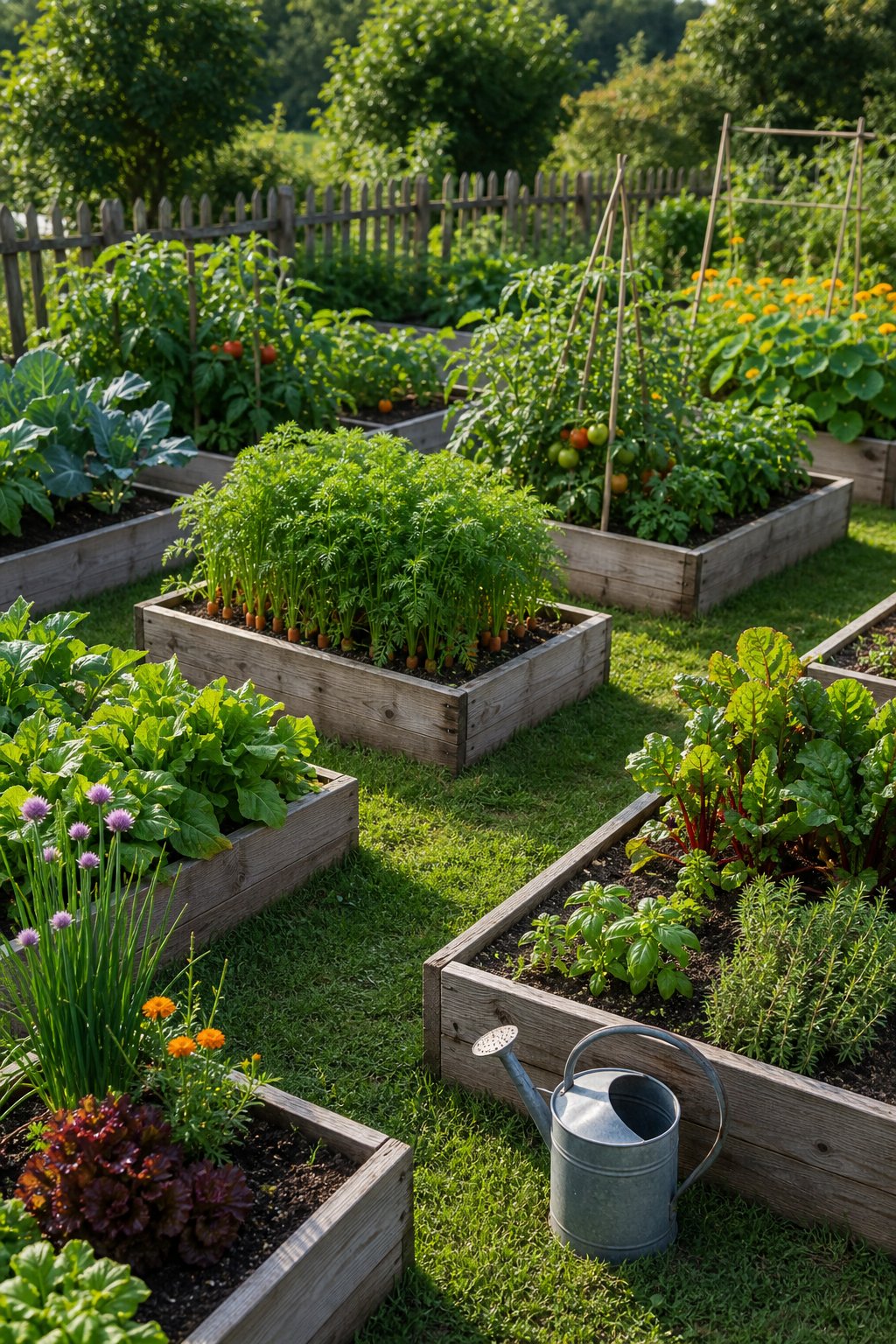
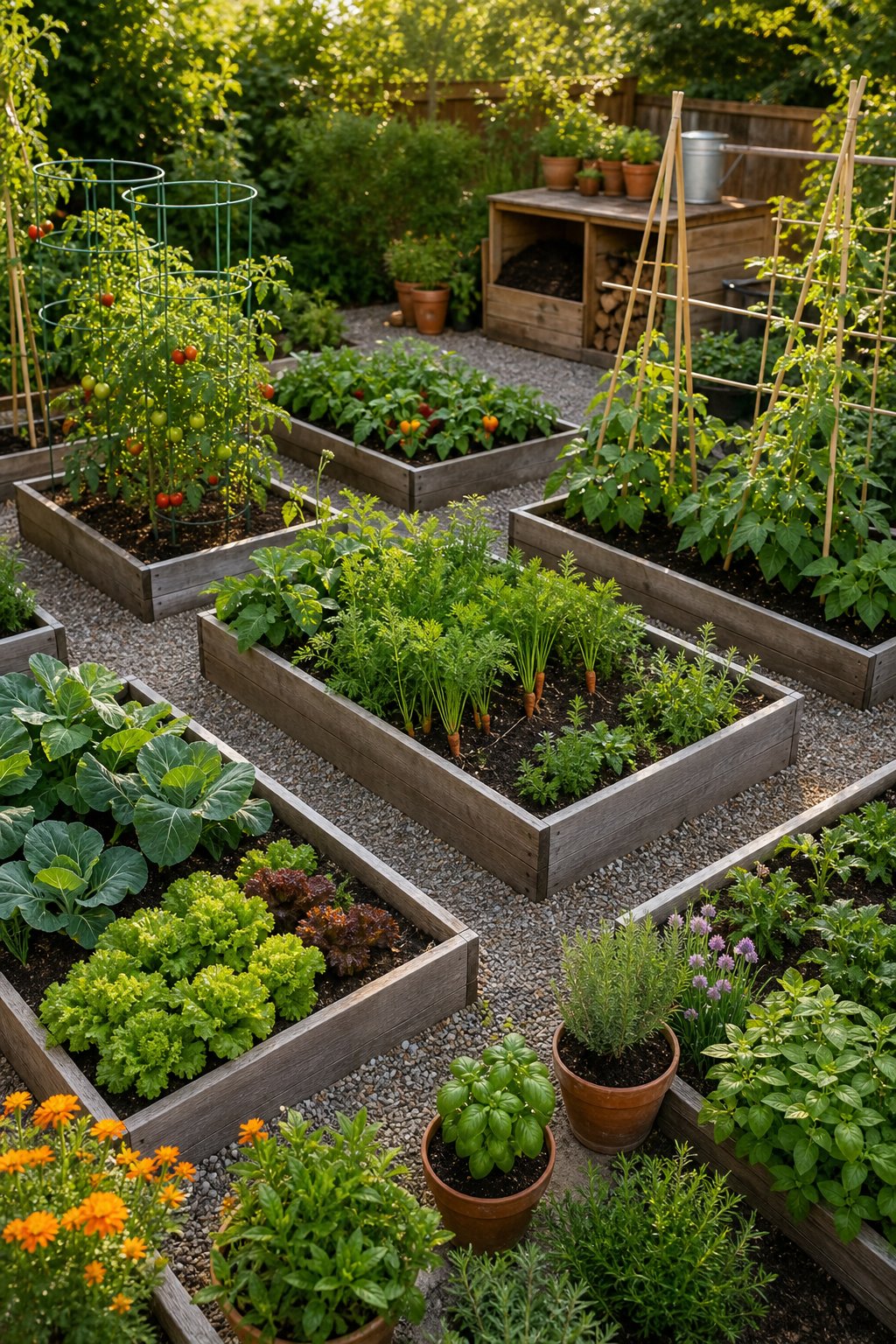
Tired of muddy shoes and sprawling vegetable rows? Raised beds with grass paths create a neat backyard layout that feels more like a garden room. Give each bed one main crop, such as lettuce, tomatoes, or carrots, so you can spot problems quickly and keep harvests organized.
Keep the beds narrow enough to reach the center from either side. Mow the paths regularly and add stepping stones at busy corners. A simple border around the grass also keeps soil from washing onto the walkway.
Expert Tip From MrPlanter: “Keep each bed under four feet wide if you reach it from both sides. Leave enough room for your mower and wheelbarrow to pass comfortably.”
2. A Greenhouse-Centered Potager Garden
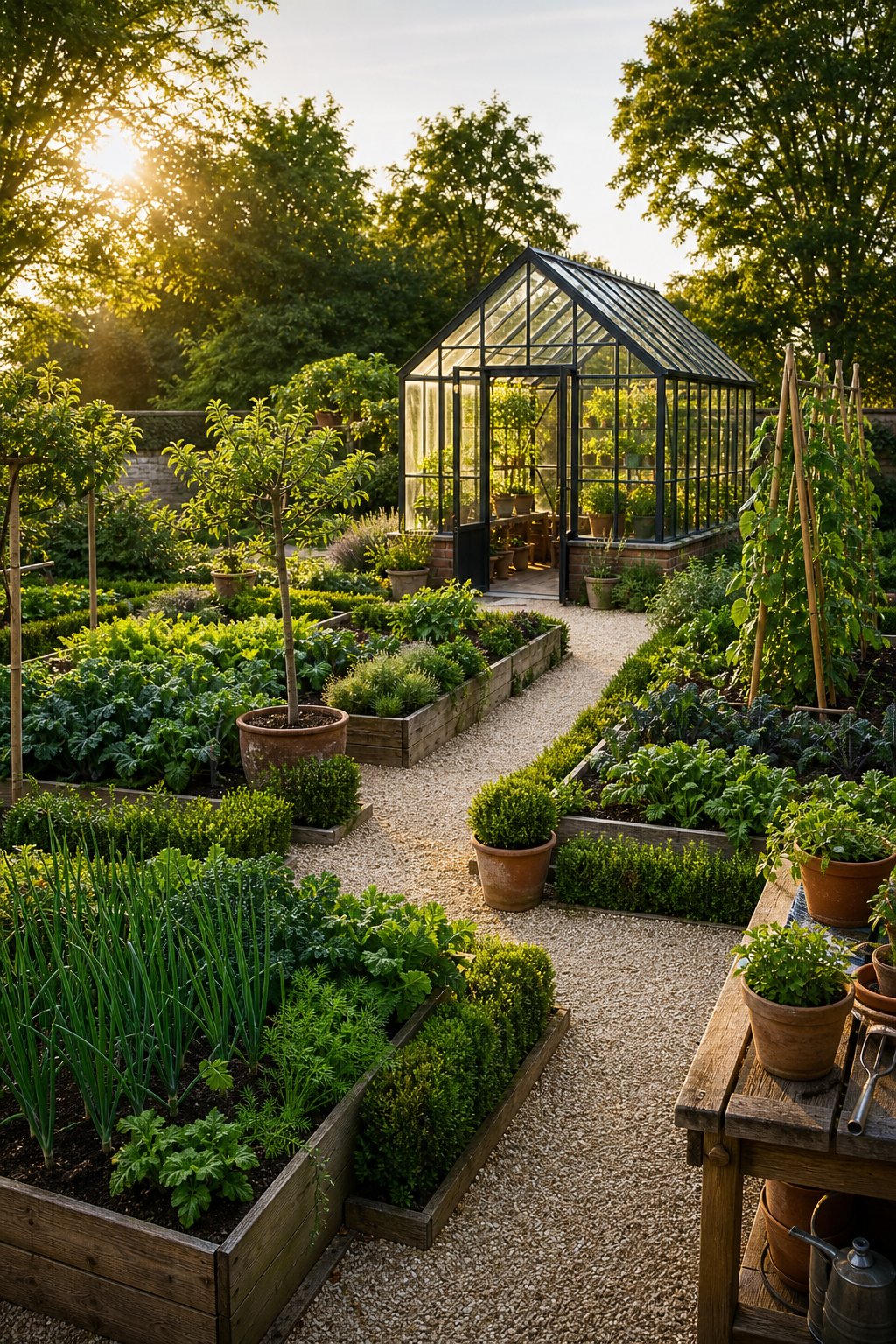
A greenhouse works best at the center of a productive garden because seedlings, tools, and tender plants stay close to the beds. Place it where it receives strong light and has a clear route from the house. Symmetrical beds around the structure give the yard a calm, planned appearance.
Use gravel paths for fast drainage and easy access after rain. Add tall supports at the bed ends for beans or cucumbers, while keeping the greenhouse doors clear. A small potting bench inside saves trips across the yard during planting season.
Expert Tip From MrPlanter: “Set the greenhouse on firm, level ground before filling nearby beds. Leave a wide path at the door so trays and soil bags move easily.”
3. Brick-Edged Kitchen Garden Beds
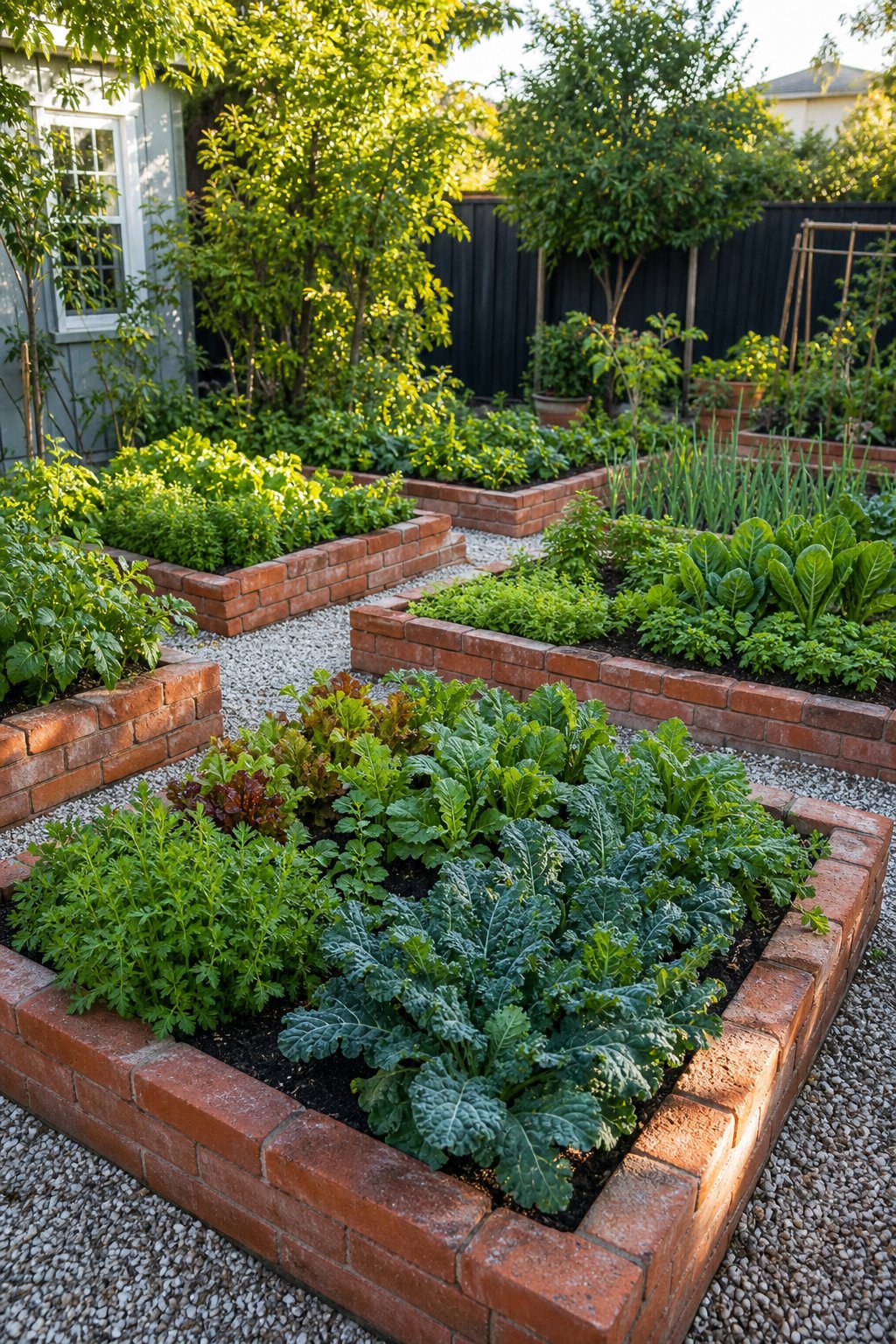
Loose soil spilling onto paths can make a kitchen garden look untidy, so brick edging gives each bed a crisp finish. Red brick also adds warmth beside leafy greens and pale gravel. Lay the bricks level with the path surface so you can roll a cart across the garden.
Arrange the beds in squares or long rectangles, leaving enough space for harvesting. Bricks hold mulch in place and create a firm edge for kneeling. For more ideas, explore these brick edging ideas before choosing a pattern.
Expert Tip From MrPlanter: “Use reclaimed bricks for character, then check every row with a level. A shallow gravel base helps prevent shifting after heavy rain.”
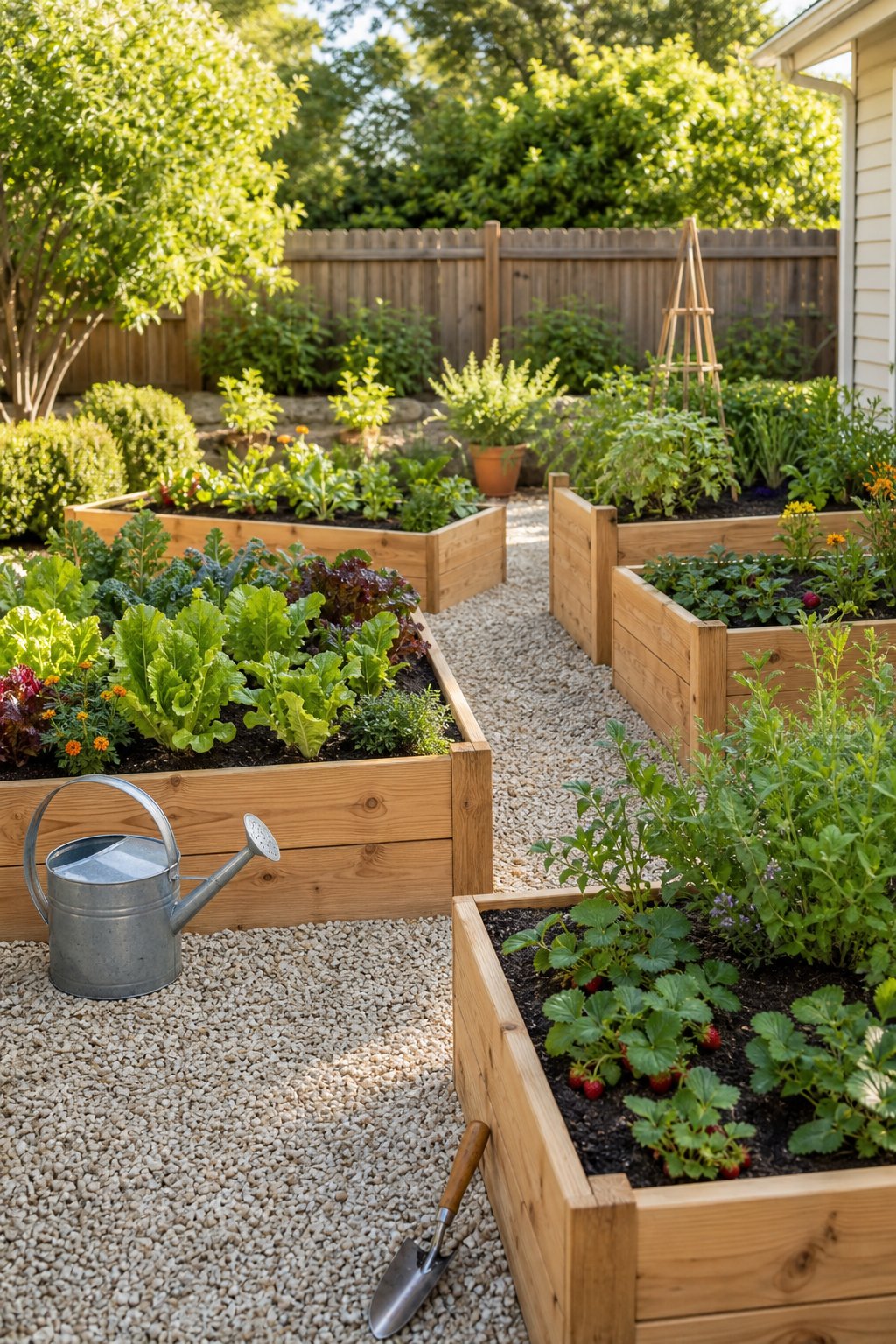
4. Cedar Raised Beds With Gravel Paths
If your yard needs a clean, warm look, cedar beds paired with gravel paths make a reliable combination. Cedar blends with fences, decks, and wooden seating while gravel keeps the walking surface dry. Fill the beds with rich soil and place taller crops on the north side so they don’t shade shorter plants.
Choose gravel that feels comfortable underfoot and install a landscape fabric layer beneath it to reduce weeds. A timber bench at the end of the path gives you a place to sort beans or enjoy a quick garden break.
Expert Tip From MrPlanter: “Seal the outside of cedar boards with a plant-safe finish if you want to slow weathering. Keep the inside untreated where soil touches the wood.”
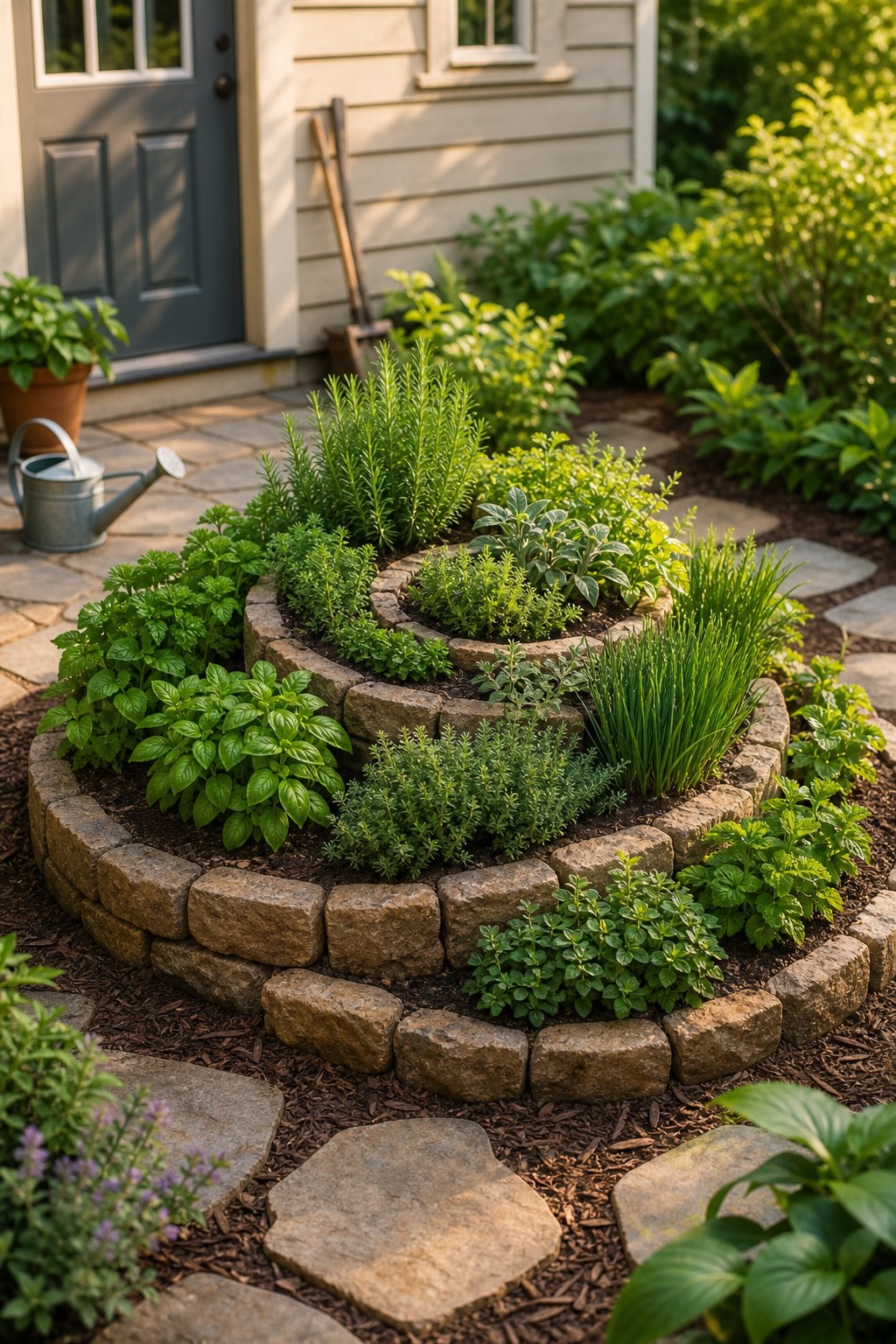
5. Herb Spiral Beside the Back Door
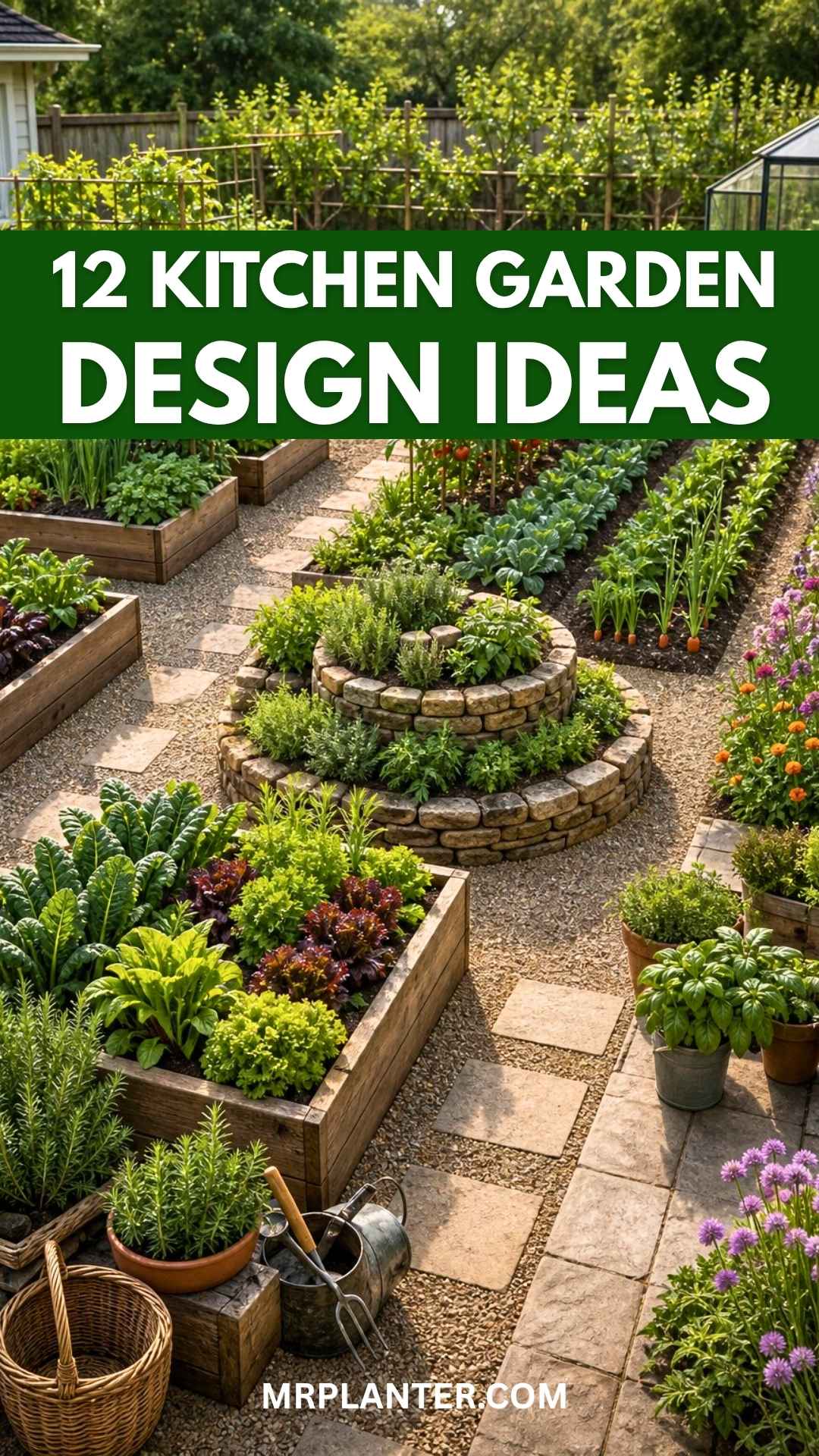
A herb spiral puts cooking herbs within a few steps of your back door while giving a small yard vertical shape. Build a gently rising spiral with stone, brick, or sturdy pavers. Place rosemary and thyme near the top, where drainage is sharp, and keep moisture-loving parsley near the lower edge.
Add chives, oregano, sage, or basil according to your cooking habits. Keep aggressive mint in a pot so it doesn’t spread through the structure. This herb garden ideas guide offers more ways to place herbs around your yard.
Expert Tip From MrPlanter: “Put the spiral where you pass every day, because frequent picking keeps herbs bushy. Give each plant enough room for air to move between leaves.”
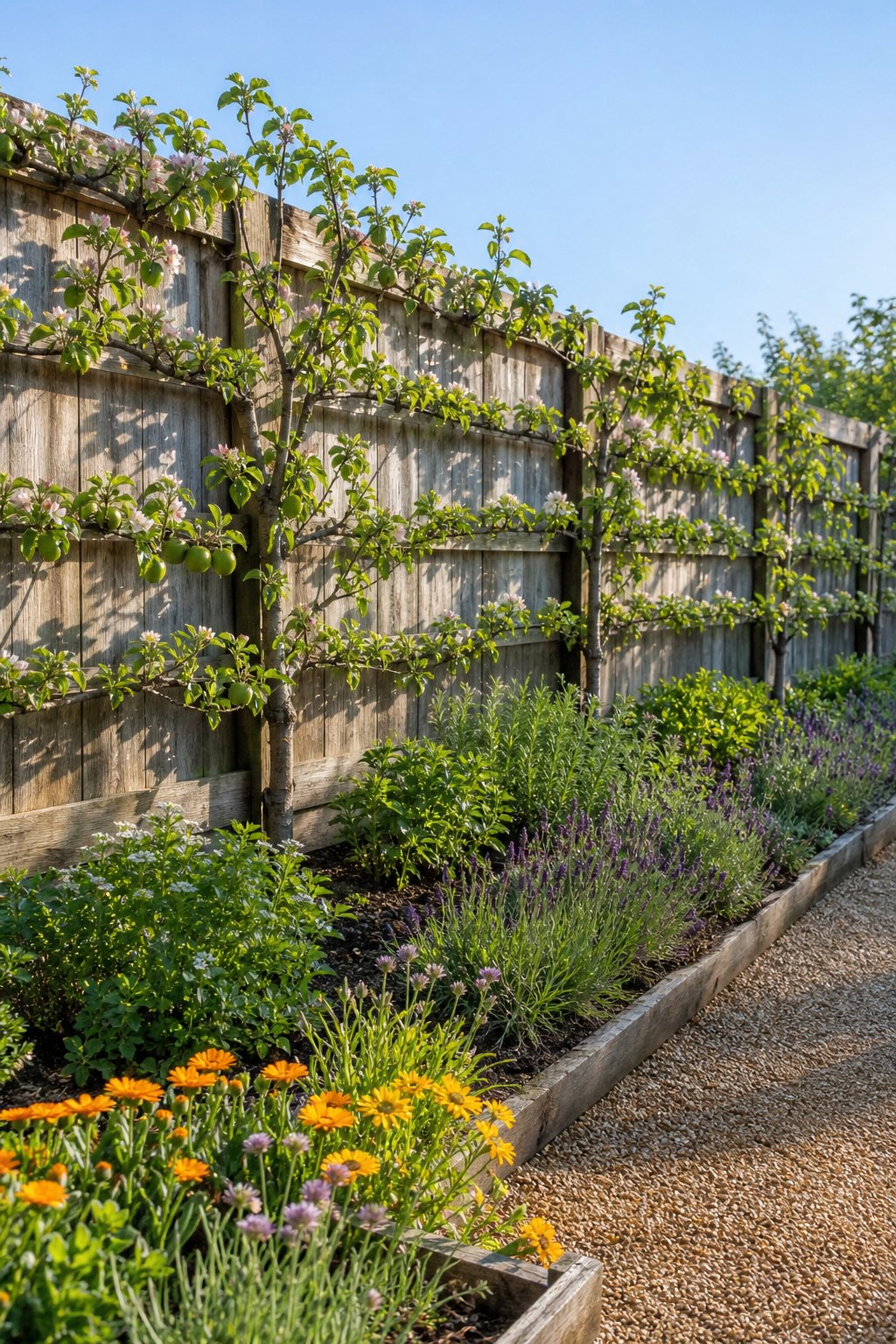
6. Espaliered Fruit Trees Along a Sunny Fence
A sunny fence can support fruit trees in a flat, space-saving form. Train apples, pears, or peaches along horizontal wires, keeping the branches open for light and easy picking. The neat lines add structure behind vegetable beds and make an ordinary fence part of the garden plan.
Install strong posts and wires before planting. Check the mature size of your chosen tree, and keep roots away from buried pipes or foundations. Prune young shoots during the growing season so the tree stays within its assigned shape.
Expert Tip From MrPlanter: “Start training branches while they are flexible and young. Tie them loosely with soft garden ties so the stems have room to thicken.”
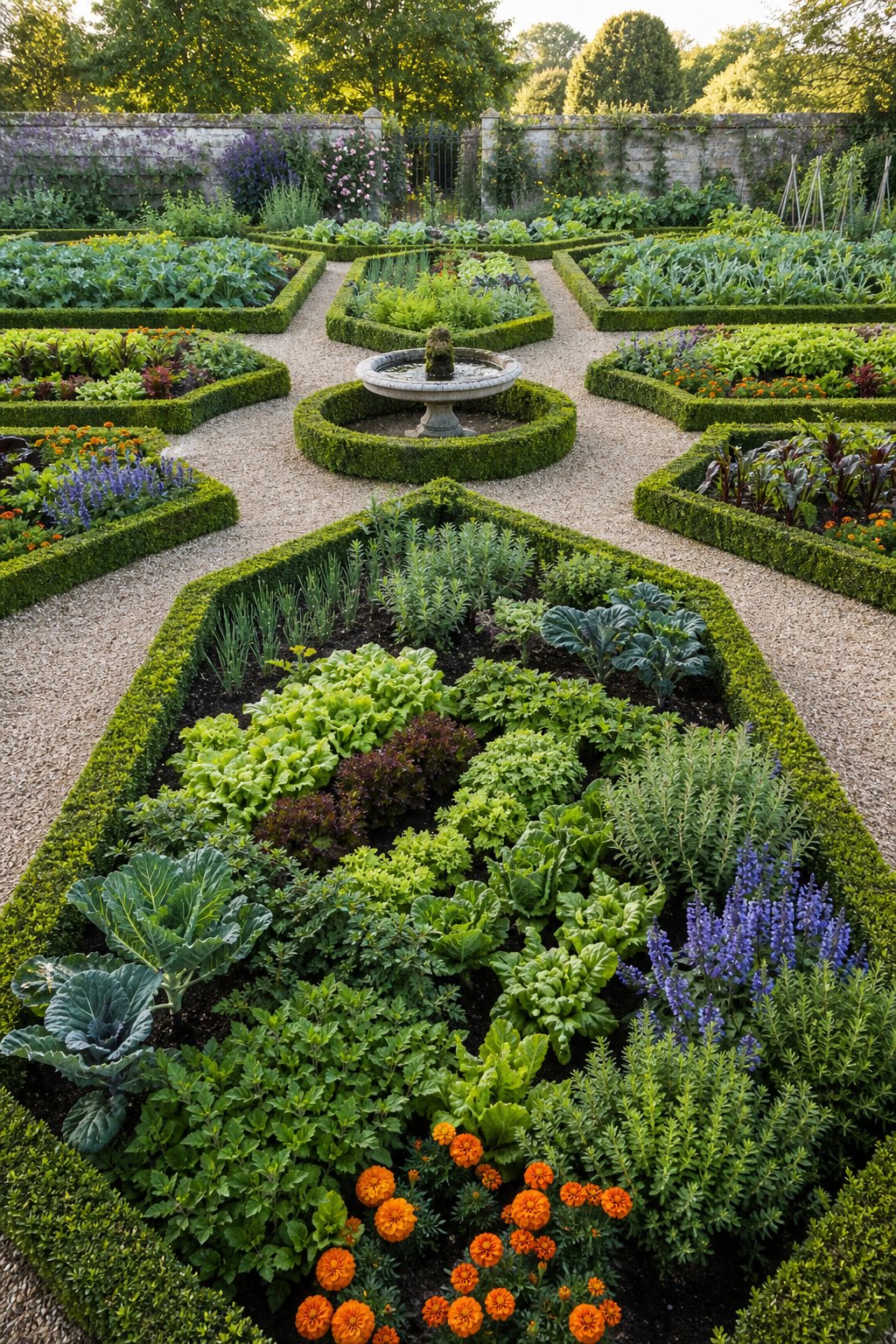
7. A Potager Parterre With Boxwood Edging
A potager parterre turns vegetables into a formal garden pattern through clipped boxwood borders and geometric beds. Use the framework for lettuce, chard, parsley, onions, and edible flowers. The repeating shapes keep the design orderly while the changing crops provide color across the seasons.
Choose a sunny area with easy water access. Keep boxwood trimmed low enough to avoid shading the beds, and leave room for pruning tools between the borders. Browse these boxwood landscaping ideas for ways to connect the look with the rest of your yard.
Expert Tip From MrPlanter: “Draw the pattern with string before planting any edging. Small layout changes are much easier on paper than after shrubs have rooted.”
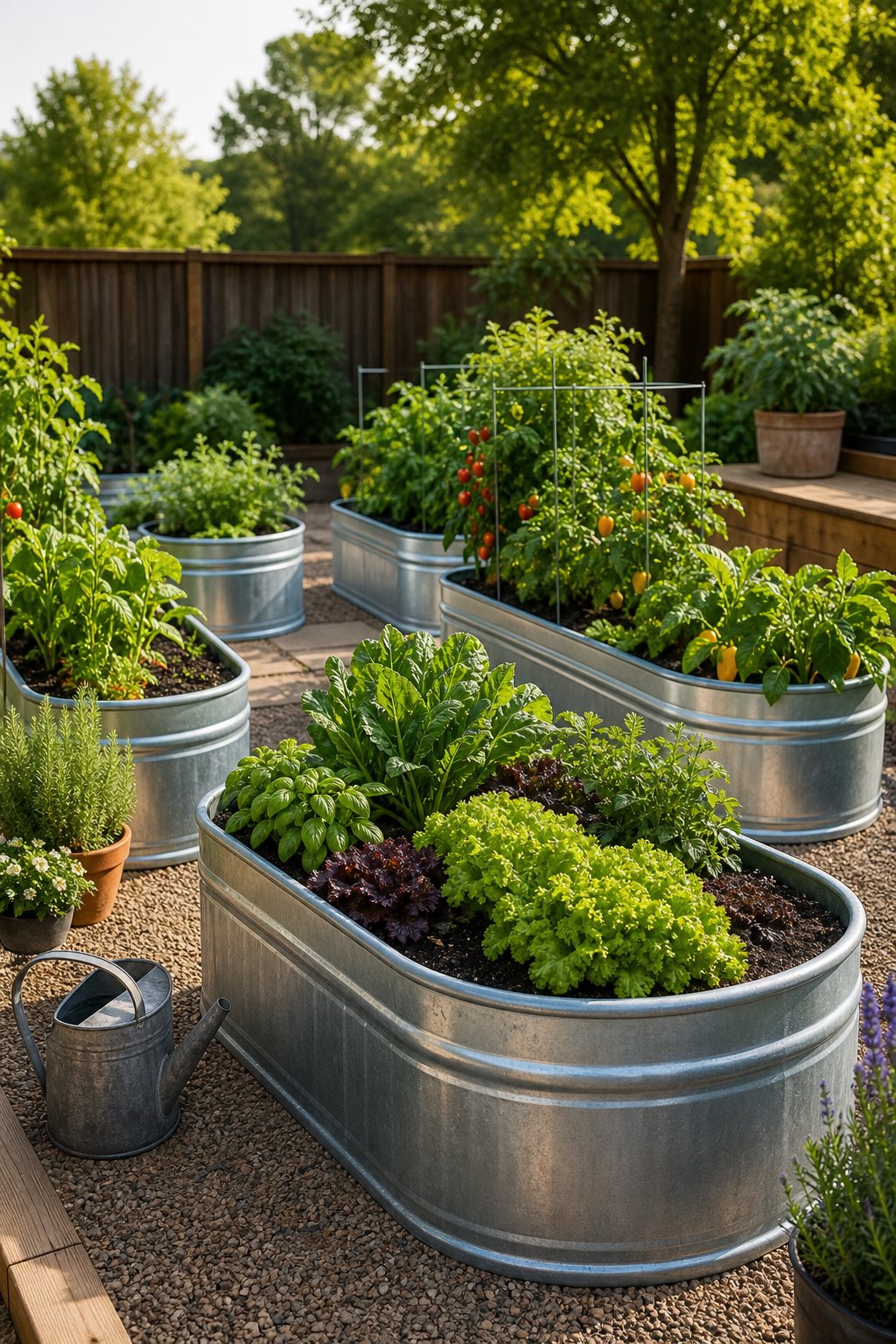
8. Galvanized Stock Tank Vegetable Planters
When digging feels like a full weekend project, galvanized stock tanks provide fast, sturdy planting space. Their tall sides make harvesting easier and give patios, lawns, and gravel yards a tidy focal point. Grow salad greens, peppers, herbs, or compact tomatoes in separate tanks.
Drill several drainage holes before adding soil, then place the tanks on a level surface. Use a soil blend made for containers, and check the plants each day during hot weather because metal containers warm quickly. Group tanks in pairs or lines to create a clear garden zone.
Expert Tip From MrPlanter: “Raise the tank slightly on pavers so excess water can escape. Choose a light-colored location with afternoon protection for tender greens.”
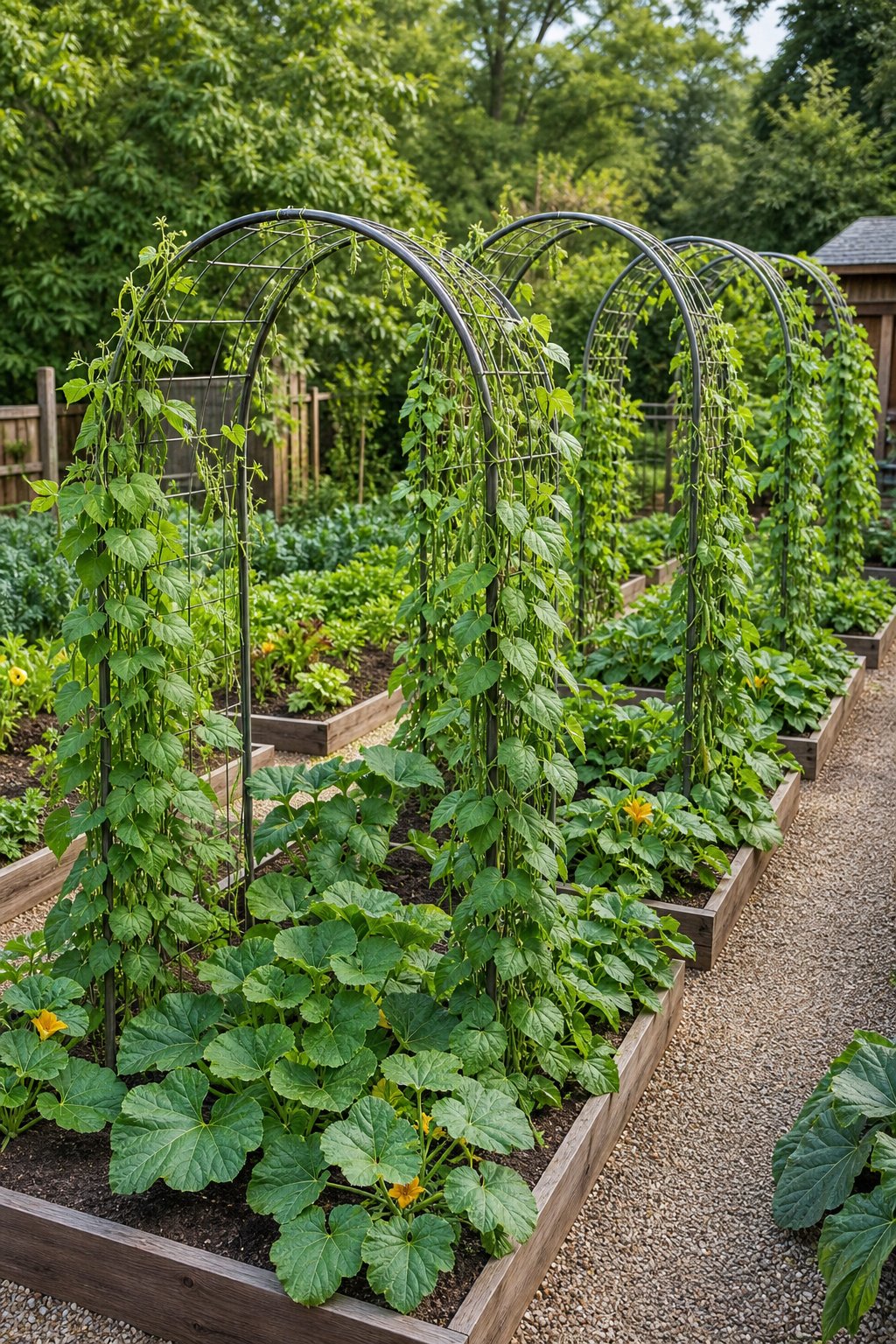
9. Arched Trellises for Beans and Squash
A trellis arch turns climbing vegetables into a garden entrance and frees valuable ground space. Use sturdy metal or timber arches for beans, cucumbers, and small squash varieties. Plant vines at both ends, then guide new growth upward with soft ties.
Keep heavy fruit supported with slings if the trellis begins to bend. Place low-growing crops beneath the arch only where they still receive enough light. An arch works well between raised beds, at the start of a path, or beside a fence.
Expert Tip From MrPlanter: “Test the structure by pushing it gently before planting. If it moves at the base, add deeper anchors before vines cover the frame.”
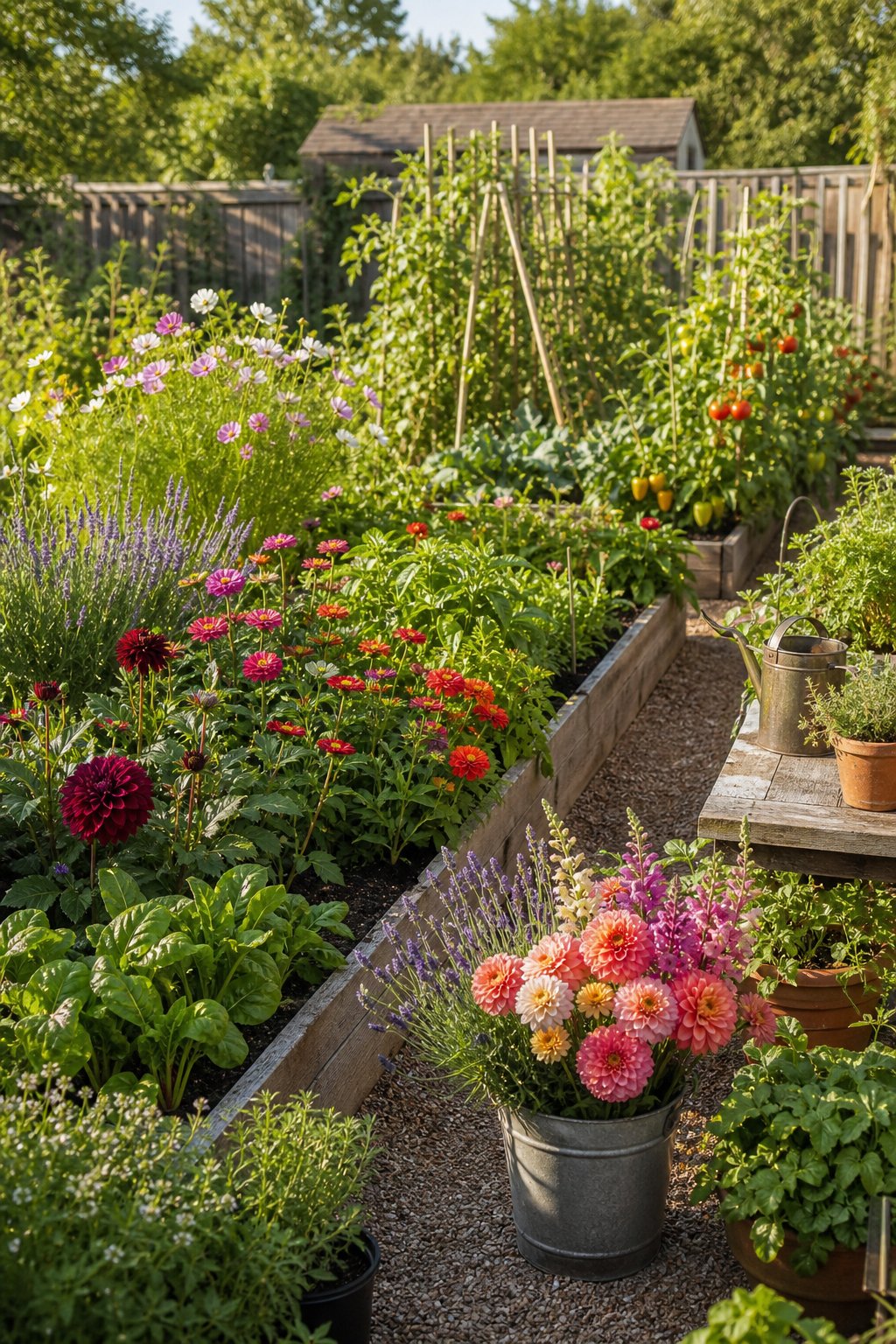
10. A Cutting Garden and Kitchen Garden Combination
Flowers and vegetables share space beautifully when you give each group a clear job. Add zinnias, cosmos, sunflowers, or snapdragons beside beds of tomatoes, peppers, and herbs. Their color softens straight rows, and blooms supply stems for indoor arrangements.
Place taller flowers where they won’t shade sun-loving vegetables. Set aside a narrow cutting strip so you can harvest blossoms without stepping into food beds. Deadhead plants often to encourage more flowers through the season.
Expert Tip From MrPlanter: “Grow flowers in small blocks instead of scattering one plant everywhere. You’ll cut stems faster and keep the garden easier to weed.”
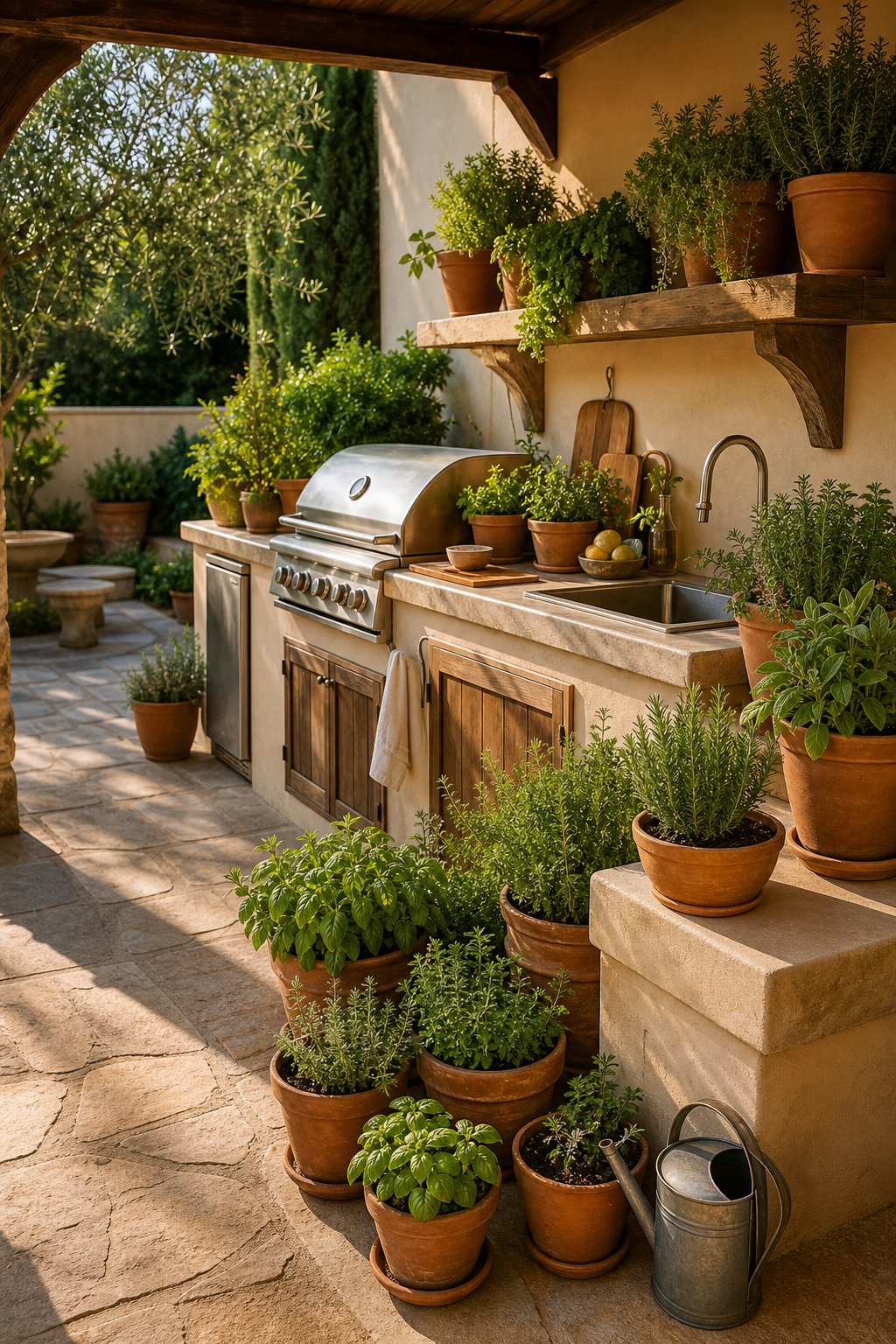
11. Terracotta Herb Pots Around an Outdoor Kitchen
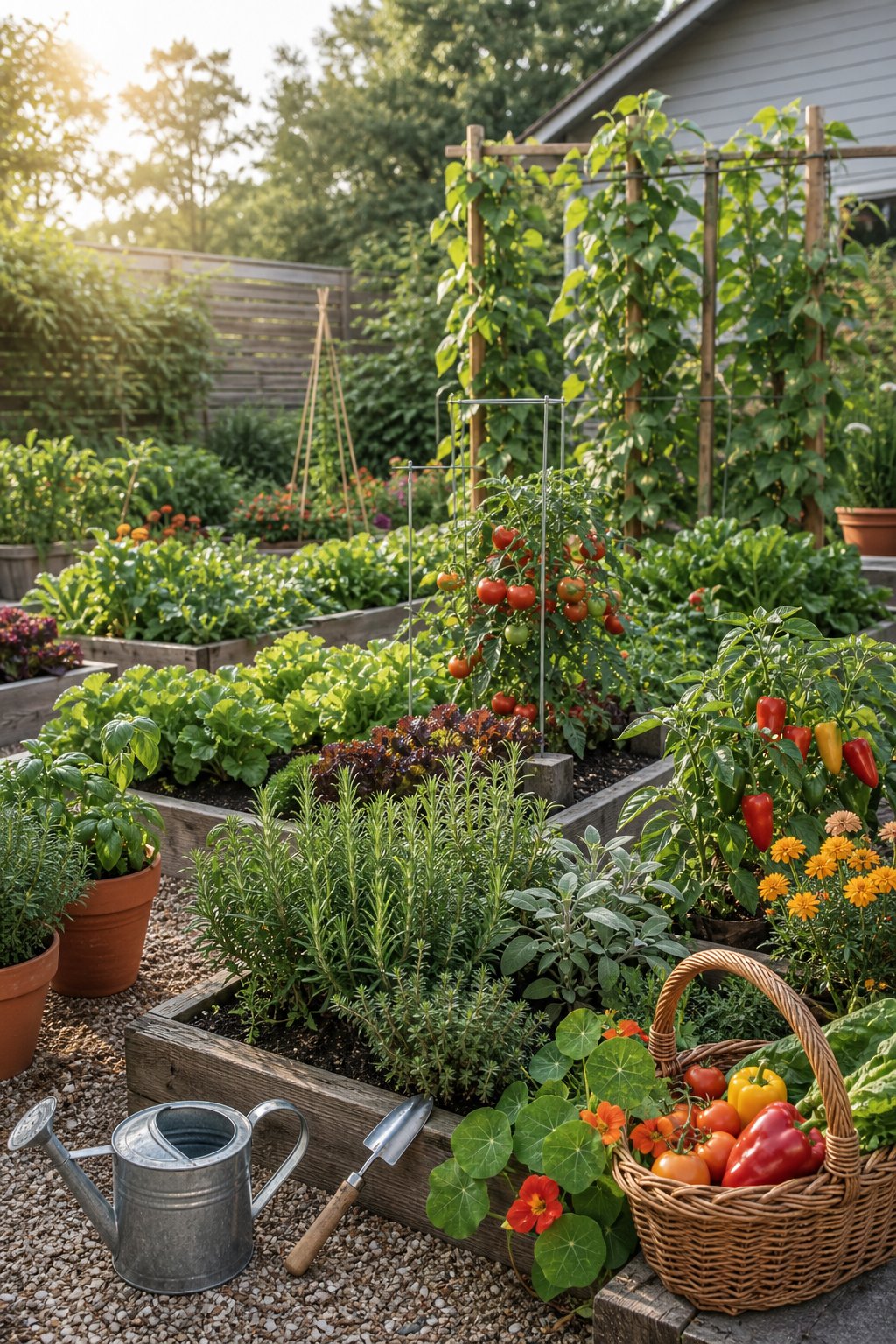
Terracotta pots keep fresh herbs close to the grill, prep counter, or dining table. Arrange basil, thyme, parsley, rosemary, and chives at different heights around your outdoor kitchen. The warm clay suits brick patios and wooden finishes while making each plant easy to move.
Use pots with drainage holes and saucers on surfaces that need protection. Group plants with similar water needs, then place rosemary and thyme in the sunniest spot. Refresh tired herbs by trimming them often and replacing plants that have finished for the season.
Expert Tip From MrPlanter: “Choose heavy pots for windy corners near the kitchen. Label each herb while planting so you can grab the right leaf during cooking.”
12. A Pollinator Border Around Productive Beds
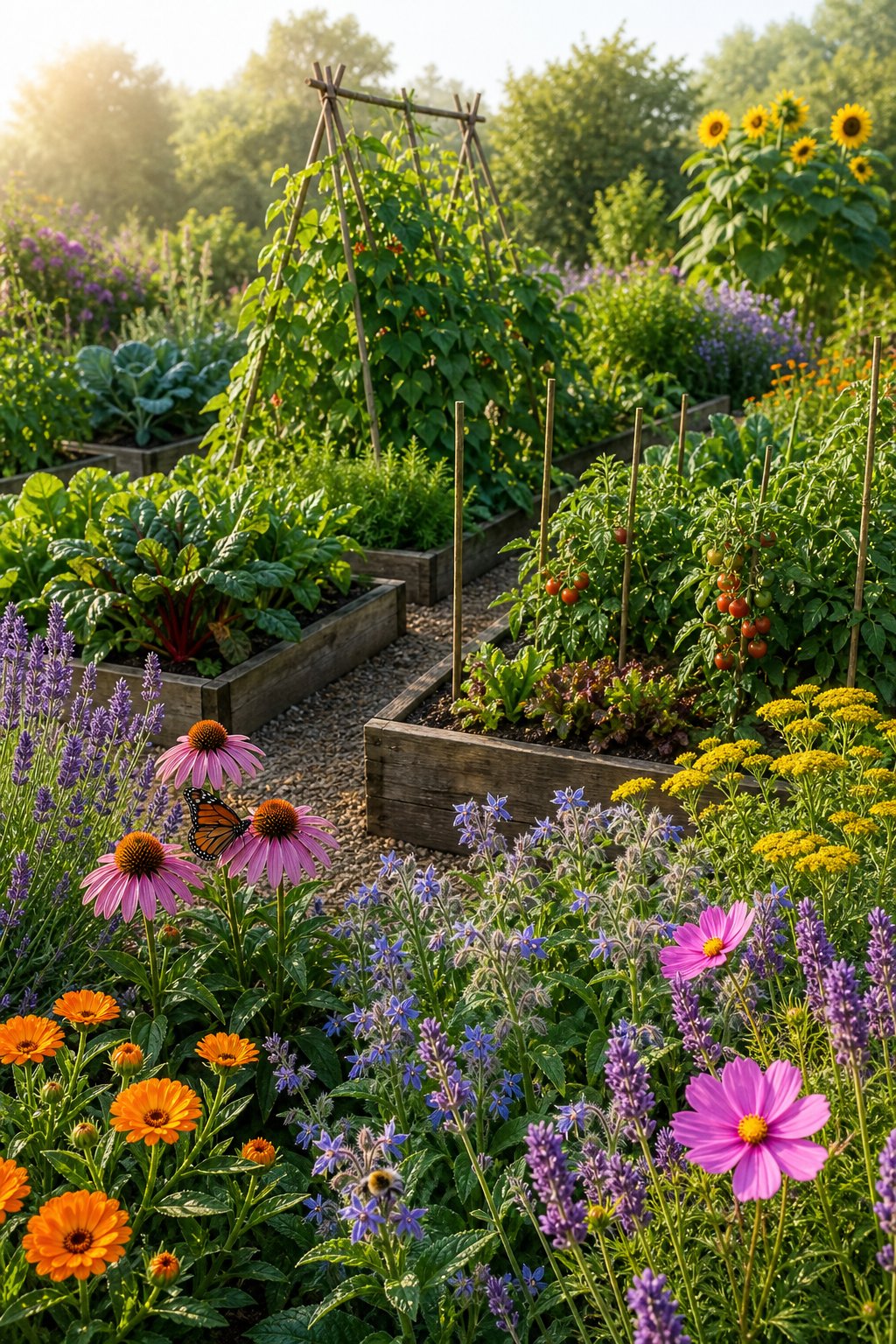
A flowering border brings bees and butterflies around vegetable beds while giving the garden a softer edge. Plant marigolds, calendula, lavender, bee balm, or native flowers around tomatoes, cucumbers, squash, and peppers. Blooms add color and provide food for helpful insects.
Leave a clear strip between flowers and vegetables so you can water and harvest without crushing stems. Choose several bloom times to keep flowers available from spring through fall. Avoid spraying insecticides on open blooms, and provide a shallow water source with stones for safe landing.
Expert Tip From MrPlanter: “Choose flowers that suit your region and bloom at different times. Keep a few seed heads through fall to feed birds and shelter small insects.”
How to Plan Your Kitchen Garden Layout
Where Should You Put a Kitchen Garden?
Place your kitchen garden near the house, where you can reach it quickly with a basket or watering can. A backyard location beside the patio or kitchen door makes daily harvesting easy. A sunny front yard can work too when local rules, visibility, and access suit the design.
Choose level ground with good drainage and a nearby water source. Watch the area for a full day before building, since fences, trees, and walls change sunlight as the sun moves. Keep compost, tools, and hose connections within a short walking route.
Most fruiting vegetables need at least six to eight hours of direct sun each day. Tomatoes, peppers, cucumbers, beans, and squash perform best in the brightest beds. Leafy greens and many herbs accept lighter shade, especially during hot afternoons.
Record the sunny hours across spring and summer before assigning crops. Put tall trellises and fruit trees along the north side when possible, so they cast shade away from shorter plants. Use containers to move herbs when a spot becomes too hot.
What Paths and Bed Sizes Make Harvesting Easier?
Paths at least 18 to 24 inches wide give you room to walk, kneel, and carry a basket. Main routes benefit from extra width for a wheelbarrow. Keep beds narrow enough to reach the center without stepping on the soil.
Use gravel, brick, mulch, or grass according to your yard and maintenance time. Curved paths suit relaxed backyard gardens, while straight paths make formal designs easier to measure. These raised garden bed ideas can help you compare shapes and materials before construction.
Plants That Earn Their Place in a Kitchen Garden
Which Herbs Deliver the Most Everyday Value?
Basil, parsley, chives, thyme, oregano, rosemary, and mint give you frequent harvests for little space. Place basil and parsley near the kitchen for quick picking, while drought-tolerant thyme and rosemary suit sunny, dry edges. Grow mint in a container because its roots spread quickly.
Cut herbs in the morning after dew dries for fresh flavor. Pinch basil tips before flower spikes open, and trim rosemary lightly to keep its shape. Add cilantro in small batches because warm weather sends it to seed quickly.
What Vegetables Are Productive for Beginners?
Leaf lettuce, radishes, green beans, cherry tomatoes, peppers, cucumbers, and Swiss chard reward steady care with repeated harvests. Choose compact varieties for containers and small beds. Sow fast crops in small batches every few weeks so your harvest does not arrive all at once.
Start with vegetables your household eats often. Check the days to maturity on seed packets, then match planting dates to your local frost calendar. These vegetable garden ideas offer more ways to arrange reliable crops.
How Can Companion Planting Improve the Design?
Companion planting adds flowers and herbs around vegetables to support pollinators and create useful planting layers. Marigolds and nasturtiums bring color near leafy crops, while aromatic herbs fit neatly along bed edges. Flowers also help attract insects that pollinate tomatoes, cucumbers, peppers, and squash.
Treat companion planting as a layout tool first, since plant spacing, sunlight, and water still guide success. Give each crop enough room for airflow, and move related vegetables to new beds each season when practical. A mixed border looks lively while keeping frequently harvested plants close to the path.
I’m Anirban Saha, the Founder and Owner of MrPlanter.com. I pay the bills as a software developer, although my BTech is actually in Electronics and Communication. I really love my day job, but what gives me energy every day is interacting with my indoor plants and taking care of them. I have been successfully nurturing and maintaining houseplants for over 10 years now.
📚🔍 Our content undergoes thorough review and fact-checking before publication. For additional details, explore our strict Editorial Policy to deliver helpful content. 📝🔒