As an Amazon Associate, MrPlanter.com earns from qualifying purchases.
A small kitchen garden turns a few sunny feet near your home into a steady supply of herbs, salad leaves, tomatoes, or berries. You get more from the space when every pot, bed, and trellis has a clear job.
Choose crops you cook with often, place them near a door, and give each plant enough sun, soil, and water. A compact setup stays productive when harvesting takes seconds and care fits naturally into your daily routine.
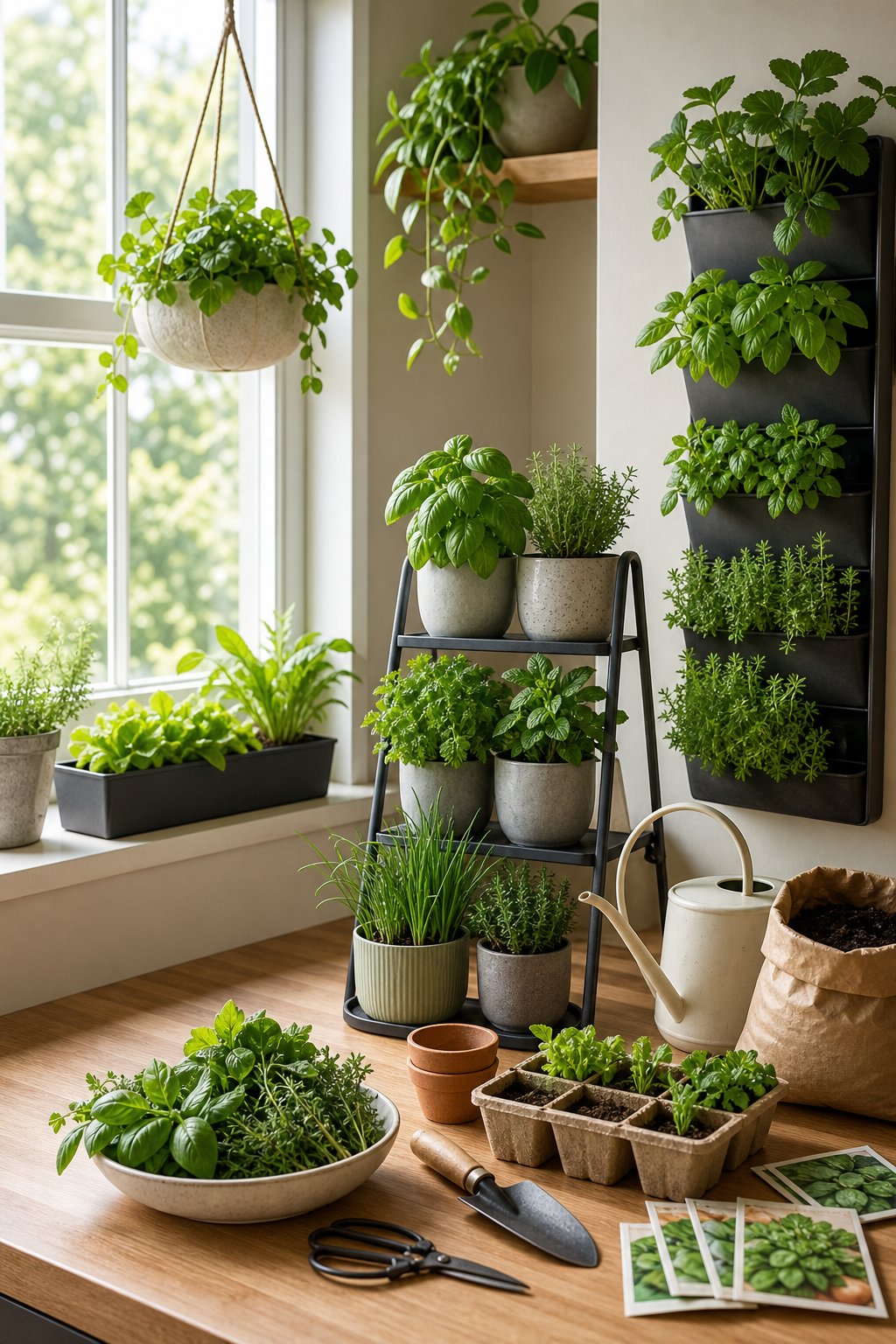
1. Kitchen-Door Herb Pot Cluster
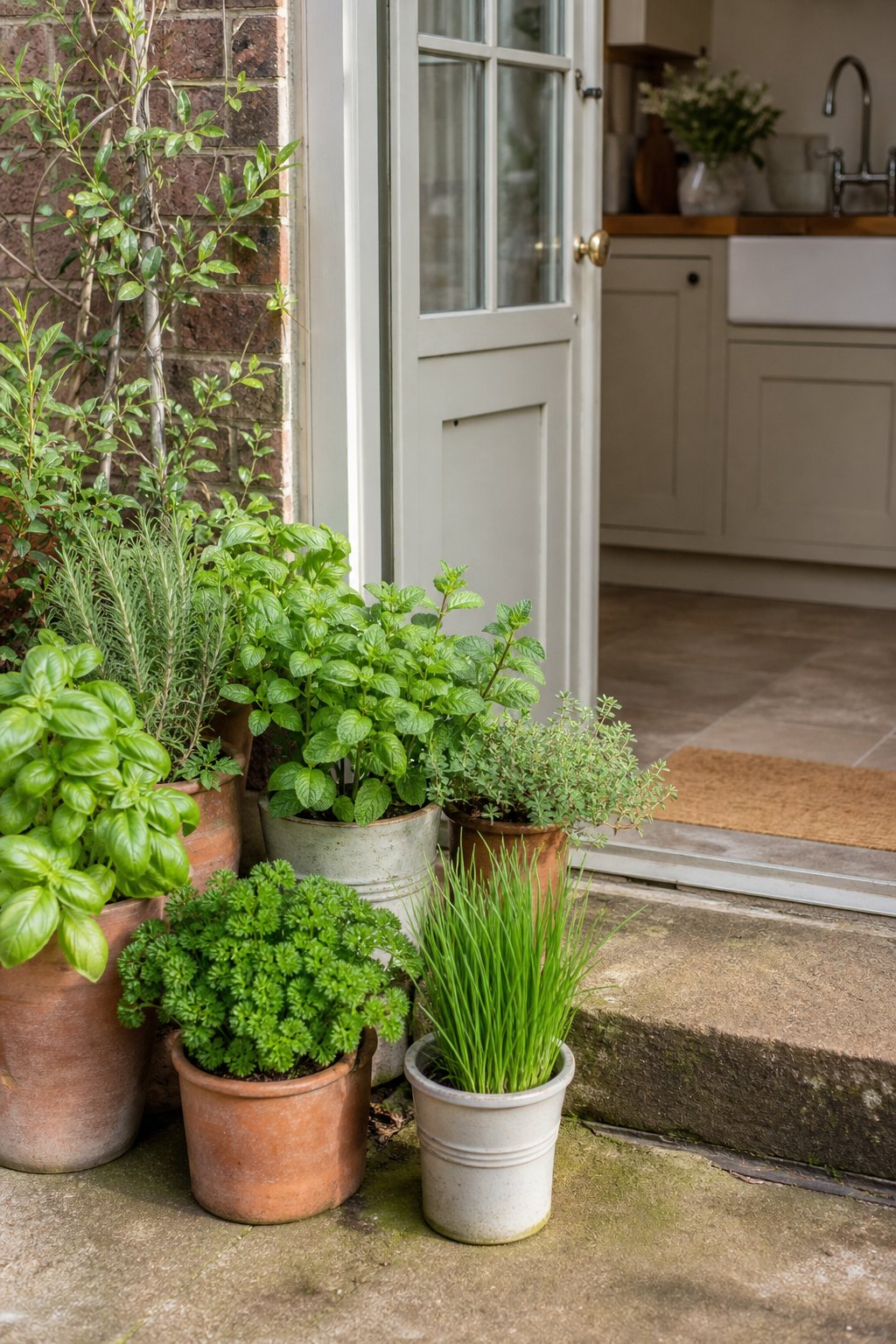
Forgotten herbs turn into sad, crispy stems when they live at the far end of the yard. Group three to five large pots beside your kitchen door so basil, parsley, chives, thyme, and mint stay within easy reach. Give mint its own container because it spreads with impressive confidence.
Choose pots about 12 to 16 inches wide for better root room and steadier moisture. Set thirsty herbs together, while thyme prefers a drier pot with sharp drainage. A small plant stand can lift shorter containers into the sun and make watering easier.
Expert Tip From MrPlanter: “Keep kitchen herbs where you naturally walk every day. You’ll harvest more when the scissors are closer than the refrigerator.”
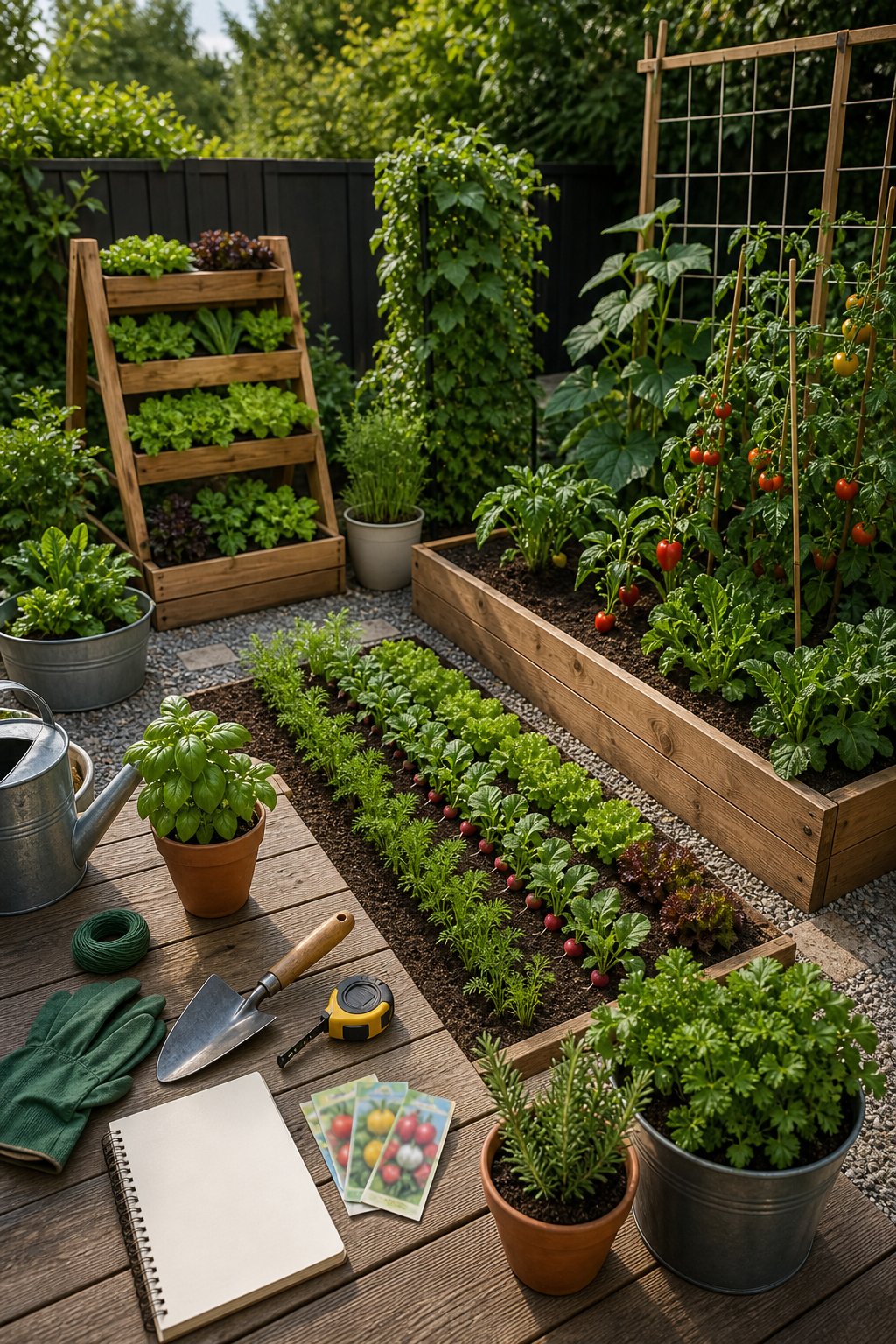
2. Narrow Raised Salad Bed
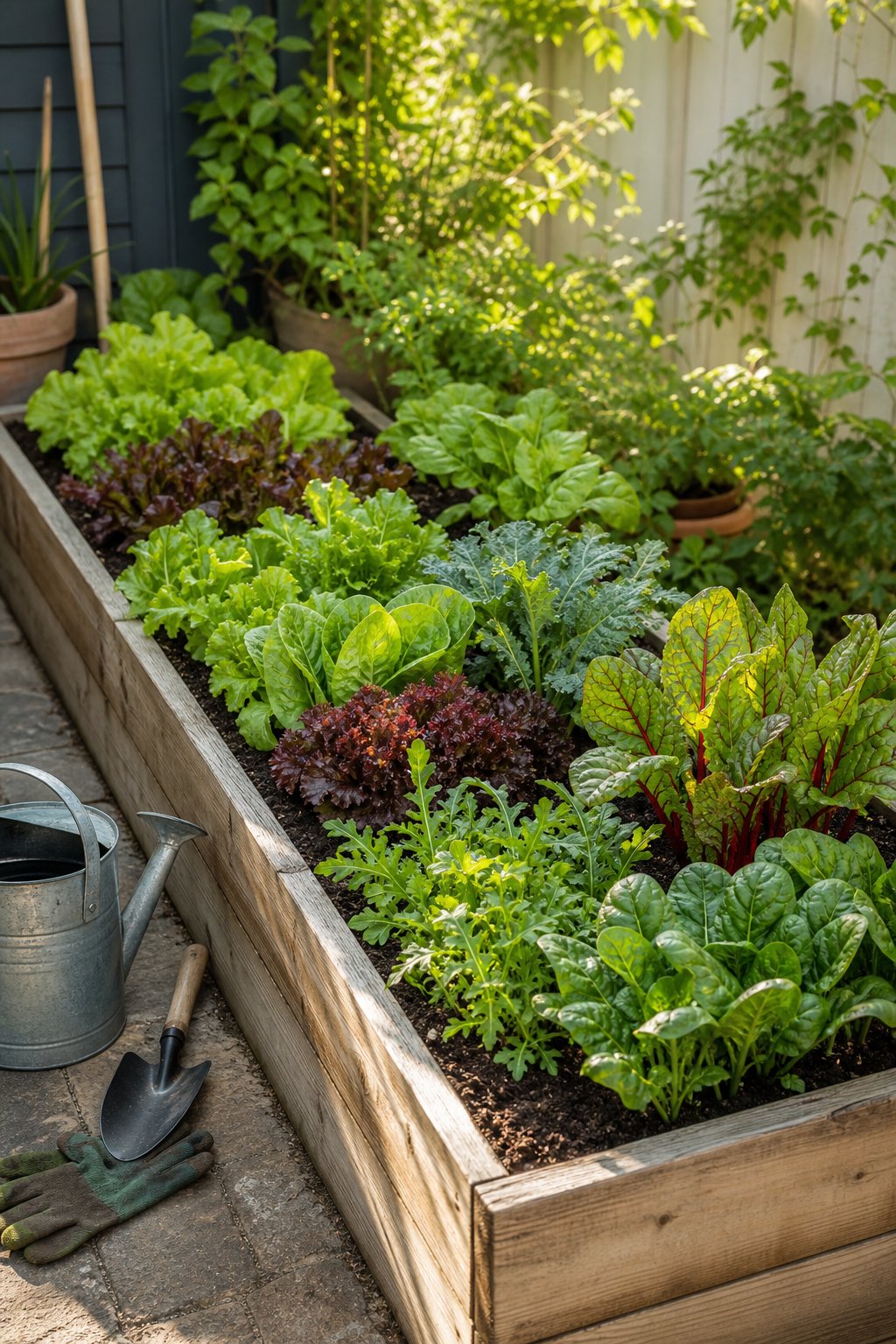
A skinny strip beside a patio or path can produce fresh salad for weeks. Build a narrow raised bed where you can reach the center from both sides, then fill it with loose-leaf lettuce, arugula, spinach, spring onions, or quick herbs.
Use rich, well-drained soil and sow small batches every few weeks during cool weather. Harvest the outside leaves first, leaving the center growing. The bed stays tidy when you keep taller plants at the back and leave a clear edge for cutting.
Expert Tip From MrPlanter: “Cut leaves high above the soil so the crown stays clean. A little regular harvesting keeps the bed producing.”
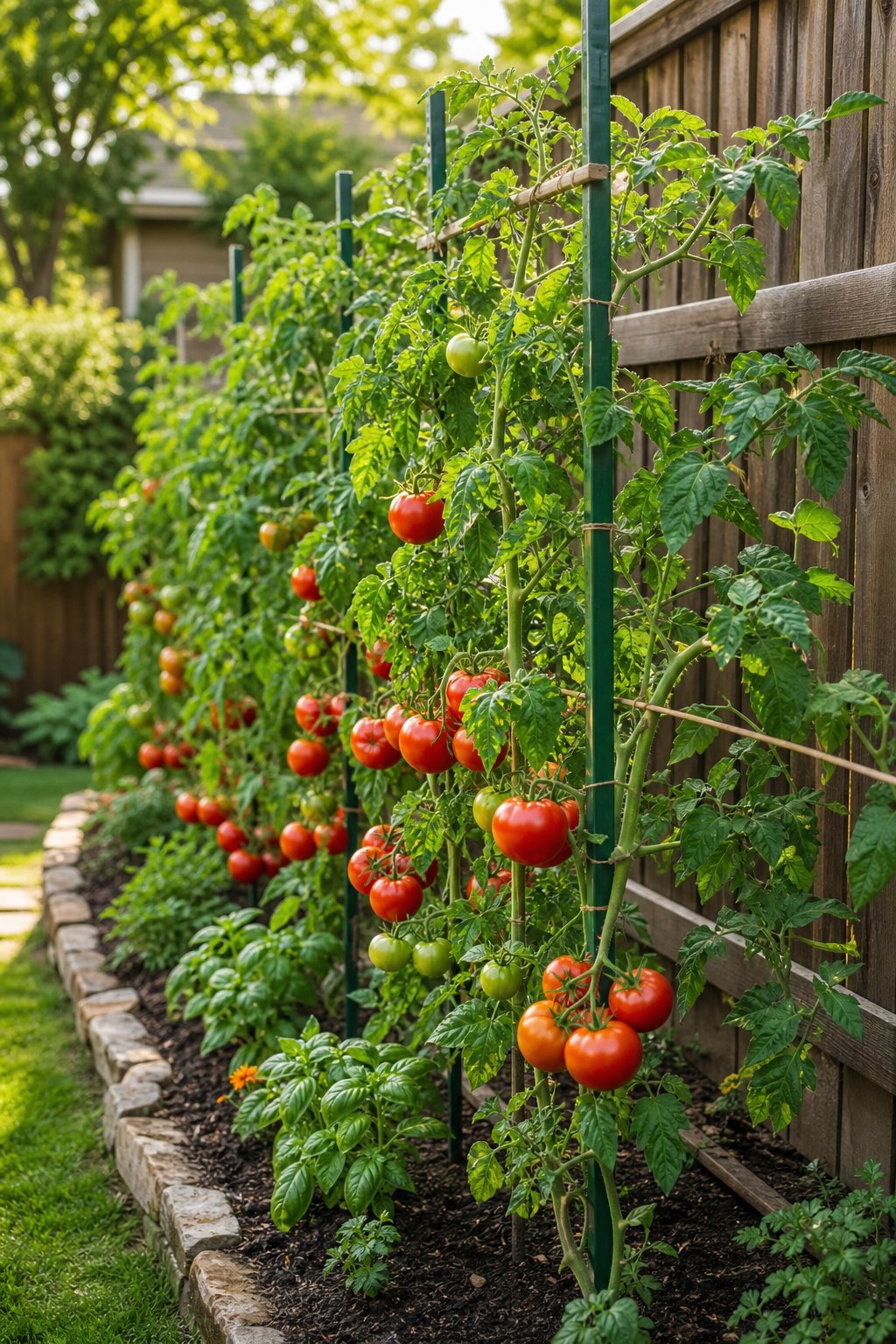
3. Tomato Trellis Along a Sunny Fence
Tomatoes love to sprawl across walkways unless you give them a clear route upward. Plant one compact cherry tomato beside a sunny fence and attach its stems to a sturdy trellis as it grows.
Choose a spot with at least six hours of direct sun and keep the plant in soil that drains well. Tie new growth loosely with soft garden twine. Water deeply at the base, especially during hot weather, and add mulch to slow moisture loss.
A fence trellis also keeps fruit cleaner and gives you a clear view of ripening tomatoes. Explore these tomato trellis ideas for support styles that fit a narrow yard.
Expert Tip From MrPlanter: “Install the support before the tomato gets large. Early support protects the roots from later digging.”
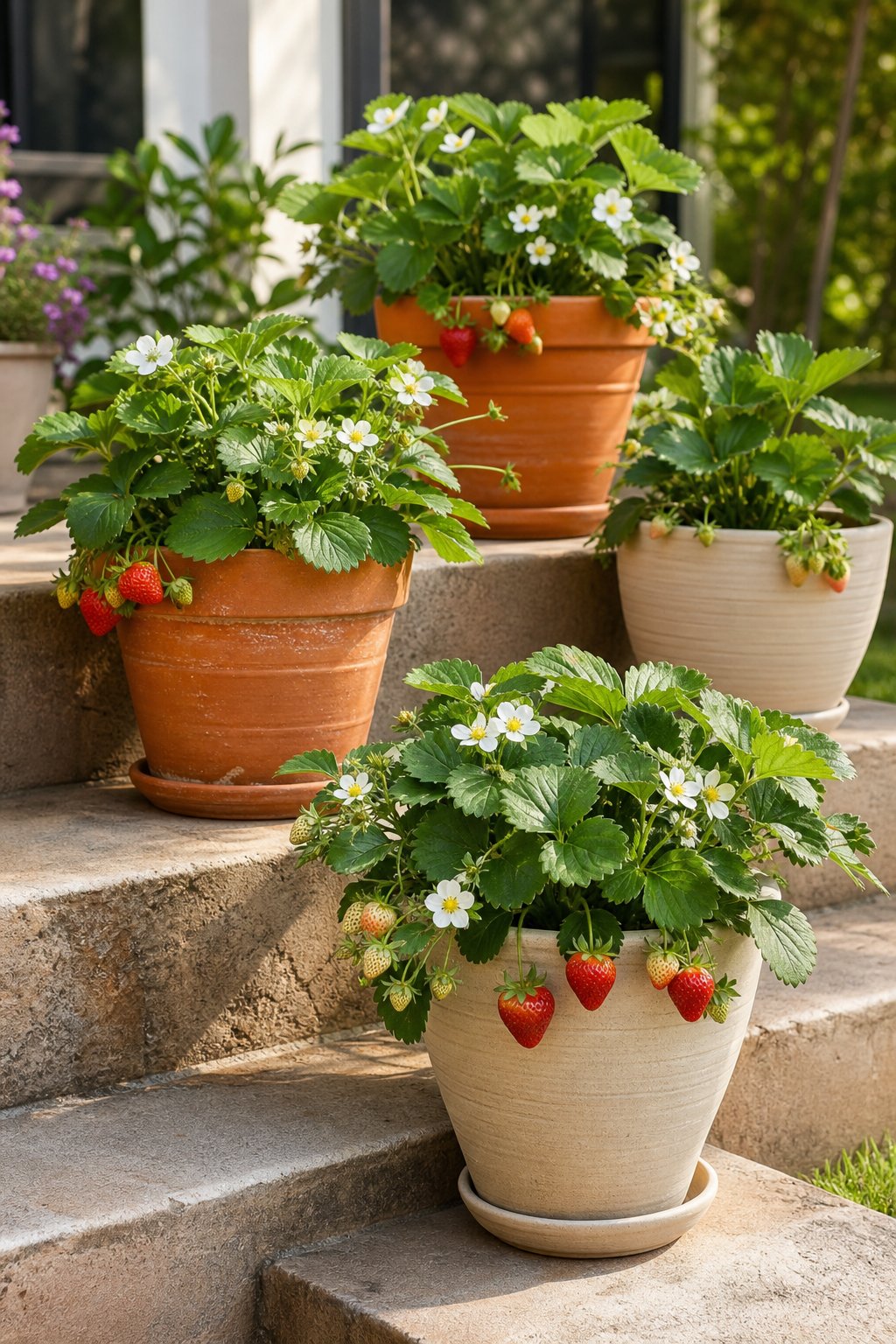
4. Strawberry Planters on Patio Steps
Patio steps give strawberries a useful staircase, and the berries get better airflow above the ground. Place containers on sunny steps or a stable tiered stand, leaving enough room for leaves to spread over the edges.
Use a potting mix that drains freely and choose containers with several drainage holes. Water when the surface begins to dry, then guide runners into nearby pots if you want more plants. Keep ripe berries off wet soil with straw or a small layer of clean mulch.
The arrangement also makes berries easier to spot before birds find them. These strawberry planter ideas offer more ways to use vertical space.
Expert Tip From MrPlanter: “Pick berries as soon as they turn fully red. Morning harvests keep them cool and firm.”
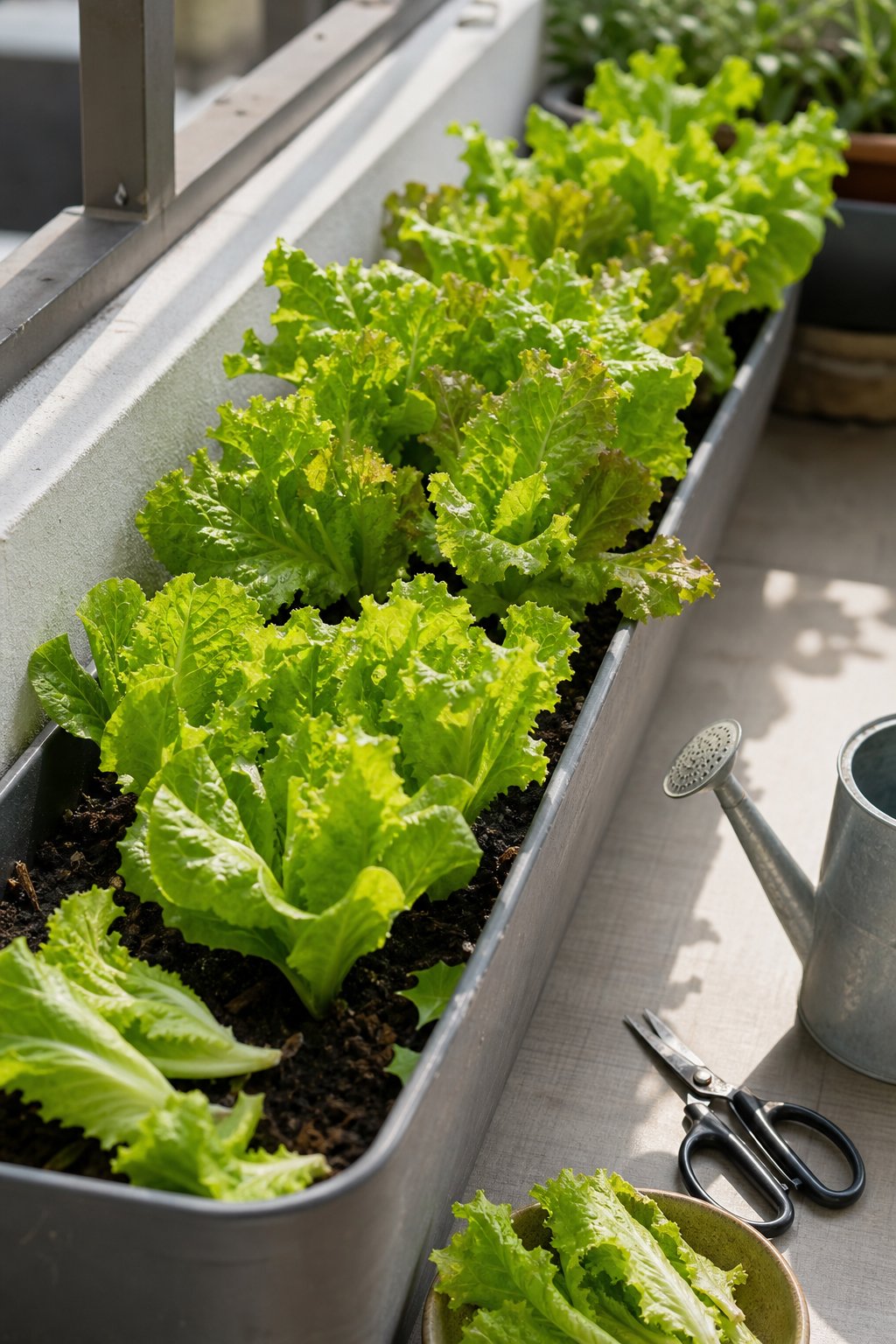
5. Cut-and-Come-Again Lettuce Trough
A lettuce trough gives you quick harvests from a small footprint. Fill a long planter with loose-leaf varieties, then place it where morning sun reaches the leaves and afternoon heat feels gentler.
Sow a few seeds every couple of weeks for a steady supply. Snip outer leaves about an inch above the soil and leave the center intact. Lettuce likes even moisture, so check the trough daily during warm spells and make sure excess water can escape.
Arugula, baby spinach, and cilantro fit well at the ends when their watering needs match. A shallow box also makes pest checks easy because every leaf sits close to eye level.
Expert Tip From MrPlanter: “Harvest lettuce before midday heat arrives. The leaves taste fresher and stay crisp longer.”
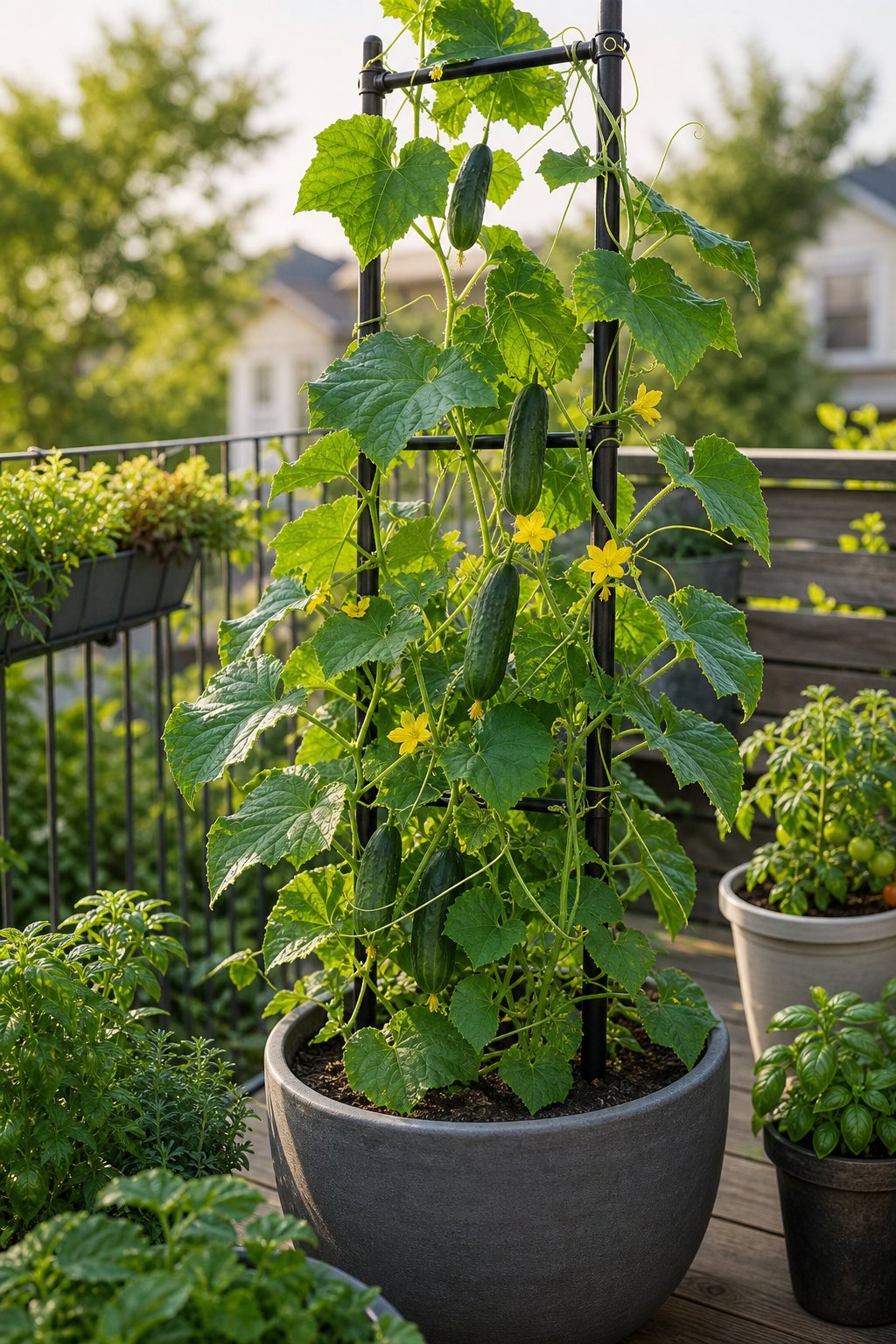
6. Cucumber Trellis in a Large Container
Cucumbers become patio bullies when they have no climbing plan. Give one plant a large container and a strong trellis, then train the vines upward before they reach across your path.
Choose a pot at least 18 inches wide with drainage holes and fill it with quality potting mix. Place the trellis securely before planting. Keep the soil evenly moist and feed the plant during active growth. Pick cucumbers while they are young for tender fruit and continued production.
A vertical frame saves floor space and helps you find fruit before it becomes oversized. For more support options, see these cucumber trellis ideas.
Expert Tip From MrPlanter: “Guide young vines every few days with your fingers. Small corrections prevent a tangled curtain later.”
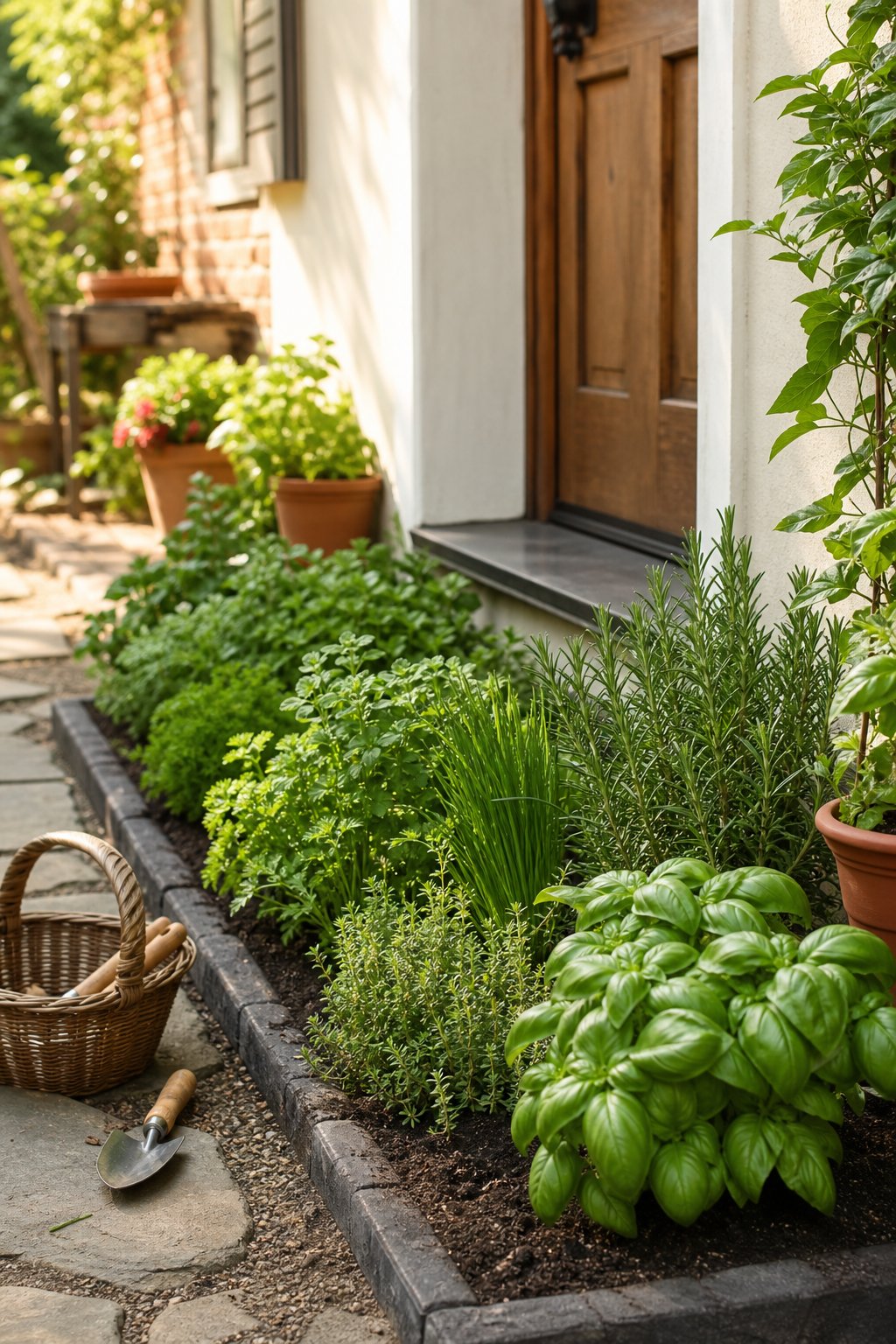
7. Pizza Herb Border by the Back Door
A pizza herb border puts dinner ingredients beside the door you use most. Edge a sunny path with oregano, thyme, chives, basil, and parsley so you can snip toppings while carrying food outside.
Group plants by moisture needs. Basil and parsley prefer regular watering, while oregano and thyme handle drier soil once established. Keep the border narrow enough to reach every plant without stepping into the bed. Repeating the same edging material gives the small space a neat shape.
Trim herbs often to keep them bushy and prevent flowers from taking over the leaves you want for cooking. You’ll also notice pests sooner when the plants remain close and visible.
Expert Tip From MrPlanter: “Place the herbs you use most near the handle side of the door. Your garden should meet your routine halfway.”
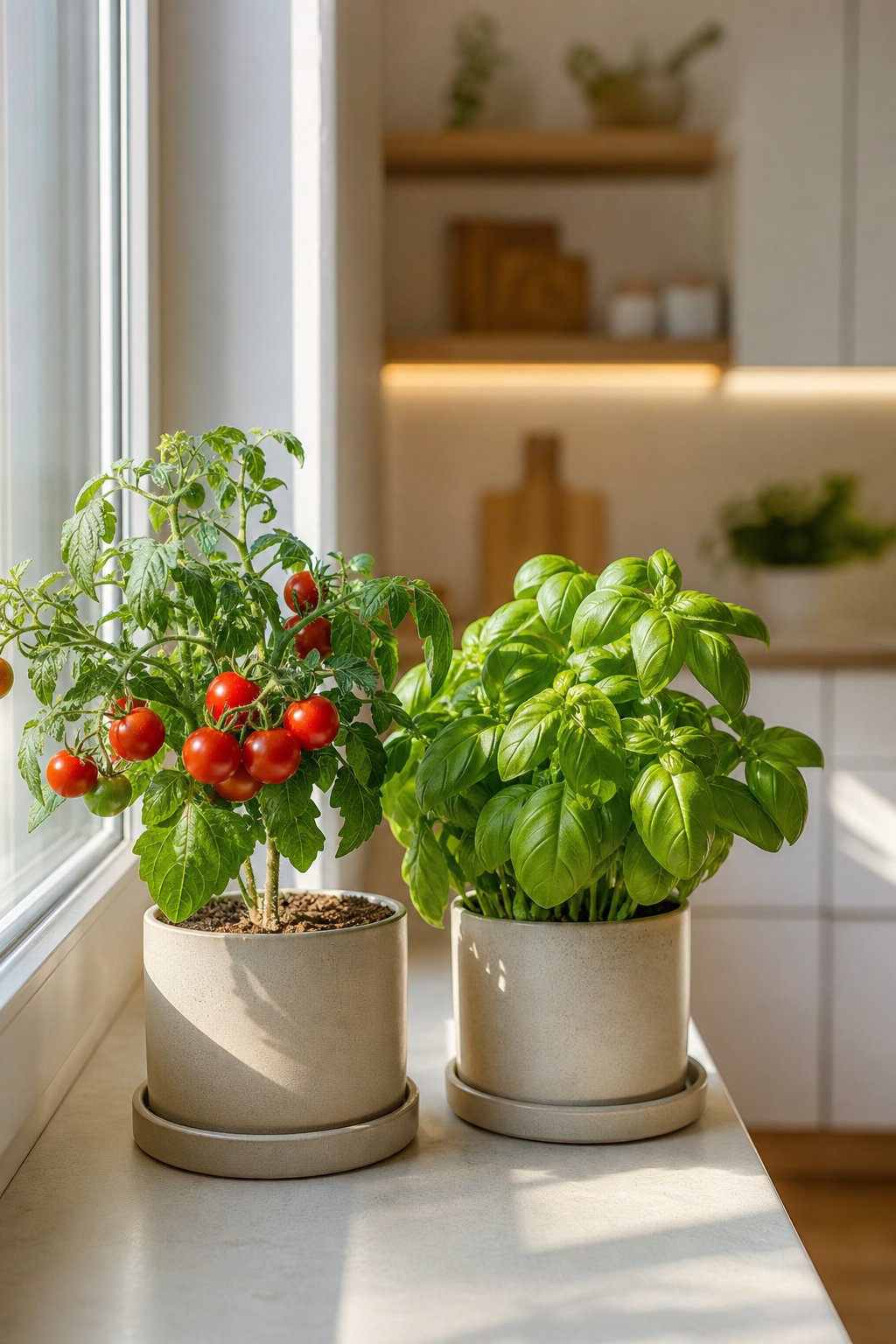
8. Cherry Tomato and Basil Container Pair
A tomato and basil pairing feels compact until the tomato starts reaching for the roof. Give the cherry tomato its own large pot, then place basil in a separate container where it receives sun without sitting under heavy foliage.
Use a pot at least 18 inches wide for the tomato and add support at planting time. Set both containers in a warm, sunny spot with good airflow. Water deeply when the top inch of mix dries, and pinch basil tips to encourage fresh side shoots.
The separate pots let you adjust watering because basil likes more consistent moisture than a mature tomato. This setup also makes it easy to move the basil into shelter during cool nights.
Expert Tip From MrPlanter: “Keep the tomato pot heavy enough to resist tipping. Fruit-filled branches create more weight than you expect.”
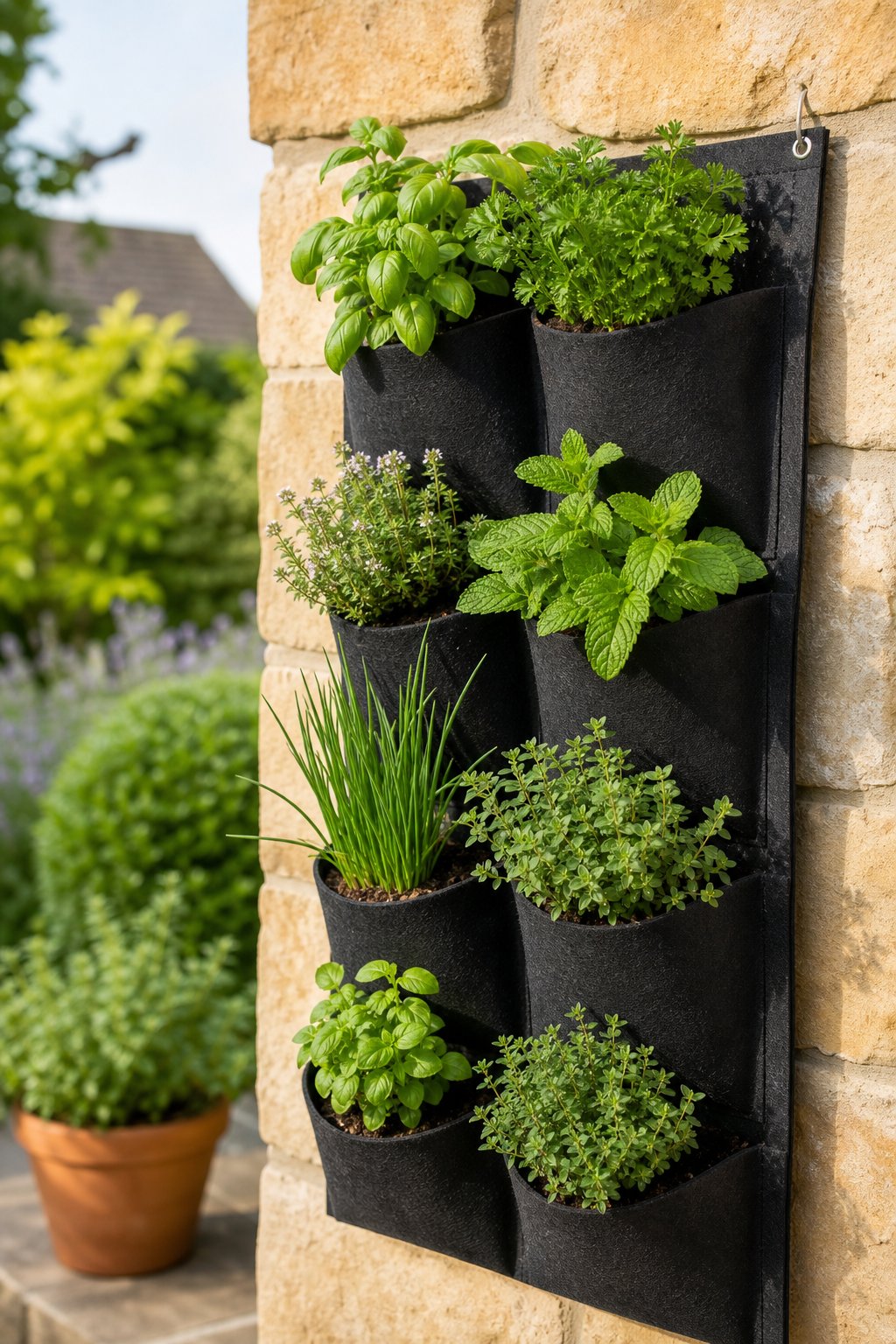
9. Vertical Pocket Planter on a Garden Wall
A blank garden wall can hold a surprising amount of fresh food when pockets take the place of floor space. Mount a vertical planter securely and fill its shallow sections with chives, parsley, thyme, baby lettuce, or edible flowers.
Check the wall for at least several hours of light, then place plants with similar water needs in neighboring pockets. Upper pockets dry faster, so put thirstier greens lower down or inspect the top row more frequently. Use a planter with drainage and protect the wall from constant runoff.
Keep heavy fruiting crops in floor containers because shallow pockets suit small herbs and greens best. This arrangement works well beside a patio seating area or outdoor kitchen.
Expert Tip From MrPlanter: “Water from the top and check the lowest pockets afterward. Dry upper pockets and soggy lower ones signal uneven drainage.”
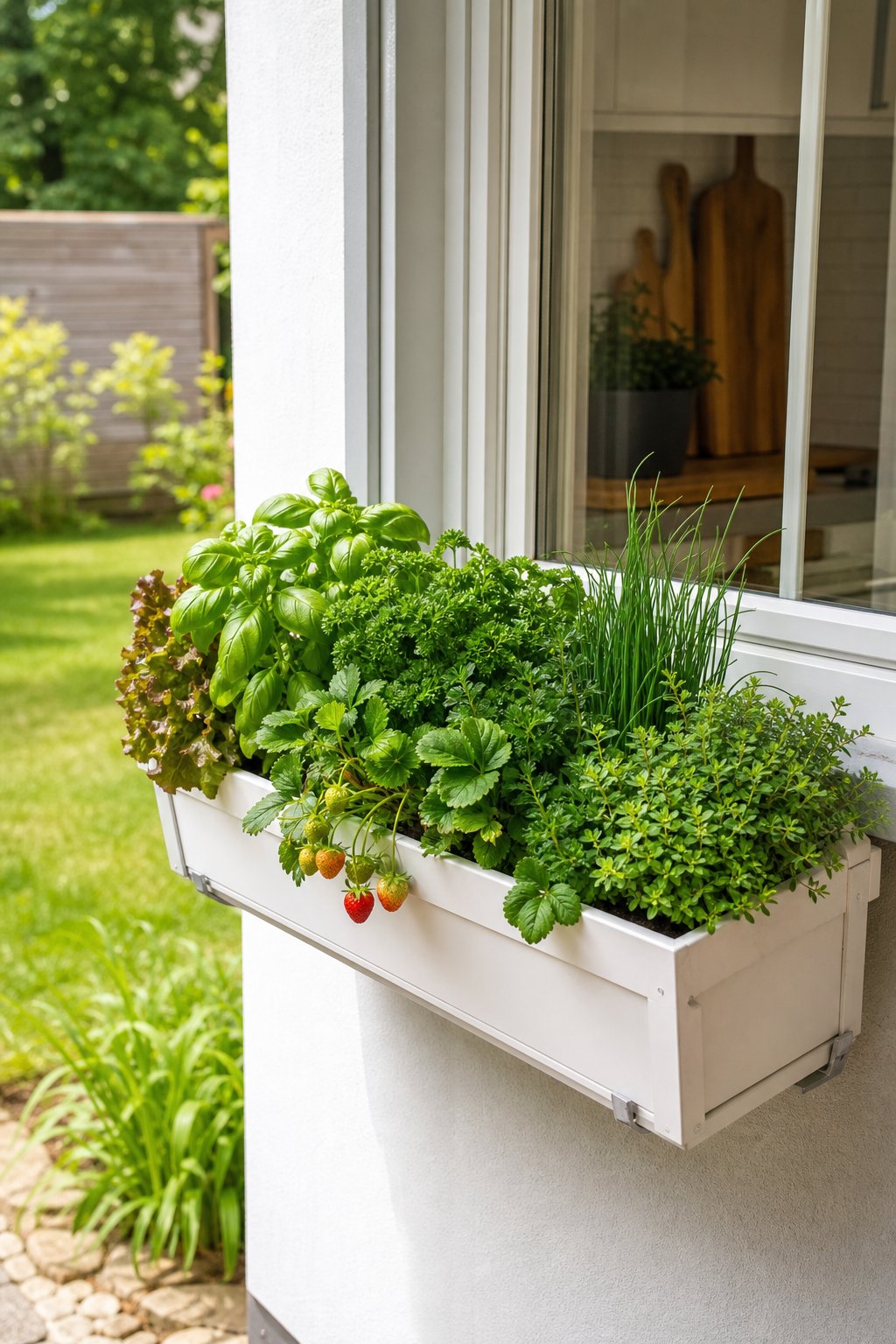
10. Edible Window Box Facing the Yard
A window box lets you pick herbs and small greens without walking across the yard. Choose a sturdy box that is securely attached, then plant parsley, chives, basil, lettuce, or compact scallions.
Confirm that the box receives enough direct light and has clear drainage holes. Use a lightweight potting mix to reduce strain on the window ledge, and water slowly until moisture reaches the bottom. Keep the box within reach for trimming and pest checks.
Place shorter plants toward the front so taller herbs do not block the window or shade the entire box. A repeated color or material also helps several small boxes feel like one planned garden.
Expert Tip From MrPlanter: “Check the mounting hardware before filling the box. Wet soil becomes heavy fast, especially after rain.”
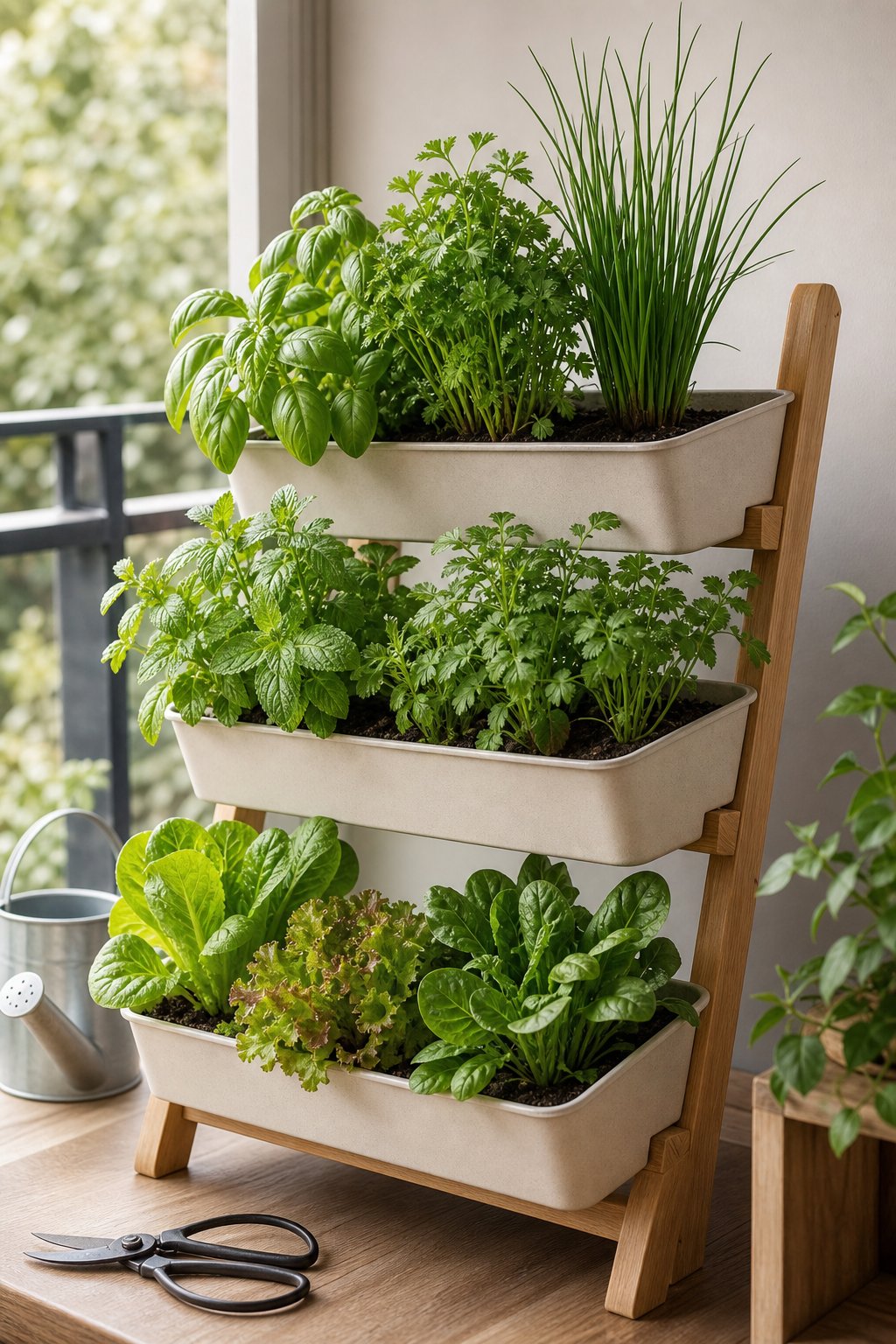
11. Tiered Planter for Herbs and Leafy Greens
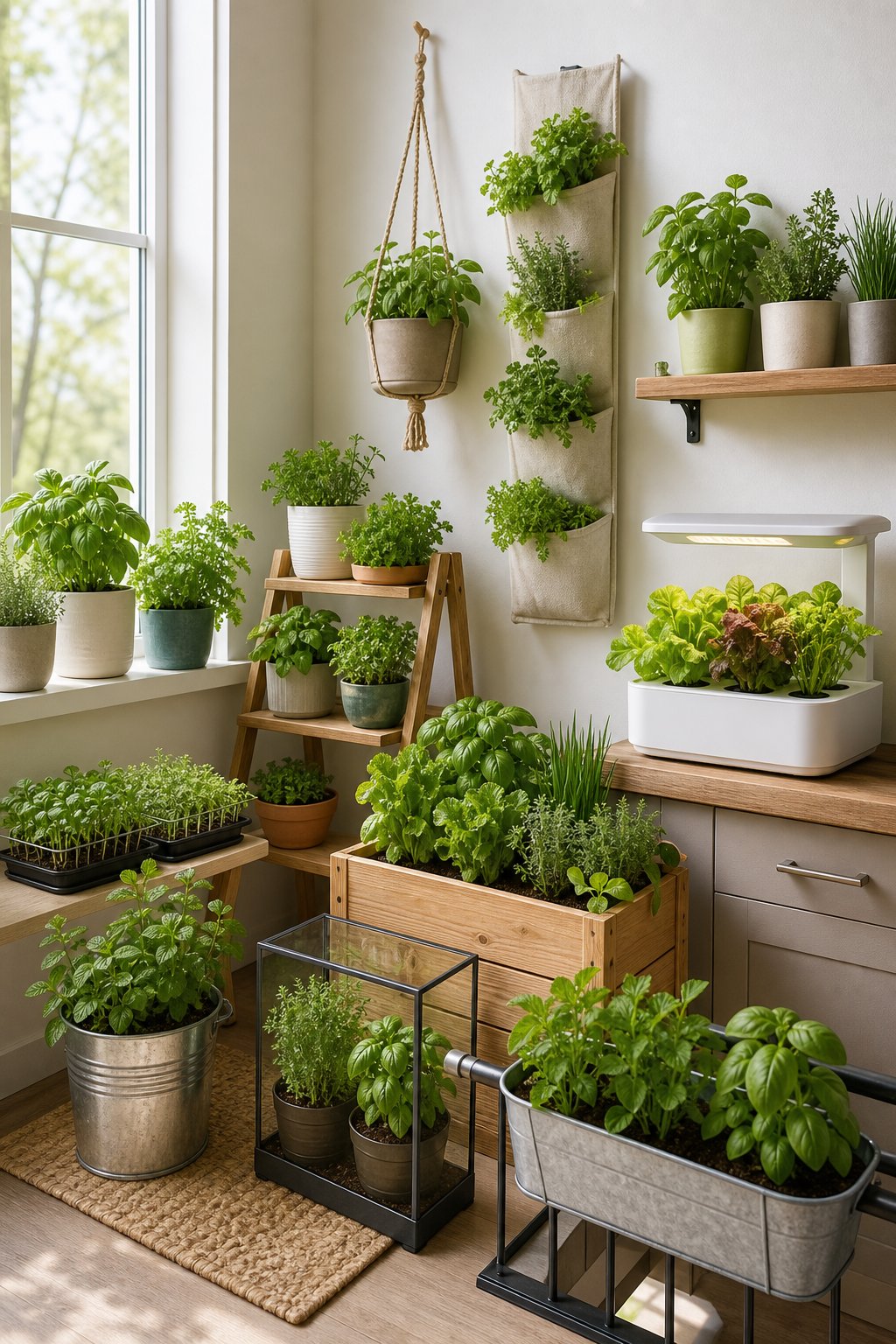
Tiered planters turn a small sunny corner into several growing levels. Put compact herbs and shallow greens on the upper tiers, then reserve lower shelves for plants that need more moisture or tolerate a little less light.
Use sturdy shelves with enough space for leaves to spread. Place basil, parsley, and lettuce where watering is convenient, while thyme and oregano can share a drier level. Check that the upper pots do not drip onto plants with different watering needs.
Rotate containers every few days if one side leans toward the light. This setup keeps crops visible and makes harvesting comfortable without filling the whole patio.
Expert Tip From MrPlanter: “Leave room between each tier for your hands and shears. Easy access keeps small harvests from becoming a chore.”
How to Plan a Small Kitchen Garden
A useful kitchen garden begins with your meals, your sunlight, and your daily path through the yard. Sketch the space, mark the brightest areas, and place the crops you harvest most often nearest the kitchen door.
What Do You Actually Cook Each Week?
Start with foods that already appear on your shopping list. If you use basil for pasta, lettuce for sandwiches, or chives for eggs, those crops earn space first. Add one fun crop, such as strawberries or a cherry tomato, after the basics have room.
Keep your first crop list short enough to care for comfortably. One salad trough, a few herb pots, and one fruiting plant provide plenty of practice without crowding the yard.
Where Does Your Yard Get the Most Sun?
Track sunlight across the yard during a clear day. Fruiting plants such as tomatoes, cucumbers, peppers, and strawberries need about six hours of direct sun, while some leafy greens handle gentler light.
Put tall crops along a fence or at the north side of a bed so they cast less shade over smaller plants. If the sunny area sits far away, keep everyday herbs by the door and grow larger crops in the bright zone.
How Close Is the Garden to Water and the Kitchen Door?
Place frequently harvested crops where a hose or watering can reaches easily. A garden that requires a long walk for every drink dries out quickly during hot weather.
Leave paths wide enough to carry a basket and reach each pot. Test the route with a full watering can before planting, then adjust containers that block doors, steps, or gates.
Small-Space Growing Essentials
Small gardens produce more when you match each crop with the right container, root space, and watering plan. Fewer large containers are easier to maintain than a crowd of tiny pots that dry out by lunchtime.
Which Containers and Beds Give Roots Enough Room?
Use containers with drainage holes and choose their size by the crop. Herbs fit well in pots about 12 to 16 inches wide, while tomatoes and cucumbers need containers at least 18 inches wide. A compact raised bed around 4 feet by 4 feet gives you room for several crops while keeping every plant within reach.
Fill containers with potting mix made for container growing. Garden soil becomes heavy and drains poorly in pots. Add mulch to the surface to slow evaporation, leaving a small gap around each stem.
Which Crops Deliver the Most Harvest in Limited Space?
Loose-leaf lettuce, arugula, parsley, chives, basil, and strawberries reward repeated picking. One cherry tomato plant also gives a strong summer harvest when it receives enough sun and support.
Climbing cucumbers and tomatoes save floor space when trellised early. Keep large crops limited so they do not shade or crowd the quick greens around them.
How Can You Keep Watering From Becoming a Daily Drama?
Group plants with similar moisture needs and place them near a hose, tap, or rain barrel. Check the soil with your finger before watering, then soak containers until water drains from the bottom.
Self-watering planters help with thirsty greens, while mulch slows moisture loss in raised beds. Set a simple reminder during hot weather and inspect leaves for wilting, pests, or scorch whenever you harvest.
I’m Anirban Saha, the Founder and Owner of MrPlanter.com. I pay the bills as a software developer, although my BTech is actually in Electronics and Communication. I really love my day job, but what gives me energy every day is interacting with my indoor plants and taking care of them. I have been successfully nurturing and maintaining houseplants for over 10 years now.
📚🔍 Our content undergoes thorough review and fact-checking before publication. For additional details, explore our strict Editorial Policy to deliver helpful content. 📝🔒