As an Amazon Associate, MrPlanter.com earns from qualifying purchases.
A minimalist backyard garden gives you room to breathe, move, and enjoy the outdoors without a crowded planting plan. The best approach is to choose one strong feature, repeat two or three materials, and leave generous open space around them. That formula suits small yards, narrow side spaces, and larger lawns alike.
You can use smooth concrete, pale gravel, dark wood, clipped shrubs, or soft grasses to create structure. The goal is a calm setting that feels easy to care for, with each path, planter, and seating area earning its place.
Quick picks:
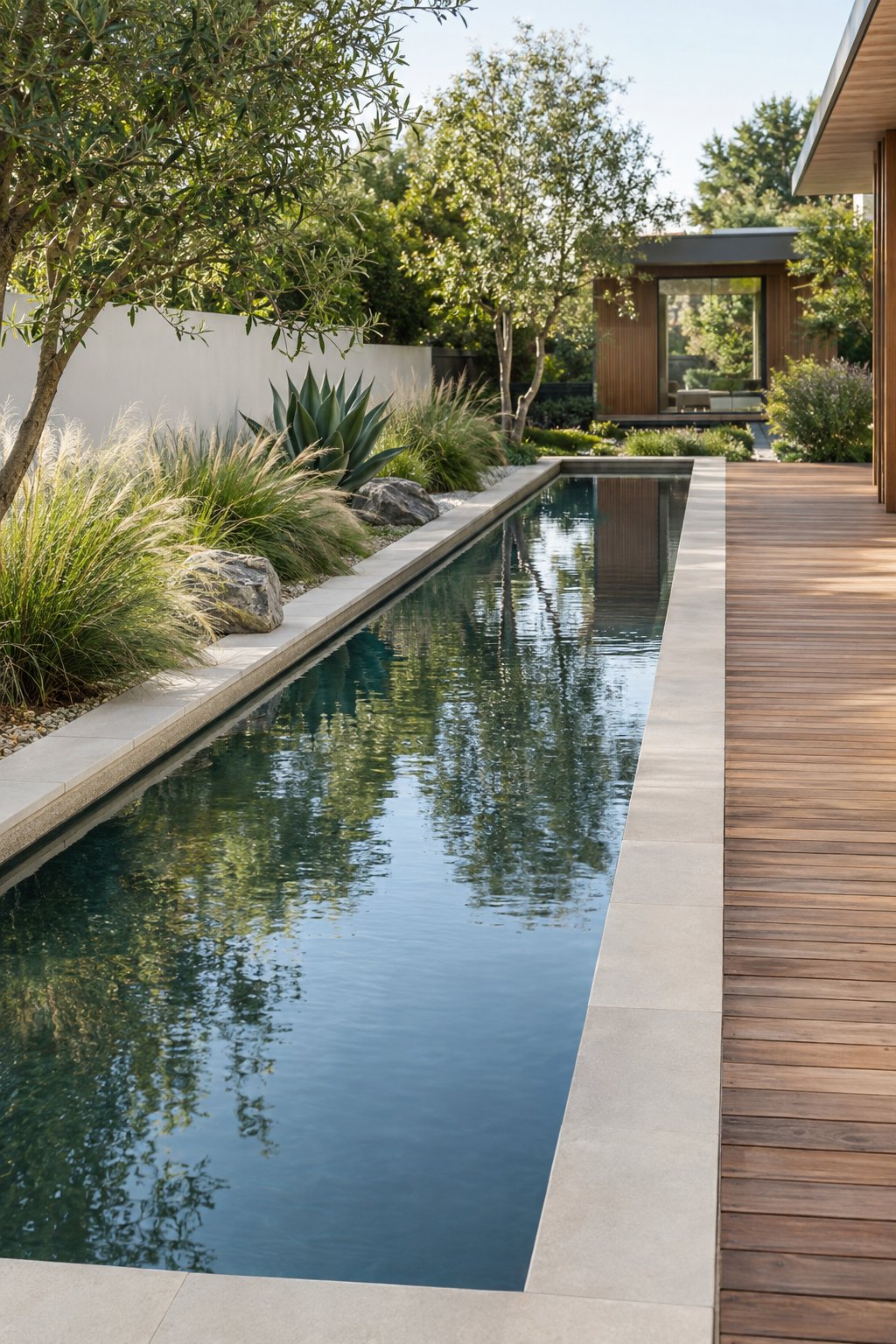
Best for reflection: Long Reflecting Pool Beside a Wood Deck
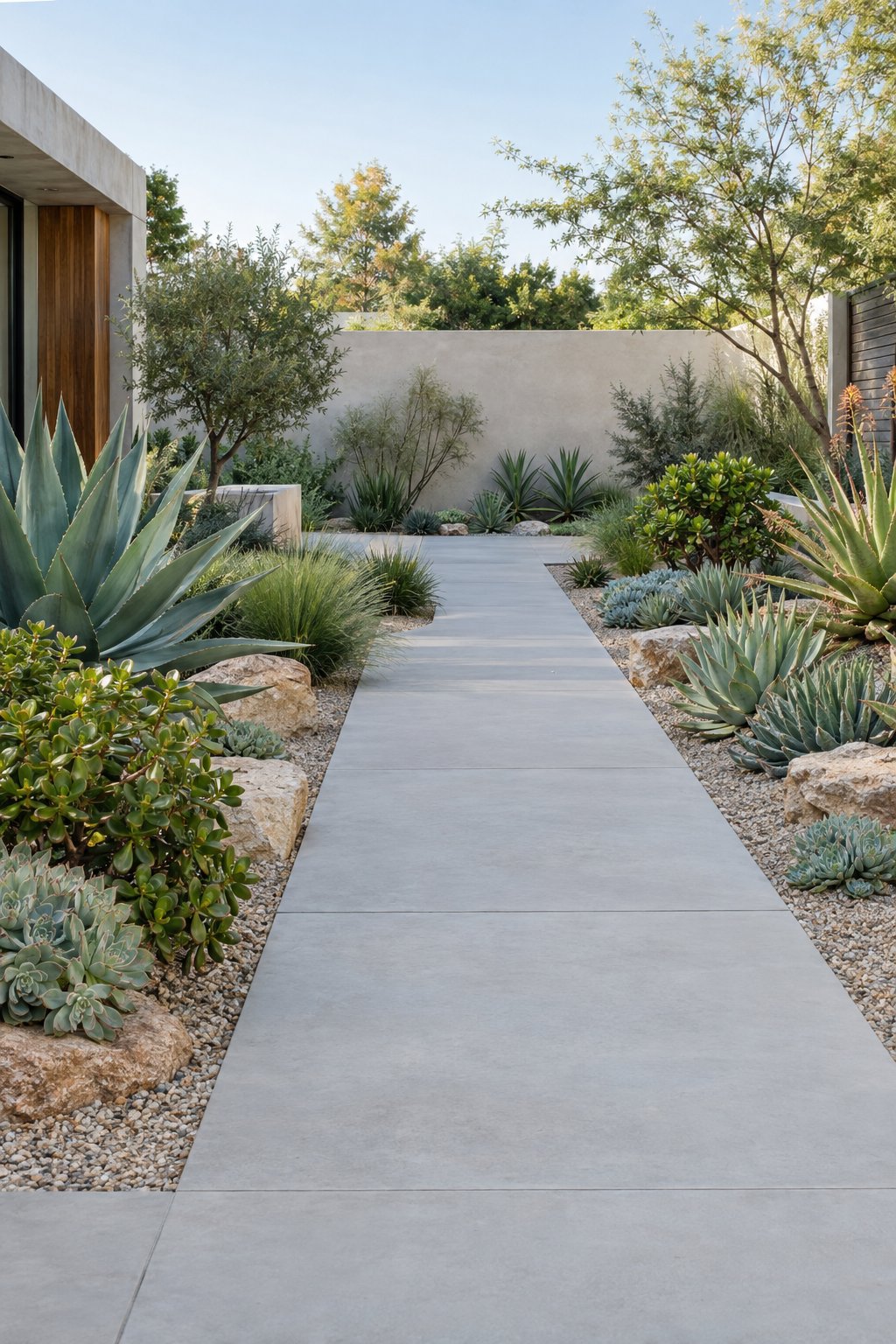
Best for small yards: Wide Concrete Pathway With Succulents
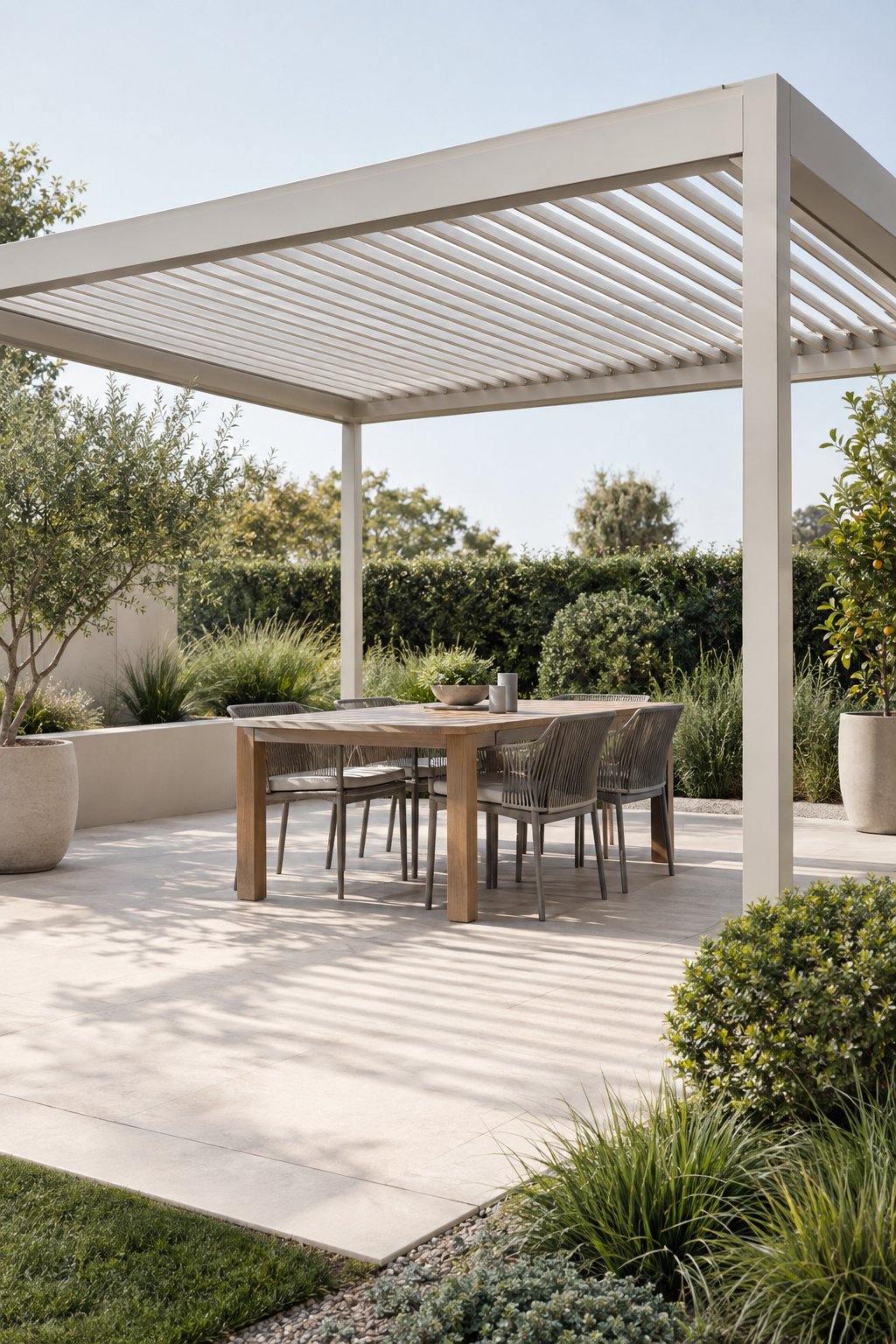
Best for entertaining: Louvered Pergola Dining Patio
Best for low upkeep: Single Specimen Tree in a White Gravel Bed
1. Long Reflecting Pool Beside a Wood Deck
A narrow reflecting pool gives a plain deck a quiet focal point without filling the yard with furniture. Its long shape draws your eyes toward the far end of the garden, which helps a narrow backyard feel deeper. Pair the water with warm wood, pale stone, and low grasses for a relaxed palette.
Keep the pool edge crisp and leave enough room beside it for safe walking. A small circulation pump helps keep the surface fresher and limits leaf buildup. This layout works well beside large patio doors because the water becomes part of your indoor view.
Expert Tip From MrPlanter: “Use dark water for stronger reflections and pale paving for a softer feel. Keep nearby plants low so leaves stay out of the pool.”
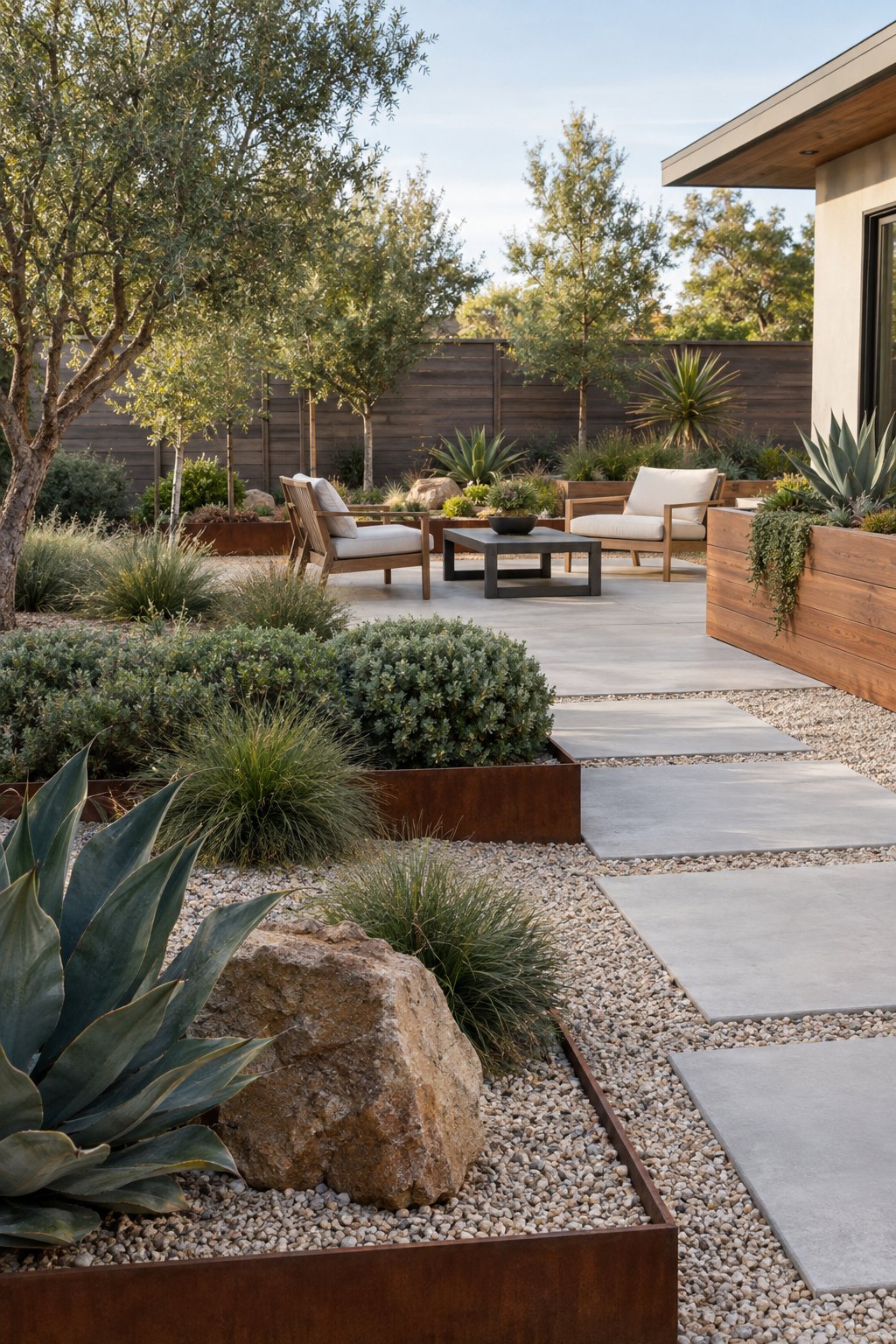
2. Wide Concrete Pathway With Succulents
A wide concrete path makes movement through your yard feel clear and relaxed. Succulents soften the hard edges while keeping the planting plan tidy. Use repeated groups of agave, sedum, blue fescue, or low thyme along one side of the path.
Set the slabs on a firm, well-drained base and leave narrow, even joints. Gravel between the planting pockets improves drainage and keeps the palette restrained. The broad surface also gives you space to carry garden tools, serve food, or guide guests toward a seating zone.
Expert Tip From MrPlanter: “Choose one concrete color and repeat it on planters or steps. Group succulents in blocks so the path keeps its clean shape.”
3. Louvered Pergola Dining Patio
A louvered pergola lets you control light above an outdoor dining area. Open slats keep the patio airy, while adjustable louvers provide shade when afternoon sun becomes uncomfortable. A slim black frame pairs well with gray pavers, pale walls, and simple container plants.
Place the dining table close to the house so meals move easily from the kitchen. Keep the planting around the structure low, then add one taller plant in a large pot for height. Check local rules and anchoring needs before installation, especially in windy areas.
Expert Tip From MrPlanter: “Leave breathing room around the table so chairs pull out easily. A single large planter gives the patio height without adding clutter.”
4. Linear Fire Pit at the Patio Edge
A long fire pit creates a warm boundary between your patio and the garden. Its straight form suits modern paving and gives guests a natural line to gather around. Low lounge chairs can face the flame while leaving the center of the patio open for movement.
Build the pit with a noncombustible surround and provide proper drainage below it. Keep branches, fences, cushions, and overhanging roofs at safe distances. Gas models offer a quick start, while wood-burning versions bring crackle and smoke that require more cleanup.
Expert Tip From MrPlanter: “Place the fire feature where its glow reaches the seating area. Keep a clear path around it so serving drinks never becomes an obstacle course.”

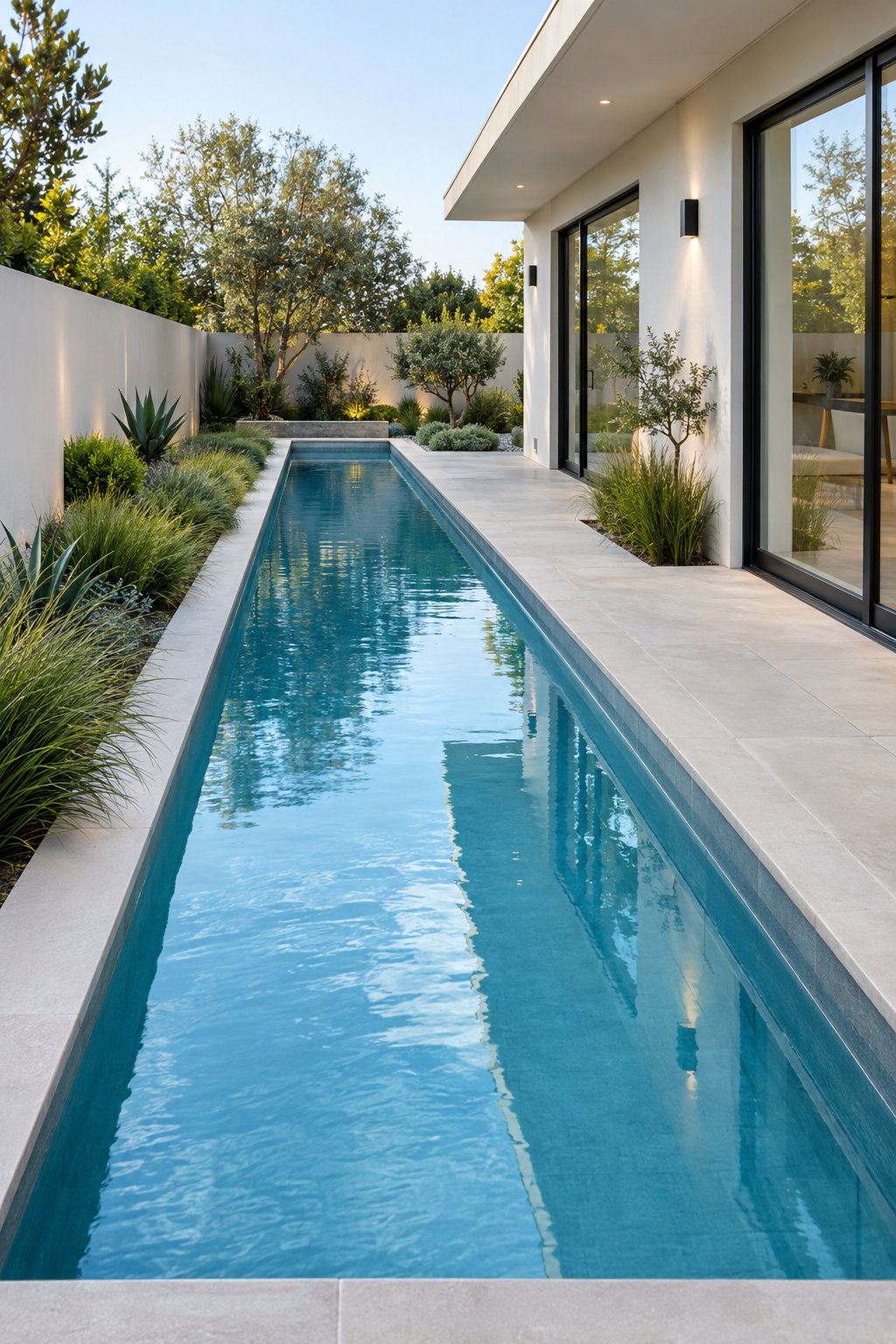
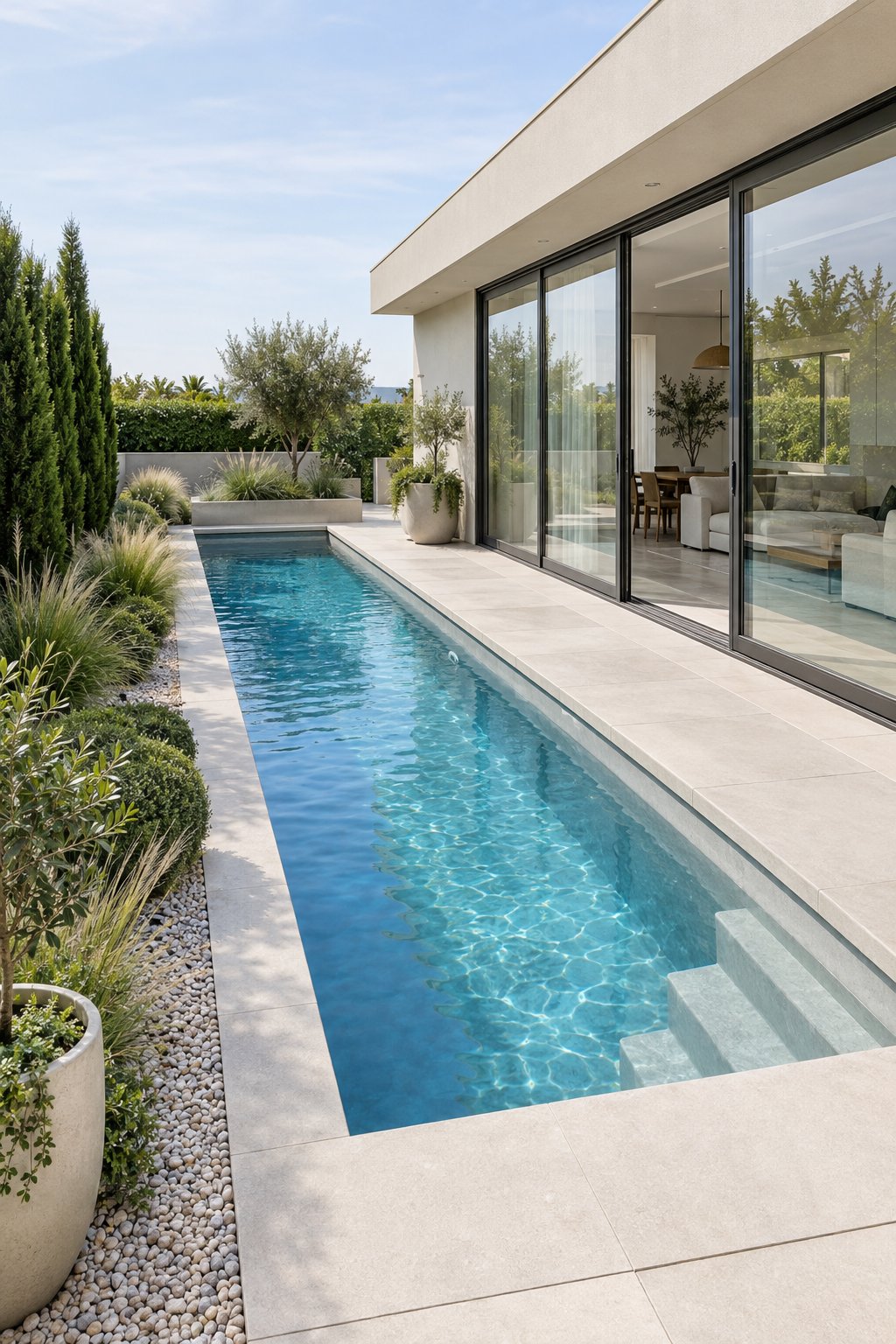
5. Narrow Lap Pool Along the House
A narrow lap pool uses the side of the house for a strong, space-saving water feature. Its long edge mirrors modern walls and makes the yard feel connected to the rooms indoors. Large glass doors add to that effect by opening the view from the living area.
Leave a safe walking strip beside the water and choose slip-resistant paving. Keep plants low near the pool so fallen leaves and trimming stay manageable. Before planning the shape, check setbacks, access for construction equipment, fencing rules, and the depth you need for swimming.
Expert Tip From MrPlanter: “Use one broad paving material around the pool to keep the edges quiet. A narrow planting bed is enough to soften the house wall.”
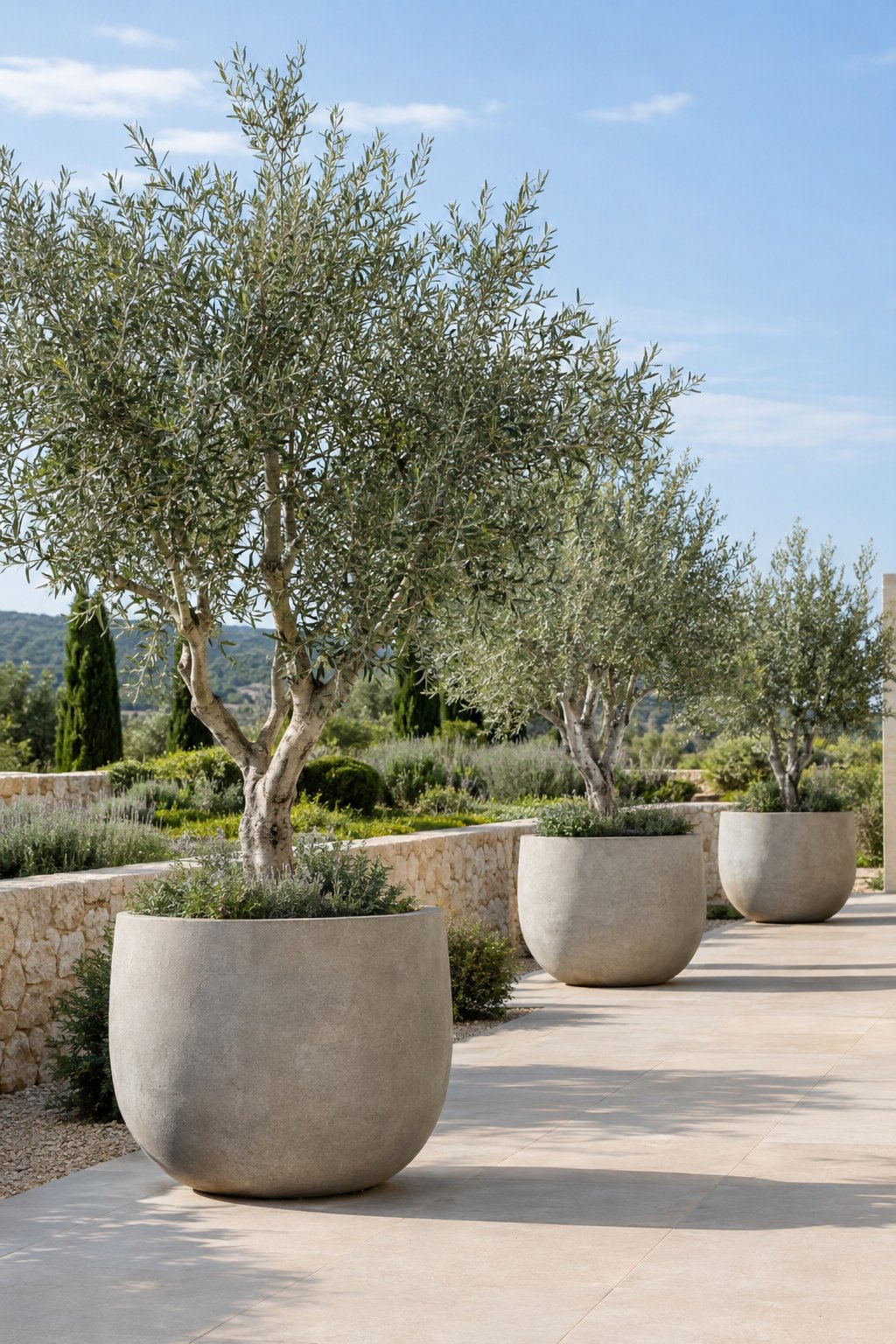
6. Large Concrete Planters With Olive Trees
Large concrete planters give olive trees the visual weight they need in an open backyard. Their square shapes add order beside gravel, glass doors, or a straight path. The gray containers also balance the trees’ silver-green leaves without competing for attention.
Choose containers with generous drainage holes and enough room for mature root growth. Set them where you can reach them with a hose, since large planters become heavy after filling. In cold regions, select hardy varieties or protect the trees during freezing weather.
Expert Tip From MrPlanter: “Use matching planters in a pair to frame a doorway or path. Raise them slightly on discreet feet so water drains freely.”
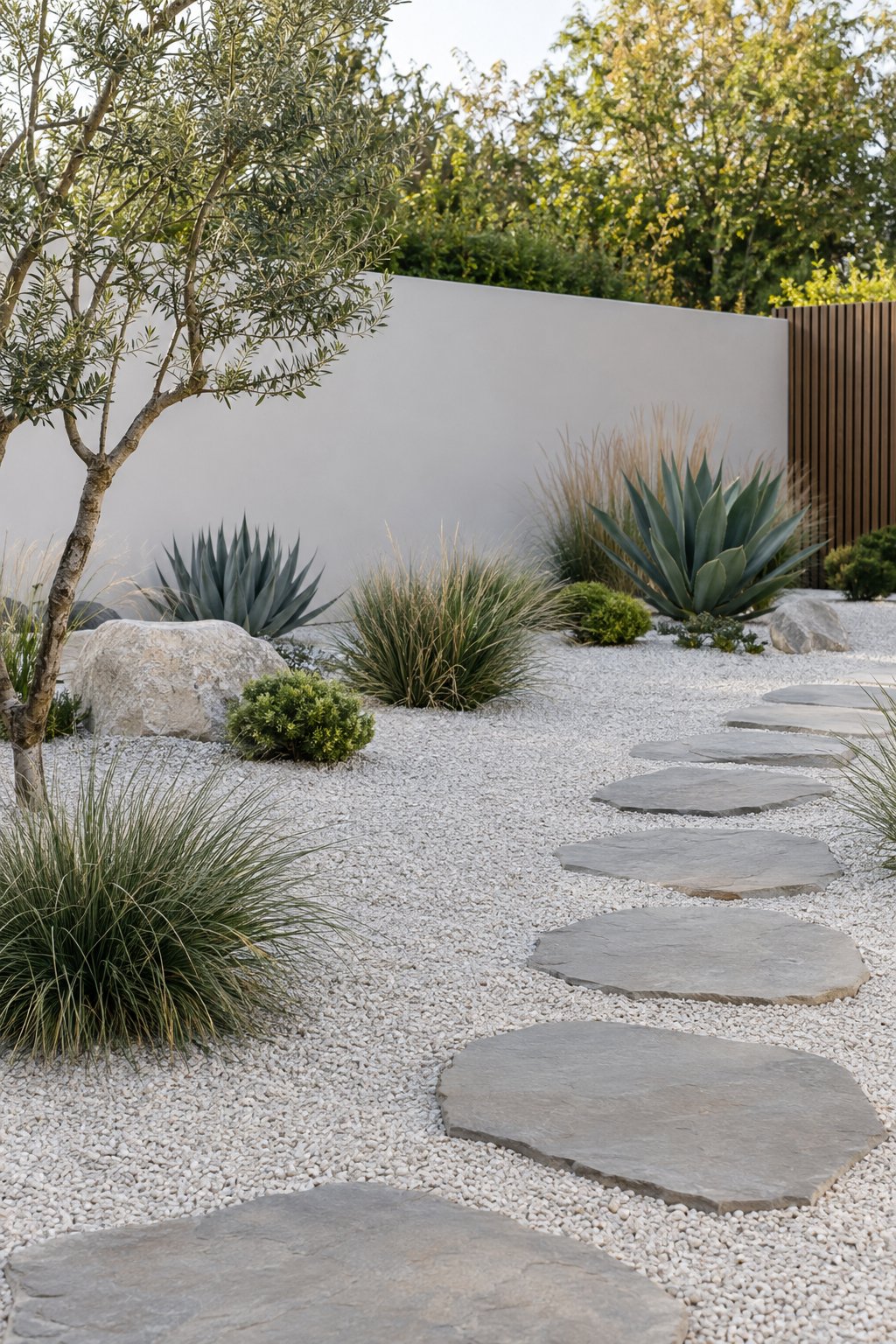
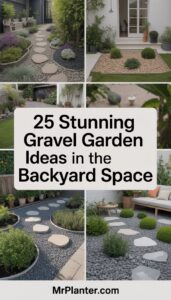
7. White Gravel Courtyard With Stepping Stones
White gravel turns a small backyard into a bright courtyard with very little visual noise. Flat stepping stones create a firm route across the loose surface and add a strong geometric pattern. A few sculptural plants give the space life while preserving the open ground.
Install landscape fabric below the gravel after clearing weeds, then use edging to keep stones inside the courtyard. Choose pavers with a textured top for safer footing after rain. A simple bench or one low chair is enough to make the area useful.
Expert Tip From MrPlanter: “Rake the gravel in one direction for a neat finish. Use larger stones near seating so feet stay steady when you sit down.”
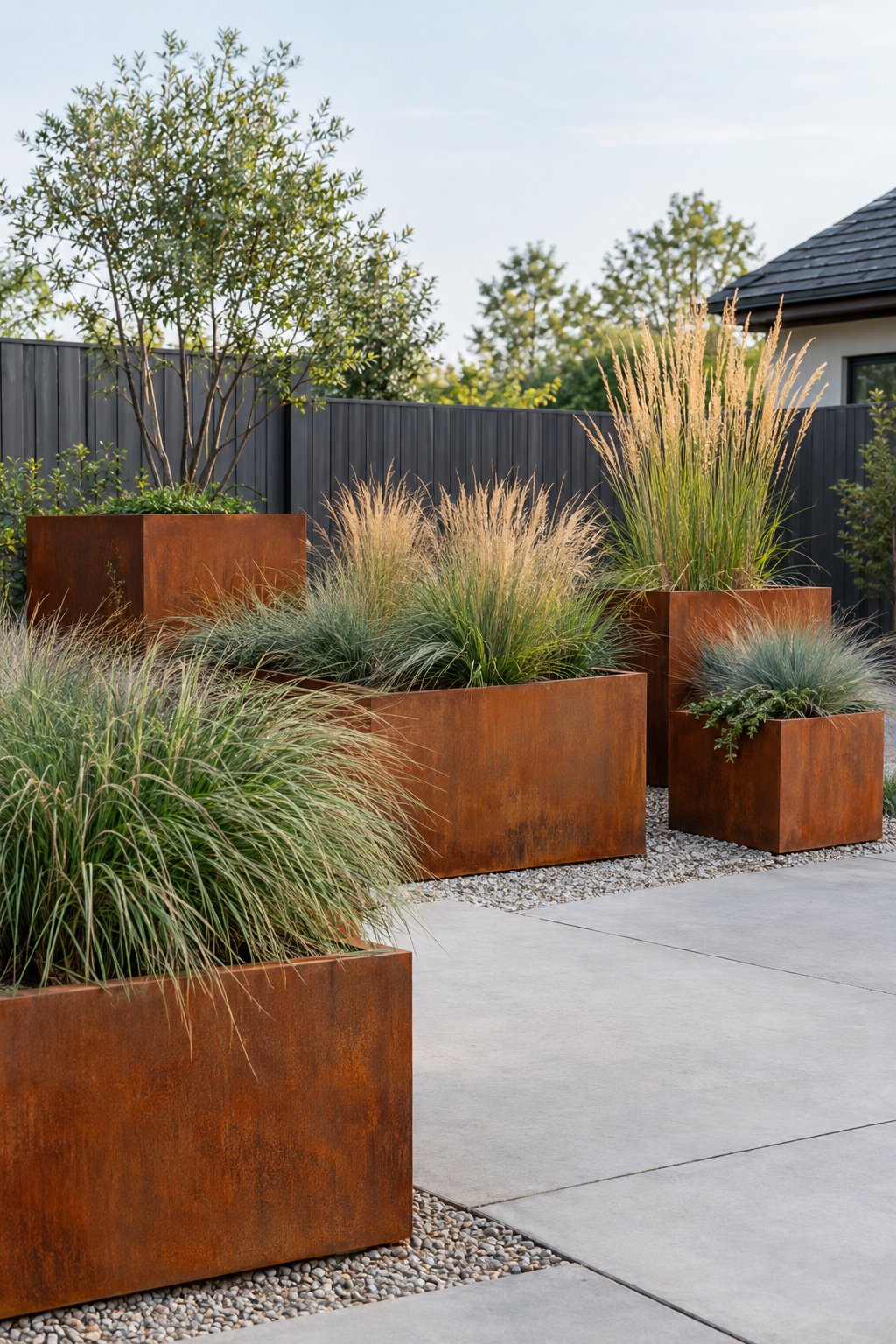
8. Corten Steel Raised Planters With Ornamental Grasses
Corten steel planters bring warm rust color to a garden built from gray concrete and green plants. Their clean edges hold ornamental grasses in strong blocks, giving the yard height and movement without a busy flower mix. The metal develops a weathered surface that suits modern homes.
Place the planters along a boundary, path, or patio edge to define zones. Add a proper liner if local soil or drainage conditions require it, and keep runoff away from pale paving because the early patina can stain. Choose grasses suited to your sun and rainfall.
Expert Tip From MrPlanter: “Repeat the steel in one small garden detail for a connected look. Cut grasses back at the right seasonal time so fresh growth stays neat.”
9. Slim Plunge Pool Beside Patio Doors
A slim plunge pool adds a cool place to sit or swim close to the house. The narrow footprint works well where a full-size pool would leave little patio space. Dark tile or interior finishes create a strong water line beside modern glass doors.
Keep the surrounding paving broad enough for towels, chairs, and safe entry. Low plants near the pool preserve the clean view and reduce debris. Include shade if the doors face strong afternoon sun, since the water and paving can reflect heat into the room.
Expert Tip From MrPlanter: “Place the pool along the view from your main living space. Add one tall plant at the far end to draw the eye through the narrow layout.”
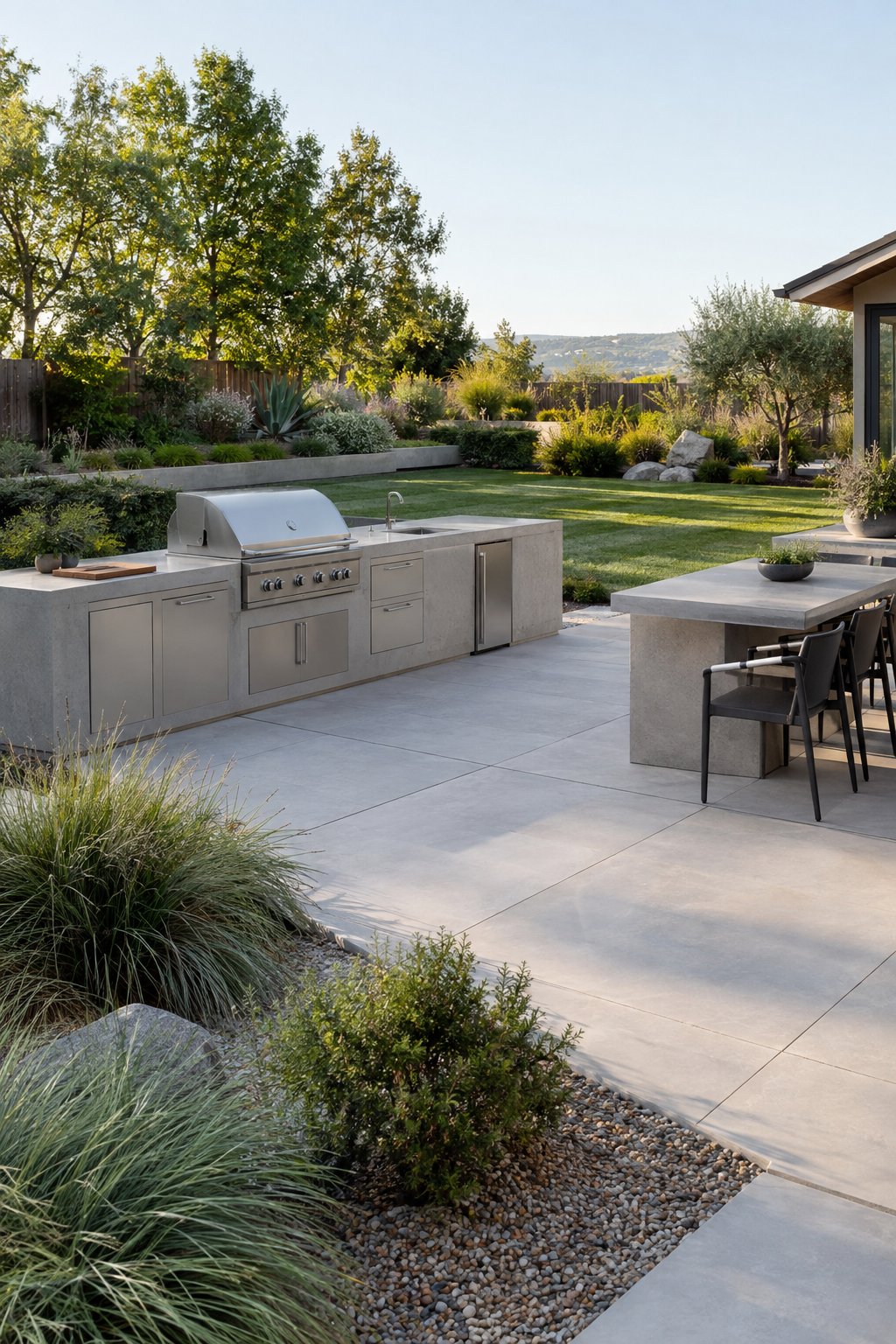
10. Outdoor Concrete Kitchen With a Built-In Grill
A concrete outdoor kitchen keeps cooking, serving, and storage in one straight run. The material handles outdoor exposure well when it is sealed and detailed for drainage. A built-in grill becomes the main feature, while a plain counter leaves room for prep and casual meals.
Place the kitchen near the house for easy utility access and shorter trips indoors. Include heat-safe surfaces around the grill, weatherproof storage, and task lighting. A narrow herb planter nearby adds useful greenery without turning the cooking zone into a full garden bed.
Expert Tip From MrPlanter: “Give the grill plenty of landing space on both sides. Slope the counter and paving away from the house so rain does not collect.”
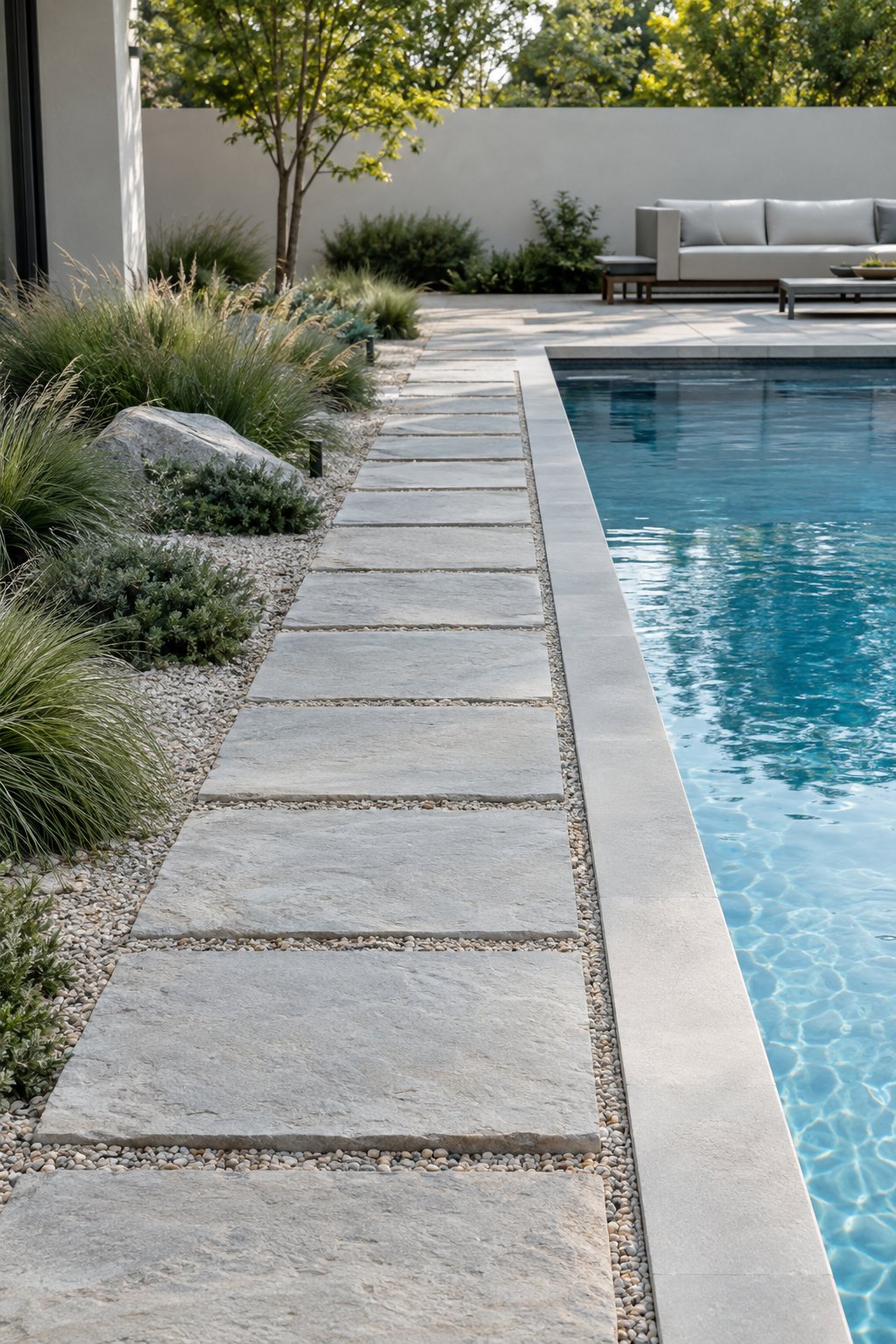
11. Stone Slab Path Along a Pool Border
Large stone slabs create a calm route beside a pool while keeping the number of joints low. Their weight and broad shape feel grounded against still water. Dark pebbles between the slabs add drainage and frame the path with a quiet texture.
Set each slab level and leave consistent gaps for a measured appearance. Use stone with a slip-resistant finish, especially in a splash zone. Low boxwood or clipped shrubs can mark the edge, while open space on the pool side keeps the walkway from feeling tight.
Expert Tip From MrPlanter: “Choose slabs large enough for a full step. Test the walking rhythm before fixing them so the path feels natural.”
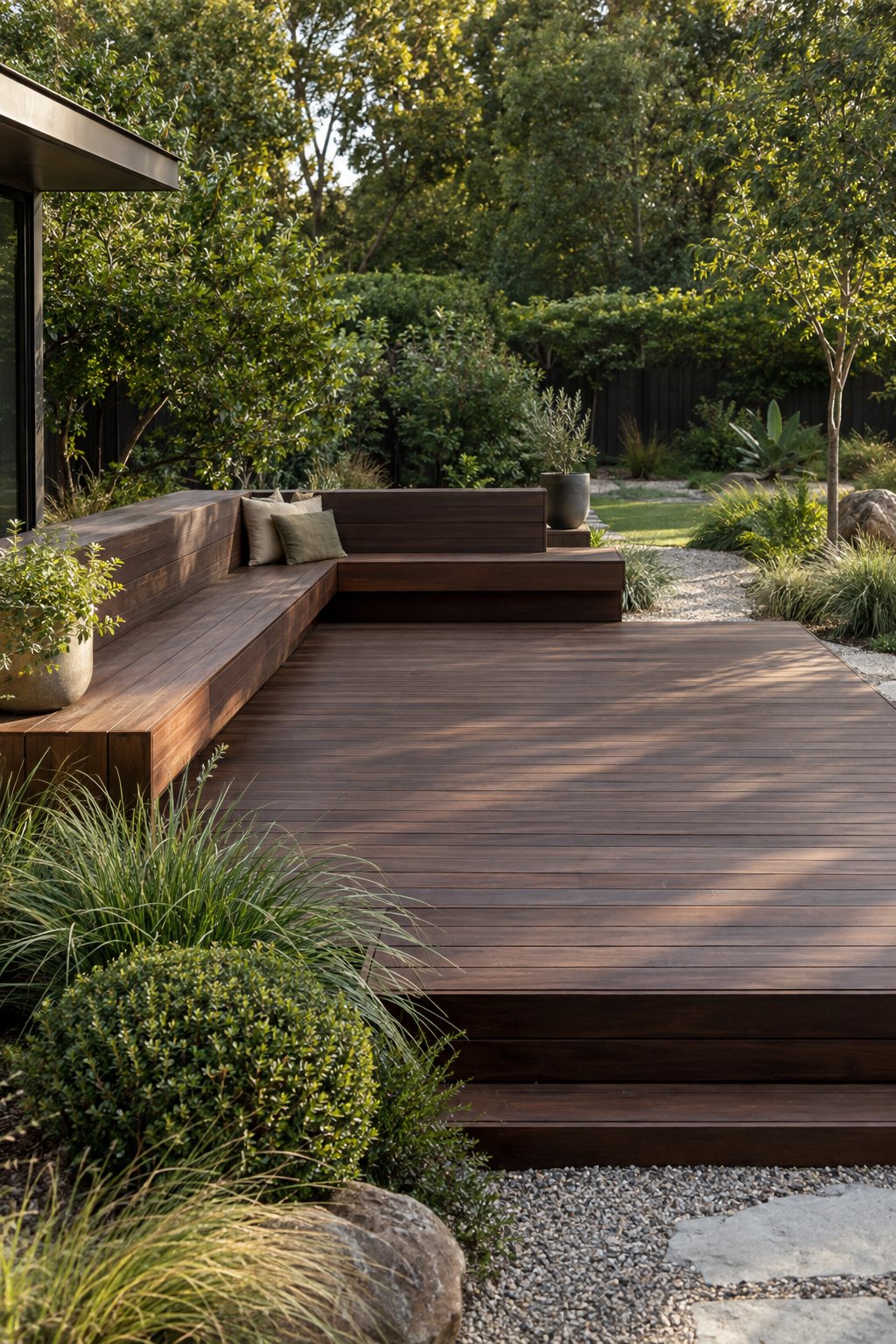
12. Dark Wood Raised Deck With Built-In Bench Seating
A dark raised deck creates a clear outdoor room and built-in benches keep seating close to the edges. The deep wood color gives pale gravel, green plants, and concrete a richer backdrop. The raised platform also helps define a lounge area in a broad lawn.
Use weather-rated lumber or composite decking and leave room for air movement beneath the boards. Build storage into the bench base for cushions and garden items. Keep the furniture count low so the deck remains open for dining, stretching, or quiet reading.
Expert Tip From MrPlanter: “Match the bench top to the deck boards for a built-in appearance. Add a light cushion color to keep the dark surface from feeling heavy.”
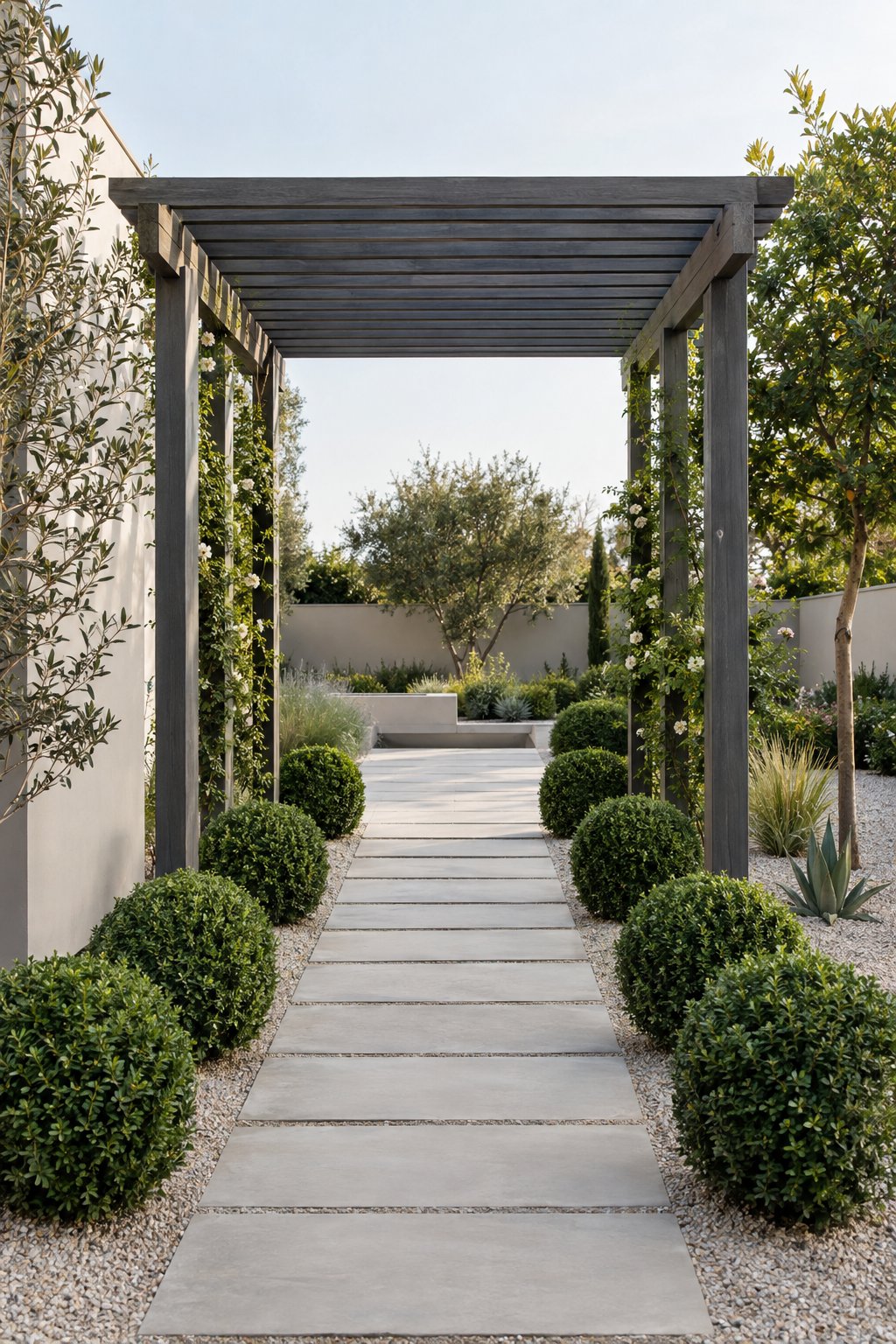
13. Pergola-Covered Entry Path With Boxwood
A pergola over an entry path makes the walk to your backyard feel intentional from the first step. Neatly clipped boxwood gives the route a firm border, while the open roof keeps light moving through the space. Stone paving and a plain timber bench complete the restrained plan.
Keep the pergola sized to the path so it frames the route without making it feel like a tunnel. Choose boxwood suited to your region and provide airflow around the shrubs. A drip line simplifies watering along the straight planting beds.
Expert Tip From MrPlanter: “Use the same stone on the path and nearby patio for visual continuity. Trim boxwood on a regular schedule while new growth is easy to shape.”
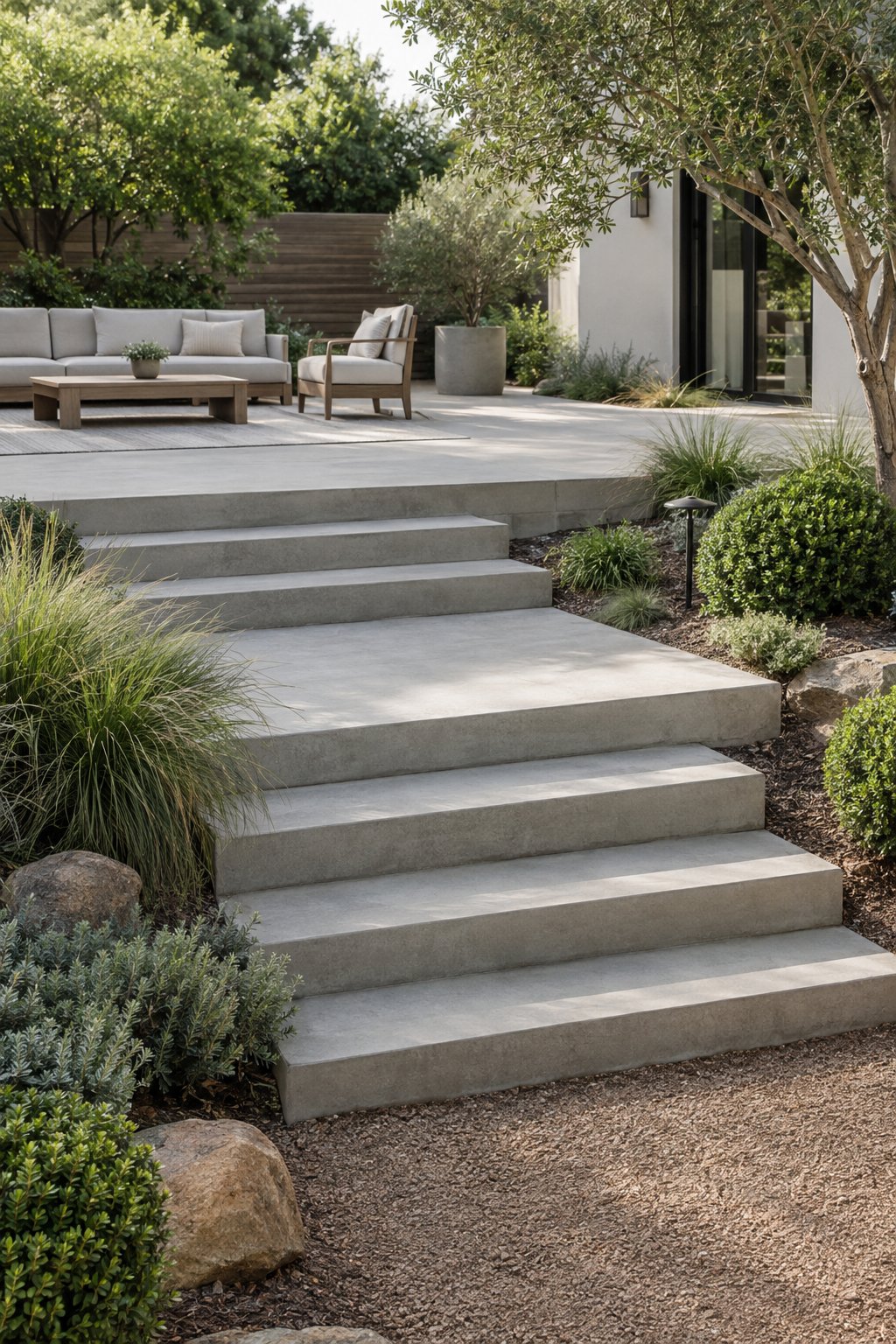
14. Multi-Level Concrete Patio Steps
Broad concrete steps turn a sloped backyard into a series of usable outdoor rooms. Each level can hold a chair, planter, or small table, so the change in grade becomes part of the design. Clean risers also suit homes with flat roofs and large windows.
Plan consistent tread depths and include a slight slope for drainage. Add simple handrails where local codes or the grade call for them. Gravel strips and low grasses soften the edges while keeping sight lines open between the levels.
Expert Tip From MrPlanter: “Mark every step on site before pouring concrete. Walk the layout repeatedly to catch awkward spacing early.”
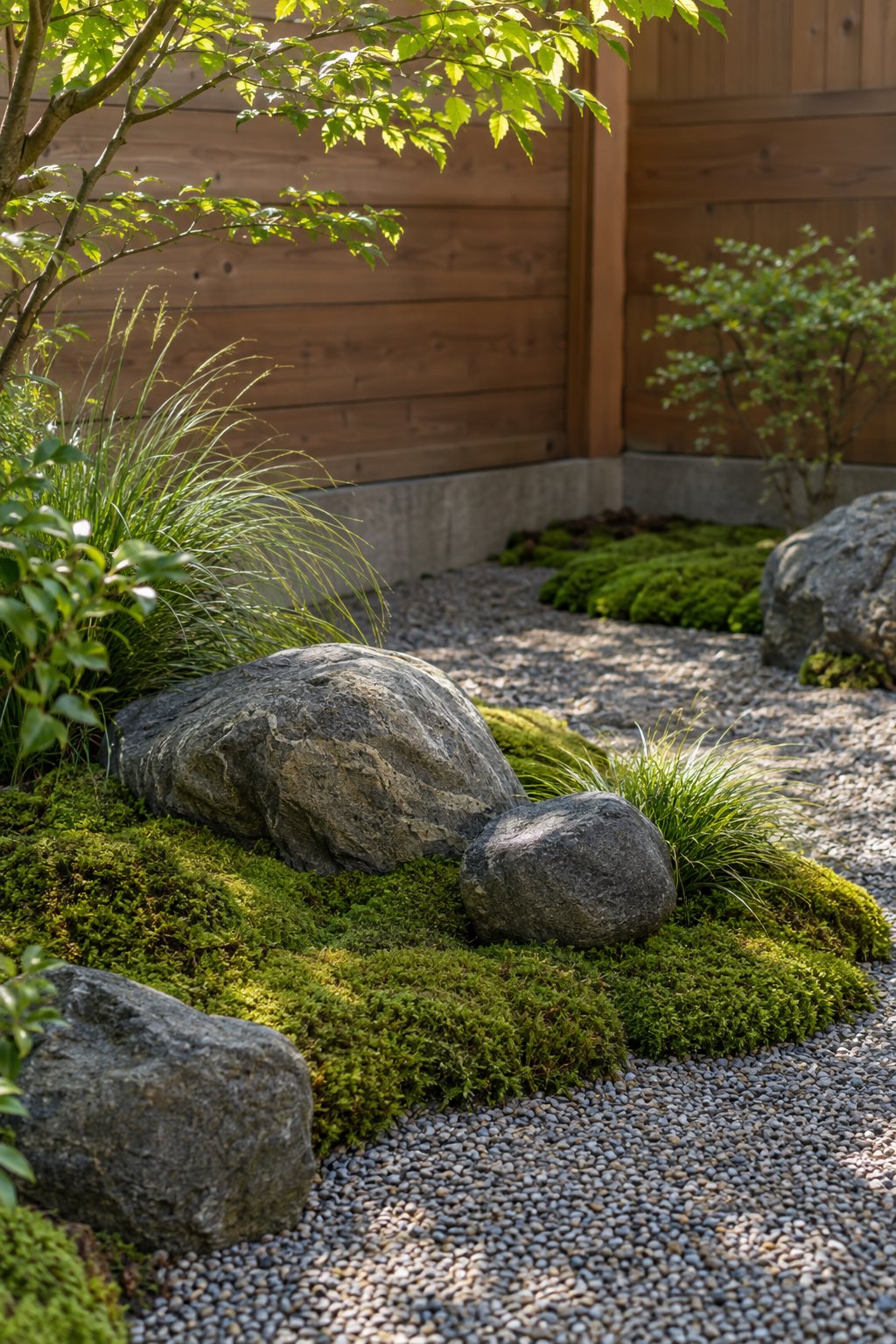
15. Zen Stone and Moss Corner Garden
A stone and moss corner creates a quiet retreat in a shaded part of your backyard. Smooth rocks provide the structure, while moss or low groundcover fills the spaces with a soft green surface. Gravel around the stones keeps the composition clear and supports drainage.
Choose stones with varied sizes but a related color so the arrangement feels settled. Moss needs the right moisture, shade, and soil conditions, so use Irish moss or creeping thyme where true moss struggles. A small bench gives you a place to pause without adding much bulk.
Expert Tip From MrPlanter: “Set the largest stone first and build the rest around it. Leave open gravel around each piece so every form remains easy to see.”
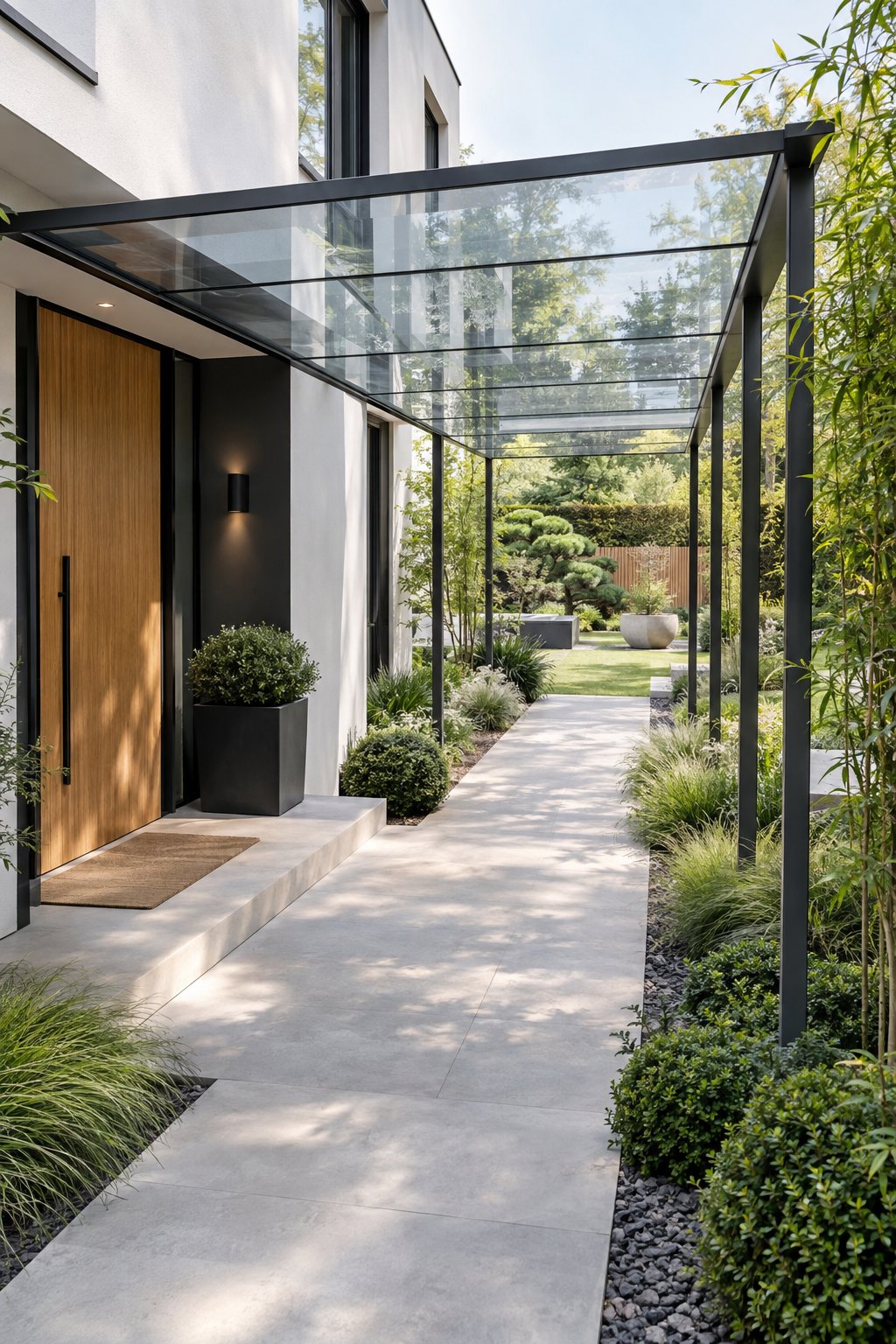
16. Glass Canopy Walkway Between House and Garden
A glass canopy keeps the route between your home and garden bright while offering cover from light rain. Its transparent roof preserves the open view and gives a narrow side passage a clear purpose. Metal supports suit smooth walls, concrete paving, and restrained planting.
Use textured paving underfoot and plan drainage at both sides of the walkway. Clean the glass on a practical schedule so dust does not reduce the light. Add one repeated plant along the edge, leaving enough clearance for doors, maintenance, and airflow.
Expert Tip From MrPlanter: “Keep the support frame thin so the garden view remains open. Test glare at different times before choosing the final glass treatment.”
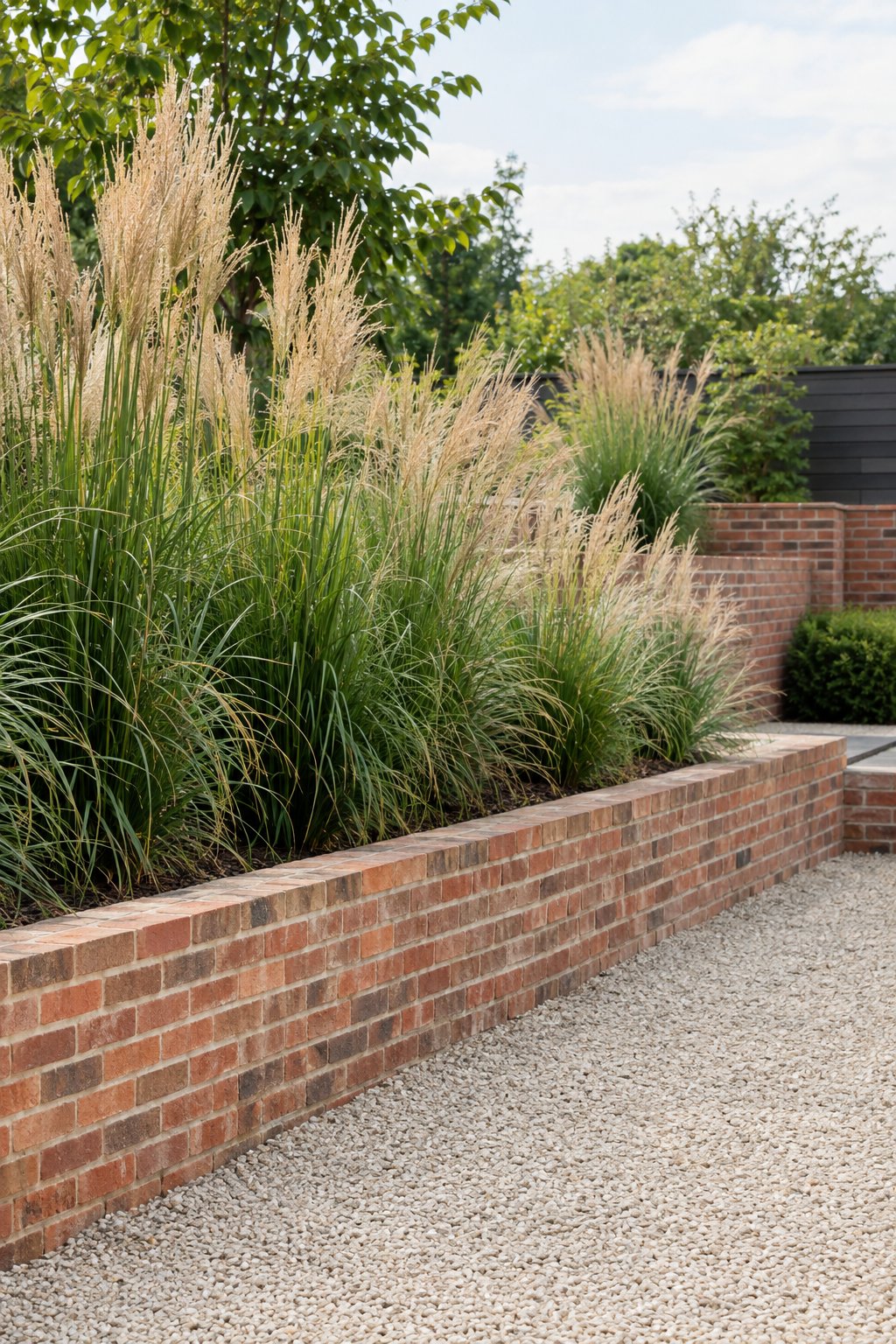
17. Brick Retaining Wall With Feather Reed Grass
A brick retaining wall gives a sloped yard a firm edge and creates a level planting bed above it. Feather reed grass adds height and movement while staying within a simple color scheme. The warm brick also brings texture to concrete-heavy patios.
Build the wall with proper footing, drainage stone, and a drainage outlet suited to the soil load. Plant the grasses in a repeated row for an orderly rhythm. Cut them back seasonally, then clear old stems before fresh growth begins.
Expert Tip From MrPlanter: “Repeat the wall brick in a nearby path or planter edge. Leave space between grass clumps so each plant moves freely in the breeze.”
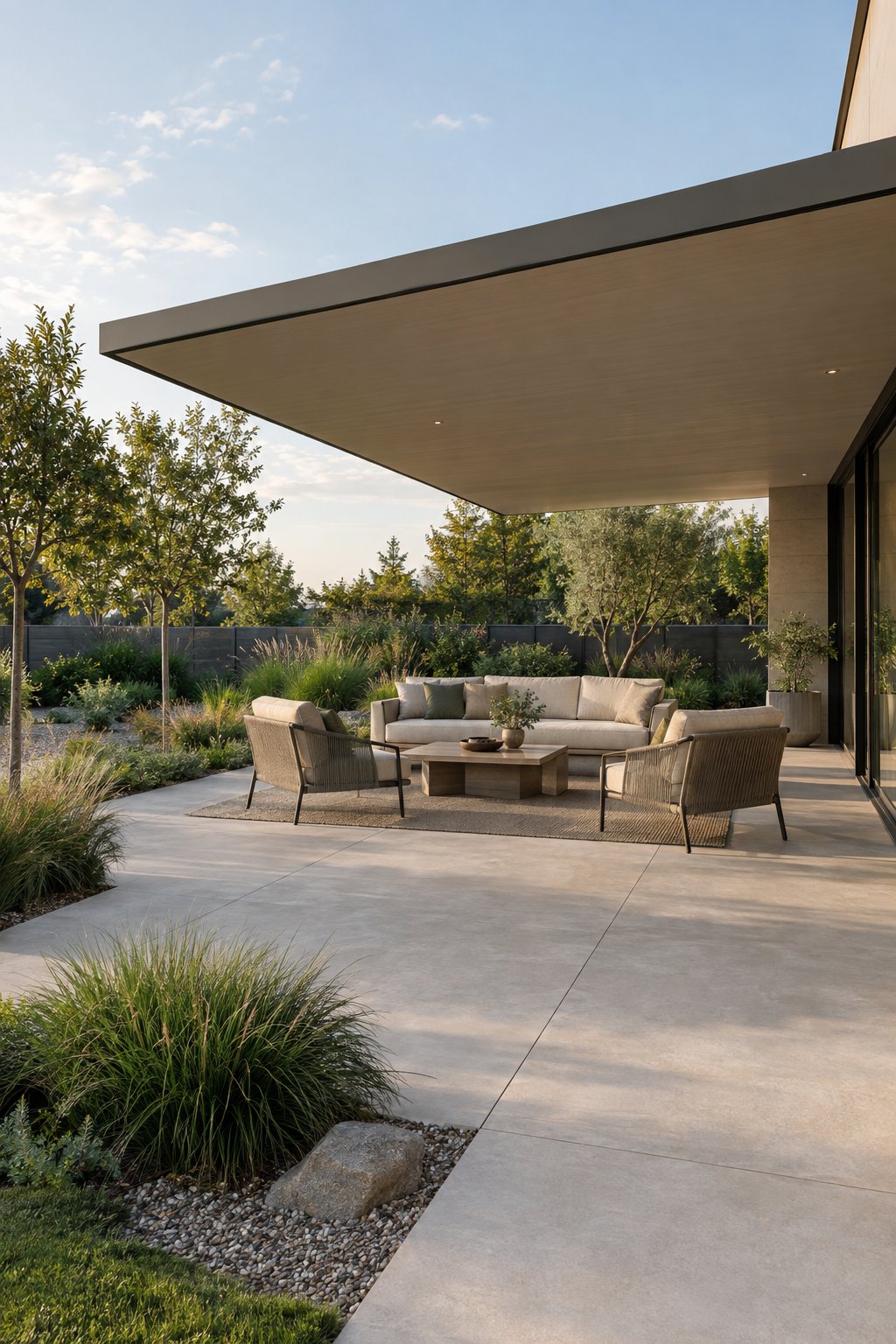
18. Cantilevered Patio Cover Over a Lounge Zone
A cantilevered patio cover shades a lounge without filling the space with support posts. The open edge preserves views across the garden and gives the seating area a clean, floating profile. Low furniture, a plain rug, and one large planter are enough to define the room.
Check the structure’s span, wind rating, roof drainage, and attachment requirements before choosing the design. Place chairs so the open side faces the best garden view. Warm lighting beneath the cover keeps evening use comfortable without visual clutter.
Expert Tip From MrPlanter: “Aim the open side toward the garden, not a boundary fence. Use concealed drainage where possible so water does not spill beside the seating.”
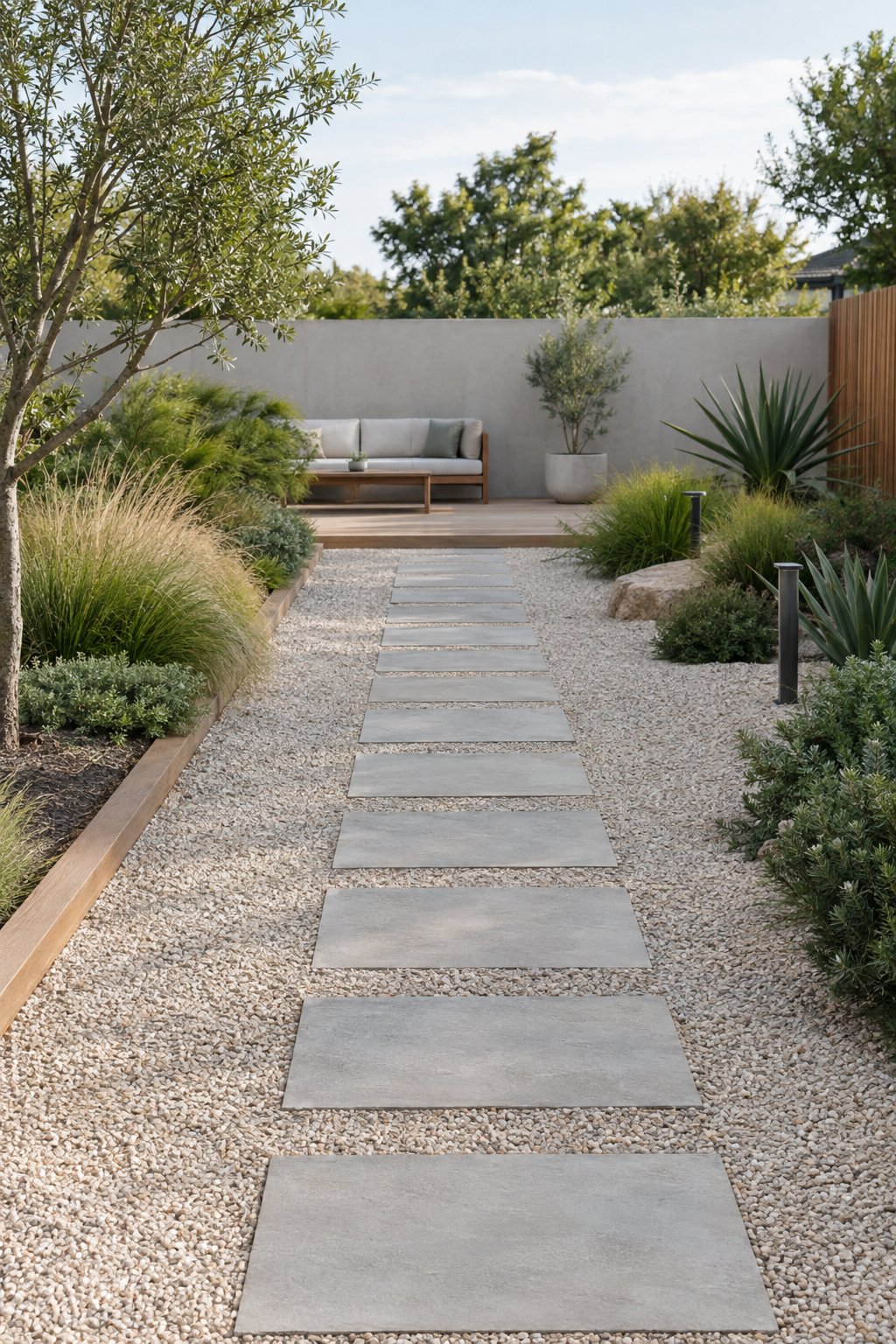
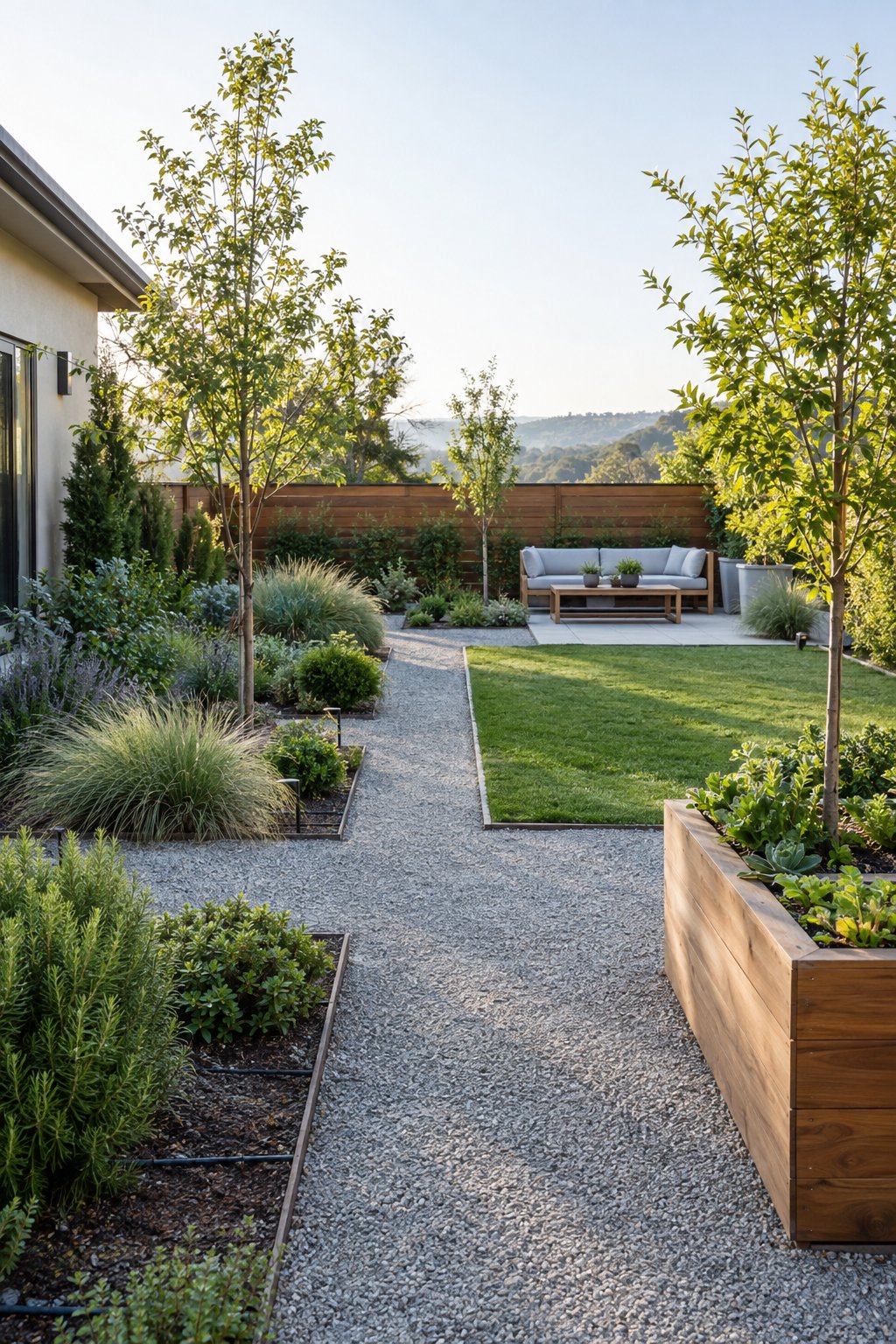
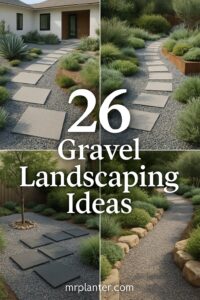
19. Gravel Path With Large Rectangular Stepping Stones
A gravel path with large rectangular stones offers fast drainage and a clear walking route. The stones anchor the loose surface and create a measured pattern through the planting area. This design suits a narrow yard because the straight lines make the available width easy to read.
Use compacted base material under the gravel and set each stone firmly so it does not rock. Choose gravel that matches your home’s paving or exterior trim. Steel or stone edging keeps the path shape crisp after rain and foot traffic.
Expert Tip From MrPlanter: “Lay the stones before ordering gravel so you can adjust the spacing. Keep each step comfortable for your natural stride.”
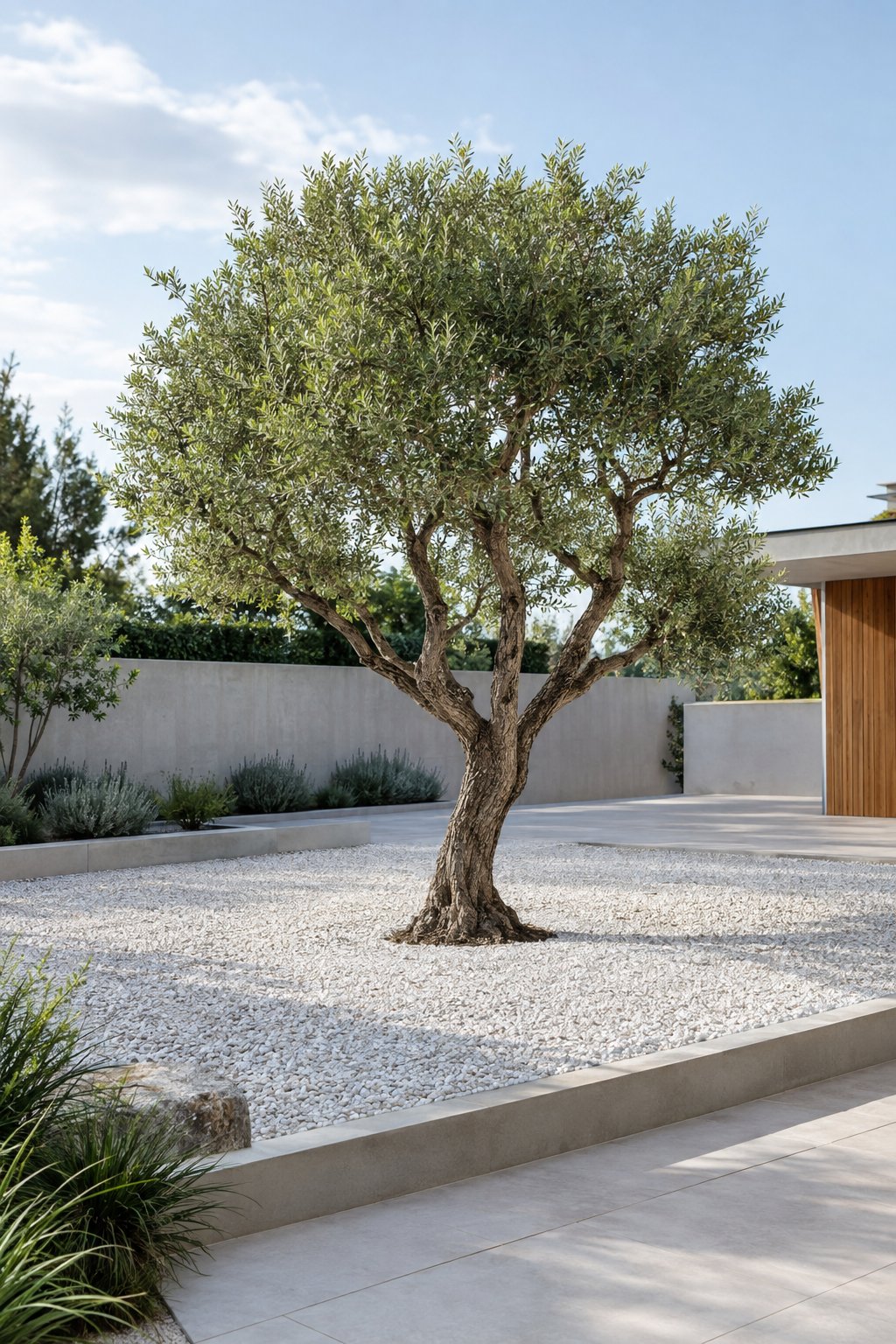
20. Single Specimen Tree in a White Gravel Bed
A single specimen tree gives a minimalist yard one clear living focal point. Its trunk and canopy stand out against white gravel, creating shade and height without a crowded border. Japanese maple, olive, or a suitable small native tree can work when matched to your climate.
Give the tree enough mature space for its canopy and roots. Use a wide gravel ring with a clean edge, then keep mulch away from the trunk flare. Add one bench or a low stone nearby if you want a place to sit beneath it.
Expert Tip From MrPlanter: “Choose the tree for its mature shape, not its nursery size. Keep the gravel bed wide enough that pruning never becomes a daily chore.”
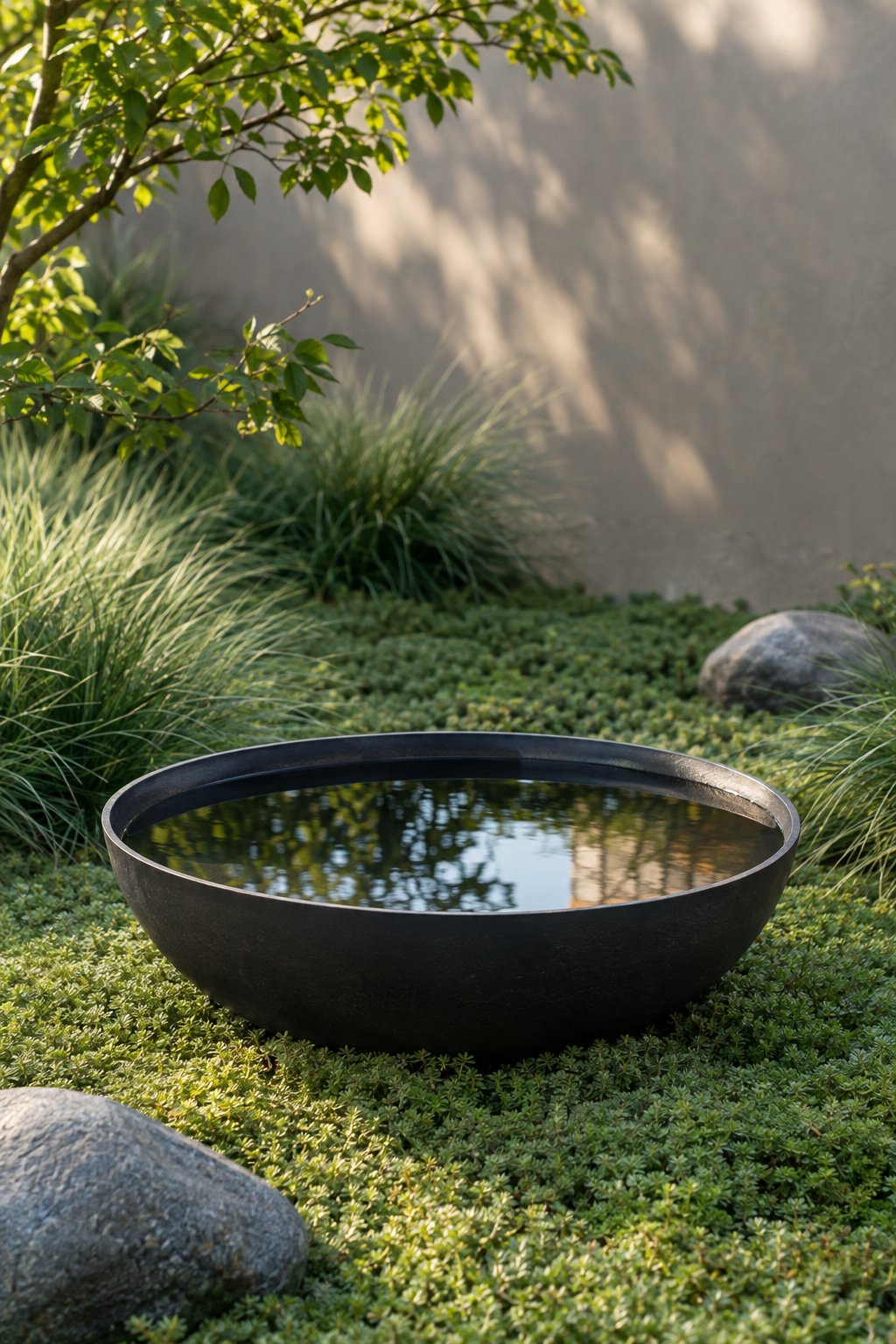
21. Black Steel Water Bowl With Low Groundcover
A black steel water bowl adds a small, reflective focal point without requiring a pool or pond. Its dark surface contrasts with low green groundcover and works well in a courtyard, patio corner, or gravel bed. The round shape also softens a yard built from straight paths and square planters.
Set the bowl on a stable, level base and place it where you can empty and refill it easily. Choose a shallow vessel if children or pets use the yard, and clean algae before it spreads. Low thyme, moss, or sedum can frame the bowl without hiding it.
Expert Tip From MrPlanter: “Leave a ring of open gravel around the bowl so its shape reads clearly. Refresh the water often and wipe the interior during warm weather.”
How to Plan a Minimalist Backyard Garden
Which Outdoor Zone Should Come First?
Start with the outdoor zone you will use most. For many backyards, that means a patio near the house because it supports meals, morning coffee, and easy access to indoor storage. Mark its footprint first, then place paths, planting beds, and features around the way you move through it.
Watch sunlight, wind, drainage, and views across a full day before fixing the layout. Keep service points close to the house, including water, power, trash storage, and cooking space. A small yard benefits from one flexible zone that can support lounging and dining.
How Much Negative Space Should You Leave?
Leave enough open ground for walking, furniture movement, plant growth, and clear views. A useful test is to draw the layout with a hose or chalk, then walk through it with a chair and serving tray. Tight corners reveal themselves quickly.
Give each feature a visual breathing zone. A large tree needs room around its canopy, while a small water bowl needs only a clear gravel ring. Repeated open spaces between planting groups keep the garden calm.
Which Materials Create a Cohesive Minimalist Look?
Choose two main materials and one accent material for the whole yard. Concrete with wood and black steel creates a cool modern palette, while gravel with stone and corten steel feels warmer. Repeat the same paving at connected zones so the garden reads as one place.
Use texture to add interest when color stays limited. Smooth paving can sit beside rough stone, fine gravel, or soft grasses. Sample materials outdoors because sunlight changes their color throughout the day.
Plants and Materials That Keep the Look Low-Maintenance
Which Plants Work Best in Minimalist Garden Beds?
Choose plants that match your local sun, soil, rainfall, and winter conditions. Drought-tolerant choices include agave, sedum, lavender, blue fescue, olive trees, and several ornamental grasses. Shady yards suit moss, ferns, hostas, and shade-tolerant groundcovers.
Repeat a small plant palette across the garden so watering and pruning stay predictable. Group plants with similar needs in the same bed. Give mature plants enough space at installation, which reduces trimming and overcrowding later.
How Do Gravel, Concrete, Wood, and Corten Steel Compare?
Gravel drains well and installs easily, though it shifts under frequent foot traffic and needs occasional raking. Concrete gives you a firm, clean surface with low routine care, while cracks and stains require repairs. Wood brings warmth and needs sealing or replacement planning based on the product and climate.
Corten steel adds strong color and crisp borders as its surface weathers. Early runoff can stain nearby pale surfaces, so allow space for weathering and manage drainage. Choose materials that suit your maintenance time and the way you use the yard.
How Can You Keep Water Features and Paths Easy to Maintain?
Build access into every feature from the start. Place pumps, drains, cleanout points, and hose connections where you can reach them without moving heavy furniture or plants. Sweep paths regularly, remove leaves from water, and top up displaced gravel after major rain.
Use broad slabs and consistent joints to reduce weeds and trip points. Keep tree branches trimmed away from pools and paths. A simple seasonal checklist helps you handle cleaning, pruning, sealing, and drainage before small jobs become larger repairs.
I’m Anirban Saha, the Founder and Owner of MrPlanter.com. I pay the bills as a software developer, although my BTech is actually in Electronics and Communication. I really love my day job, but what gives me energy every day is interacting with my indoor plants and taking care of them. I have been successfully nurturing and maintaining houseplants for over 10 years now.
📚🔍 Our content undergoes thorough review and fact-checking before publication. For additional details, explore our strict Editorial Policy to deliver helpful content. 📝🔒