As an Amazon Associate, MrPlanter.com earns from qualifying purchases.
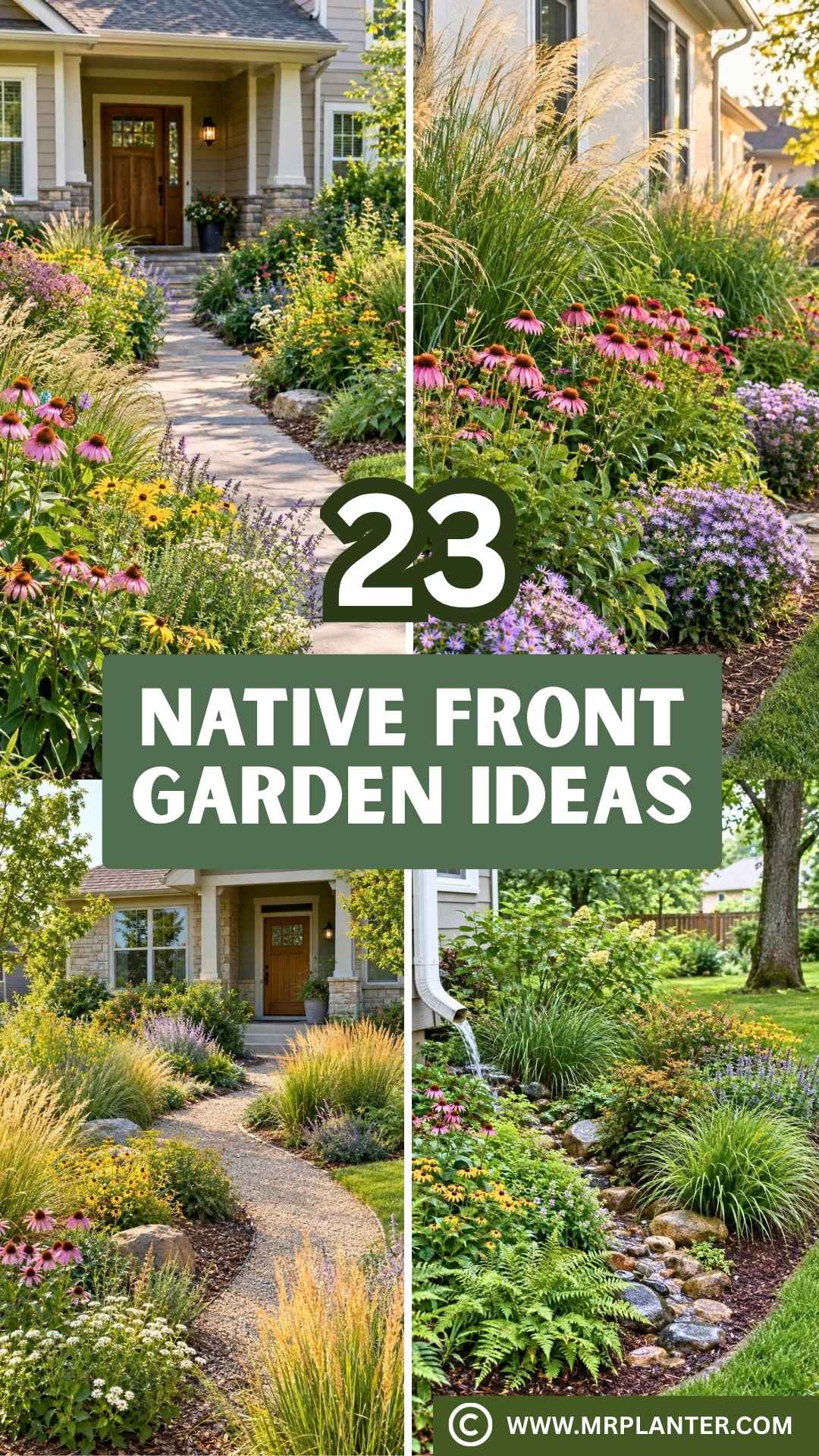
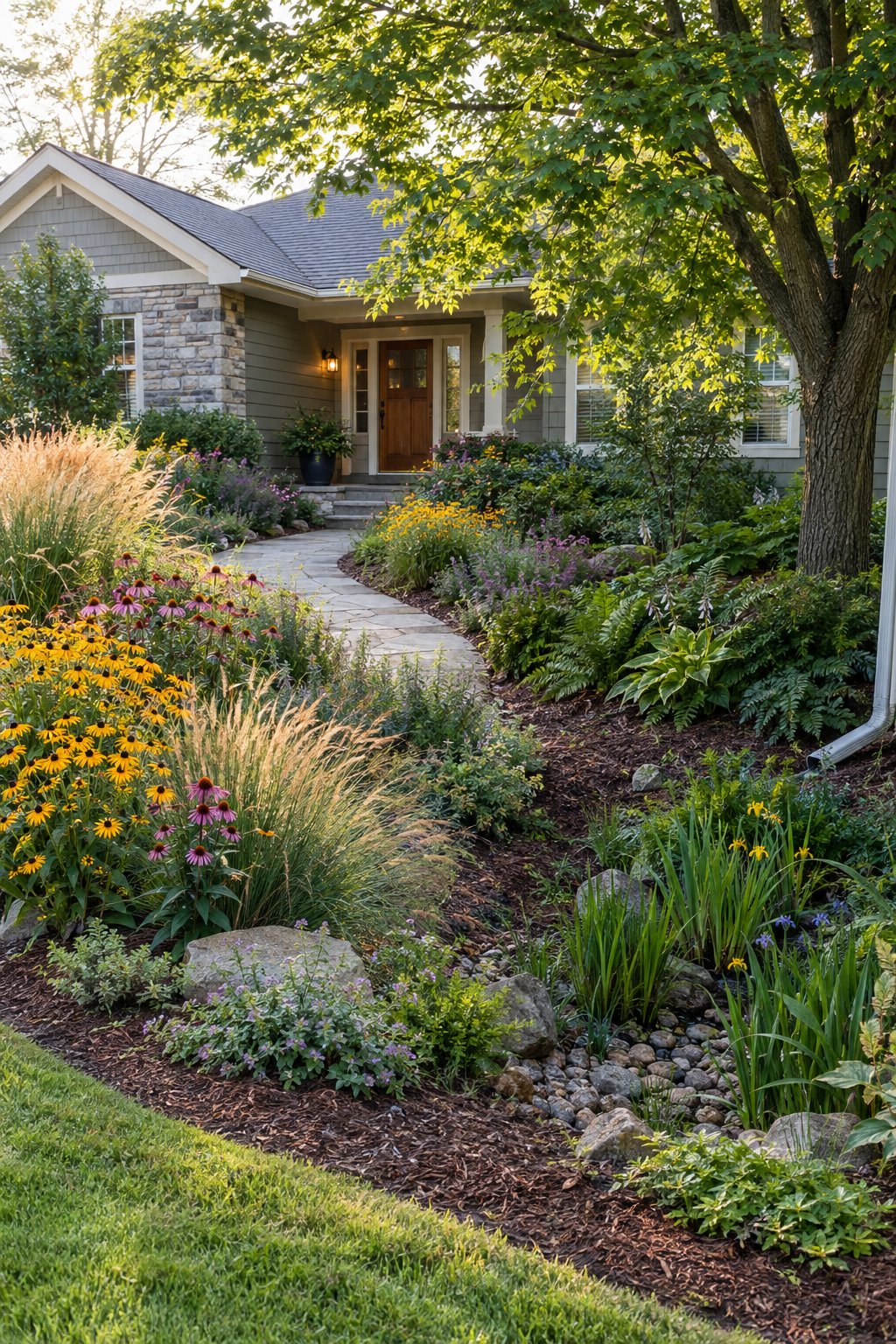
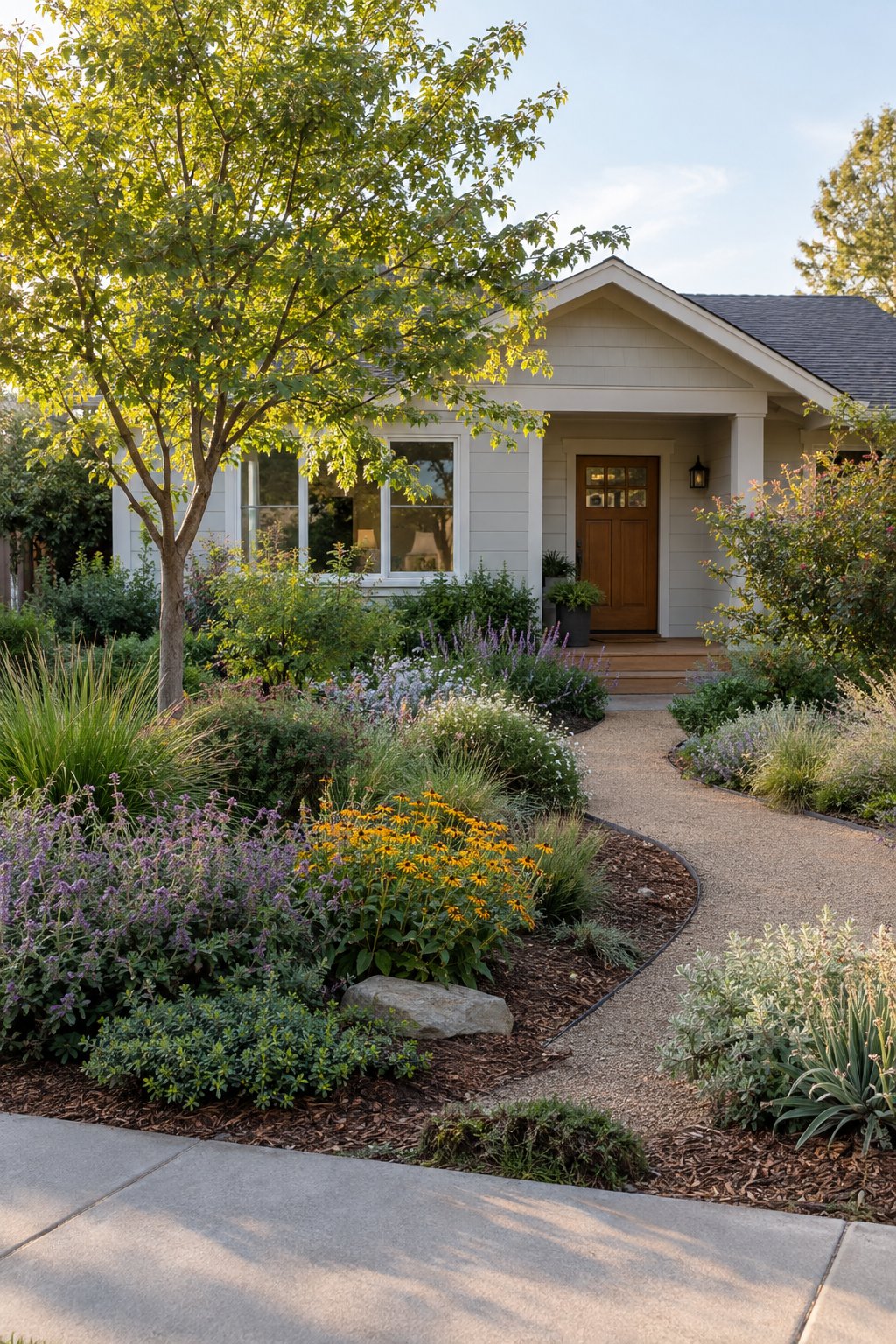
Native plants give you a front garden that supports local wildlife while fitting the soil, weather, and character of your home. The strongest designs use regionally native species in repeated groups, with clear paths, tidy edges, and plants sized for their mature spread.
The best native front garden ideas in the backyard combine local plants with a clear front-yard purpose, such as a foundation border, walkway edge, lawn replacement, or wildlife habitat.
You can create a polished look with grasses, shrubs, perennials, and groundcovers while providing nectar, seeds, shelter, and seasonal interest.
Before planting, check sunlight, drainage, mature plant size, and your state or ecoregion’s native plant list. A crisp bed edge and repeated plant groups help the garden feel cared for, while seedheads, stems, and leaf litter give wildlife useful cover.
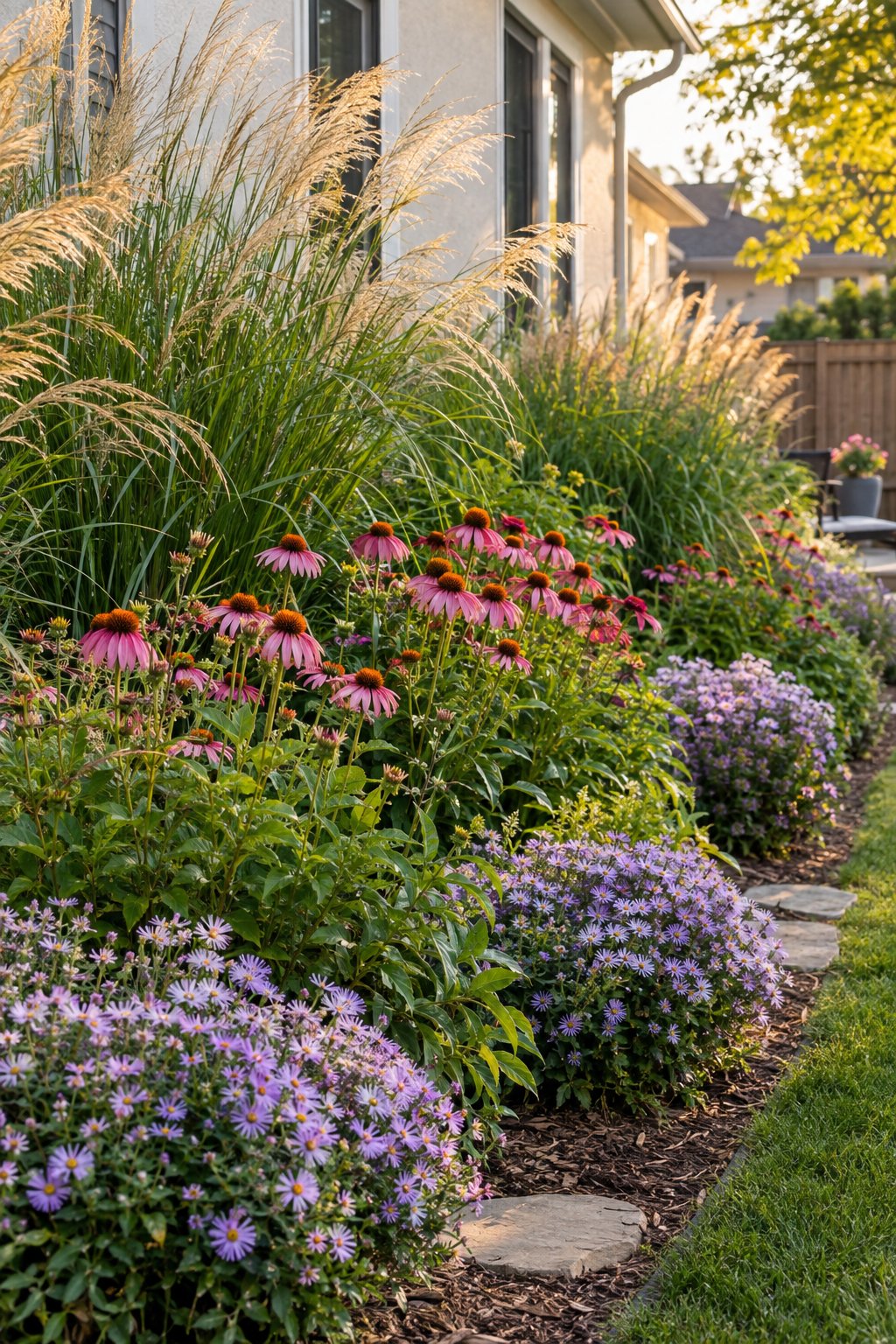
1. Layered Native Foundation Border With Switchgrass, Coneflower, and Asters
A bare foundation looks softer when you build the planting in low, middle, and tall layers. Place switchgrass toward the back, coneflowers through the center, and asters near the front edge for a long season of texture and color.
Keep every plant below windows, vents, and house numbers as it matures. Repeating each species in small groups gives the border a calm rhythm, even when blooms come and go. This layout suits sunny walls with average to moderately dry soil.
Add a defined mulch or stone edge so the loose prairie forms still look connected to the house.
Expert Tip From MrPlanter: “Leave enough space for switchgrass to reach its full width. A little breathing room today saves you from heavy trimming later.”
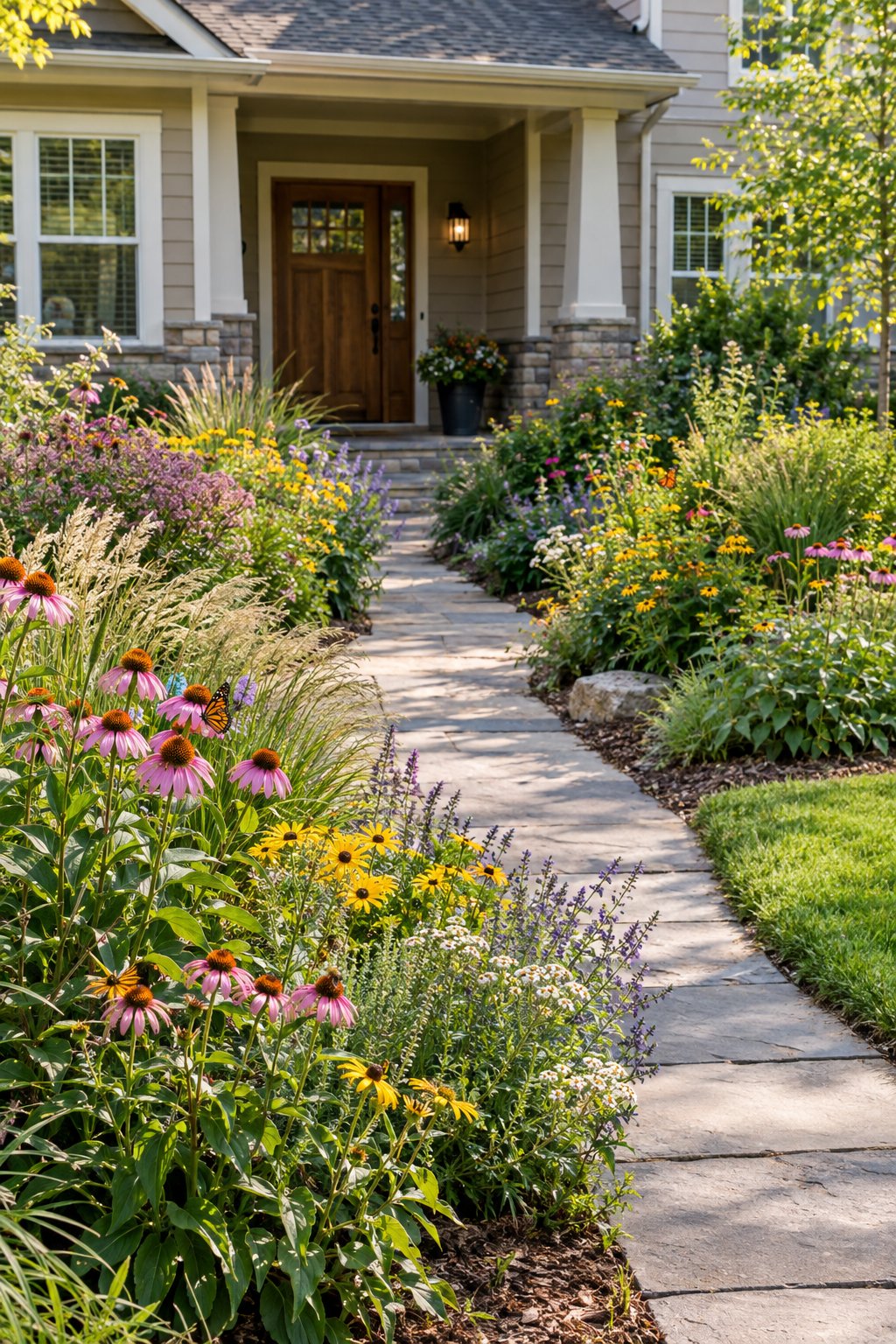
2. Native Pollinator Border Along the Front Walk
A narrow walkway feels welcoming when low native flowers create a soft border without crowding your steps.
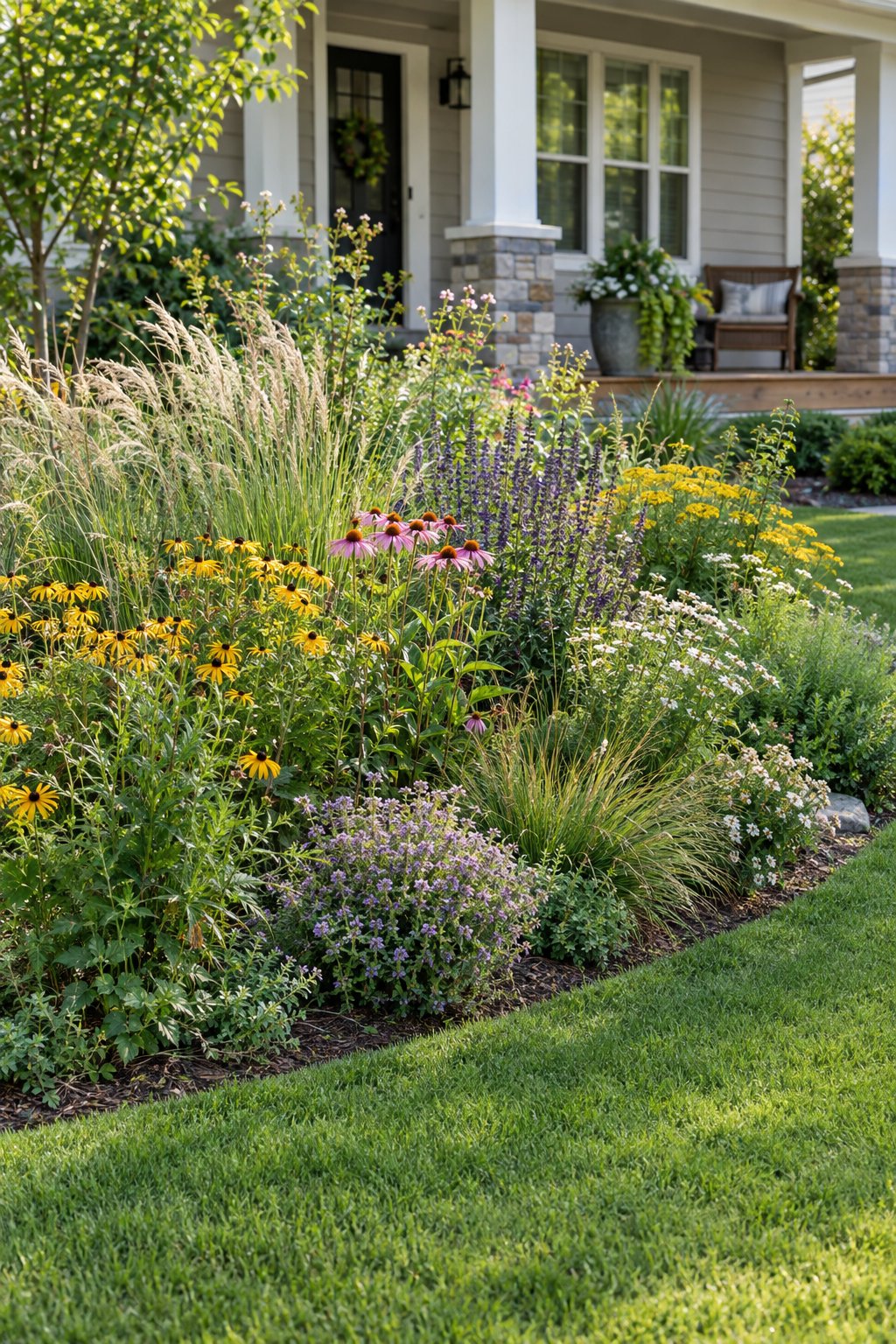
Use compact perennials near the paving, then place taller bloomers farther from foot traffic. Coneflower, bee balm, native phlox, and asters bring bees and butterflies through several seasons.
Leave a clear strip beside the path so stems and seedheads have room to sway without brushing visitors. A curved edge can make a straight walk feel friendlier, while a repeated planting pattern keeps the border easy to read from the street.
Expert Tip From MrPlanter: “Measure the mature width before planting beside the walk. Your ankles will appreciate that small bit of planning.”
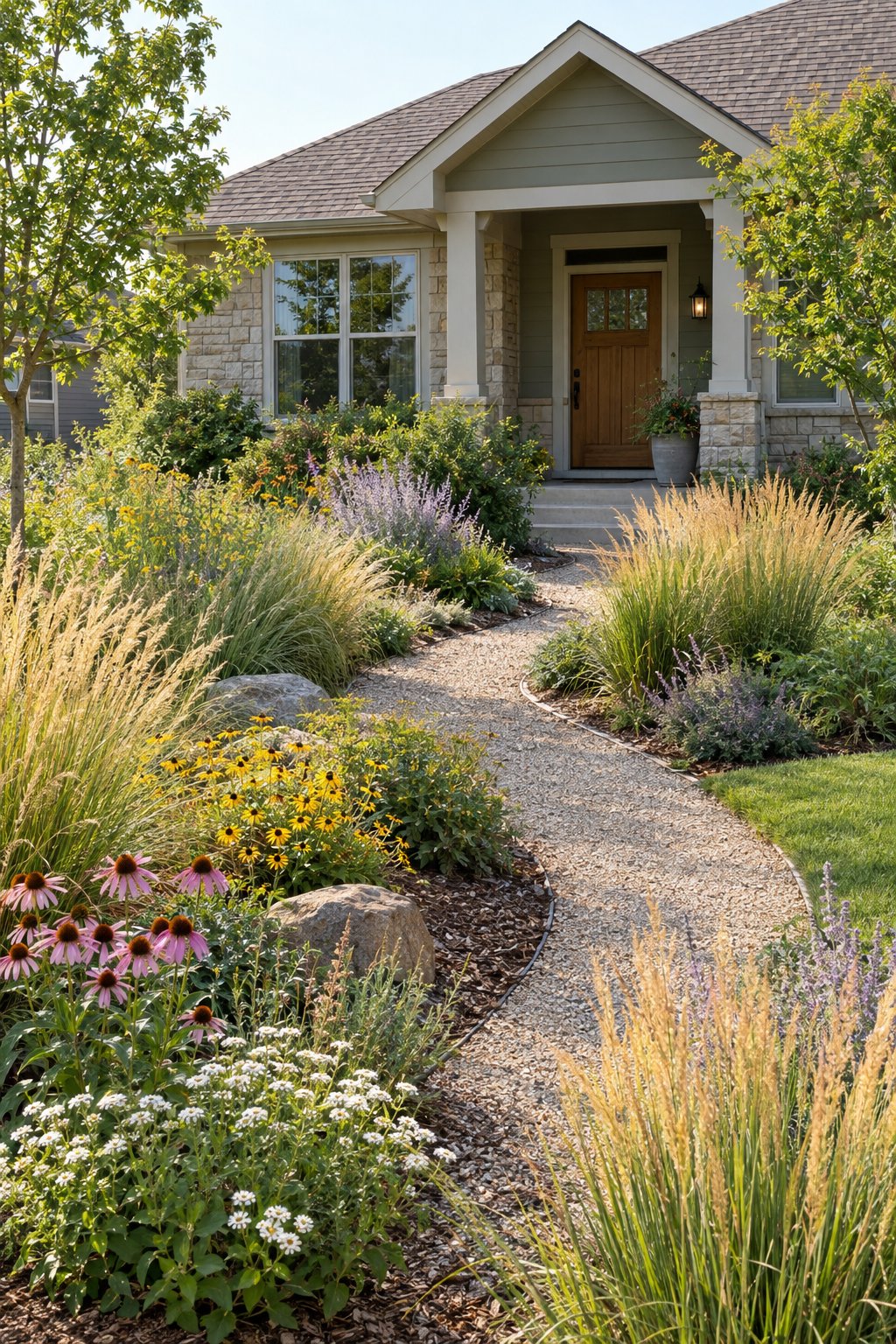
3. Tidy Prairie-Style Front Lawn Replacement
A prairie-style lawn replacement works best when you give the planting a simple shape and a sharp edge.
Mix low grasses with coneflowers, black-eyed Susans, and late-season asters to create movement without losing order. Keep the main route to the door open and use taller plants toward the center or back of the bed.
A mown strip around the planting makes the transition from lawn to habitat look planned. Choose species that match your local rainfall and soil, since a prairie mix from another state may struggle in your yard.
Expert Tip From MrPlanter: “Start with one manageable island before removing all your turf. You’ll learn the planting rhythm without turning the whole yard into a weekend project.”
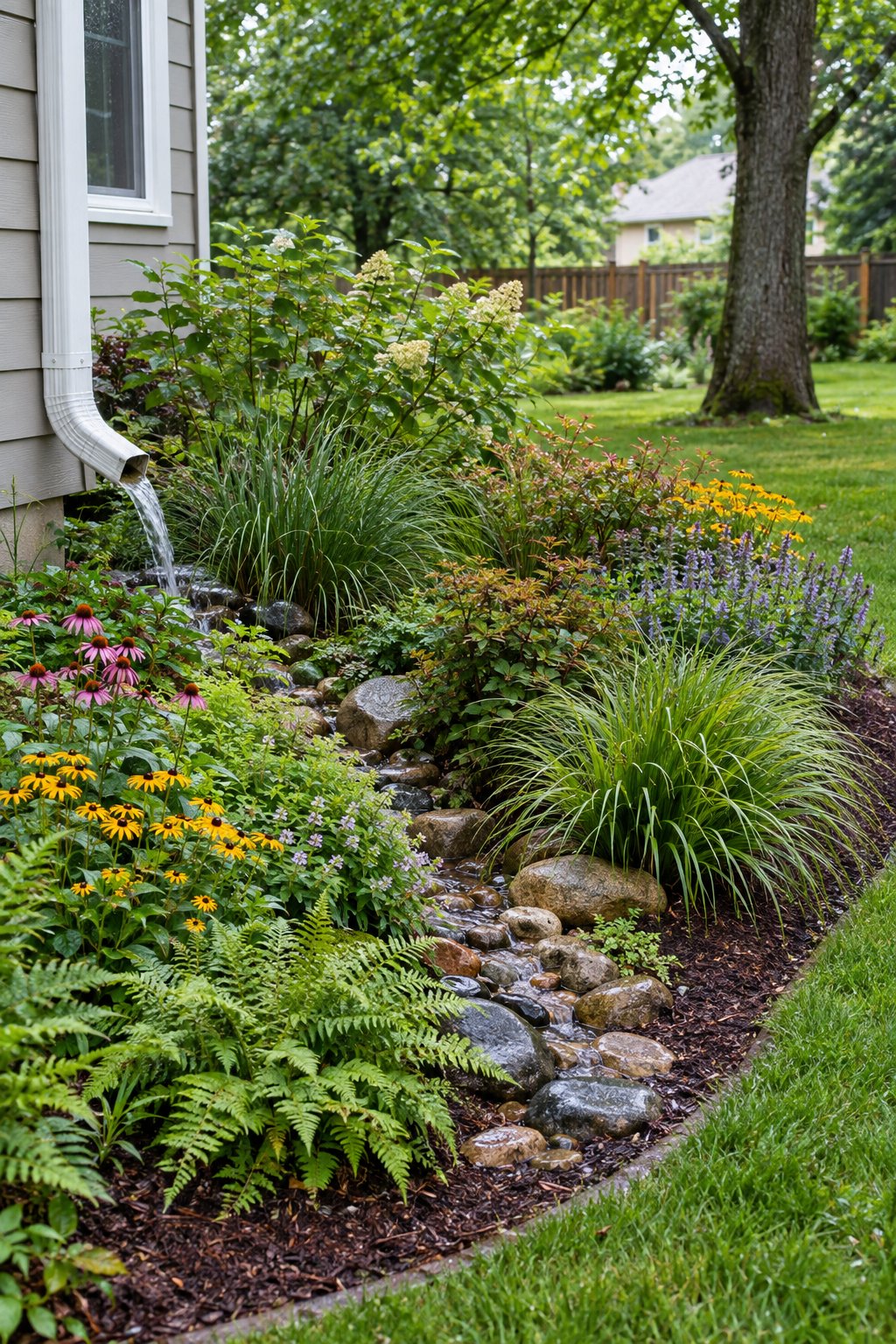
4. Native Rain Garden Beneath a Downspout
A rain garden gives roof runoff a planted place to soak into the soil. Shape a shallow basin below the downspout, confirm that water flows away from the foundation, and fill it with moisture-tolerant native plants.
Switchgrass, cardinal flower, swamp milkweed, and sedges bring roots and wildlife value to the wet zone.
Use drier plants along the outer rim where the soil drains sooner. A stone splash area below the downspout protects young plants from erosion. Test how quickly the basin drains before choosing species, since standing water and damp soil call for different plants.
Expert Tip From MrPlanter: “Watch the basin after a hard rain. Your plants should enjoy the moisture while your foundation stays dry.”
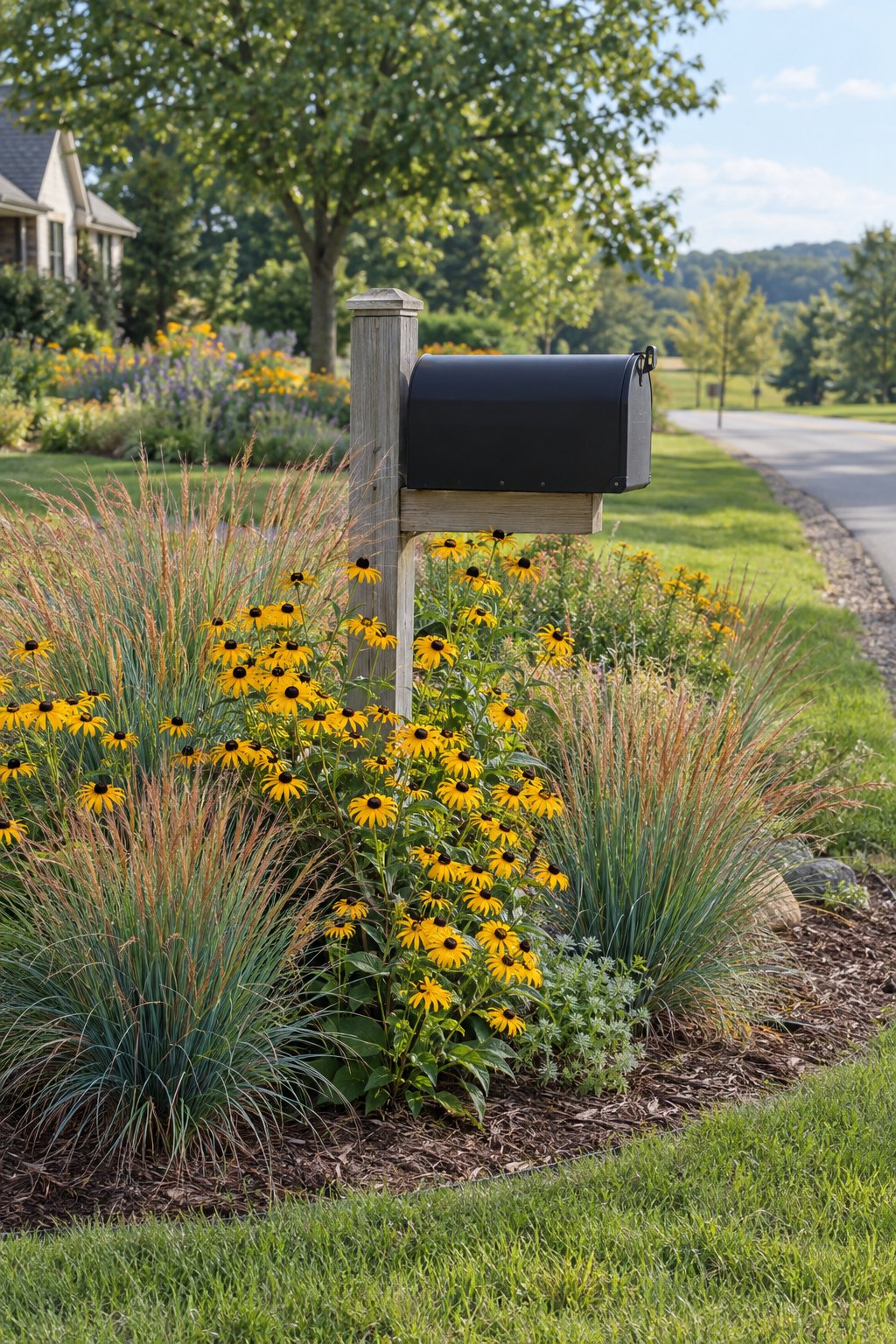
5. Mailbox Island With Black-Eyed Susans and Little Bluestem
A mailbox island turns a forgettable patch of grass into a bright neighborhood welcome.
Black-eyed Susans supply sunny flowers, while little bluestem adds compact structure and copper color after summer. Keep plants low around the post and leave a clear approach for deliveries.
A small oval bed with a crisp edge looks polished from the road and remains easy to weed. Choose tough species that handle reflected heat, road dust, and occasional dry soil. Check local clearance rules before adding anything tall, thorny, or wide near the curb.
Expert Tip From MrPlanter: “Leave the mailbox door and delivery path completely open. A beautiful planting fails fast when every package bumps into it.”
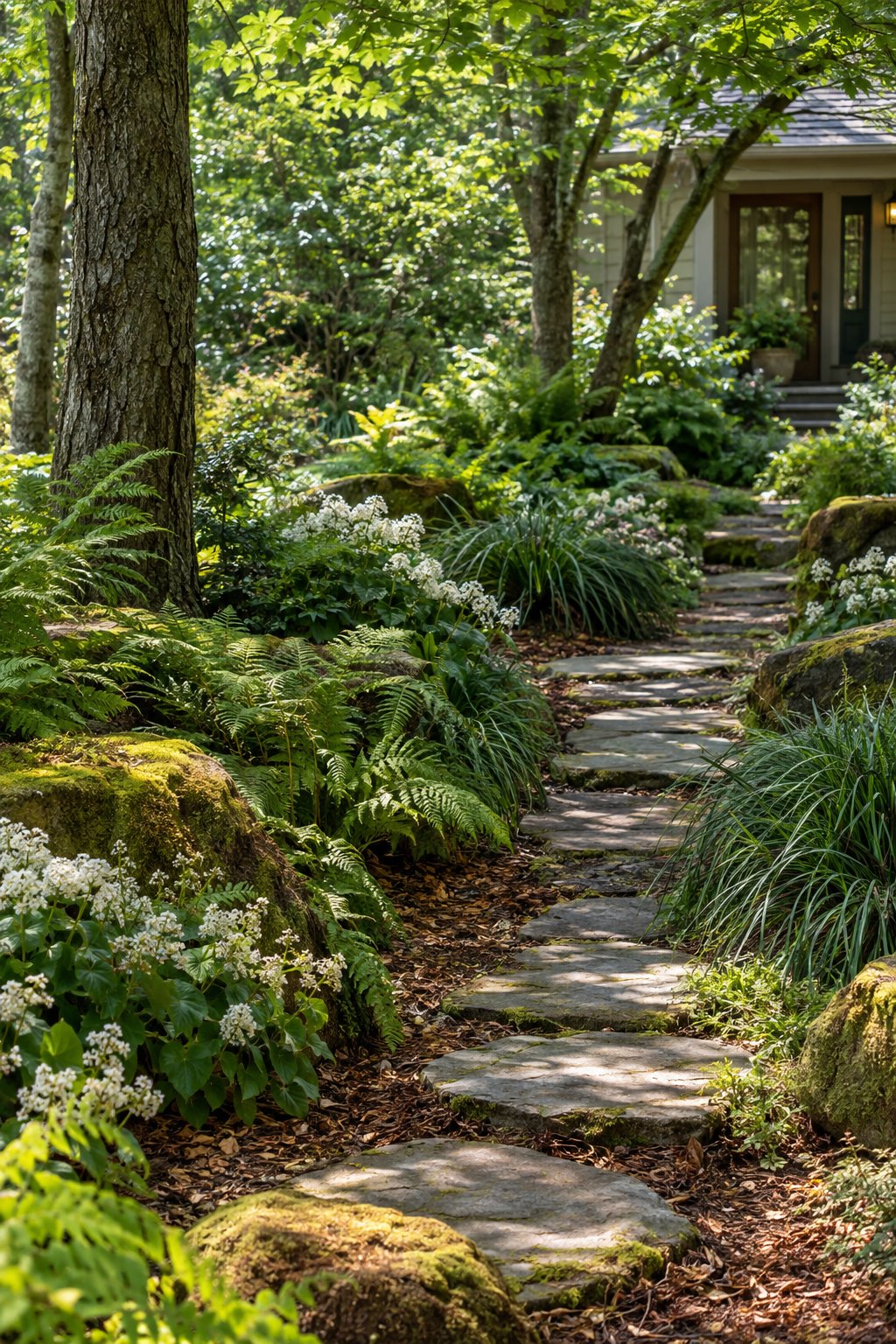
6. Woodland Entry Garden With Ferns, Sedges, and Foamflower
A shady entry feels inviting when foliage carries the design between bloom periods. Use native ferns for height, sedges for a flowing carpet, and foamflower for spring bloom and patterned leaves.
Add a few flat stones along the path so foot traffic stays off the planting. Woodland plants prefer soil with steady moisture and organic matter, especially beneath mature trees where roots compete for water.
Keep the planting low near steps and brighten darker corners with pale flowers or light foliage.
Expert Tip From MrPlanter: “Water new woodland plants during dry spells while their roots settle in. Tree shade does not remove the need for early care.”
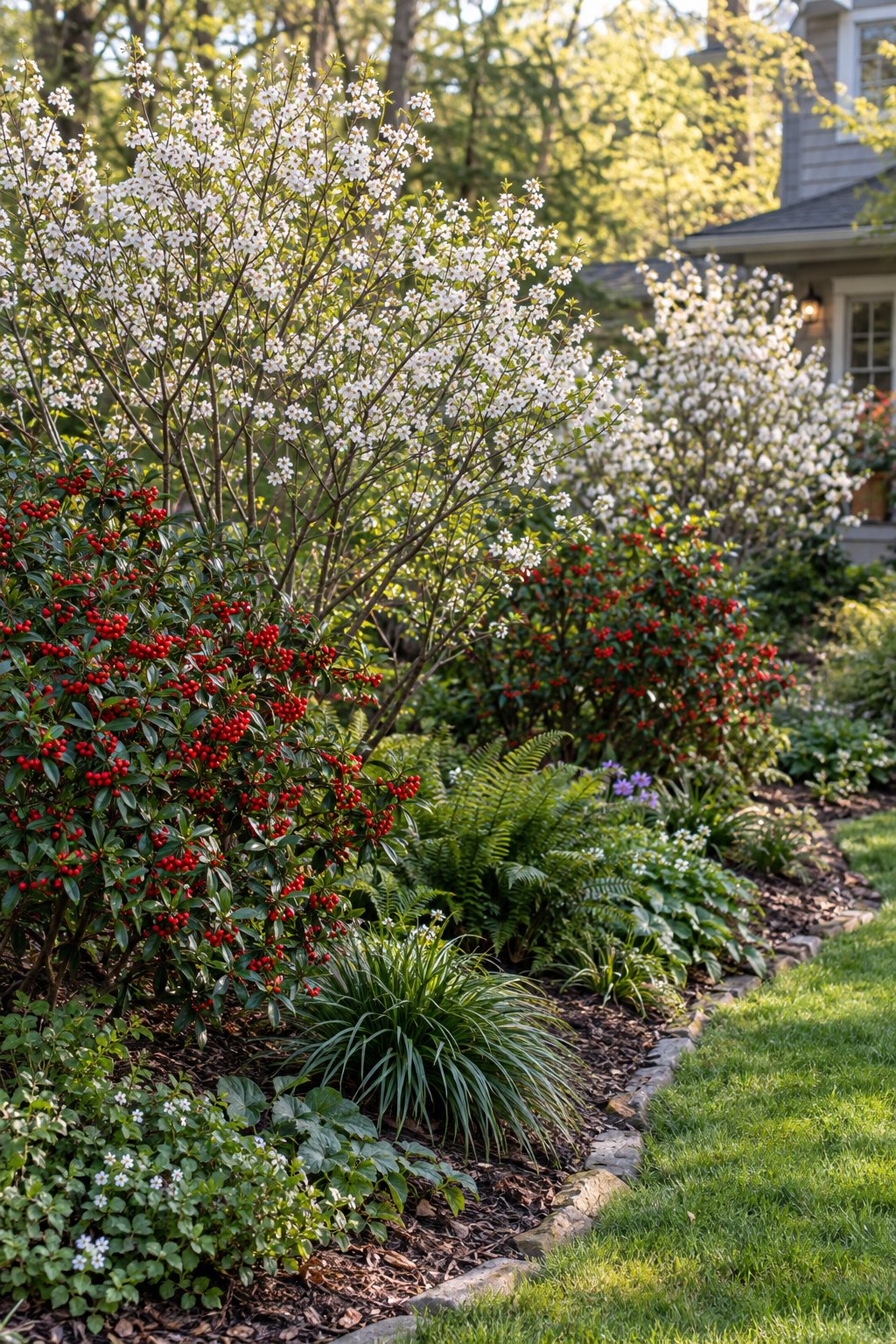
7. Native Shrub Border With Serviceberry and Winterberry Holly
A native shrub border gives your garden height, berries, and year-round form in one planting. Serviceberry offers spring flowers, edible fruit for wildlife, fall color, and a graceful winter shape. Winterberry holly adds bright berries after its leaves drop, with berry production requiring suitable male and female plants nearby.
Place shrubs where their mature spread will not block windows or paths. Fill the lower layer with sedges, ferns, or native groundcovers to reduce open soil and connect the border to the lawn. Expert Tip From MrPlanter: “Check the mature size on every shrub tag before spacing. Serviceberry looks airy in a pot and much larger in the ground.”
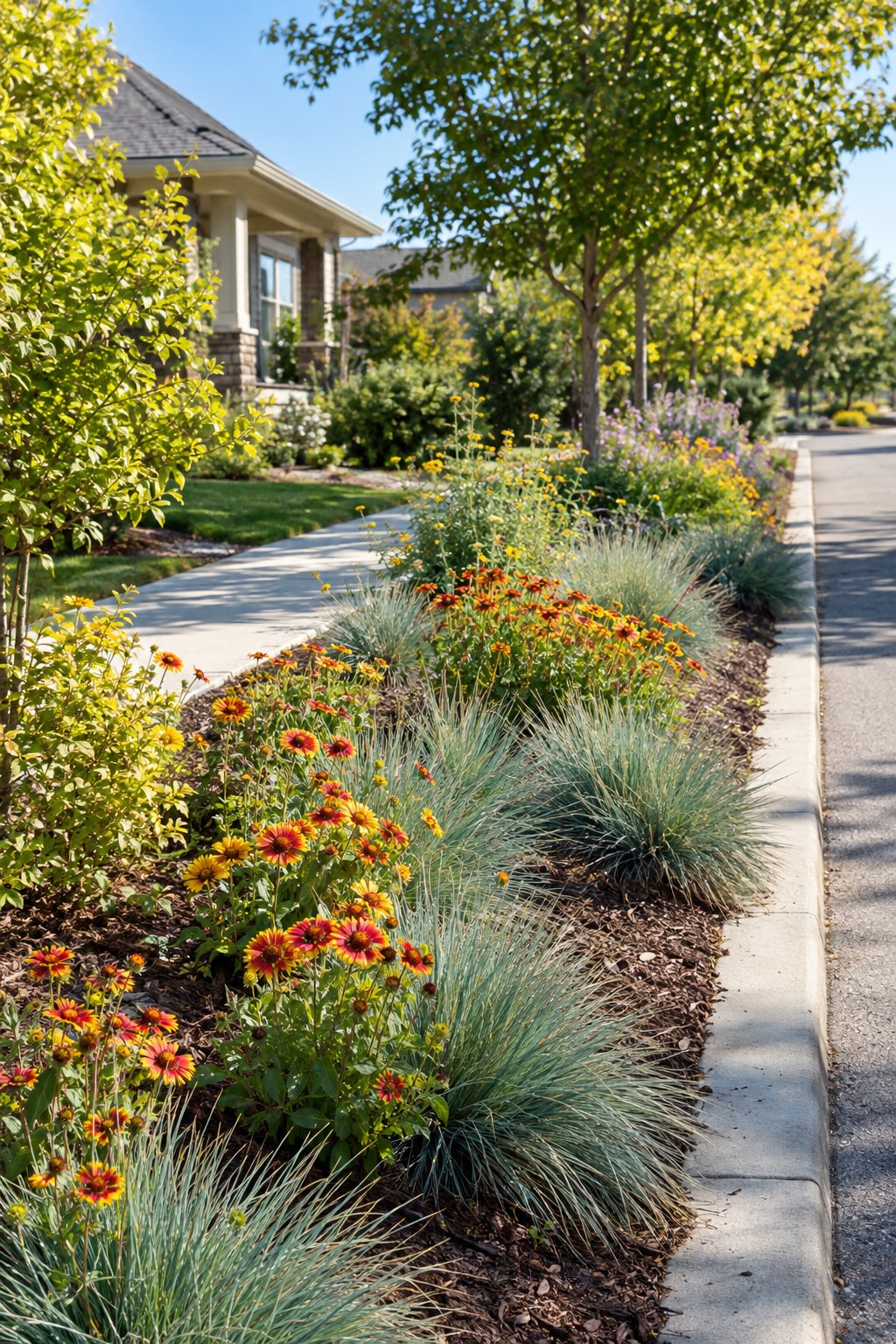
8. Sunny Curb Strip With Blue Grama and Blanketflower
A hot curb strip suits low native plants that handle lean soil and reflected heat. Blue grama stays compact and adds fine texture, while blanketflower brings red and yellow blooms through summer.
Improve compacted soil before planting, then give the bed a clear line beside the sidewalk. Keep enough room for people stepping from cars and for snow or street maintenance in colder areas. This design works well where turf struggles from heat, foot traffic, or road salt.
Expert Tip From MrPlanter: “Treat the curb strip as a public edge. Keep the plants low, tough, and easy for people to pass.”
9. Front-Yard Micro-Meadow Framed by a Crisp Mown Edge
A micro-meadow feels relaxed when a clean mown edge gives it a firm boundary. Combine a few native grasses with flowering plants suited to your region, then repeat the same groups across the bed.
The edge can be straight, gently curved, or shaped around a tree, as long as it stays easy to maintain. Remove invasive weeds while the planting fills in and keep paths open through the space.
Winter stems provide cover for insects and seed for birds, so cut them back in late winter when practical.
Expert Tip From MrPlanter: “Use a garden hose to test the bed shape before digging. You can adjust a curve in seconds while the hose is still flexible.”
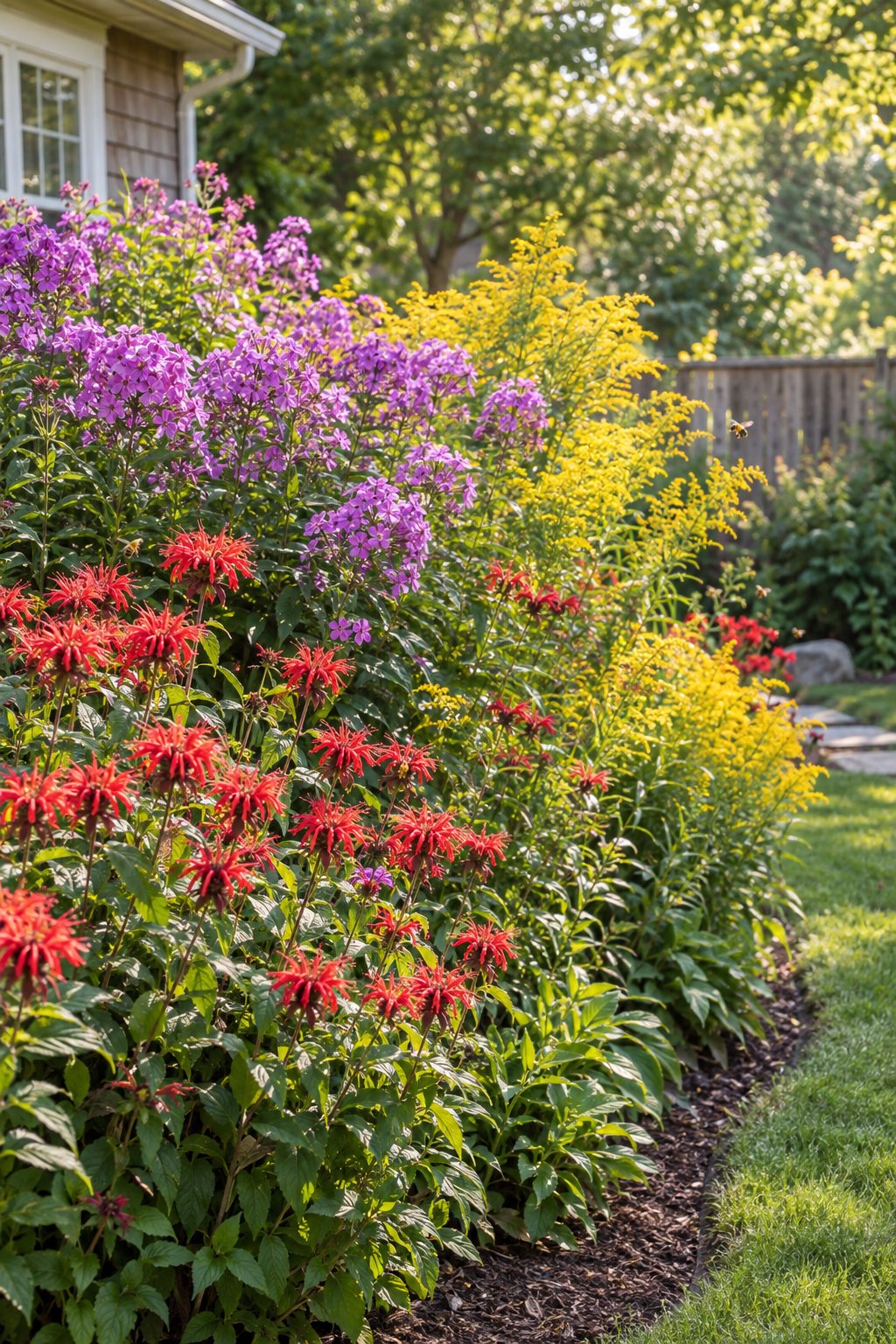
10. Native Cottage Border With Bee Balm, Phlox, and Goldenrod
A native cottage border brings a generous mix of color while repeated plants keep the look grounded. Bee balm supplies summer flowers for hummingbirds and pollinators, phlox fills the middle layer, and goldenrod carries the display into fall.
Give bee balm good air movement and enough room to spread. Plant goldenrod toward the rear or middle where its height will frame lower flowers. A narrow mulch path through the bed gives you access for weeding and seasonal cutback.
Expert Tip From MrPlanter: “Repeat each plant in several places instead of making one plant the star. The border will feel fuller and calmer.”
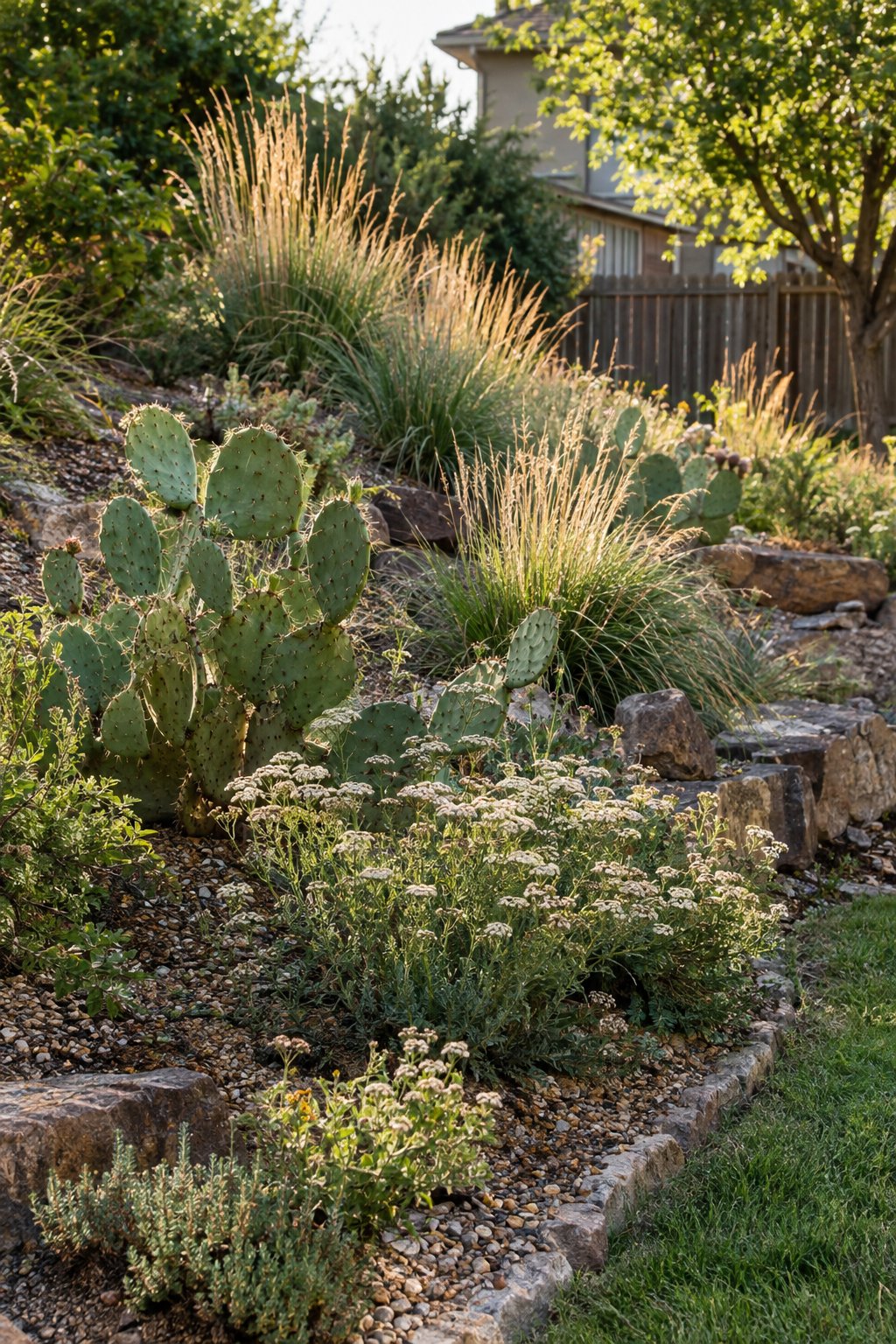
11. Dry-Slope Garden With Prickly Pear, Yarrow, and Sideoats Grama
A dry slope becomes easier to manage when you choose plants that enjoy sharp drainage. Prickly pear adds bold form, yarrow supplies flat flower clusters, and sideoats grama anchors the soil with bunches of fine foliage.
Set rocks into the slope to slow runoff and reduce soil movement. Keep prickly pear away from narrow paths and play areas because its pads and spines need space.
Gravel mulch suits the planting and prevents wet soil around drought-adapted roots.
Expert Tip From MrPlanter: “Place spiny plants where nobody needs to brush past them. Give their shape room to be admired from a safe distance.”
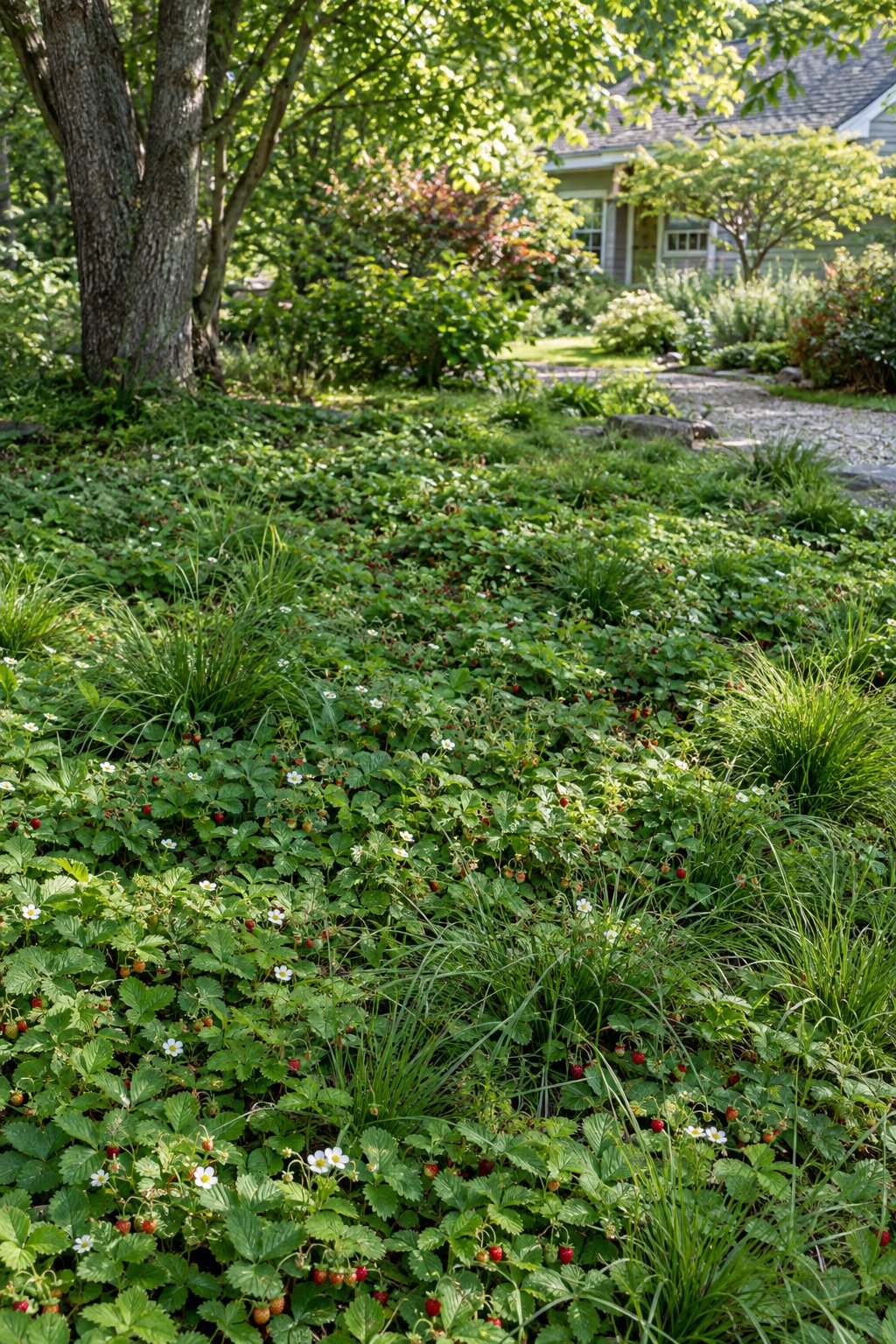
12. Native Groundcover Lawn Alternative With Wild Strawberry and Sedge
A groundcover lawn alternative reduces mowing in areas with light foot traffic. Wild strawberry creates a low green carpet with small flowers and fruit, while native sedge handles light shade and knits the soil together.
Clear weeds before planting and space plugs so the groundcover can fill without leaving long gaps.
Keep a small path or open sitting area where you need regular access. This approach suits under-tree spaces, side strips, and garden edges that do not need sports-turf durability.
Expert Tip From MrPlanter: “Mark walking routes before you plant. Groundcovers fill beautifully when foot traffic stays on the spaces meant for it.”
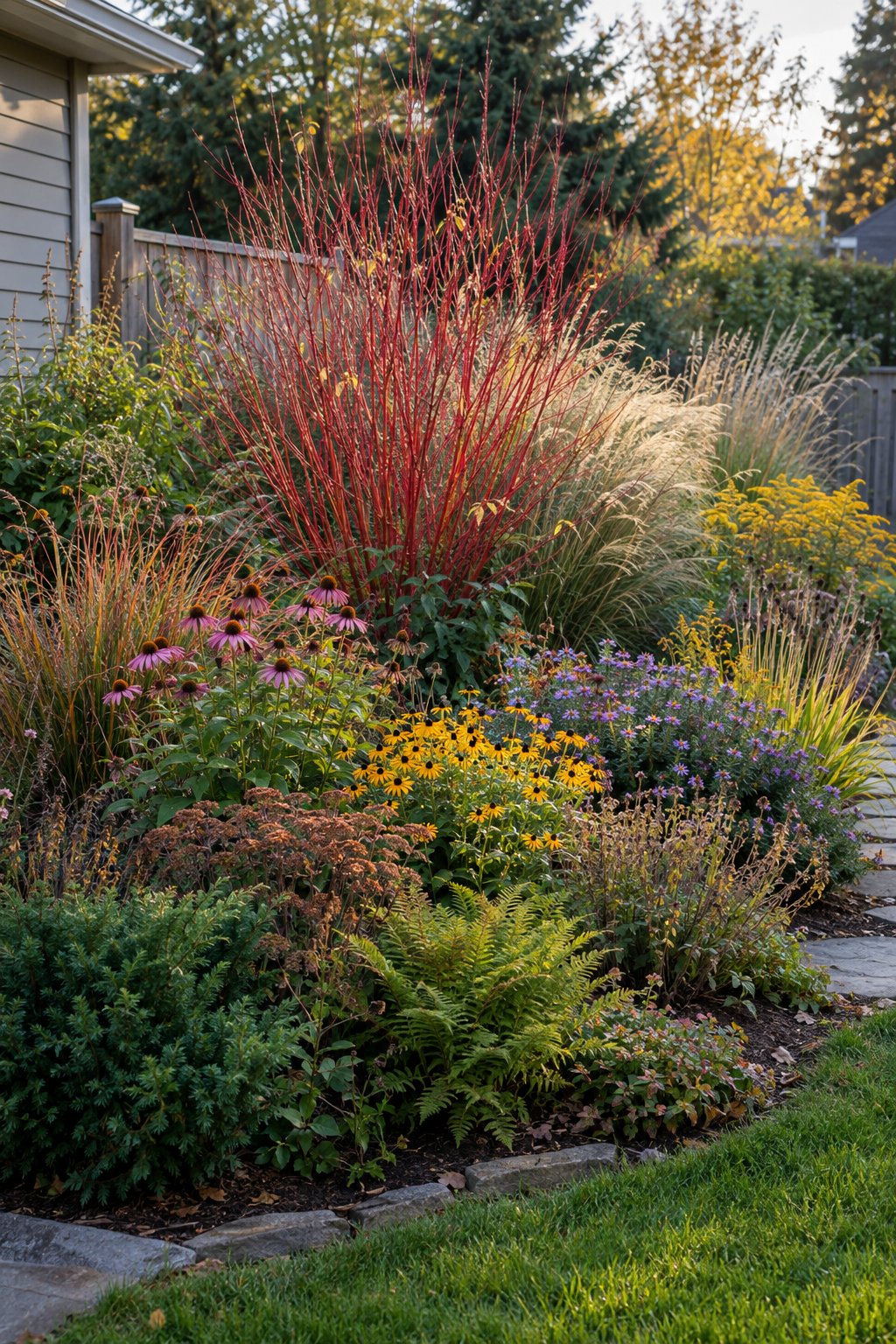
13. Four-Season Corner Bed With Red Twig Dogwood and Native Perennials
A corner bed earns its space when every season has a feature. Red twig dogwood provides flowers and berries in warmer months, then bright red stems in winter.
Surround it with spring perennials, summer coneflowers, fall asters, and grasses that hold seedheads into the cold season.
This shrub suits moist soil and can spread, so allow room for its mature form. Place the tallest structure toward the corner and step down toward lawns and paths.
Expert Tip From MrPlanter: “Visit the bed in winter before choosing plants. Bare stems and seedheads reveal whether the design has enough shape.”
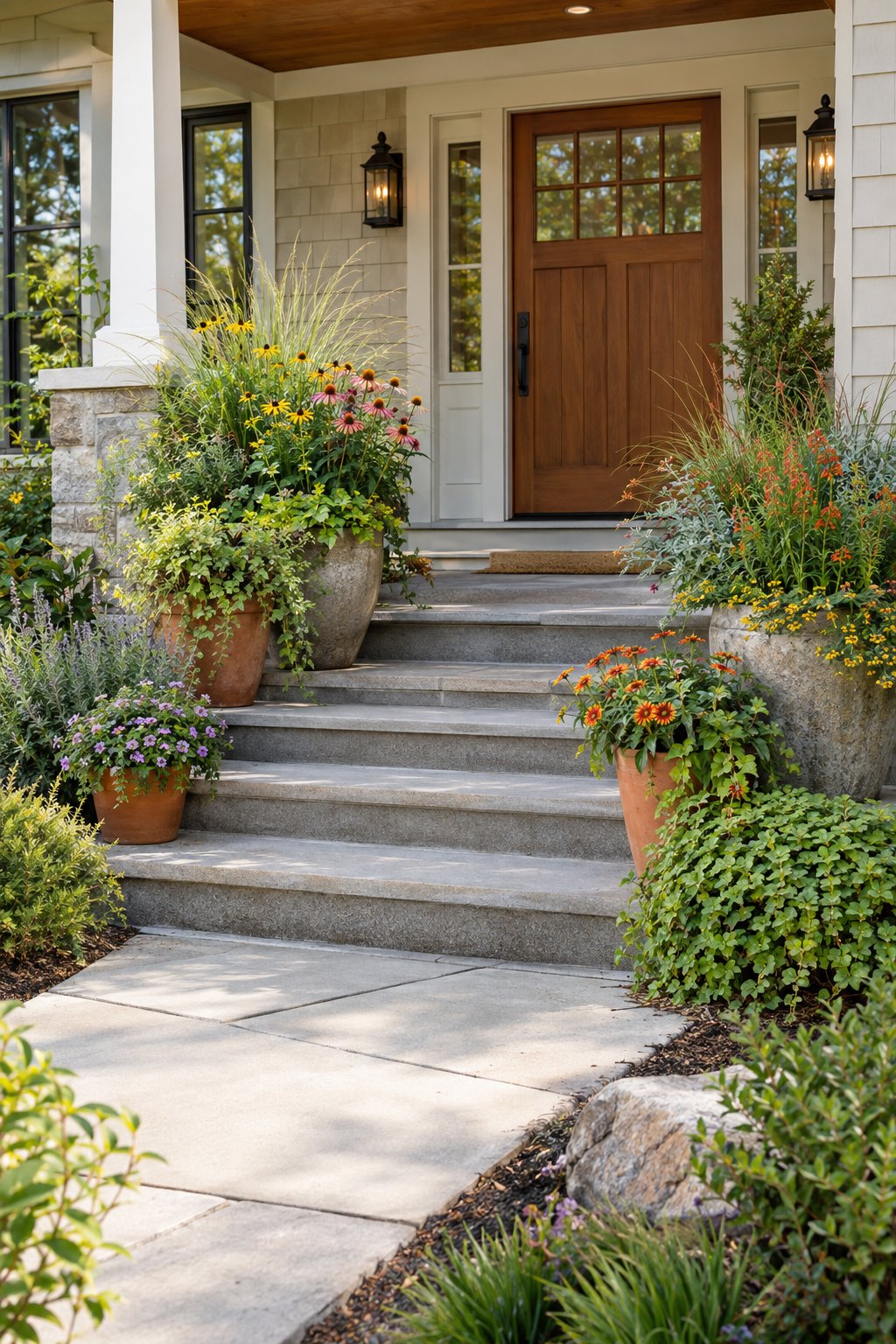
14. Front Steps Planters Filled With Regionally Native Plants
Native planters soften front steps when you match each container to the light and keep the landing clear. Use compact grasses, low flowering perennials, and leafy shade plants according to the exposure.
Choose sturdy containers with drainage holes, then water more closely during the first growing season because pots dry faster than garden soil.
Keep house numbers, railings, and the door swing visible. Grouping two or three containers on one side can look more relaxed than placing a crowded pot on every step.
Expert Tip From MrPlanter: “Lift each pot slightly with feet or a tray so water drains freely. Healthy roots need an escape route for extra moisture.”
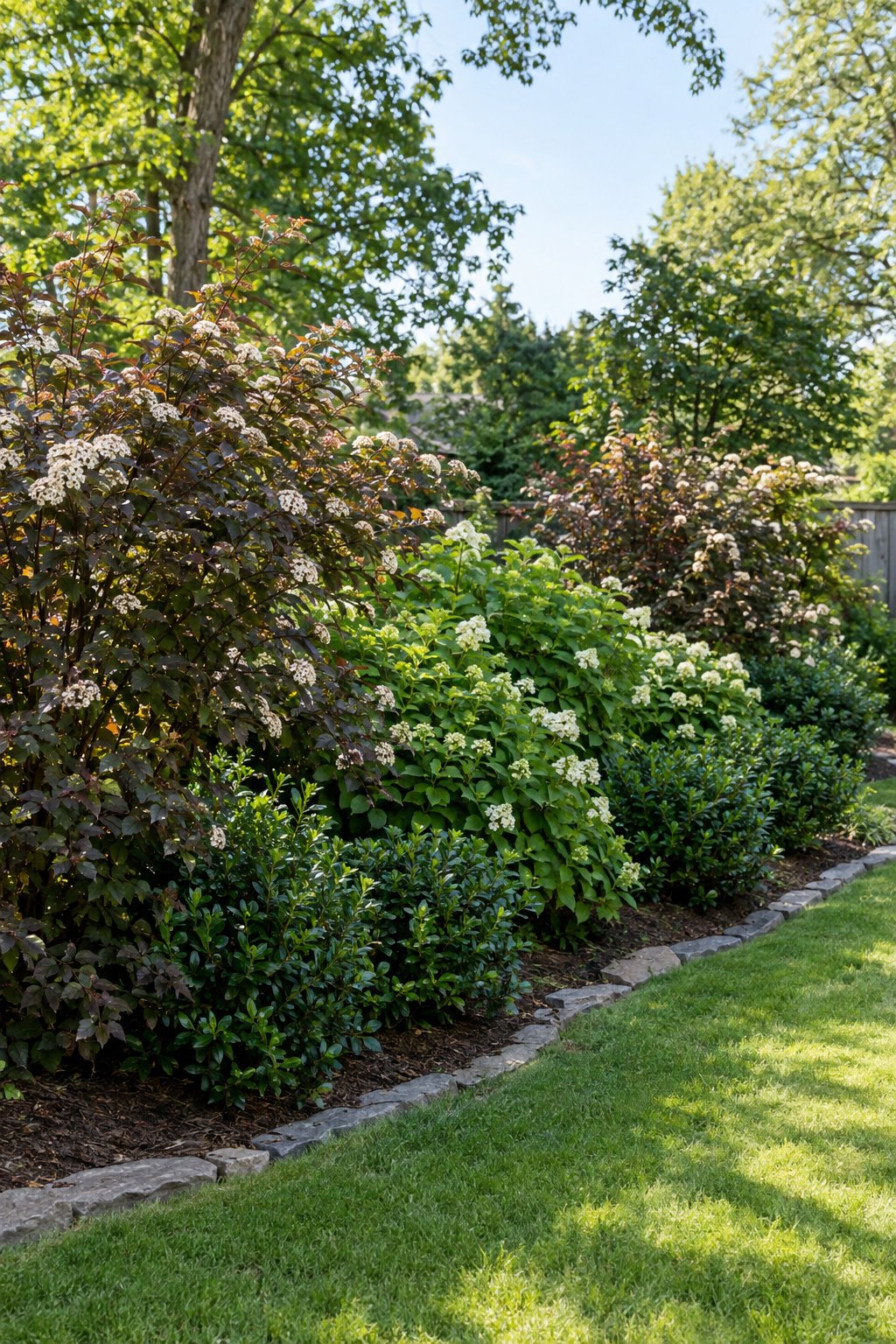
15. Native Hedge With Ninebark, Viburnum, and Inkberry
A mixed native hedge gives you screening with more wildlife value than a single repeated shrub. Ninebark brings exfoliating bark and spring flowers, viburnum offers bloom and fruit, and inkberry provides evergreen structure where site conditions suit it.
Stagger shrubs by mature width so the hedge fills without crowding windows or paths. Keep the front edge low with sedges or compact perennials to prevent a wall of green. Prune lightly to guide shape while preserving each shrub’s natural form.
Expert Tip From MrPlanter: “Use several shrub sizes for a softer screen. A hedge with every plant at one height can feel stiff beside a home.”
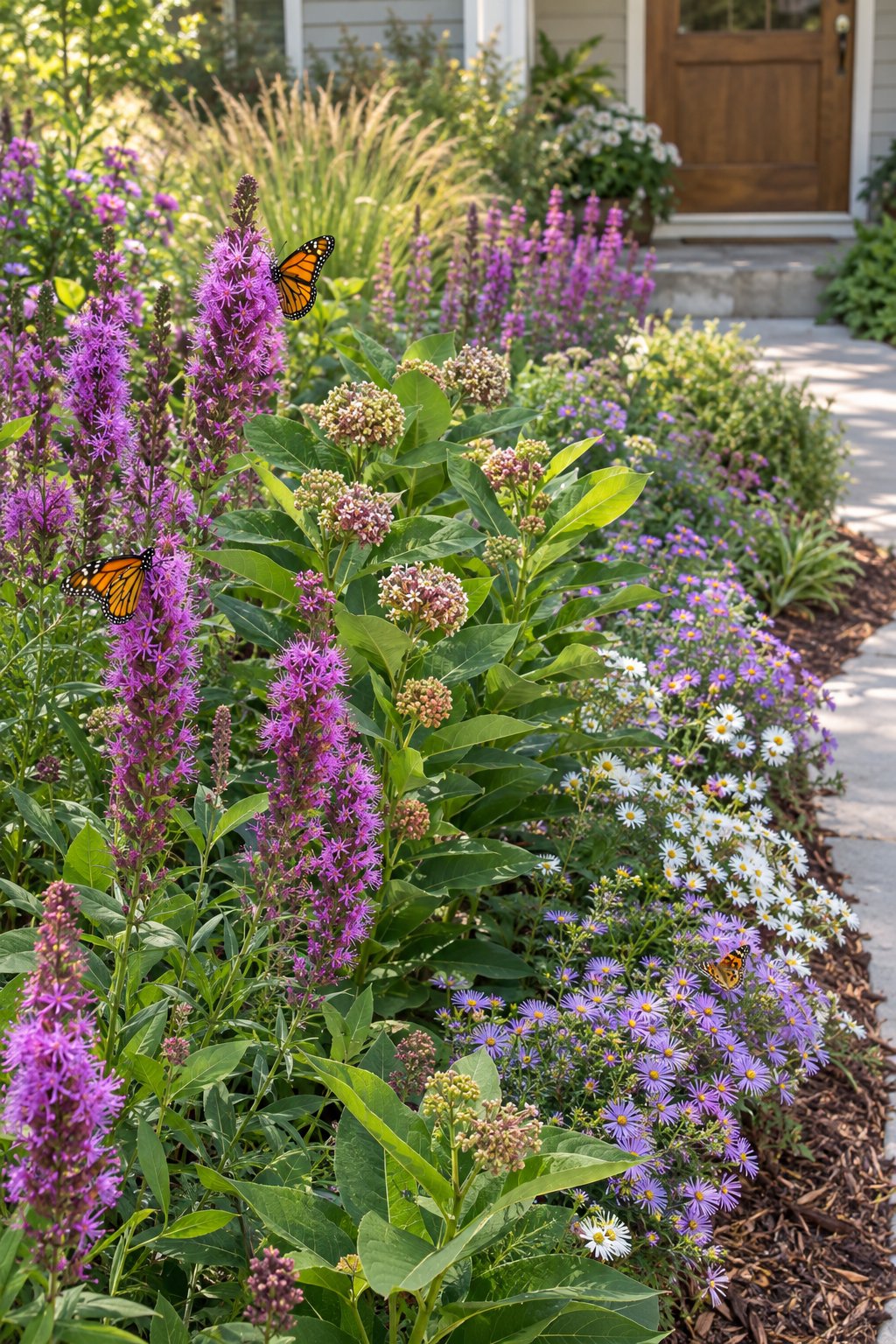
16. Butterfly Waystation With Milkweed, Blazing Star, and Asters
A butterfly waystation needs host plants as well as nectar flowers. Milkweed supports monarch caterpillars, blazing star feeds adult butterflies, and asters extend nectar into fall.
Plant each species in groups so visiting insects can find flowers without crossing a bare yard.
Choose milkweed species native to your region and give tall plants room away from the main walkway. Leave some stems standing through winter for insects and seed-eating birds.
Expert Tip From MrPlanter: “Plant milkweed in more than one spot when space allows. A small cluster makes the habitat easier for butterflies to find.”
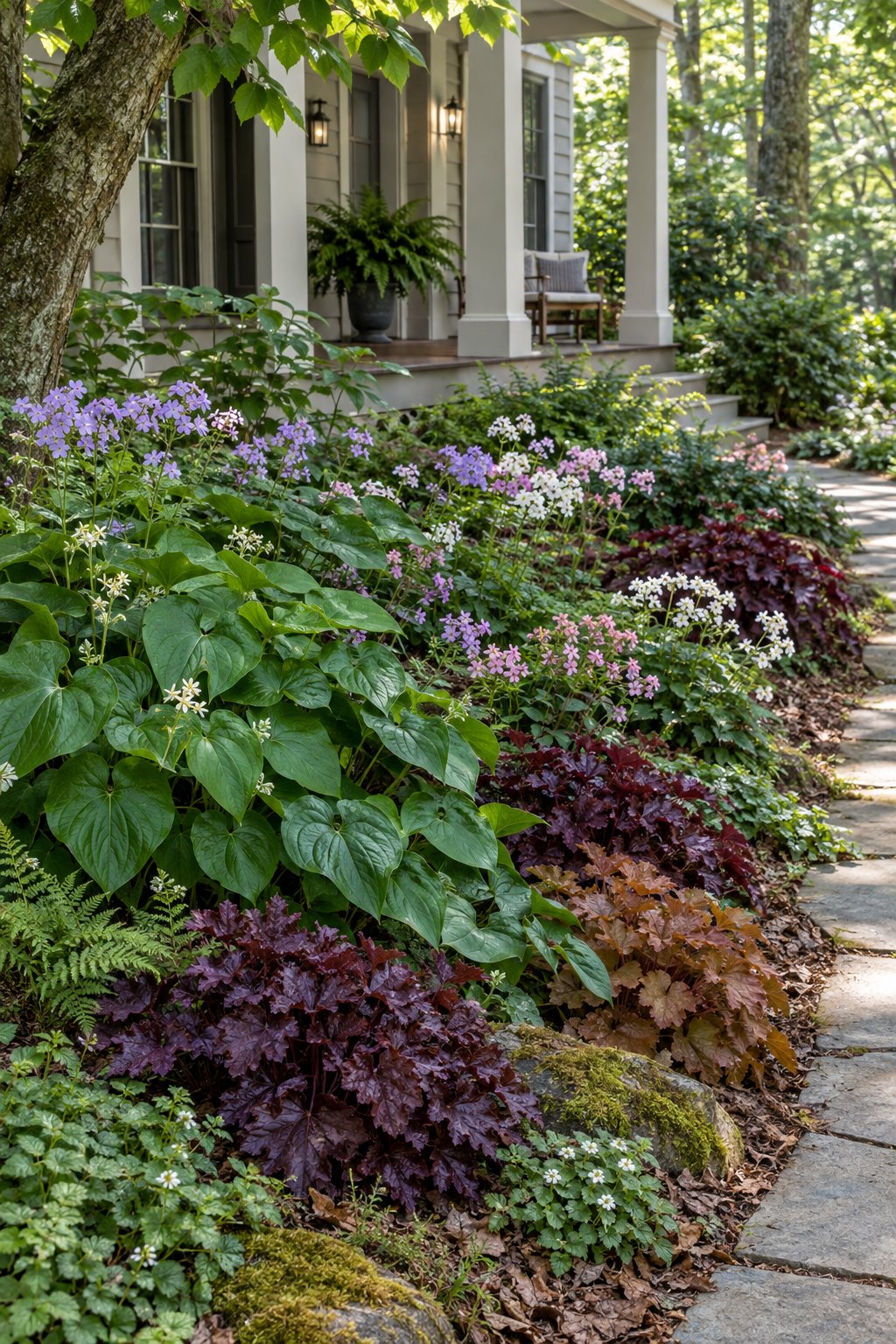
17. Shady Porch Border With Wild Ginger, Heuchera, and Woodland Phlox
A shady porch border can look full through foliage even when few flowers are open. Wild ginger supplies broad leaves near the ground, heuchera adds mounded texture, and woodland phlox brings spring color.
Check that the heuchera you choose is regionally native, since many garden varieties come from mixed parentage.
Keep the planting edge low beside steps and use taller foliage near the porch wall. Moist, well-drained soil with leaf mulch helps these plants settle beneath filtered light.
Expert Tip From MrPlanter: “Clear leaves from the porch steps while leaving a thin layer in the bed. Your path stays safe and the soil gets natural cover.”
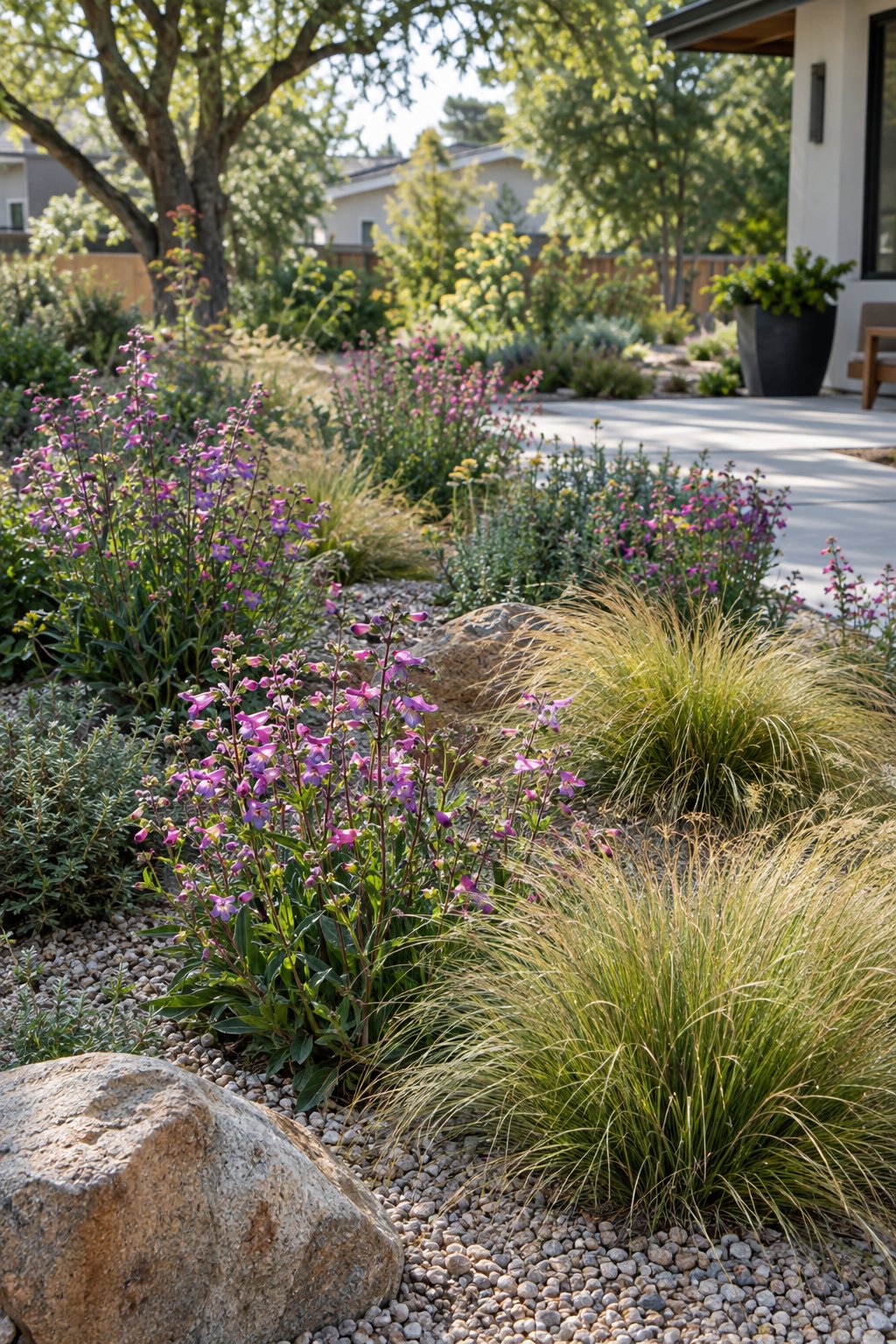
18. Native Gravel Garden With Penstemon and Prairie Dropseed
A gravel garden suits sunny areas where drainage is fast and soil fertility is low. Penstemon adds upright flowers for bees and hummingbirds, while prairie dropseed forms neat, fragrant mounds.
Remove persistent weeds before laying gravel, since later digging through stone is a chore nobody requests as a gift. Use larger rocks to anchor the bed and repeat the grass in small drifts. Leave enough open gravel around crowns so moisture does not collect against the plants.
Expert Tip From MrPlanter: “Keep the plant list short and repeat it often. Gravel gardens look strongest when texture leads the design.”
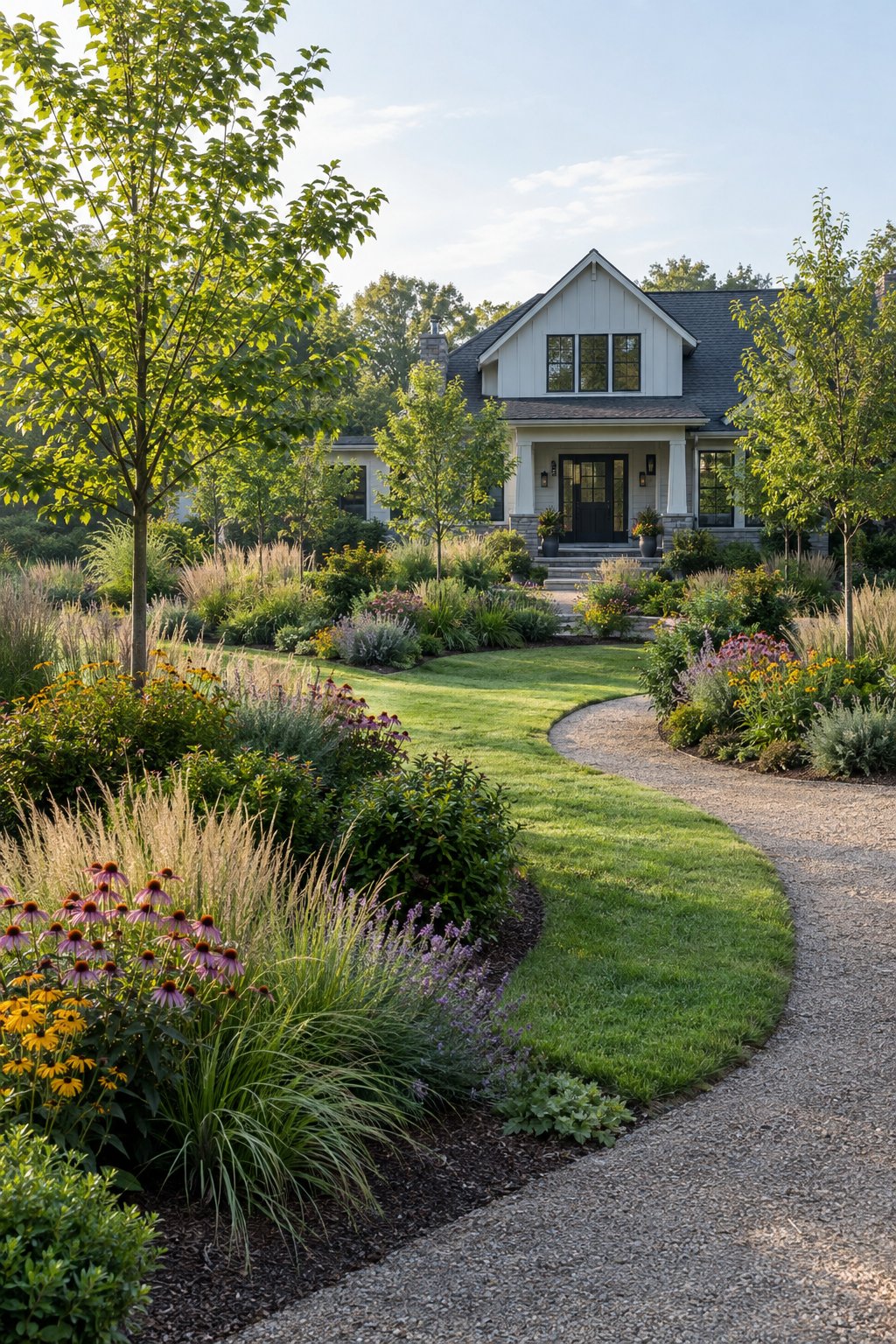
19. Formal Native Garden With Repeated Drift Plantings
A formal native garden gains order through repetition, symmetry, and clear bed lines. Choose a small palette of local grasses, shrubs, and perennials, then repeat each group along the front of the house or beside a path.
Keep the lowest plants near edges and reserve taller forms for the center or rear. A clipped-looking outline can come from careful edging, not from forcing every native plant into a tight shape. This style works well when you want habitat value with a strong architectural feel.
Expert Tip From MrPlanter: “Lay out plant groups with pots before digging. Moving containers is much easier than relocating established roots.”
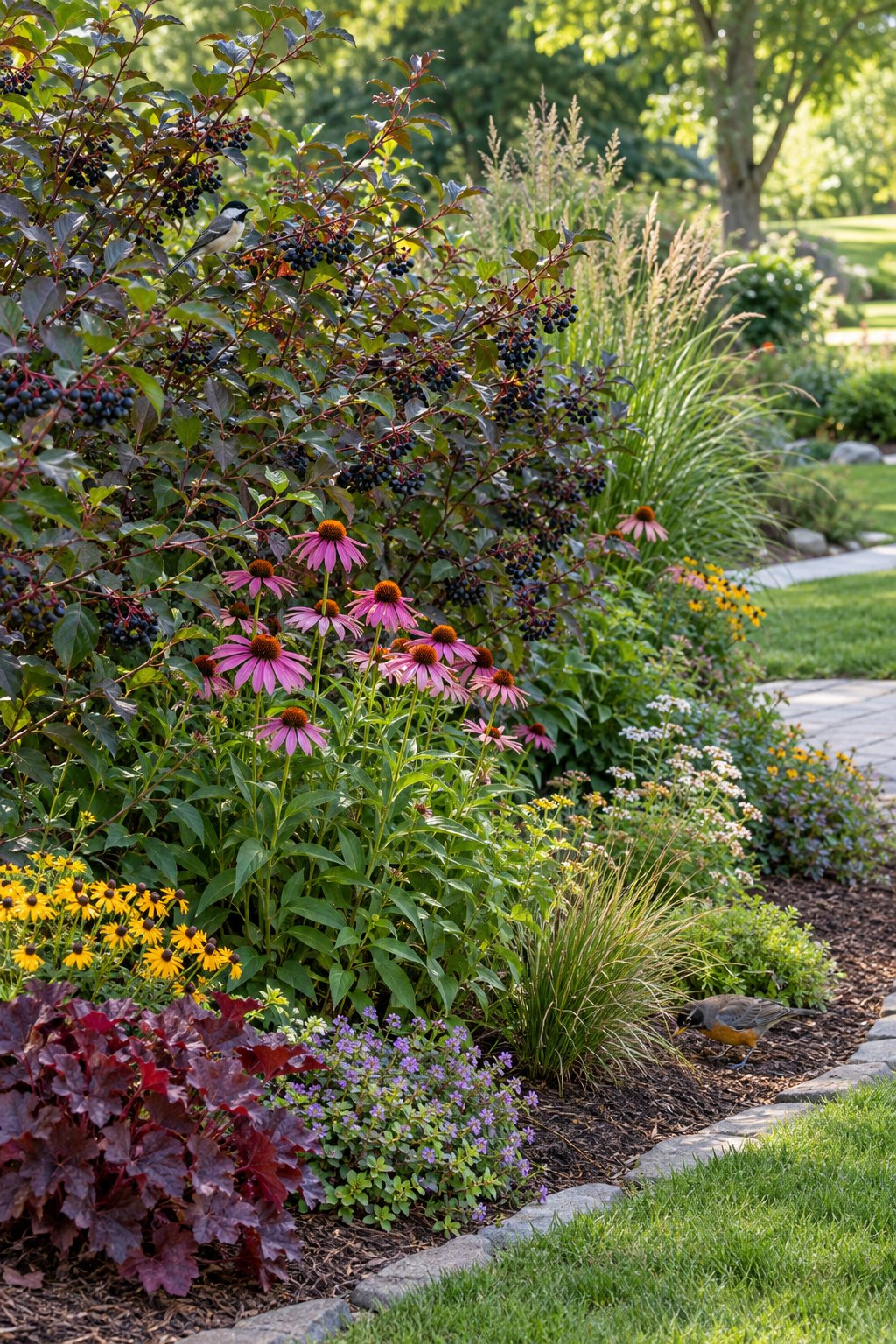
20. Bird-Friendly Front Border With Chokeberry and Coneflowers
A bird-friendly border combines berries, seeds, cover, and safe places to perch. Chokeberry offers fruit and seasonal color, while coneflowers leave seedheads that finches use after bloom.
Add native grasses for shelter and keep some dense shrubs near the edge of the yard. Avoid placing thick cover right beside windows where bird strikes are more likely. A shallow water source nearby adds value when you keep it clean and refreshed.
Expert Tip From MrPlanter: “Leave coneflower seedheads through winter. Their dry shapes feed birds and give the border useful cold-season structure.”
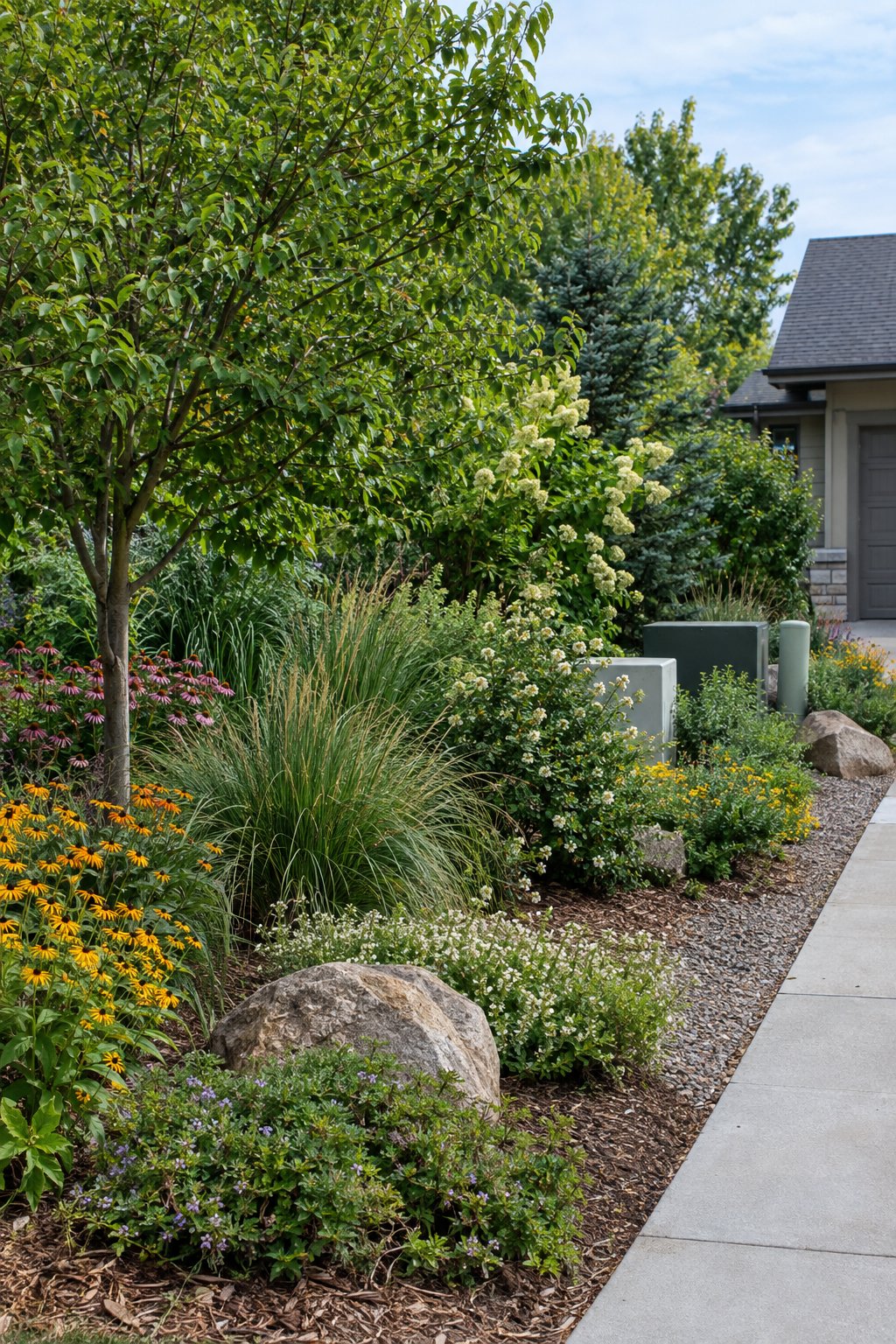
21. Native Screen Garden for a Driveway or Utility Area
A native screen garden hides utility views while keeping access available for repairs. Use a layered mix of shrubs, grasses, and lower groundcovers instead of one dense row. Place shrubs far enough from utility equipment, meters, and gates for safe service access.
Ninebark, serviceberry, viburnum, and suitable native evergreens offer different heights and seasons of interest. Keep the tallest growth away from driveway sightlines so cars and pedestrians remain visible.
Expert Tip From MrPlanter: “Mark every access panel before planting. A screen should hide equipment from view while leaving it easy to reach.”
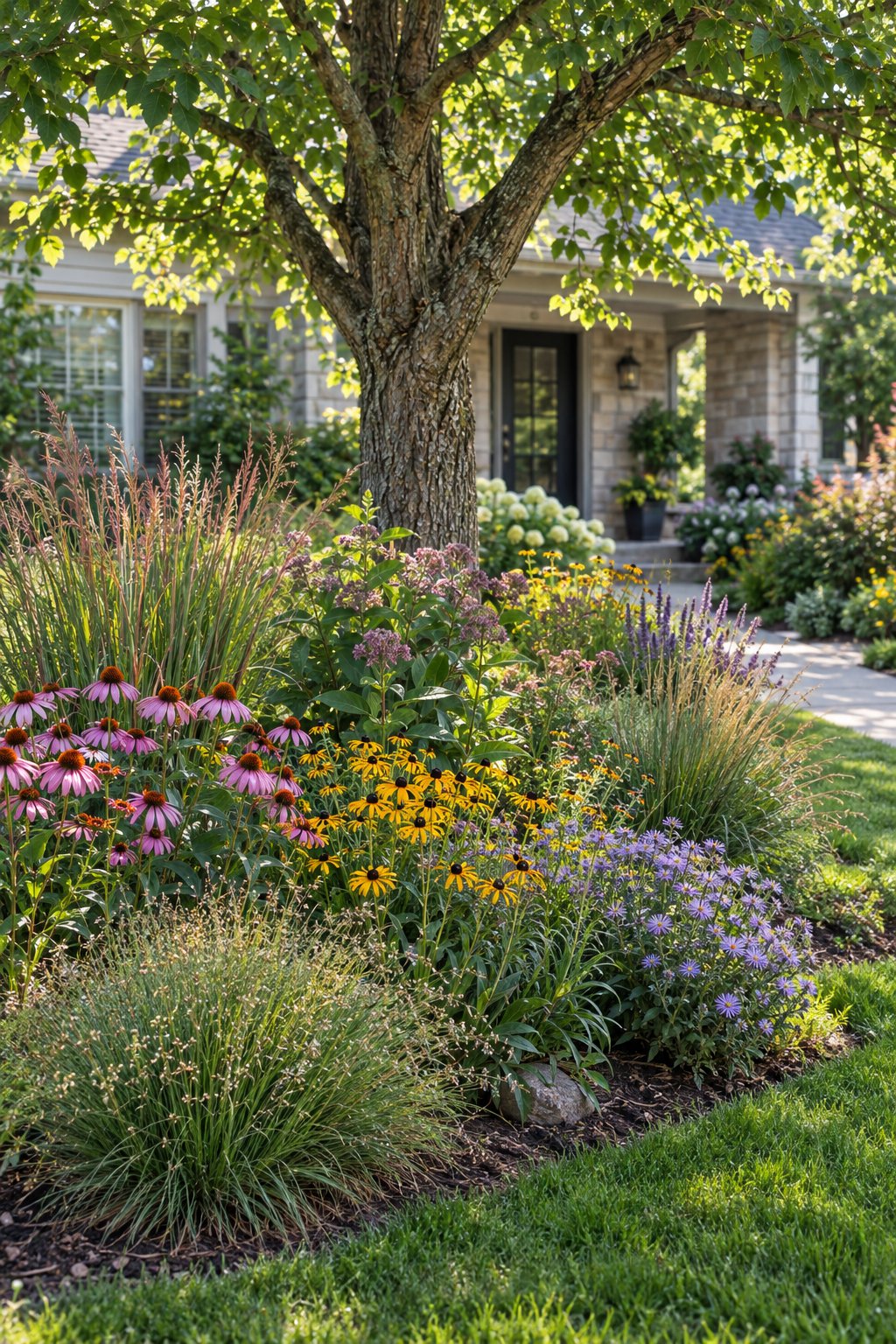
22. Pocket Prairie Around a Front-Yard Tree
A pocket prairie gives a mature tree a planted understory without competing with its trunk. Use shallow-rooted, regionally native grasses and flowers suited to the tree’s light and soil conditions.
Keep mulch or open soil around the trunk flare, and avoid piling roots or planting soil against the bark.
Low grasses, asters, and coneflowers create a simple ring with seasonal movement. Shape the outer edge clearly so the bed reads as a planned garden island.
Expert Tip From MrPlanter: “Protect the trunk first and fill the outer ring second. Trees need breathing room at the base.”
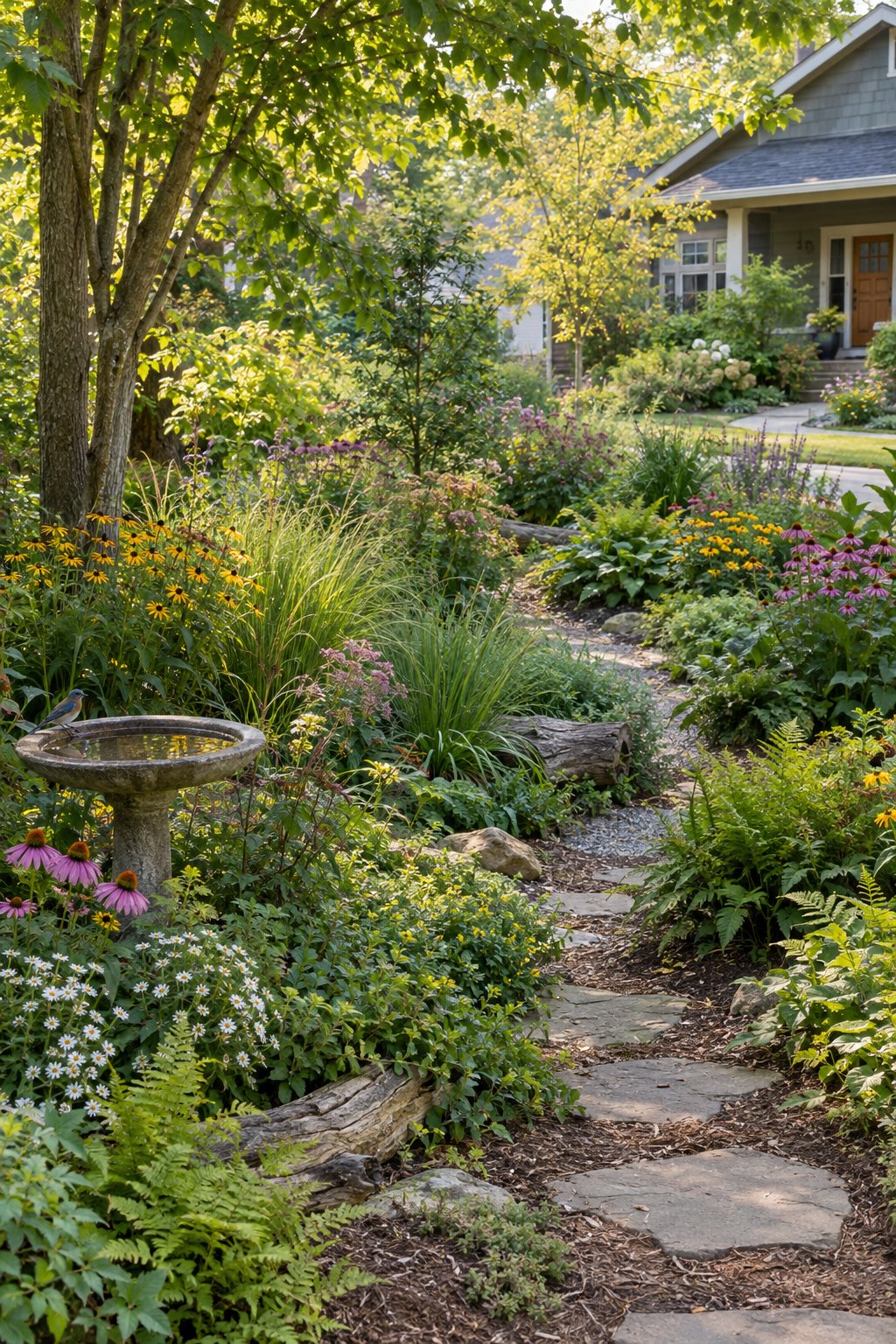
A habitat corridor connects separate garden spaces through repeated native plants and continuous cover. Link the backyard and front yard with a side border, fence-line planting, or narrow path edged with grasses and flowering perennials.
Repeat a few anchor species so the transition feels planned from one space to the next. Use taller shrubs for privacy where sightlines allow, then lower the planting near gates, sidewalks, and driveways.
This approach also gives insects and birds more shelter between feeding and nesting areas.
Expert Tip From MrPlanter: “Repeat one plant from the backyard near the front entry. That small echo makes the whole property feel connected.”
How to Match Native Plants to Your Front Garden Site
How Much Sun, Shade, and Reflected Heat Does the Space Receive?
Start by watching the site through a full day and noting where sunlight reaches the soil. South- and west-facing walls may add reflected heat, while mature trees create dry shade because their roots draw moisture. Curb strips and paved areas also raise heat around plants. Match sun-loving species to open exposure and woodland plants to filtered or full shade.
Is the Soil Dry, Average, Moist, Compacted, or Poorly Drained?
Test drainage by filling a small hole with water and watching how quickly it empties. Compacted soil near walks may need loosening and organic matter, while a low area may call for moisture-tolerant natives. Avoid changing drainage across a large area without checking where runoff will go. Soil texture, moisture, and pH all help narrow your plant choices.
What Mature Height and Width Will Keep Paths, Windows, and Entries Clear?
Use the plant’s mature size, not its nursery-container size, when planning spacing. Keep low growth near paths, steps, and curb edges, and reserve tall shrubs or grasses for locations that will not block windows, vents, signs, or sightlines. Leave access space around utility equipment and gates. A simple sketch with mature circles can prevent crowded beds.
Which Plants Are Actually Native to Your State or Ecoregion?
Check regional native plant lists from your state, local botanical garden, county extension office, or nearby native plant society. A plant native to one part of the United States may struggle in another region or fail to support the same wildlife. Confirm the species name, local range, mature size, and site needs before buying. Cultivars also deserve a closer look when wildlife value is a main goal.
How to Keep a Native Front Garden Looking Intentional
Why Do Clean Edges and Repeated Plant Groups Matter?
A crisp edge tells viewers where the garden begins and keeps spreading plants from visually taking over the lawn. Repeat grasses, shrubs, or perennials in groups so the planting has rhythm from the sidewalk. A simple curve, narrow mulch strip, or mowing line can frame a loose native mix. Keep the edge easy to reach with a mower, trimmer, or hand tool.
How Can You Build Bloom, Seed, and Structure Into Every Season?
Choose plants that cover different parts of the year. Spring flowers support early insects, summer perennials carry color, and asters or goldenrod feed pollinators late in the season. Grasses, berrying shrubs, and sturdy seedheads keep the garden useful and attractive after frost. Place evergreen or woody forms where they can hold the bed together during winter.
What Low-Input Maintenance Does a Native Garden Still Need?
Water new plants during establishment, pull invasive weeds, refresh paths, and trim growth that blocks entries or sidewalks. Cut back many herbaceous stems in late winter so insects can use hollow stalks through the cold months. Divide crowded perennials when flowering declines and remove diseased material when needed. Skip routine fertilizer unless a soil test shows a clear need.
How Can You Leave Wildlife Habitat Without Making the Garden Look Neglected?
Keep some leaves, fallen stems, seedheads, and small brush in less visible parts of the bed. Frame those habitat areas with mown edges, paths, repeated plant groups, or a defined shrub line. Remove litter and invasive plants so the garden’s natural texture remains readable. A small sign can also explain the habitat purpose to neighbors who are curious about the planting.
I’m Anirban Saha, the Founder and Owner of MrPlanter.com. I pay the bills as a software developer, although my BTech is actually in Electronics and Communication. I really love my day job, but what gives me energy every day is interacting with my indoor plants and taking care of them. I have been successfully nurturing and maintaining houseplants for over 10 years now.
📚🔍 Our content undergoes thorough review and fact-checking before publication. For additional details, explore our strict Editorial Policy to deliver helpful content. 📝🔒