As an Amazon Associate, MrPlanter.com earns from qualifying purchases.
Winter window boxes are easier than the summer kind. You don’t deadhead petunias or water them twice a day in July.
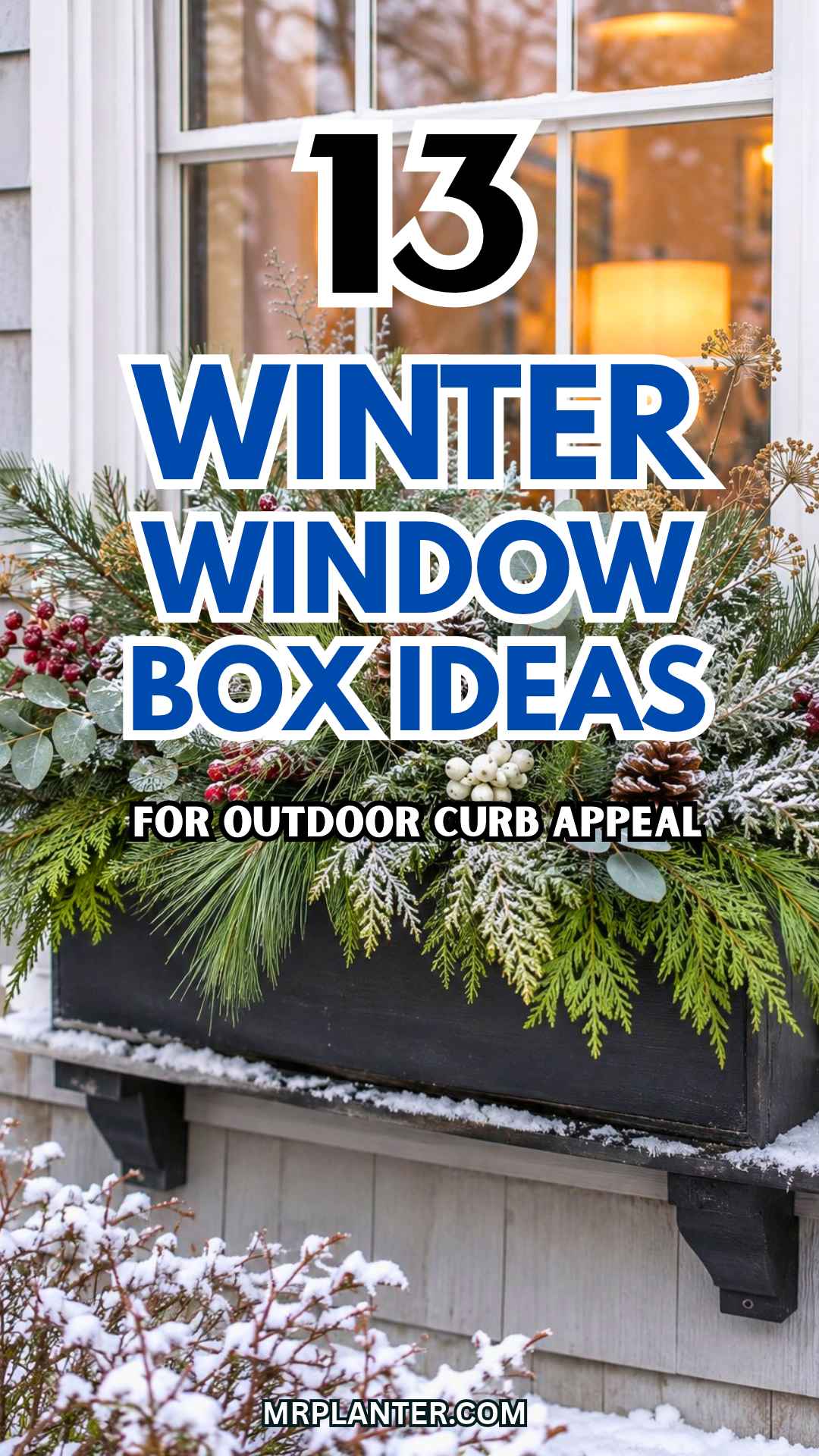
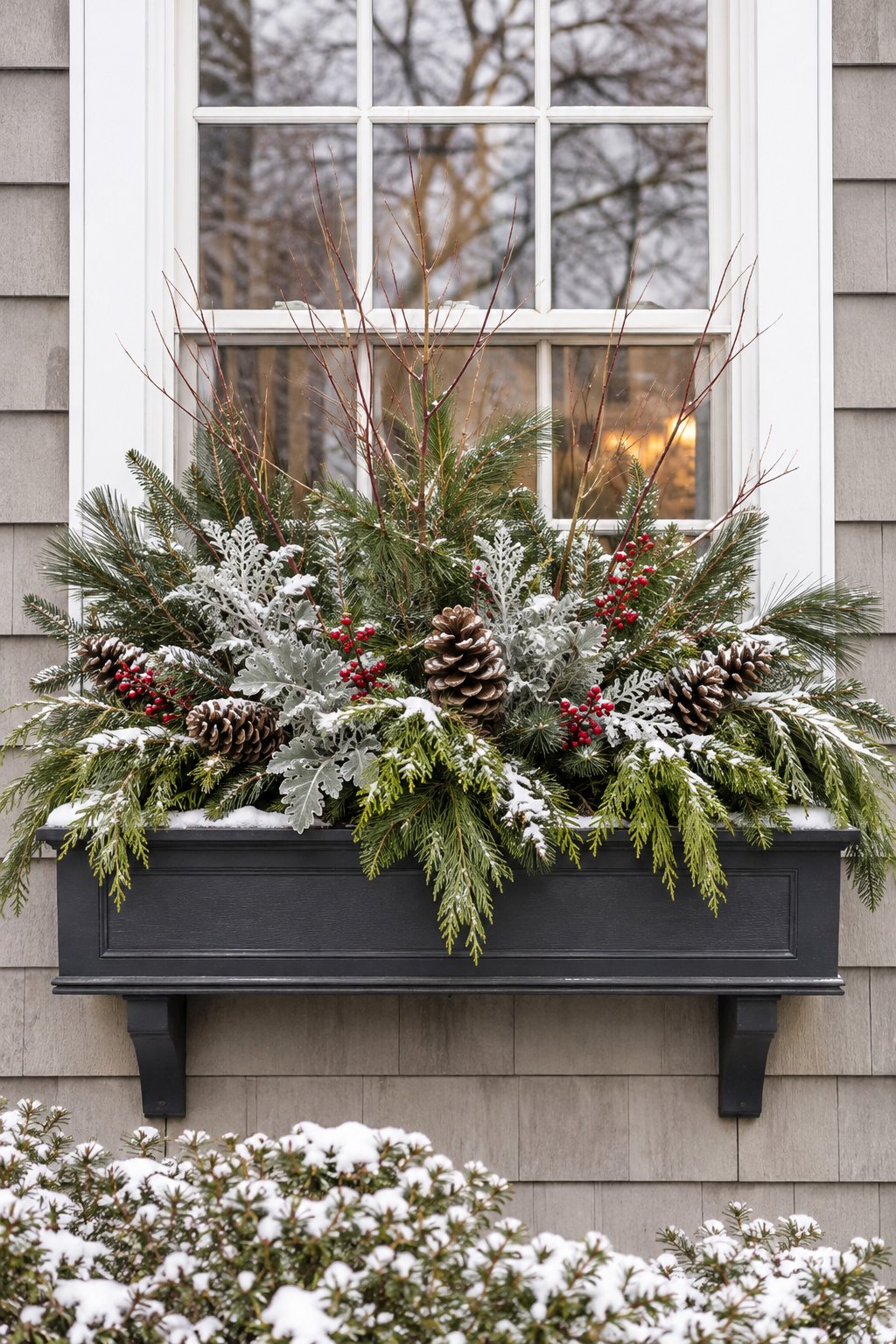
The best winter window boxes for curb appeal pair long-lasting cut evergreens like fir, cedar, and pine with one bright accent (red berries, white birch, or soft lights), set in a base of sand so you can move stems around all season.
Most conifer cuttings stay fresh outdoors for weeks in the cold. That means one afternoon of work can carry your front yard, porch, or garden shed from Thanksgiving to March.
The ideas below run from classic holiday looks to living plant combos for mild climates. Some stay put all winter. Others let you pull the festive bits in January and keep going.
If you already have outdoor pots near the door, many of these also work as winter planter ideas so your boxes and pots match.
Quick picks:
Best classic look: Cascading cedar and fir boughs with oversized pinecones.
Best for color: White birch branches with red winterberry stems.
Best for warm winters: White cyclamen and ivy.
Best for night glow: Outdoor LED candle lanterns framed by white twigs.
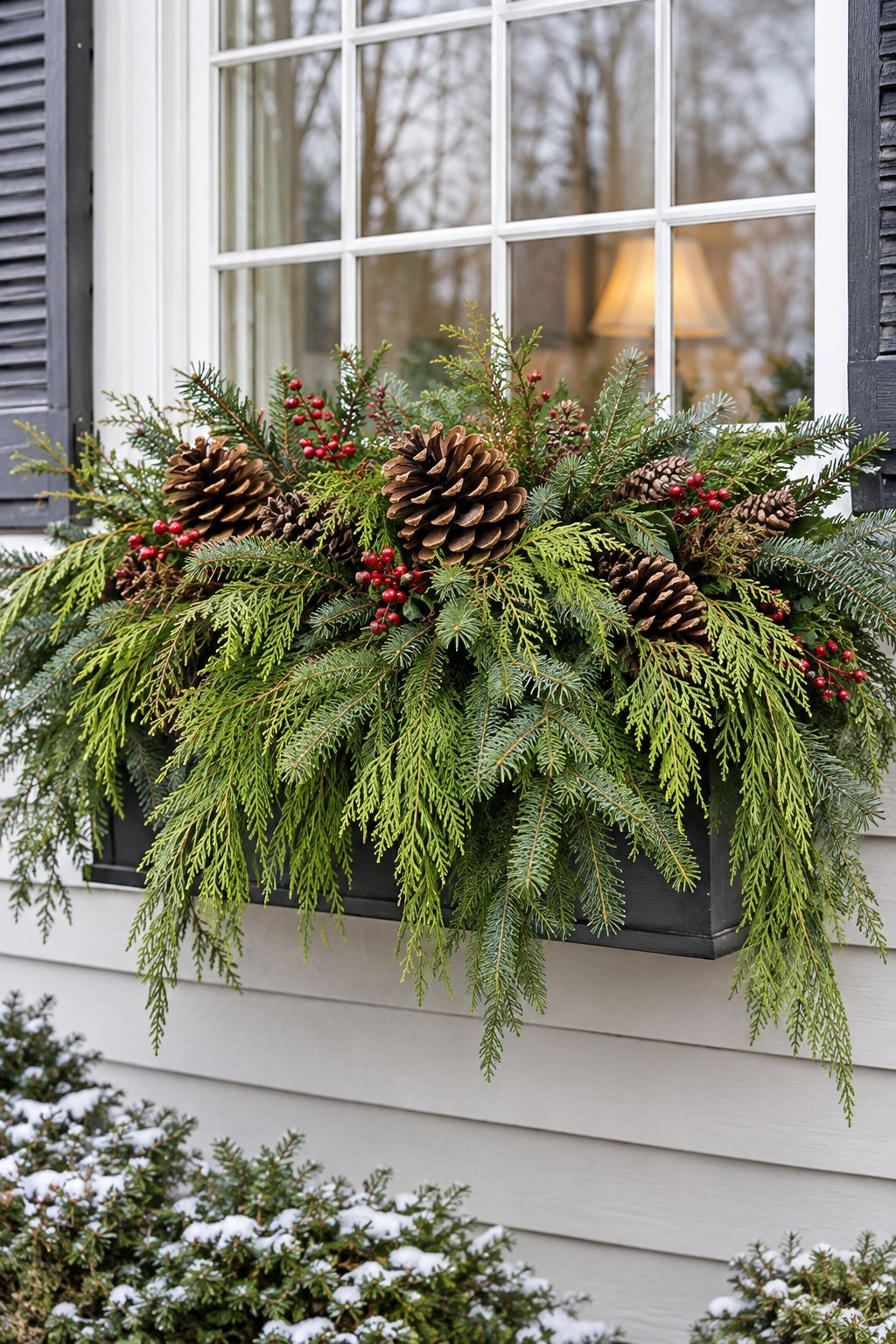
1. Cascading Cedar and Fir Boughs With Oversized Pinecones
Ever filled a window box and had it look like a stiff green hedge? The fix is floppy branches. Cedar and long-needled fir bend and droop on their own, so they spill over the front edge like a green waterfall. Push the stiff stems in the back for height. Then tuck the soft, long boughs along the front lip and let them hang down a good 8 to 12 inches.
Oversized pinecones, like sugar pine or ponderosa cones, give your eye a place to land. Group them in odd numbers, threes or fives, so it looks natural.
Expert Tip From MrPlanter: “Soak your cut boughs in a bucket of water overnight before you arrange them. They’ll drink up and stay green much longer out in the cold.”
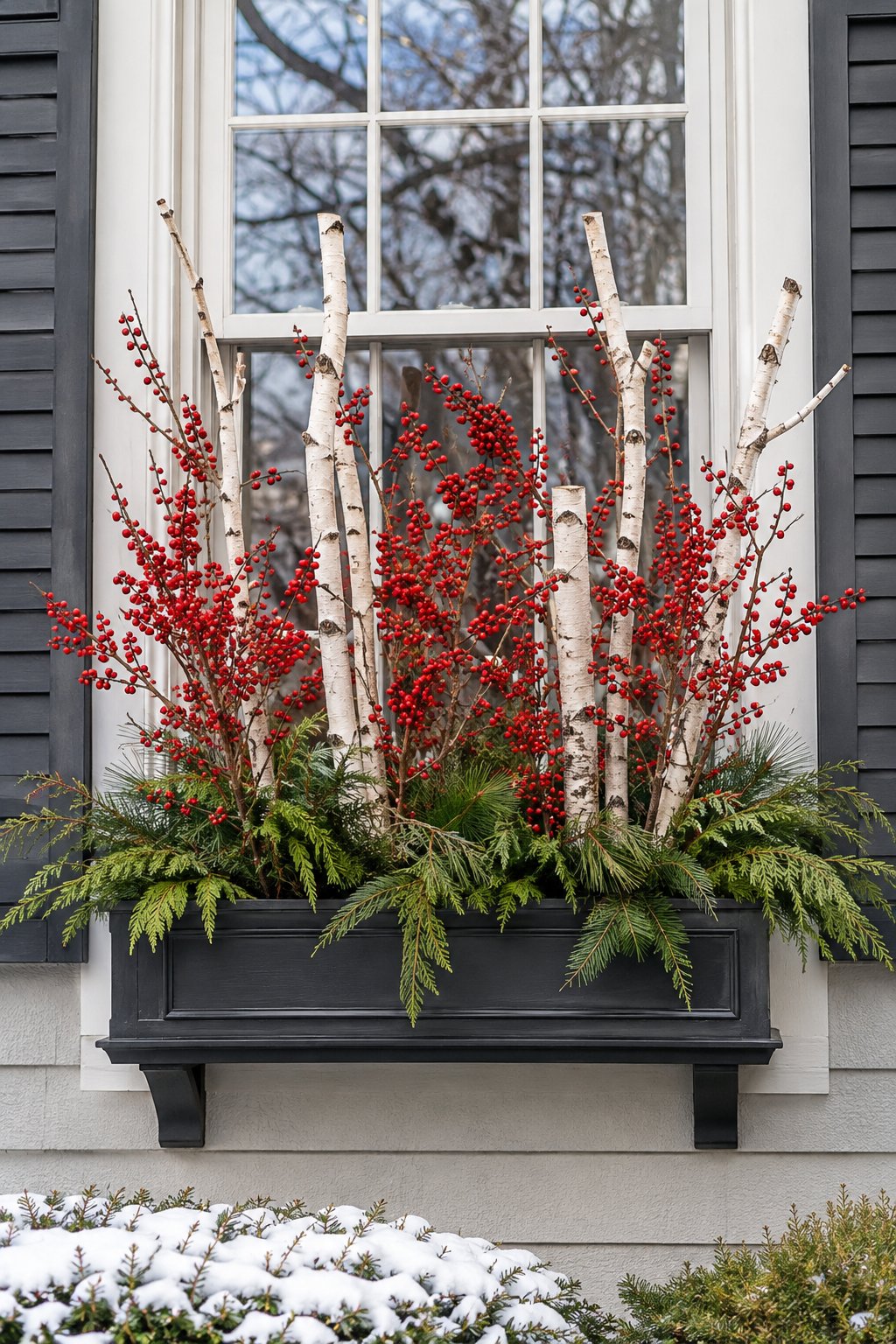
2. White Birch Branches With Red Winterberry Stems
Red looks twice as bright in winter. When the yard turns gray and brown, a few winterberry stems shout from the street. Birch branches play the calm friend here, with their chalky white bark standing tall behind all that red.
Start with a bed of short evergreens to hide the sand. Add three to five birch poles in the back, cut at different heights. Then scatter winterberry through the middle so the berries peek out at different levels. Red dogwood twigs work well too if you want even more color.
Expert Tip From MrPlanter: “Birds love winterberry, so expect a few visitors pecking at your display. Buy a couple of extra stems so you can fill gaps in late January.”
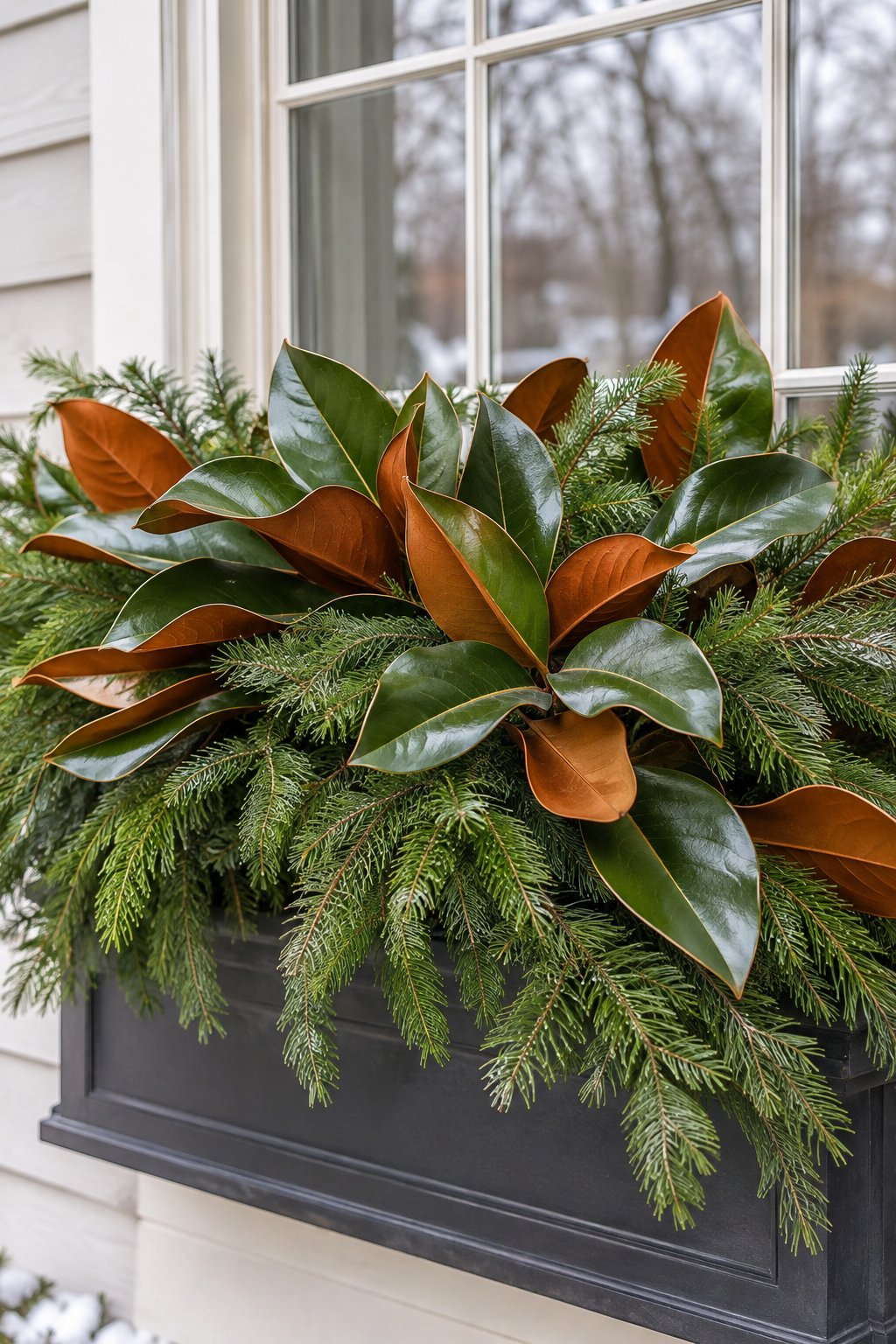
3. Glossy Magnolia Leaves Layered Over Balsam Boughs
Magnolia leaves are the fancy cousin at the evergreen family dinner. One side is shiny green, and the other is a fuzzy brown like suede. Mix both sides into your box and you get two colors from one plant.
Lay down a thick base of balsam fir first. It smells like a Christmas tree lot, which is a nice bonus by the front door. Next, tuck magnolia leaves in clusters of three, turning some to show the brown backs. Add winterberry for the holidays. Pull the berries out after New Year’s and you’ll still have a rich mix of textures until spring.
Expert Tip From MrPlanter: “Magnolia leaves dry out and curl over time, but they still look good that way. Buy a magnolia branch with leaves attached so they stay fresh longer than loose ones.”
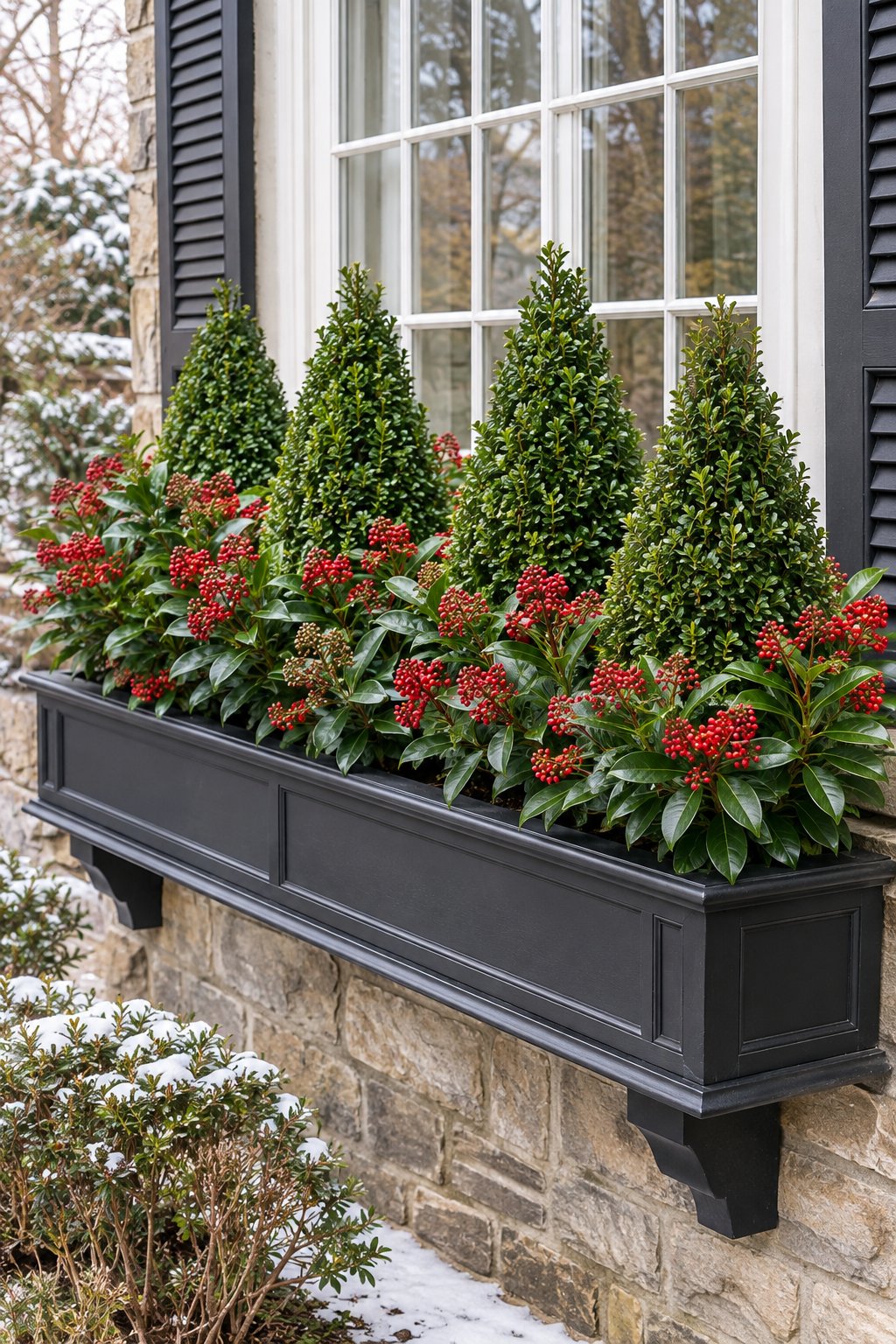
4. Clipped Boxwood Cones Surrounded by Japanese Skimmia
Here’s a surprise: your winter box can be alive and still look tidy all season. Small sheared boxwood cones (a dwarf type like ‘Wee Willie’ fits a box well) give you neat, formal shapes. Japanese skimmia fills the space around them with glossy leaves and red buds or berries.
Skimmia is hardy in zones 7 to 9 and blooms in early spring. So you get a clean winter look now and flowers later. If you like this style, it pairs well with other boxwood garden ideas for your front beds.
Expert Tip From MrPlanter: “Put your skimmia on a shady side of the house, because it burns in strong winter sun. Water the box on mild days when the soil isn’t frozen.”
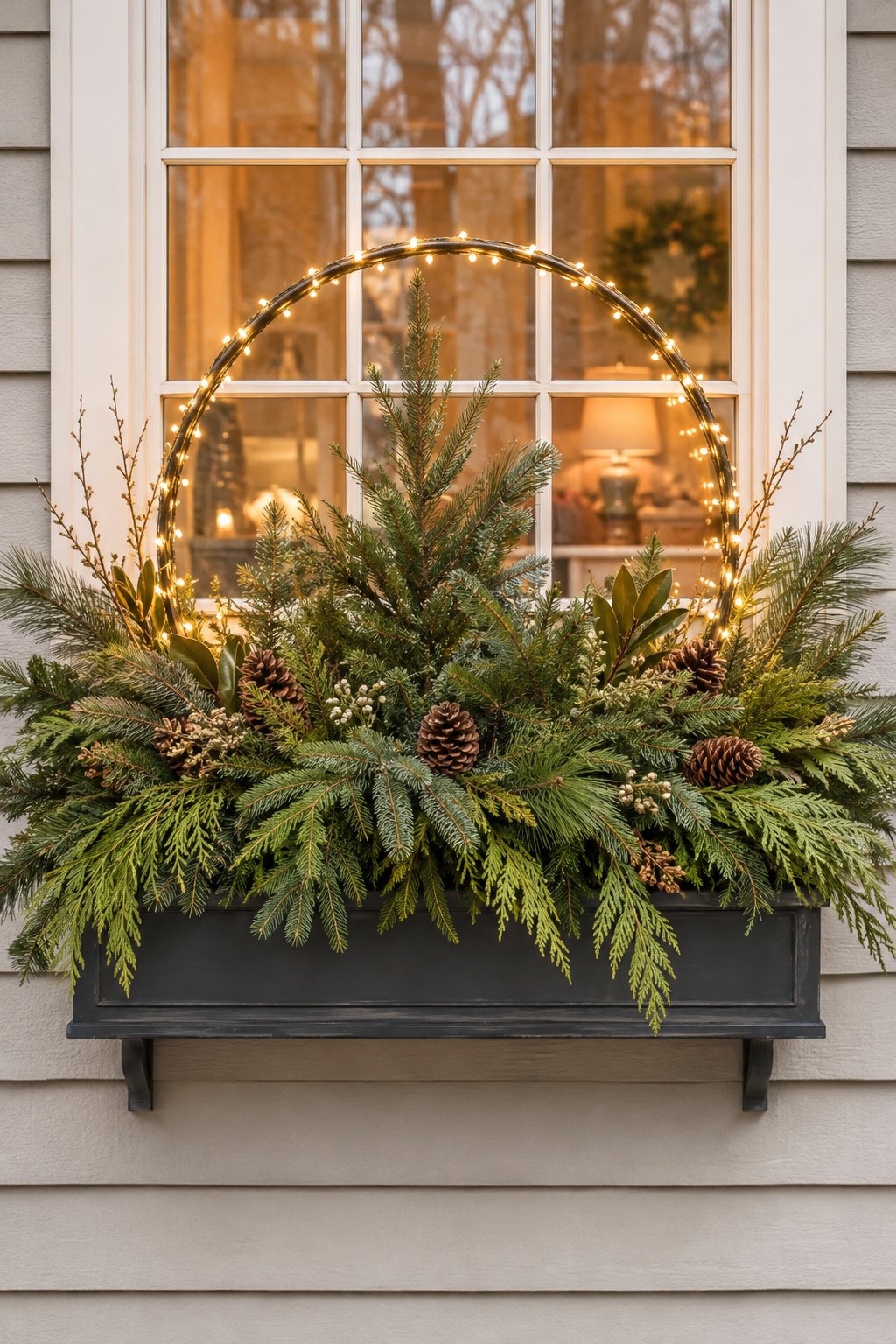
5. A Light-Wrapped Metal Hoop Rising Above Mixed Evergreens
A metal hoop sticking out of a window box sounds odd. Then you see it lit up at dusk, and you want one. This is a farmhouse-meets-sparkle look that costs very little.
Fill the box until it overflows with cedar, pine, and fir. Slip in a few berry stems. Then push an old wine barrel hoop (or metal garden edging bent into a circle) deep into the sand. Wrap it with battery fairy lights. The circle frames your window and gives height without blocking much light. For more glow around the yard, mix in some outdoor Christmas lights ideas on nearby shrubs.
Expert Tip From MrPlanter: “Zip-tie the hoop to the back wall of the box so wind can’t tip it. Pick lights with a timer so they turn on at sunset by themselves.”
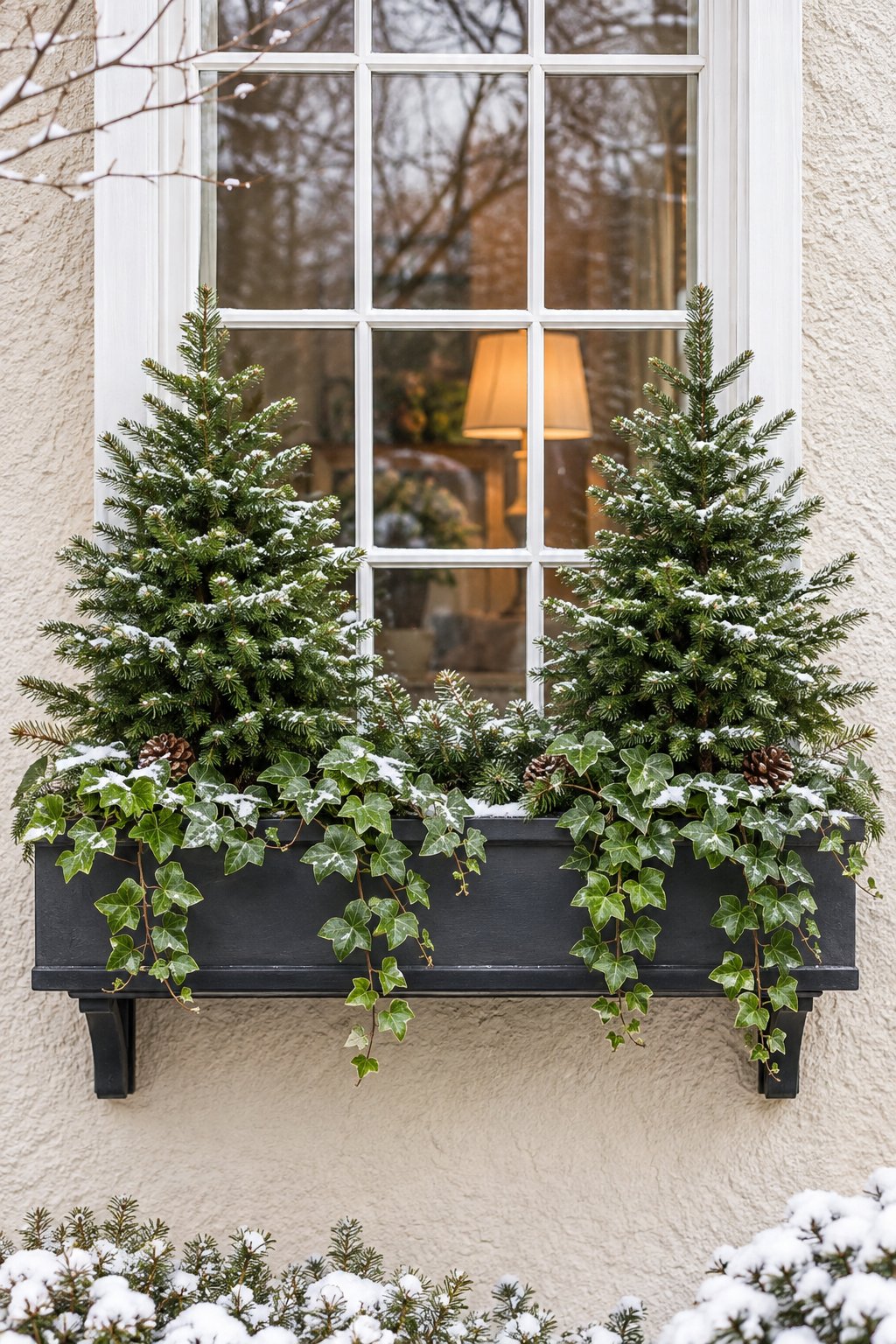
6. Matching Dwarf Spruces With Trailing Ivy
Two matching trees are like bookends. They make everything between them look planned on purpose. Plant one dwarf spruce, such as a dwarf Alberta spruce, at each end of the box.
Fill the middle with English ivy and let it trail over the edge. This is the old “thriller, filler, spiller” idea: the spruces are the thrillers, and the ivy spills. Add a few white flowers or small ornaments in the center for the holidays. In spring, plant both spruces in your garden as evergreen shrubs or keep them in pots by the steps.
Expert Tip From MrPlanter: “Turn the spruces a quarter turn every few weeks so they grow evenly. One-sided sun makes them lean toward the light.”
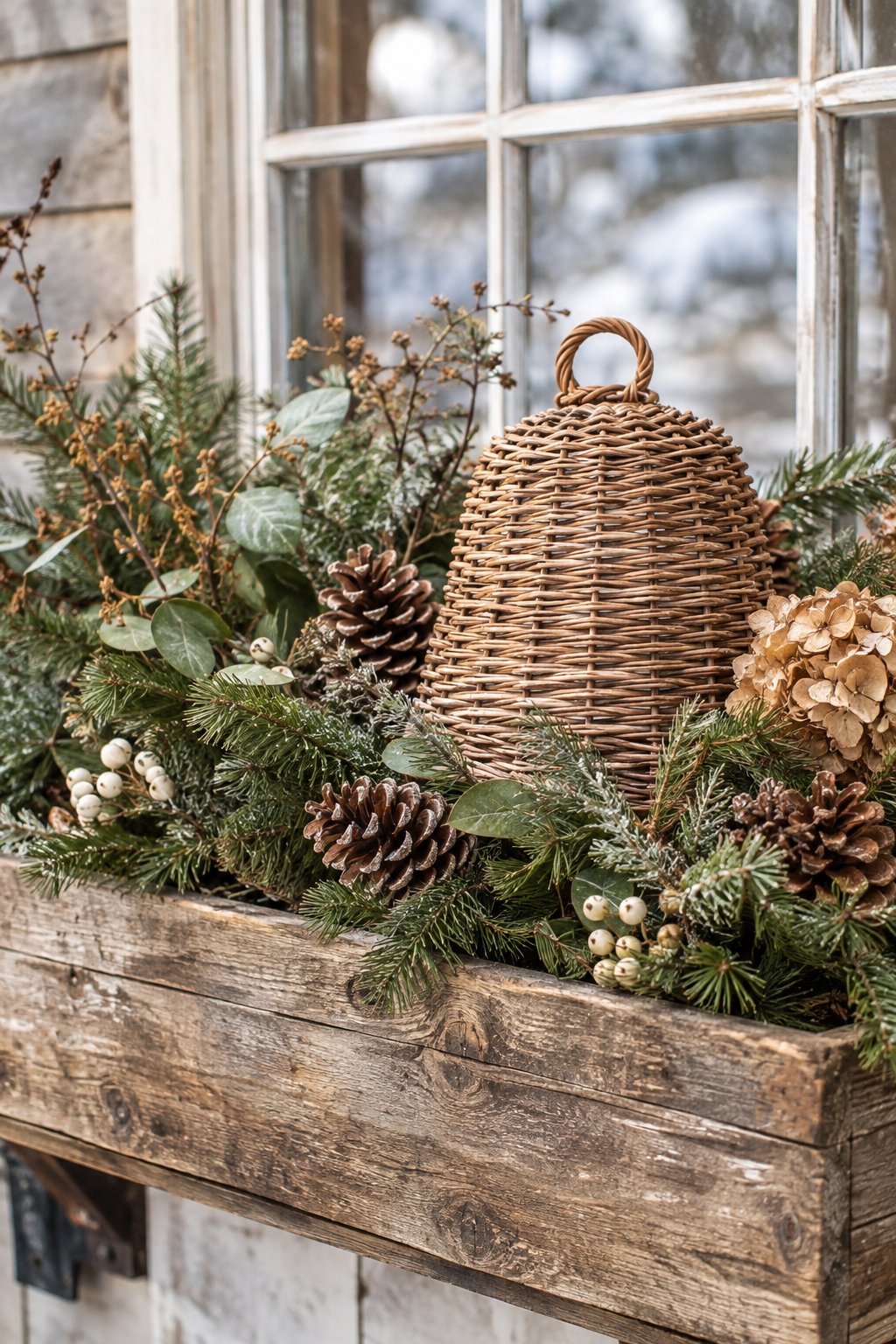
7. A Rustic Wicker Cloche Nestled in a Weathered Wood Window Box
No window boxes on your house? A wooden planter on the porch rail or a garden bench does the same job. Old, gray, weathered wood is perfect here, so don’t toss that tired box in the shed.
Set a wicker cloche, the bell-shaped garden cover, right in the center. Pack fresh greenery, berries, and pinecones around it. Hang a couple of vintage glass ornaments inside the cloche for an old-time farm feel. This style fits right into rustic gardens with split-rail fences and stone paths.
Expert Tip From MrPlanter: “Spray the wicker with a clear outdoor sealer before you set it out. It’ll shrug off snow and rain and last for many winters.”
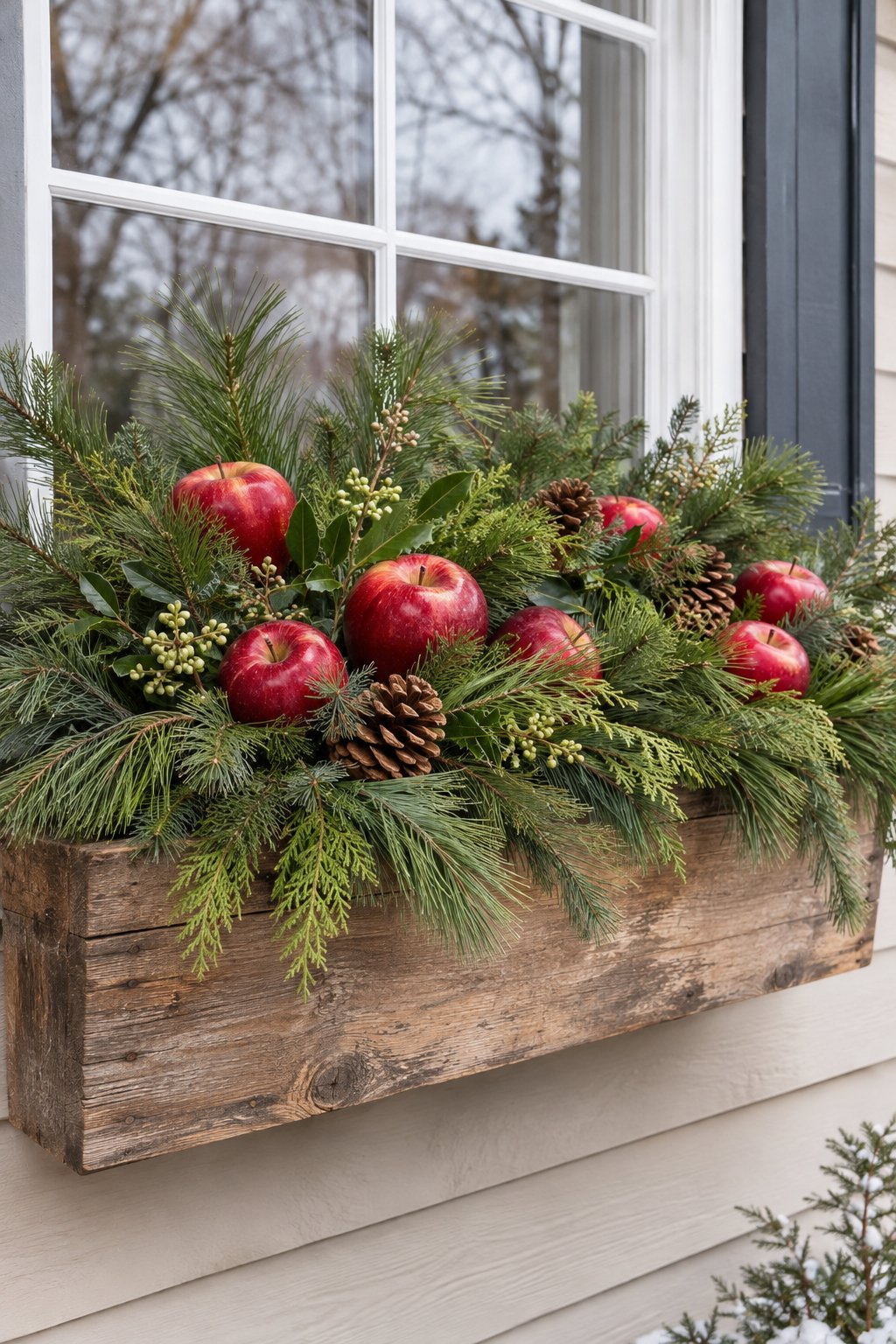
8. Red Apples Tucked Into a Trough of Pine Boughs
Apples in a window box? Yes, and they look like something out of a storybook cottage. The trick is building a little trough for them to sit in.
Stand some pine branches upright in the back. Lay others flat across the front, pointing out. That leaves a dip in the middle. Pile fresh red apples there, then add pinecones and winterberry around them. Cold weather keeps apples firm for a long time.
One warning: deer love apples too. If they visit your yard, place this box up high or near the door where you’ll see them coming.
Expert Tip From MrPlanter: “Pick firm, tart apples like Red Delicious or Fuji for a deep red shine. Check them every week and swap out any soft ones before they spoil.”
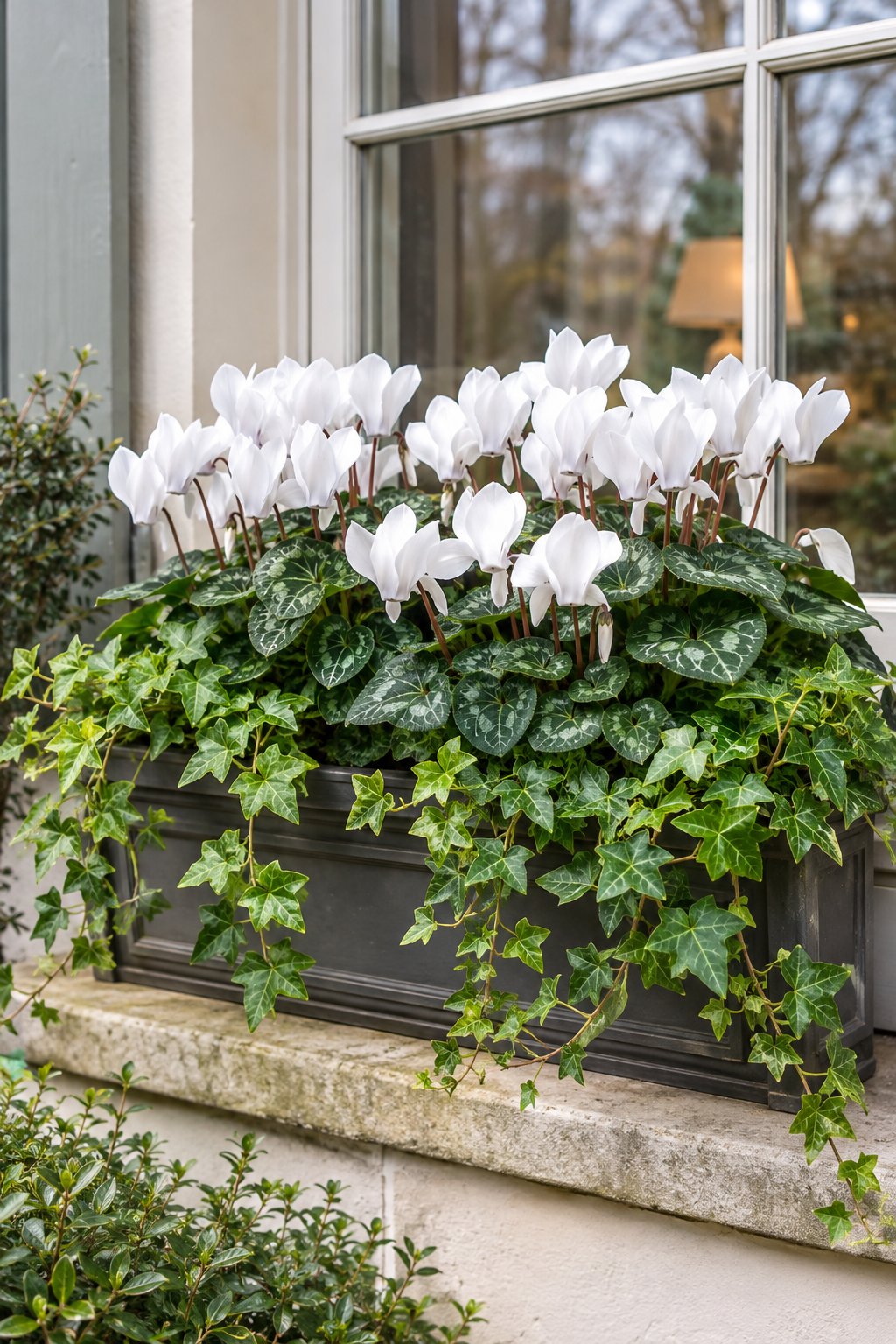
9. White Cyclamen and Ivy for Mild-Winter Gardens
Live somewhere warm and dry? Cut evergreens turn brown fast in places like Southern California or Arizona. Living plants are your friend instead.
Start with a bed of ivy in shades from dark green to lime. Tuck in white cyclamen, with its swept-back petals that look like tiny moths. Add a few winter pansies and some potted ornamental peppers for color. No peppers at the store? Try kumquats or small lemons. If you love this clean look, more white flowers can carry it into your beds.
Expert Tip From MrPlanter: “Water cyclamen at the soil line, never over the leaves. They like cool roots and bright shade, so skip the hot west-facing window.”
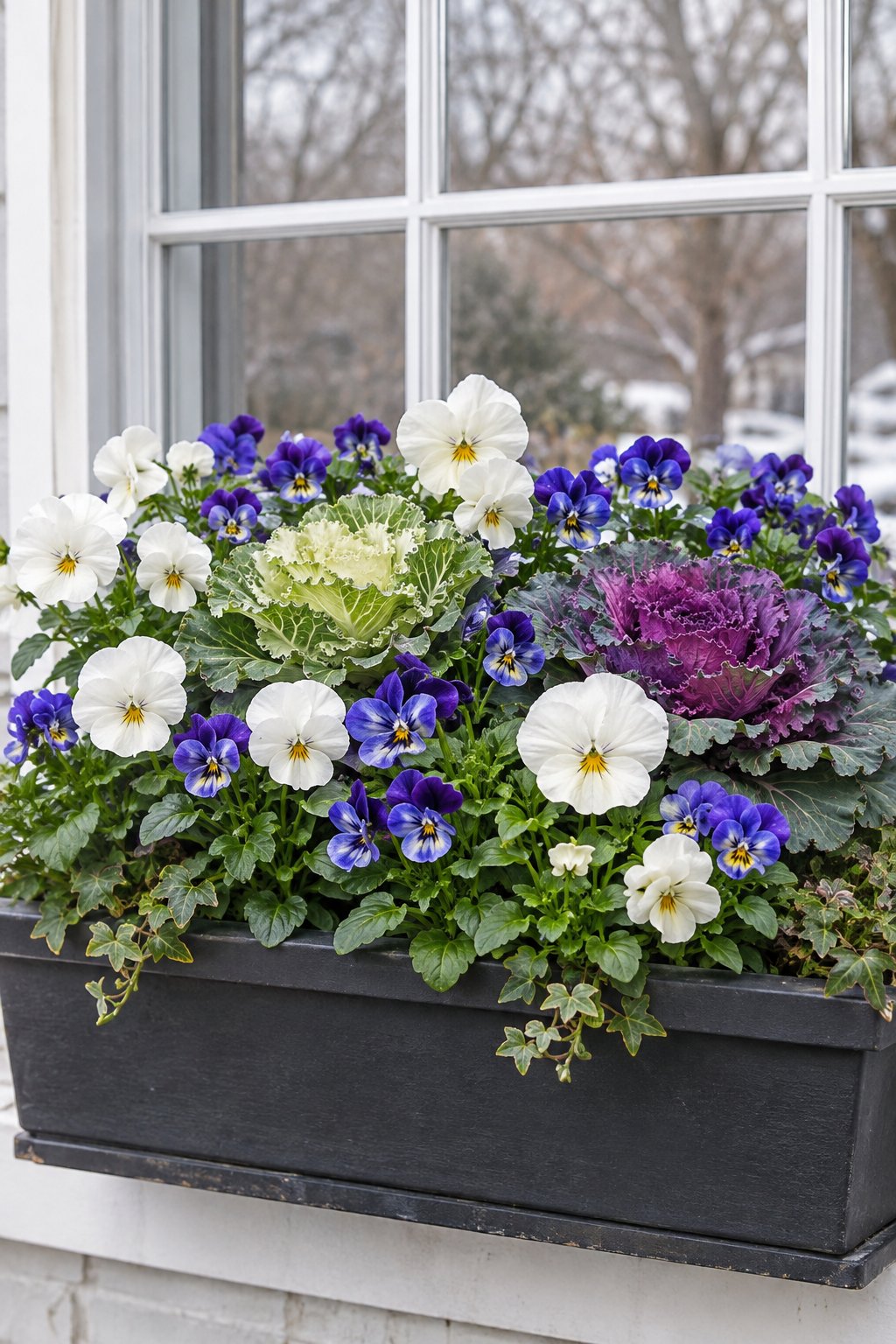
10. White Pansies, Blue Violas, and Ornamental Kale
Pansies are tougher than they look. They can freeze solid, thaw out, and keep blooming like nothing happened. That makes them great for zones with cold but not brutal winters.
Plant ornamental kale in the center. Its frilly rosettes turn deeper pink and purple as nights get colder. Ring it with white pansies and blue violas for an icy, winter wonderland palette. It’s a nice break from the usual red and green. In the coldest zones, plant this in fall and enjoy it until the deep freeze hits, then switch to cut greens.
Expert Tip From MrPlanter: “Pinch off faded pansy blooms each week to keep new ones coming. Kale gets leggy, so plant it a little deeper than it sat in the nursery pot.”
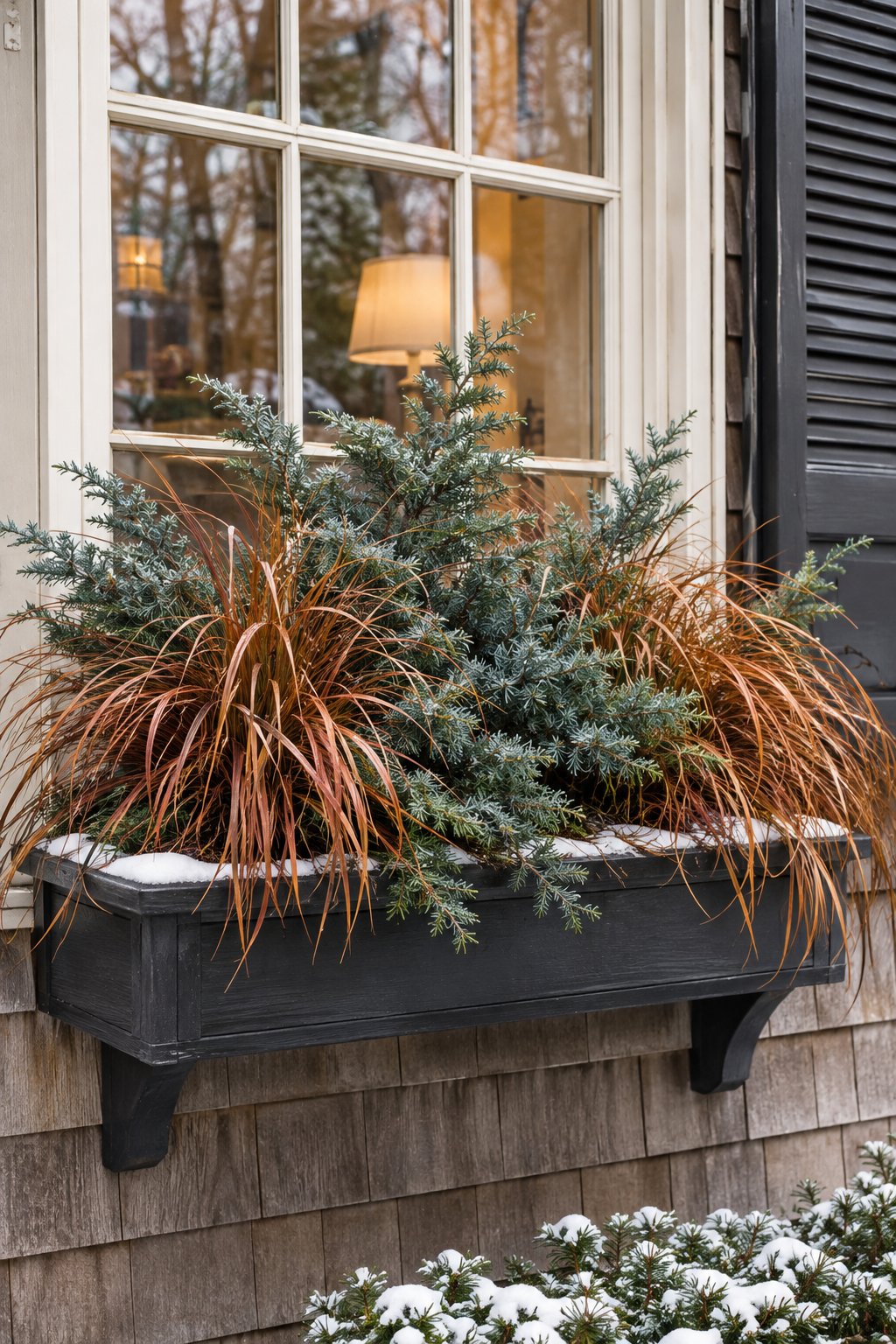
11. Blue Star Juniper With Bronze Leatherleaf Sedge
Who says winter has to mean red? This box skips holiday colors and looks modern. Blue Star juniper forms a low, silvery-blue mound. Leatherleaf sedge (Carex buchananii) shoots up in curly bronze blades that look like copper wire.
The cool blue and warm bronze make each other pop. Both plants stay put through winter, so you can leave this box alone until spring. It suits a modern house with dark trim or a garden full of grasses.
Expert Tip From MrPlanter: “Plant the juniper in front so it can spill a bit, and put the sedge behind it. Comb the sedge with your fingers in spring to pull out old, dead blades.”
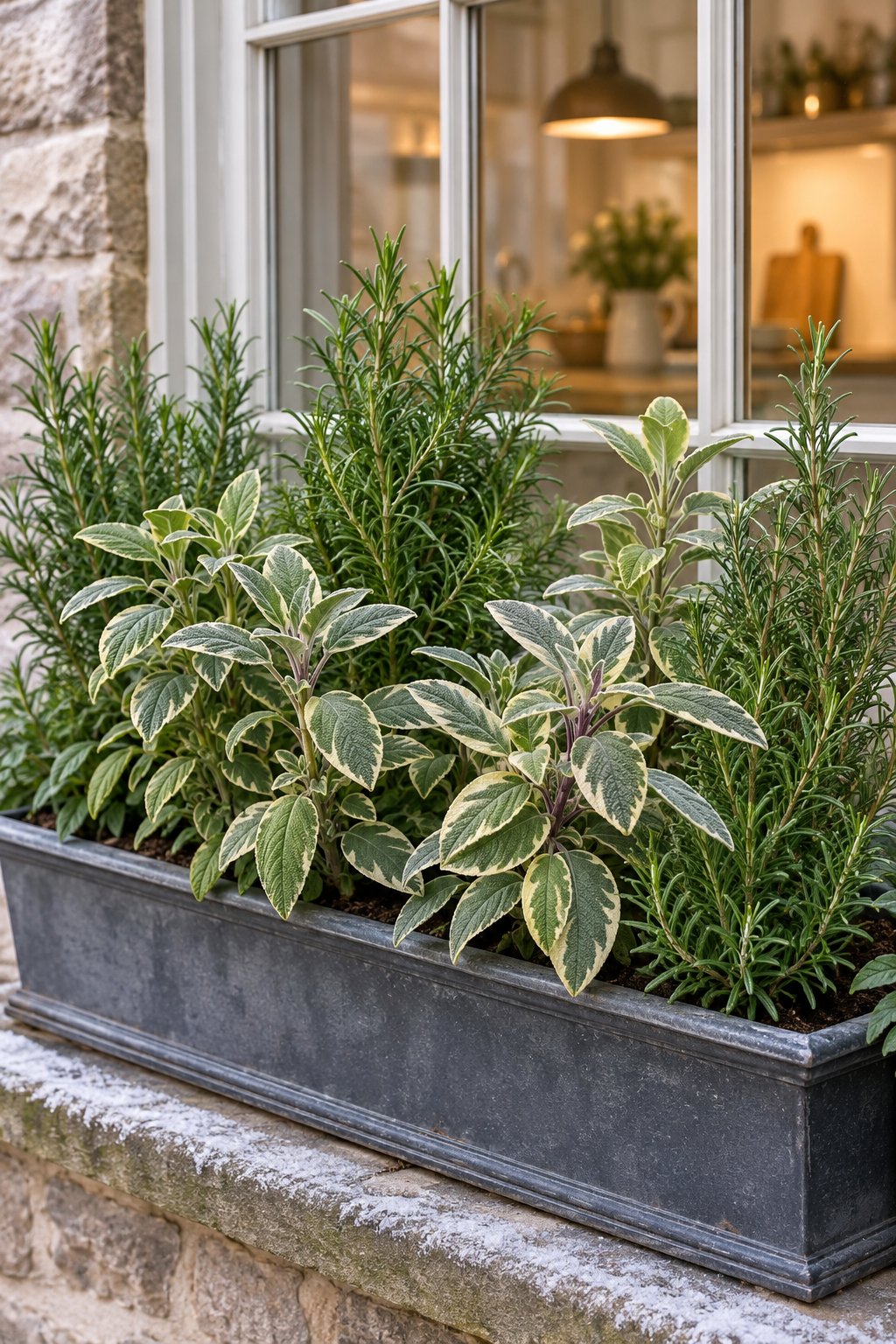
12. Rosemary and Variegated Sage in a Sheltered Kitchen-Garden Window Box
A window box you can cook from? Rosemary and sage are evergreen herbs, so they stay green while your other herbs disappear. Variegated sage adds cream and green stripes that look pretty even when nothing else is growing.
The word “sheltered” is the key. Put this box on a south or east wall, under an overhang, out of strong winter wind. Rosemary handles cold down to about zone 7. Sage is hardier. A box by the back door or garden shed lets you snip a sprig for soup on your way in.
Expert Tip From MrPlanter: “Use a gritty, fast-draining mix, because wet roots kill rosemary faster than cold does. Only snip a little at a time so the plants keep their shape.”
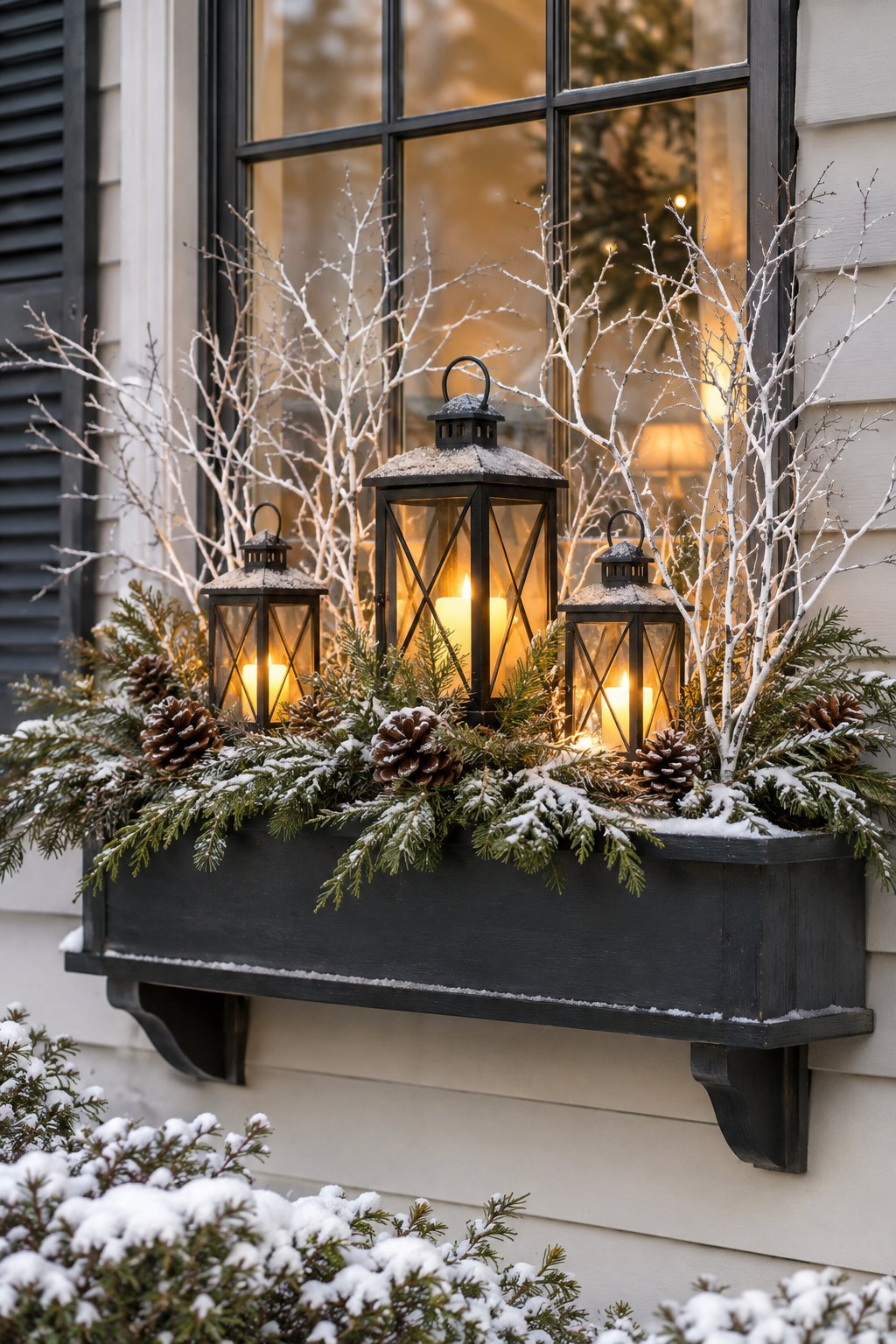
13. Outdoor LED Candle Lanterns Framed by White Twigs
Real candles in a window box sound cozy until you remember wind, dry needles, and a wooden house. Flameless LED candles give you the same warm flicker with zero worry. Set two or three inside small lanterns.
Frame them with white-painted twigs or birch branches standing up behind. Add greenery around the base and a few red berry sprigs. At night, the glow lights up the white twigs, so the box looks good even after dark. It’s a nice touch for the window nearest your front porch Christmas decor.
Expert Tip From MrPlanter: “Buy LED candles with a 6-hour timer so they shut off on their own. Use rechargeable batteries, because cold weather drains regular ones fast.”
How to Choose a Winter Window Box Design
Pick your design by your winter first, then your house style, then your budget. A gorgeous box that dies in January doesn’t help your curb appeal. Use this table to compare all 13 ideas quickly.
Idea
Type
Best Climate
Upkeep
Holiday-Only?
1. Cedar and fir boughs
Cut
Cold
Low
No
2. Birch and winterberry
Cut
Cold
Low
No
3. Magnolia and balsam
Cut
Cold to mild
Low
No
4. Boxwood and skimmia
Living
Zones 7–9
Medium
No
5. Lit metal hoop
Cut + lights
Cold
Low
Mostly
6. Dwarf spruce and ivy
Living
Cold to mild
Medium
No
7. Wicker cloche
Cut
Cold
Low
No
8. Apples and pine
Cut
Cold
Medium
No
9. Cyclamen and ivy
Living
Warm
Medium
No
10. Pansies, violas, kale
Living
Mild to cool
Medium
No
11. Juniper and sedge
Living
Cold to mild
Low
No
12. Rosemary and sage
Living
Zone 7+
Medium
No
13. LED lanterns
Cut + lights
Any
Low
Mostly
Which Plants Can Handle Your Local Winter in Containers?
Plants in a box get colder than plants in the ground. Their roots sit in a small block of soil with cold air on every side. A good rule is to pick plants rated one to two zones colder than where you live. So if you’re in zone 6, choose plants hardy to zone 4 or 5. Juniper, dwarf spruce, and boxwood handle this well. Cyclamen, rosemary, and skimmia need milder winters.
Should You Use Living Plants, Cut Branches, or Both?
Cut branches are the easiest choice for cold regions. Fill the box with sand, push stems in, and you’re done until spring. Living plants cost more up front, but you can plant them in the yard afterward. Many people mix both: one or two live evergreens for structure, with cut boughs and berries tucked around them.
How Can You Match the Display to Your Home and Garden?
Look at your trim, door, and siding color before you shop. A white farmhouse loves red berries and birch. A brick colonial suits formal boxwood. A modern home looks sharp with juniper and sedge. Repeat one element from your boxes in your yard, too. Matching Christmas outdoor planter ideas by the steps ties the whole front together.
Which Materials Suit Your Budget and Maintenance Time?
Free greenery is all around you. Prune your own evergreen shrubs, or ask a friend with a wooded lot. Nurseries, florists, and farmers’ markets also sell cut boughs in late fall. Holly dries out quickly, while most conifers stay fresh for weeks. Fallen pinecones cost nothing; dab them with white craft paint for a snowy look and seal glitter with a fixative spray.
How to Install and Maintain Outdoor Winter Window Boxes
A winter box needs a strong mount, clear drainage, and a quick check after storms. Get those right and the rest takes minutes a month.
Can Your Brackets Support the Fully Loaded Box?
Wet sand, snow, and ice add up fast. A 36-inch box full of damp sand weighs well over 50 pounds, and snow piles more on top. Screw brackets into wall studs or solid framing, never into siding alone. Check for loose screws or rust before you fill the box. If your box already held fall window boxes, give the hardware a firm tug before winter loading.
How Do You Keep Drainage Holes Clear?
Frozen water in a box expands and can crack plastic or split wood. Lay a piece of mesh screen over each drainage hole before adding sand or soil. That keeps the holes open while holding the fill in. Clear away ice from the bottom edge after big storms so melting snow can drain.
How Should You Anchor Branches and Decorations Against Wind?
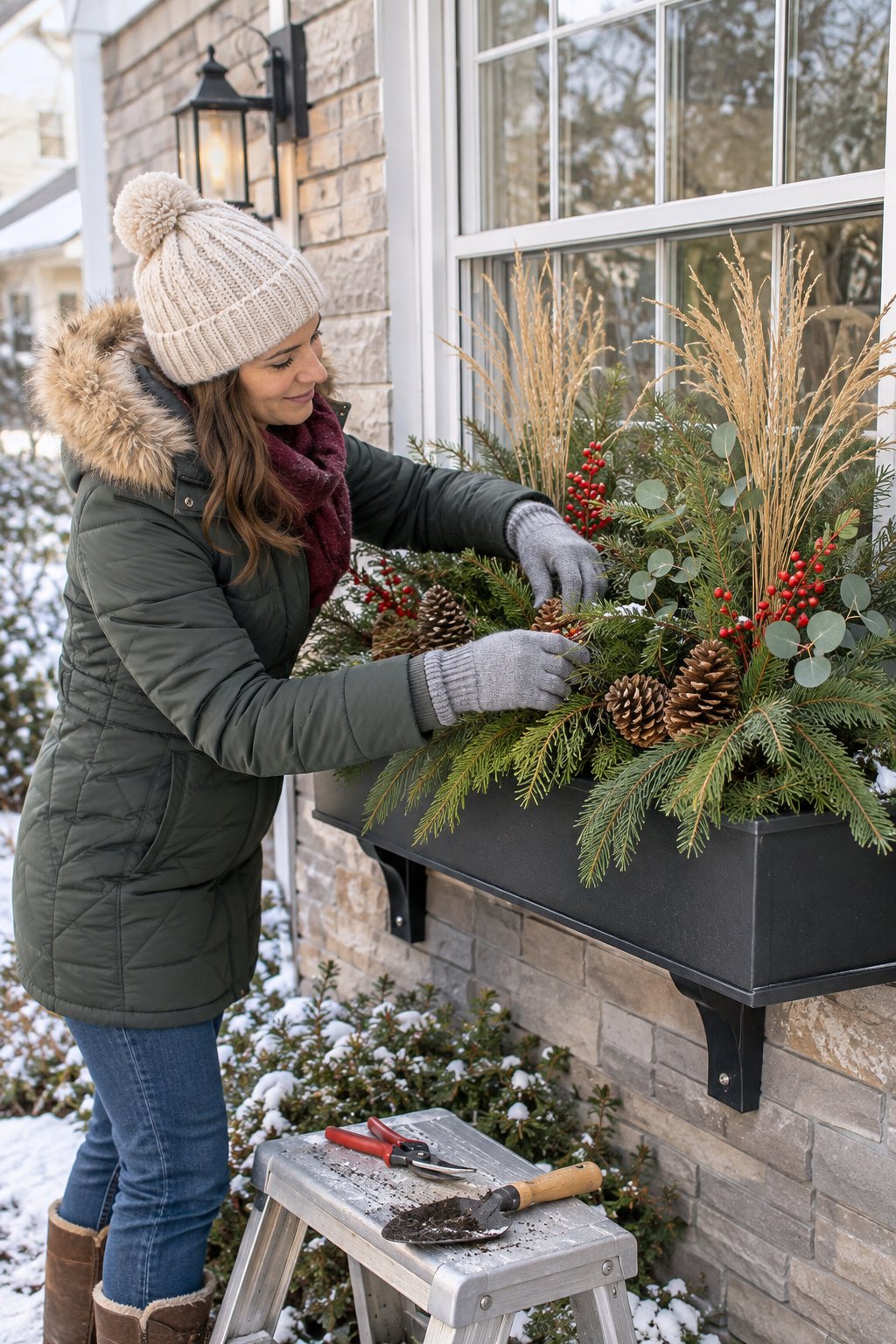
Push every stem at least 4 to 6 inches into the sand. Sand works better than soil for cut displays because it won’t freeze around your stems as hard, so you can still rearrange things. Florist foam blocks are another option. Wire pinecones and ornaments to stems with green floral wire, and zip-tie tall pieces like hoops or lanterns to the box.
When Should You Water Plants or Replace Cut Greenery?
Water living plants on mild days when the soil has thawed, about every two to three weeks if there’s no rain or snow. Evergreens lose moisture through their needles all winter, and dry roots hurt them more than cold. Cut boughs need no water once they’re in the sand. Swap out any that turn brown or brittle, which happens sooner with holly and in sunny, windy spots.
How Can You Refresh the Display After the Holidays?
Pull the ornaments, ribbon, and red glass balls in early January. Keep the greens, pinecones, and twigs so the box still looks wintry. Add fresh white twigs, silver foliage, or a few new berry stems to fill gaps. In late February, tuck in pansies on warm days for an early hint of spring, then clear the cut greens out once daytime temperatures stay above freezing.
I’m Anirban Saha, the Founder and Owner of MrPlanter.com. I pay the bills as a software developer, although my BTech is actually in Electronics and Communication. I really love my day job, but what gives me energy every day is interacting with my indoor plants and taking care of them. I have been successfully nurturing and maintaining houseplants for over 10 years now.
📚🔍 Our content undergoes thorough review and fact-checking before publication. For additional details, explore our strict Editorial Policy to deliver helpful content. 📝🔒