As an Amazon Associate, MrPlanter.com earns from qualifying purchases.
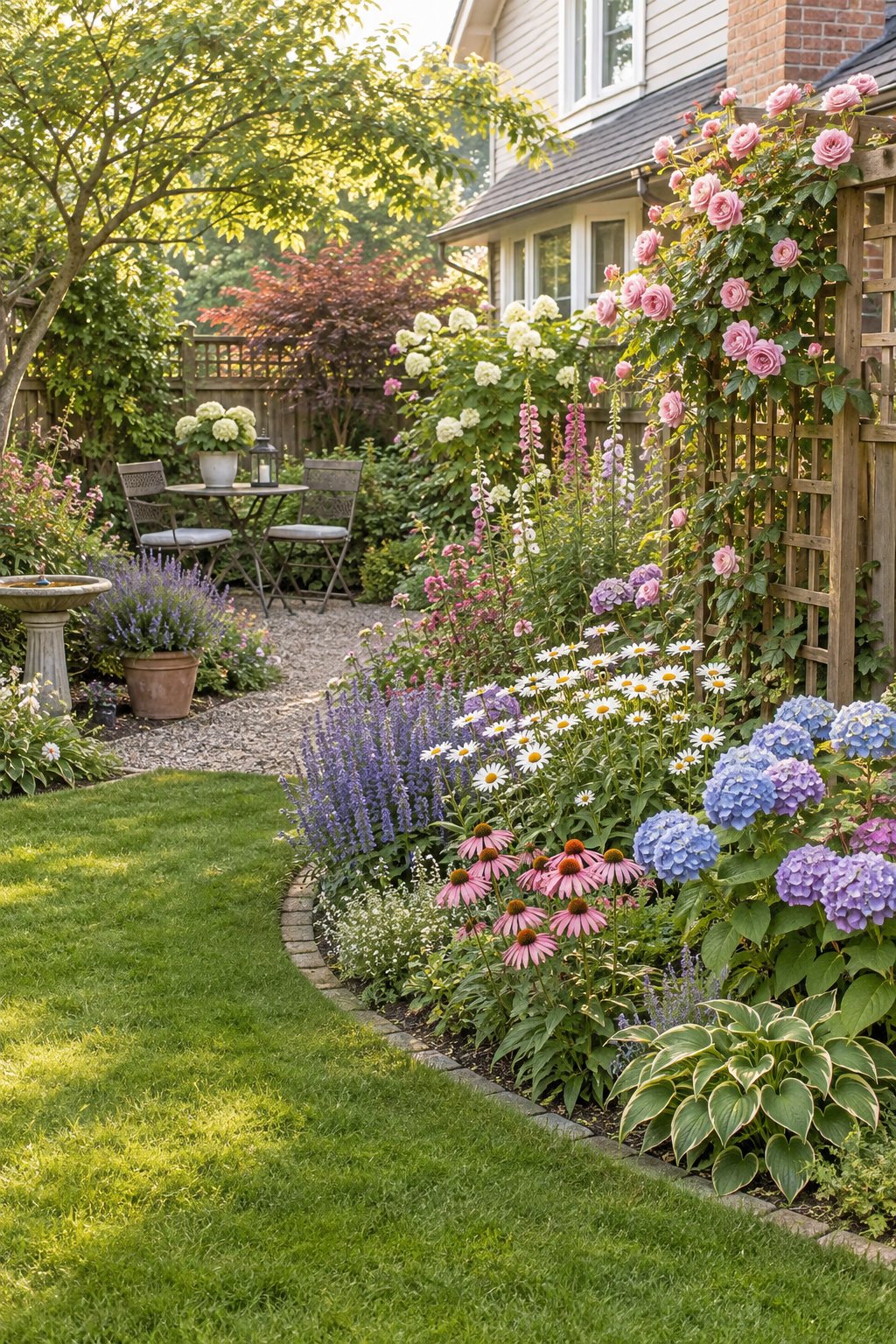
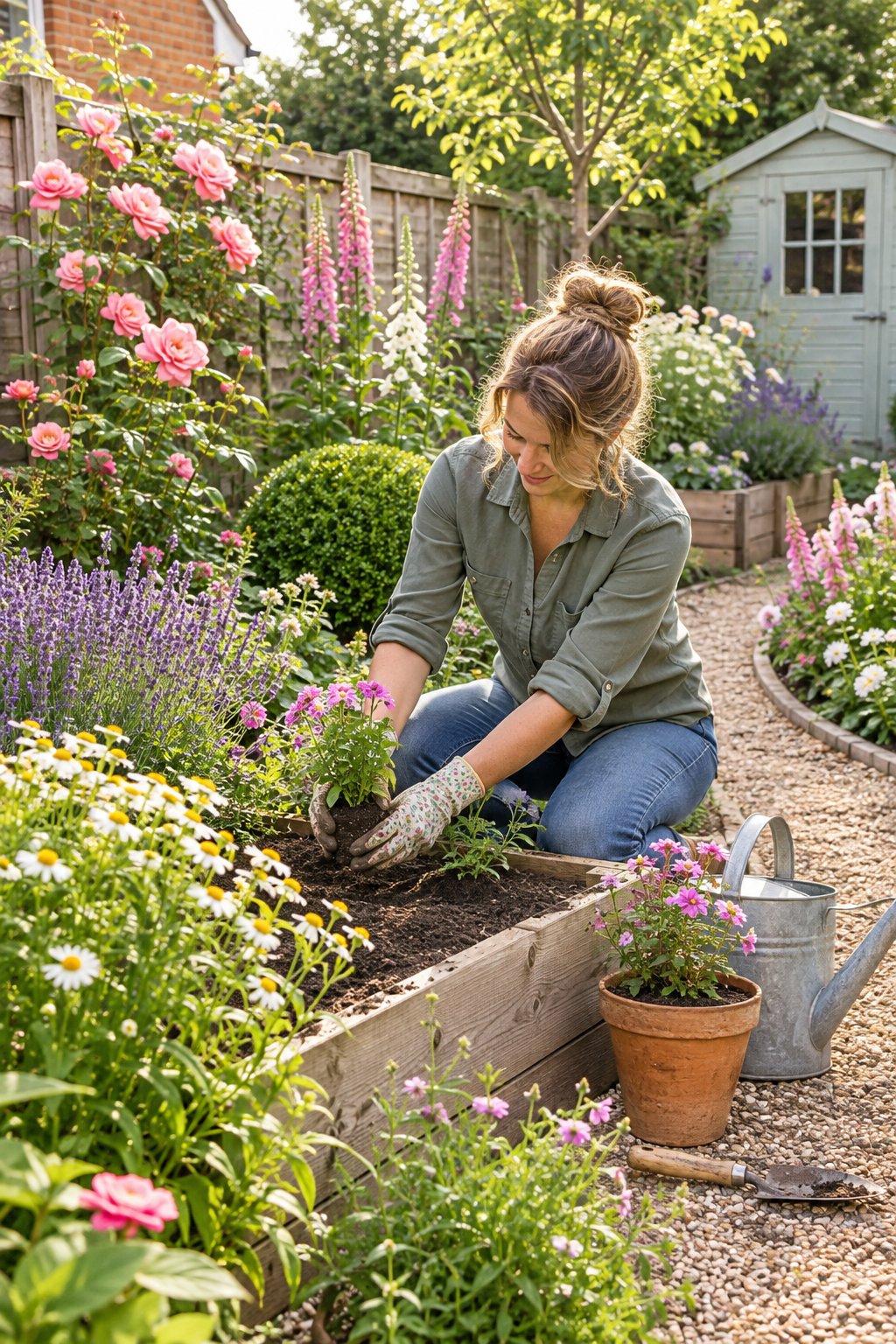
You can get the classic English garden look in an American yard without a manor house or a team of gardeners. Every great English garden is built from a few repeating parts: layered flower borders, soft winding paths, clipped green structure, and a few quiet places to sit.
If you combine those parts, your backyard, front yard, or side garden starts to feel like it has been growing for decades.
The fastest way to get English garden charm is to pair loose, overflowing cottage plantings with a few crisp, formal features like hedges, arches, and edged paths. That push and pull between wild and tidy is the whole trick.
The 23 English Garden landscaping ideas below range from weekend projects like a lavender walk to bigger builds like dry stone terraces.
The style also has a weather problem. Many classic English plants love cool, damp summers, and much of the US gets hot, humid, or dry ones. Each idea works best when you match the plant to your USDA hardiness zone and swap in regional plants where needed. You’ll find advice for that near the end.
1. Layer Cottage Borders With Roses, Salvias, and Hardy Geraniums
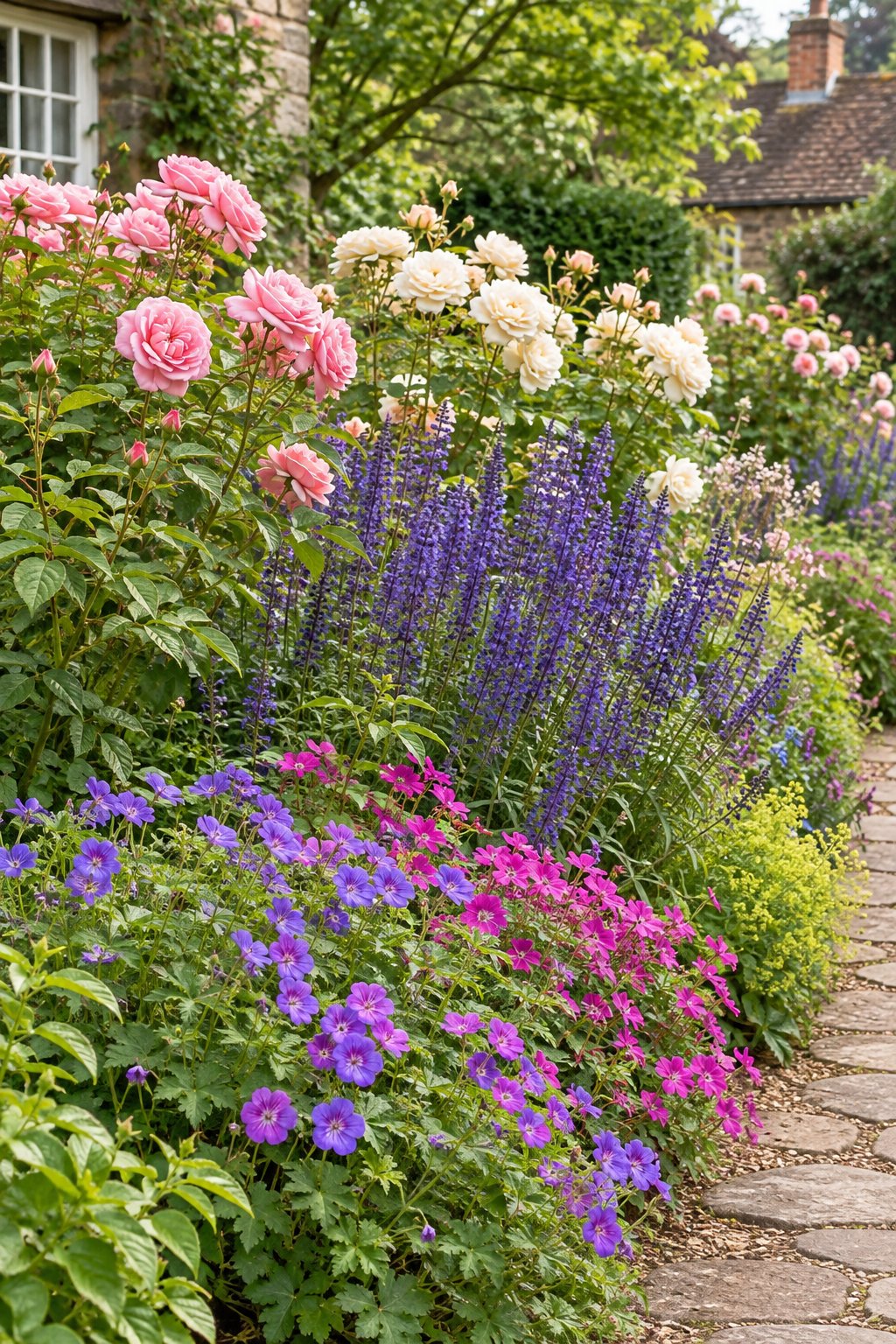
Ever plant a flower bed that looks great for two weeks and then goes flat? A layered border fixes that. Put shrub roses in the back, upright salvias in the middle, and hardy geraniums (often called cranesbill) along the front edge. The geraniums spill over and hide the bare knees of the roses, which is a rose’s least flattering look.
Salvias like ‘May Night’ rebloom if you cut them back after the first flush. Hardy geraniums like ‘Rozanne’ flower for months. Space shrub roses 3 to 4 feet apart so air can move and leaves stay healthy. For more mix-and-match plant combos, browse these cottage garden ideas.
Expert Tip From MrPlanter: “Plant in groups of three or five so each color reads from across the yard. Single plants dotted around look busy, but clumps look planned.“
2. Train Climbing Roses Over a Garden Entrance Arch
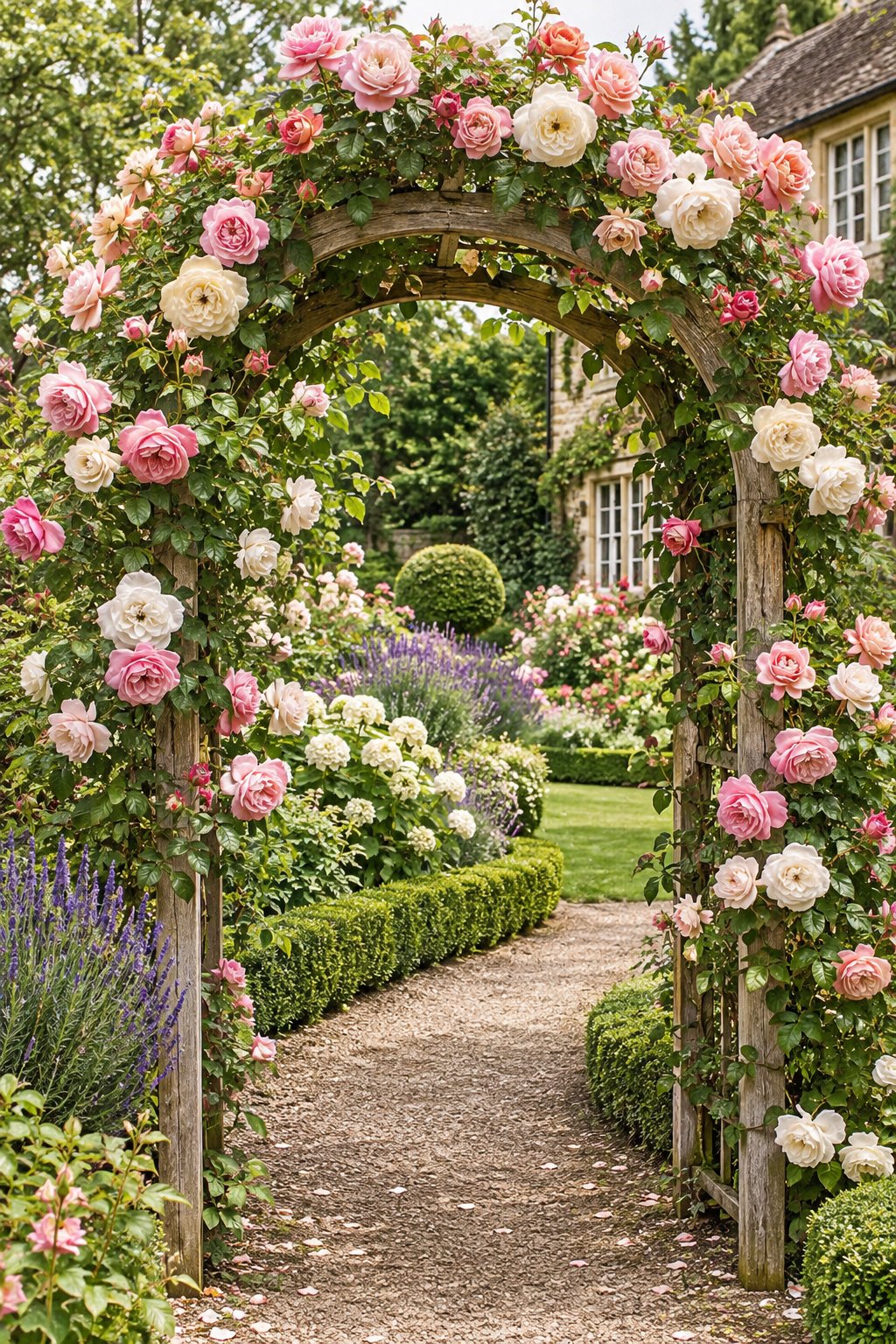
Here’s a surprise: climbing roses flower best when you bend their canes sideways. A cane trained flat sends up lots of short flowering shoots, while a cane pointing straight up blooms mostly at the tip. So on an arch, you’ll wrap canes gently around the posts in a loose spiral.
Pick a sturdy metal or cedar arch, at least 7 feet tall and 4 feet wide, so you’re not ducking thorns. Repeat bloomers like ‘New Dawn’ handle a range of climates and reach 8 to 12 feet. Tie canes with soft garden tape, never wire. You’ll find more climbing and shrub rose picks among these rose garden ideas.
Expert Tip From MrPlanter: “Plant the rose about a foot out from the post, then lean it in. That gives the roots room to grow and keeps them out of the dry soil right at the base.“
3. Lay a Meandering Gravel Path With Stone Edging
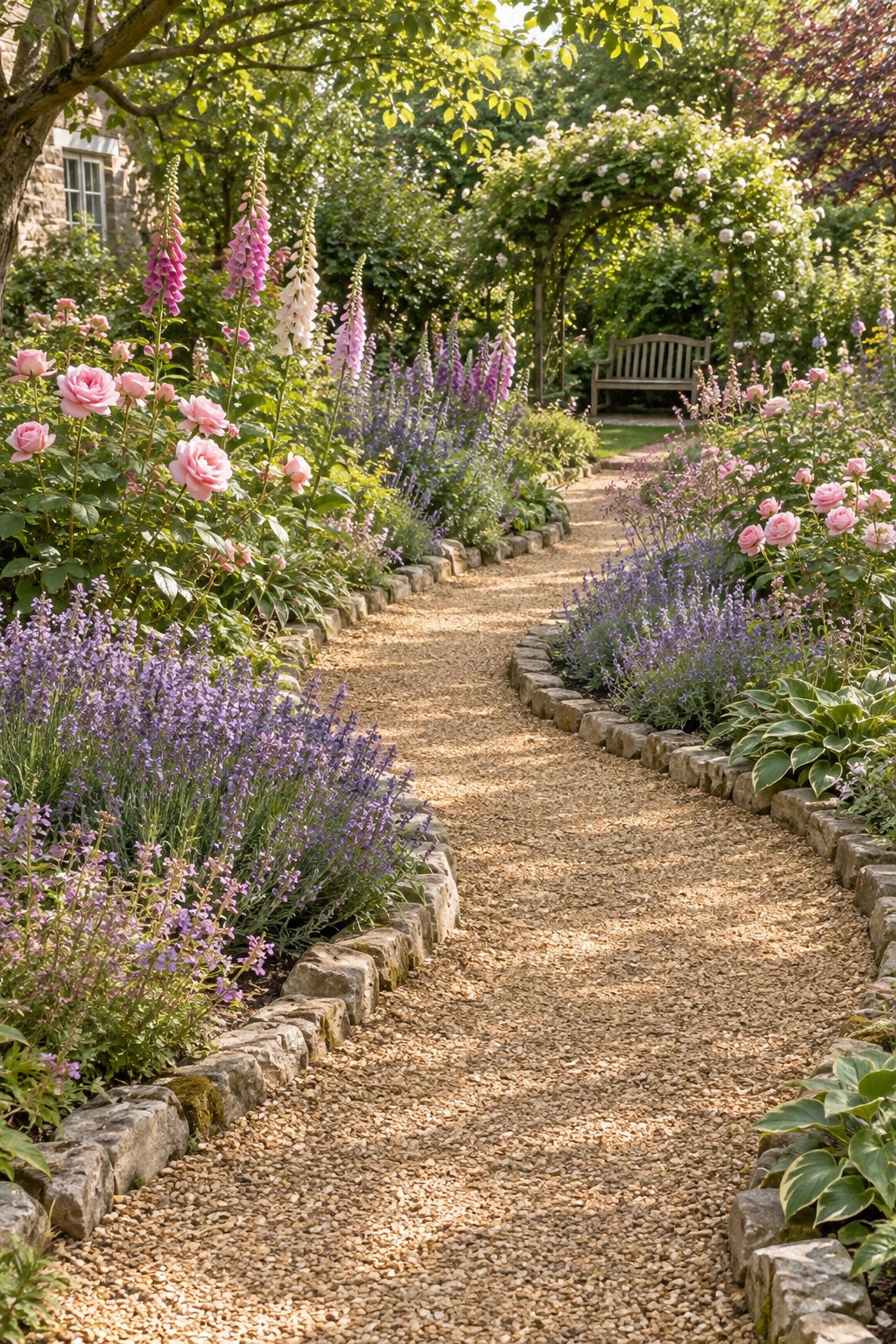
A straight path says “walk to the shed.” A curved one says “come see what’s around the bend.” That little mystery is why English gardens feel bigger than they are.
Make your path 3 to 4 feet wide so two people or a wheelbarrow can pass. Dig out 4 inches, lay landscape fabric, add compacted crushed stone, then top with pea gravel or decomposed granite. Fieldstone or brick edging keeps the gravel from wandering into your beds. Mix up surfaces and styles with these gravel garden ideas, and pick a border that suits your soil from these garden edging ideas.
Expert Tip From MrPlanter: “Lay a garden hose on the ground to test your curve before you dig. Leave it there a day and walk past it a few times to see if it feels right.“
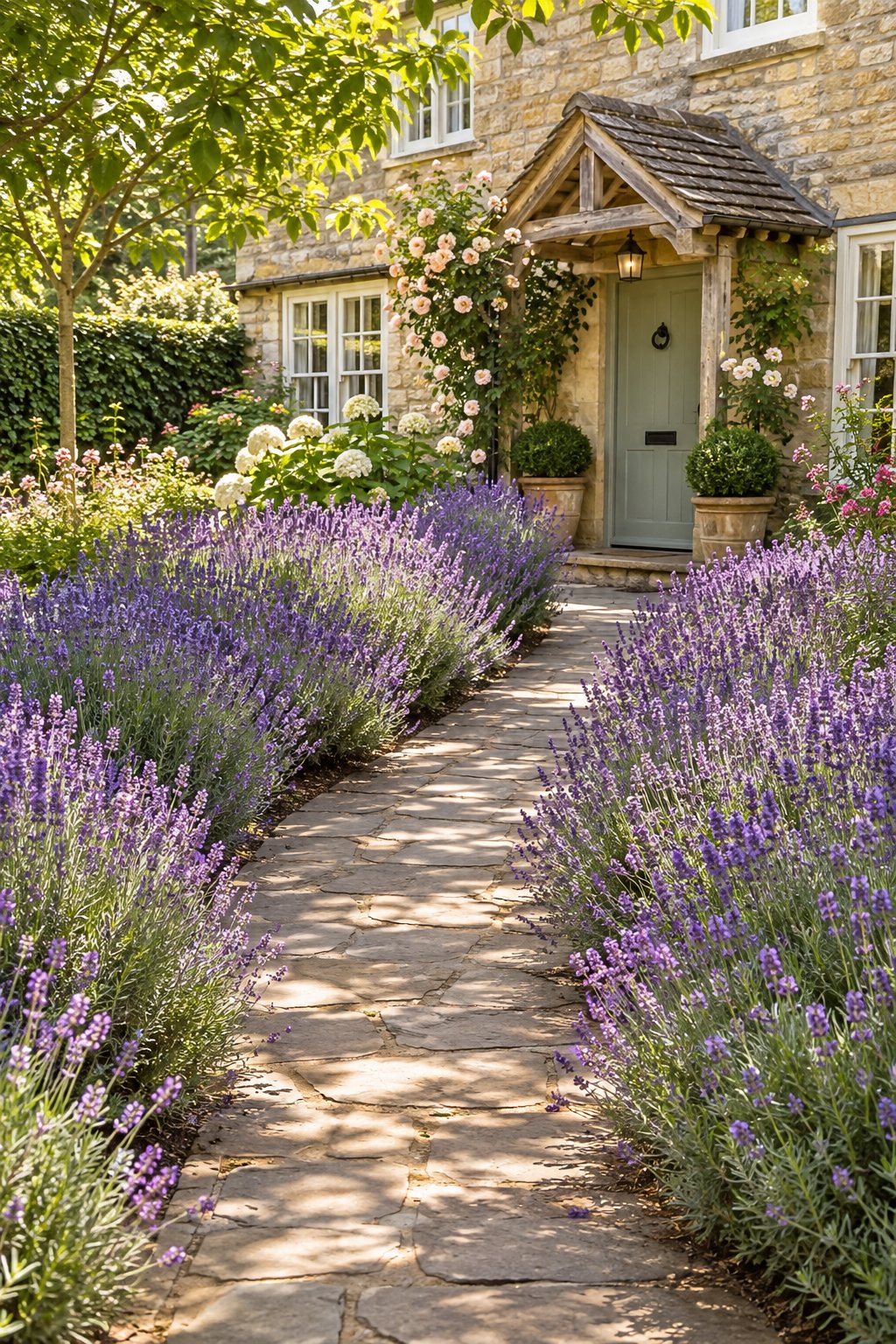
4. Line a Sunny Front Walk With Lavender
Lavender is a plant that wants to be ignored. Too much water and rich soil will finish it off faster than any frost. Give it full sun, sharp drainage, and a little neglect, and it’ll reward every guest who brushes past.
English lavender (Lavandula angustifolia) types like ‘Hidcote’ and ‘Munstead’ are the hardiest picks for most US front walks. Space plants 18 to 24 inches apart, and they’ll knit into a soft hedge within two seasons. In humid Southern yards, try lavandin types like ‘Phenomenal’, which handle muggy summers better. Get spacing and soil prep right with this guide on how to plant lavender.
Expert Tip From MrPlanter: “Shear the plants by about a third right after flowering, but never cut into bare brown wood. That keeps them round and bushy for years.“
5. Divide the Backyard Into Garden Rooms With Clipped Hedges
Most backyards show you everything at once from the back door, and then there’s nothing left to discover. Garden rooms fix that. Hedges split one big space into smaller spaces, each with its own job: a lawn room, a flower room, a dining room.
Hedges don’t need to be tall. Waist-high hedges of yew, holly, or boxwood define a room and still let you see over. For taller screens, try arborvitae or hornbeam. Leave a gap or an arch in each hedge so you’re pulled from one room to the next.
Expert Tip From MrPlanter: “Trim hedges slightly wider at the bottom than the top. Sunlight then reaches the lower branches, so the base stays green and full.“
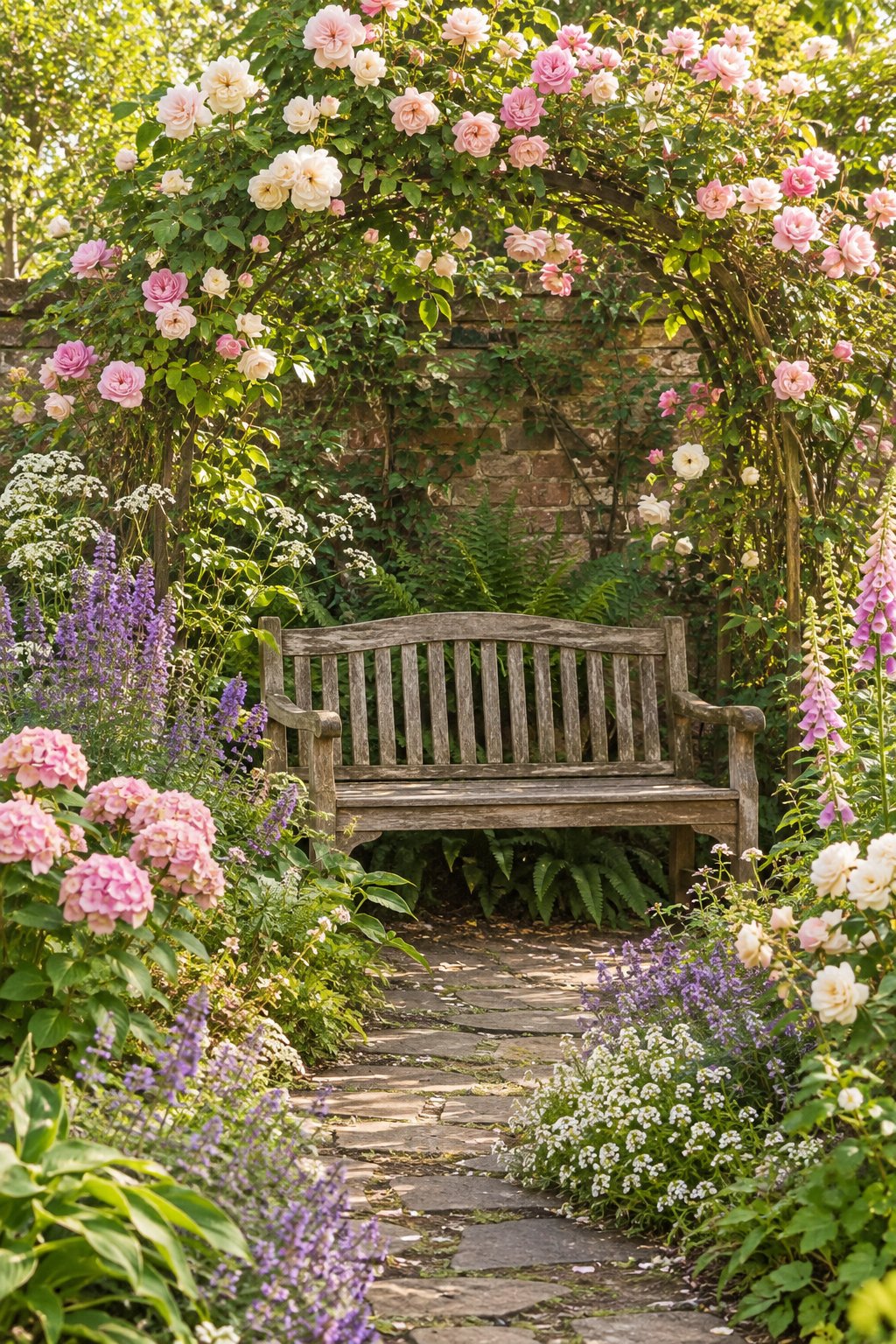
6. Nestle a Weathered Wooden Bench Into a Flower-Filled Alcove
A garden bench has one job, and most people put it in the wrong place. Out in the open, it feels like a waiting room. Tucked into an alcove with plants on three sides, it feels like a secret.
Back the bench with a hedge, fence, or trellis, then plant fragrant things close by: roses, phlox, or sweet alyssum. Set it on gravel or pavers so the legs stay dry and the wood lasts longer. Teak and cedar fade to a lovely silver-gray on their own. Browse more garden seating ideas if you’d like a bench with a back or arms.
Expert Tip From MrPlanter: “Face the bench toward your best view, not toward the house. You’ll sit there more often if it shows you something pretty.“
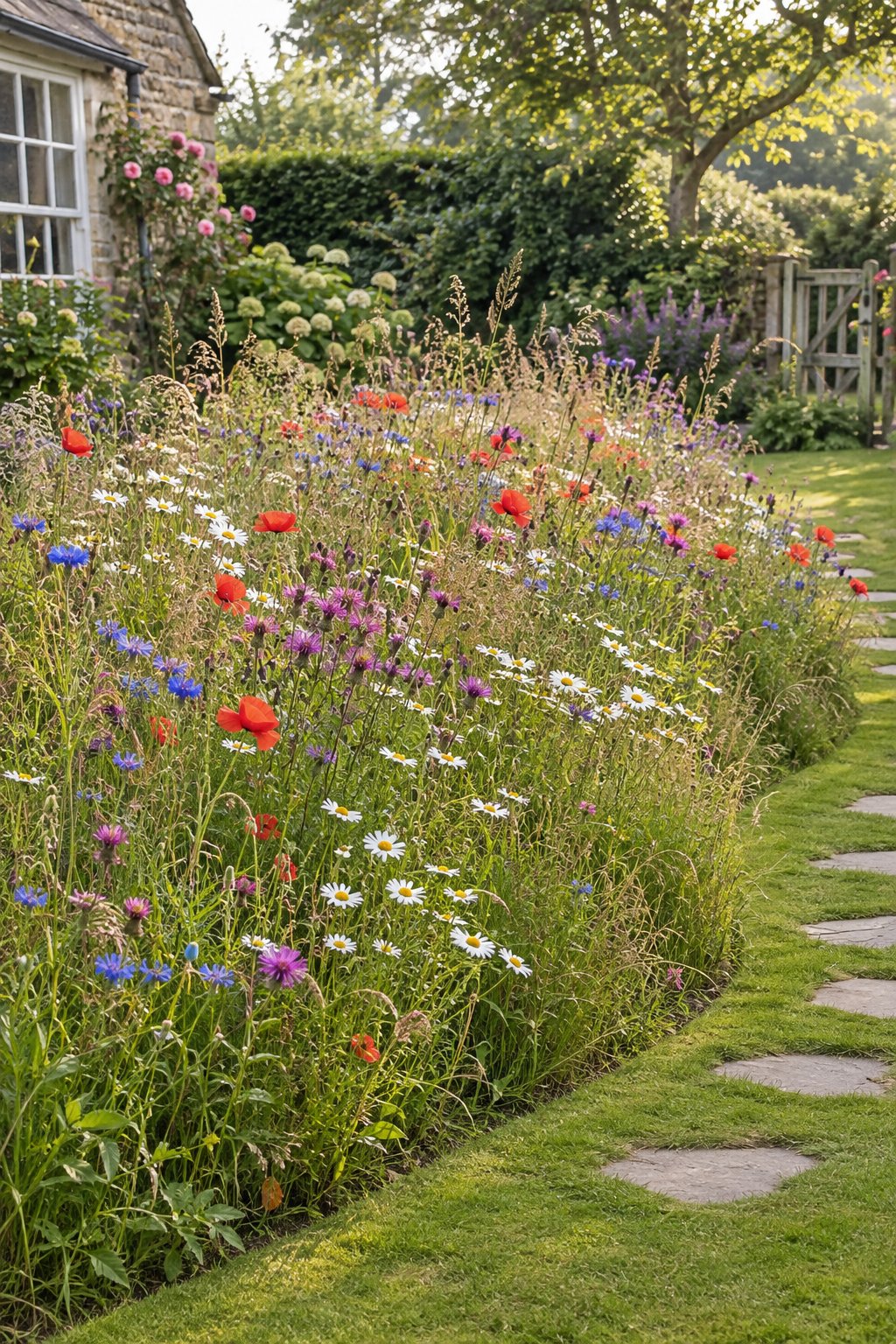
7. Replace a Patch of Lawn With a Native Wildflower Meadow
Your lawn might be the thirstiest, most demanding plant you own. Swapping even a 10-by-10-foot corner for a meadow saves mowing and gives bees and butterflies a buffet.
Use a seed mix made for your region, packed with plants like black-eyed Susan, purple coneflower, little bluestem, and milkweed. Clear the grass fully first, then sow in fall so seeds get the winter chill they need. Expect year one to look scruffy. Meadows sleep, then creep, then leap. Mow a tidy strip along the edge so neighbors can see it’s on purpose.
Expert Tip From MrPlanter: “Mow the meadow once a year in late winter, not in fall. Birds eat the seeds all winter, and helpful insects hide in the stems.“
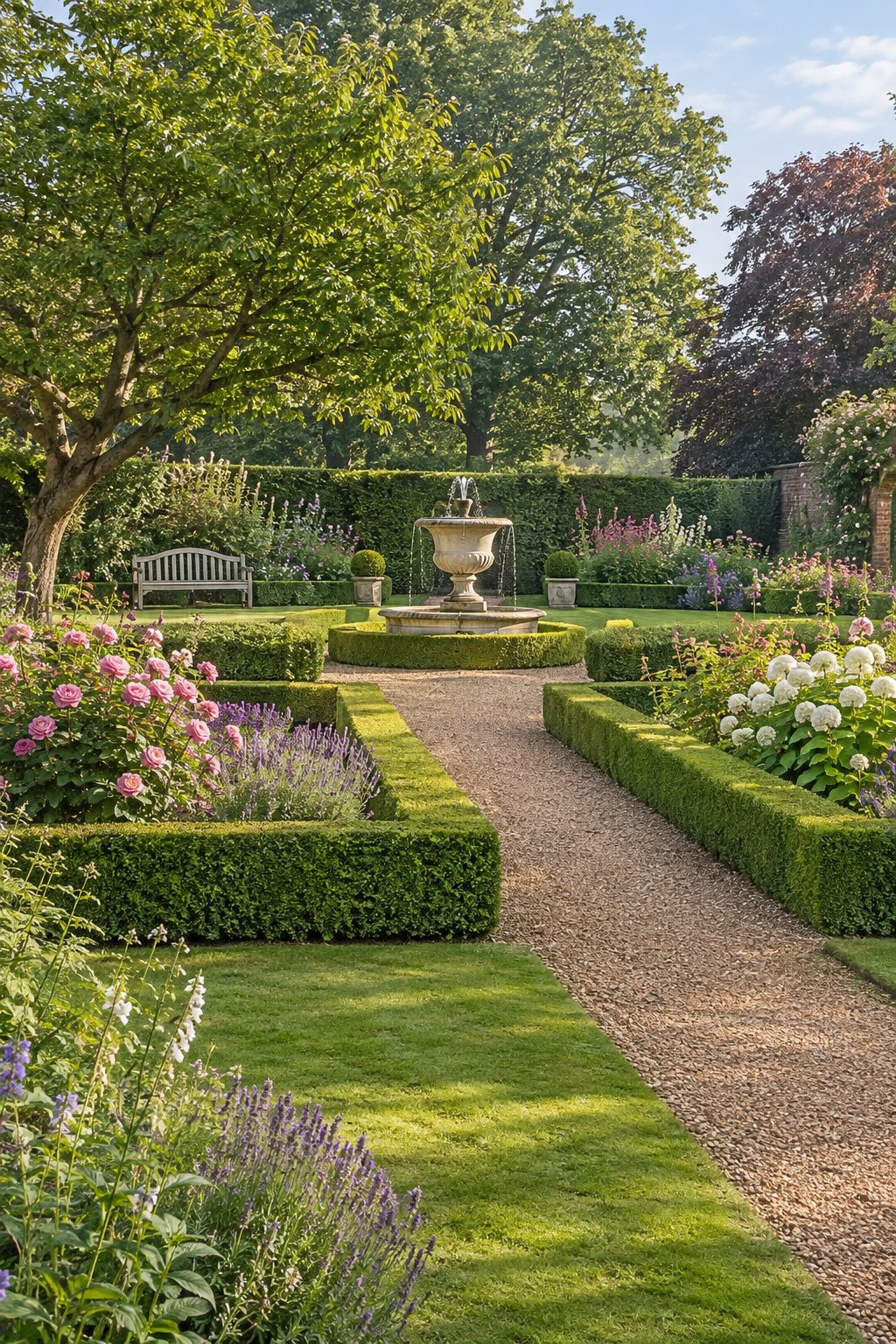
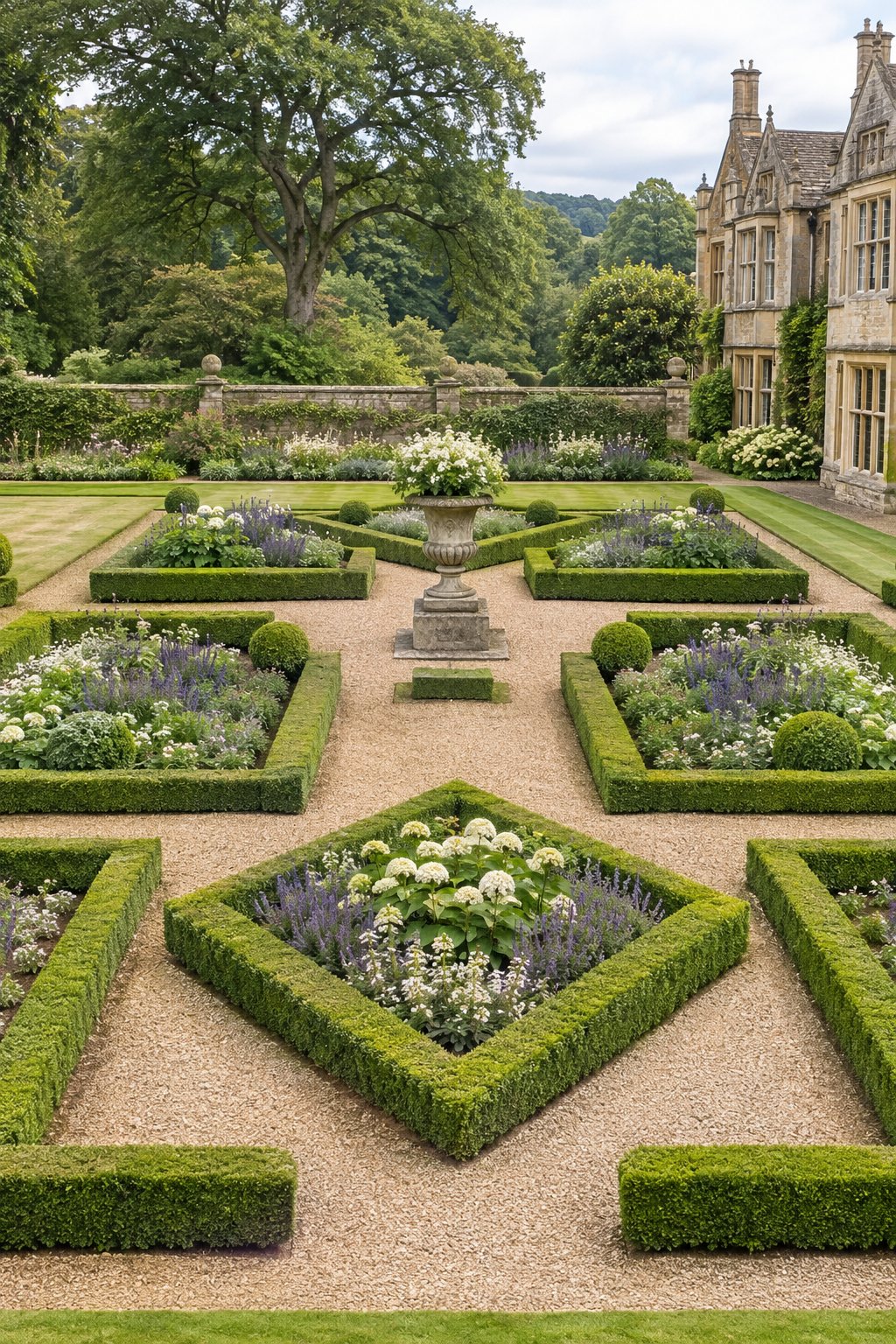
8. Create a Geometric Parterre With Low Evergreen Borders
Think of a parterre as a garden wearing a suit. It’s made of low evergreen hedges planted in neat squares, triangles, or knots, with flowers or gravel filling the spaces.
Keep hedges 12 to 18 inches tall so the pattern reads clearly. Boxwood is the classic pick, though boxwood blight is a problem in many states, so look for resistant types like ‘NewGen Independence’. Inkberry holly and dwarf yew also work. Start small: four square beds around a birdbath or urn is plenty. See more shapes in these boxwood garden ideas.
Expert Tip From MrPlanter: “Use string lines and stakes to mark every bed before planting. Straight lines are the whole point of a parterre, and eyeballing them never works.“
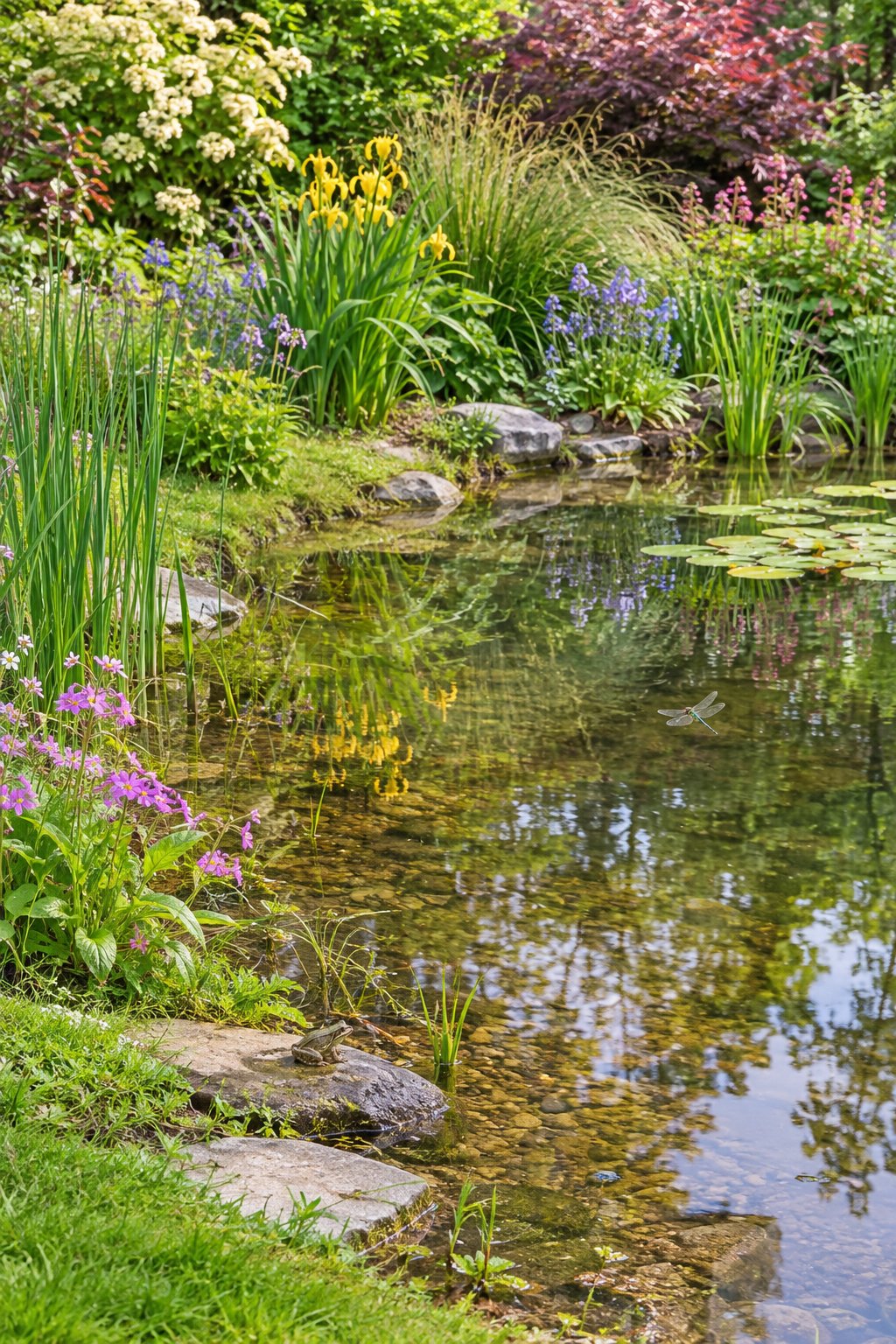
9. Add a Small Wildlife Pond With a Gently Sloping Edge
Here’s a myth worth busting: you don’t need a big pond to bring in wildlife. A pond just 4 feet across will draw frogs, dragonflies, and songbirds, as long as they can get in and out.
That’s where the sloped edge comes in. Steep sides trap hedgehogs and toads in England and chipmunks and toads here. Shape one side as a shallow beach of pebbles, then step down to about 2 feet deep in the middle. Use a flexible rubber liner, and add native plants like pickerelweed and blue flag iris. Skip fish if wildlife is the goal, since fish eat tadpoles.
Expert Tip From MrPlanter: “Fill the pond with rainwater if you can. Tap water often carries extra nutrients that feed green algae.“
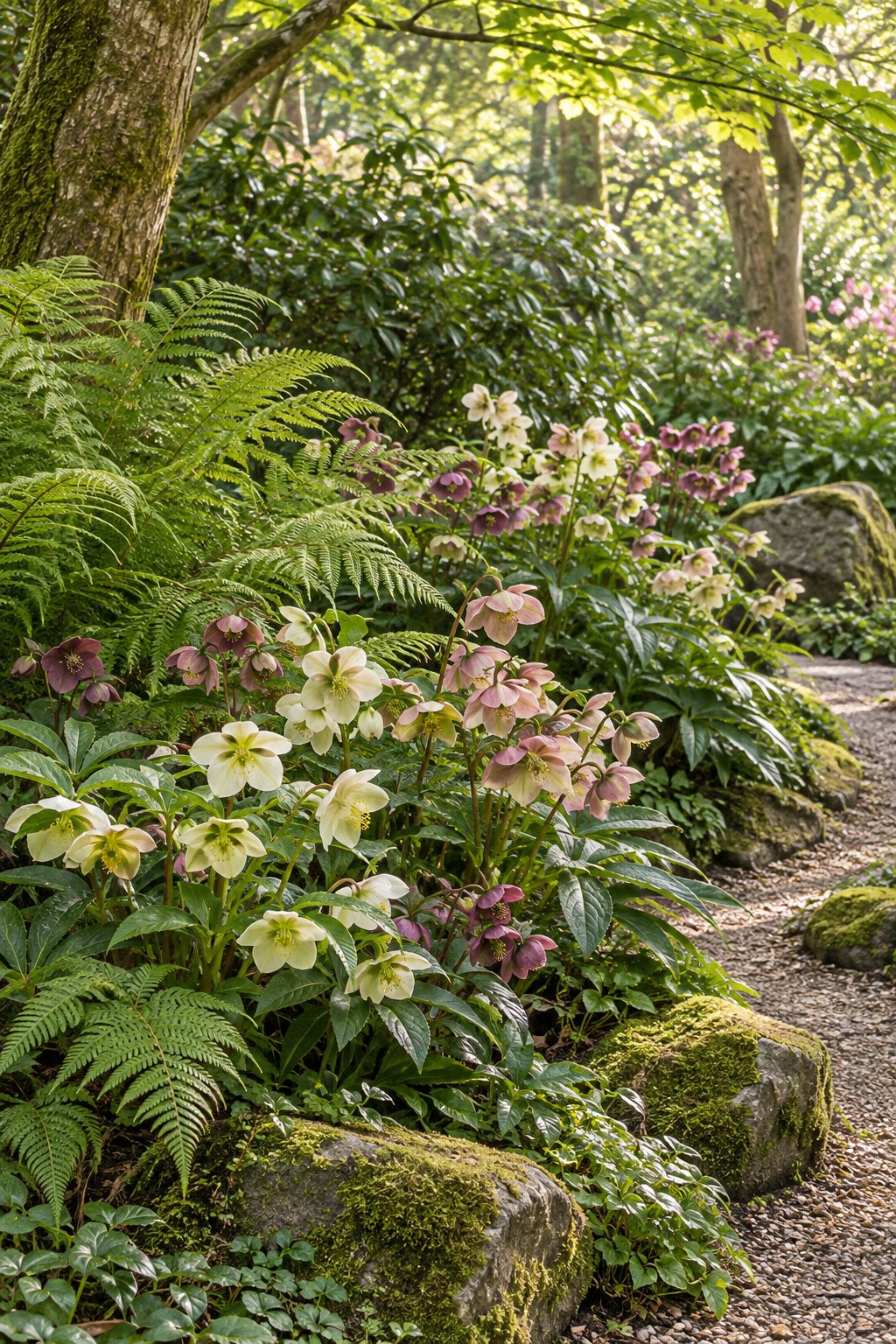
10. Plant a Shady Woodland Corner With Ferns and Hellebores
Got a dark spot under a tree where grass gives up? Congratulations, you own the start of a woodland garden. Shade is a gift in an English-style yard.
Hellebores (Lenten roses) bloom in late winter when almost nothing else does, and deer leave them alone. Pair them with ferns like Christmas fern or Japanese painted fern for texture. Add hostas, foamflower, and Virginia bluebells to fill gaps. Spread 2 inches of shredded leaves as mulch, like a forest floor. For bed shapes and plant spacing, these shade garden design layout ideas help a lot.
Expert Tip From MrPlanter: “Cut off last year’s tattered hellebore leaves in late winter. The new flowers pop up clean, and you can see them clearly.“
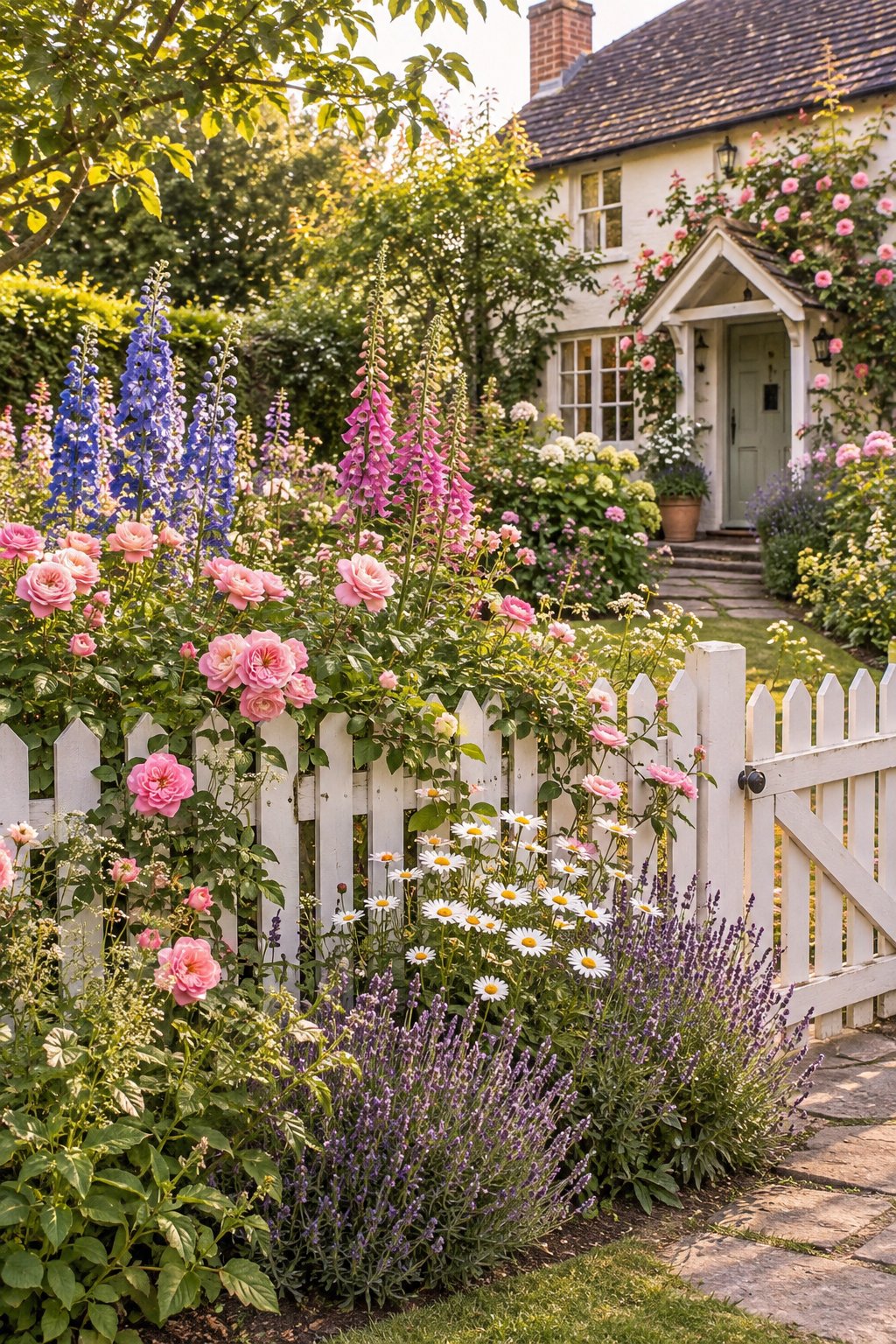
11. Soften a Front Yard Picket Fence With Cottage Flowers
A bare picket fence looks like it’s waiting for something. Cottage flowers are what it’s waiting for. Tall plants poking through and over the pickets make your front yard look friendly from the sidewalk.
Plant hollyhocks and foxgloves behind or along the fence for height. Hollyhocks reach 6 to 8 feet. In front, mix in shorter plants like catmint, Shasta daisies, and coreopsis. Leave about 12 inches between the fence and the first plants so you can paint and repair it later.
Expert Tip From MrPlanter: “Let foxgloves and hollyhocks drop their seeds. They’ll pop up in new spots each year, which is exactly the loose cottage look you want.“
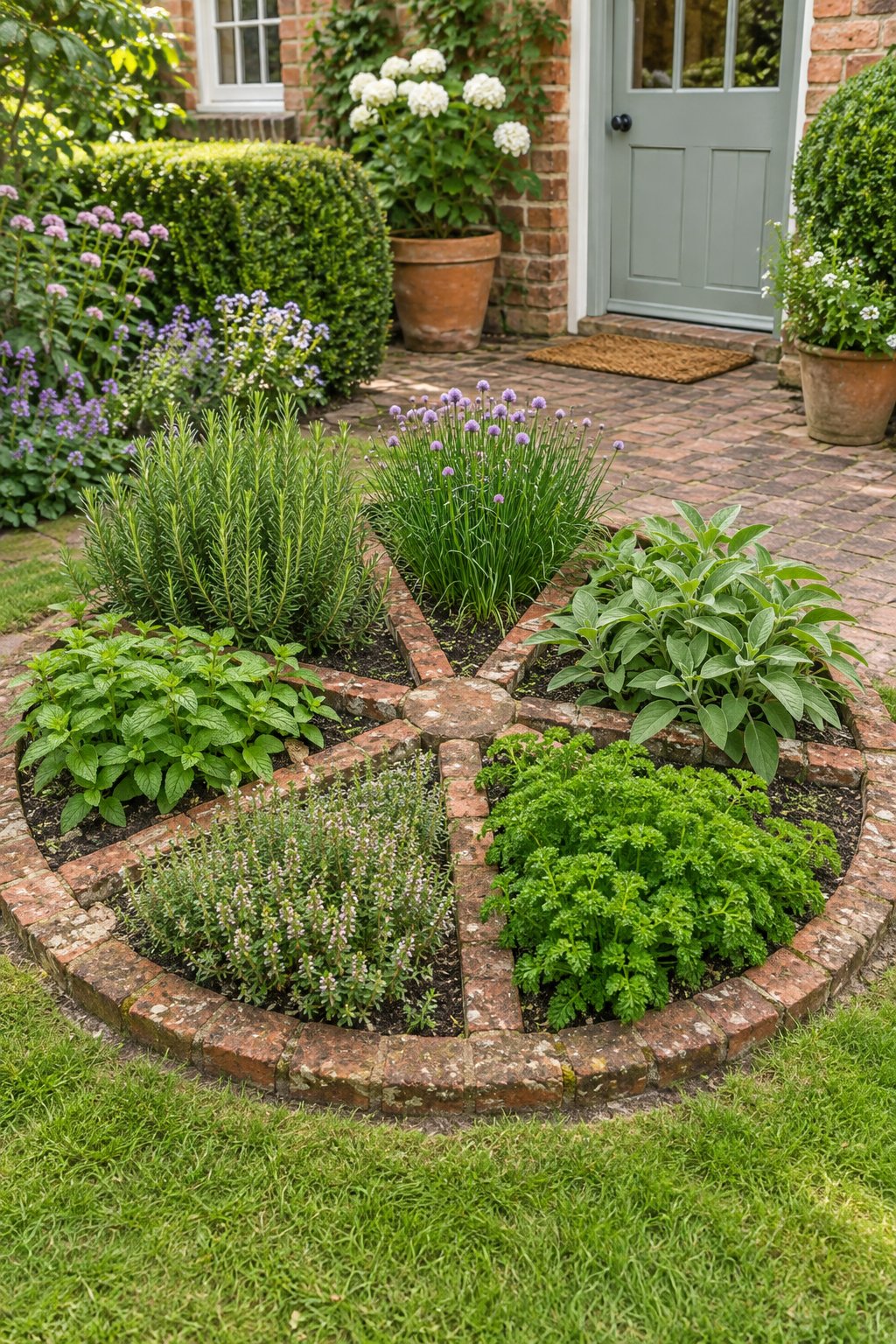
12. Build a Brick-Spoked Herb Wheel Near the Kitchen Door
Nobody walks 50 feet in the rain to grab two sprigs of thyme. Herbs belong by the kitchen door, and a wheel makes them look gorgeous there.
Mark a circle 6 to 8 feet wide. Lay bricks on edge like bicycle spokes, splitting it into six or eight wedges. Each wedge gets one herb: thyme, oregano, sage, chives, parsley, and rosemary. Put mint in a sunken pot or it’ll take over every wedge. Most herbs want full sun and loose, well-drained soil.
Expert Tip From MrPlanter: “Put a small pot or sundial in the hub of the wheel. It gives your eye a center point and fills the awkward middle space.“
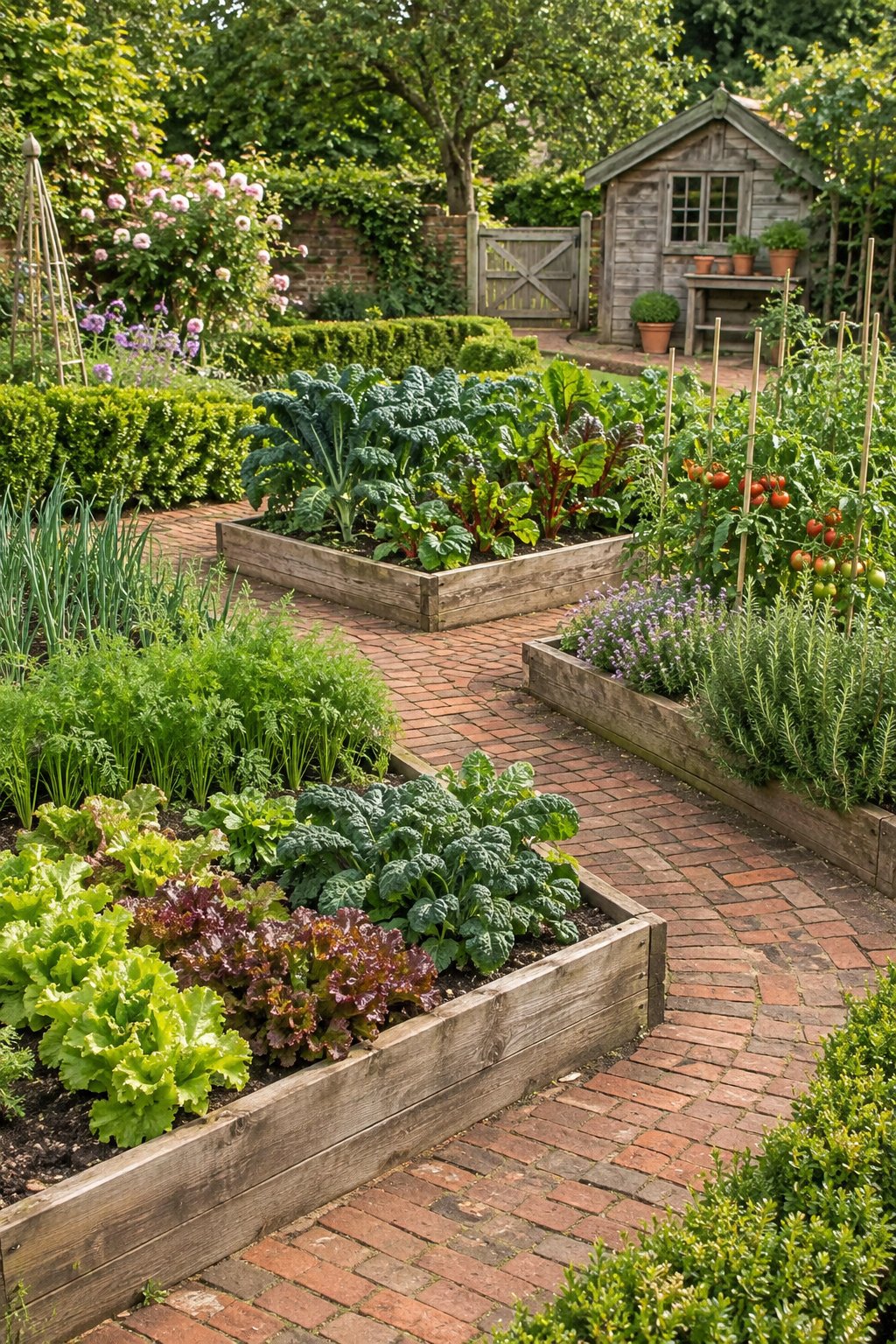
13. Lay Out a Kitchen Garden With Brick Paths and Raised Beds
Vegetable gardens get a bad rap for looking messy. The English answer is the kitchen garden (also called a potager): veggies grown in tidy beds with handsome paths, so it looks good even in February.
Build raised beds no wider than 4 feet so you can reach the middle without stepping in. Use cedar boards about 12 inches tall. Run brick paths 2 to 3 feet wide between them. Tuck flowers like marigolds, nasturtiums, and calendula among the tomatoes and beans to bring in pollinators and color.
Expert Tip From MrPlanter: “Set bricks on 2 inches of packed sand, not straight on soil. They’ll stay level and won’t heave every spring.“
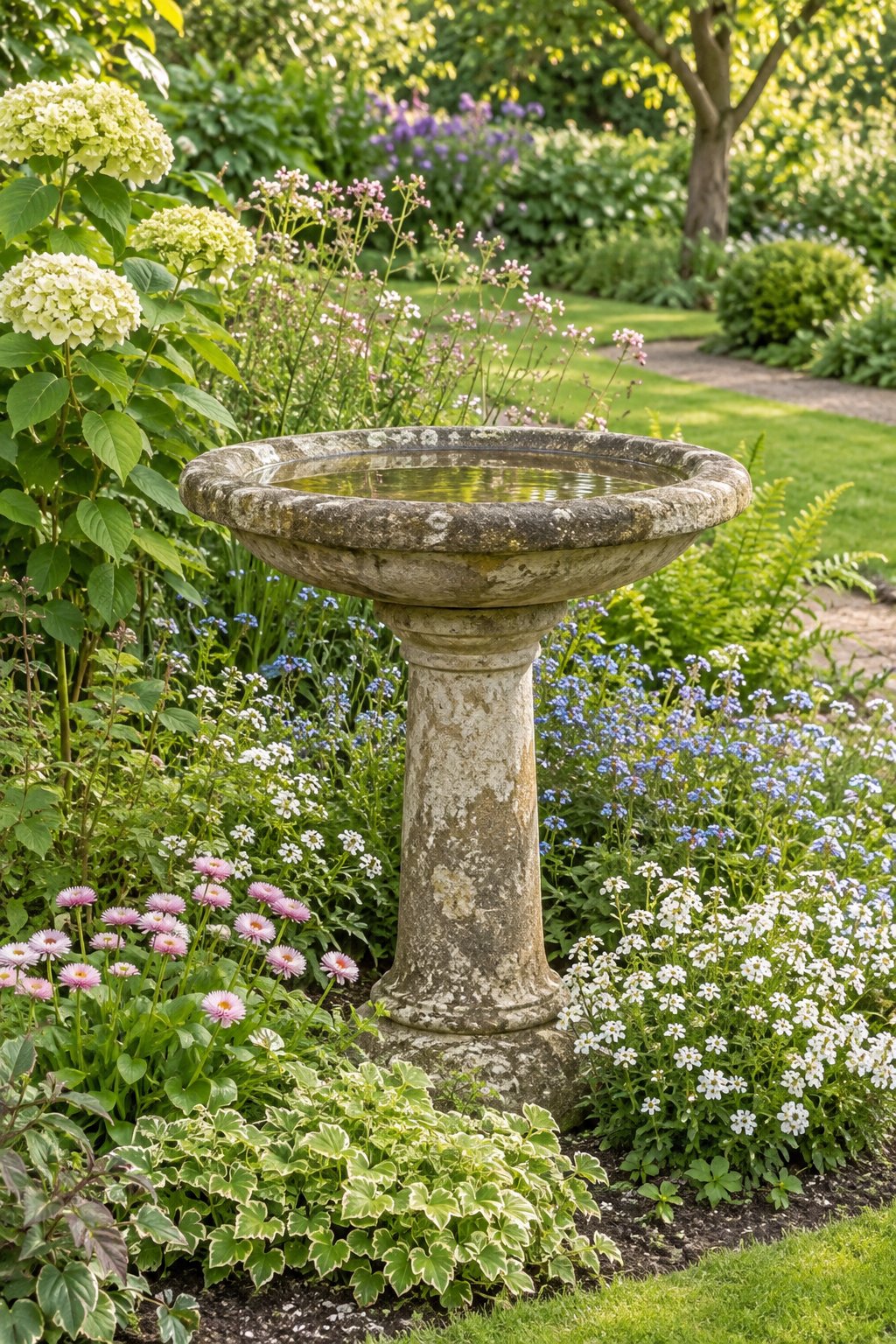
14. Place a Stone Birdbath Among Low Flowering Plants
Birds are picky bathers. They want water no deeper than about 2 inches, a rough surface to grip, and a clear view of cats sneaking up.
That’s why low plants around the base work so well. Creeping thyme, sedum, dianthus, or ajuga stay short, so birds can see danger coming. Keep taller shrubs about 10 feet away. They’ll give birds a quick escape spot without hiding predators. Stone or concrete birdbaths look the most classic and get mossy and charming with age.
Expert Tip From MrPlanter: “Dump and refill the water every two or three days. It stops mosquitoes from breeding and keeps the birds coming back.“
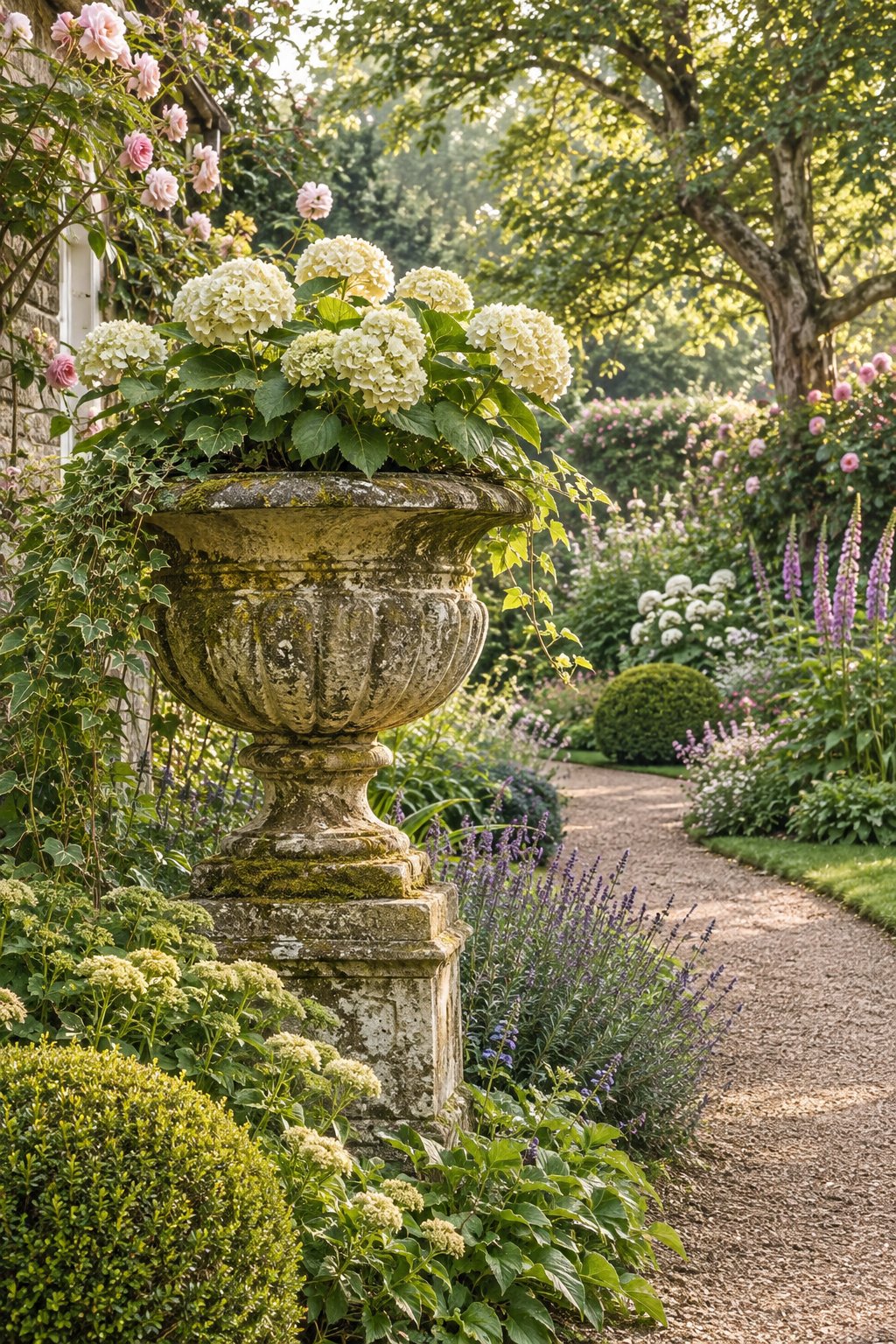
15. Anchor a Path View With a Weathered Garden Urn
Your path wants a destination, even a pretend one. An urn at the end of a path or at a curve gives eyes and feet a reason to keep going.
Cast stone and concrete urns look old within a few years. Brush on yogurt or buttermilk to speed up moss and lichen growth. You can leave the urn empty for a sculptural look, or plant it with trailing ivy, geraniums, or a small boxwood ball. Set it on a pedestal or block so it rises above the nearby plants.
Expert Tip From MrPlanter: “Go bigger than you think. A small urn gets lost in a lush garden, while a large one looks like it’s always been there.“
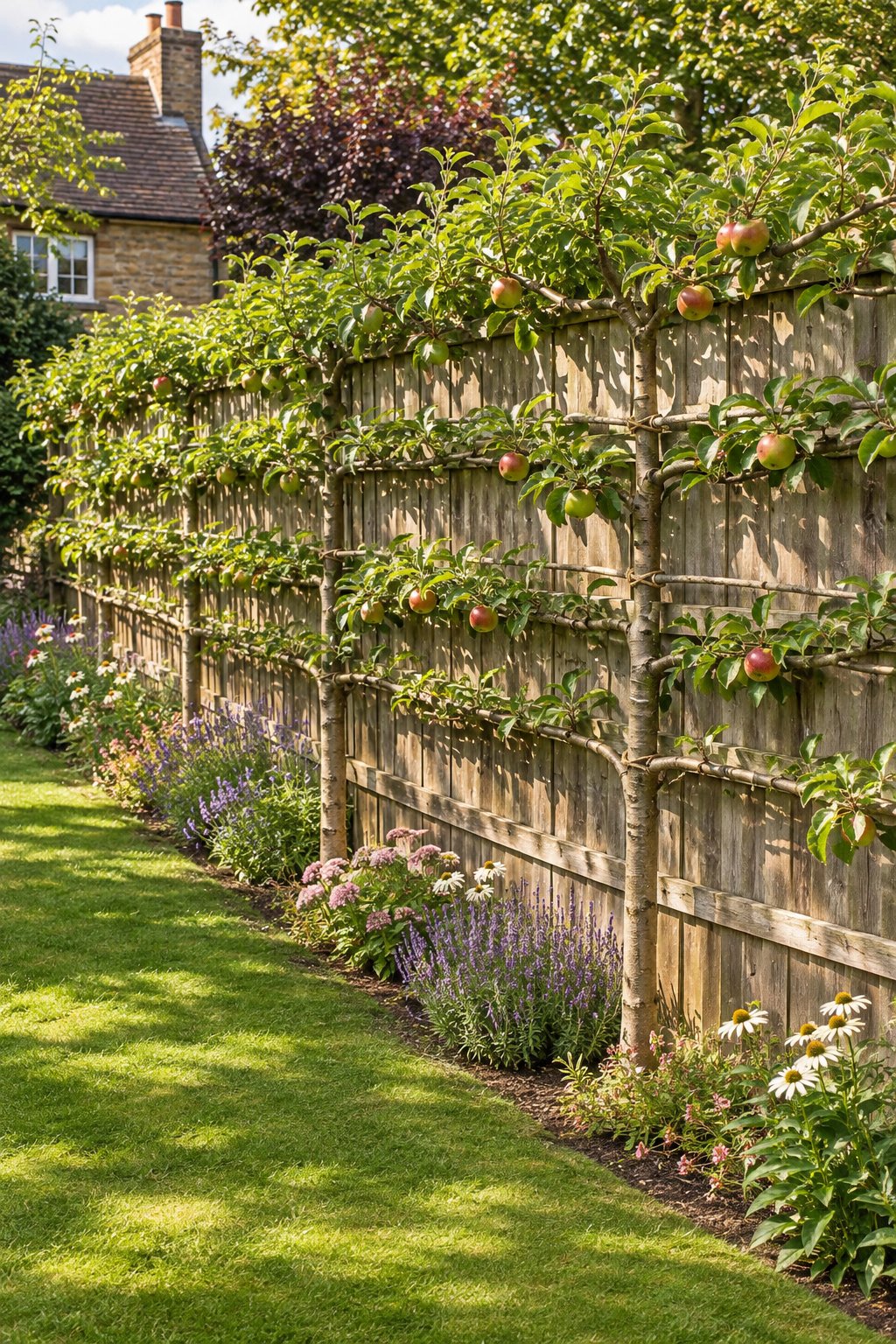
16. Train Espalier Apple or Pear Trees Along a Sunny Fence
An apple tree that’s only 12 inches deep sounds like a magic trick. It’s espalier, an old method of training fruit trees flat against a wall or fence.
Start with a young dwarf or semi-dwarf tree. Stretch horizontal wires along a sunny fence at about 18-inch spacing. Each year, tie side branches along the wires and prune off anything growing straight out. Apples and pears both take to this well. You’ll get spring blossoms, fall fruit, and a living fence pattern in winter. Many varieties need a second tree nearby for pollination, so check before you buy.
Expert Tip From MrPlanter: “Do most of your shaping in summer, when the tree heals fast. Winter pruning makes it push out lots of leafy growth instead of fruit.“
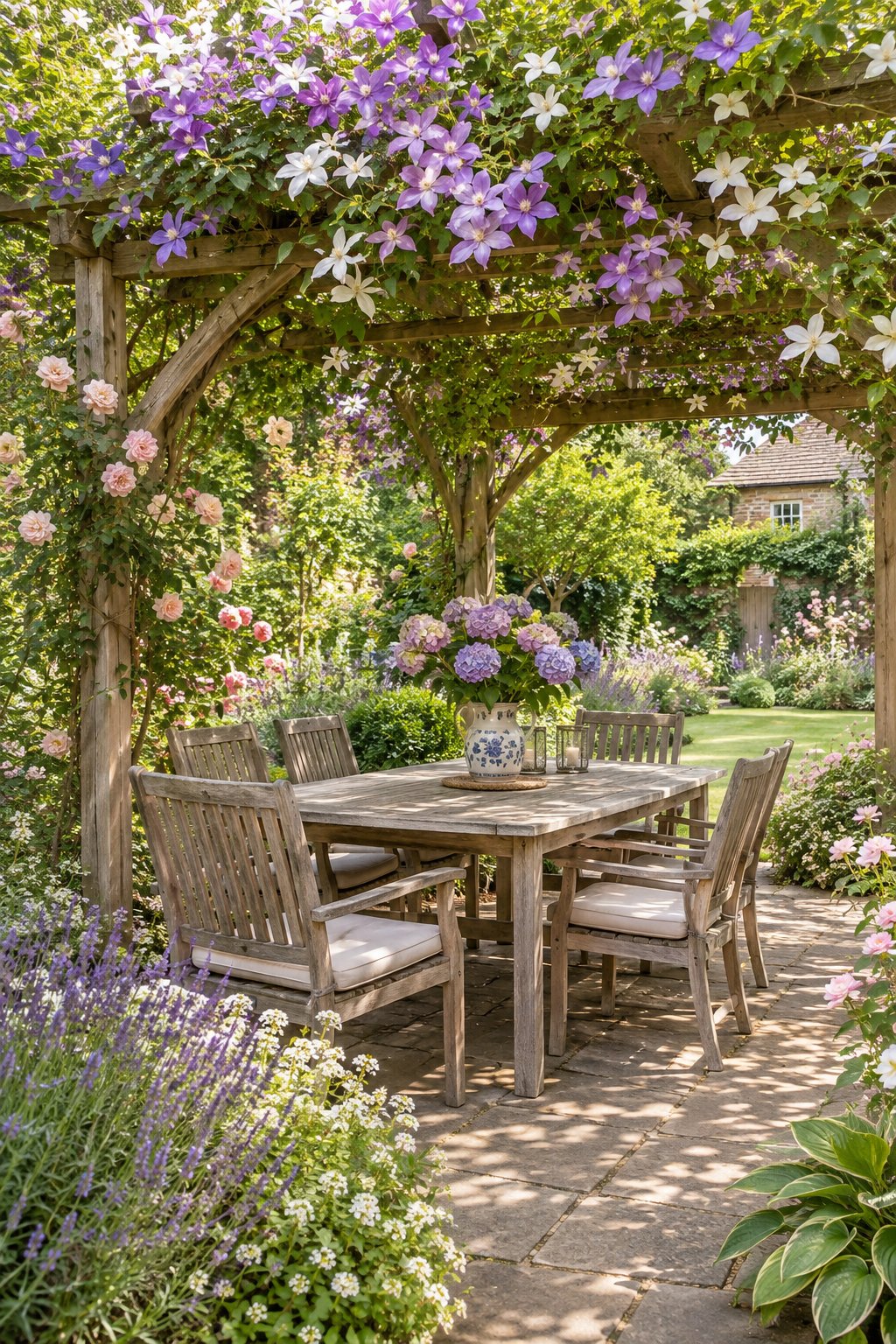
17. Shade a Backyard Dining Area With a Clematis-Covered Pergola
Clematis has a famous rule: “head in the sun, feet in the shade.” Follow it, and this vine will cover your pergola in flowers the size of saucers.
Plant clematis at the base of each pergola post, then shade the roots with a low plant or a flat stone. Large-flowered ‘Jackmanii’ blooms deep purple in summer, and sweet autumn clematis adds a fragrant white cloud later. Pair clematis with a climbing rose on the same post for a longer show. Build the pergola at least 8 feet tall so flowers can dangle without bumping heads.
Expert Tip From MrPlanter: “Check the tag for the pruning group before you cut anything. Clematis types bloom on old or new wood, and the wrong snip costs you a year of flowers.“
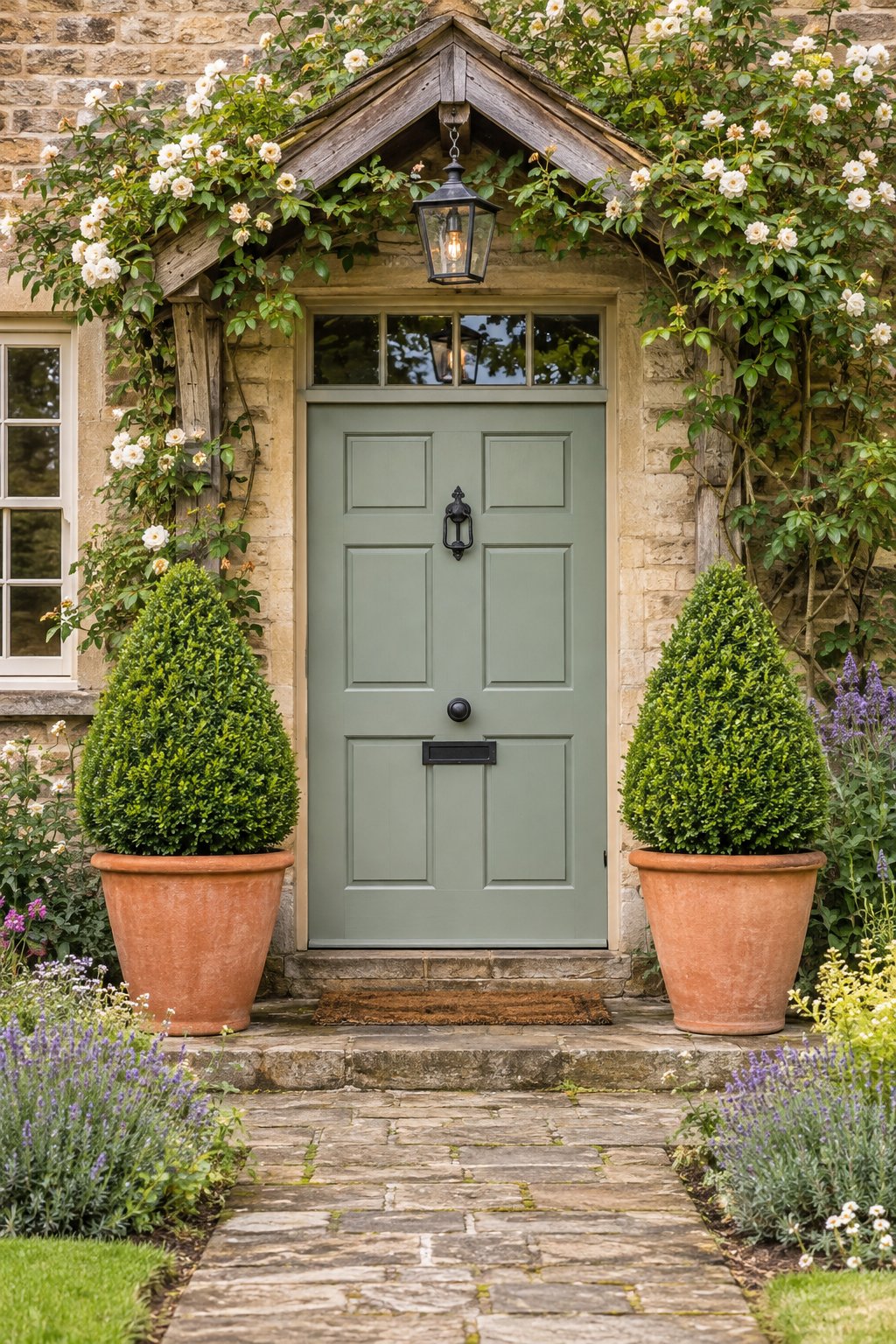
18. Frame the Front Entrance With Evergreen Topiary in Pots
Two matching pots by the front door do more for curb appeal than nearly anything else for the money. Add clipped evergreen balls, cones, or spirals, and your house suddenly looks like it has a gardener on staff.
Boxwood, dwarf Alberta spruce, and Japanese holly all take to shaping. Pick pots at least 18 inches wide, frost-proof if you live north, with drainage holes. Water often in summer, because pots dry fast. Trim lightly two or three times a year to keep the shape crisp.
Expert Tip From MrPlanter: “In cold zones, wrap the pots in burlap or move them against the house for winter. Roots in pots freeze much faster than roots in the ground.“
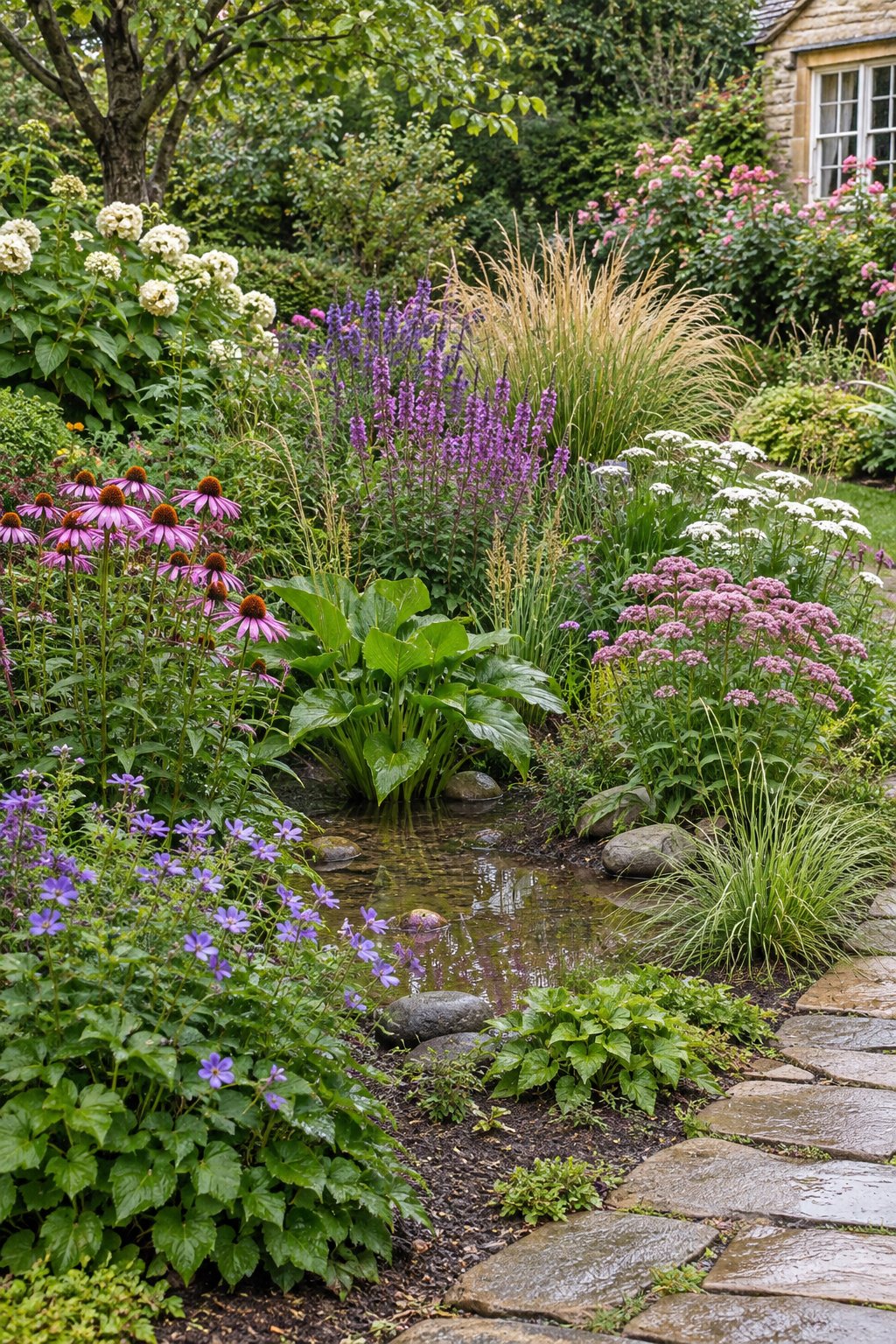
19. Turn a Soggy Garden Corner Into a Flowering Rain Garden
That muddy spot where rain pools is trying to tell you something. It wants to be a rain garden, a shallow bowl planted with flowers that love wet feet and handle dry spells too.
Dig a basin 4 to 8 inches deep at least 10 feet from your house foundation. Fill it with plants like swamp milkweed, blue flag iris, Joe Pye weed, and switchgrass. Line the edges with river rock where water flows in. The water soaks away within a day or two, so mosquitoes don’t have time to breed.
Expert Tip From MrPlanter: “Do a quick soak test before digging. Fill a hole with water, and if it doesn’t drain in 24 hours, add compost to loosen the soil.“
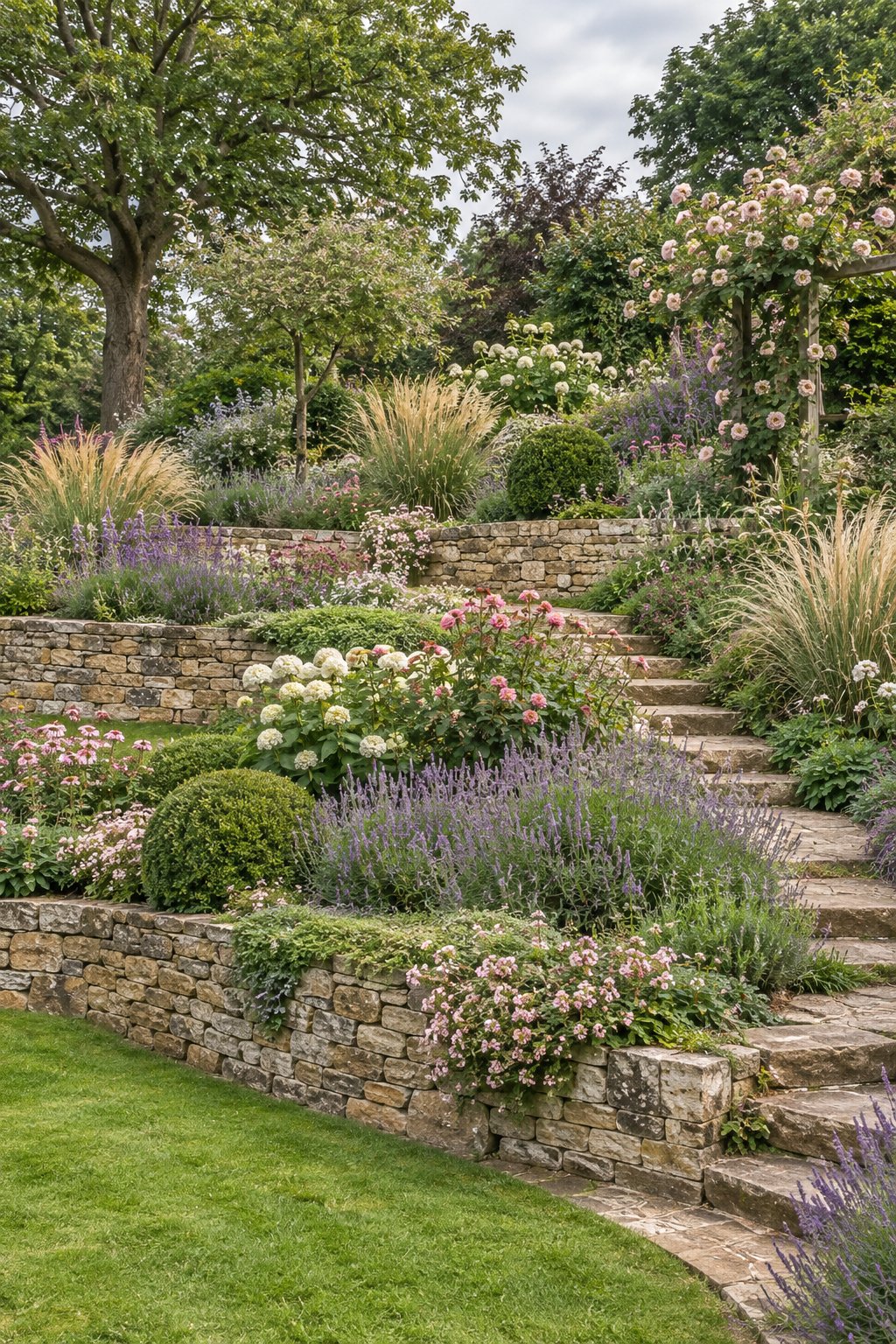
20. Terrace a Gentle Slope With Dry Stone Retaining Walls
A slope is a headache until you cut it into steps. Then it’s the best part of the yard. Dry stone walls are stacked with no mortar, so water drains right through them and plants can grow in the cracks.
Keep each wall under 3 feet tall for a DIY project. Lean each course slightly back into the hill, and set the bottom row in a trench of gravel. Tuck creeping thyme, sedum, or creeping phlox into the gaps as you build. Each level becomes a flat bed for flowers or herbs.
Expert Tip From MrPlanter: “Place the biggest, flattest stones at the bottom and the smallest on top. Walls built that way stay put through freeze and thaw.“
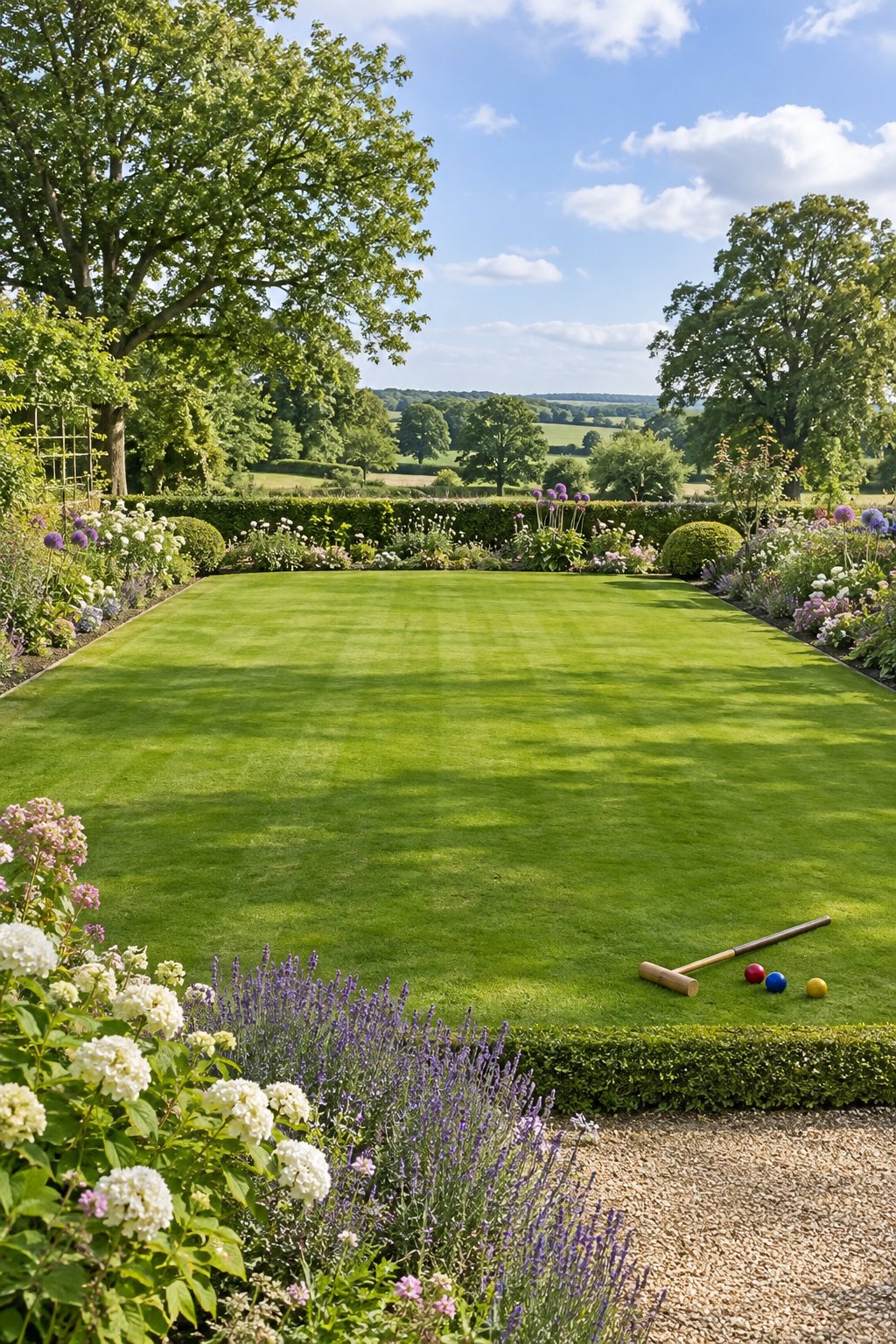
21. Keep a Small Rectangular Lawn for Croquet and Open Views
All that lush planting needs a place to rest your eyes. A small, crisp lawn is the calm pause between busy borders, and it’s flat enough for croquet, lawn chairs, or kids.
A clean rectangle looks more English than a blobby shape. Edge it with a sharp spade line or a mowing strip of brick so the grass stays tidy. Pick a grass for your zone: tall fescue in cooler areas, zoysia in warmer ones. Keeping the lawn small means less mowing and water than a full yard of grass.
Expert Tip From MrPlanter: “Mow at about 3 inches high. Taller grass shades its own roots, needs less water, and crowds out weeds.“
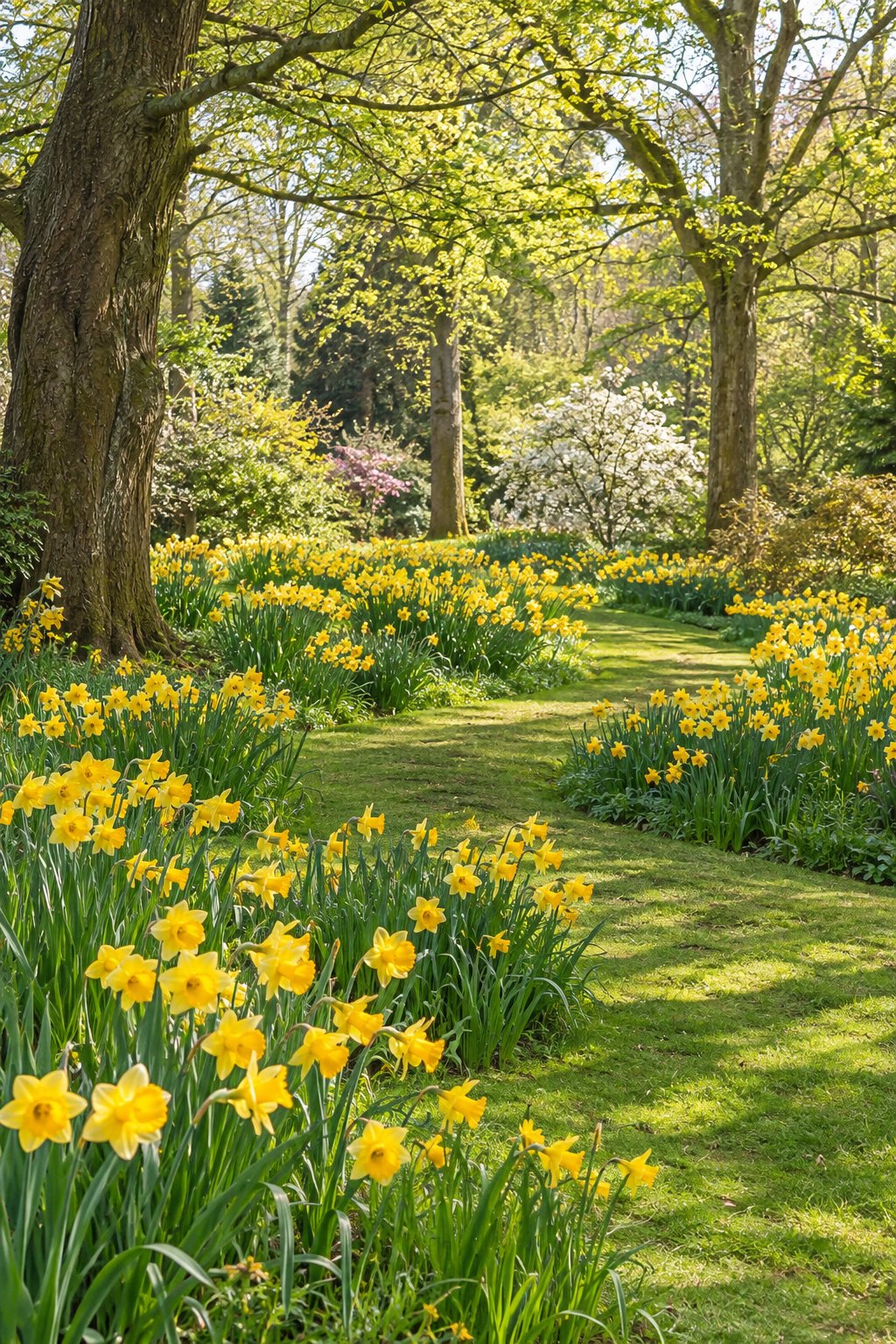
22. Naturalize Daffodil Drifts Beneath Deciduous Trees
Daffodils are the gift that keeps on giving. Plant them once, and they’ll multiply for decades. Squirrels and deer also find them poisonous, so they tend to leave them alone.
Under trees that lose their leaves, daffodils get full spring sun before the canopy fills in. Plant bulbs in fall, about 6 inches deep, with the pointy end up. For a natural drift, toss handfuls of bulbs and plant them right where they land. Mixing early and late types like ‘February Gold’ and ‘Thalia’ stretches the show over several weeks.
Expert Tip From MrPlanter: “Let the leaves turn yellow before you cut them, about six weeks after flowering. That’s how the bulbs store energy for next year’s blooms.“
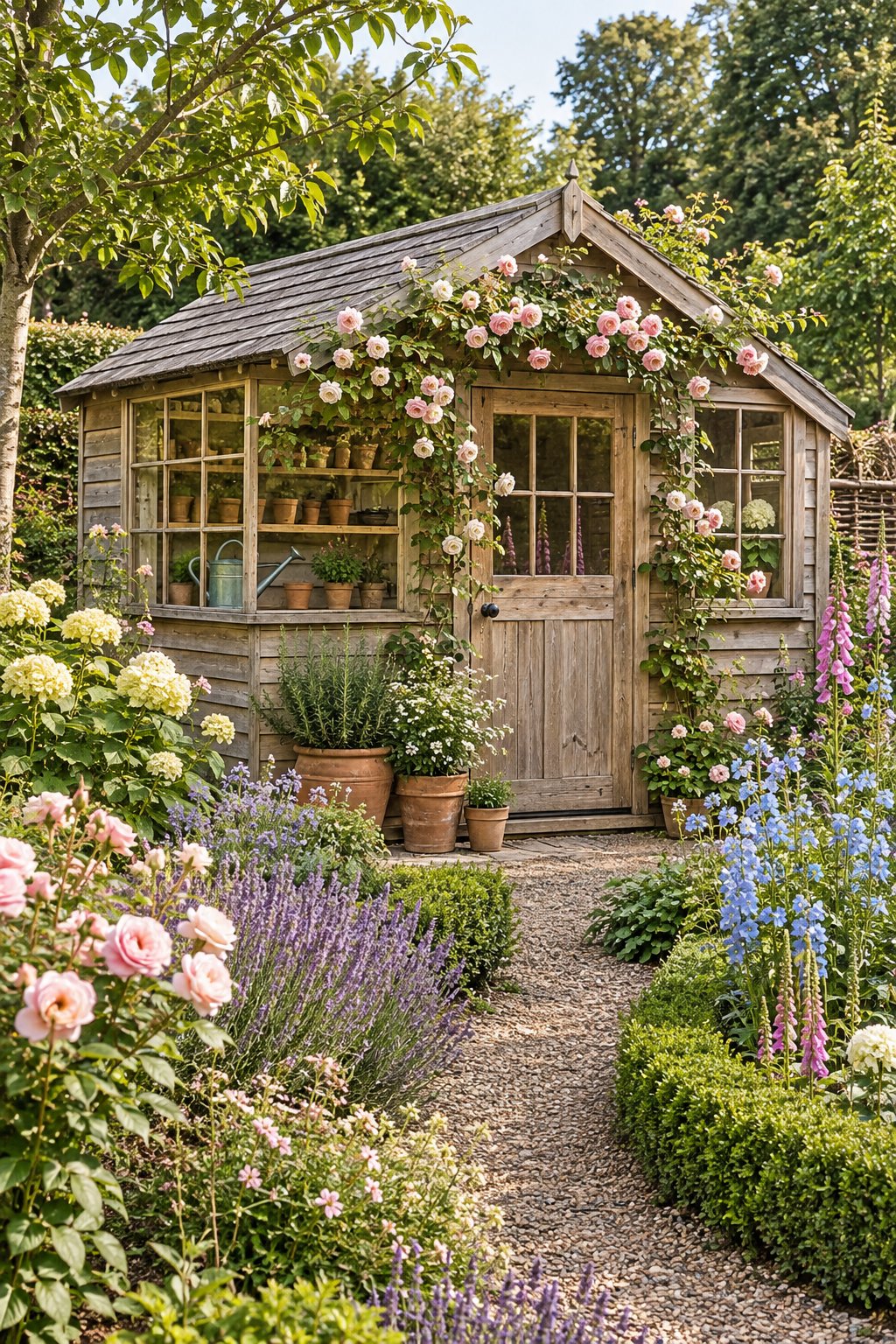
23. Make a Timber Potting Shed a Charming Garden Focal Point
Your shed doesn’t have to hide in the back corner like it did something wrong. A dressed-up potting shed can be the star of the garden.
Paint it a soft color such as sage green, blue-gray, or cream. Add a window box, a rose or clematis on one wall, and a gravel path leading to the door. Inside, a potting bench at waist height saves your back. Hang tools on pegboard so you can see what you have. Plant a loose border around the base so the shed looks rooted in the garden.
Expert Tip From MrPlanter: “Set the shed on a gravel or block base, not bare soil. Wood that stays off the wet ground lasts many years longer.“
How to Adapt English Garden Style to Your Yard
English garden style travels well once you match each feature to your site’s sun, soil, and climate. Start with what your yard already gives you, and pick the ideas that fit it.
Which Ideas Suit Your Sunlight, Soil, and Climate?
Watch your yard for one full day and note where sun falls for six hours or more. Those spots suit lavender, roses, herb wheels, and meadows. Areas with under four hours of sun are perfect for woodland plantings, ferns, and hellebores.
Condition
Ideas That Fit
Full sun, dry soil
Lavender walk, herb wheel, gravel path, dry stone terraces
Full sun, average soil
Cottage borders, rose arch, kitchen garden, espalier
Part to full shade
Woodland corner, daffodils under trees, bench alcove
Wet or soggy spots
Rain garden, wildlife pond
A simple soil test from your county extension office tells you pH and drainage. Lavender wants lean, gritty soil, while roses like richer ground with compost.
How Can You Scale the Design to a Small Yard?
Pick one formal feature and one loose feature, and stop there. A potted topiary pair at the door plus a cottage border along the fence reads as English in a tiny front yard. In a small backyard, use vertical space: arches, espalier, and climbing roses take up floor room measured in inches. These small garden design ideas offer more ways to fit features into tight lots.
Which Traditional Plants Need Regional Substitutes?
Delphiniums and foxgloves sulk in hot, humid summers in the South. Swap in salvia, larkspur, or agastache for the same tall spikes. Boxwood struggles with blight in many areas, so try inkberry holly or dwarf yaupon. In dry Western yards, native penstemons and lavender stand in for thirsty perennials. Skip English ivy entirely, since it’s invasive in many states.
What Should You Check Before Adding Paths, Walls, or Water?
Call 811 at least a few days before you dig, and they’ll mark buried utility lines for free. Check with your town or HOA about pond depth rules, fence heights, and wall permits. Walls over about 3 or 4 feet often need an engineer. Keep rain gardens and ponds at least 10 feet from your foundation.
How to Build Your Garden Without Overwhelming Your Budget
Build the bones first, then add flowers over several seasons. Structure costs more but lasts decades, while plants fill in quickly and spread on their own.
Which Projects Should You Tackle First?
Paths, hedges, and trees come first, because they take the longest to mature and set the layout for everything else. A gravel path and a few hedge plants in year one give you a frame. Borders, containers, and bulbs follow in years two and three. Sketch your plan on graph paper with these garden planting layout ideas before buying anything.
Where Should You Spend and Where Can You Save?
Spend on things that are hard to redo: a good arch, sturdy edging, quality stone, and healthy trees. Save on perennials by buying small 4-inch pots, which catch up to gallon pots within a season. Divide friends’ hardy geraniums, hostas, and daylilies for free plants. Grow cottage annuals like cosmos and zinnias from seed for pennies.
How Much Maintenance Can You Realistically Manage?
Be honest about your weekends. Clipped hedges and parterres need trimming two or three times a year. Roses need pruning and feeding. Meadows, woodland corners, and daffodil drifts need very little once settled. If you only have an hour a week, lean on those lower-care ideas and keep formal pieces to a pair of potted topiaries.
How Can You Plan for Interest Across the Seasons?
Aim for something happening in every season:
Late winter: hellebores and early daffodils
Spring: later daffodils, fruit blossoms on espalier, salvias
I’m Anirban Saha, the Founder and Owner of MrPlanter.com. I pay the bills as a software developer, although my BTech is actually in Electronics and Communication. I really love my day job, but what gives me energy every day is interacting with my indoor plants and taking care of them. I have been successfully nurturing and maintaining houseplants for over 10 years now.
📚🔍 Our content undergoes thorough review and fact-checking before publication. For additional details, explore our strict Editorial Policy to deliver helpful content. 📝🔒